Thread: Goddess Demeter riding a panther. Terracotta figurine from Thebes, 375-325 BCE. Currently in Louvre collections.louvre.fr/en/ark:/53355/…
Very interesting...But I wonder: is this really a panther...Or is it a lioness...Let's see:
Very interesting...But I wonder: is this really a panther...Or is it a lioness...Let's see:
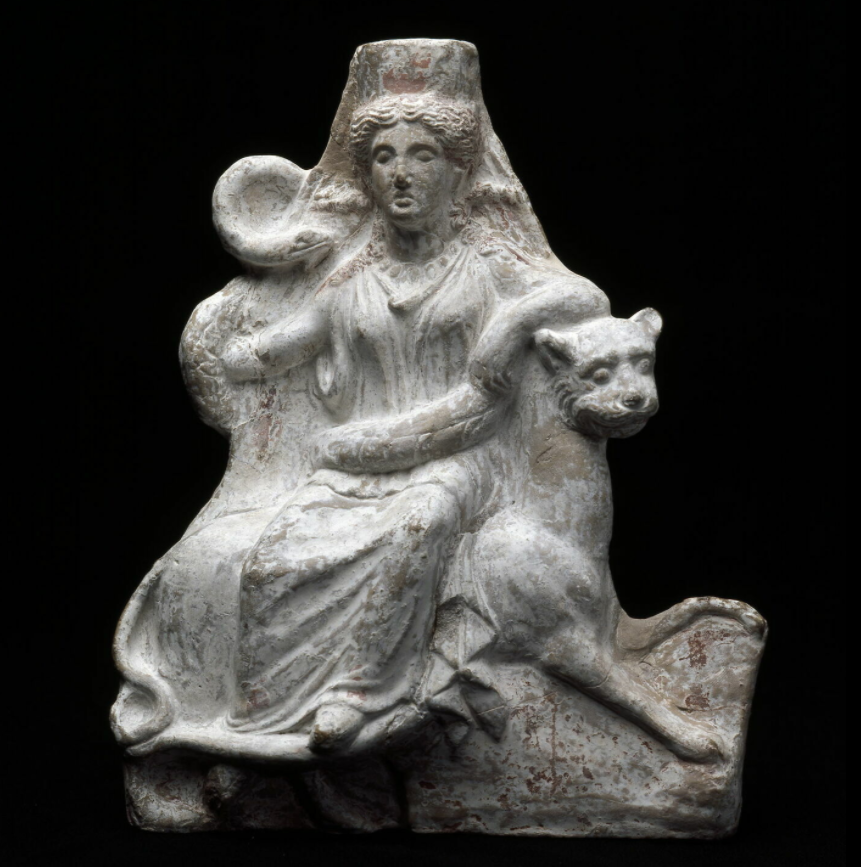
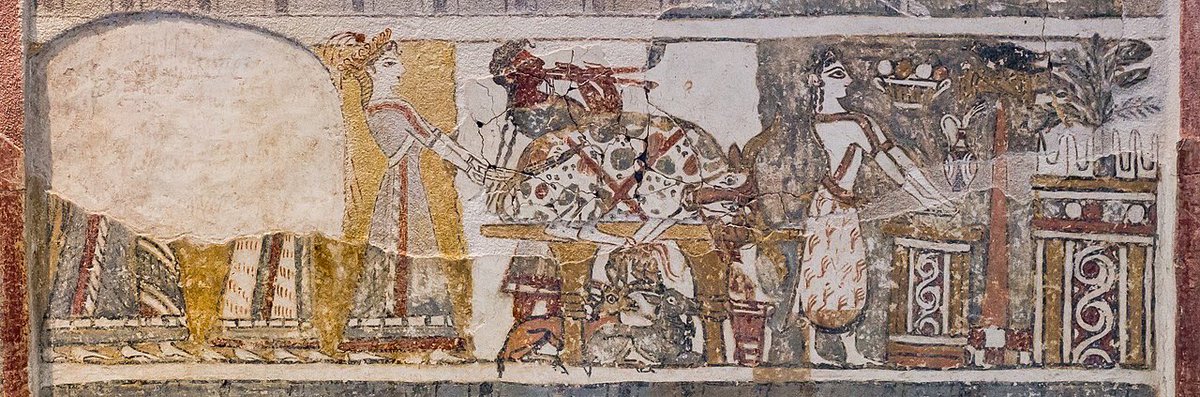
See the snake coiling around the goddess? Why is this snake here? For the same reason why on this Roman relief of Ceres (Roman equivalent of Demeter), the goddess is seen emerging from the ground holding grain and snakes...

Snakes are the only true solar animals. They are in our world when sun is in our world (day and hot part of the year) and they are in the underworld when sun is in the underworld (night and cold part of the year)
oldeuropeanculture.blogspot.com/2020/01/enemy-…
oldeuropeanculture.blogspot.com/2020/06/the-ch…
oldeuropeanculture.blogspot.com/2020/01/enemy-…
oldeuropeanculture.blogspot.com/2020/06/the-ch…
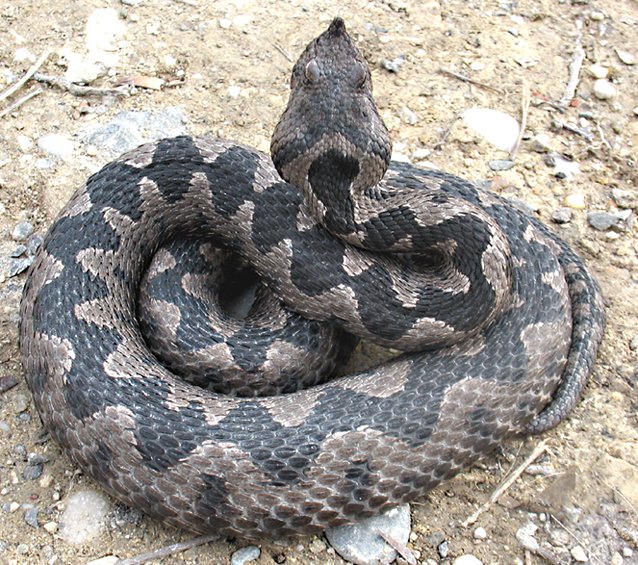
The serpent was the animal most sacred to Demeter. Apparently, because "it is a creature which represented rebirth in nature and the fertility of the earth"...Why?
Well in continental Europe, winter is the time of cold and death. The time when sun and his snakes spend in the underworld...
Reemergence of snakes in spring announces the return of the sun from the underworld. Which causes "the rebirth of nature and the fertility of the earth"
Reemergence of snakes in spring announces the return of the sun from the underworld. Which causes "the rebirth of nature and the fertility of the earth"
The time when snakes spend in our world with the sun, the hot, fertile part of the year, is also the time when grain grows, ripens and is harvested...I think Demeter had something to do with grain...Like a goddess of grain or something...
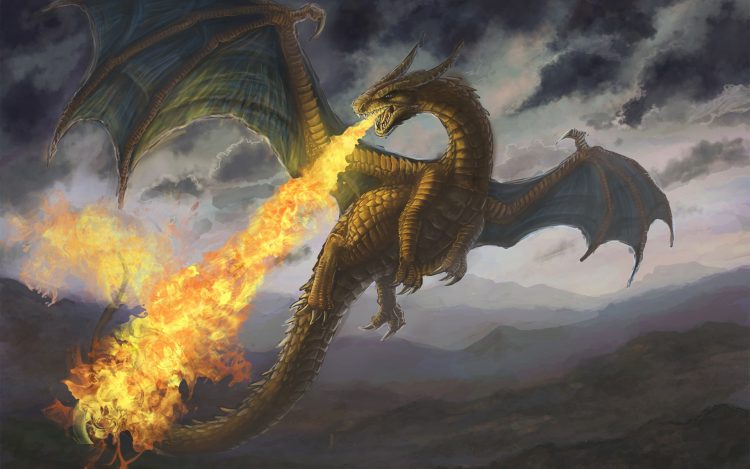
Snakes are symbol of sun's heat. And dragons, old snakes, are symbol of the old sun, destructive late summer sun which burns the land and causes drought.
Hence fire breathing dragons
oldeuropeanculture.blogspot.com/2020/01/dragon…
Hence fire breathing dragons
oldeuropeanculture.blogspot.com/2020/01/dragon…
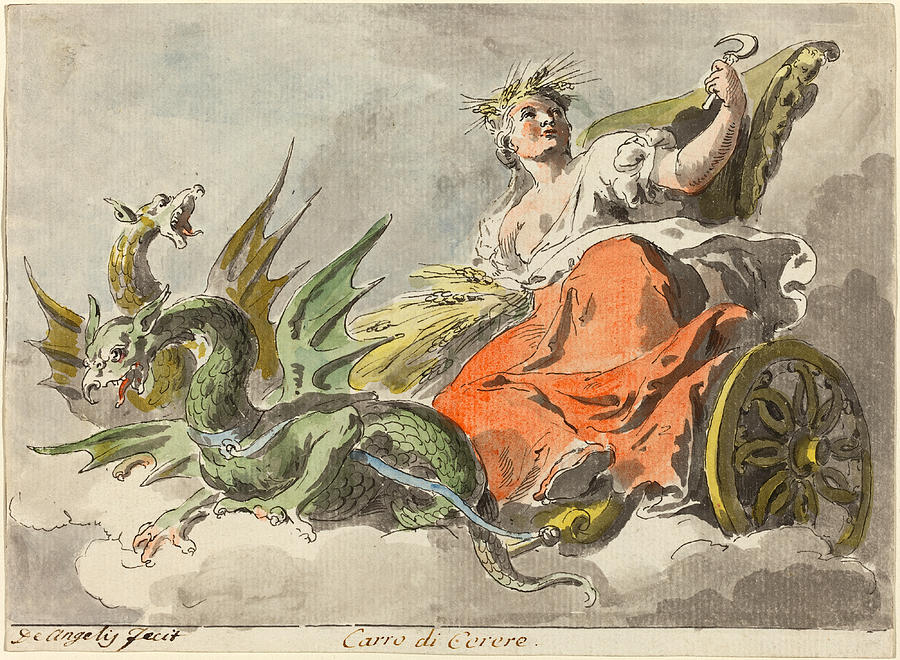
Interestingly, Demeter, and here Roman incarnation Ceres, ride around in a chariot pulled by two snakes or two dragons...And they bring ripe grain and a sickle...Like on this drawing by Pietro de Angelis...Why?
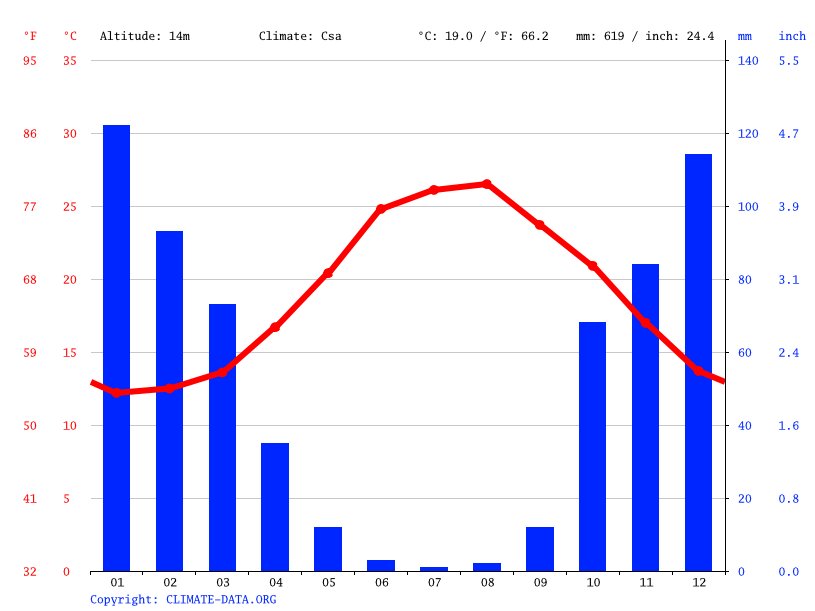
In Ancient Greece the grain harvest started around the beginning of May, in Taurus. If we are to trust Hesiod anyway
oldeuropeanculture.blogspot.com/2020/06/hesiod…
oldeuropeanculture.blogspot.com/2020/06/hesiod…
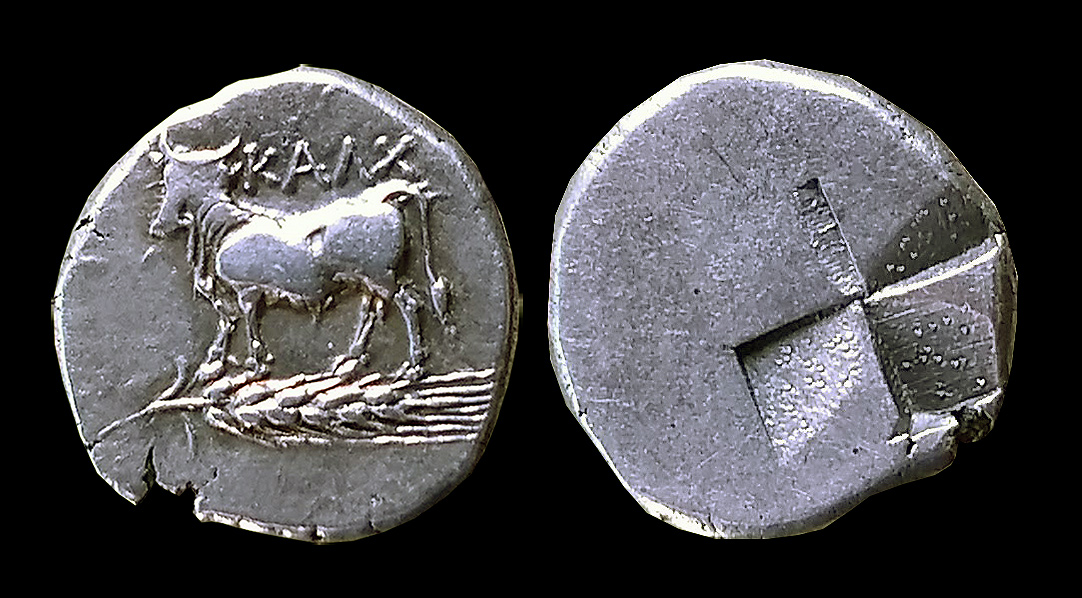
Interestingly, adder, the most common European snake, mates at exactly that time...And mating of these snakes is not something you will miss if you live on land...Cause of this: male snakes fighting for females...Looks familiar? Will talk about this soon...

So "two snakes" pull the chariot of the grain goddess who brings grain and sickle...Translated to agricultural calendar, when snakes begin to mate, it's time to start the grain harvest...
Anyway, as the goddess of grain, wheat was naturally regarded as her most sacred plant. The poppy was also sacred to Demeter...Apparently "as it is a flower commonly found growing amongst the grain of the wheat-fields"...

Here is Demeter holding grain and poppies in her left hand and torch in her right hand.
https://twitter.com/serbiaireland/status/1403631759728726021
But the poppies she is holding are not your innocent wild red poppies. They are opium poppies...So I wonder, were poppies Demeter's flower, because the grain harvest and poppy opium harvest used to take place at the same in Ancient Greece...
https://twitter.com/serbiaireland/status/1403630395640496136
In my tweet about Demeter holding wheat, poppies and a torch, I said that torch represents winter...I wonder if I was wrong here...Torch is the symbol of light and heat. Fire...Fire of the sun? I need to think about this...I did a bit of thinking here: oldeuropeanculture.blogspot.com/2020/12/thyrsu…
But we are talking about Demeter here. Look at this: 500BC-480BC red-figured Atic skyphos (drinking-cup): Triptolemos takes the gift of grain to mankind. Riding on Demeter's snake (dragon) chariot...Currently in the British Museum: britishmuseum.org/collection/obj…
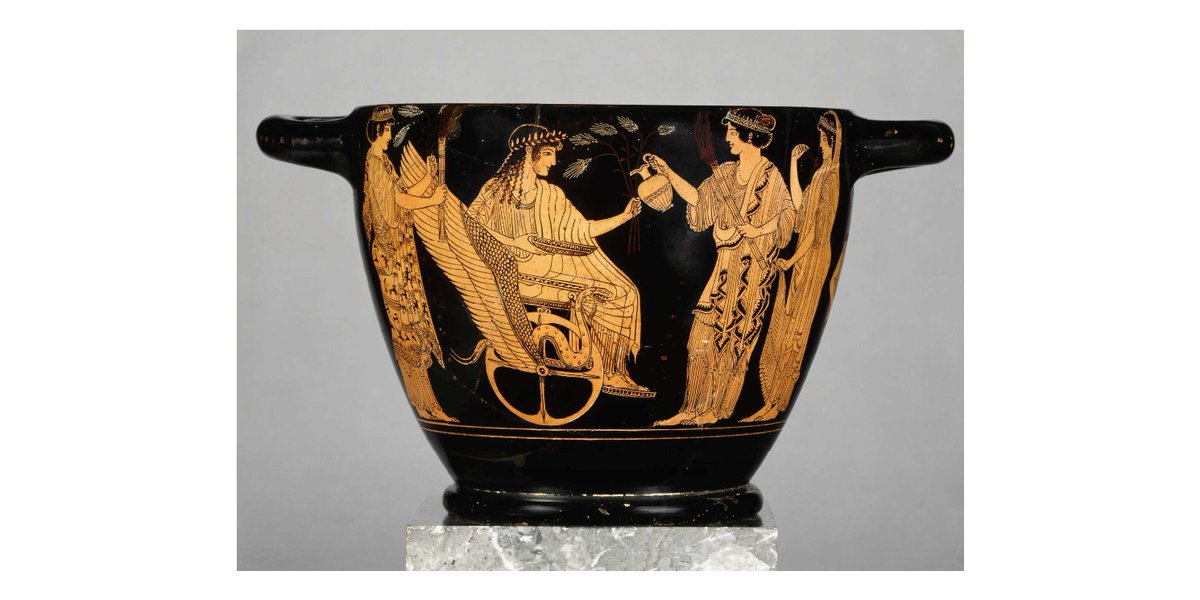
He is driving away from Demeter (behind him) holding grain towards Persephone (in front of him) holding jug of water...Both goddesses are holding blazing torches...
Demeter, representing grain harvest, at the beginning of the hot, dry part of the year (Apr/May) and Persephone representing grain sawing at the end of the hot, dry part of the year (Oct/Nov)...
Torches here would then represent the light and heat of the sun...
Torches here would then represent the light and heat of the sun...
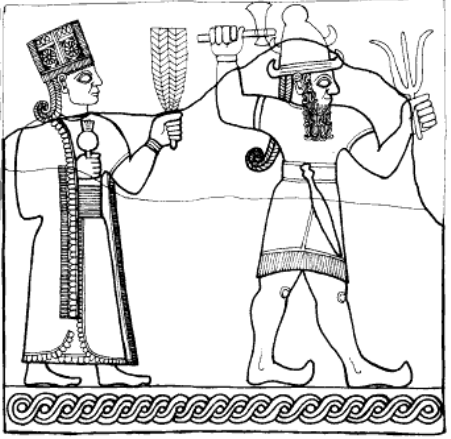
Speaking of grains and poppies...Look, the same grain poppy goddess in Mesopotamia...Which is where all this originates btw
https://twitter.com/serbiaireland/status/1403700423819726849
Including the bull and grain symbolism (in Mesopotamia grain harvest also starts in Taurus)
https://twitter.com/serbiaireland/status/1406566512849260546
But I am digressing 🙂 Back to the original question: is Demeter riding on a panther (leopard), or on a lioness?
I talked about the opposite meaning of the leopard and lion animal calendar markers in Eurasia in this thread
I talked about the opposite meaning of the leopard and lion animal calendar markers in Eurasia in this thread
https://twitter.com/serbiaireland/status/1406722643638824960
Leopard symbolises beginning of spring, the coldest part of the year, and lion symbolises the beginning of autumn, the hottest part of the year...But in general, leopard symbolises the cold dark half of the year and lion symbolises the hot, bright half of the year...
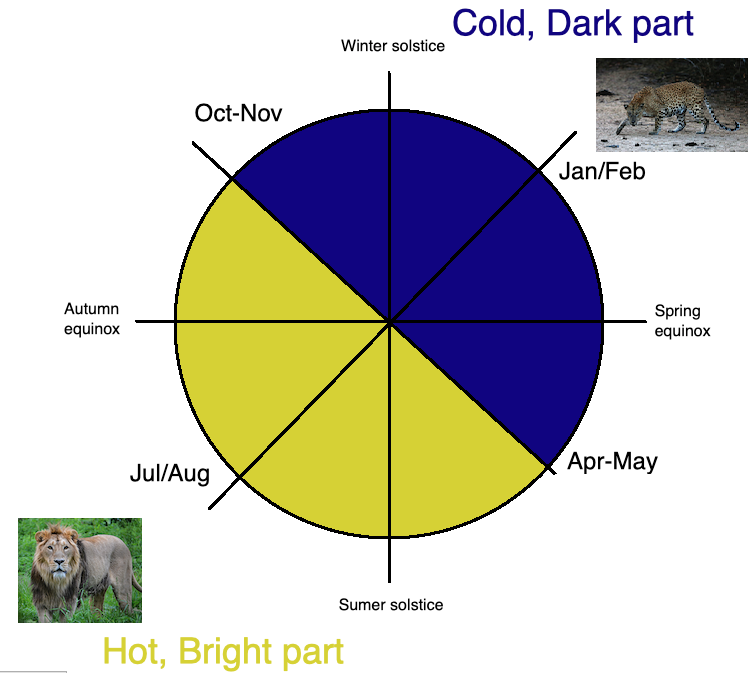
This is true in Europe too, where Leopard is associated with Dyonisus
https://twitter.com/serbiaireland/status/1359642521299808258
Dionisus, the winter sun, as opposed to Apollo, the summer sun
https://twitter.com/serbiaireland/status/1366420464936042503
But I am digressing again 🙂 Considering that Demeter is linked with snakes and dragons, both symbols of the hot, summer sun, I believe that she is actually riding on a lioness, symbol of the half of the year when grain ripens and is harvested...
Remember in Mesopotamia, dragons (the oldest dragons we know of BTW), had lion's body and snake's heads?
https://twitter.com/serbiaireland/status/1399807920200630278
While we are in Mesopotamia, did you know that Inanna/Ishtar, was in "A song of Inanna and Dumuzid" described as: "Maiden, glossy mane, lovely beauty...colourful as a pile of grain, fit for the king, fit for Dumuzid! Maiden...a stack of...barley, fully developed in loveliness"...

Wasn't Demeter's cult title Sito (Σιτώ), "she of the Grain"? Wasn't she "the holy goddess with the beautiful golden hair"? Wasn't one of her names The name "Ioulo", from "ioulos" meaning "grain sheaf"?
Interesting right? And this beautiful corn maiden loved having sex on a threshing floor...
https://twitter.com/serbiaireland/status/1380556494022836225
Guess when the threshing was finished in Mesopotamia? In Leo...Guess who loves standing on a lion (in Leo)???
https://twitter.com/serbiaireland/status/1396917159457079299
Small world...BTW, Demeter and Inanna are just two names of the "lion goddess" found all over Eurasia and North Africa...The (incomplete) list can be found here:
oldeuropeanculture.blogspot.com/2019/11/assump…
oldeuropeanculture.blogspot.com/2019/11/assump…
So what do you think? Panter or a lioness?
• • •
Missing some Tweet in this thread? You can try to
force a refresh