

As Charles Moser has shown, around 93% of cisgender women report occasional "erotic arousal to the thought or image of oneself as a woman", and 28% commonly so. If anything so-called 'autogynephilia' is merely a regular feature of female sexuality.
Of the cisgender women in the study, 90% were straight. This reported 28% is largely in line with the 10 to 36% rate of 'femininity self-arousal' among straight trans women.
The overlap is large! A 2008 study by Veale, Clarke & Lorax reaches similar results, giving us this overlap in 'core autogynephilia score'. Trans women and straight cis women are pretty darn similar! 
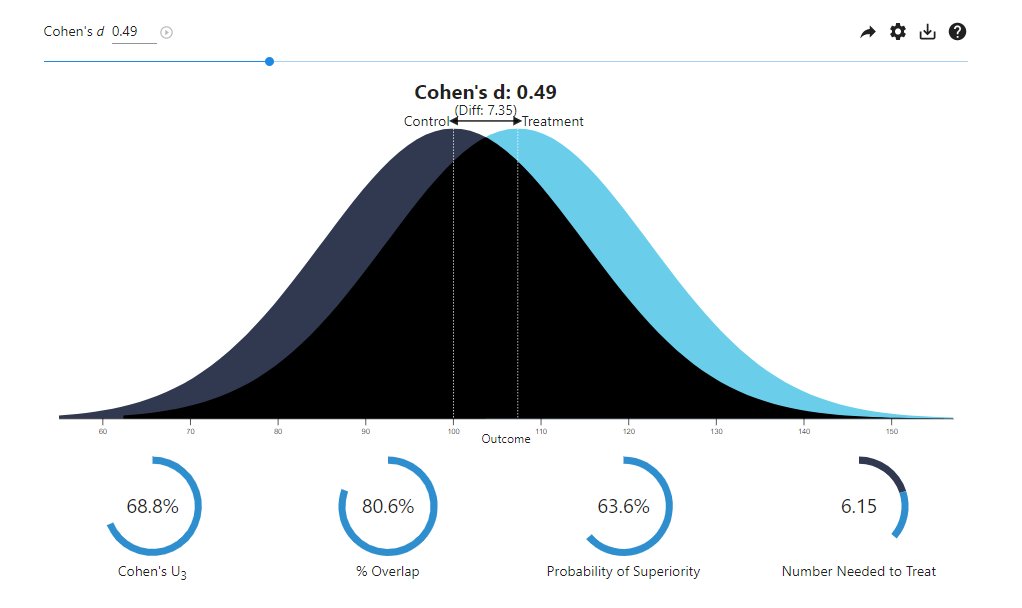
Now let's compare the scores for 'autogynephilic interpersonal fantasy', i.e. self-arousal at the thought of another person finding your femininity sexy. Such overlap. But wait! This is actually inverted - cisgender women had HIGHER 'autogynephilic interpersonal fantasy' scores!

No if we compare trans women *specifically* labelled autogynephilic (i.e. scoring high on the arbitrary test) to random cisgender women (largely straight), you also get strong overlap in 'core autogynephilia' score. Not as large, but we're starting to compare apples and oranges.

As with earlier, the overlap of 'autogynephilic interpersonal fantasy' scores is much larger. The sexuality of so-called 'autogynephilic' trans women sure looks a lot like that of cisgender women - even straight ones!

That makes sense: people like being sexy, and your relationship to your own sexiness is different when you are sexually attracted to bodies like yours (or one that would feel right for you).
I am not aware of data specific to femme lesbians, but we have pretty good reasons to think that trans and cis women would be incredibly similar in terms of 'femininity self-arousal' once controlling for sexual orientation and gender expression.
Overall, the available data suggests that so-called 'autogynephilia' is a standard component of female sexuality that authors like Ray Blanchard have decided to single out and pathologize among trans women.
Further readings link dump!
In this letter to the editor, I use autogynephilia theory to how science is always ideological more than one interpretation always fits the data. Good science favours interpretations that don't perpetuate marginalization.
rdcu.be/bKMO6
In this letter to the editor, I use autogynephilia theory to how science is always ideological more than one interpretation always fits the data. Good science favours interpretations that don't perpetuate marginalization.
rdcu.be/bKMO6
In this recently published article, Julia Serano carefully picks apart autogynephilia theory, showing how it relies on essentialist, heteronormative, and male-centric presumptions that are incompatible with contemporary sexology.
core.ac.uk/download/pdf/3…
core.ac.uk/download/pdf/3…
In this philosophy article, Talia Mae Bettcher sets out a new theory of sexual orientation as composed of both the other's gender and one's own gender. Lesbians are, e.g., attracted to women *as women*. She uses this to rebut autogynephilia theory.
philpapers.org/rec/BETWSH
philpapers.org/rec/BETWSH
This is the Moser publication I was talking about, which is an empirical study of cisgender women that shows 'autogynephilia' as a regular feature of female sexuality.
researchgate.net/publication/26…
researchgate.net/publication/26…
This is the Veale, Clarke & Lomax publication that compares trans and cisgender women in terms of 'autogynephilia' scores, finding that there's a lot of overlap - meaning that we can't use the experiences as explanations for why someone is trans.
researchgate.net/publication/55…
researchgate.net/publication/55…
And finally, this is another Moser publication that sets out his critique in theoretical, rather than empirical, form - albeit building on his previous research.
researchgate.net/publication/44…
researchgate.net/publication/44…
Oh and while it is true we don't have data for femme lesbians, we do have this... Some 84% of cis queer men have 'autoandrophilic arousal'? Oop.
(From: link.springer.com/article/10.100…)
(From: link.springer.com/article/10.100…)

• • •
Missing some Tweet in this thread? You can try to
force a refresh





