1. What did I do today? I flew a helicopter for the first time in my life. Not in a sim, in the real world. 
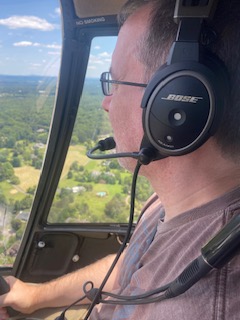
2. Now I’m going to preface this thread by recognizing that undertaking any serious helicopter training while learning to fly an airplane is not a good idea. It’s too easy to transfer habits and instincts from one to the other than can get you in a world of hurt.
3. But in this case, I saw it as just a short mental break, a chance to expose myself to something new and appreciate the huge differences between two ways of flying.

4. So I already did a flight sim thread explaining the basics of how helicopters are flown, which you can check out here.
https://twitter.com/prchovanec/status/1410072264289230848
5. This was an opportunity to get in the real thing and check out what it felt like.

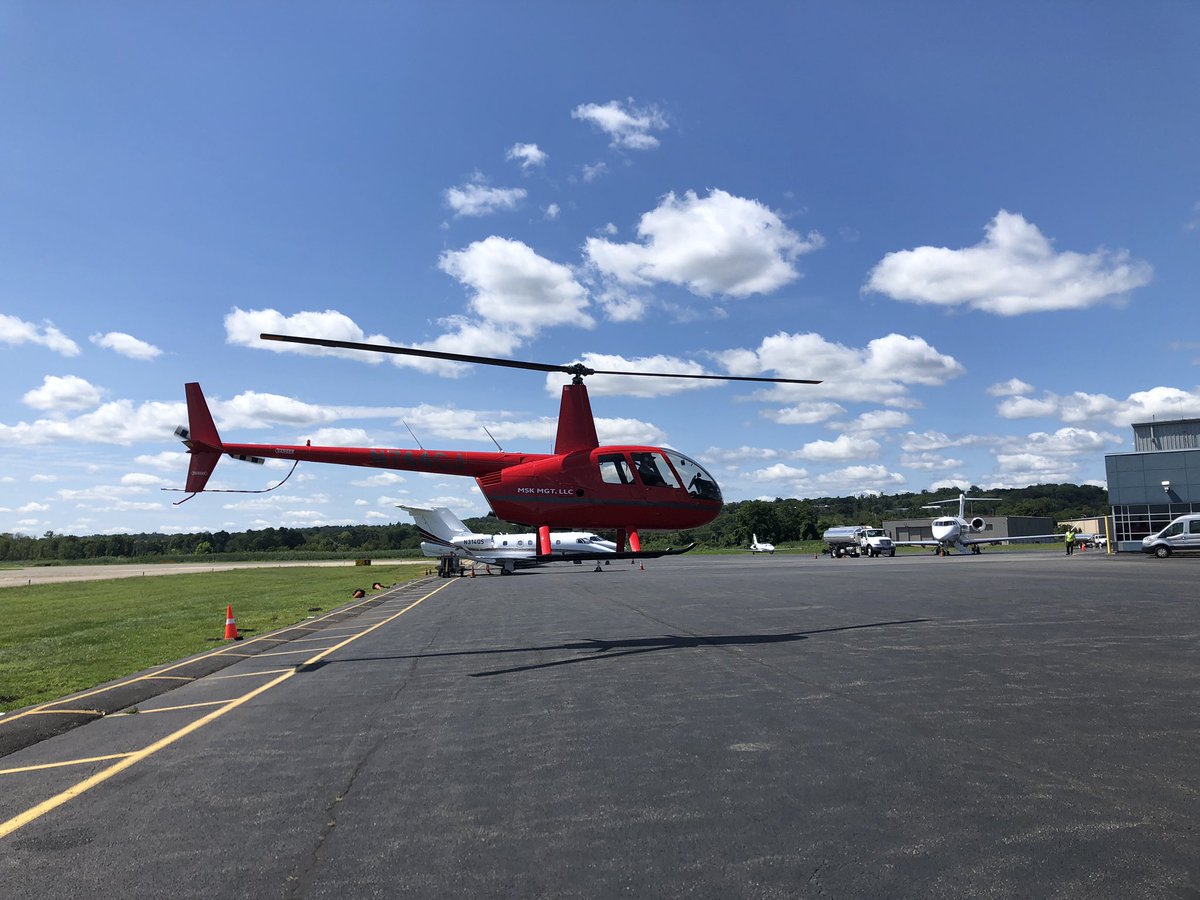
6. This is a Robinson R22 light utility helicopter. It has 2 seats and 2 main rotor blades. It’s been around since the 1970s and is a popular trainer. This one is pink because that’s how I roll.

The first hour was spent getting introduced to the aircraft and its controls, and doing the preflight inspection. A lot more complicated than a Cessna 172, I have to say.
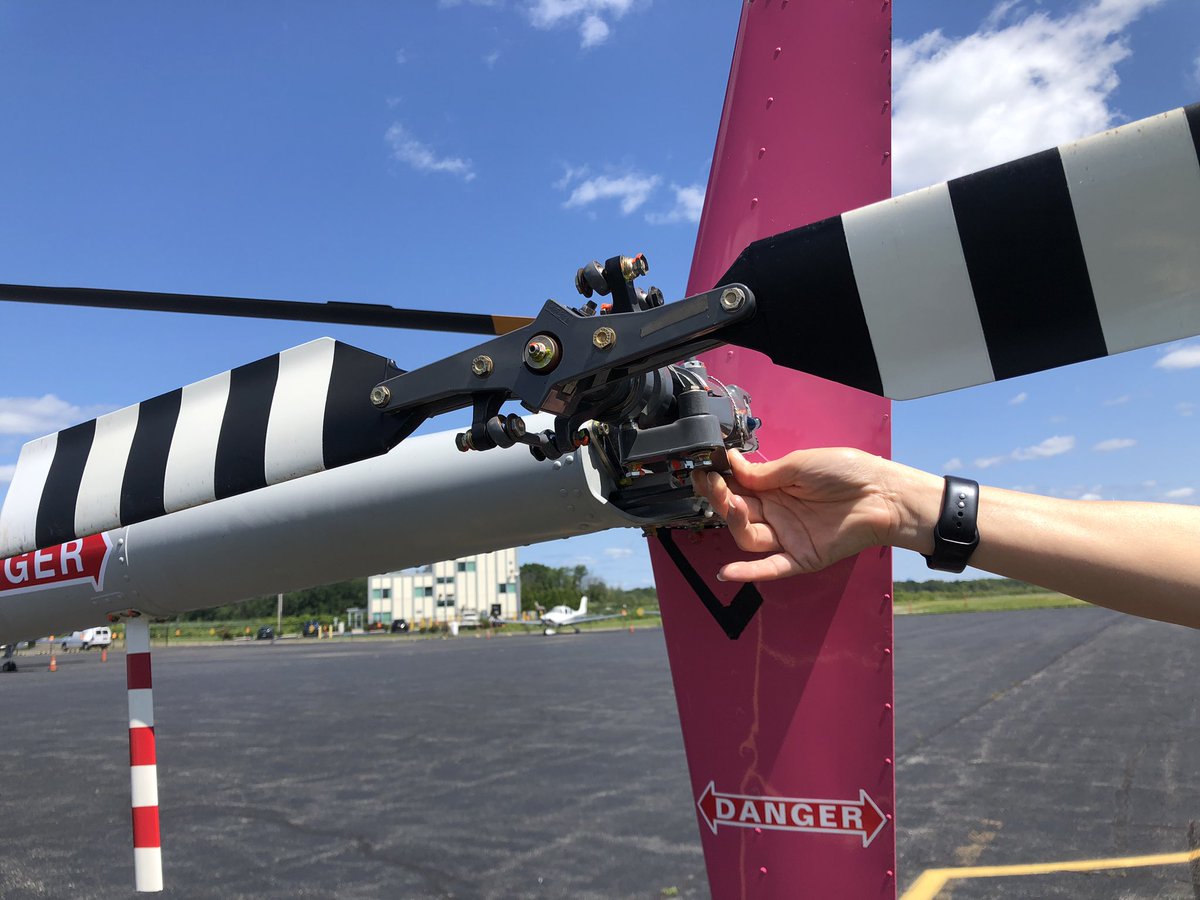


Well, not everything is complicated. These two strings of yarn tied to the front windshield are my yaw indicator.

If I see the threads blowing one way or the other, it’s telling me the body of the helicopter is turning with the torque of the main rotor, and I need to compensate with the foot pedals (which control the smaller tail rotor).

My main control is the cyclic, which tilts the main rotor blades to move me forward, back, left, or right. By my left side (can’t see it here) is a lever called the collective, which controls if the helicopter rises or descends.

Okay, here we go. I’m not driving yet at this point.
But once we go airborne, I took over the three controls (cyclic, collective, pedals) one at a time, to get a feel for each. (I gave the instructor control back here, so I could take a quick photo).
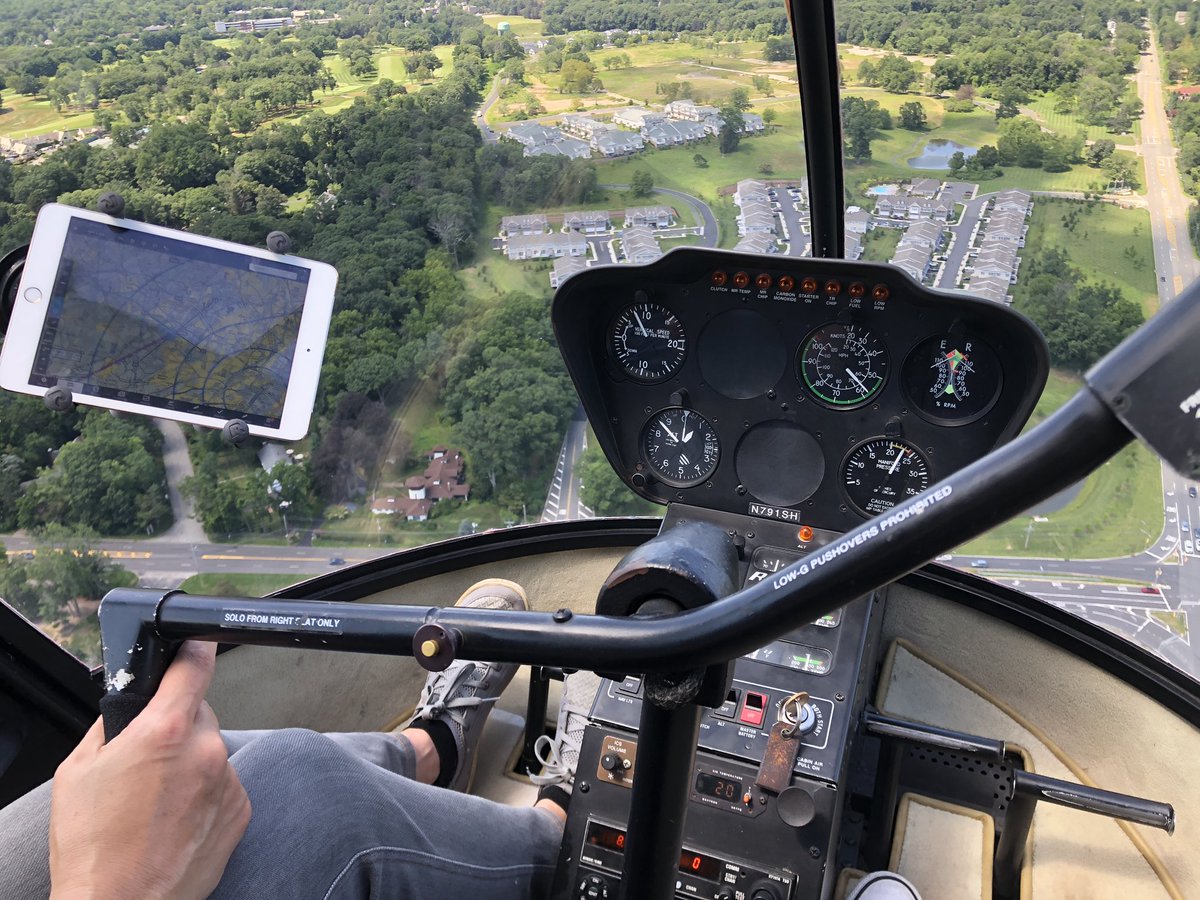
We went over to land at another airport, where we went to a grass runway strip and practiced hovering and taxiing. It takes a VERY light touch and constant adjustments to each of the three controls not to veer off or rotate in the wrong direction. But I did okay!

I flew most of the way back, until we got close to landing. Unlike an airplane, which - for better or worse - wants to keep flying in a straight line, the helicopter required constant input and adjustment not to go off on its own. My right arm was quite tired after an hour.

Here’s a red Robinson R44, which is similar to the pink R22 I flew but has 4 seats.
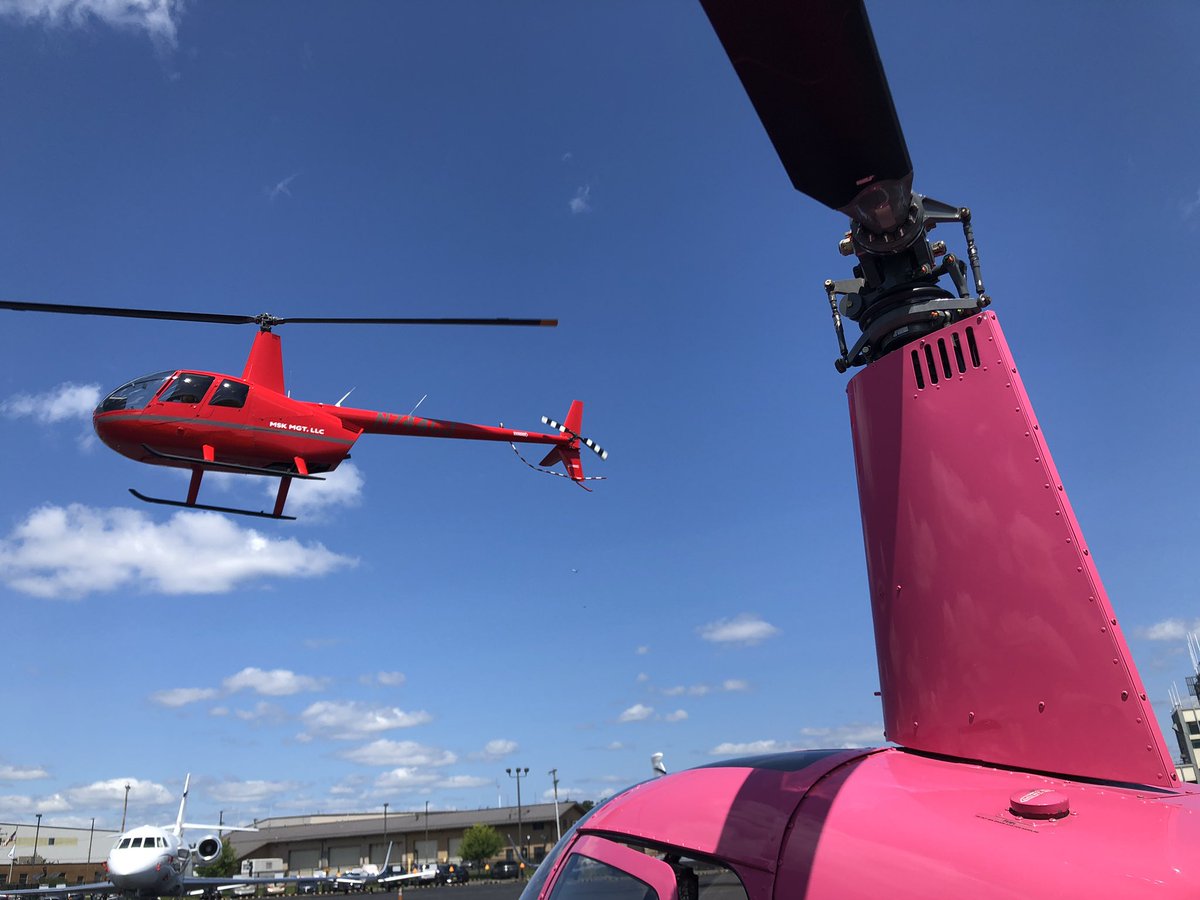
It was interesting because this is actually the same airport (Morristown) that I’ve landed at dozens of times flying a Cessna 172 airplane. It was a very different perspective.

My final verdict? For the same price as a standard helicopter tour (something I’ve done a couple of times before), I’d choose taking a lesson that gave me a chance to FLY the helicopter myself any day. It was a pretty cool - and unforgettable - way to spend the morning.

And yeah, it was short enough I don’t think it’s going to mess up my airplane flying with new and weird habits. (In general, helicopter and airplane pilots are separate breeds).
• • •
Missing some Tweet in this thread? You can try to
force a refresh