Why are neural networks unable to nail arithmetic or multiplication? That is, you might be able to ask GPT-3 what 5 plus 7 equals, but you can't calculate 59 + 77 (trust me, it can't). Why is that?
This is because neural networks are unable to formulate compositional models of reality. Would a caveman be able to invent arithmetic or multiplication? I seriously doubt it, it requires a gifted human individual to invent these from scratch.
But computers can easily compute 59 + 77. That's because we've encoded the algorithms (i.e. the step by step procedures) of how to compute the results. You see, knowledge is not a collection of facts, it's a collection of skills.
The curious thing about skills is that they are composable. Just add one skill after another as the most simplest case. In the more complex case, you just add conditional expressions and loops.
Programmers are very good at instructing computers as to what to precisely do. What we don't have yet are algorithms that are good at instructing computers as to how to precisely perform tasks.
Instead, we have algorithms that are very good at mimicking tasks. But they aren't very good at composing these tasks to solve more complex problems. We have AIs that are good mimics but are unable to conjure up their own abstractions.
We don't have AIs that can explain how they arrive at their solutions to problems. That's because agents that only learn to mimick do not need to learn to reflect on their own solutions.
But why are machine learning models unaware of their own solutions? Some kinds actually are. These are the kinds that engage in self-play (i.e. GANs, AlphaZero)
• • •
Missing some Tweet in this thread? You can try to
force a refresh

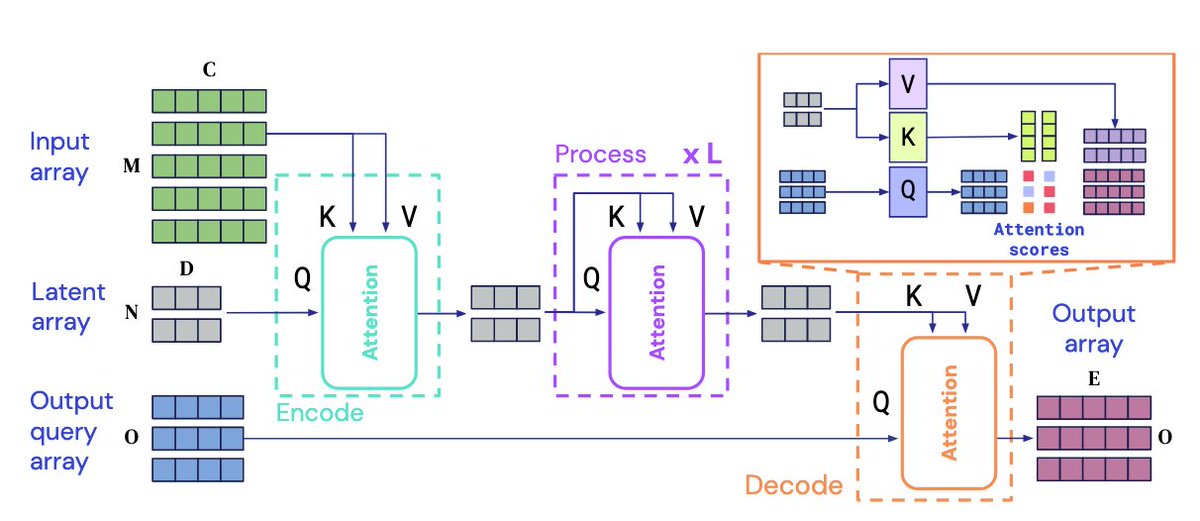
What's the logic behind DeepMind's universal Perceiver-IO block?
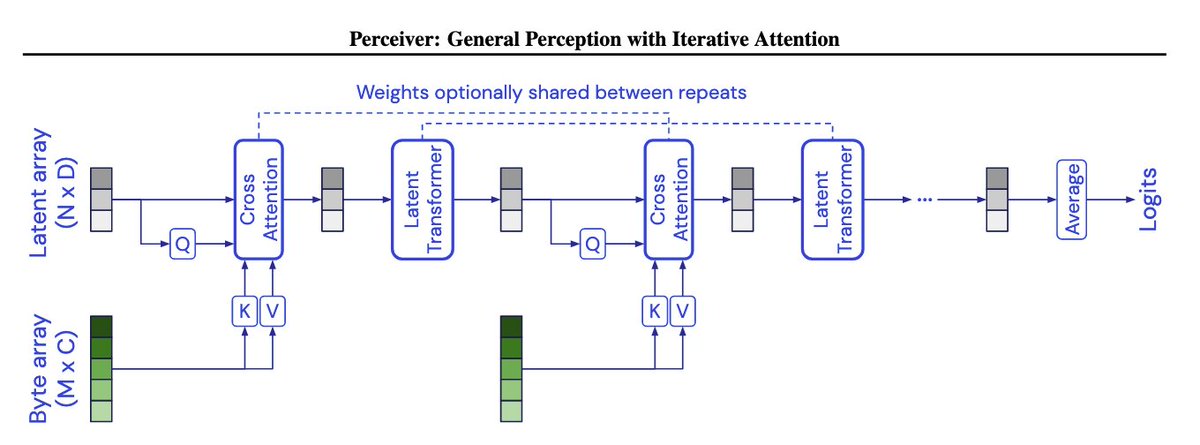
Perhaps we want to compare this with the original perceiver architecture:
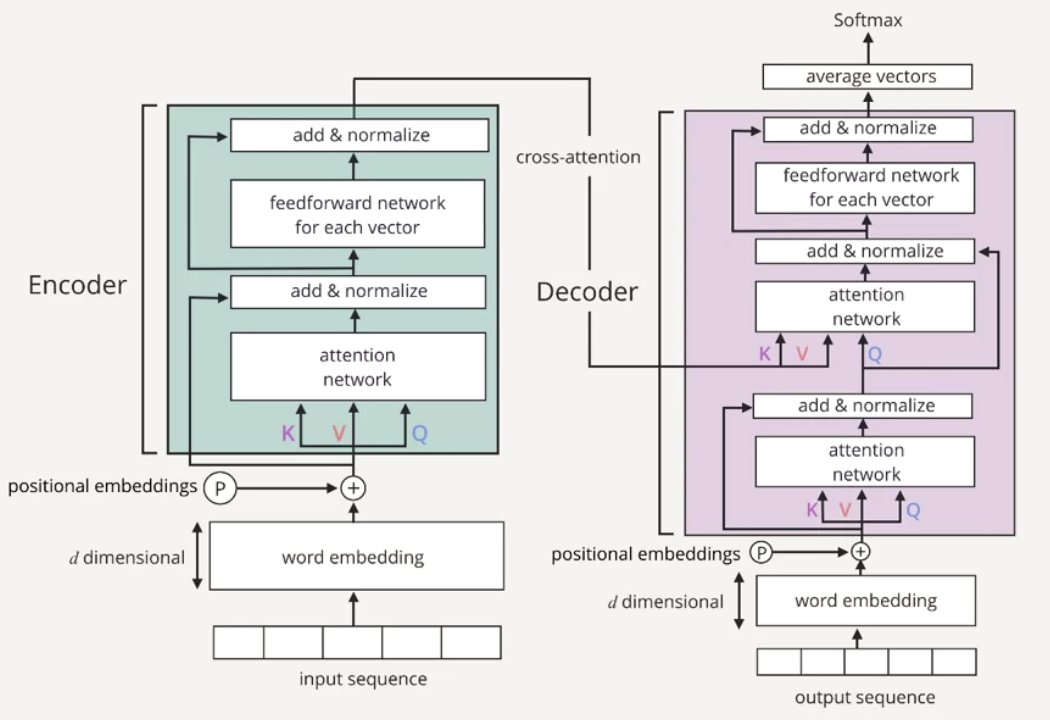
Note how the input array (in green) is fed back into multiple layers as a 'cross attention' in the previous diagram. That cross attention is similar to how your would tie an encoder with a decoder in the standard transformer model:
This is also why money printing thingamajigs have so much persuasive value. Hence why cryptocurrencies have their appeal.
People are more easily persuaded to pay for something if they perceive that it is an investment. An investment is anything that makes more money than what you originally put in.
In Frank Herbert's Dune, the affairs of the entire universe revolve around a psychedelic drug known as the Spice Melange that enables beings the ability to fold spacetime and see into the future. dune.fandom.com/wiki/Spice_Mel…
The spice is essential because without it travel between planets in the universe would be practically impossible. The universe is interconnected in commerce through psychedelics.
The spice however also allows its consumers to see into the future. Hence to make predictions of what might come. Does not one find it odd that success in our modern financial industry relates to our ability to see into the future?
What is wrong with knowledge representations that it has barely moved the needle in machine understanding? @danbri
Intuitively, KR should be useful in that it diagrammatically records how concepts relate to other concepts. Yet for a reason that is not apparent, it isn't very useful in parsing out new understandings of the concepts in its graph. Where did we go wrong here?
Perhaps it's because knowledge graphs are noun-centric and not verb-centric. Reality is verb-centric. To get an intuition about this, watch this explanation of the open-world game Nethack:
Noun-centric thinking is making it difficult to explain and understand the dynamics of covid19. People seem to not understand that everything is a process.
Knowledge discovery is a process. Covid19 is novel because it is a new virus and its characteristics are unknown without further investigations. Of course, one has to balance the time required for information and the need to act swiftly.
Science is a knowledge discovery process. It is not a label you slap on to something that remains unchanging for all time. Yes, we do these for food items up to an expiration date. But after the expiration date, all labels attached to the food item aren't expected to hold.