Higher levels of omega-3 acids in the blood increases life expectancy by almost five years
Huge result, though association only - causation not shown
I want to show how this implicates seed oils in mortality
sciencedaily.com/releases/2021/…
Huge result, though association only - causation not shown
I want to show how this implicates seed oils in mortality
sciencedaily.com/releases/2021/…
Original paper
Similar results have been seen in several other studies.
While this is framed as benefits of consuming fish or fish oils, the omega-3 index also depends on the consumption of omega-6, abundant in seed oils academic.oup.com/ajcn/advance-a…
Similar results have been seen in several other studies.
While this is framed as benefits of consuming fish or fish oils, the omega-3 index also depends on the consumption of omega-6, abundant in seed oils academic.oup.com/ajcn/advance-a…
Omega-3 index is a measure of the amount of omega-3 in red blood cells
When omega-6 consumption is high, omega-3 index is low
Omega-3 fatty acids EPA and DHA in tissues decreases with higher omega-6 content
When omega-6 consumption is high, omega-3 index is low
Omega-3 fatty acids EPA and DHA in tissues decreases with higher omega-6 content

Omega-6 content in tissues increases with increasing consumption of seed oils, and omega-3 index declines
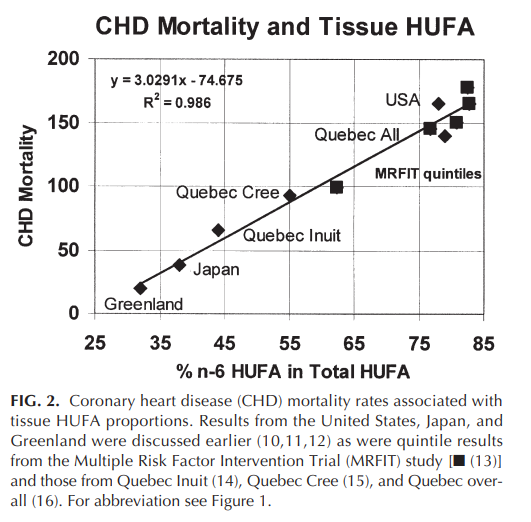
One estimate is that omega-3 index has declined by ~60% during the 20th century due to increasing seed oil consumption
academic.oup.com/ajcn/article/9…
One estimate is that omega-3 index has declined by ~60% during the 20th century due to increasing seed oil consumption
academic.oup.com/ajcn/article/9…
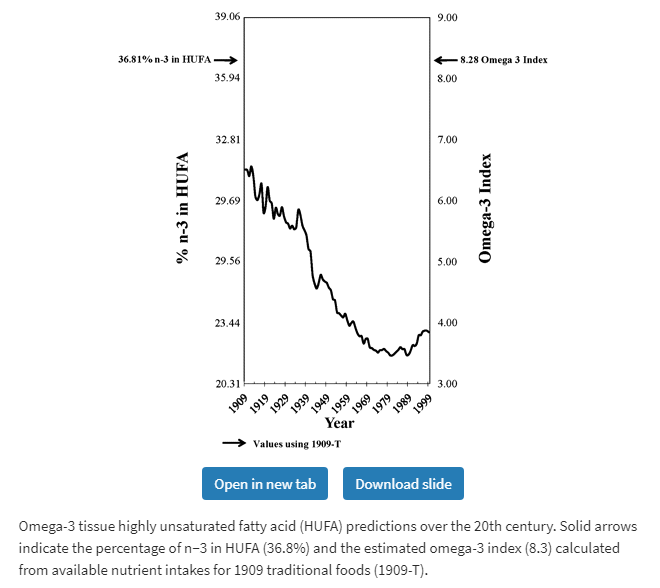
In different populations, tissue omega-6 correlates with coronary heart disease mortality.
So, higher omega-6 (seed oil) consumption leads to lower omega-3 index, which is associated with higher mortality
So, higher omega-6 (seed oil) consumption leads to lower omega-3 index, which is associated with higher mortality
• • •
Missing some Tweet in this thread? You can try to
force a refresh