Right-oh, so a few details on the @USMC tests of NMESIS - that unmanned JLTV thing with some lovely anti-ship missiles on the back in this @JanesINTEL article by @ashroque13: janes.com/defence-news/n… 
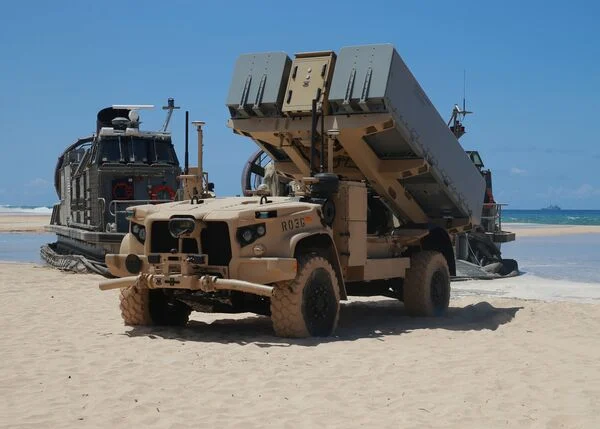
What did they do? “During the exercise, forward-deployed forces on expeditionary advanced bases detected and, after joint command-and-control collaboration with other US forces, responded to a ship-based adversary...
simultaneous impacts from multiple, dispersed weapons systems and platforms across different US services, including NMESIS, engaged the threat.” This seems to be key to the whole concept, and the pivot of the USMC.
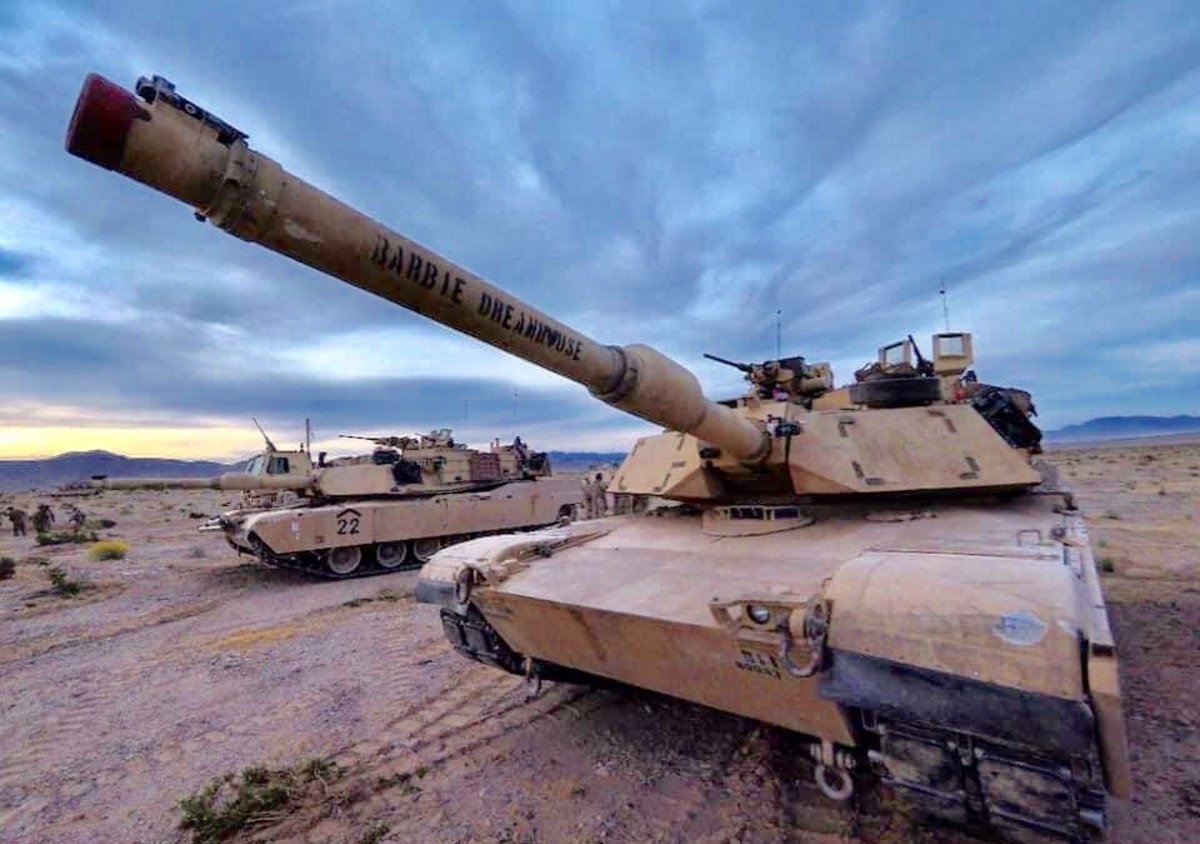
Why do this? The whole thing is of course part of the wrap that is leading to the removal of the M1 Abrams from the USMC ToE, and a reduction in its artillery etc - a matter of fierce debate.
I think we can garner some understanding from a look into the capabilities of the PLA - aspirational and current, as well as what can be gleaned of its strategic outlook and attitude towards the US.
Starting with the capabilities, the PLA is building national level ISR assets, which include over-the-horizon backscattering (OTH-B) radars with est range of 2,500 km. As well as OTH-Surface Wave radars, range around 300/400 km, filling OTH-B dead zones.
It is deploying and developing the Jianbing-8 constellation of ocean surveillance satellites, including launches of the third group known as Yaogan 31-03 in Feb this year. The satellites are believed to be for electronic intelligence (ELINT) thru radar/comms emissions of ships.
There is another series of Yaogan satellites launcedh between 2017 and 2020 that are thought to be capable of providing imagery intelligence, they have a high revisit time over the South China Sea.
Added to this is a growing fleet of airborne ISR assets such as the KJ-2000 and KJ-500, which replace ISR missions conducted by the H-6 fleet an provide higher fidelity.
Then there are is the maritime recce-intel system, the sea-based component of which includes “radar, sonar, and electronic reconnaissance from naval surface ships, ship-based aircraft and UAVs, and submarines that are either surfaced or at periscope depth”, according to Engstrom.
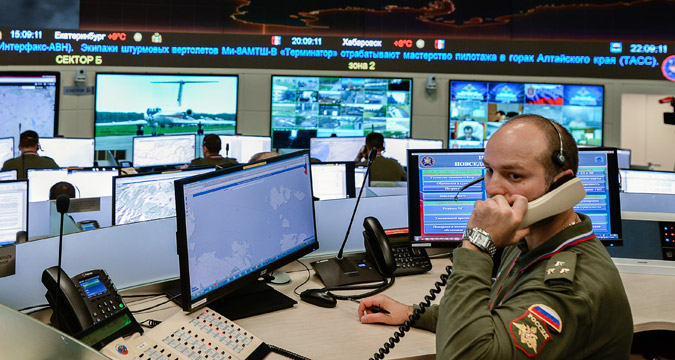
All of this is either already networked into a national C2 system, or is slowly being networked into one - it's not super clear. Picture of Russia's military command centre for illustration only.
This is all combined with a lot of strike assets, the majority of which are working on passive detection and guidance - typically the realm of the USAF. This can be seen in AESA arrays installed on J-16, J-15 and J-20 aircraft.
Multiple anit-ship missiles are carried by the PLAN. The YJ-83 is the PLAN’s primary ASM, carried by ships including Type 022, Type 056 corvettes, Type 054A frigates, and Type 051C destroyers. The missile has a range of 180 km, speed of Mach 0.9, and flies 20 m above sea level.
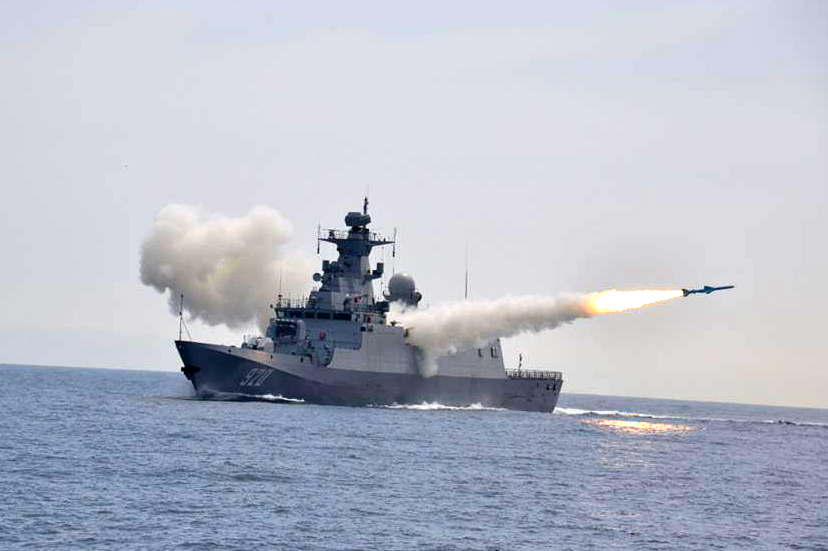
The Type 052D destroyer is the first to be armed with the YJ-18 ASM, it is assessed to have a 530 km range, cruises at Mach 0.8, and has a Mach 3 supersonic terminal phase.
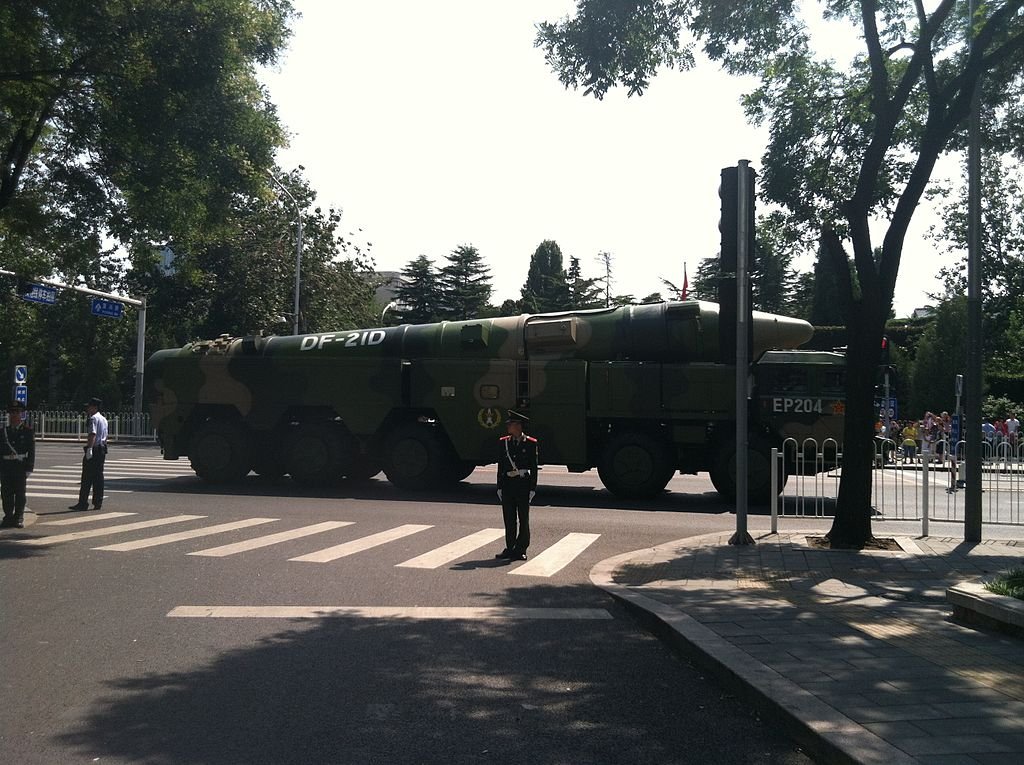
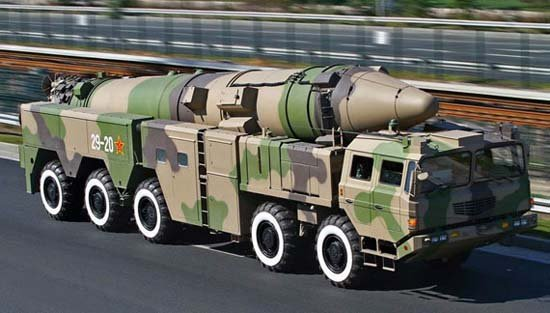
Then of course, there is the DF-21D, a land-based anti-ship ballistic missile with a range of 1,500 km, an active radar seeker and manoeuvring warhead. There are many more capabilities to discuss, but this twitter after all...
Strategy/doctrine: So, “In line with the evolving form of war and national security situation, the basic point for PMS [preparation for military struggle] will be placed on winning informationized local wars, highlighting maritime military struggle and maritime PMS.”
This is from Beijing's 2015 White Paper, it is apparent that the @USNavy is the PLA's pacing threat, and its strategic thought seems to be structure accordingly.
If the Science of Campaigns is accurate, and the writings published in the PLA Daily representative of military theory within the PLA we can draw the following: There is a focus on 'decisive battle,' the understanding that enemy ships should be destroyed in port,
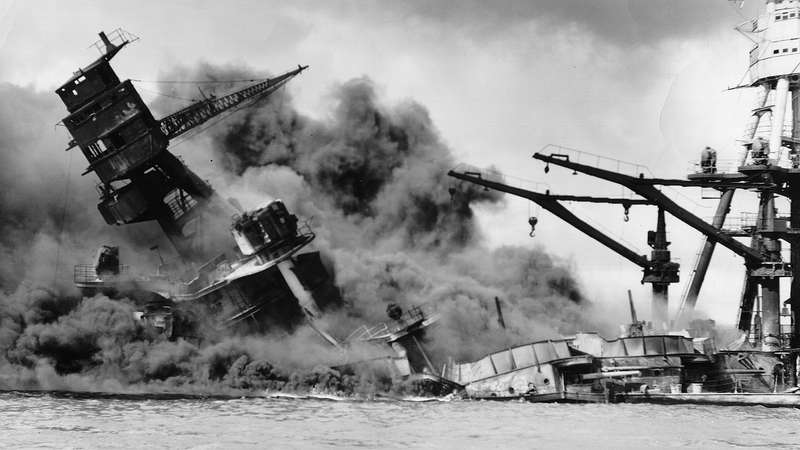
And a belief that a naval campaign should ideally be conducted before the enemy is really sure that one will take place. All of this should be preceded by an air dominance campaign if possible, intended to at least secure the air in the AO.
Ok, so back to unmanned JLTVs and getting rid of tanks etc. The US Navy is potentially facing an opponent that would look to replicate Pearl Harbour, but with greater success and in a much wider geographical sense - think California/Guam, that sort of thing.
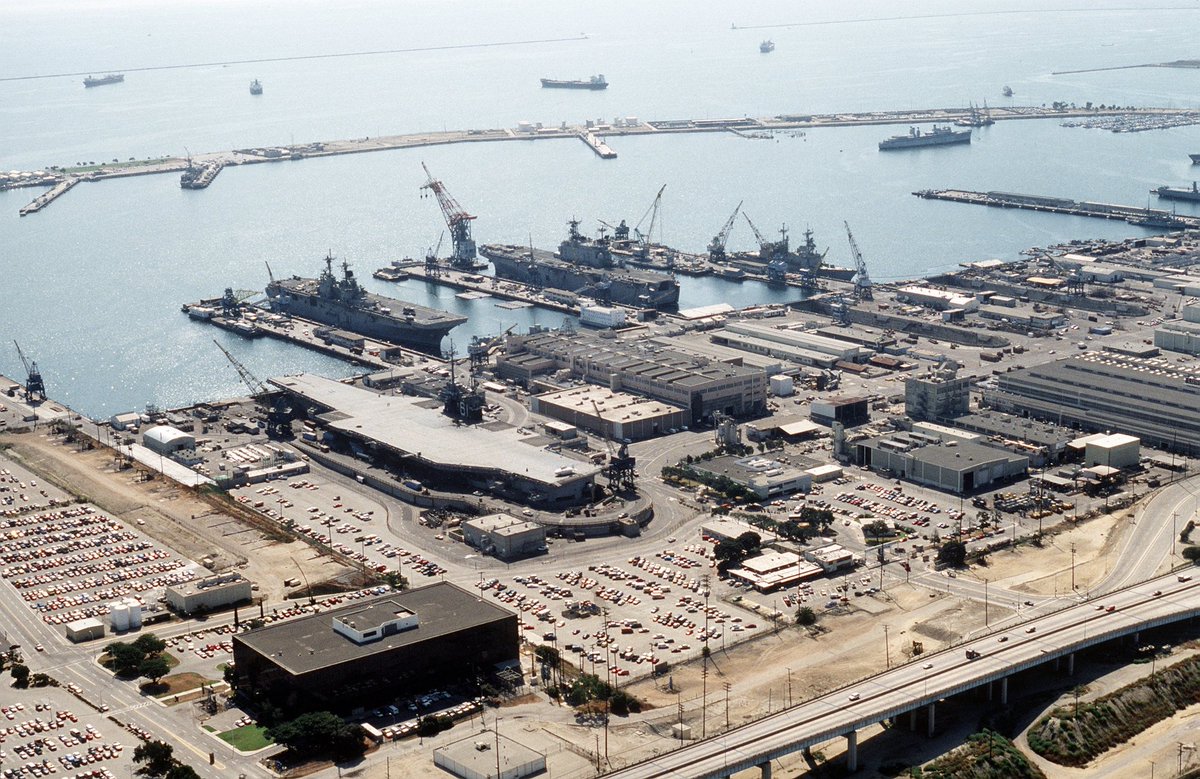
It is also facing an opponent that seems to have decided upon some sort of Trafalgar type scenario, which runs contrary to a lot of thinking on how modern warfare would shake down. This raises a few major issues for US CONOPs.
A carrier group is a monster of a capability and rightly feared - these things bring a lot of firepower. But, the PLA is building the capability to track and monitor them, a long way from its own shores and likely understands the folly of going toe-to-toe with one, or two...
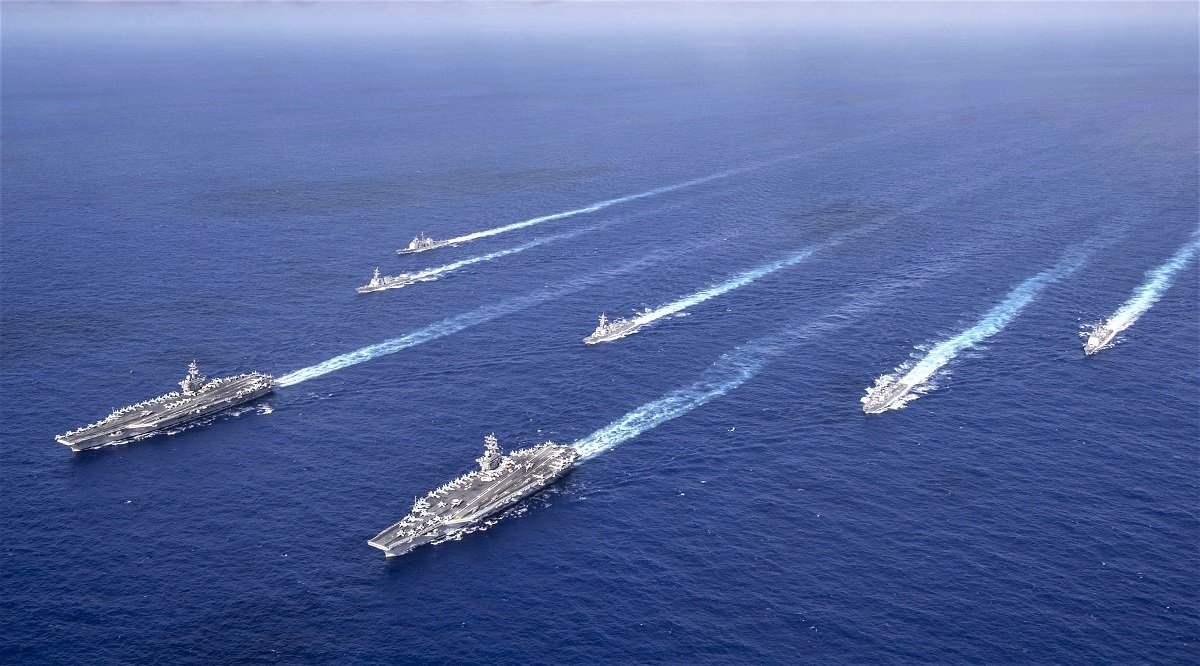
This may mean that the USN no longer sees any validity in large group that is located within a single space, or that doing so without some kind of forward deployed asset is generally a bad idea.
Enter the USMC and NMESIS or ROGUE Fires as it is also known. Forward deployed and linked to US national ISR assets, these things have reach. And, they are far more expendable than an Arleigh Burke or Nimitz.

In short, NMESIS seems to be about dispersing and providing a tool for the USN to blunt this potential PLA first strike - hitting naval assets before they can reach a carrier group or something like that. Preventing or opposing an amphib landing is the last thing on their minds.
From the initial news, it is clear that the intention is to create multiple points from which to inflict damage on an opponent such as the PLAN, and in doing so present many targets that might be difficult to detect or track.
Deploying them by air will help with speed of delivery, and unless there are PLAAF/PLANAF assets in the area, the OTH radars and satellites may only be capable of showing that something has happened.
Equally, deploying them by sea will help in the event of a successful air campaign by the PLA, small and fast boats may be harder to track and locate, especially if the PLA is busy dealing with the USN and its friends.
I know it's not popular, tanks are cool and easy to understand - an unmanned chassis with some missiles less so. But, I think that a consideration of the biggest threats shows why it is being done. End.
• • •
Missing some Tweet in this thread? You can try to
force a refresh