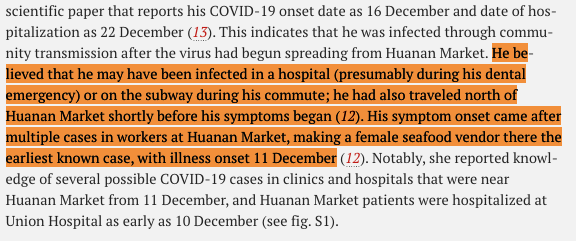
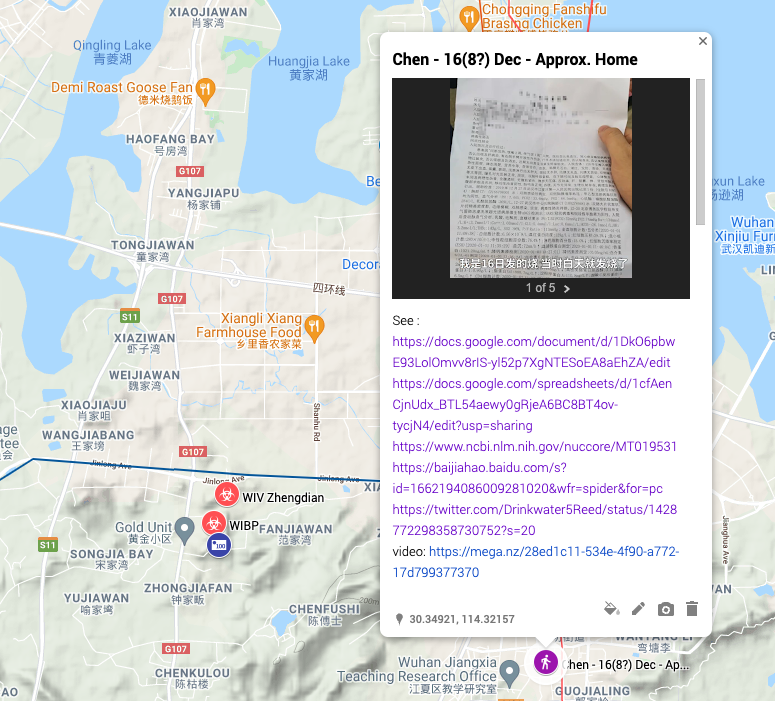
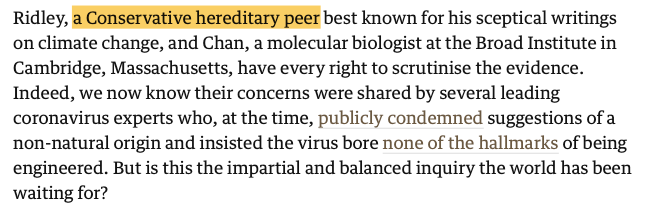
Going back to the existence of Nov cases that have since then been 'cancelled' by China, please remember the US intel Nov 19 warning.
researchgate.net/publication/35…
researchgate.net/publication/35…
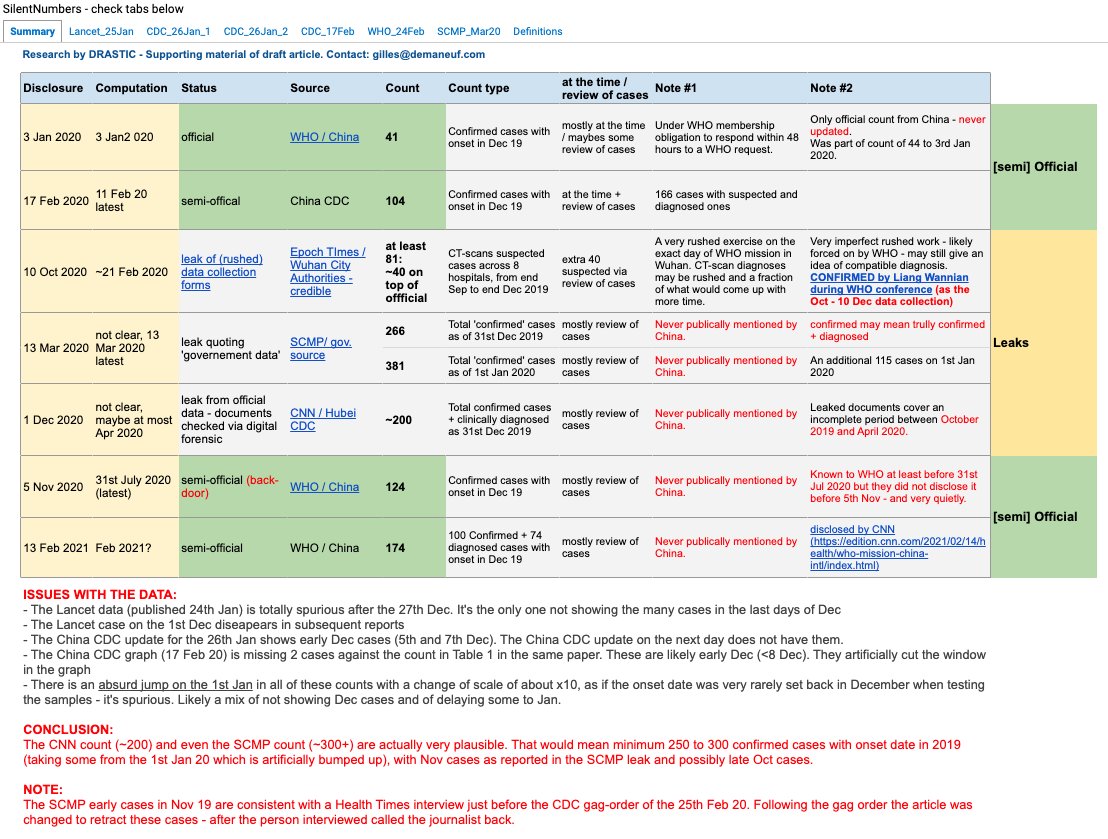
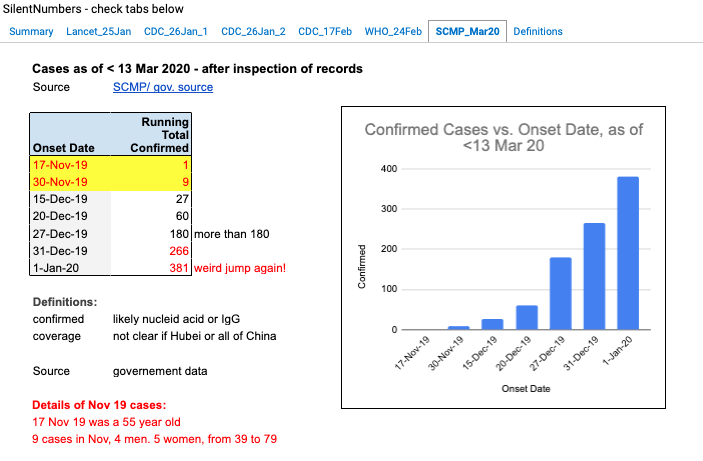
Also remember the nine Nov confirmed cases from the SCMP (based on official Chinese sources).
My Silent Numbers give you all the sources (inc. the SCMP without firewall).
I also graphed the SCMP numbers (SCMP tab at top)
bit.ly/2OyytJ4
@jbloom_lab @MichaelWorobey
My Silent Numbers give you all the sources (inc. the SCMP without firewall).
I also graphed the SCMP numbers (SCMP tab at top)
bit.ly/2OyytJ4
@jbloom_lab @MichaelWorobey
One of the best papers I read about dating the index case is actually co-authored by Worobey himself.
That's Pekar et al with its mid-Oct to mid-Nov estimate - which we referred to extensively in our 'October Surprise'.
Pekar et al: science.org/doi/10.1126/sc…
That's Pekar et al with its mid-Oct to mid-Nov estimate - which we referred to extensively in our 'October Surprise'.
Pekar et al: science.org/doi/10.1126/sc…
In the 'October Surprise' you can also read my analysis of the game played by China - walking the epidemiological trail AWAY from the earliest known cases.
researchgate.net/publication/35…
researchgate.net/publication/35…
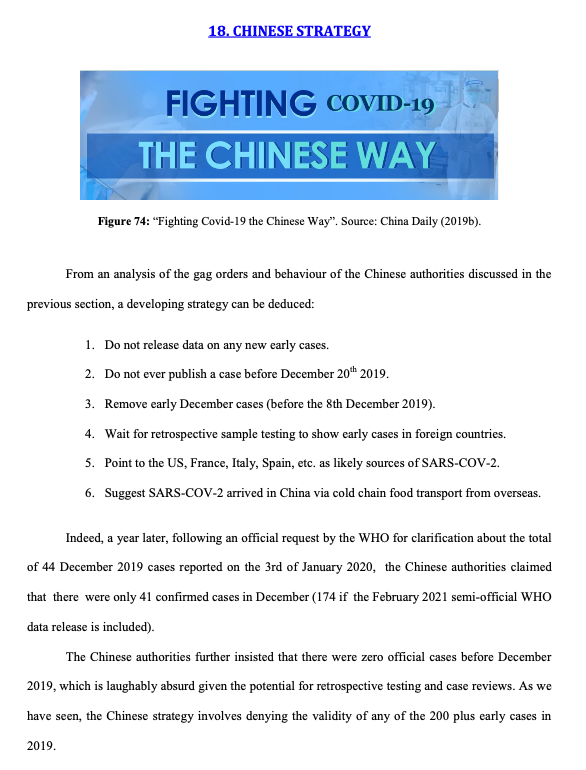
Also, do you really think that China would have suppressed the Nov cases and the early Dec ones if they pointed to the market?
Please take a second to think about it.
Please take a second to think about it.
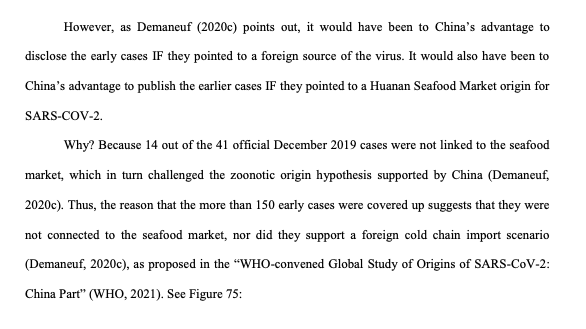
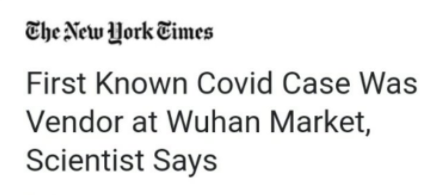
So one can believe in fairies and a December 'patient zero'.
Or one can look at the epidemiological and genomic evidence, plus the data leaks and various ham-fisted 'cancels', which point us to cases in Wuhan in Nov 19.
Or one can look at the epidemiological and genomic evidence, plus the data leaks and various ham-fisted 'cancels', which point us to cases in Wuhan in Nov 19.
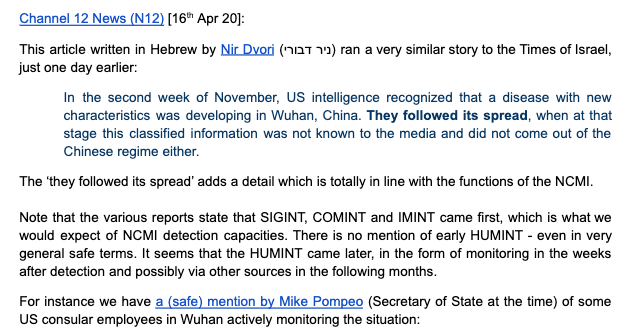
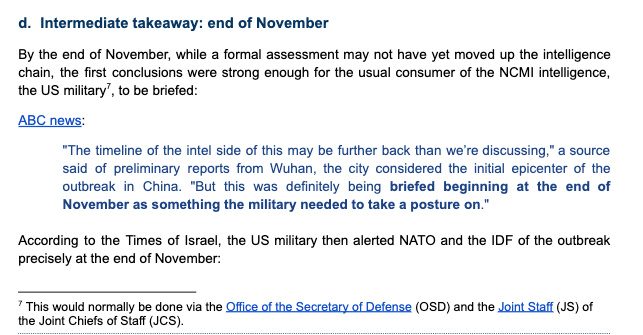
Nov 19 cases that could be detected from space and via com intercept, as the NCMI did.
And it showed a reliable enough picture for the US to alert Nato and Israel at the end of that very month.
researchgate.net/publication/35…
@thedeadhandbook @ianbirrell @thackerpd @KatherineEban
And it showed a reliable enough picture for the US to alert Nato and Israel at the end of that very month.
researchgate.net/publication/35…
@thedeadhandbook @ianbirrell @thackerpd @KatherineEban
In the end we have two likely 'ground zeros'.
One in particular is centered on the WIV, the Wuhan Uni ABSL-3 (worked with the WIV) and the PLA hospital of central military command (which shows up in relation to early cases, inc. Nov ones from US intel)
One in particular is centered on the WIV, the Wuhan Uni ABSL-3 (worked with the WIV) and the PLA hospital of central military command (which shows up in relation to early cases, inc. Nov ones from US intel)
https://twitter.com/gdemaneuf/status/1461797672394891277?s=20
I'll leave the fairies to the MSM, and the December data illusion to the 'Perspectives' section of Science mag.
https://twitter.com/MJnanostretch/status/1462266715929198592?s=20
@threadreaderapp compile
• • •
Missing some Tweet in this thread? You can try to
force a refresh