News story about our paper in the journal Icarus. Apparently we were the first to study the historical records on how the scientific concept of planets developed, and why it matters to science. What what we found was truly surprising. 1/2
ucf.edu/news/planet-de…
2/2 We discovered that the IAU's basic idea about planets originated not from science, not from the Copernican Revolution, but from 1800s astrology. The nature of *doing science* has been pushing planetary scientists back to Galileo's historic & useful planet concept since ~1960.
3/ Here's a visual summary of how planets were conceptualized since the Copernican Revolution, both among scientists and among the non-scientific public. This is quite different than the untrue story told in most astronomy textbooks.
4/ Our manuscript that documents this is here: sciencedirect.com/science/articl…
5/ We expect people to be skeptical, so we put our data online for people to verify that the idea of planets based on their orbits is 1800s astrology, not scientific. Much of the data is supplementary material at the journal website. We put even more here: philipmetzger.com/moons_are_plan…

• • •

Missing some Tweet in this thread? You can try to force a refresh

 

Keep Current with Dr. Phil Metzger

Dr. Phil Metzger Profile picture

Stay in touch and get notified when new unrolls are available from this author!

Read all threads

This Thread may be Removed Anytime!

PDF

Twitter may remove this content at anytime! Save it as PDF for later use!

Try unrolling a thread yourself!

how to unroll video
  1. Follow @ThreadReaderApp to mention us!

  2. From a Twitter thread mention us with a keyword "unroll"
@threadreaderapp unroll

Practice here first or read more on our help page!

More from @DrPhiltill

9 Dec
Hey Mars settlement fans: I modeled the economics of starting a city on Mars, including the use of Mars resources to build over a few decades, and including income to offset costs. The model indicates much cheaper than @elonmusk estimated here: .../1
2/ For this model, I used actual data from the US Census bureau, the bureau of labor statistics, etc etc, assuming most segments of the economy will be built on Mars. A portion of the residents will work in the services sector (NAICS 51) just as in the US economy, so...
3/ ...exports from those workers will be "massless", easy to transport back to Earth. Including only those exports, the settlement can completely pay for ongoing imports of materials from Earth within a couple decades, thus keeping total cost low...
Read 10 tweets
25 Nov
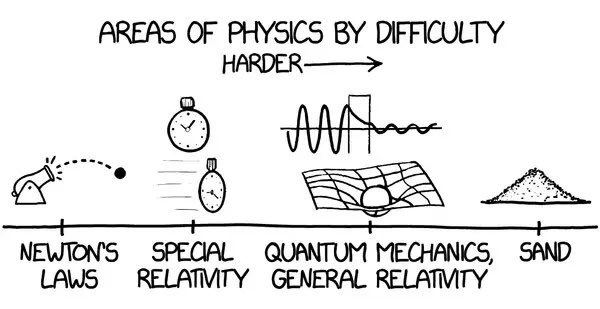
BTW, the reason we need to experimentally slam a spaceship into an asteroid rather than simply *calculate* how much it will deflect the asteroid, is because regolith physics is UNSOLVED and too hard to calculate! The splash of regolith on impact determines the deflection. 1/2
2/2 Because the splash flies *back* the opposite direction that the asteroid is being nudged, so it actually increases the change of momentum of the asteroid. But how much? Nobody can calculate a splash of sand. Sand physics is unsolved and super hard. nytimes.com/2020/11/09/sci…
The factor of the momentum change due to regolith splash is known as the “beta” of the impact. It is super important to measure so we can deflect an asteroid enough to miss the Earth, considering that spacecraft kinetics are not infinite. nasa.gov/feature/nasa-s…
Read 4 tweets
17 Nov
Indigo Aerospace turned my 2D plot into 3D. This is ejecta blown completely off the Moon by the rocket exhaust of a 40 ton lunar lander. Gravity wraps it around the Moon, it cross-crosses on the back side of the Moon, then it flies off into orbit around the Sun.
2/ The dashed ellipse is the Near Rectilinear Halo Orbit of the planned Lunar Orbital Gateway. The damage the ejecta will cause to GW is only slight since the particles are very tiny and traveling “relatively” slow at that height above the Moon. Impact velocity will be ~400 m/s.
3/ However, the damage to spacecraft in Low Lunar Orbit can be unacceptably large. The impact velocity at that height may exceed 4000 m/s (relative speed of the ejecta and the orbiting spacecraft), so these will be hypervelocity impacts.
Read 7 tweets
17 Nov
@FSlazer @NASAWatch When I was with NASA, our overhead burden (unscalable costs) were 46% on top of the scalable costs. So workers doing scalable productivity account for 1/1.57 = 64% of the cost. If the current program could support a launch rate 6X higher, then... 1/n
@FSlazer @NASAWatch 2/n ... the scalable part of the workforce would need to increase by a factor of 6, so the overall costs would increase by 6x64% + 36% = 418%, so the program would be another 4 times more expensive, or 12x Apollo. OTOH, if the workforce can already support a 6x launch rate...
@FSlazer @NASAWatch 3/ ... then that part of the workforce should have been reduced by a factor of 6. I mean, this is not an unplanned stand down, maintaining skills until it is over. The program is planning only 1 or 2 launches a year. So why would the workforce be scaled for 6x as many?
Read 8 tweets
10 Nov
@XgoMonstrous Read the paper ;)

Jk. It is the crystal clear insight that planets are the engines of complexity in the cosmos, such a tiny fraction of the cosmos’ mass yet responsible for the great flourishing of complexity up to & including life. Regardless what or how they currently orbit.
@XgoMonstrous 2/ That is the essence of the insight Galileo had when he saw mountains on the Moon and realized that all planets are “other Earths” possessing features of complexity like Earth, unlike the “fixed stars” (which we now simply call stars). From Galileo’s insight, all the …
@XgoMonstrous 3/ … early scientists who embraced Copernicanism immediately left to the idea that planets throughout the cosmos are likely the homes of civilizations like Earth. Since then we have realized not all planets have life, but we have continued to embrace that they are unique as…
Read 11 tweets
25 Aug
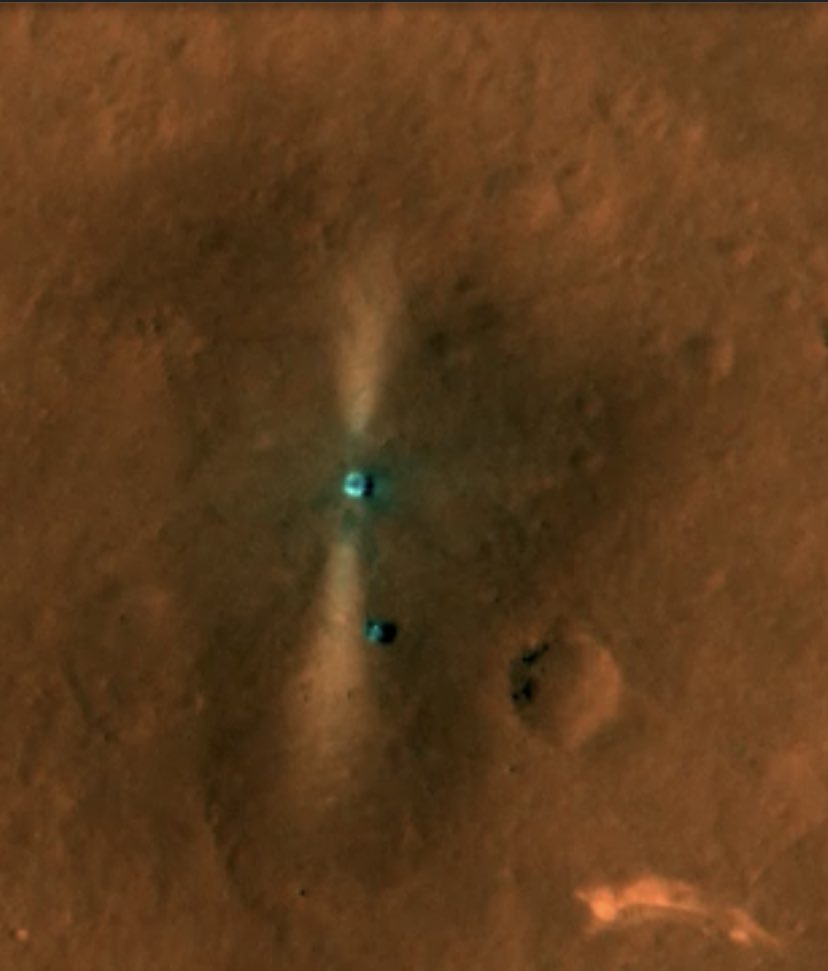
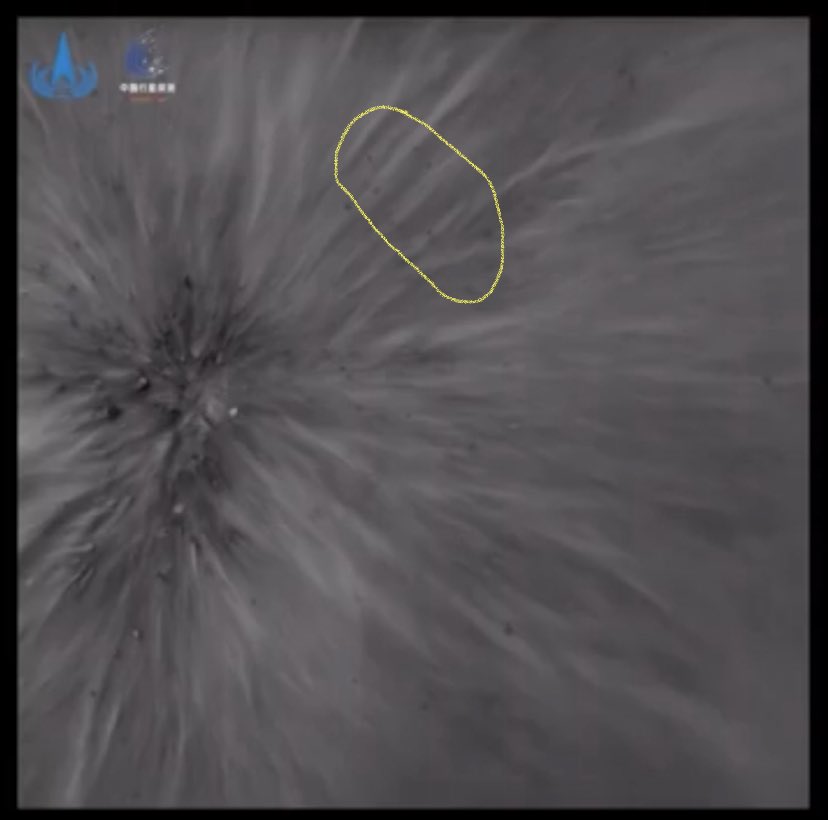
Interesting video by @DJSnM on the Chinese Mars rover mission. He mentions the landing scar and offers an interesting theory on the two lightened plumes and how that could happen on a single engine lander.
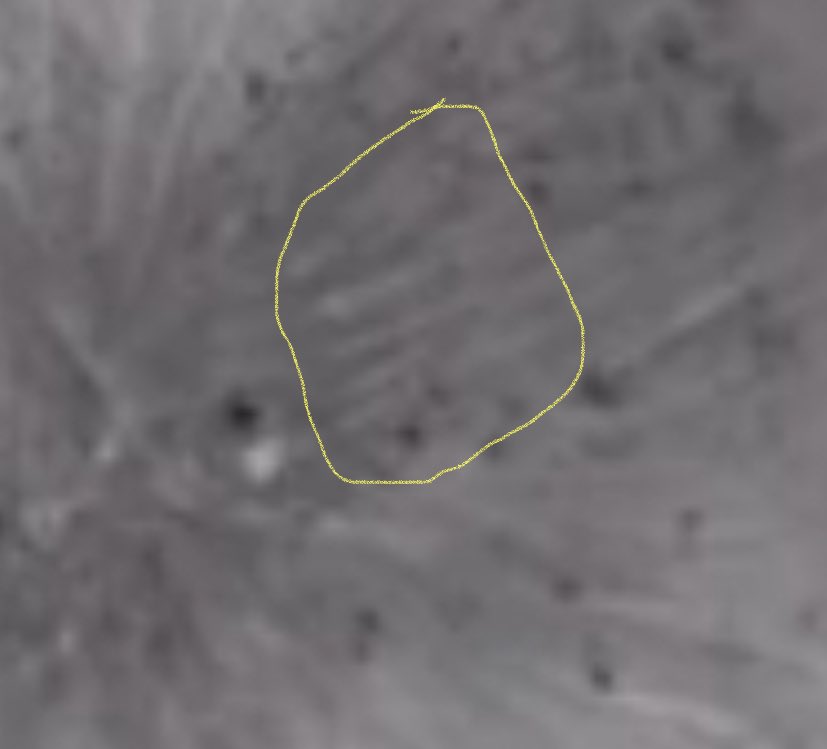
2/ While watching this video I was reminded of some recent, new thinking about the fluid flow physics you can see in this picture. See the many radial dust streaks? We have always said they are caused by enhanced erosion around rocks and in craters. However,...
3/ ...the latest thinking says there is something else going on in the physics to create these streaks. One problem with the “rocks and craters” theory is that the streaks are too regularly spaced. Why is the spacing between streaks usually about the same?
Read 17 tweets

Did Thread Reader help you today?

Support us! We are indie developers!


This site is made by just two indie developers on a laptop doing marketing, support and development! Read more about the story.

Become a Premium Member ($3/month or $30/year) and get exclusive features!

Become Premium

Too expensive? Make a small donation by buying us coffee ($5) or help with server cost ($10)

Donate via Paypal

Or Donate anonymously using crypto!

Ethereum

0xfe58350B80634f60Fa6Dc149a72b4DFbc17D341E copy

Bitcoin

3ATGMxNzCUFzxpMCHL5sWSt4DVtS8UqXpi copy

Thank you for your support!

Follow Us on Twitter!

:(