Fundamental misunderstanding of what it means for Omicron to result in less severe illness. Still no studies compare hospitalization in naive people infected w/ Omicron & Delta. All studies simply measure effect of vaccination + previous infection which we know reduce severity.
Here's best attempt to control for vaccination status & prev infection (including undetected cases). It finds 0-30% reduction in risk of hospitalization. That's tiny & much smaller than other studies that don't account for this. imperial.ac.uk/media/imperial…
(cont)
If you read @jburnmurdoch & @EricTopol replies you'll see that they are actually trying to answer a different question. Instead of: 1) "is Omicron intrinsically milder" they are addressing 2) "Will ratio of hospitalizations/case be lower" than for Delta wave.
Answer to (1) is "unclear"; best answer I know is report above suggesting, "about the same maybe a tiny bit milder?"
Answer to (2) is: "definitely, due to higher immunity from infection + vaccination".
I took it for granted that people knew immunity reduces severe disease, including for Omicron, but @jburnmurdoch argues that that's not widely appreciated.
Lots of replies from @jburnmurdoch that I think might help some folks understand some of many complexities here. If this issue is confusing to you I'd have a read. Thanks to John for clarifying.
• • •
Missing some Tweet in this thread? You can try to
force a refresh

How effective are vaccines against Omicron?
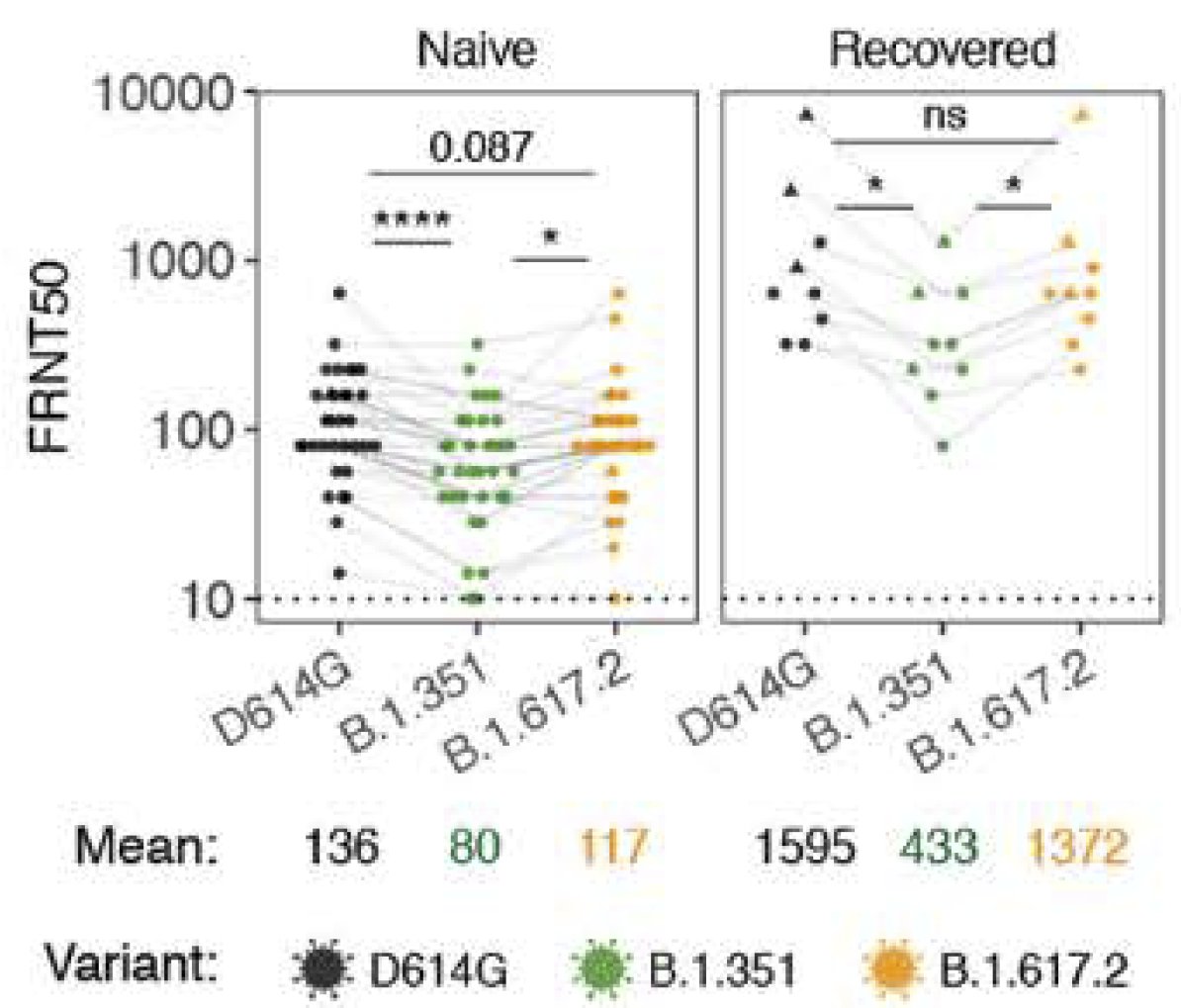
Today 3 studies were posted of data on immune escape measured by reductions in "antibody neutralization titers".
We can use these to estimate VE, WITH SOME ASSUMPTIONS.
Thread based on paper w @billy_gardner_ that we'll post tomorrow
We've known since the discovery of Omicron's growth & posting of it's sequence that it has many mutations in its spike protein, & many of these affect binding of our antibodies. @jbloom_lab estimated that these would reduce binding of antibodies 20-60 fold:
We measure "neutralizing antibody titers" by determining how much we can dilute a person's sera (blood) & have it still neutralize the virus & stop it from growing in cell culture. Papers often use 50% reduction in "plaques" or "foci" as a cutoff so you'll see FRNT50 as response.
How much faster can we detect Omicron by sequencing more cases?
As many countries try to determine if Omicron is present, one simple approach is to sequence more. How much time does this buy us? A simple calc puts things in perspective.
tl;dr sequencing 5x more buys ~13-40d
The math:
The probability of detecting something by sequencing N samples given it is present at a prevalence P is simply:
1-(1-P)^N
Graphically, this relationship for two lowish prevalence values is:
So, the more the better, initially ~linearly when variants are rare, but w/ diminishing returns as prevalence increases & as N samples sequenced increases.
Observations on new variant detected in Africa (Omicron)
-Many countries have closed borders, but I haven't heard of any that are simultaneously sending 10M vaccine doses to Africa.
-Closing borders while R>1 locally is silly. Virus is likely already widespread at v low freq.
-w/ no data, it's a bit shocking to see reputable people promoting 1 doctor's anecdotal observations that Omicron causes mild illness. If claim was opposite the same (always optimistic) scientist would demand to see data & suggest we don't believe it w/out rigorous analyses.
-interesting to see strong knee jerk reactions from reputable scientists (i.e. calling Omicron a scariant that we shouldn't worry about), while others take sequence data & mapping to make initial assessment that is worrisome:
How do we get broad immunity to SARS-CoV-2 that will protect against future variants?
2 studies (are there more?) suggest that vaccination followed by infection gives broader protection than infection followed by vaccination. @florian_krammer@profshanecrotty@GuptaR_lab
1st paper (medrxiv.org/content/10.110…) shows: if you get vaccinated w/ mRNA vaccine & have a breakthrough Delta infection your subsequent antibodies are almost equally reactive in neutralizing Delta, Beta, Alpha, WT.
2nd paper (science.org/doi/10.1126/sc…) shows if you get infected (probably w/ D614G) then vaccinated w/ mRNA vaccine, your immunity is strong vs D614G & Delta but less so vs the most immune evasive variant so far, Beta.
Should we all get a vaccine booster (3rd dose)?
New preprint w @billy_gardner_ , we examine impact of 3rd doses on key topic: transmission. medrxiv.org/content/10.110…
tl;dr 3rd dose could significantly reduce Rt & stop some surges, but doses should 1st go to unvaccinated if possible
Background
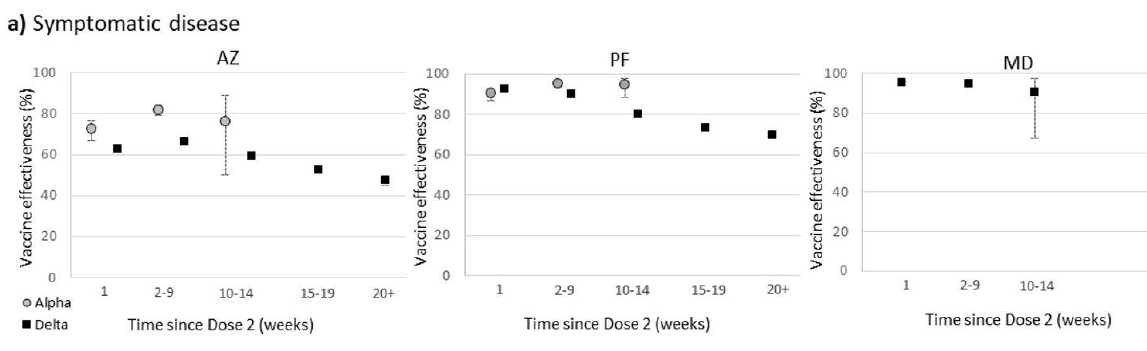
COVID-19 vaccines are fantastic. Better than we could have imagined. mRNA vaccines had efficacy of ~95% for symptomatic disease & even better for severe disease & death. But there's now strong evidence that protection against mild disease & infection is waning a bit.
Here's one study from the UK (there are many others) showing a reduction for Pfizer &Astrazeneca. doi.org/10.1101/2021.0…
What is driving current peaks in SARS-CoV-2 cases & what does this mean for the fall & winter?
Although a peak might seem to indicate that we're headed for fewer cases until a new variant arises, unfortunately that's not the case & a surge is both likely & avoidable.
A thread.
One possibility is in nice thread @trvrb suggesting US Delta surge is peaking now b/c 5% more of US pop infected, driving Rt down to 1 (which occurs at peak).