How do we get broad immunity to SARS-CoV-2 that will protect against future variants?
2 studies (are there more?) suggest that vaccination followed by infection gives broader protection than infection followed by vaccination. @florian_krammer@profshanecrotty@GuptaR_lab
1st paper (medrxiv.org/content/10.110…) shows: if you get vaccinated w/ mRNA vaccine & have a breakthrough Delta infection your subsequent antibodies are almost equally reactive in neutralizing Delta, Beta, Alpha, WT.
2nd paper (science.org/doi/10.1126/sc…) shows if you get infected (probably w/ D614G) then vaccinated w/ mRNA vaccine, your immunity is strong vs D614G & Delta but less so vs the most immune evasive variant so far, Beta.
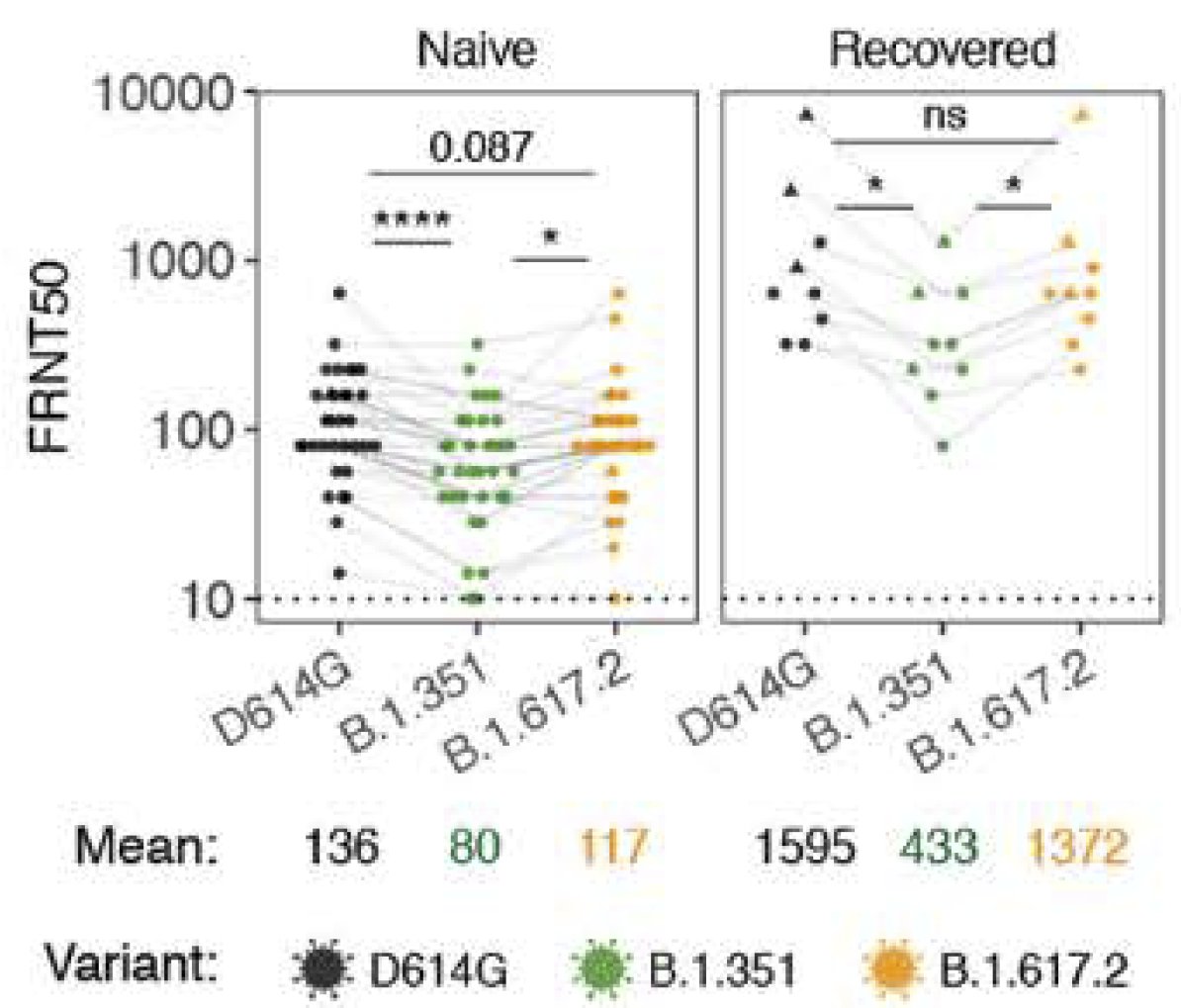
It's unclear to me whether one could stimulate broad neutralizing antibodies seen in breakthrough cases using a vaccine with a different spike protein variant (e.g. Delta instead of Wuhan) or if broad response comes from exposure to the complete virus & can't be vaccine derived.
Caveat: Both studies have small sample sizes so difference might be due to chance & who knows if results vs Beta are indicative of whatever variant comes after Delta. But it's an important question & possibly 1 more reason its better to get vaccinated before getting exposed!
In case there was any confusion: it's much better to get your immunity to SARS-CoV-2 through vaccination rather than infection. That way you can avoid unpleasant side effects of infection like death and long covid.
• • •
Missing some Tweet in this thread? You can try to
force a refresh

Should we all get a vaccine booster (3rd dose)?
New preprint w @billy_gardner_ , we examine impact of 3rd doses on key topic: transmission. medrxiv.org/content/10.110…
tl;dr 3rd dose could significantly reduce Rt & stop some surges, but doses should 1st go to unvaccinated if possible
Background
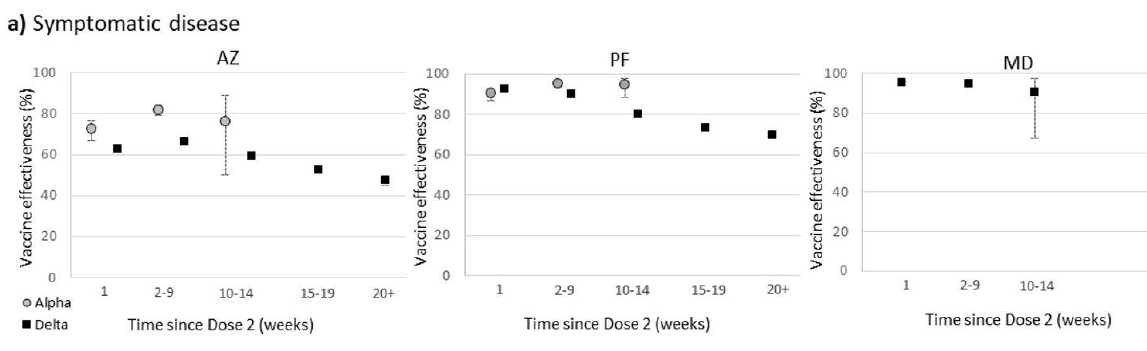
COVID-19 vaccines are fantastic. Better than we could have imagined. mRNA vaccines had efficacy of ~95% for symptomatic disease & even better for severe disease & death. But there's now strong evidence that protection against mild disease & infection is waning a bit.
Here's one study from the UK (there are many others) showing a reduction for Pfizer &Astrazeneca. doi.org/10.1101/2021.0…
What is driving current peaks in SARS-CoV-2 cases & what does this mean for the fall & winter?
Although a peak might seem to indicate that we're headed for fewer cases until a new variant arises, unfortunately that's not the case & a surge is both likely & avoidable.
A thread.
One possibility is in nice thread @trvrb suggesting US Delta surge is peaking now b/c 5% more of US pop infected, driving Rt down to 1 (which occurs at peak).
Nice thread @EdMHill describing modeling from 1 of 3 teams on possible outcomes in UK that guided recent decision to postpone re-opening.
Big takeaways:
-I wish US gov had been open to scientific guidance in 2020
-Big uncertainty in behavior changes w/ re-opening
cont.
-Big uncertainty in relative transmissibility of delta (b.1.617.2) variant & vaccine effectiveness for transmission (not symptomatic disease). PHE-UK has provided fantastic real-time analyses of available data, but some critical data, that could be collected, are missing.
-Importance of limited vaccine supply. US can't seem to give away vaccine even with beer, lotteries & more. In UK (& most, but not all, of world) every dose is precious & in-demand.
Why hasn't B.1.1.7 fully displaced other variants in US? What other variants are persisting/growing?
Thread
B.1.1.7 has risen to relatively high frequencies in many states, but hasn't exceeded 90% in any of them & may be falling in several.
Data here from @my_helix
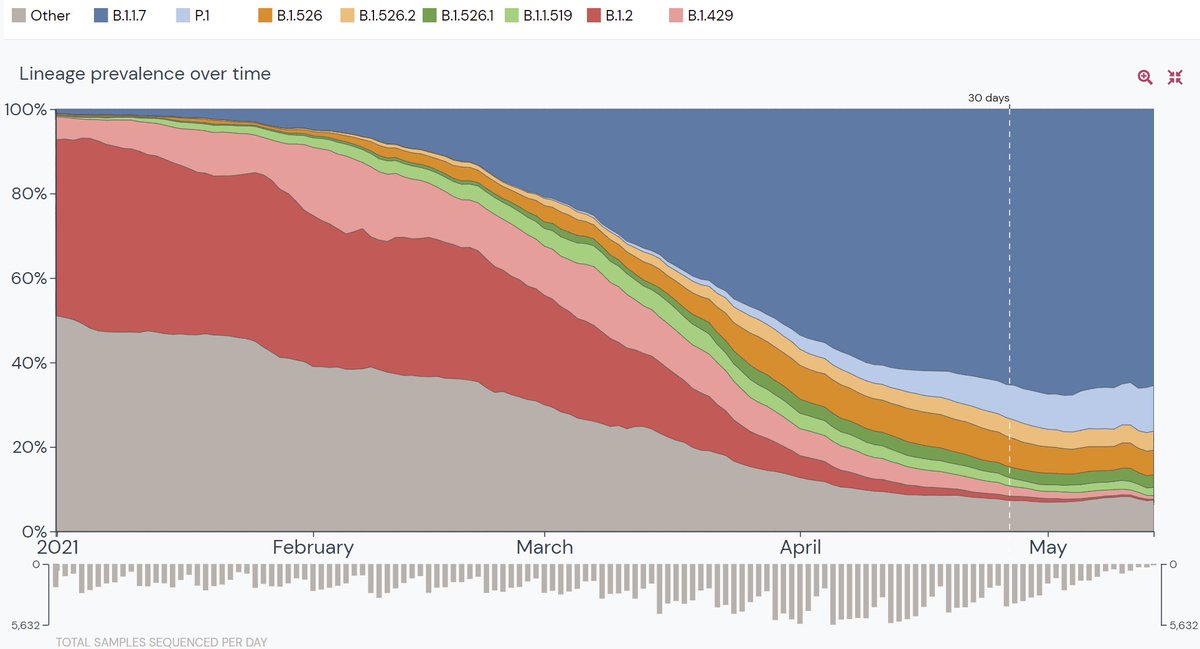
GISAID sequences via fantastic outbreak.info for US as a whole suggest B.1.1.7 now stable @70%, P.1 is growing, B.1.526 frequencies are stable. But variable sequencing means finer resolution is better for understanding frequency dynamics, spatial variability & nuance.
Statewide scale is still too large but better than whole US.
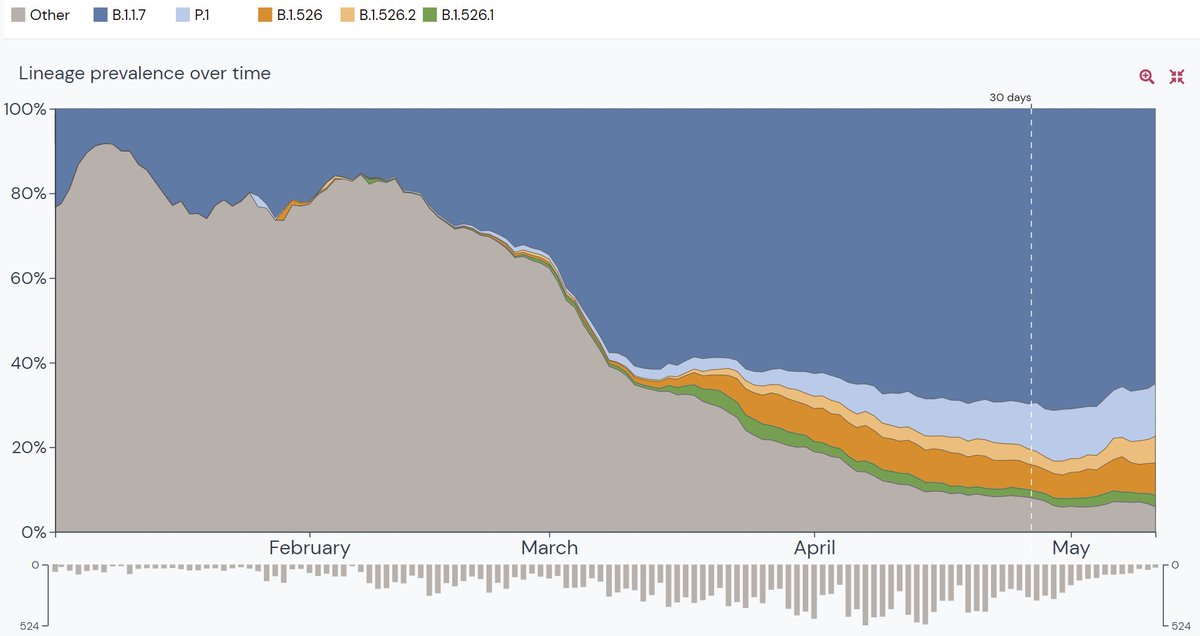
Here's FL. Similar pattern as whole US - P.1 growing & B.1.526 stable, leading to slight recent decrease in B.1.1.7
Yesterday I posted the tweet below as a joke.
Today I found so much bullshit (@callin_bull) it blows my mind.
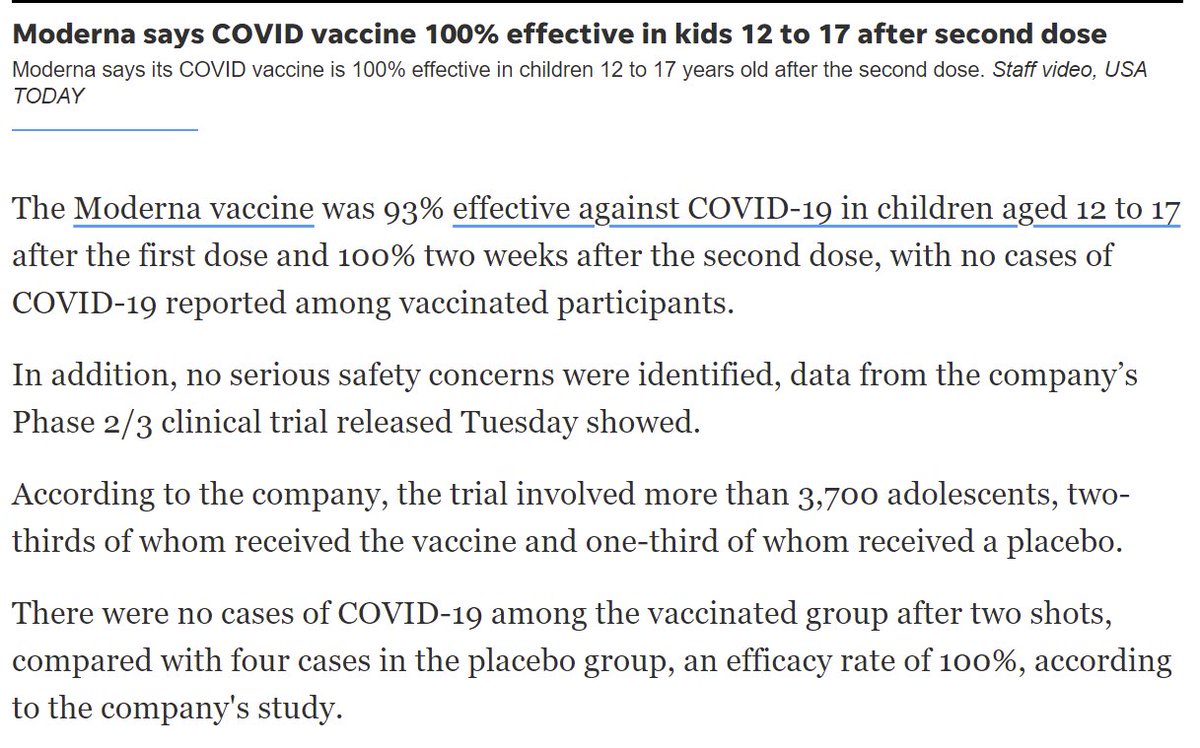
Exhibit 1: The press release itself: investors.modernatx.com/news-releases/…
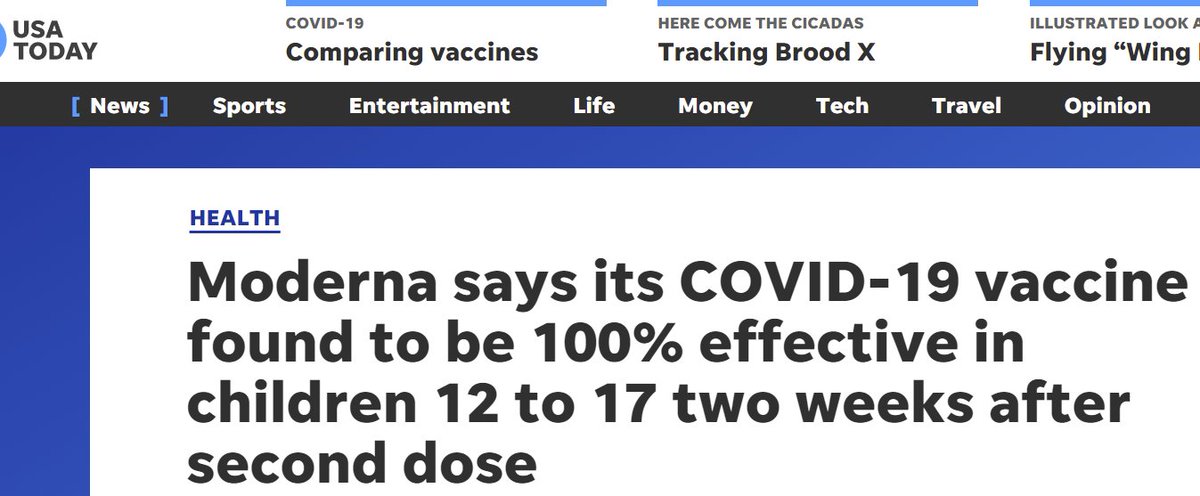
Yup, they claim 0 vs 4 cases = 100% efficacy.
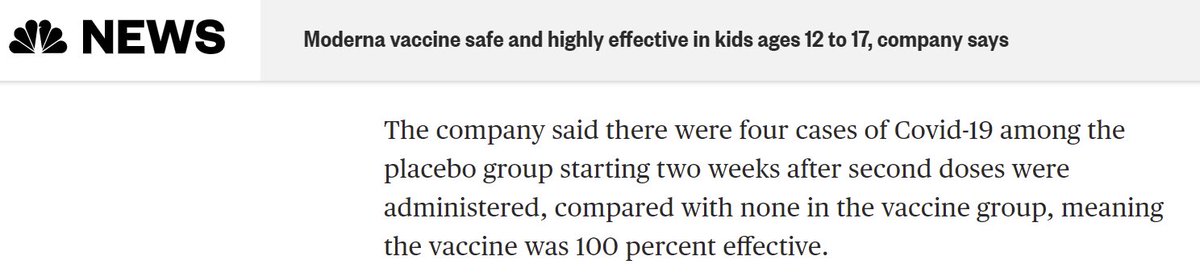
Exhibit 2: NBC, USA today both parrot 100% efficacy claim.
Exhibit 3: Moderna CEO claims vaccine prevents infection (see quote). Note: there was no data presented from study on efficacy against infection (despite that being #1 reason to vaccinate kids). Only symptomatic disease (4 cases total), antibody response, & side effects.
It's worth noting that efficacy wasn't a primary endpoint of this trial - translation: the study wasn't trying to measure efficacy so there's no need for Moderna CEO to spout bullshit. Where is NIH partner telling them to cut the BS?
What is the trajectory of viral load dynamics & test sensitivity post-INFECTION?
We're 17 month into the pandemic &, shockingly, this Q is still only partly answered.
Recent paper using a study design I proposed 12 months ago provides detailed look & raises many questions.
Background
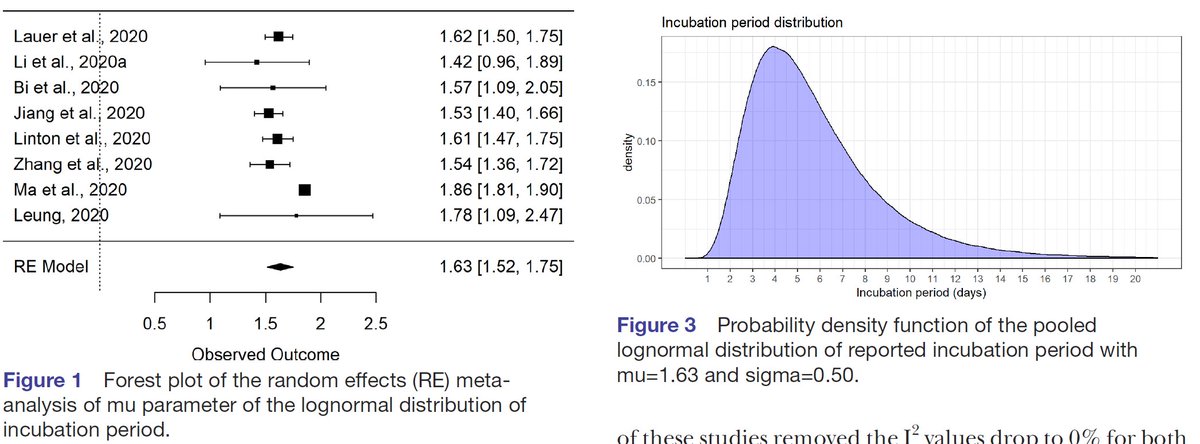
We know that ~3-6d following infection COVID-19 symptoms start (the incubation period). doi:10.1136/
bmjopen-2020-039652
We also know that people are infectious before symptom onset - this has been one of the greatest challenges in controlling SARS-CoV-2.