Finally finished initial characterization of the @UCSC_OpenRAM OR1 test chips made on SKY130! Here's a thread of results.
I tweeted a bunch of preliminary results a while back but some of the numbers have changed due to methodology tweaks and refining of the test protocols.
The OR1 test chip is an 8kbit (256 row x 32 bit) SRAM array with two bits of each byte bonded out to pins of a 64-pin QFN.
So the actual addressable capacity for the purposes of testing is 256 rows x 8 bits.
It predates full top level STA in OpenROAD and there are some very long routing delays at the top level. As a result, performance of the test chip is quite a bit worse than the "naked" SRAM IP.
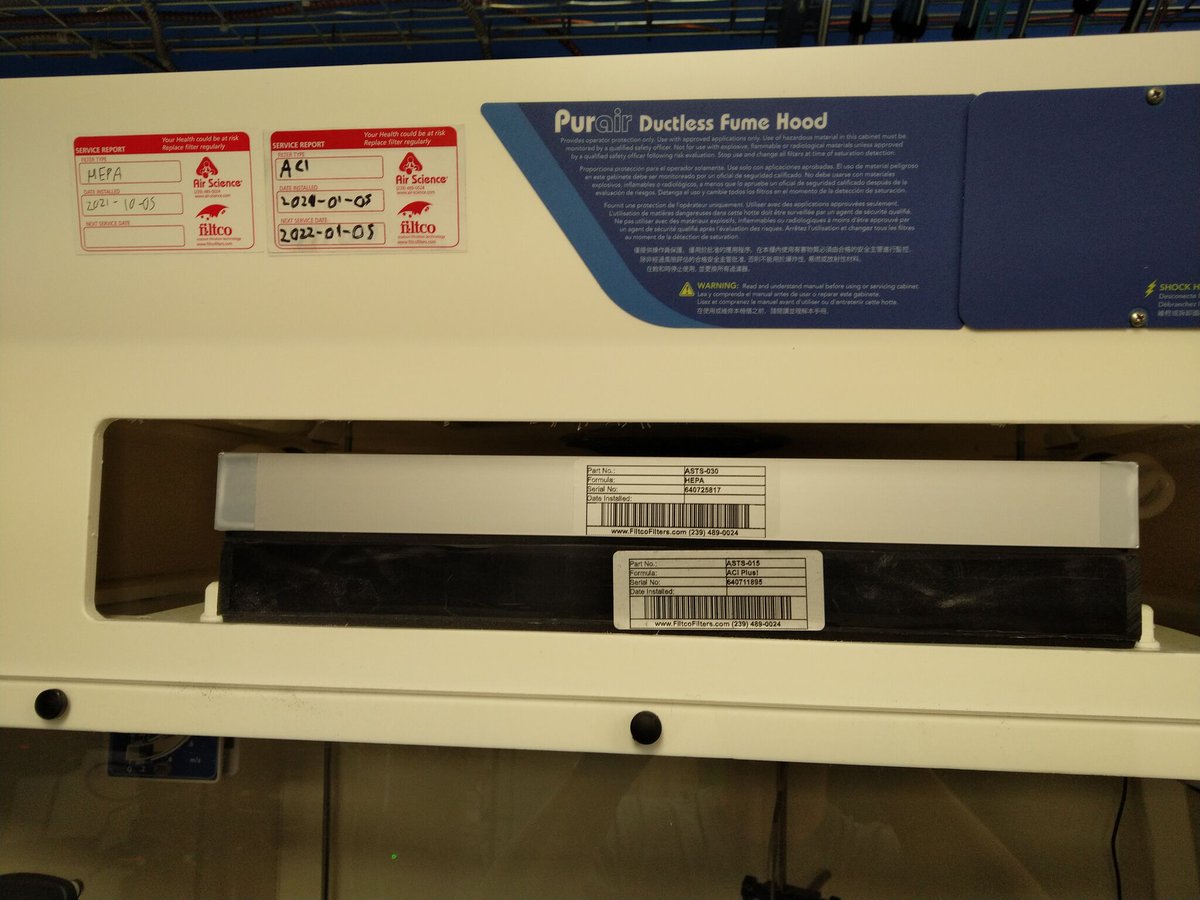
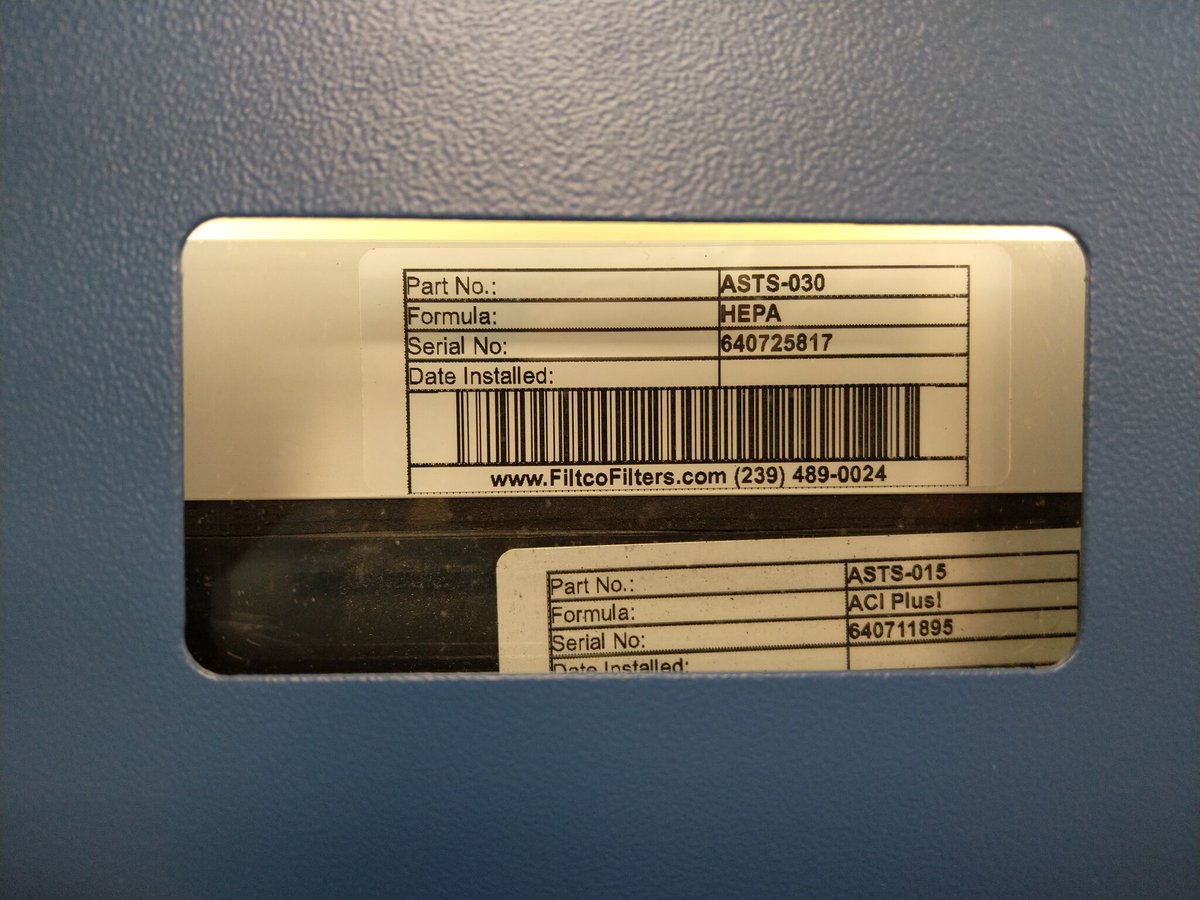
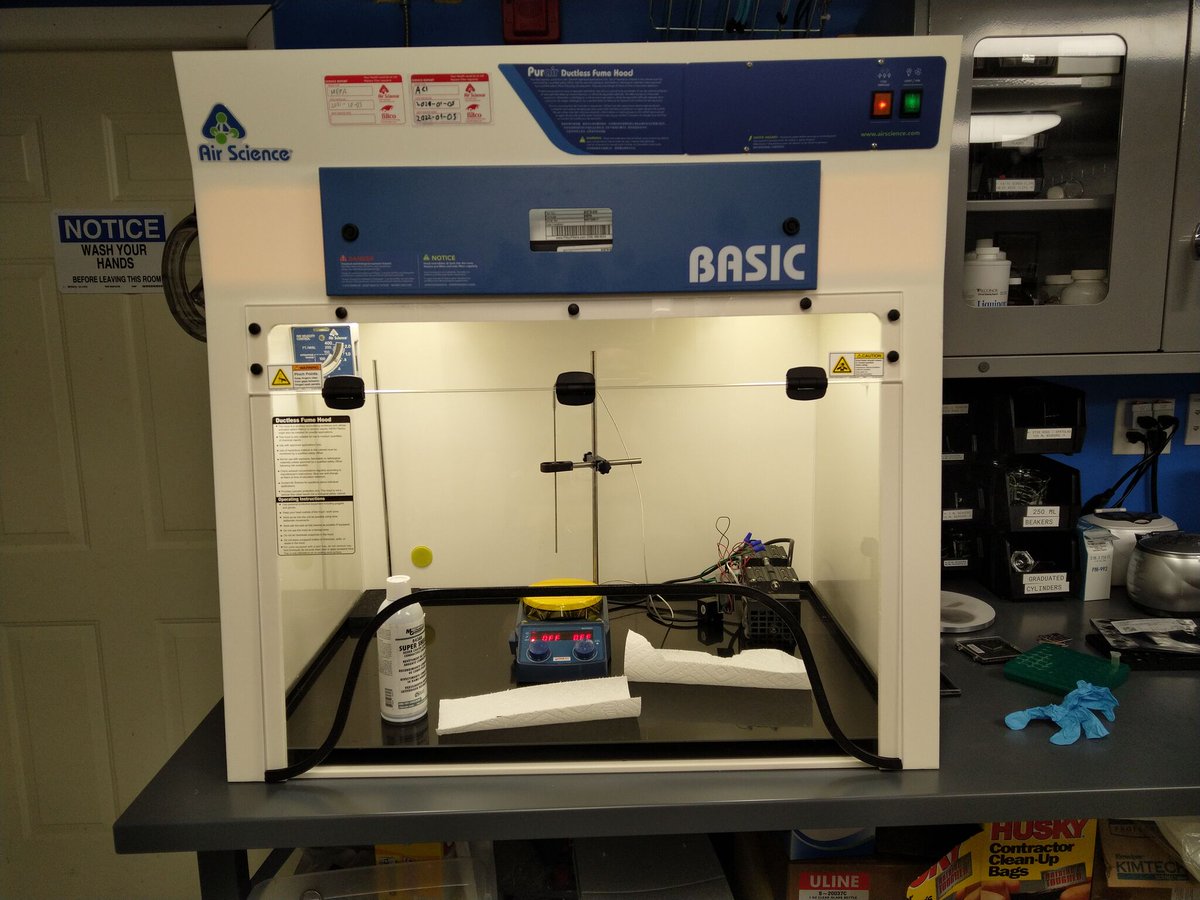
Not how the saying usually goes, but that's how things go in my lab. This is a ductless hood with a stack of two filters, a doped carbon for organic vapor/acid gas followed by a HEPA to catch carbon particles, sanding debris, etc.
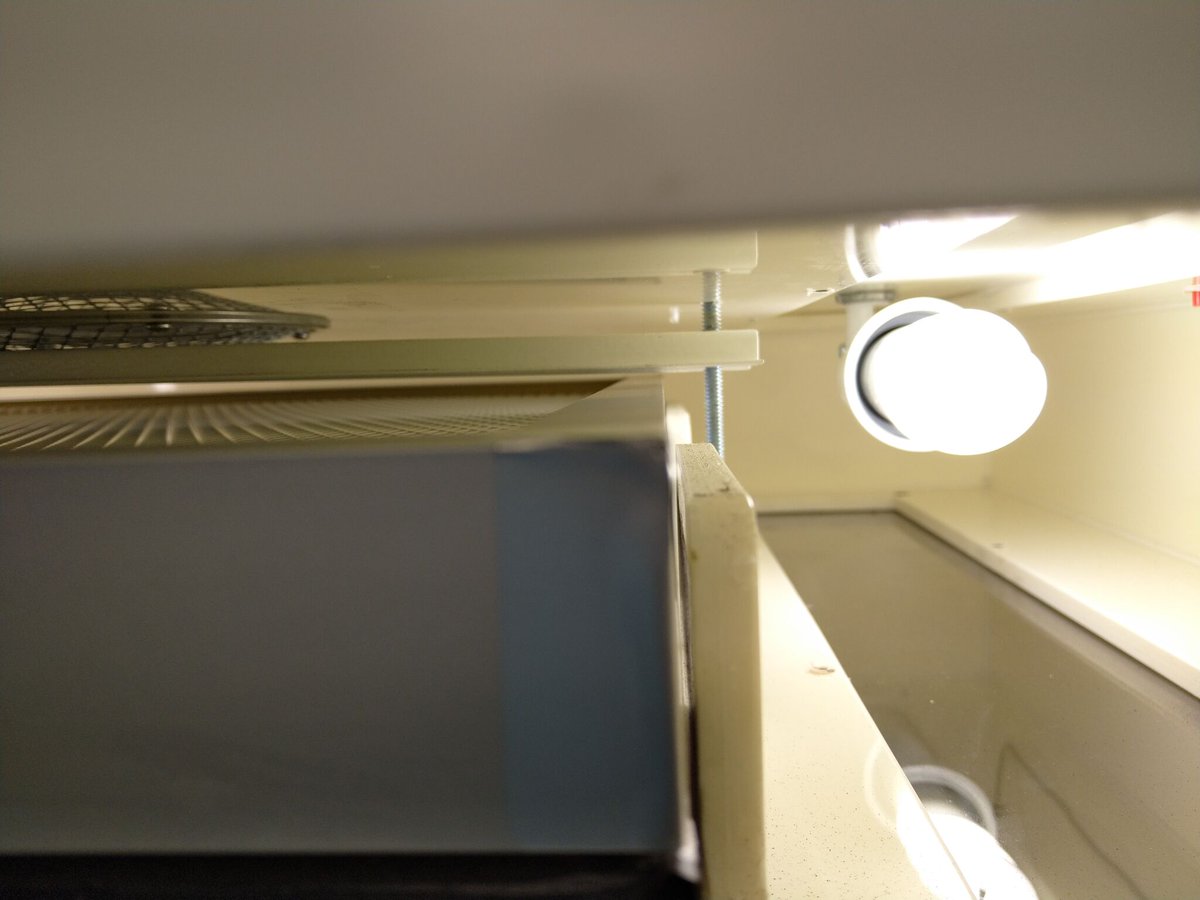
Here's the service plenum with the access cover removed. I change the carbon filter annually and the HEPA only when I notice it's clogged enough to impair airflow.
This is pretty rare since I don't generate a lot of particles in the lab and the overall air quality is excellent.
After loosening the compression bar on the filter mount, I can remove the HEPA and save it for re-insertion over the new carbon filter.
Why does Amazon bother sending order confirmation / shipped emails anymore? There's no actionable information left in them.
All I know is "something shipped". I don't know *what* shipped, when it's arriving, the tracking number, etc.
So all I do is delete them because it tells me nothing.
Also, I really wish there was a privacy setting to say "I don't use a mail provider that data-mines my inbox, please include full order details in the emails"
Or, equivalently, "I use gmail but also adblock, so IDGAF if Google can see my purchase history because I won't be seeing the ads anyway".
I generally don't care much about silent background web tracking because it doesn't harm me in any noticeable way. Ads are in-your-face.
A week or so ago, @femtoduino asked me to help out with troubleshooting and reworking a prototype of the BOMU, a tiny USB-connected microcontroller dev board. It's a super dense six-layer board with multiple levels of blind vias.
Here's a bare board after removal of back mask.
So far, there's two known problems with it.
1) A blind via from layer 2 to 6 collides with a trace on layer 3. This is a design bug that slipped through DRC somehow, and results in SWCLK being shorted to a power rail.
Correction, from layer 3 to 6 collides with a trace on 4.
The good news is that there's no polygons on layer 2 in this area at all. While the USB connector footprint does cover it on layer 1, repairing a solid copper plane after an inner layer edit is straightforward.
Preparing to apply shielding paint to the new rev AKL-AD3 enclosure. This time I'm trying electrical tape instead of Kapton tape as a masking material, we'll see if it helps with less bleed-through / overspray.
It's a little hard to see in this view but the new design has 45 degree angled interior walls to provide a smooth transition between horizontal and vertical. This should provide better paint coverage and conductivity.
I painted the last rev in the fume hood to keep the lab from smelling like solvents, but noticed a huge spike on the particle counter after.
Seems like the solids in the shield paint were getting airborne and making it through the carbon filter in the hood. So I fixed that.
Continuing to play with the SSG5060X-V demo, testing the LFO. This is normally used as the source for analog modulation, but you can also output it directly via a front panel port which is handy.
Note that the SSG output level is in Vpp and the DMM only reads in Vrms.
The LFO can also be used to produce DC signals, so you get a free DC reference/bias voltage generator.
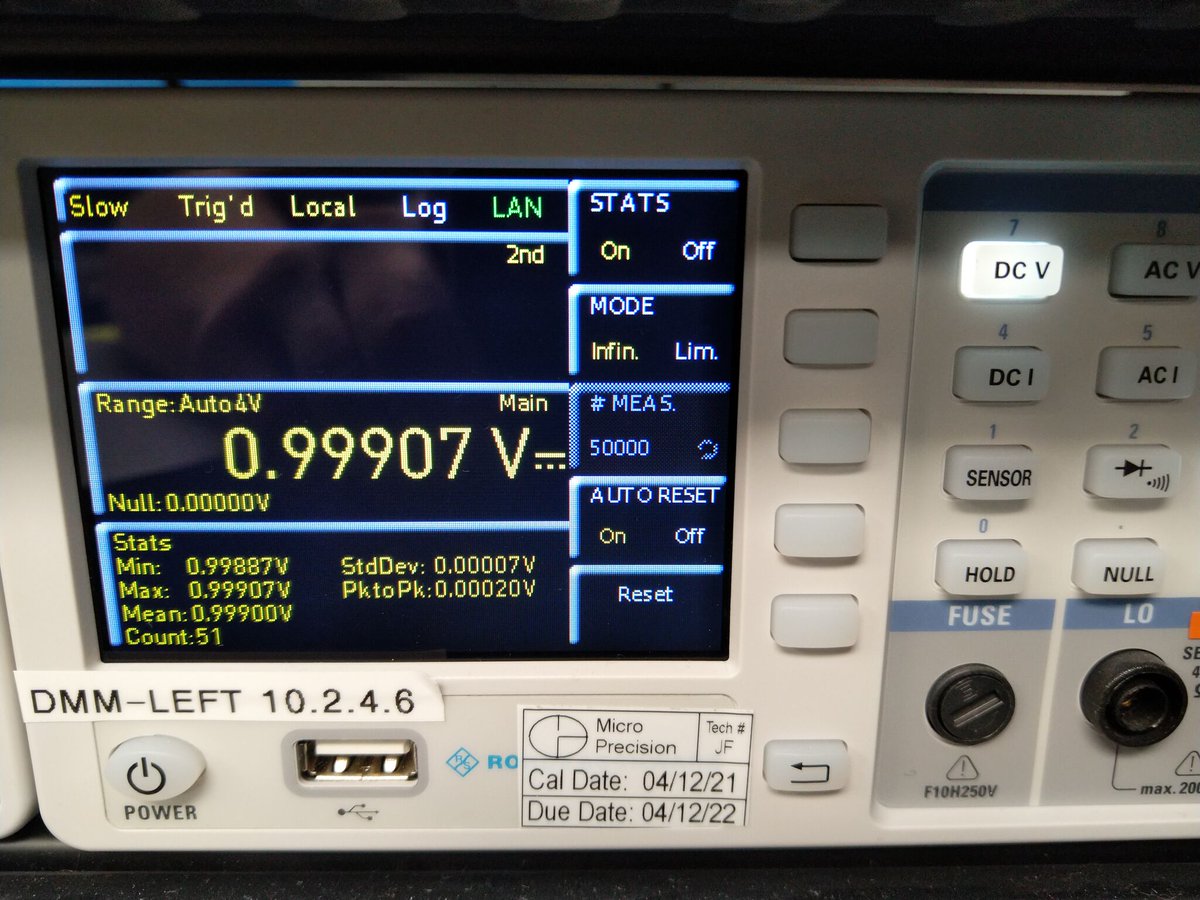
The levels seem dead on, this test is 500 μV low. And some of that might be tolerance of the 50Ω terminator I have across the DMM.
At 1.0V DC output, still looking very good. <1 mV off nominal.