We have overestimated Putin’s rationality in a sense. But here’s another consideration. Putin is acting the way he is because we have long resigned to Ukraine being in the Russian sphere. Why, the US/NATO have repeatedly stated they would not defend Ukraine. Art 5 doesn’t apply.
So Putin is acting like Khrushchev did in 1956 or like Brezhnev in 1968 when they invaded Hungary and Czechoslovakia respectively. They did because they knew there would not be much of a Western response. And there’s wasn’t one.
In this sense at least, Putin is reasserting the Brezhnev doctrine: no country ‘deemed’ to be in the Russian sphere should be allowed to leave it.
This is as good an explanation as a Cold War historian can give. Option 2: he is just crazy.
• • •
Missing some Tweet in this thread? You can try to
force a refresh

This war is obviously not going well for Putin. Consider Czechoslovakia in 1968: the invasion was largely unopposed, the Czechoslovak leader was arrested on the second day, flown to Moscow. The West just swallowed it. What we have today in Ukraine is playing out very differently.
The possibility of escalation and carnage remains. I would not rush to write Russia off as a paper tiger at this point. The situation is dangerous precisely because the war is not going well. Which brings us to the question of rationality.
Is Putin unhinged or has he miscalculated? In my recent piece for the War on the Rocks I talked about brinksmanship as a foreign policy strategy, and how war can happen (and has happened) as a result of miscalculation. warontherocks.com/2022/02/moscow….
I never voted for Putin, having regarded him as unfit for office from day 1. However, if he stepped down after two terms in 2008, perhaps - and that’s a big perhaps, given the deeply worrying trends of his first eight years - history would still give him a C.
Years later, Russia still lacks viable institutions, still deeply mired in corruption, still dependent heavily on the export of oil and gas. Russia has lost all moral authority. It has become a pariah state. Questions are being posed about its leader being possibly deranged.
How did we get here? Bad political choices. Cowardice and greed of the few and the indifference of the many. And who is to blame? We ourselves are. And, yes, many bravely opposed this hideous regime, and have paid the price. But most have been ‘fine’ with it.
Here are some thoughts / documents on the "broken promise" of NATO enlargement, which (I hope) will constructively contribute to our debate. First of all, I will not go into great detail about the Feb. 9, 1990 Gorby/Baker conversation and Baker's "not one inch" remark.
This is because the facts of the story are well-known. I would suggest reading @e_sarotte and @shifrinson in particular, who are detailed and brilliant, and of course the relevant documents are downloadable here: nsarchive.gwu.edu/briefing-book/…. Be sure also to read Mary's new book.
In a nutshell, it's clear that Baker's "promise" had to do with NATO's jurisdiction in East Germany as the GDR was absorbed by the West Germans. I am interested in what happened next.
A very interesting article. The debate will continue. I'd agree with @shifrinson that it's pretty clear that key Western players thought certain assurances had been offered - and, indeed, the records of Gorby/Baker talks in Feb. 1990 had long shown that much. That said...
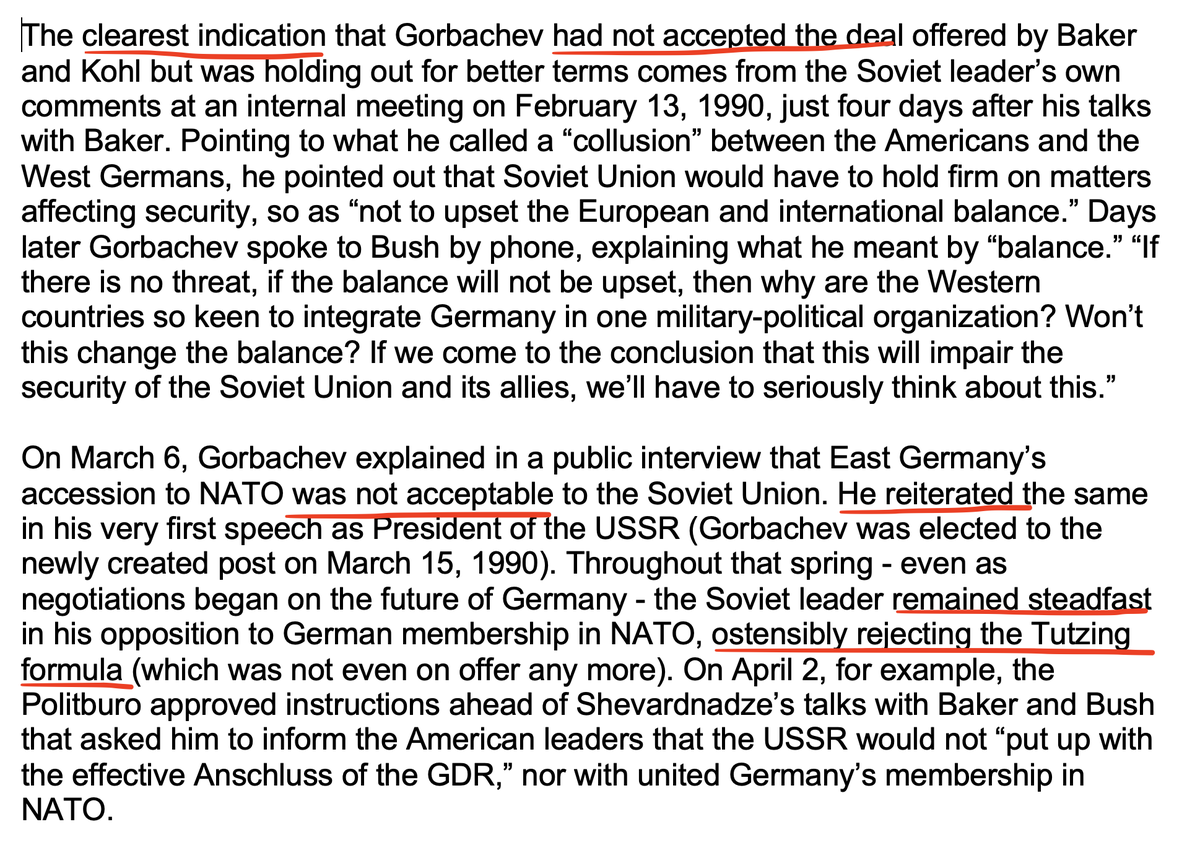
What strikes me is that Gorbachev never accepted these assurances, and continued to hold out for better terms well into the spring of 1990. I deal with this issue in my forthcoming book. Here's an excerpt.
So when Putin argues that "we were promised" that NATO would not enlarge, he is not entirely wrong. But he tells only one part of this story (the one that's useful to his narrative). The reality was much more complicated. I'd argue, there never was a deal.
The Sino-Russian joint statement, signed in Beijing, is an extremely interesting programmatic document. I am sure we'll soon have the English translation but here's the link to the Russian version: kremlin.ru/supplement/5770. Some observations. 👇🏿
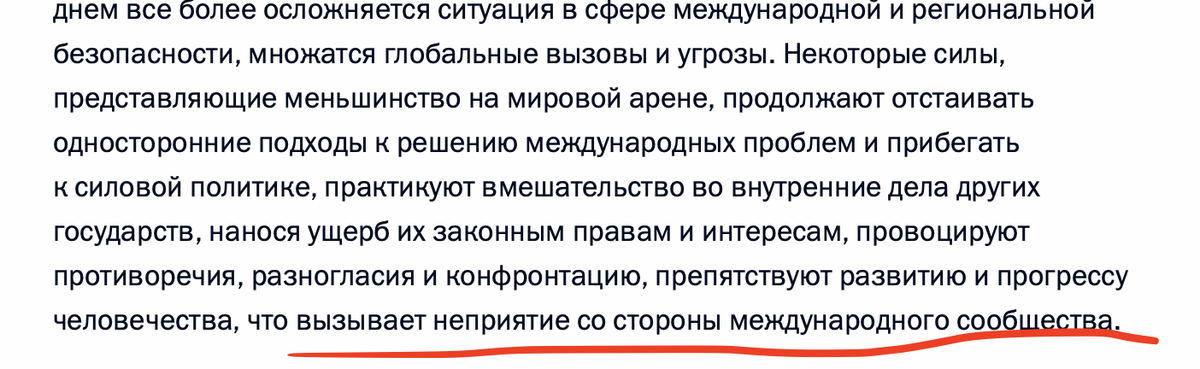
1) This is a major effort to construct a globally-relevant ideological narrative to legitimise Beijing's and Moscow's bid to rework the international order. This is done by semantically challenging widely accepted terms like "international community" and "democracy."
We see this in the preamble, where they talk about Western / US interference in other countries' internal affairs, which is "rejected by the international community."
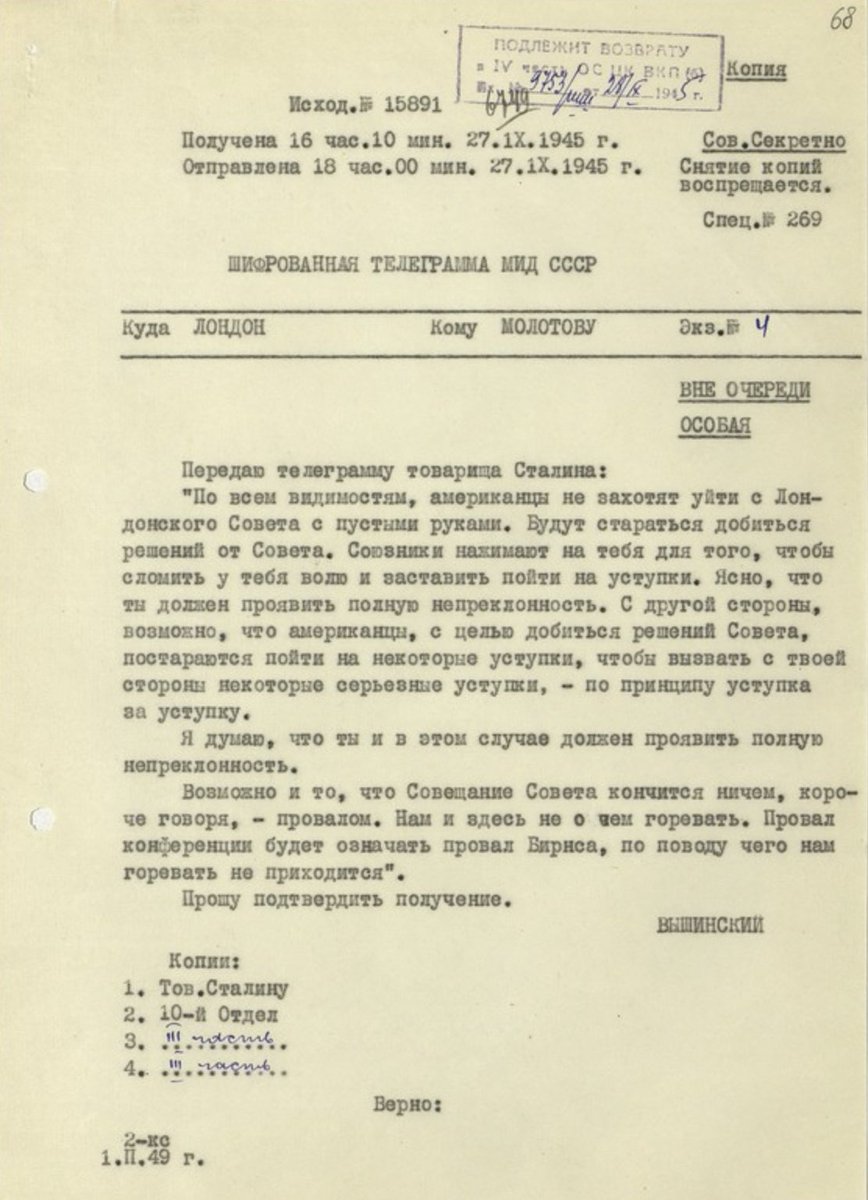
If you asked, what is the most important document from the early Cold War that helps understand Soviet approach to the West, I would say it's this telegram from Stalin to Molotov, dated September 27, 1945.
This was where he famously coached Molotov (who was then at the London Conference of Foreign Ministers): "The Allies are pressing on you to break your will and force you to make concessions. It is clear that you must display complete obduracy."
The reason for Stalin's obduracy was that he realised that he held a bad hand of cards. The US possessed atomic monopoly. The USSR was in ruins and could not possibly support another war. So he bluffed by refusing to yield - on virtually anything. It was a psychological game.