How to run a meeting at an academic medical center
🧵
🧵

Originally, this presentation was for our oncology trainees, and we figured we would share it on #AcademicTwitter #MedTwitter to maximize the impact of your meetings.
Thanks to @DrSpratticus @LeilaTchelebi @EricLehrer @TimShowalter1 @RonaldChenMD @nytimes @HarvardBiz et al
Thanks to @DrSpratticus @LeilaTchelebi @EricLehrer @TimShowalter1 @RonaldChenMD @nytimes @HarvardBiz et al
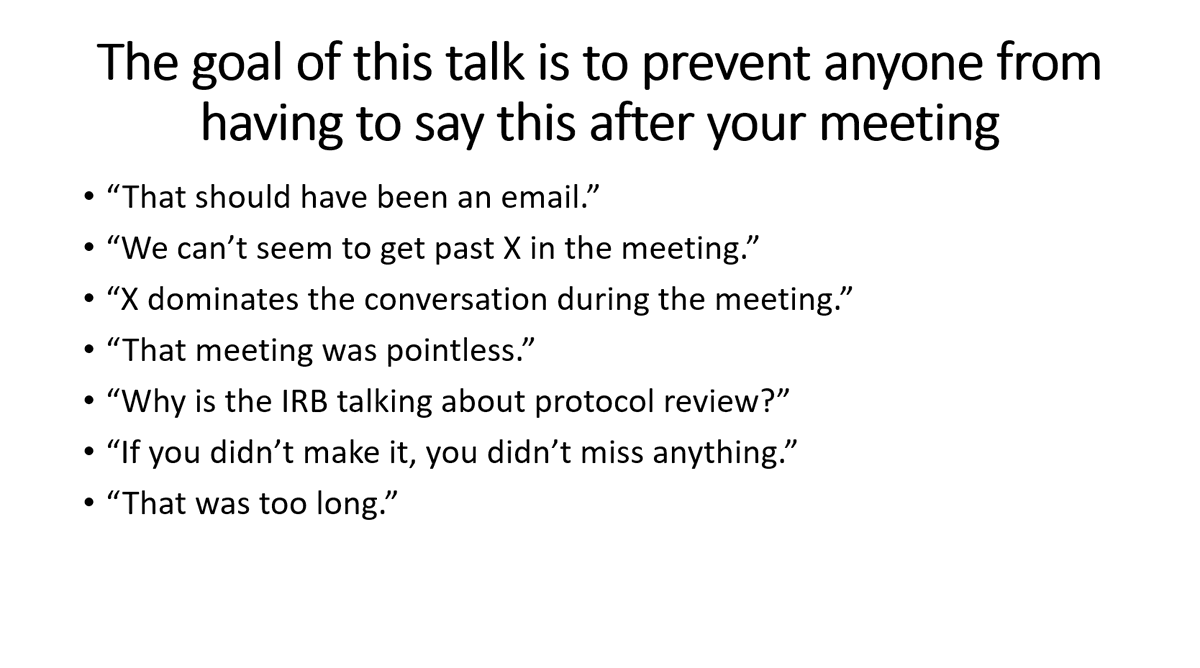


1. Do you really need a meeting?
Consider an email if:
you're just sharing info
there is no discussion or decision
you've already had a similar meeting
Consider an email if:
you're just sharing info
there is no discussion or decision
you've already had a similar meeting


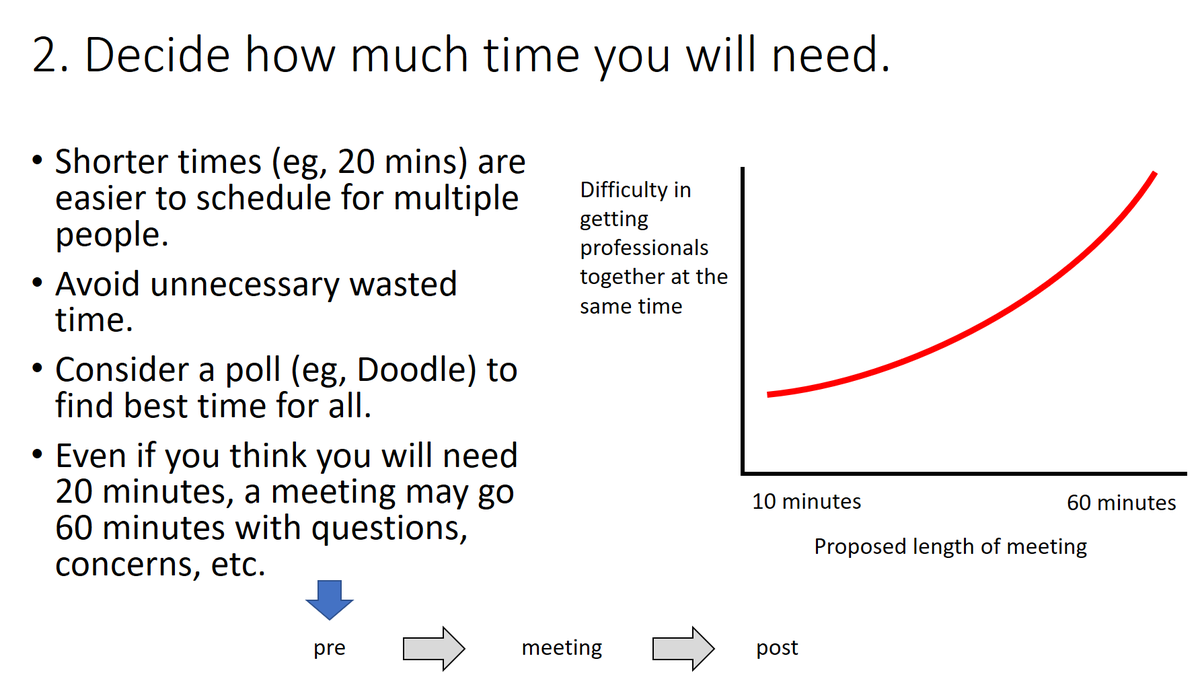
2. Decide how much time you will need.
It is difficult and costly to get multiple MDs/DOs, PhDs, experts, admins, etc all together at once
hbr.org/2016/01/estima…
It is difficult and costly to get multiple MDs/DOs, PhDs, experts, admins, etc all together at once
hbr.org/2016/01/estima…

3. Before the meeting, send an agenda and minutes from last meeting.
Make your meetings friendly for those who may be calling in from their phone or Zoom app: send link, password, etc.
Make your meetings friendly for those who may be calling in from their phone or Zoom app: send link, password, etc.

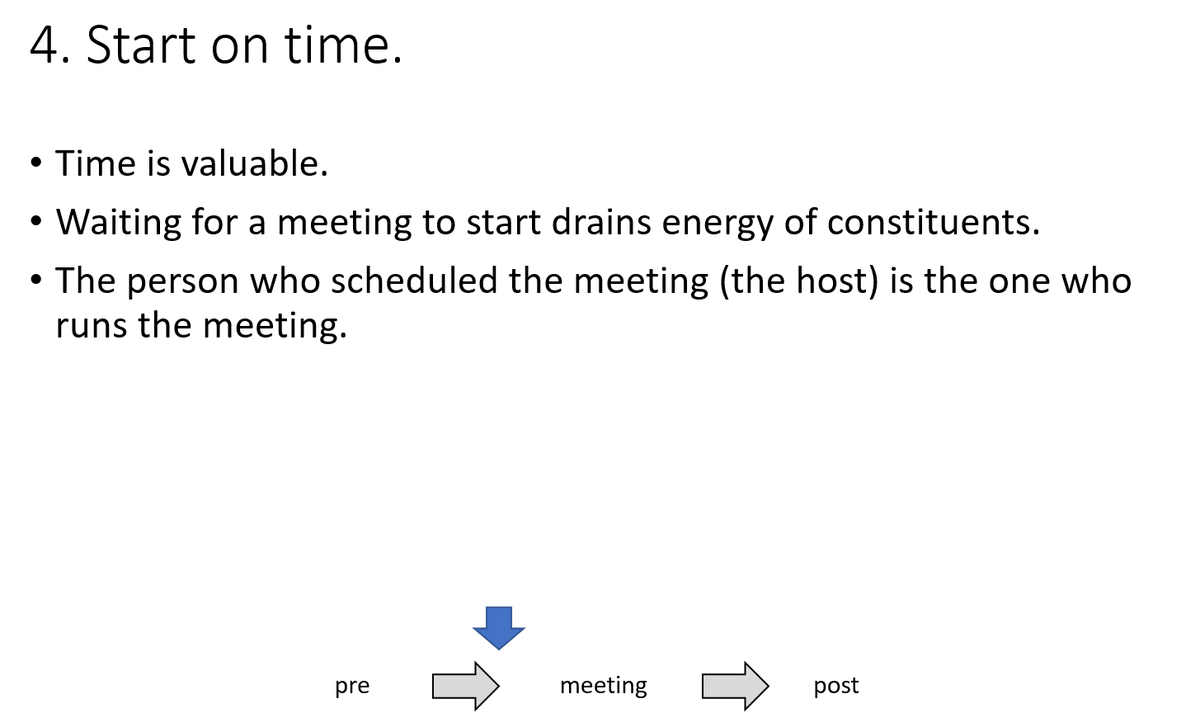
4. Start on time.
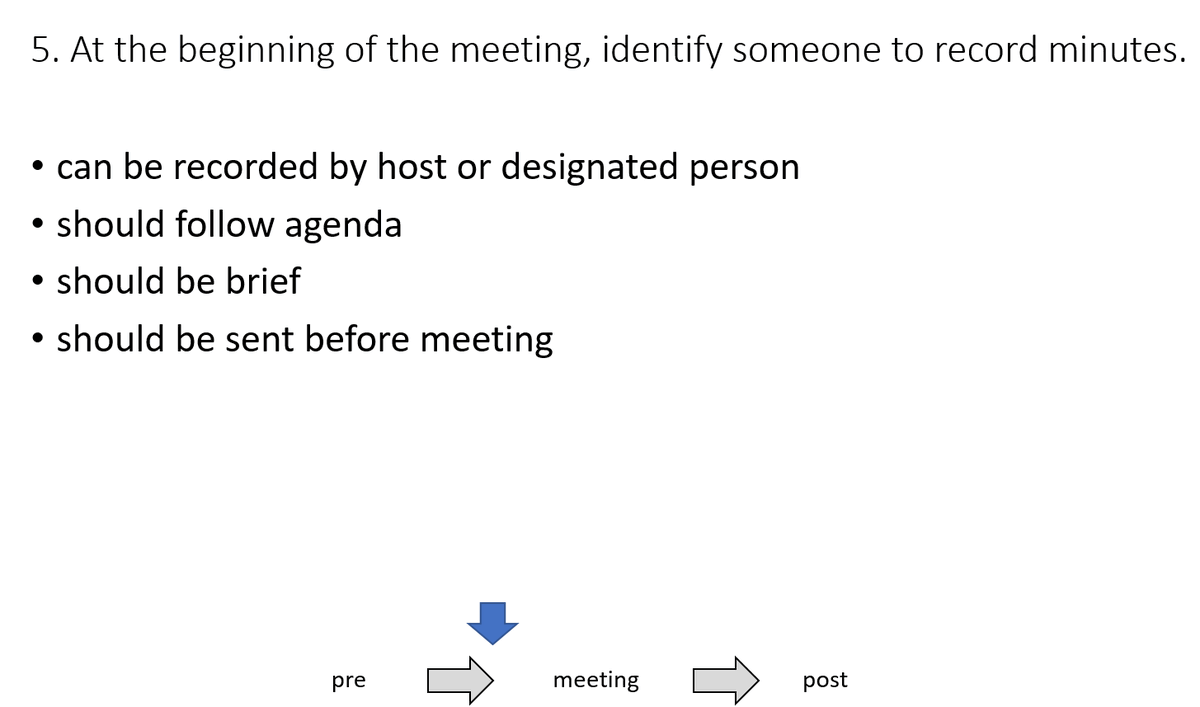
5. Designate someone to record the minutes.
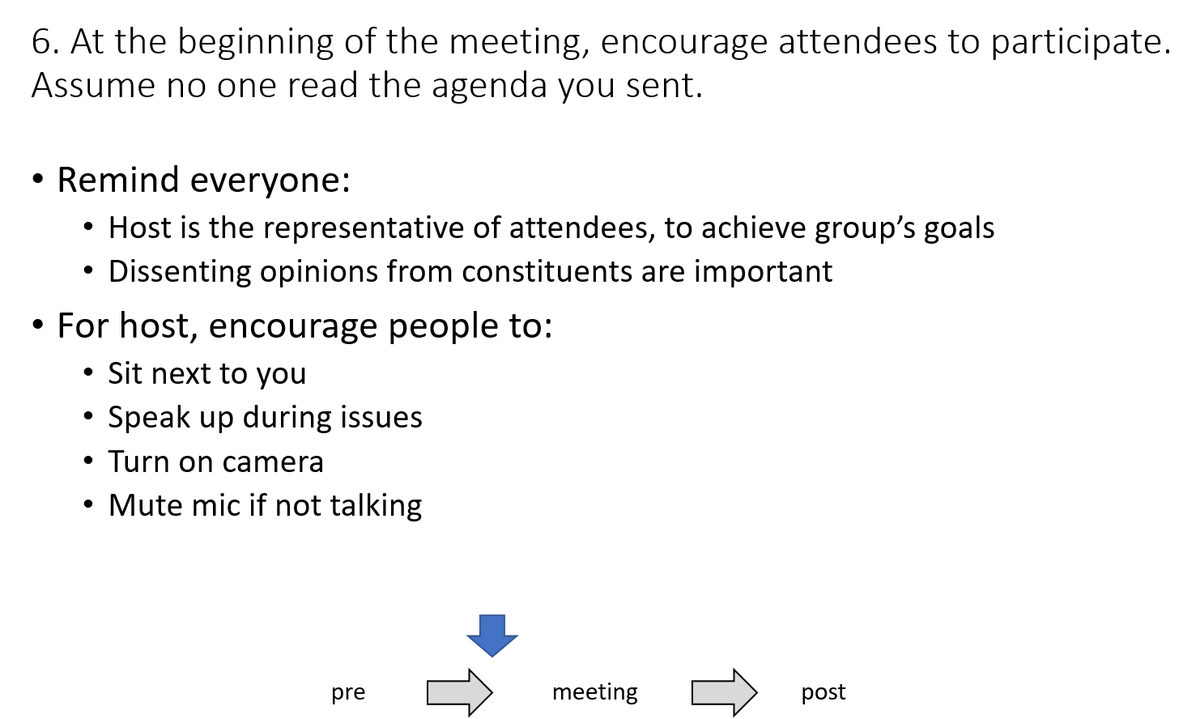
6. Assume no one read the agenda you sent, and encourage everyone to participate.
5. Designate someone to record the minutes.
6. Assume no one read the agenda you sent, and encourage everyone to participate.
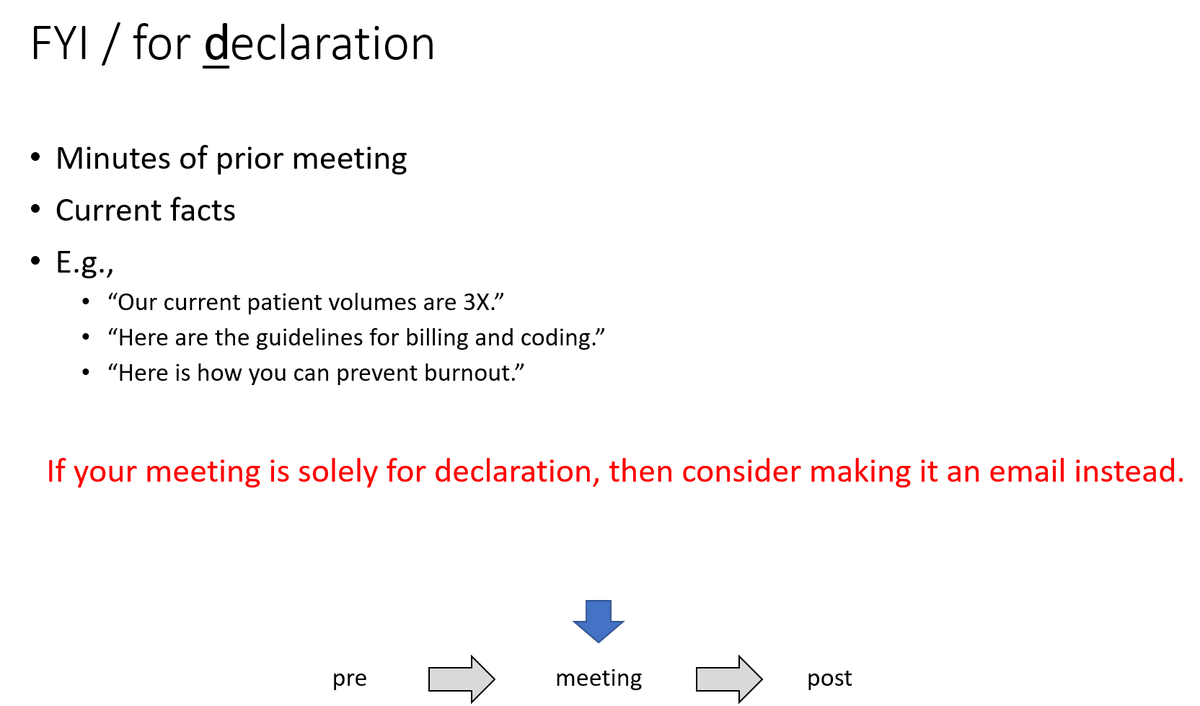
7. During the meeting, use an agenda to keep guests on task and on time.
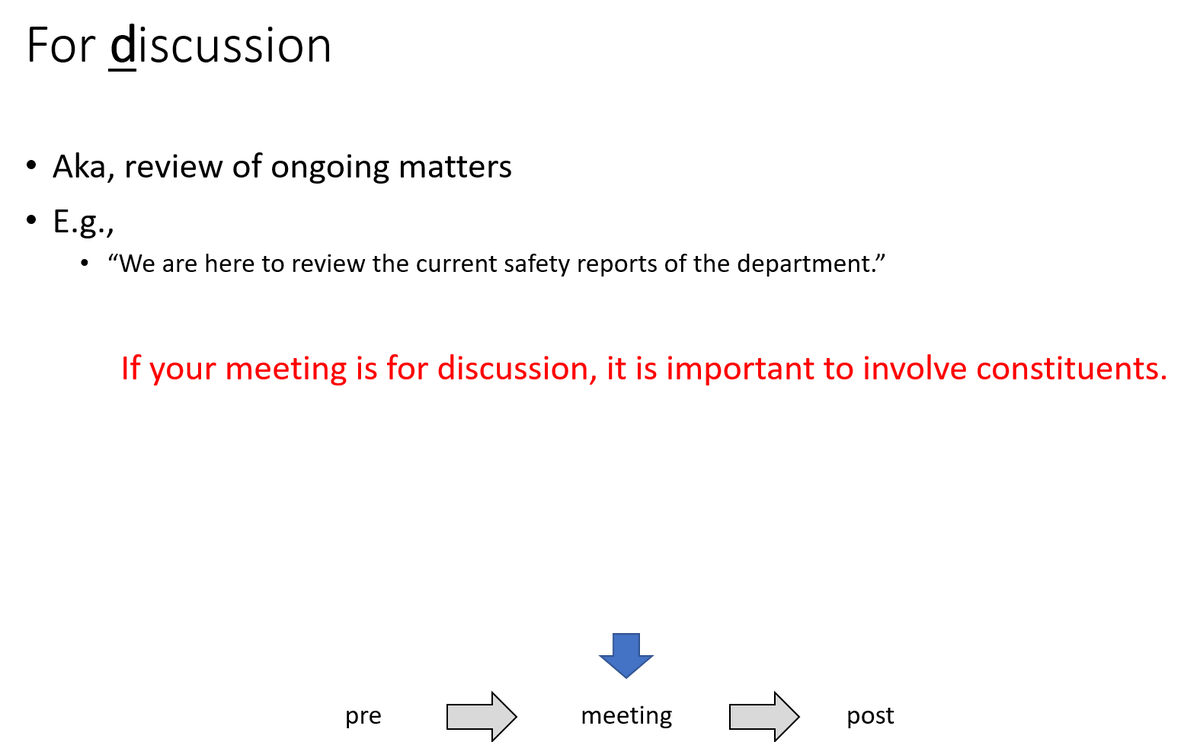
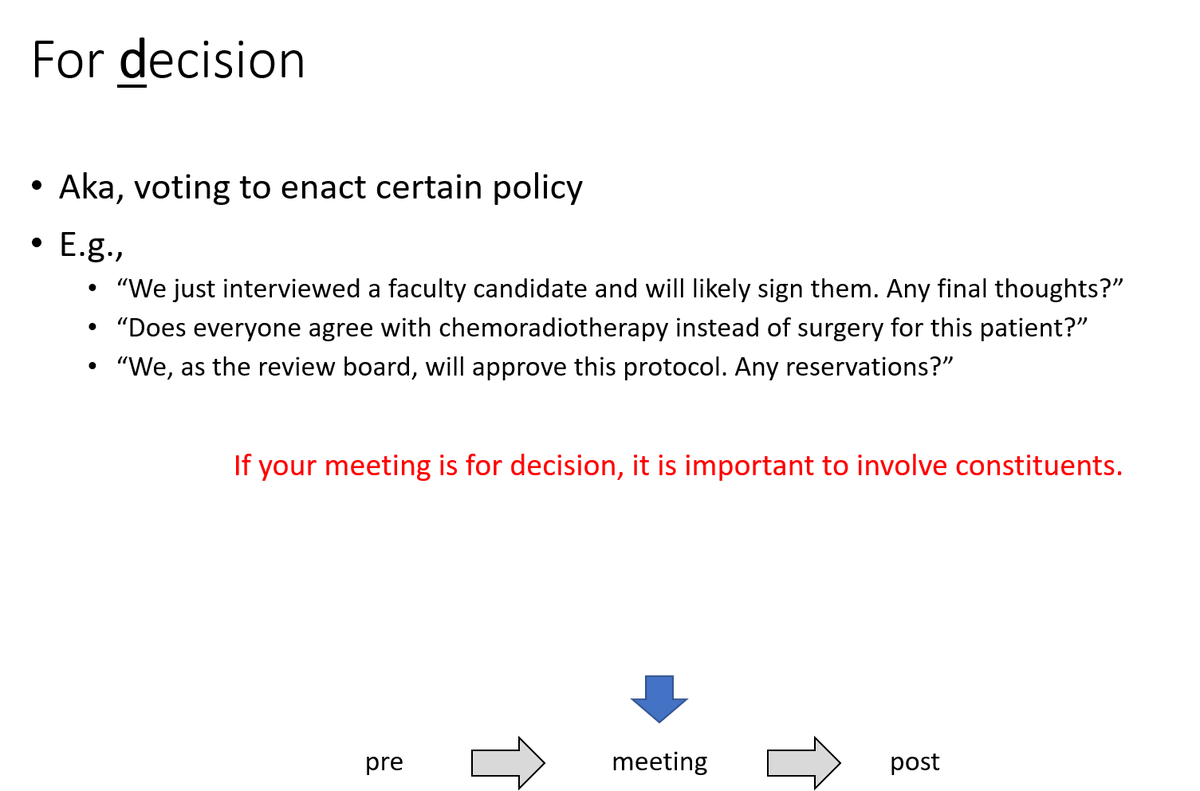
Consider the "Ds":
FYI / for declaration
For discussion
For decision
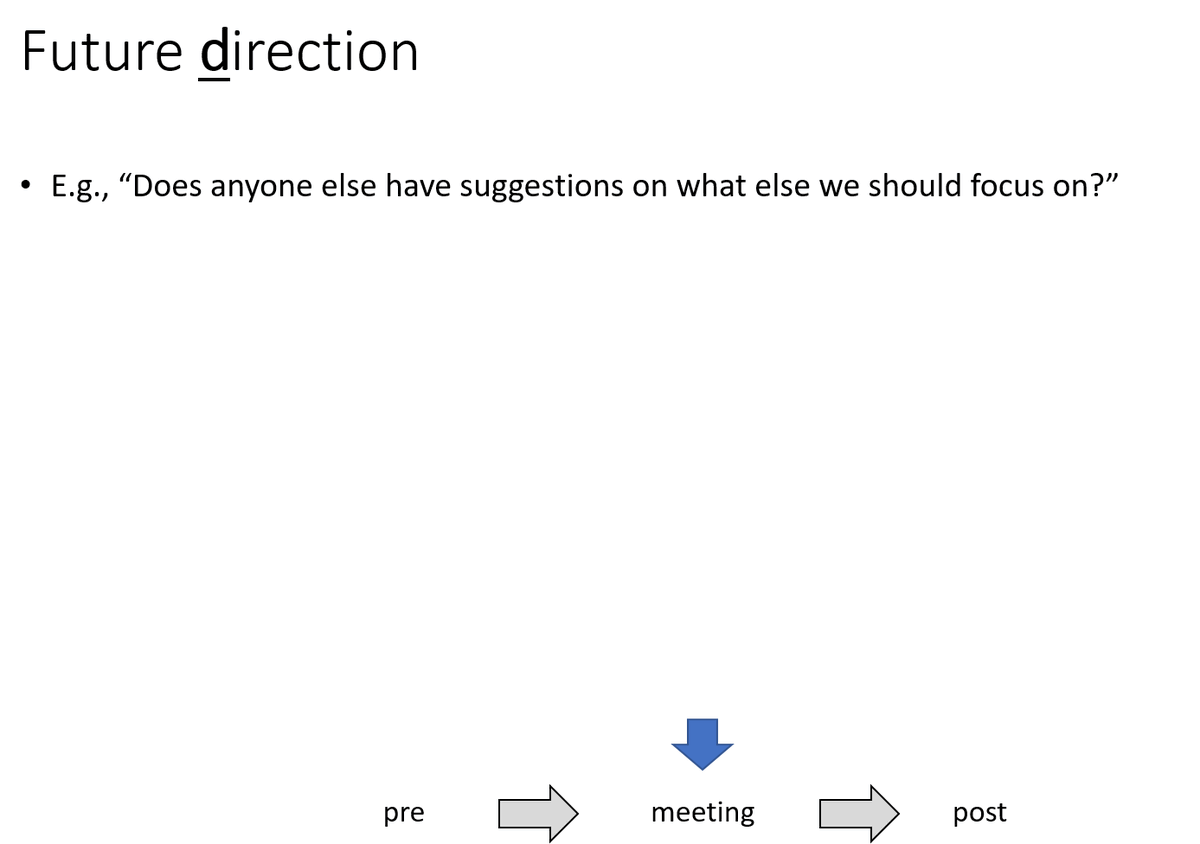
Future direction
Consider the "Ds":
FYI / for declaration
For discussion
For decision
Future direction
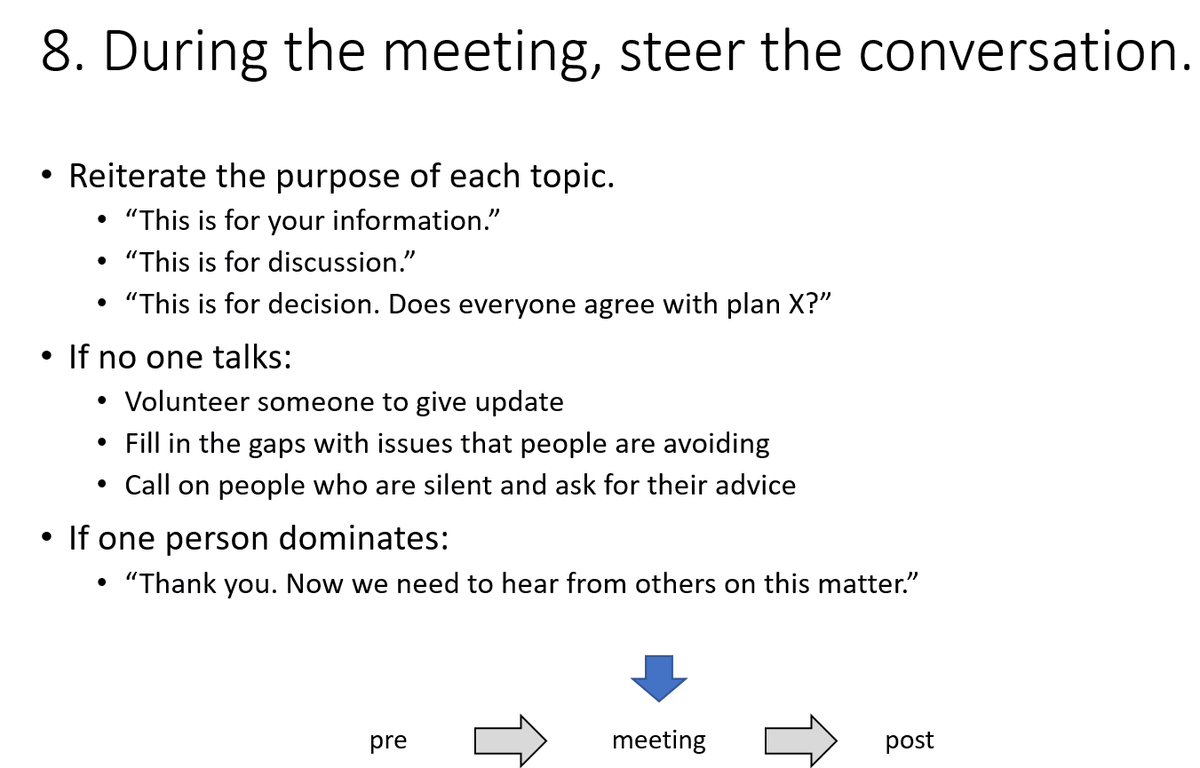
8. During the meeting, steer the conversation.
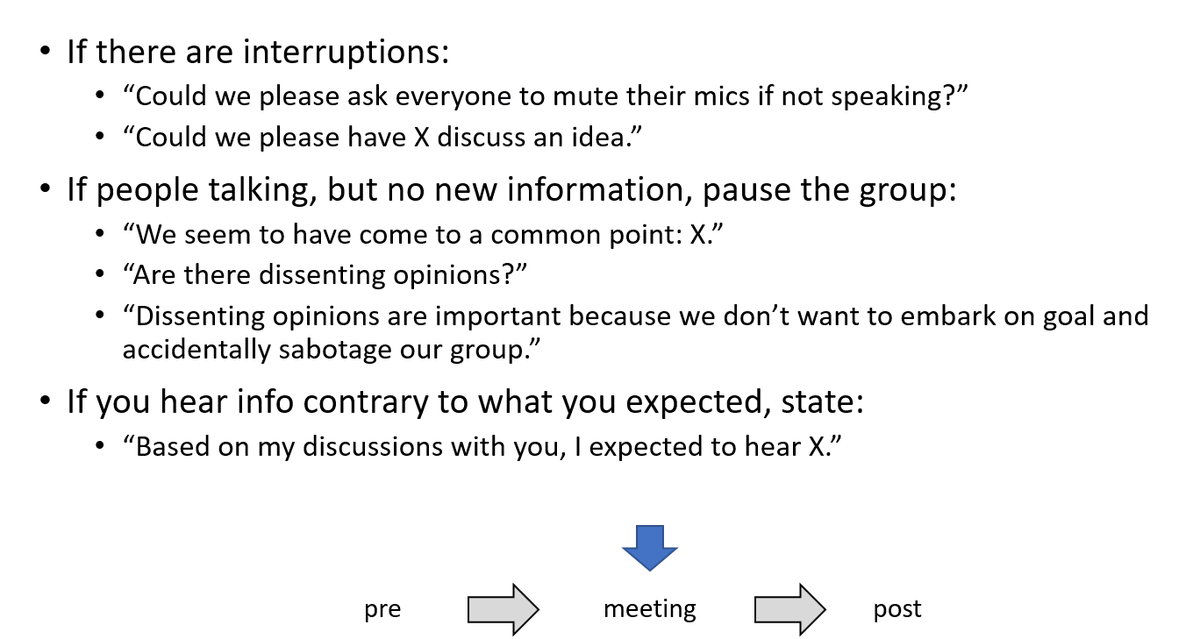
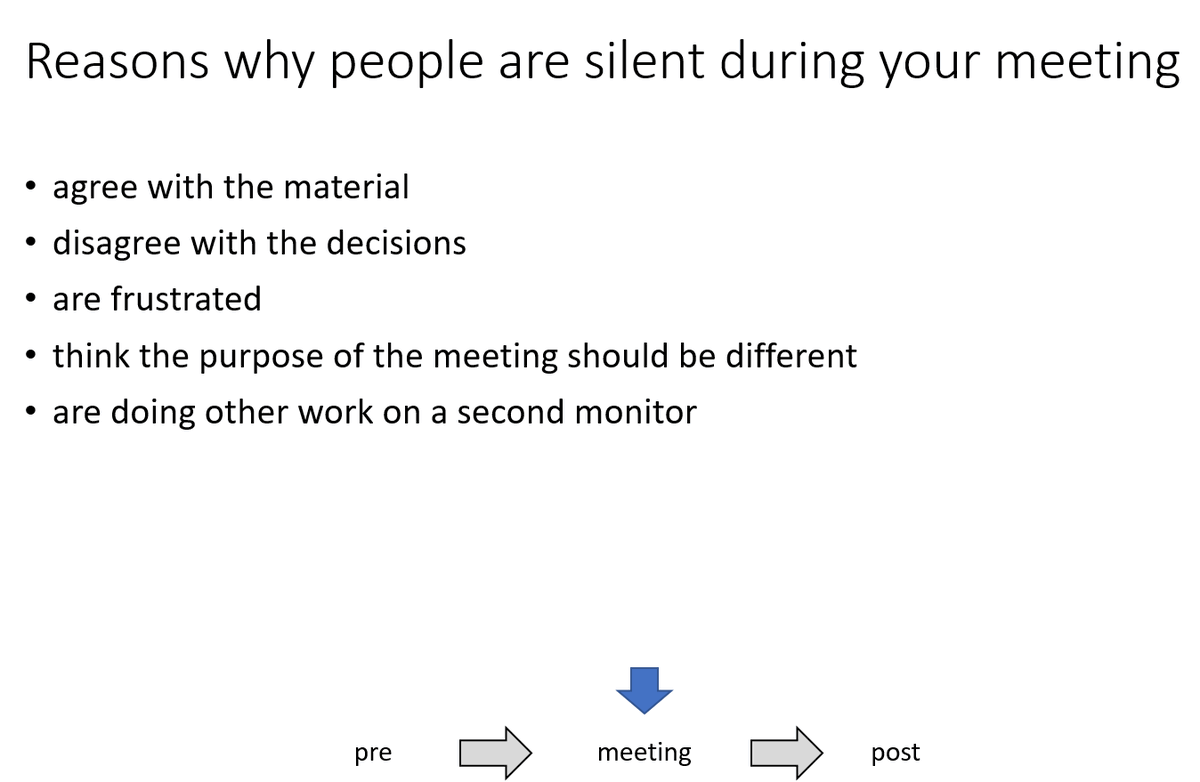
The host can lead the discussion, minimize interruptions, pause the group, encourage constituents to speak.
The host can lead the discussion, minimize interruptions, pause the group, encourage constituents to speak.
9. Do not deviate from the purpose.
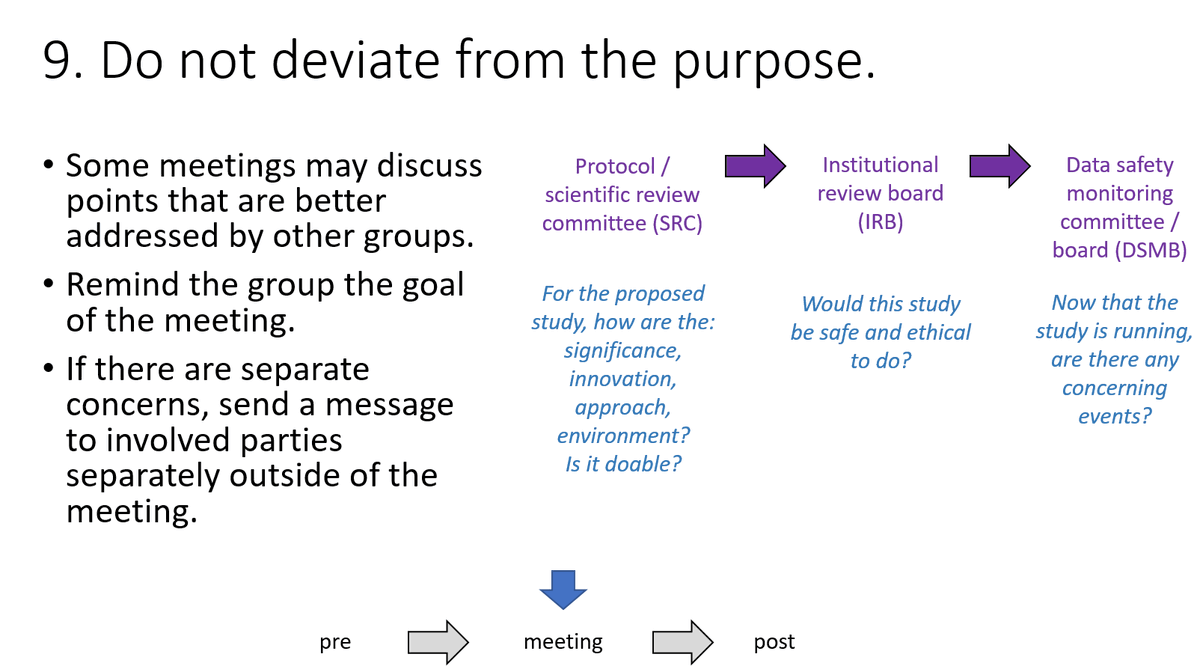
A frequent set of meetings that may deviate from their goals are the SRC, IRB, and DSMB.
Each of these meetings has a unique purpose for clinical trials.
A frequent set of meetings that may deviate from their goals are the SRC, IRB, and DSMB.
Each of these meetings has a unique purpose for clinical trials.
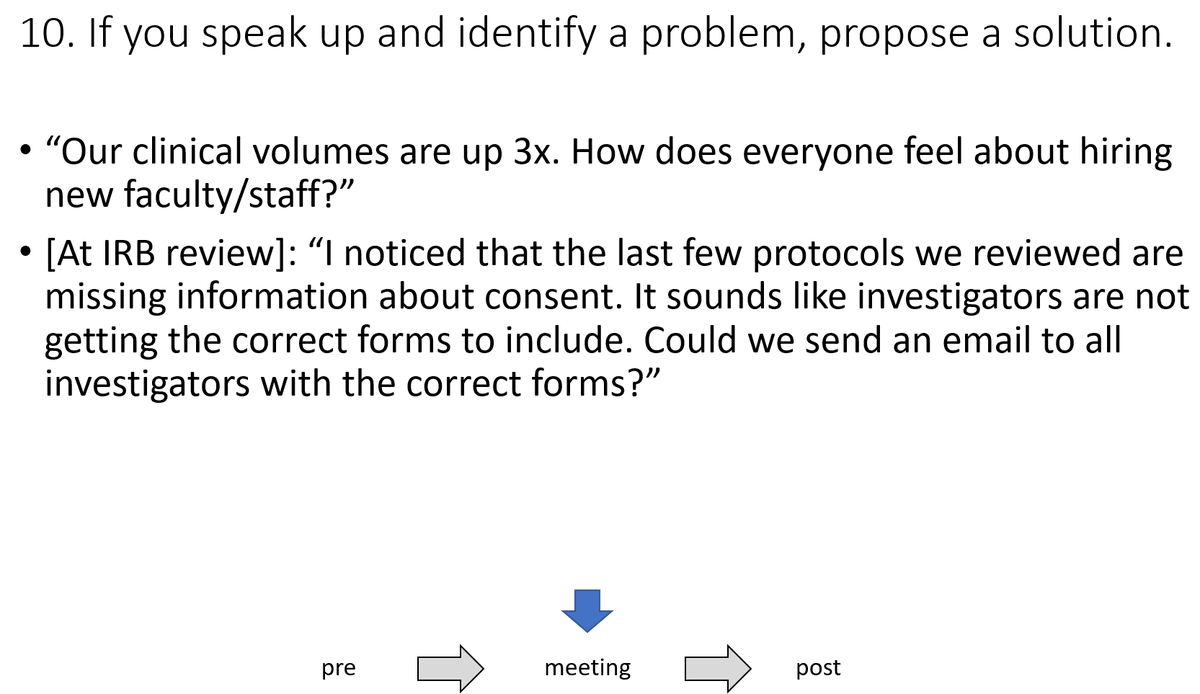
10. If you speak up and identify a problem, propose a solution.
This works for other discussions with senior leaders too. A leader may not understand the problem and possible solutions until you tell them.
This works for other discussions with senior leaders too. A leader may not understand the problem and possible solutions until you tell them.
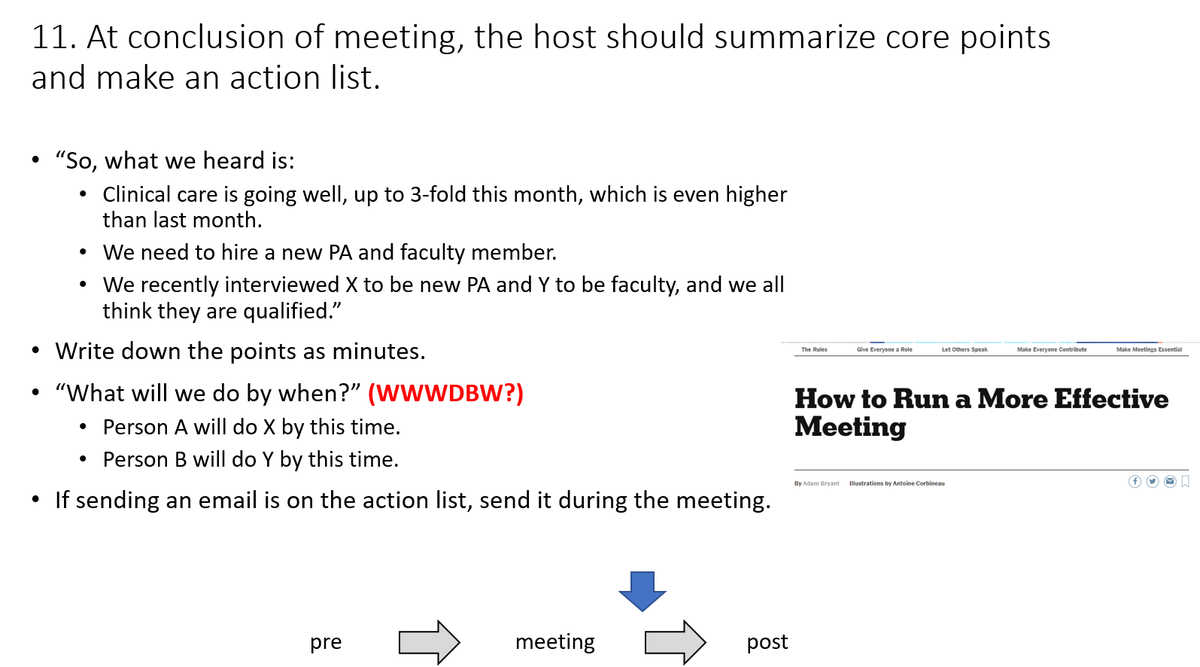
11. At the conclusion of the meeting, the host should summarize core points and make an action list.
"What will we do by when?"
If your action list includes things like sending emails, send them before you leave the meeting.
nytimes.com/guides/busines…
"What will we do by when?"
If your action list includes things like sending emails, send them before you leave the meeting.
nytimes.com/guides/busines…
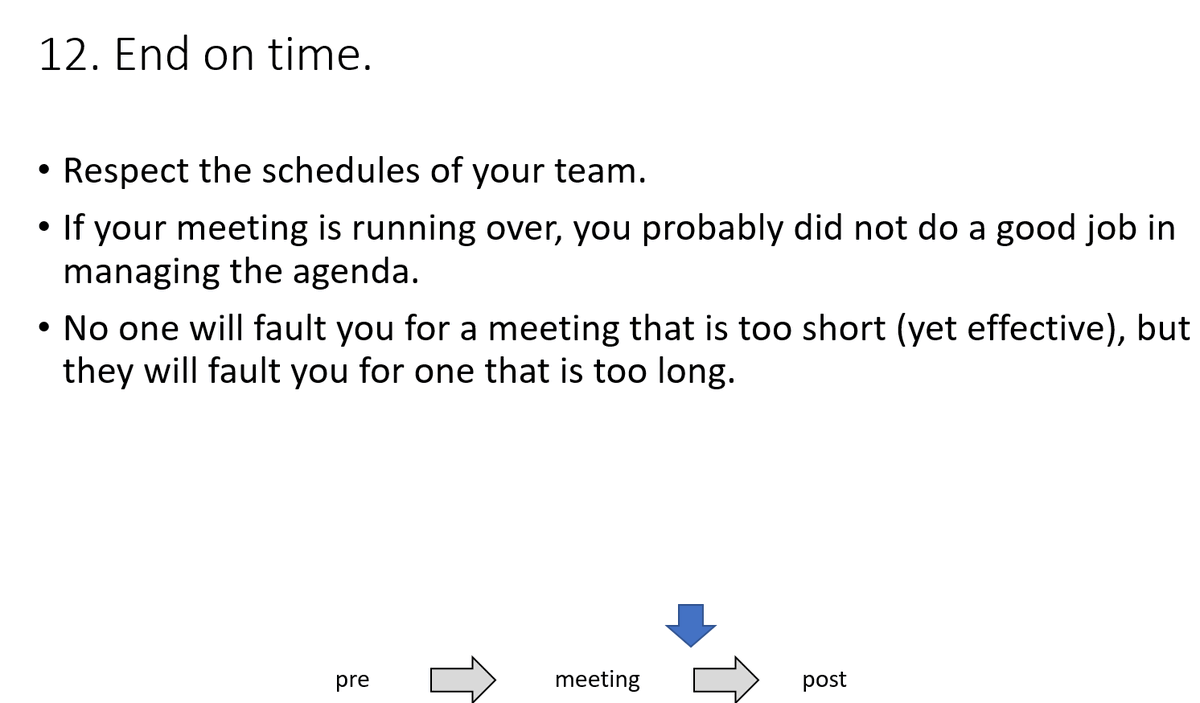
12. End on time.
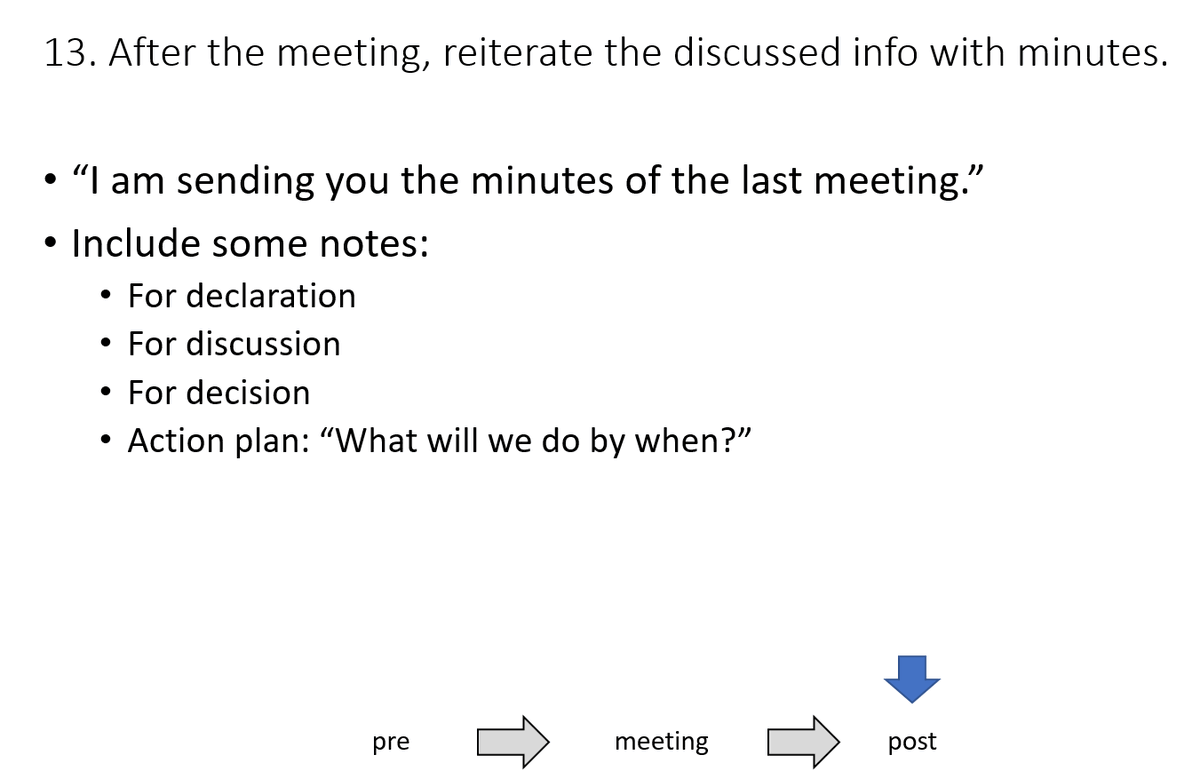
13. Reiterate the information you discussed with minutes.
13. Reiterate the information you discussed with minutes.
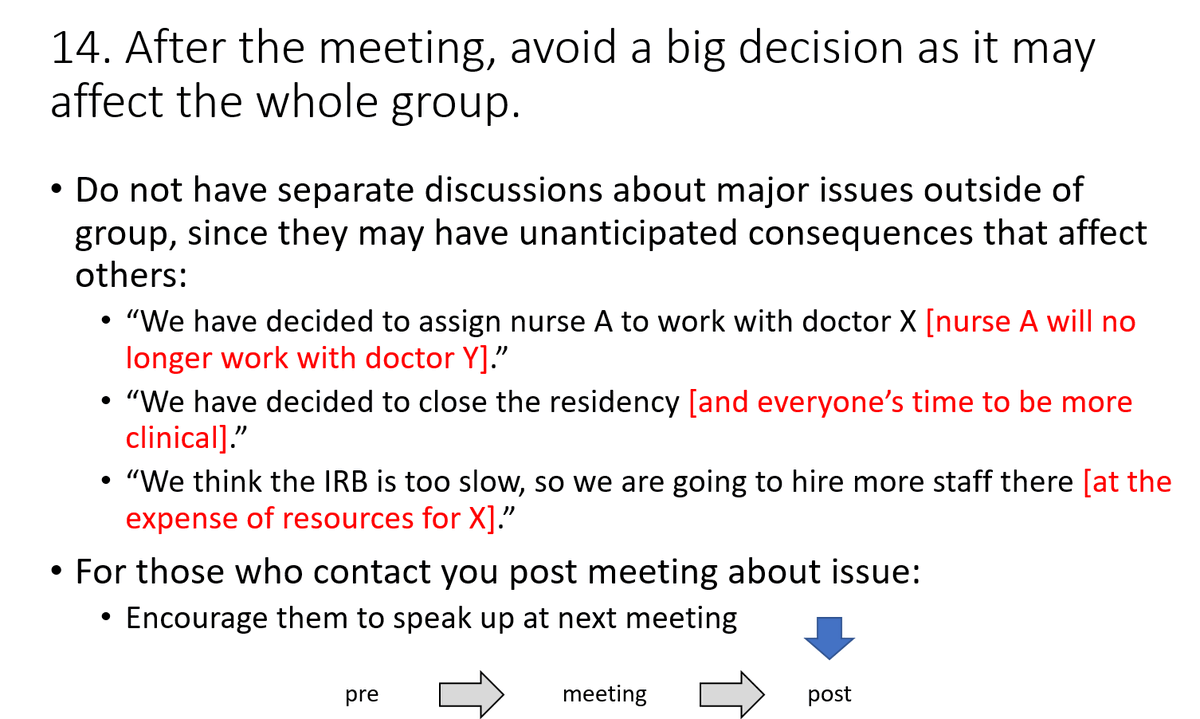
14. After the meeting, avoid a big decision as it may affect the whole group.
Decisions we make for the medical center may have unintended consequences on constituents.
Decisions we make for the medical center may have unintended consequences on constituents.
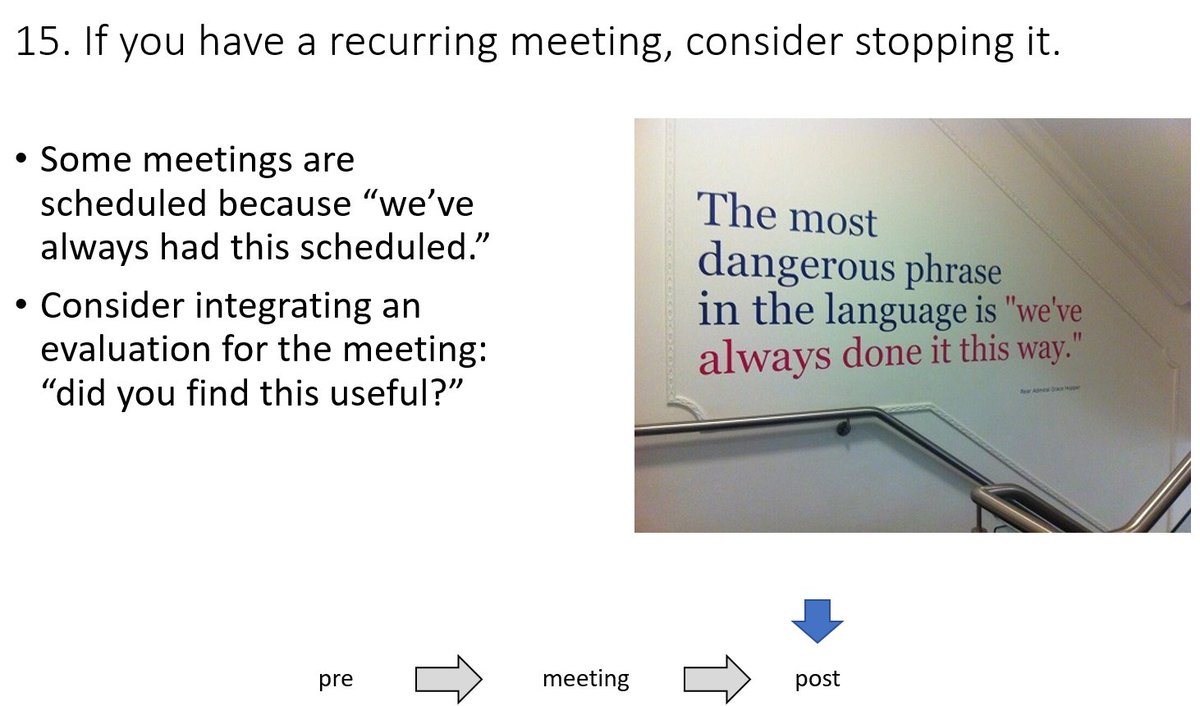
15. If you have a recurring meeting, consider stopping it.
• • •
Missing some Tweet in this thread? You can try to
force a refresh