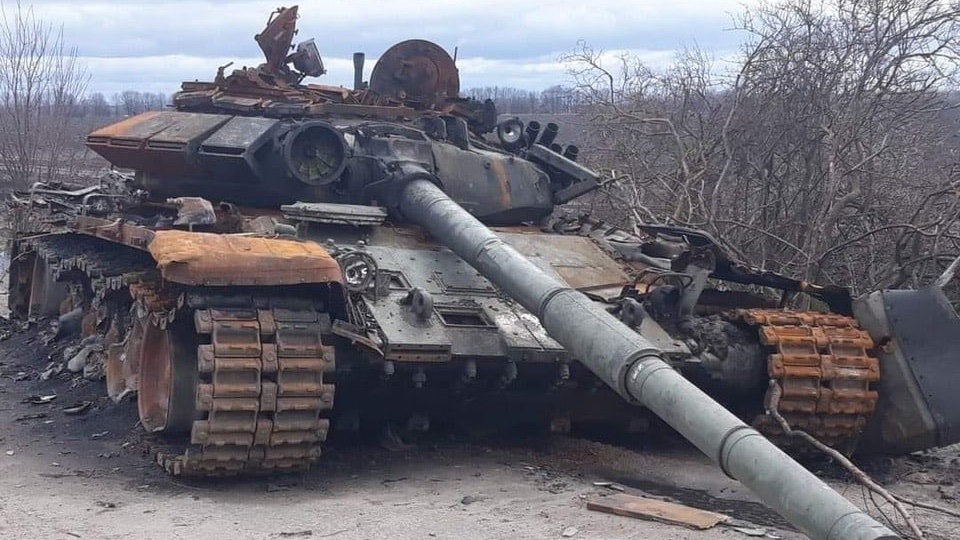
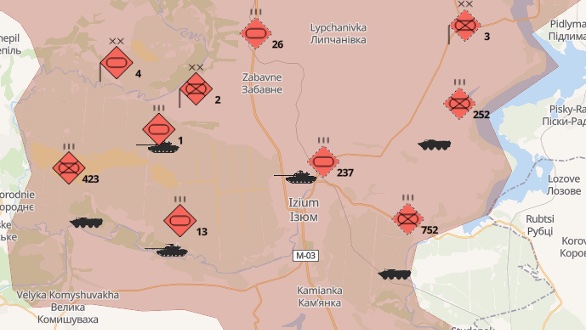
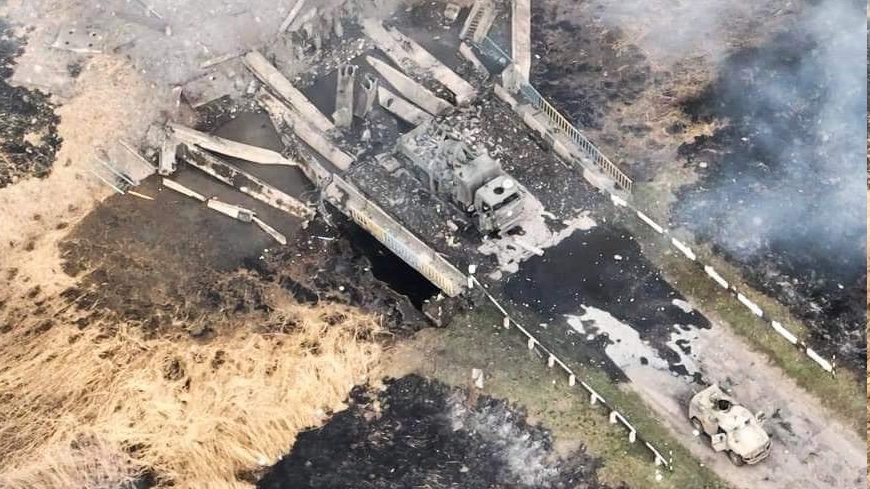
It is 59 days since the Russian invasion of #Ukraine began. Today I will update my analysis of Russia’s shift to the east and examine the prospects for Russian success there. 1/25 (Image - @UAWeapons) 
2/25 I will conduct my analysis using the construct of ‘fighting power’. This is something we use in the Australian Army to describe the optimal development & combination of the intellectual, physical and moral aspects of war. More here: researchcentre.army.gov.au/sites/default/…
3/25 The intellectual component of fighting power is knowledge and it application - of war, warfare, tactics, logistics, command and control. This includes organisational concepts, building a learning culture, adaptation, etc.
4/25 The physical component is a military organisations capabilities and functional effects. This includes equipment, training infrastructure, weapons, ammunition, trucks (HT @TrentTelenko), personal equipment, sensors, physical comms networks, etc.
5/25 Finally, the moral component is all about culture, values and legitimacy. Importantly, it includes #leadership, purpose, and the will to fight of individuals and teams.
6/25 The best military institutions are able to develop each of these components, adapt them based on experience and learning, and combine them in optimal ways (different for every operation) in order to succeed at their missions.
7/25 Key intellectual aspects that the have Russians demonstrated – in the east but throughout their invasion – have included the BTG as the core fighting formation, the ability to use ground and air power (but not well integrated) and to conduct warfare on multiple fronts.
8/25 However, there are many shortfalls in this intellectual component which will tell in their eastern operations. The Russians have not provided suitable logistic support to their combat forces. Nor have they demonstrated the capacity to integrate air and land operations well.
9/25 While some sources have noted additional logistic units deploying to the east, and Russian air sorties have increased, these fall short of a systemic fix. The air and logistic problems weren’t just a quantity issue – they are a systemic problem. These take time to fix.
10/25 Intellectually, the Russians used their combat forces piecemeal, feeding them into the fight slowly rather than generating large, powerful main efforts to achieve not just tactical success, but operational breakthroughs. This has been a significant intellectual failing.
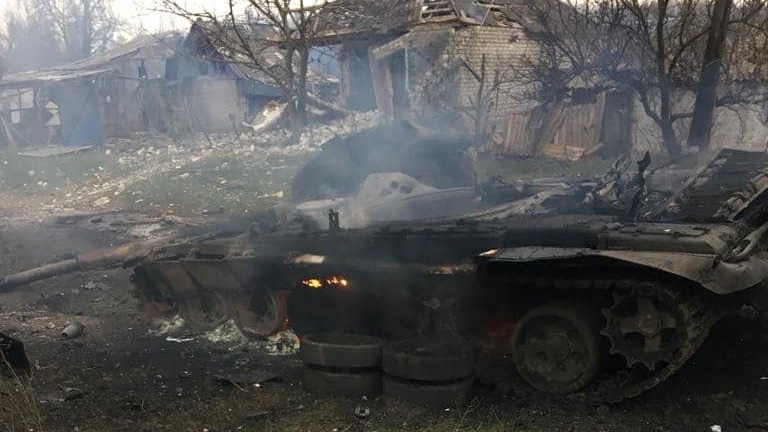
11/25 Their application of combined arms warfare appears to have been sub optimal. Tanks have been employed by themselves without infantry, engineer, aviation support. Once again, this goes against all the lessons of modern combined arms warfare. (Image - @UAWeapons)
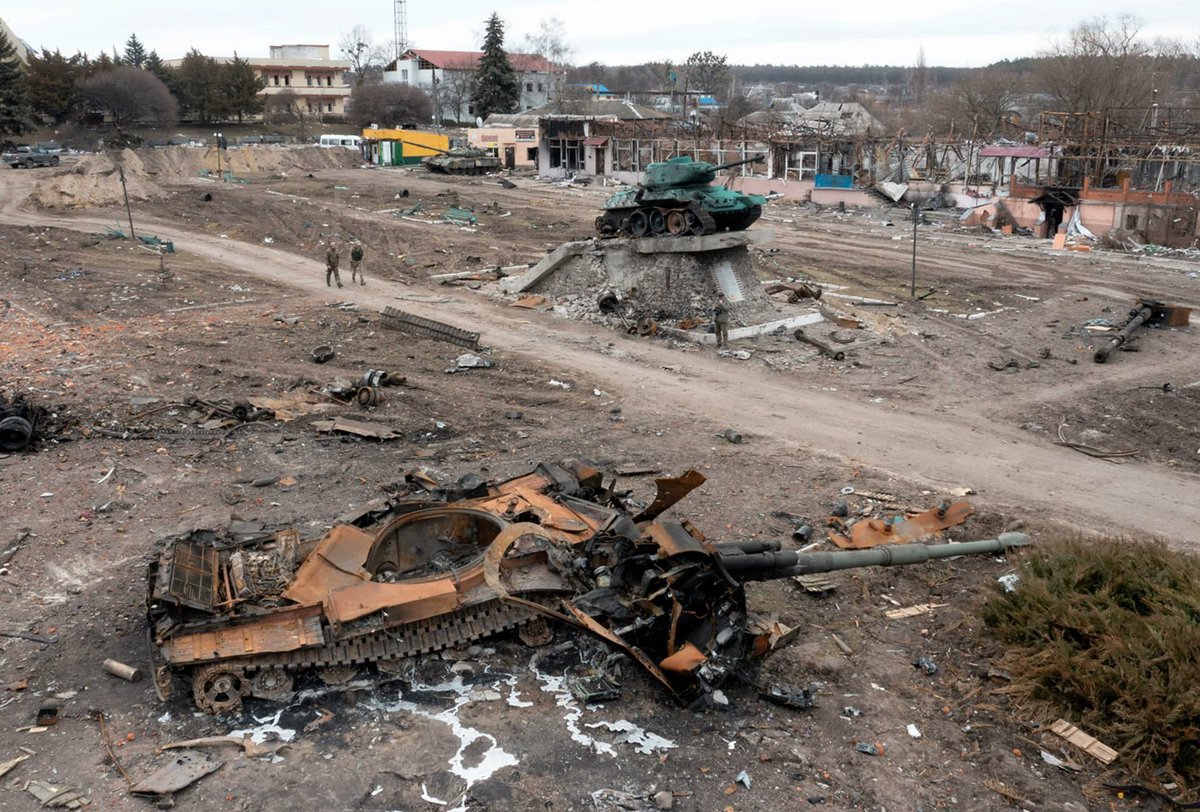
12/25 Their approach to command & control is also a problem in the intellectual domain. Russia's initial approach was to fight 3 separate wars in the north, east & south - & another in the air. Russia seeks to fix this with the appointment of a unified commander – GEN Dvornikov.
13/25 But, without a well-structured joint headquarters, trained staff, a joint culture and a functional command and control system (including communications), this may be too little, too late to enable the Russian offensive in the east.
14/25 What about the physical component of fighting power? This is a topic that needs to be caveated up front because we don’t have perfect clarity on the size of the opposing forces in the east. So my analysis uses only open source information only.
15/25 Also, there are many who caution against using force ratios as a basis for planning. I understand the reasons for this (I helped rewrite Army doctrine and have been a combat brigade commander). That said, they remain useful rough order of magnitude guides for planning.
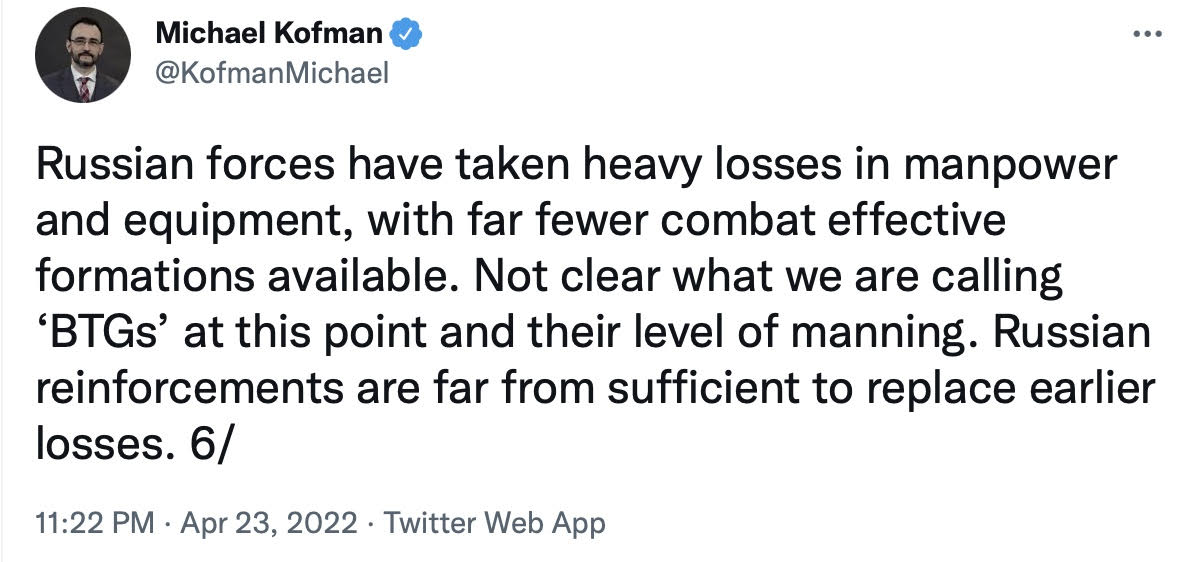
16/25 That said, the Russians do not appear to have sufficient mass to achieve a significant breakthrough in the east, despite the indications that they now have upwards of 80 BTGs there. And, as @kofman_michael notes, because of their losses, it is not clear what a BTG is now.
17/25 Opposing them, there are (according to several sources) up to 15 Ukrainian brigades, each of which has 3-5 combat battalions. This gives them somewhere between 45 and 75 battalion sized organisations opposing the Russians. (Image - @jominiW)
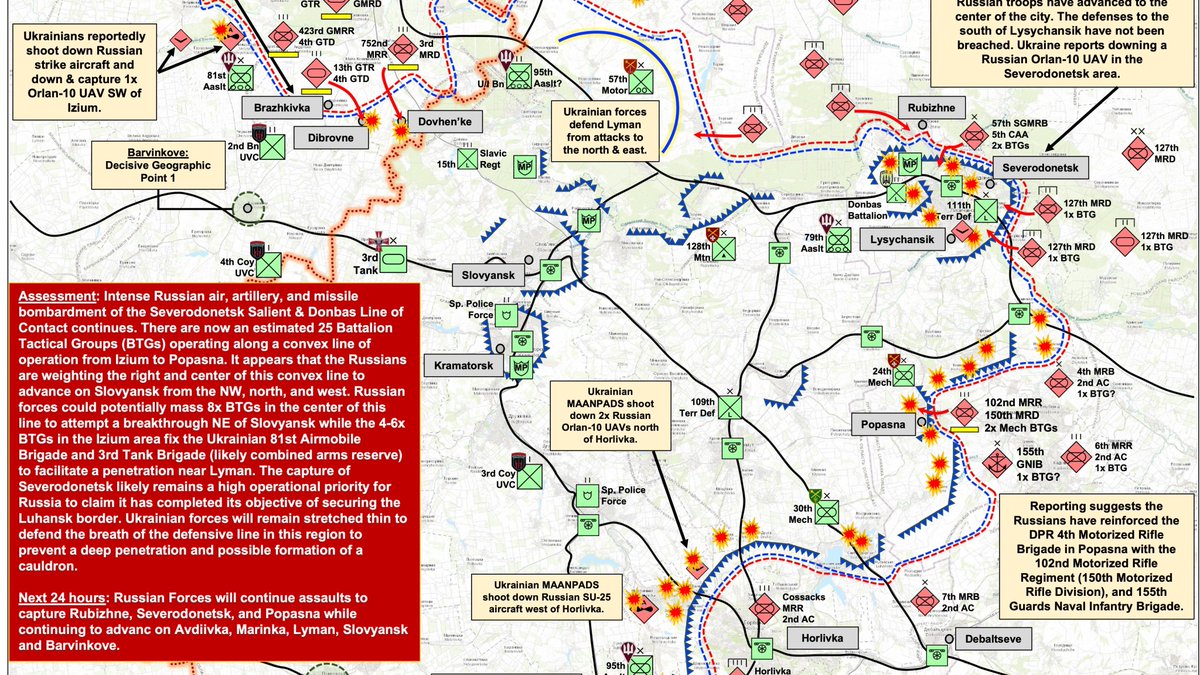
18/25 In such an operation, the Russians need to deploy forces of at least a 3:1 ratio to the defenders. They don’t come anywhere near this. And, by the way, this assumes Russian attacking forces are well led, supplied & coordinated. As we saw in the north, this is unlikely.
19/25 So, in addition to intellectual shortfalls in their fighting power, the Russians lack the physical wherewithal for significant breakthroughs in the east. While there are things we are not seeing, the ‘Donbas Maths’ don’t work in Russia’s favour for a large-scale offensive.
20/25 Finally, the moral component of fighting power. This includes Russian military culture, leadership and will. As we have seen, the Russian military culture is one that is brutal and representative of their behaviour in WW2, Afghanistan, Chechnya and Syria.
21/25 This military culture, and the atrocious behaviour it spawns, has delegitimised Russian operations (even more than their illegal invasion). It also means they are less effective as a military force, and less capable at achieving difficult military objectives.
22/25 But, perhaps leadership is the area most lacking in the moral component of Russian fighting power. Their strategic leaders planned this war poorly and have incentivised systemic targeting of cities and civilians.
23/25 At the tactical level, bad leaders have been responsible for the intellectual failings described earlier in the thread. This is a systemic problem with training, education, and organisational culture. It will not be fixed in the coming weeks.
24/25 Taken together, these three elements of Russian fighting power do not appear to support the prospect of any major Russian gains from their eastern offensive. There may be some successes, but there are multiple challenges that suggest things don't bode well for the Russians.
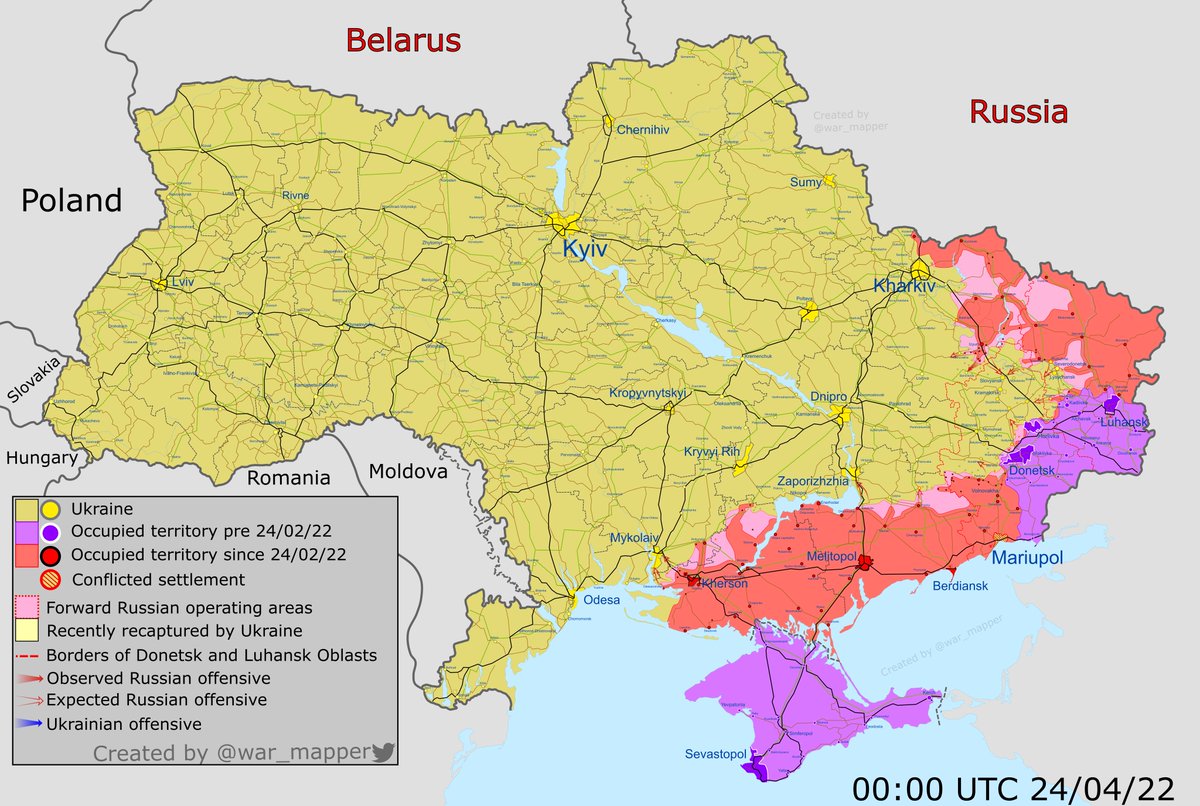
25/25 That does not mean the Russians are not dangerous, or that they won’t hold onto ground already seized in Ukraine. The Ukrainians are also very capable of mounting an offensive in the east. I will explore these topics in threads this week. End (Image - @War_Mapper)
• • •
Missing some Tweet in this thread? You can try to
force a refresh