Lots of reports currently about Ukrainian advances in #Kherson and #Luhansk. Few have been officially confirmed. However, we can draw a couple of things from these ongoing campaigns. 1/17 🧵
2/ First, what we are seeing is an excellent Ukrainian operational design playing out across the south and east of the country. While geographically separate, they are campaigns that are part of an integrated design, and part of an overall military #strategy.
3/ Second, the two campaigns are mutually supporting. The south is the most decisive region because of its economic contribution to Ukraine’s economy. The Russians know this and it is here they have deployed their most capable units.
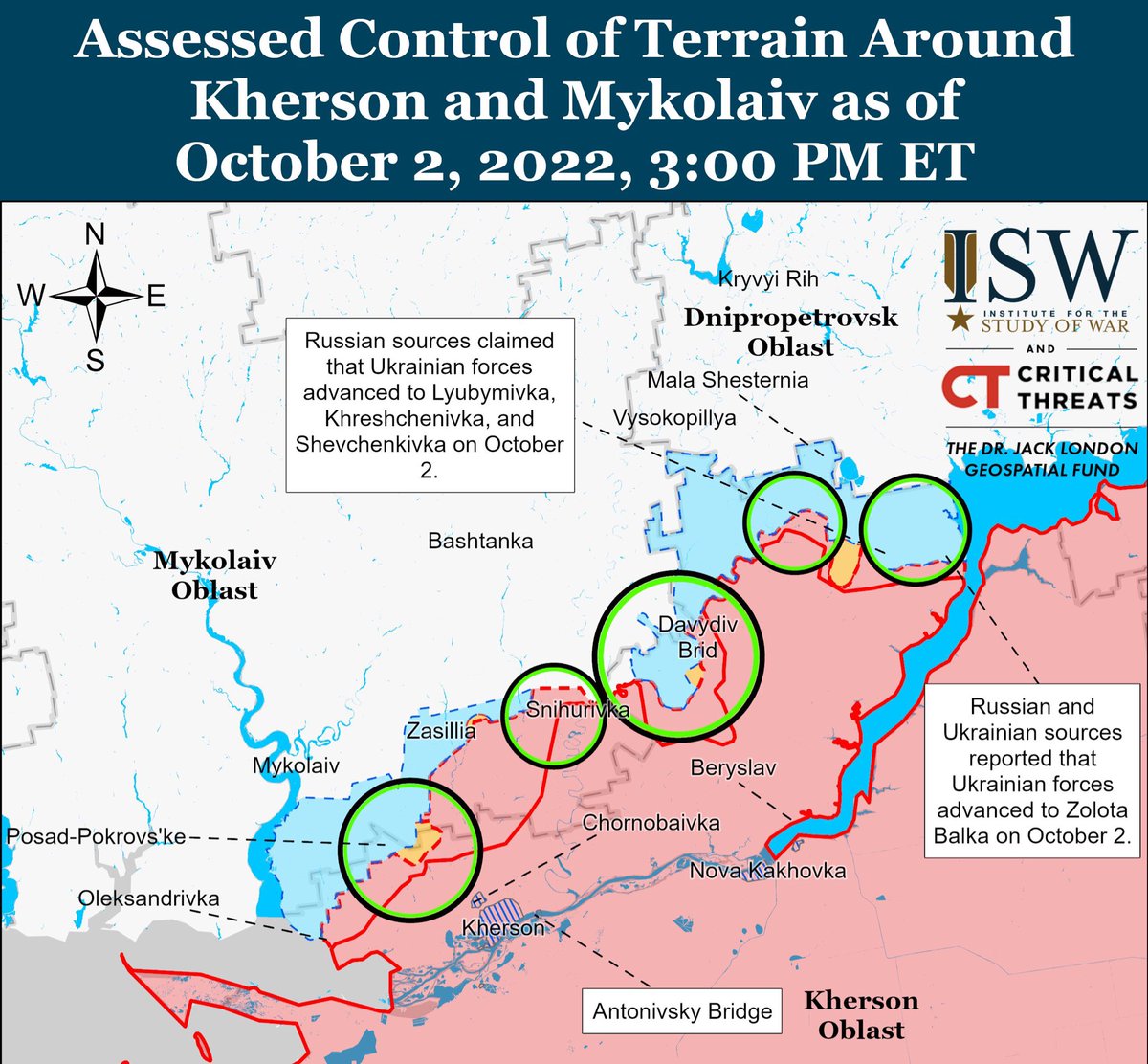
4/ But the east is also important. It is a region proximate to Russia, and therefore gains here has a significant psychological effect on the Russians. And, the north east is a key logistic route for supporting operations in the Donbas.
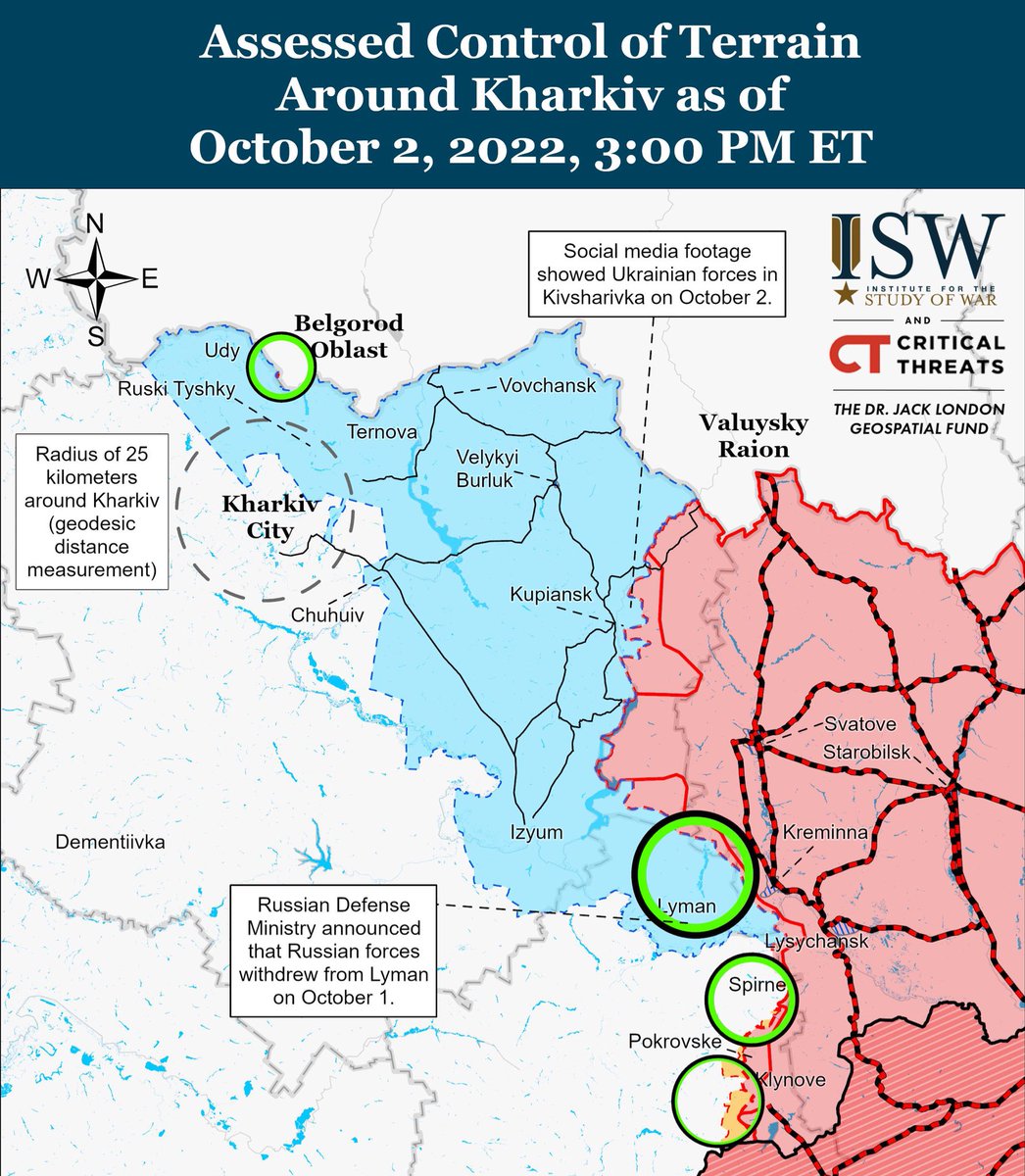
5/ Third, because the Ukrainian operational deign for these campaigns has sequenced them well. Large Russian forces were drawn to the south and at trite during by Ukrainian artillery and HIMARS. This provided an opportunity for the next part of their design, the #Kharkiv thrust.
6/ It has been a classic ‘horns of a dilemma’ for the Russians, who have to decide where to weight their forces and reinforcements between the south and north east. And at the same time, they have persisted with their pointless attacks in the Donbas.
7/ Fourth, because the Ukrainians are operating on interior lines, they are better placed to move forces between the campaigns (although it is still a good distance). The Russians, on exterior lines, have big challenges in this regard.
8/ Fifth, the Ukrainian campaigns have continued to implement the ‘strategy of corrosion’ which focusses on destruction of Russian fire support, logistics, C2 nodes and concentrations of troops that might be reinforcements or reserves.
9/ This corrodes the Russians from within. It physically reduces their fighting power and also has a profound psychological impact. But there is also something else going on while this corrosion occurs. This is the ‘recon battle’ - a fight for tactical information.
10/ This reveals weak points which the Ukrainian combined arms teams can break into and penetrate. And then conduct rapid exploitation, as we saw (and continue to see) in the #Kharkiv area. And now MIGHT be seeing in #Kherson.
11/Ultimately the result of the physical and psychological pressure of all these integrated elements of the Ukrainian campaign design can lead to cascading tactical (and potentially operational) failures by the Russians.
12/ Such failure by the Russians in the two different regions can force additional errors. For example, they might speed up the deployment of mobilized troops, competing with transport required to provide other logistical support to front line troops.
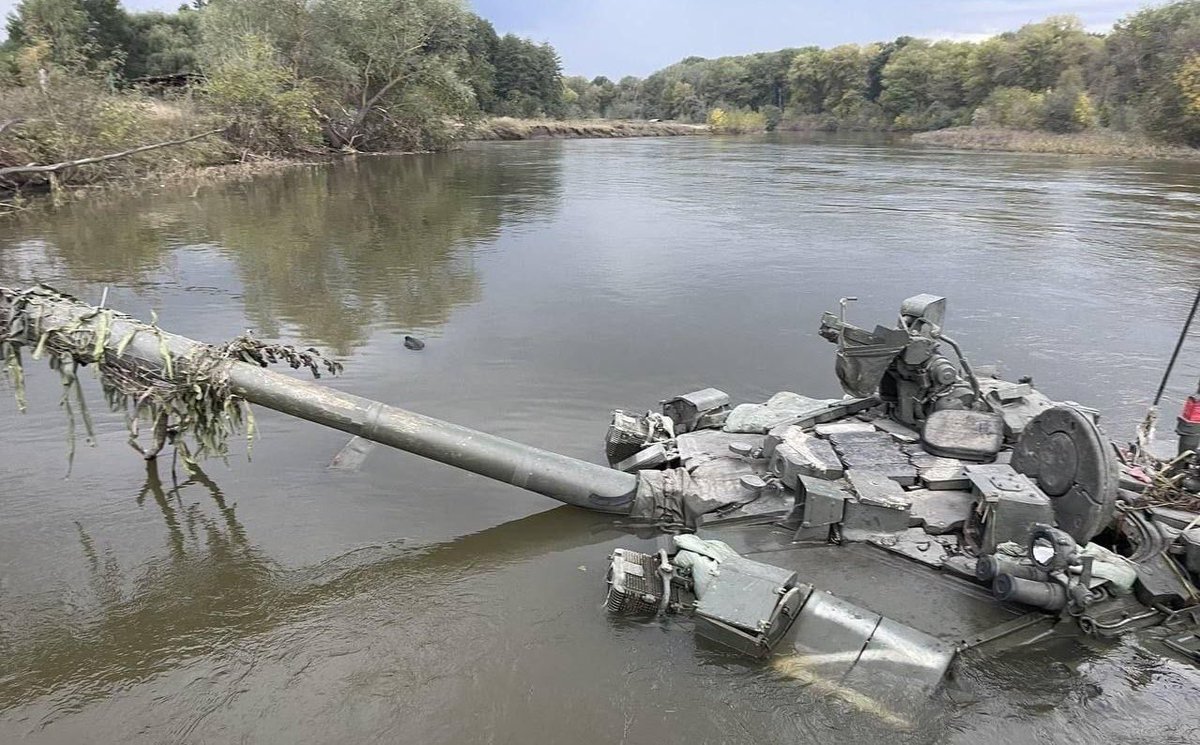
13/ It can also force the Russians into taking greater risk with assets such as their EW, fires, and Air Force (they still have one, right?). All of which provides additional opportunity for the Ukrainians to exploit, destroy more of the Russian Army and recapture more ground.
14/ This is less an operational update than an explanation of how the theory of operational design works in practice. But what we have seen recently from the Ukrainian Armed Forces is more evidence that they have a better understanding of modern multi-domain war than all of us.
15/ Their mastery of modern war - including strategic influence operations - has also induced profound psychological shock in the Russians at the political, strategic, operational & tactical levels. Russia must now respond to Ukrainian initiatives at levels.
16/ We will see over the next few hours and days how the Kharkiv and Kherson campaigns play out. And, because of pressure in these two areas, there may be opportunities elsewhere that open up for the Ukrainians to exploit. End.
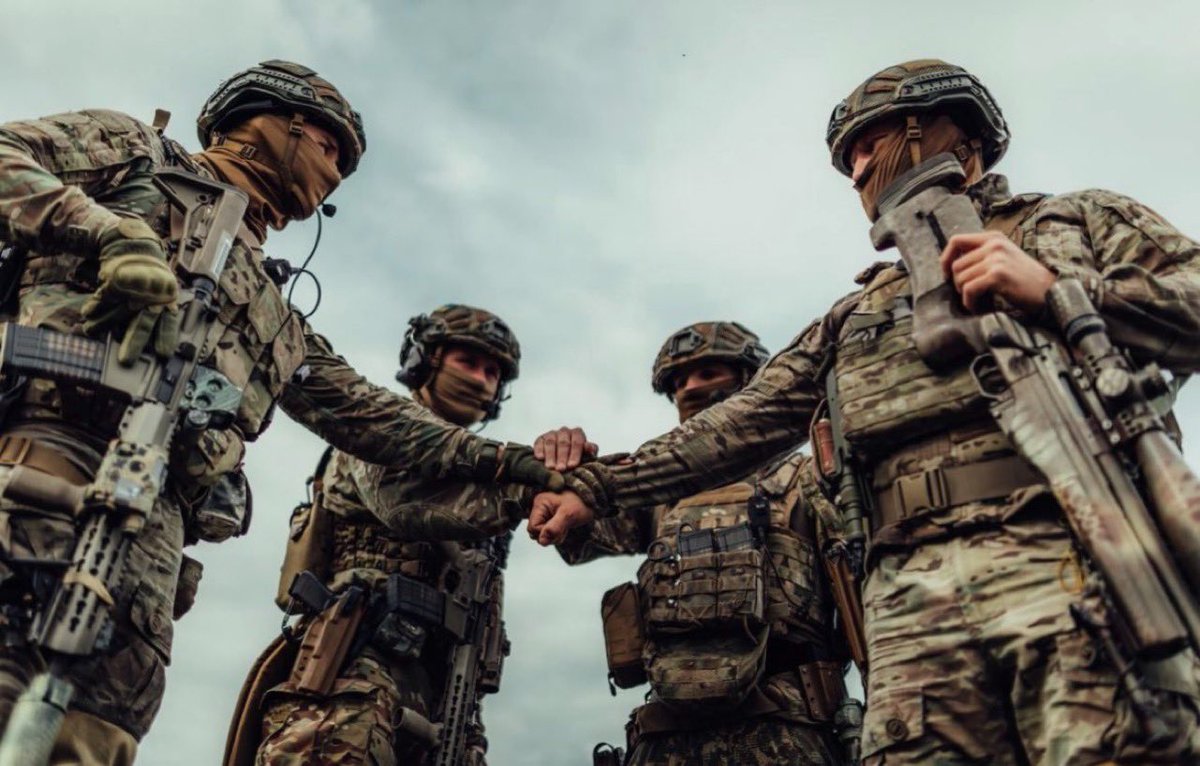
China fields a military where 70-80% of soldiers are only children. Every battlefield death risks extinguishing a family line. This demographic reality shapes Xi's strategic calculus in ways Western analysis should pay more attention to. My new piece explores this. 1/5 🧵mickryan.substack.com/p/one-child-on…
2/ China's one-child policy ended in 2015. Its military consequences are only beginning. By 2015, ~70% of PLA soldiers and 80% of combat troops came from one-child households. There is almost no historical precedent for a major military force comprised almost entirely of only children.
3/ The research is sobering. Only children are measurably less trusting, less resilient, less risk-tolerant, and less competitive than those with siblings. These are not ideal traits for combat. They are increasingly the defining traits of the PLA's human capital.
Some initial thoughts on the new Australian National Defence Strategy released today in Canberra. Overall, the focus and trajectory of Australia's defence strategy remains consistent with the 2024 version. There are some notable things worth highlighting. 1/15 🧵🇦🇺
2/ The new NDS shifts more towards a true 'defence' strategy rather than just a 'military' strategy that was described in the 2024 version. There is stronger language around national civil preparedness, fuel security, and economic security. This is good. But these are also topics that should be in a National Security Strategy - if Australia had one!
3/ Spending. There is an uptick in spending. This is a positive. There is a claim that we might get 3% of GDP on defence at some point in the future. The reality is that because we are well short of this now, trying to fund both AUKUS and the ADF at the same time with current spending is challenging (nice word for not possible), and conventional military capabilities are degrading - and not modernising fast enough.
“The advantages of threatening an American ground intervention are real. The advantages of actually committing boots on the ground are also real but more limited. The disadvantages could be numerous.” My weekly update on Iran, Ukraine and the Pacific. 1/6 🧵
2/ Ukraine has achieved something significant in the south. Ukrainian attacks there have disrupted Russian offensive planning, consumed Russian reserve forces, and demonstrated that Ukrainian combined arms operations can impose genuine operational costs. But there is also a trade-off in these southern operations. Gains in the south have come at some cost to northern Donetsk, and Russian forces retain the initiative on what is Russia’s main effort on the ground: the envelopment of Ukraine’s fortress belt and the remainder of Donetsk.
3/ In Iran, the oldest lesson in strategy keeps surfacing: military success in the air and at sea does not automatically translate into political outcomes on the ground. Iran has not been beaten. The question being probably being considered in the Pentagon, Congress and the White House is whether ground forces would ensure that the military campaign achieves a decisive political outcome - or whether it would lead to a larger and more difficult American military commitment to the Middle East with uncertain results.
The latest update on drone and missile attacks on the UAE has just been released. With this as context, I thought I would share some initial insights arising from this Iranian retaliatory campaign and the overall war against #Iran. 1/9 🧵
2/ First, the battlespace is not transparent. It is highly visible but high visibility is not the same as high wisdom about what is seen. And we must not fall into the trap of assuming that we actually are seeing everything we need to see rather than what the enemy wants us to see. Finally, no tech can see into the hearts and minds of soldiers and combat leaders, especially when they are functioning under conditions of existential threat.
3/ Second, Understanding the enemy, and how resilient it is, matters. The Iranians have been preparing for this fight for decades, will have many caches of weapons and have strategised how this might play out. And assuming that a few bombs from the sky topple a regime (especially when it has never been achieved before) badly under estimated the Iranians.
"America & Iran are fighting two very different wars and have two different theories of victory. China & others in the authoritarian learning & adaptation bloc are observing closely & learning." An assessment of where we are, & who is learning from the Iran War. 1/6 🧵
2/ This assessment examines the two wars in and around Iran: the military campaign that Washington is fighting, and the economic campaign that Tehran is waging. It then asks the following question: what are the respective theories of victory, and how does that theory play out differently for each belligerent?
3/ A theory of victory is not simply a list of military objectives. It is a coherent account of how the application of military force produces a political outcome that endures. The Trump administration entered Operation Epic Fury with a theory of the means, and a range of constantly changing ends (at least in public). It might be able to use the military to win the war, but it is unclear whether it has a longer-term plan to win the peace.
Wars are never simple. Despite the efforts of governments, war resists the clarity, certainty & clever narratives supported by AI slop videos, we wish to impose on them. The #Iran war & developments in #Ukraine, were exemplars of this during the week. 1/7
2/ Welcome to my weekly update on war and strategic competition. This week, shifting strategic initiative in Ukraine, the war in Iran, politics in the Pacific & my Big 5 reading recommendations.
3/ In #Ukraine, Ukrainian forces achieved some of the most operationally significant gains of the past year, reclaiming territory in the south while striking deep into Russia’s military-industrial complex. Diplomacy continued its chaotic and erratic journey.