2/ The Ukrainian General Staff’s daily reports from December 1 to 15 uniformly state that Ukrainian officials have not detected Russian forces in #Belarus forming strike groups necessary to attack northern #Ukraine.
3/ There are no observed open-source indicators that Russian forces are forming strike groups within #Belarus as of December 15, and Belarusian forces remain extremely unlikely to invade #Ukraine without a Russian strike group.
4/ The following 4 indicators support a forecast cone that #Russia may be setting conditions to attack #Ukraine from #Belarus in winter 2023. ISW will continue to monitor the situation and provide updated assessments.
1. Russia’s military presence in #Belarus has been growing since the fall of 2022.
2. Ukrainian officials claim that Russian forces in #Belarus do not have specific plans to return to #Russia after completing their training.
3. Senior Ukrainian officials are increasingly warning that Russian forces may attempt to attack Kyiv.
4. Elements of the 1st Guards Tank Army—in principle #Russia's most elite heavy formation that could form the core of a strike force—are reportedly training in #Belarus.
5/ It remains extraordinarily unlikely that Russian forces would be able to take Kyiv even if Russian forces again attack from Belarus. Russian forces are extremely unlikely to be more successful at attacking northern Ukraine in the winter of 2023 than they were in February 2022.
• • •
Missing some Tweet in this thread? You can try to
force a refresh

NEW: Multiple sources published what appears to be the text of the US-Iran agreement. Neither the United States nor Iran has officially published the text of the agreement at this time. The leaked text of the agreement, if accurate, indicates that Iran has emerged from the conflict in a stronger strategic position, however. ⬇️
The MoU reportedly grants Iran significant economic relief, which Iran would likely use to try to reconstitute its missile, drone, and nuclear programs, as well as the Axis of Resistance. The MoU states that Iran could receive further economic relief by fulfilling its commitments in the MoU and reaching a final agreement that addresses key nuclear issues. ISW-CTP has not observed any indications that Iranian decision-makers are willing to make concessions on the nuclear issues that would be included in a final agreement, however.
Iran will likely try to exploit the agreement’s seemingly ambiguous language about the Strait of Hormuz to try to enforce its control over shipping through the strait. The reported text of the agreement does not explicitly bar Iran from “managing” the strait, and Iran could therefore continue to insist on vessels using its illegal traffic separation scheme in Iranian territorial waters and paying “fees” to the IRGC Navy.
The Iranian regime is interpreting the clause in the agreement about a ceasefire “on all fronts” as a requirement for Israel to cease operations against Hezbollah and withdraw from Lebanon. This interpretation is part of a broader Iranian effort to preserve Hezbollah by trying to secure Israel’s capitulation in Lebanon.
The reported MoU terms indicate that Iran structured the agreement in a way to try to limit the United States’ ability to impose renewed pressure on Iran during the 60-day negotiations period and thereby make it more challenging for the United States to extract concessions from Iran during the negotiations.
Iranian officials and media are largely framing the US-Iran MoU as an Iranian victory that codifies Iran’s military achievements. The Iranian regime’s English-language media outlet, Press TV, argued on June 16 that the MoU is not simply a ceasefire, but rather represents the “political codification of a battlefield reality.”
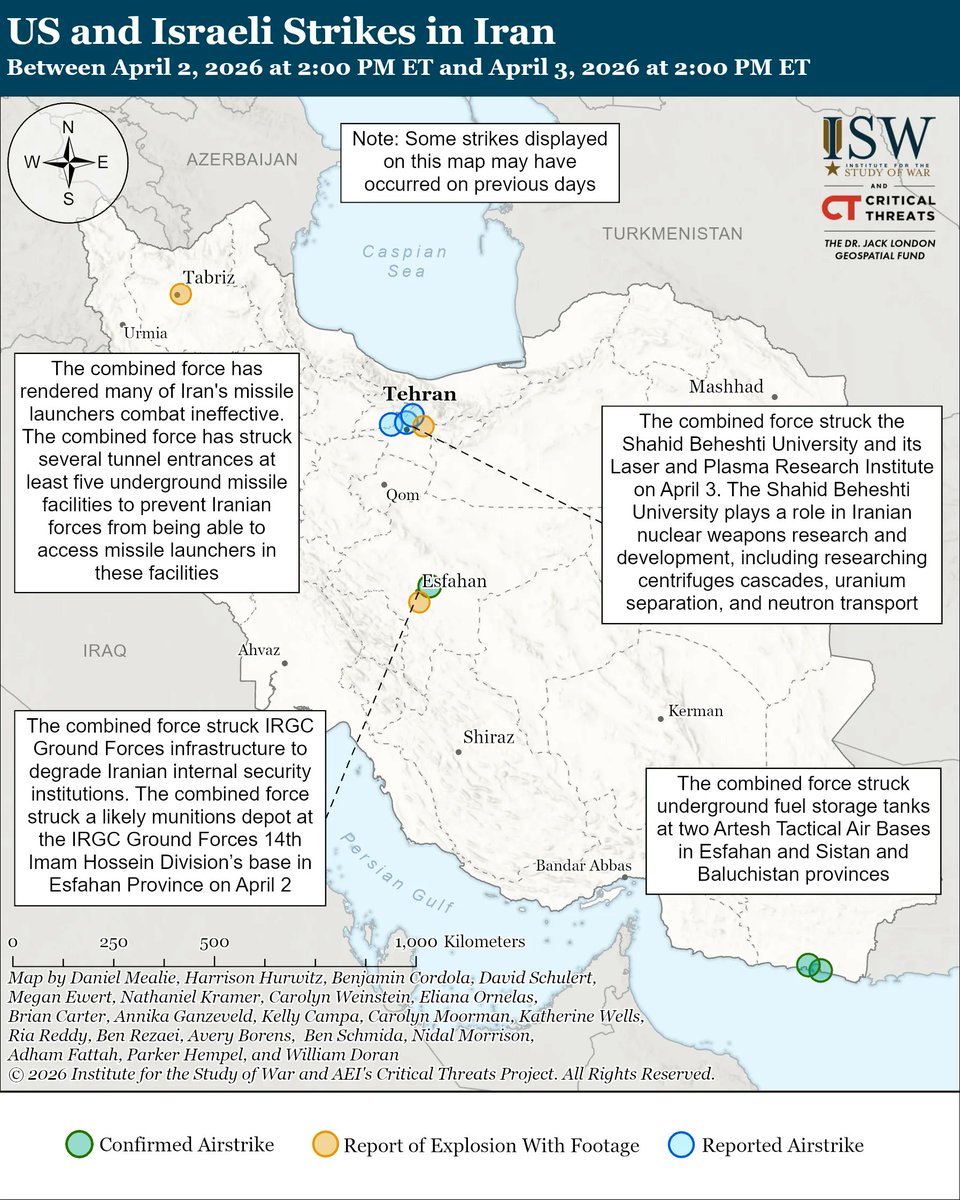
MORE 🧵(1/5) | US and Israeli Air Campaign: The combined force killed an IRGC Aerospace officer on April 1 as part of the decapitation campaign against Iranian military officials.
The combined force struck a likely IRGC Ground Forces munitions depot in Esfahan Province as part of its effort to degrade Iranian internal security institutions.
The combined force struck the Laser and Plasma Research Institute (LAPRI) on April 3, which is a specialized research center at Shahid Beheshti University in Tehran Province. The Shahid Beheshti University plays a role in Iranian nuclear weapons research and development, including researching centrifuge cascades, uranium separation, and neutron transport.
The combined force struck underground fuel storage tanks at two Artesh Tactical Air Bases (TAB), including the 8th TAB in Esfahan Province and the 10th TAB in Sistan and Baluchistan Province.
2/ Iranian Response: Iran has launched at least nine missiles targeting Israel since ISW-CTP’s last data cut off on April 2. This figure is estimated from IDF and Israeli media reports about IDF-issued missile detections and interceptions. Iran launched the missiles in eight waves of attacks, which suggests that most of the launches only contained one or two missiles. This rate is consistent with recent Iranian launch rates targeting Israel over the past few weeks, but Iran has fired slightly fewer barrages targeting Israel in the past three days.
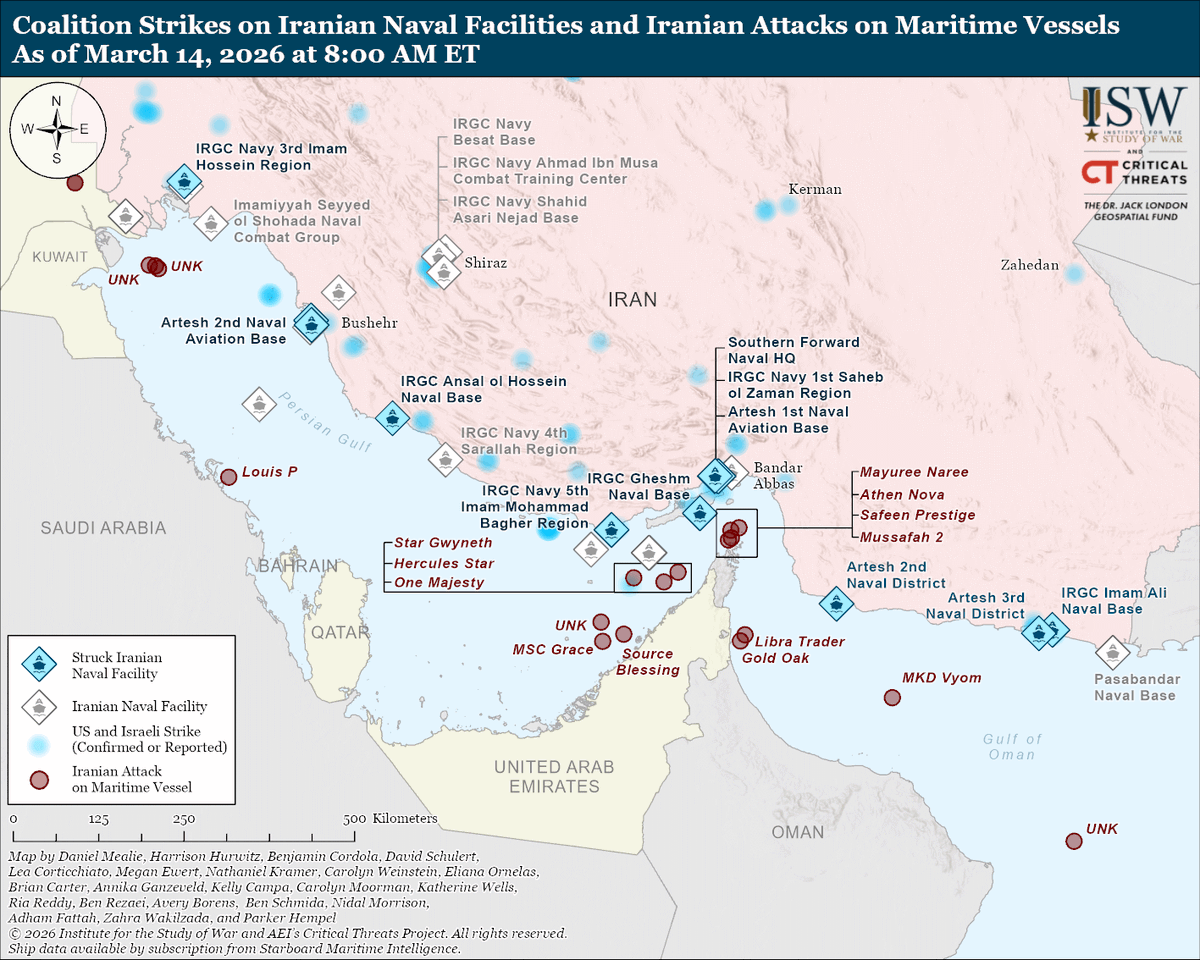
3/ Iranian strikes and intercepted fragments damaged several Gulf energy facilities on April 3. Iran continues to target Gulf energy infrastructure, which is part of the Iranian effort to drive up global energy prices and coerce the Gulf states into pressuring the United States and Israel to end their campaign.
Iran fired slightly more projectiles targeting the UAE on April 3 than on any day within the last week. Iran fired 47 drones, 18 ballistic missiles, and four cruise missiles targeting the UAE and killed at least one person. The volume of Iranian missile and drone fire targeting the UAE this week is about less than half of the volumes that Iran fired during the first week of the war, however (see graph below). The drop in volume after the first week of the war is likely the result of combined force strikes targeting Iranian missile and drone assets.
NEW | Special Report: The war in Iran is currently in a phase in which the military trajectory is relatively positive: the United States is steadily destroying Iran’s ability to use its most essential tool in the war — drone and missile attacks — which in turn underpin the entire Iranian strategy.
Iran has still done some damage to US forces, and it is still firing drones and missiles, though the overall attack rate is slowly decreasing. These attacks still pale in comparison to the major attacks Iran sought to conduct in an existential war and have caused neither operationally significant damage nor widespread casualties.
The US-Israeli combined force will need time to achieve its military objectives and prevent Iran from inflicting further political and economic pain upon the United States and its allies in the region, but the campaign remains incomplete, and it is too soon to forecast its outcome. Declaring it an operational failure is unquestionably premature.
BREAKING: The combined US-Israeli force appears to be increasing its targeting of the Iranian internal security apparatus after killing Iranian Supreme Leader Ali Khamenei on February 28. The targeting of internal security institutions is consistent with the United States and Israel’s stated objective of toppling the Iranian regime. (1/3)
2/ The Israel Defense Forces struck the Sarallah Headquarters in Tehran, which is responsible for security in Tehran and plays a significant role in suppressing internal dissent.
The combined force also struck the Law Enforcement Command (LEC) Headquarters in Tehran. The LEC is the regime's first line of defense against protests.
3/ The combined force reportedly struck Basij bases in Kermanshah and Tehran, including a base that was reportedly involved in the suppression of the December 2025-January 2026 protests.
The targeting of Iranian internal security institutions could degrade Iranian security forces’ ability and willingness to quell potential internal unrest against the regime.
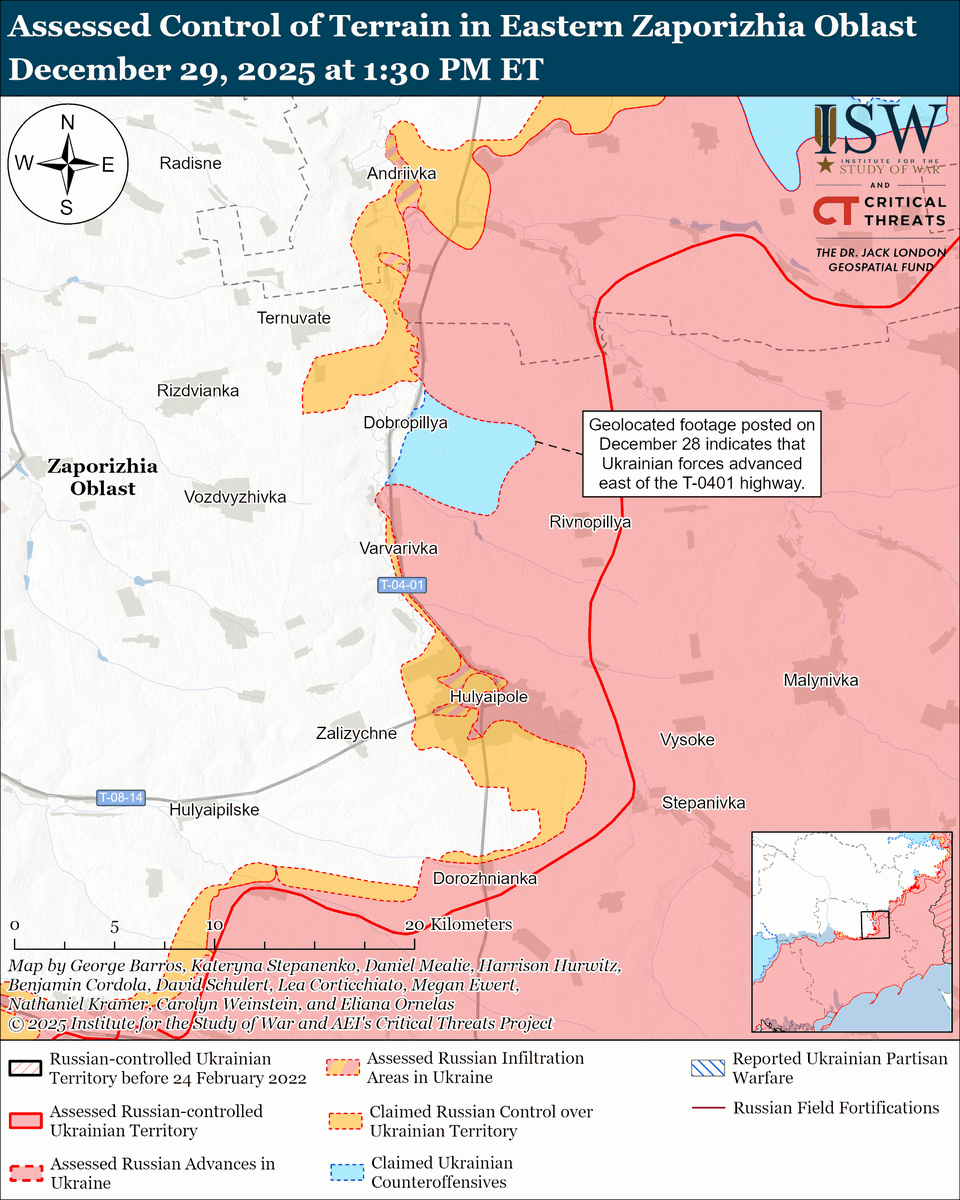
NEW: The Kremlin accused Ukraine of conducting a long-range drone strike targeting Russian President Vladimir Putin’s residence in Novgorod Oblast on December 29. 🧵(1/3)
The circumstances of this alleged strike do not conform to the pattern of observed evidence when Ukrainian forces conduct strikes into Russia.
Ukrainian President Volodymyr Zelensky refuted the alleged strike against Putin’s residence in Novgorod Oblast and warned that Russia will use this claim to justify strikes against Kyiv City and Ukrainian government buildings.
The Kremlin may intend to use this claimed strike to justify its rejection of any peace proposals that come out of recent bilateral US-Ukrainian and multilateral US-Ukrainian-European talks.
Other Key Takeaways ⬇️
2/ Russian President Vladimir Putin and high-ranking Russian military commanders held another meeting to aggrandize tactical details and create the false impression that the front lines across Ukraine are on the verge of collapse.
Pro-war Russian ultranationalist milbloggers are publicly acknowledging that the Russian military command’s claims are exaggerated.
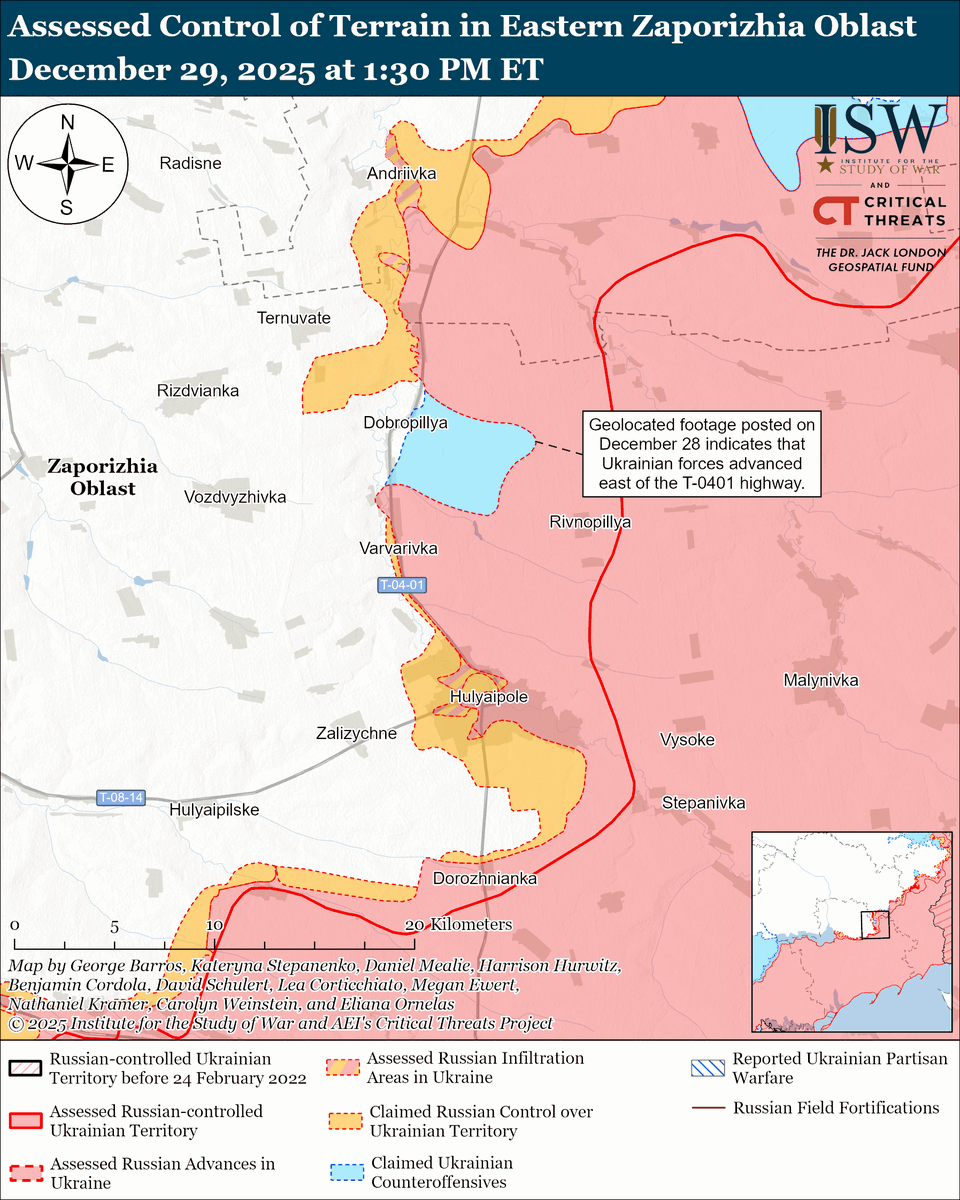
Russian forces continue to commit war crimes in the Hulyaipole and Pokrovsk directions.
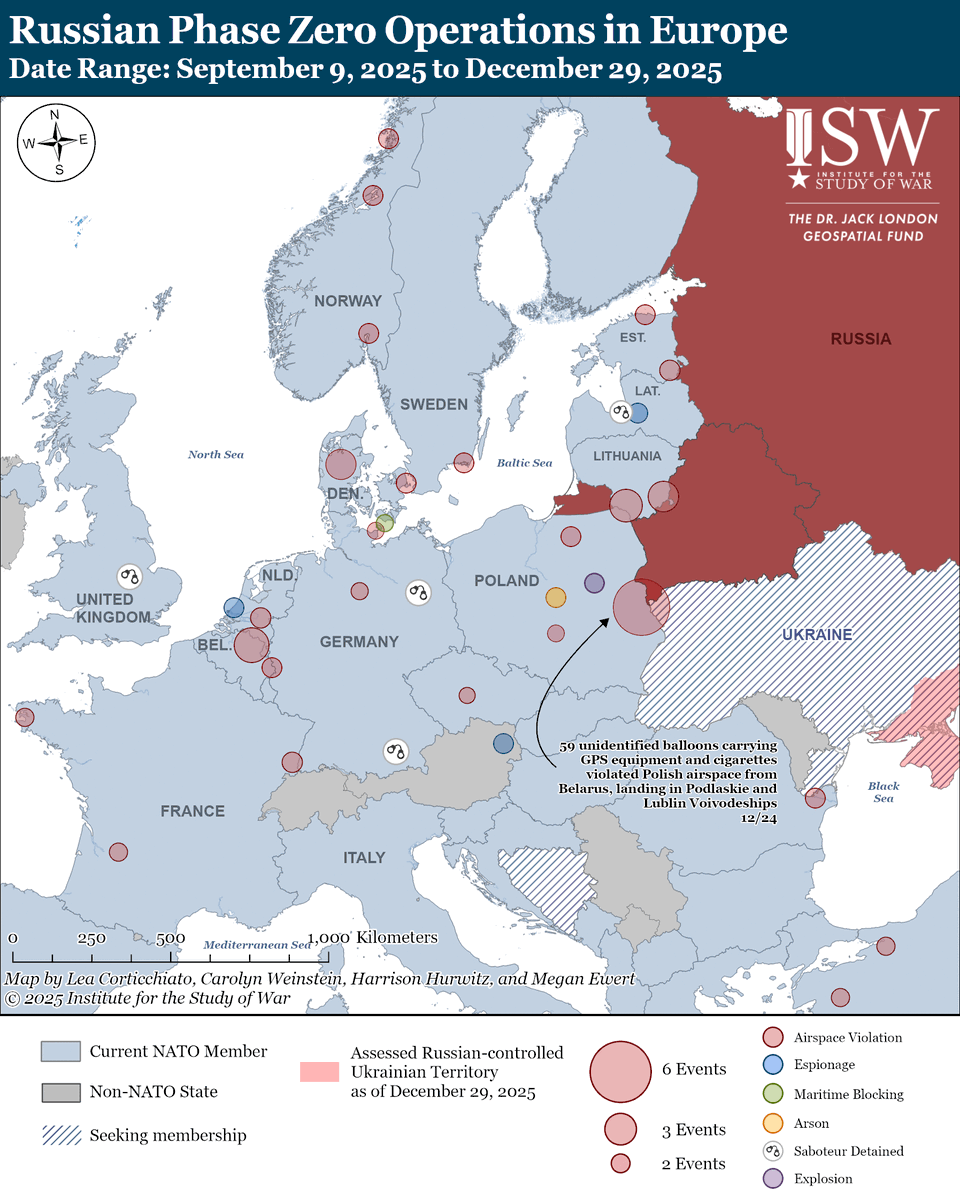
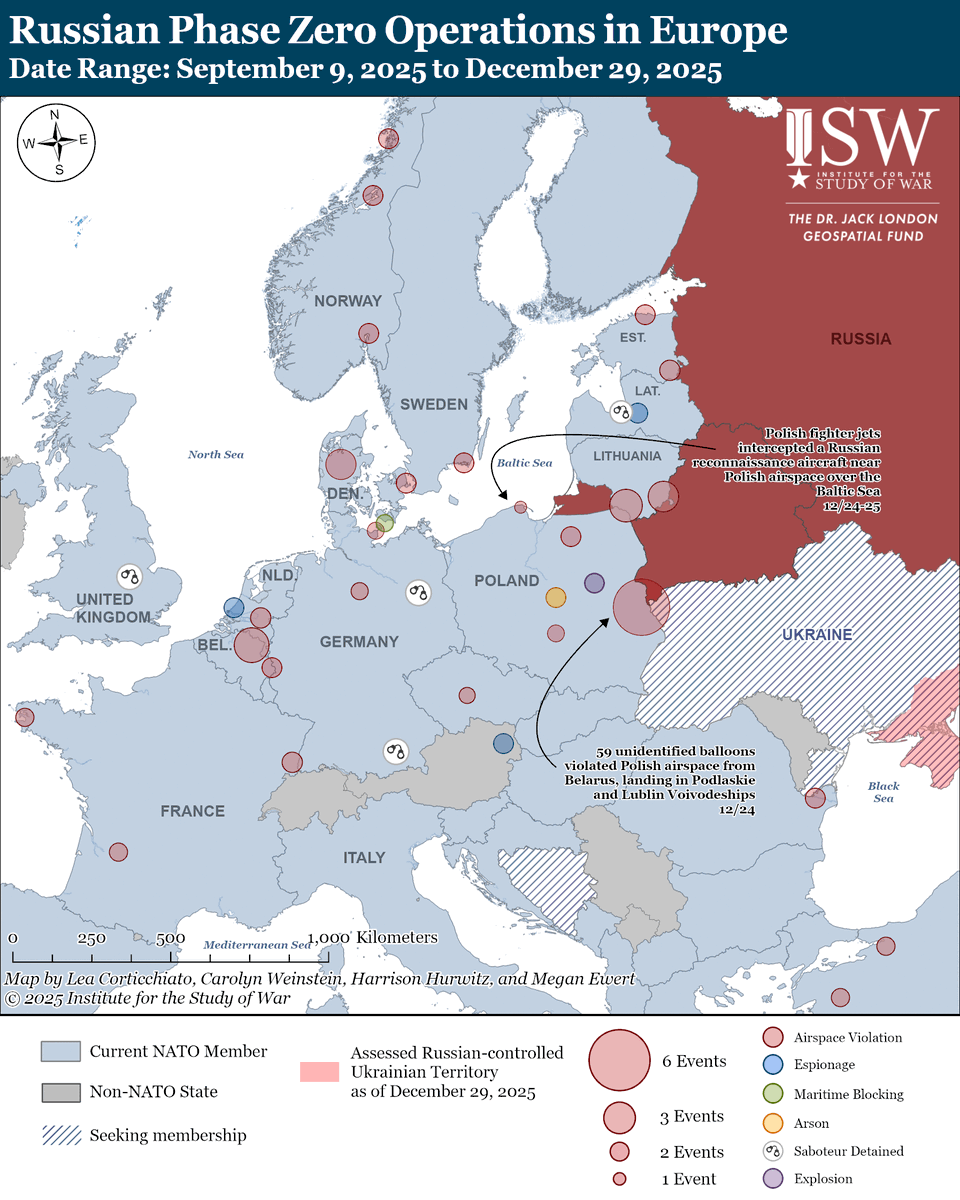
Several dozen Belarusian smuggling balloons illegally entered Polish airspace, and Polish aircraft intercepted a Russian reconnaissance aircraft near the international border overnight on December 24 to December 25.
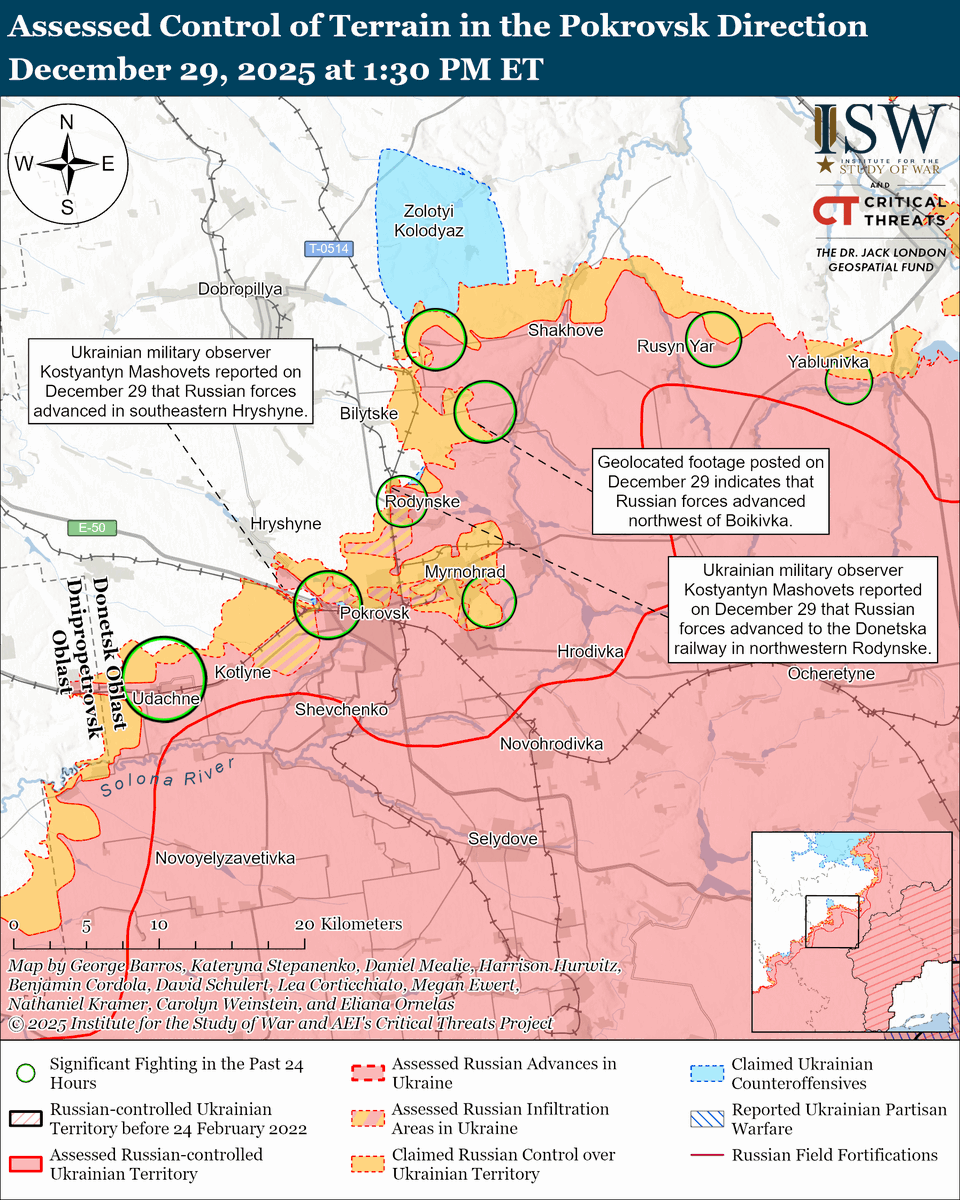
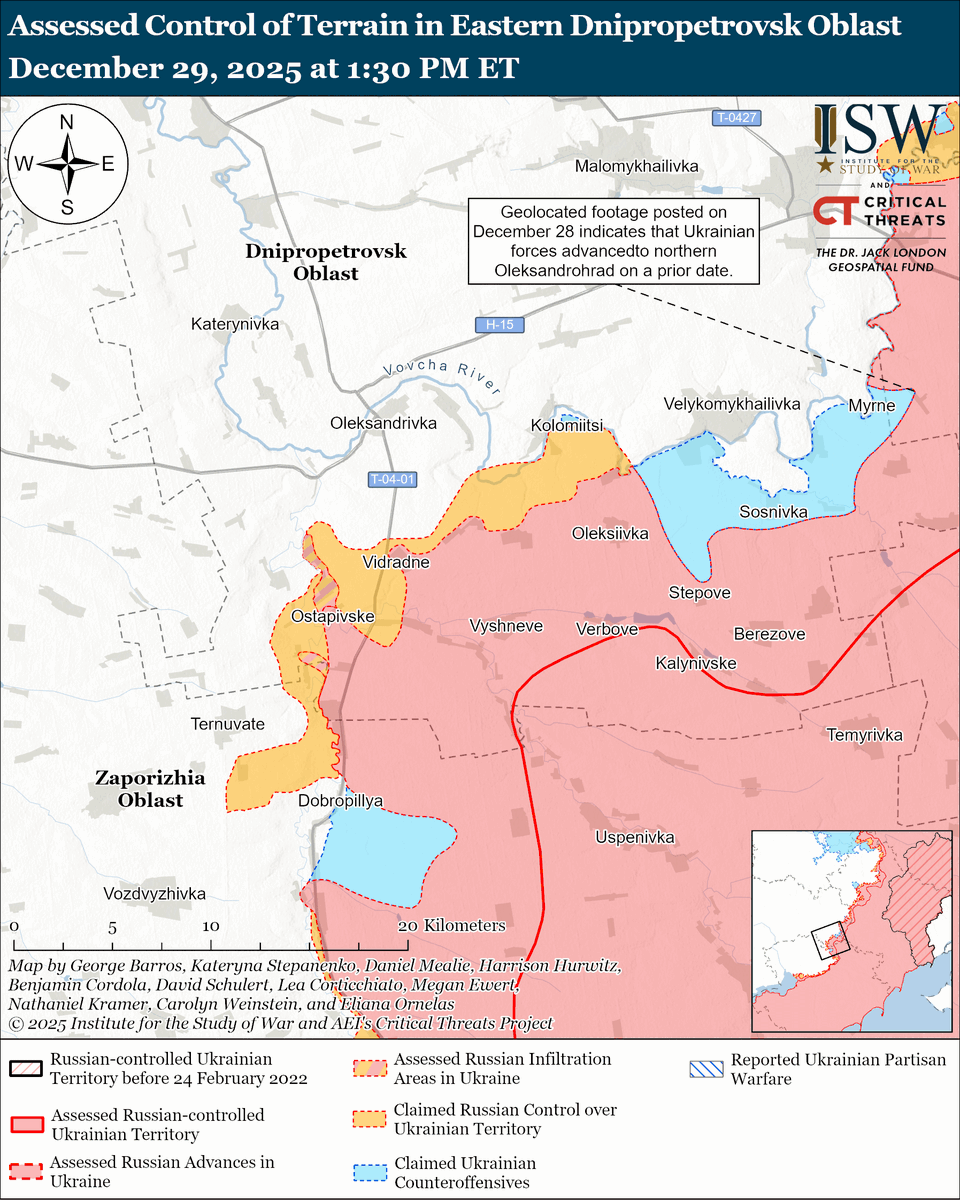
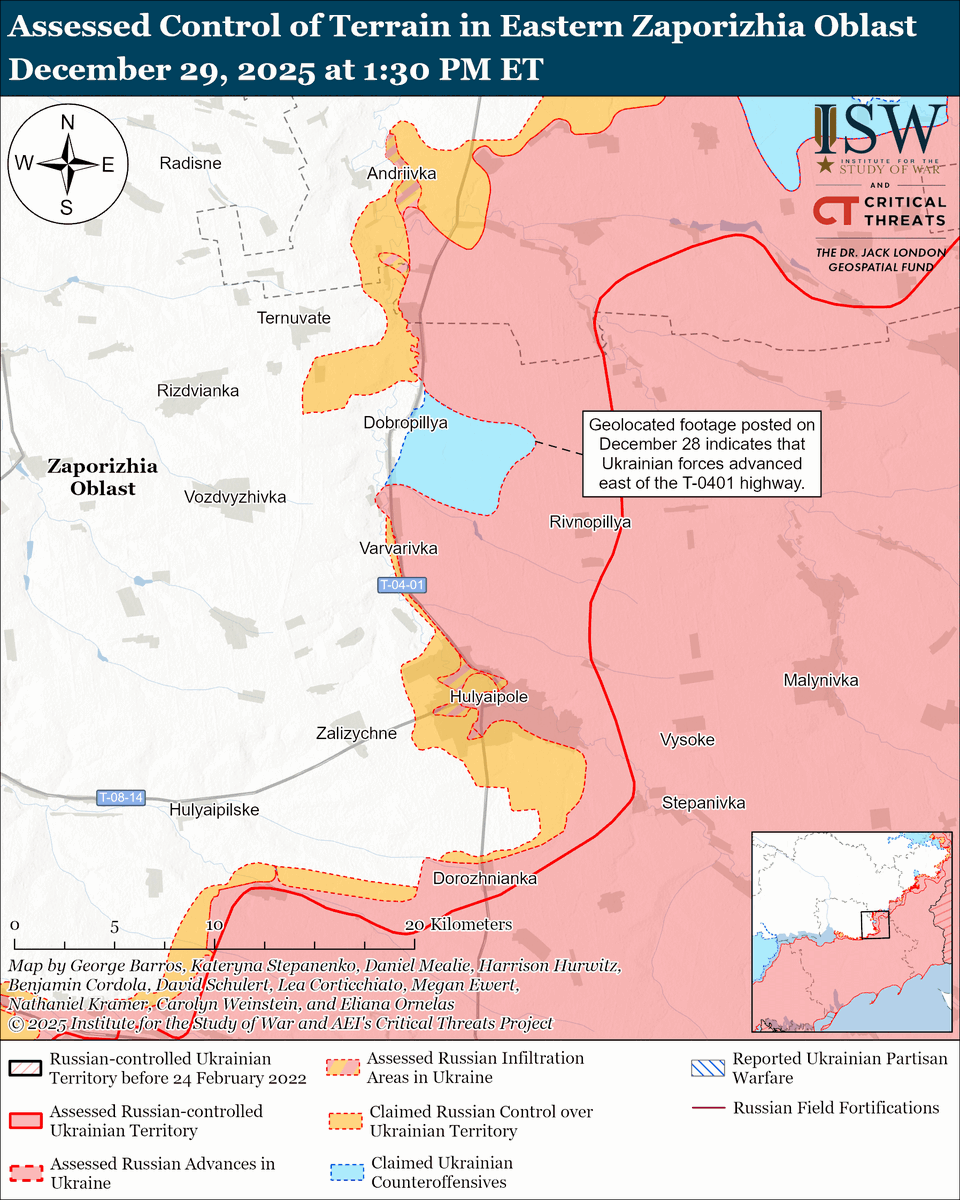
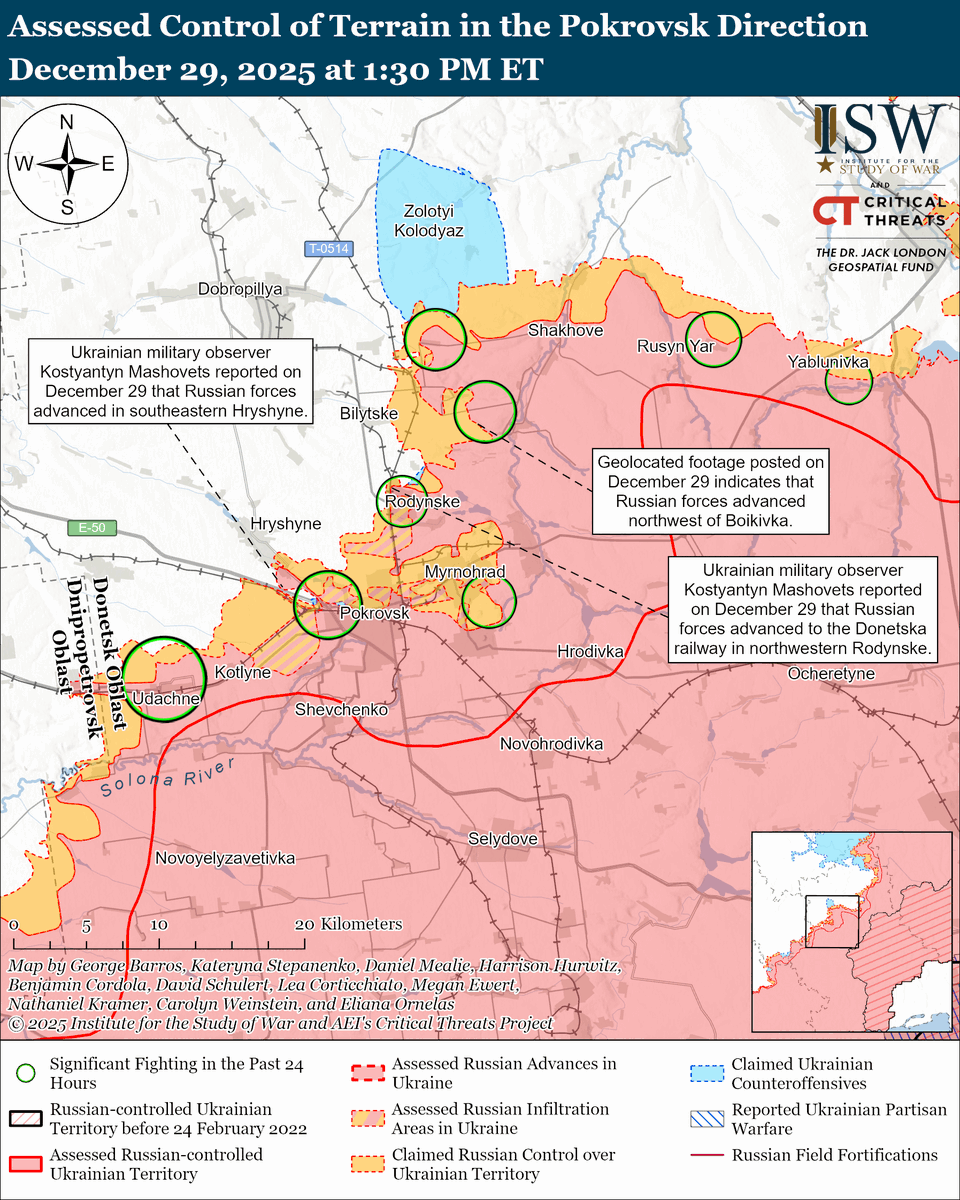
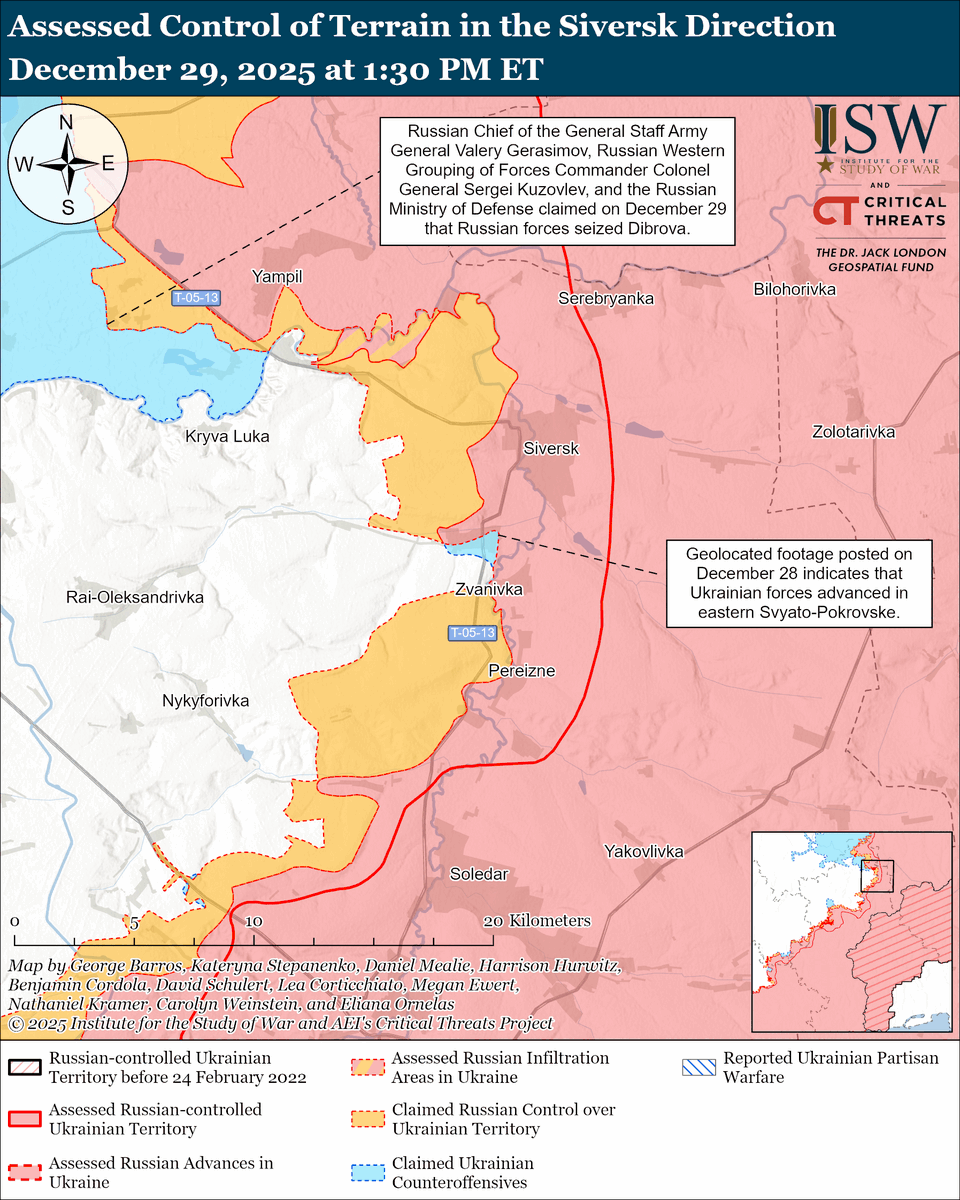
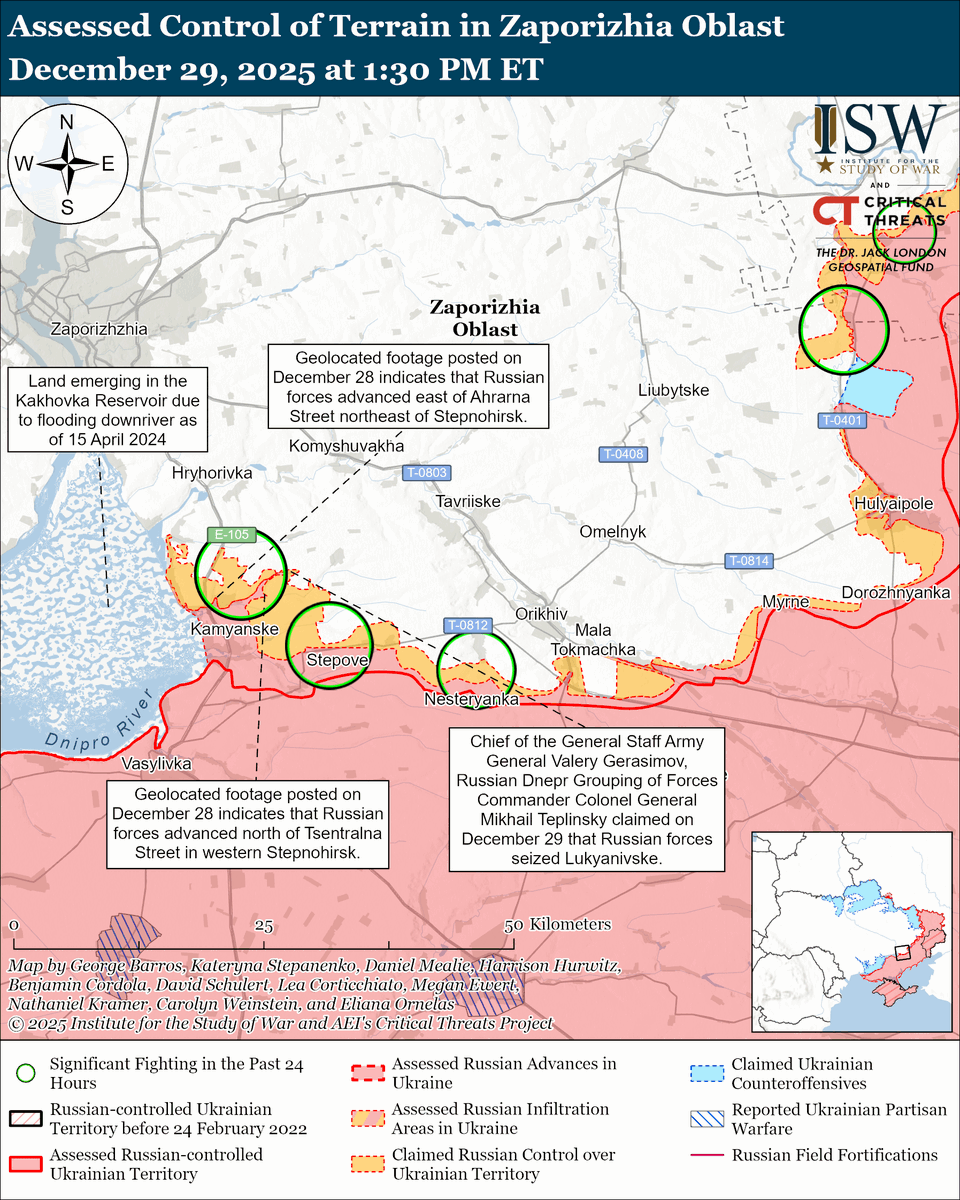
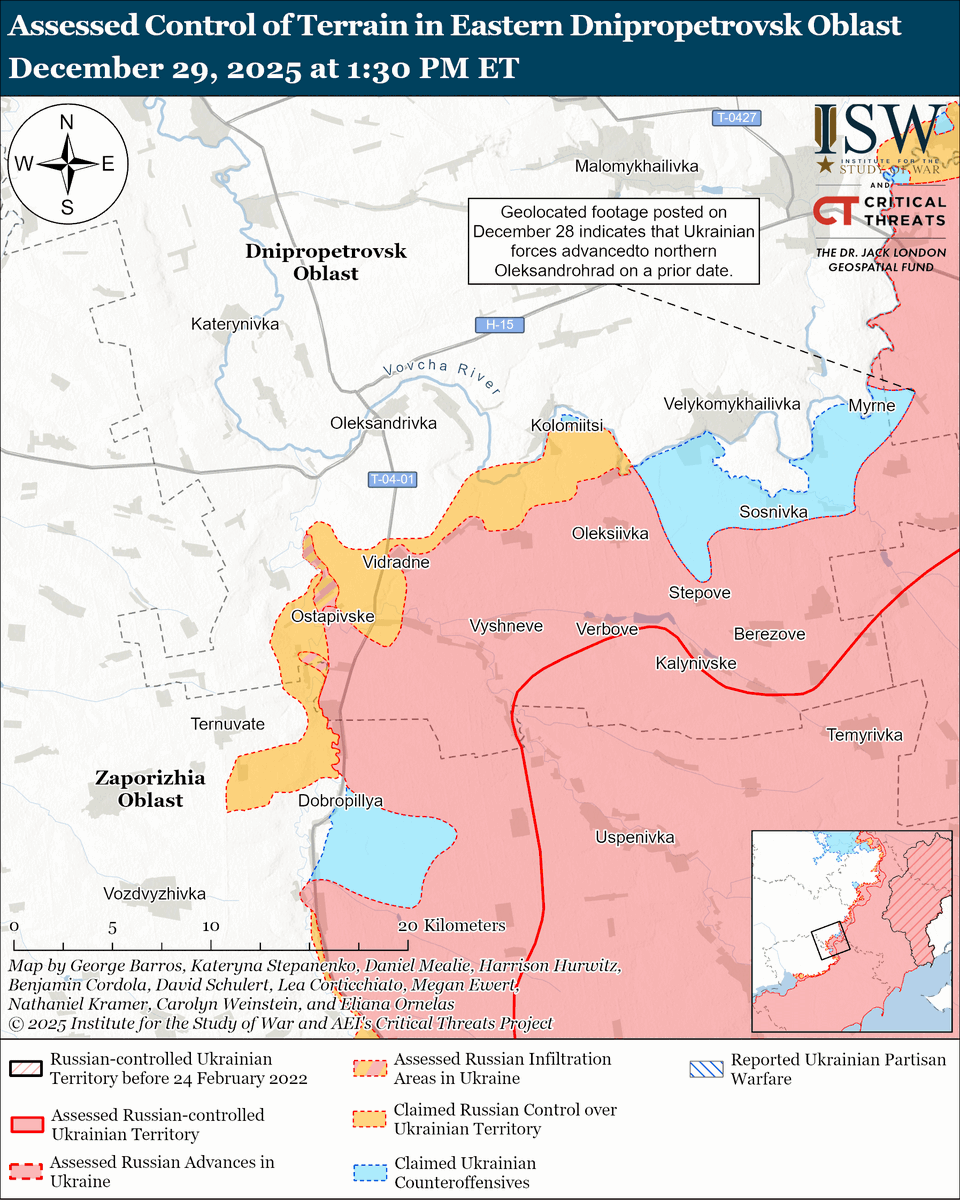
3/ Ukrainian forces recently advanced near Siversk, Oleksandrivka, and Hulyaipole. Russian forces recently advanced in western Zaporizhia Oblast, in the Dobropillya tactical area, and near Pokrovsk.
NEW: US President Donald Trump met with Russian President Vladimir Putin at Joint Base Elmendorf-Richardson in Anchorage, Alaska, on August 15. In a joint press conference, Putin addressed the crowd first and spoke in Russian, reiterating several long-standing Kremlin information operations about the war in Ukraine, Russian history, and the US-Russia relationship.
Putin said nothing to indicate that he has moderated either his war aims or his willingness to compromise on them and reiterated language he has used since 2021 to justify Russia's aggression against Ukraine.
Trump stated that the United States and Russia did not come to a firm agreement about the war in Ukraine.
Russia conducted drone and missile strikes in Ukraine in the hours before the August 15 Alaska summit, causing civilian casualties and damage to civilian infrastructure.
Other Key Takeaways ⬇️
2/ Ukrainian officials continue to indicate that Ukrainian counterattacks are stabilizing the situation east and northeast of Dobropillya (northwest of Pokrovsk).
The Russian military command is reportedly trying to redeploy forces and means to reinforce and exploit the penetration near Dobropillya but has so far been unsuccessful.
ISW continues to assess that Russia's use of drone strikes to generate battlefield air interdiction (BAI) effects in the Ukrainian near rear is severely hindering Ukrainian evacuation efforts in the Pokrovsk-Dobropillya area.
3/ Ukraine continued its long-range drone strike campaign against Russian military and energy infrastructure overnight on August 14 to 15.
Ukrainian forces recently advanced near Toretsk, and Russian forces recently advanced near Pokrovsk and Velykomykhailivka.