Game Theory and DeFi.
Human Behaviour always moves the Market.
Understand GAME THEORY to Stay ahead of Trends and Narratives in DeFi.
Human Behaviour always moves the Market.
Understand GAME THEORY to Stay ahead of Trends and Narratives in DeFi.

Introduced in 1944 by John Van Neumann and Osker Morgenstern,
Game theory is a branch of mathematics that examines the strategies employed in competitive situations where the outcomes for players depend critically on the actions of the other players.
Game theory is a branch of mathematics that examines the strategies employed in competitive situations where the outcomes for players depend critically on the actions of the other players.
Okay let's put it more simply.
Game theory is a way of thinking about how people make decisions when they're playing games with each other in order to win.
Game theory is a way of thinking about how people make decisions when they're playing games with each other in order to win.
For instance Players A and B are in a game of Chess, or Poker.
In the game, Player A's move depends on Player B's move and vice versa.
Each player's decision is based on what they think the other player is going to do.
And that is simply what game theory is.
In the game, Player A's move depends on Player B's move and vice versa.
Each player's decision is based on what they think the other player is going to do.
And that is simply what game theory is.

The game theory model comprises of 3 main Elements:
•Players: These are the persons activitely involved in the game, they could be traders in the crypto market or VC's e.t.c
•Strategies: The methods or decisions taken to increase the chances winning the game.
•Players: These are the persons activitely involved in the game, they could be traders in the crypto market or VC's e.t.c
•Strategies: The methods or decisions taken to increase the chances winning the game.
•Payoff or Outcome: The resultant effect of their applied strategies. Which could be win or lose.
Now how is all this applied in DeFi?
Game theory can be applied in various parts of DeFi but one major part is in Cryptocurrency Trading.
Cryptocurrencies are very volatile and people buy or sell based on various factors which follow a behavioral pattern.
Game theory can be applied in various parts of DeFi but one major part is in Cryptocurrency Trading.
Cryptocurrencies are very volatile and people buy or sell based on various factors which follow a behavioral pattern.
So by understanding game theory, you can easily predict people's behaviors in the market and then make better decisions when it comes to buying and selling.
Here are some other Use cases of Game theory in DeFi.
•Consensus Mechanisms: Mechanisms such as PoW and PoS, use game theory in order to incentivize honest behavior, discourage malicious activity and ensure the security and stability of decentralized networks.
•Consensus Mechanisms: Mechanisms such as PoW and PoS, use game theory in order to incentivize honest behavior, discourage malicious activity and ensure the security and stability of decentralized networks.
•Tokenomics: Game is also applied in the design of different token models, such as inflationary or deflationary models, to ensure they are fair and sustainable.
•Smart contract design: Game theory can be used to design smart contracts that are secure and resistant to attacks by malicious actors.
While Game theory may have it's Pro's, it still has its fair share of challenges which should be considered during its application.
•Assumption of rationality: Game theory assumes that all players will act rationally to maximize their own utility.
But as the crypto market is volatile and unpredictable, there may be instances where participants act irrationally, due to emotions or other factors.
But as the crypto market is volatile and unpredictable, there may be instances where participants act irrationally, due to emotions or other factors.
•Incomplete information: Game theory also assumes that all players have complete and accurate information about the game.
However, in the crypto market, there may be cases where players do not have all the information, or the information they have is incomplete or unreliable.
However, in the crypto market, there may be cases where players do not have all the information, or the information they have is incomplete or unreliable.
•Emergence of new players and strategies: DeFi is quite new and rapidly evolving, with new players and strategies emerging regularly.
This can make it challenging to accurately model the game using game theory, as the assumptions required for accurate modeling may not be met.
This can make it challenging to accurately model the game using game theory, as the assumptions required for accurate modeling may not be met.
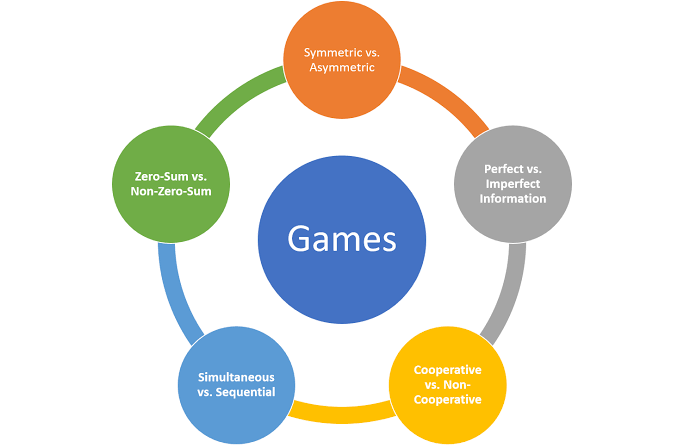
A Quick Look into the Types of Game Theory Models:
• Nash Equilibrium
•Simultaneous or sequential
•Symmetrical or asymmetric games
•Zero or non-zero sum games
•Cooperative or non-cooperative games
•Perfect or Imperfect information.
• Nash Equilibrium
•Simultaneous or sequential
•Symmetrical or asymmetric games
•Zero or non-zero sum games
•Cooperative or non-cooperative games
•Perfect or Imperfect information.
Some popular examples of Game theory models include:
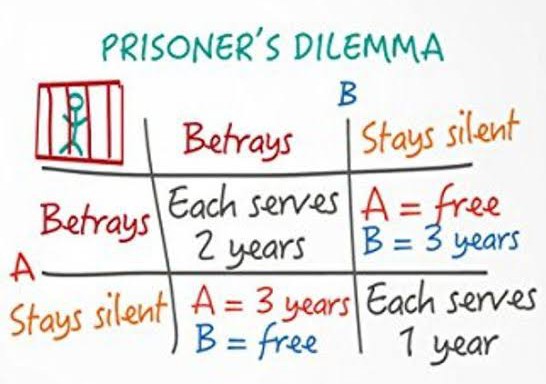
•Prisoners Dilemma
•Dictator Game
•Volunteer's Dilemma
•Centipede Game
•Chicken Game
•Ultimatum Game
•Battle of the Sexes
To mention a few.
•Prisoners Dilemma
•Dictator Game
•Volunteer's Dilemma
•Centipede Game
•Chicken Game
•Ultimatum Game
•Battle of the Sexes
To mention a few.
In conclusion, Game theory is a significant tool used to analyze the rational human decision-making process.
It has proven useful for solving complex problems that may have been difficult to solve.
Thus making it a very important tool in the world of Decentralized Finance.
It has proven useful for solving complex problems that may have been difficult to solve.
Thus making it a very important tool in the world of Decentralized Finance.
That it for today!!
If this thread provided you with value, then a LIKE / RT / REPLY goes a long way.
Also follow me @vick_of_VEE to get more content on #DeFi #Crypto #Web3 #blockchain.
If this thread provided you with value, then a LIKE / RT / REPLY goes a long way.
Also follow me @vick_of_VEE to get more content on #DeFi #Crypto #Web3 #blockchain.
Tagging some of my favorite threadors ( I also want some thread validation)
@Only1temmy
@crypthoem
@thedefiedge
@DeFiMinty
@rektdiomedes
@gregyounger
@CryptoGirlNova
@DOLAK1NG
@MercyDeGreat
@DeFi_Finest
@DefiIgnas
@thedailydegenhq
@crypto_linn
@Only1temmy
@crypthoem
@thedefiedge
@DeFiMinty
@rektdiomedes
@gregyounger
@CryptoGirlNova
@DOLAK1NG
@MercyDeGreat
@DeFi_Finest
@DefiIgnas
@thedailydegenhq
@crypto_linn
• • •
Missing some Tweet in this thread? You can try to
force a refresh