
So excited to share some new work @PLOSPathogens from our group – on zoonotic staphylococci!
So, how’d we get from #malaria parasites to pathogens of puppies 🐶?
🧵
journals.plos.org/plospathogens/…
So, how’d we get from #malaria parasites to pathogens of puppies 🐶?
🧵
journals.plos.org/plospathogens/…
We’ve been collaborating w/Cindy Dowd at GWU (@GWtweets) making new antimalarials called MEPicides = cool prodrugs that target the DXR enzyme of the MEP pathway -- an essential biosynthetic pathway that humans and other mammals just don’t have/2
see:
nature.com/articles/s4159…
see:
nature.com/articles/s4159…
Turns out, malaria parasites aren’t the only bugs with the MEP pathway. We were totally inspired by Dan Beiting @hostmicrobe @pennvet – they found that staphylococci have either the mevalonate pathway (like people) or the MEP pathway (like parasites)/3
msphere.asm.org/content/1/5/e0…
msphere.asm.org/content/1/5/e0…
Cool fact – staph associated with people (like S. aureus or CONS), they have the mevalonate pathway. But animal-associated staphs (like S. scheiferi or S. pseudintermedius) have the MEP pathway!
And animal staph is no joke (📷: @pennvet):
And animal staph is no joke (📷: @pennvet):

Another cool but unhappy fact – animal staph species are also bad actors in people. They are coag positive (like S. aureus) and act like it. Great review on intermedius-group staph in humans from @MicroMeIanie, W. Lainhart and @BurnhamBugDoc @WUSTLmed/5
jcm.asm.org/content/56/3/e…
jcm.asm.org/content/56/3/e…
So, what did we find?
✅The MEP pathway is a new drug target for intermedius group staph!
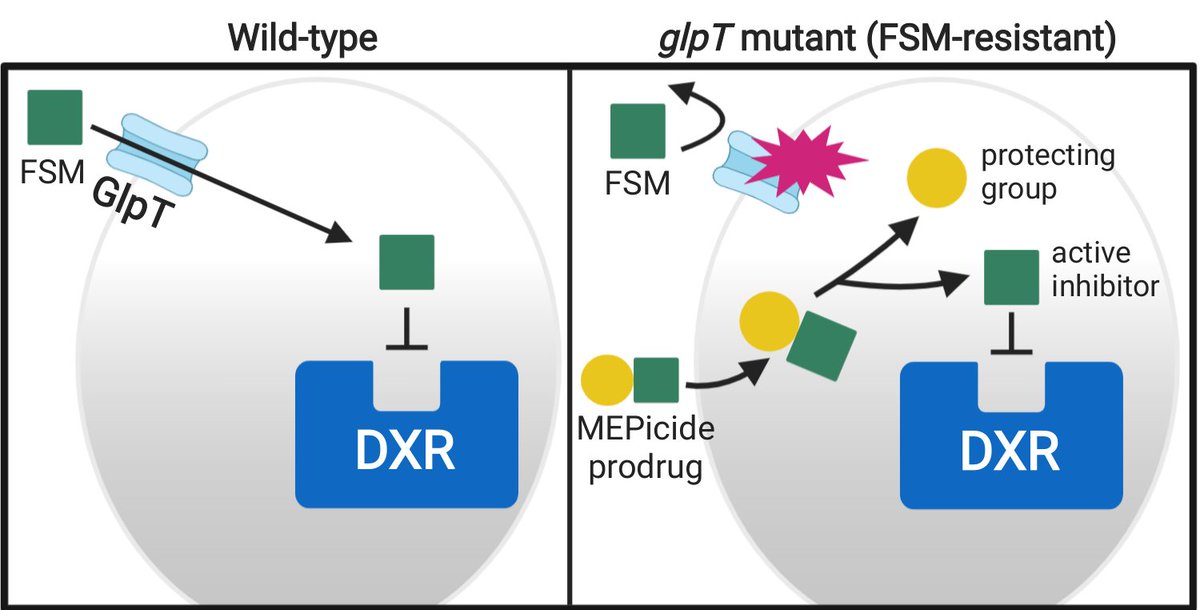
✅We identified GlpT as the staphylococcal transporter for phosphonate antibiotics (like fosmidomycin (FSM), a MEP pathway inhibitor)
✅FSM targets DXR in staphylococci /6
✅The MEP pathway is a new drug target for intermedius group staph!
✅We identified GlpT as the staphylococcal transporter for phosphonate antibiotics (like fosmidomycin (FSM), a MEP pathway inhibitor)
✅FSM targets DXR in staphylococci /6
What else did we find??
✅Prodrugging has a major impact on antistaph potency AND our MEPicides don’t need GlpT for transport (higher barrier to resistance)
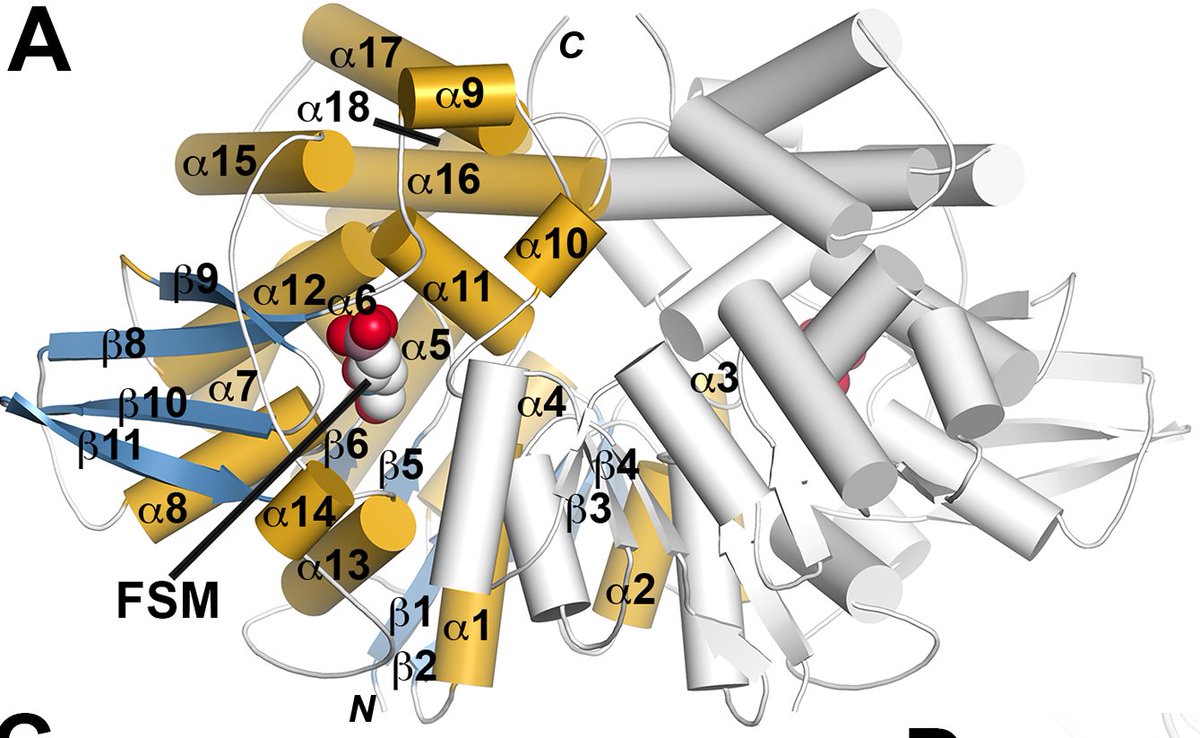
✅And the cherry on top: check out our beautiful staph DXR+FSM co-crystal structure (collaborator: Joe Jez @WUSTLBio)!/7
✅Prodrugging has a major impact on antistaph potency AND our MEPicides don’t need GlpT for transport (higher barrier to resistance)
✅And the cherry on top: check out our beautiful staph DXR+FSM co-crystal structure (collaborator: Joe Jez @WUSTLBio)!/7
Finally, a HUGE congrats to all the trainees and collaborators on this project! This was a beast of an effort
Particular shout-out to rock star future doctor @ishaantshah... who started it all as a *FRESHMAN* undergrad @WUSTL!/FIN
Particular shout-out to rock star future doctor @ishaantshah... who started it all as a *FRESHMAN* undergrad @WUSTL!/FIN
• • •
Missing some Tweet in this thread? You can try to
force a refresh






