Since my colleagues @hausfath and @atrembath’s piece in @politico on reasons to question the utility of a US public lands fracking ban has been generating a lot of buzz, I thought I’d highlight aspects of #energytwitter discussion so far. (THREAD)

First, worth noting upfront that @politico’s editorial choice of title is extreme - far from @hausfath + @atrembath’s original title.

Their original title was: "Why Biden and Harris Are Right to Be Skeptical of a Fracking Ban”

That acknowledged, the discussion so far: (1)
Important point: Only 1/3 of US gas production goes to electric gen. 1/3 is used for industrial (fertilizer production, chemicals, etc), rest is mostly residential/commercial use. So most gas use is harder to substitute with clean tech than is the case for electricity. (2)
Important critique: As said by @CostaSamaras, @RyanMKellogg, others, re: fracked gas, one should also discuss fracked oil. Decarbonization of oil in transport/elsewhere is a difficult work in progress, but fracked oil + oil co-production won’t help. (3)

Important point: Ban on public lands fracking carries immediate political risks + is probably difficult to politically enact. Given that overwhelming majority of O+G fracking is on private, not public, lands, the gesture would be largely symbolic. (4)

Important critique: @gilbeaq argues that today, reducing fracking of gas probably would only reduce US LNG exports rather than influencing gas-fired US electricity, so this would neither spare US coal from death or slow renewables deployment. (5)

Important point: the piece points out the risk that a poorly-implemented public-lands fracking ban may harm efforts to develop clean enhanced geothermal energy, which has high resource potential on Western US public lands and uses similar drilling technology. (6)
Important critique: We must acknowledge that actors in the gas fracking industry continue to flout many enviro protections and oppose greater accountability for methane leaks + local enviro impacts. The gas industry needs to be consistently held to far higher standards. (7)
Important point: The article does point out that we are rapidly approaching the tail end of the trend of gas killing off coal in the US, and underlines the importance of meeting a net-zero power sector by 2035 as proposed by Biden/Harris. (8)
Important critique: As @J_Lovering points out, gas isn’t good news for clean energy across the board, and is also responsible for driving existing nuclear out of the market and dissuading new nuclear projects. (9)

Important point: It is good to highlight that gas + CCS in electricity + industrial sectors can play key roles in deep decarbonization + a clean energy future. Things like gas-associated infrastructure, chemical industry, have potential roles too. (10)

thebreakthrough.org/issues/energy/…
Overall, #EnergyTwitter has identified many good, valid critiques. All the same, @hausfath and @atrembath still raise important points that deserve consideration + discussion. And as all political analysis indicates, a US fracking ban is political fantasy anyways. (11)
At any rate, the core of Biden/Harris climate plan is that by 2035, we will no longer be burning gas for electricity (at least not without CCS), or any other fossil fuel.

That’s hugely important, and next to that a fracking ban on public lands is frankly insignificant. (END)

• • •

Missing some Tweet in this thread? You can try to force a refresh
 

Keep Current with Seaver Wang

Seaver Wang Profile picture

Stay in touch and get notified when new unrolls are available from this author!

Read all threads

This Thread may be Removed Anytime!

PDF

Twitter may remove this content at anytime! Save it as PDF for later use!

Try unrolling a thread yourself!

how to unroll video
  1. Follow @ThreadReaderApp to mention us!

  2. From a Twitter thread mention us with a keyword "unroll"
@threadreaderapp unroll

Practice here first or read more on our help page!

More from @wang_seaver

22 Sep
This study is generating buzz + looked fascinating, so I read the press release, media briefing + full report yesterday.

Key findings are probably approximately correct, but these results were guaranteed given the methodology used. (THREAD)
The authors use a top-down approach to assign a country’s total emissions (private + govt) to each household based on a monotonic relationship proportional to household income, using the national income distribution and Global Carbon Proj carbon emissions data for each year. (1)
In other words, the study is virtually hard-coded to allocate more emissions to households with higher incomes, irregardless of actual consumption patterns. To be fair, relationship btwn income + emissions is generally borne out by consumer habit surveys, but… (2)
Read 14 tweets
17 Sep
New PNAS paper highlights increasing fragility of buttressing ice shelves at the mouths of the Pine Island + Thwaites glaciers in Antarctica, further emphasizing the importance of warming-induced positive feedbacks for ice mass loss + sea lvl rise: (1)

pnas.org/content/early/…
Scientists studying Antarctic ice are paying close attention to Thwaites and Pine Island ice shelves, as they are exhibiting some of the fastest changes among West Antarctic glaciers and could drive considerable sea level rise over timescales of a century and beyond. (2)
The Thwaites Glacier is thought to be particularly important to the stability of the West Antarctic Ice Sheet as a whole, which could be significantly destabilized by its degradation. (3)

washingtonpost.com/climate-enviro…
Read 8 tweets
6 Sep
Quoted today in @axios article by @JacKnutson on tension btwn increasing copper demand for renewables and the need to significantly step up copper mining:

"a lot of people... in the clean energy sector are working very hard to reduce copper demand" (1)

axios.com/copper-renewab…
The copper intensities for solar and wind surprised me as well when I first looked into them.

A study of the Springerville, AZ solar farm (6.4 MW) found a copper intensity of around 7000 tons/GW: (2)

copperalliance.org/wp-content/upl…
For wind, official Vestas LCAs for hypothetical 50MW wind farms using V110-2.0MW, V100-2.0MW, and V90-2.0MW turbines yield copper intensities of 1740, 1700, and 3320 tons of copper/GW: (3)

vestas.com/~/media/vestas…
Read 7 tweets
1 Sep
An important article by @Chris__Reddy on the recent Mauritius oil spill:

"It is critical that casual observers stay informed about the realities of the situation, rather than abandoning Mauritius's economy..."

(a thread)

"If those notions become cemented in people's minds, it will hurt Mauritius's crucial tourism and fishing industries and could compound the country's problems by causing longer-lasting economic and psychological harm than the oil spill by itself." (1)
Dr. Reddy, who has studied oil spills for 30 years and conducted research as part of the response to the BP Gulf of Mexico spill, cautions that it is too early and potentially damaging to assume that the Mauritius spill damage is permanent. (2)
Read 15 tweets
26 Aug
Hurricane Laura is forecasted to make landfall as a Category 4 sometime between tonight and Thursday morning.

The particularly worrisome news is that the storm may coincide with local tides to generate a particularly intense storm surge. (1)

washingtonpost.com/weather/2020/0…
"Laura may strike near high tide, inundating coastal areas of western LA to the TX border under ~15-20 ft of water. The Hurricane Center warned of an 'unsurvivable' surge with 'large and destructive waves' and wrote areas up to 30 miles inland could be inundated." (2)
For comparison, storm surges associated with Hurricane Katrina in 2005 reached 25-28 feet.

Hurricane Sandy generated a storm surge of nearly 14 feet in the Manhattan area. (3)
Read 6 tweets
23 Aug
I feel uncomfortable sometimes about how climate folks sometimes default to talking about people in low + middle-income countries primarily as current/future climate victims. I think this overlooks much context + minimizes their agency. (1)

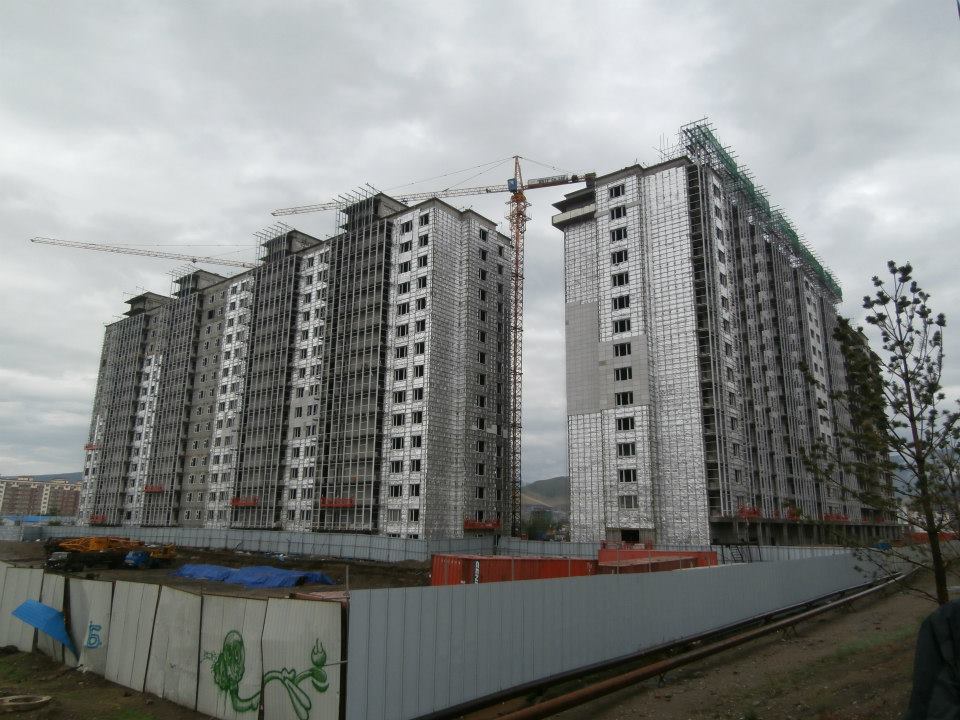
Pic from Ulaanbaatar, Mongolia in 2010 Image
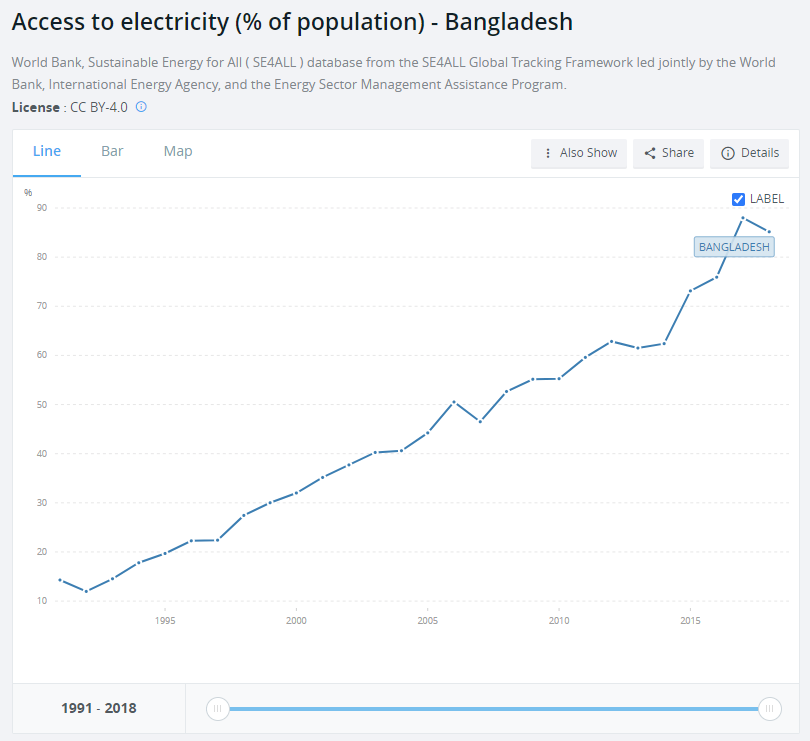
Bangladesh, for instance, has doubled literacy rates within my lifetime, halved maternal mortality in the last 20 yrs, tripled manufacturing output in the last 10 years, and provided some electricity access to 85% of its population today from 55% in 2010. (2) Image
In the last 10 years, the economies of Bangladesh, Vietnam, Mongolia, for example have been growing at rates that rival China’s in recent decades, with GDP growth rates (yes, imperfect metric I know) of ~5-10% per year. (3) Image
Read 7 tweets

Did Thread Reader help you today?

Support us! We are indie developers!


This site is made by just two indie developers on a laptop doing marketing, support and development! Read more about the story.

Become a Premium Member ($3/month or $30/year) and get exclusive features!

Become Premium

Too expensive? Make a small donation by buying us coffee ($5) or help with server cost ($10)

Donate via Paypal Become our Patreon

Thank you for your support!

Follow Us on Twitter!