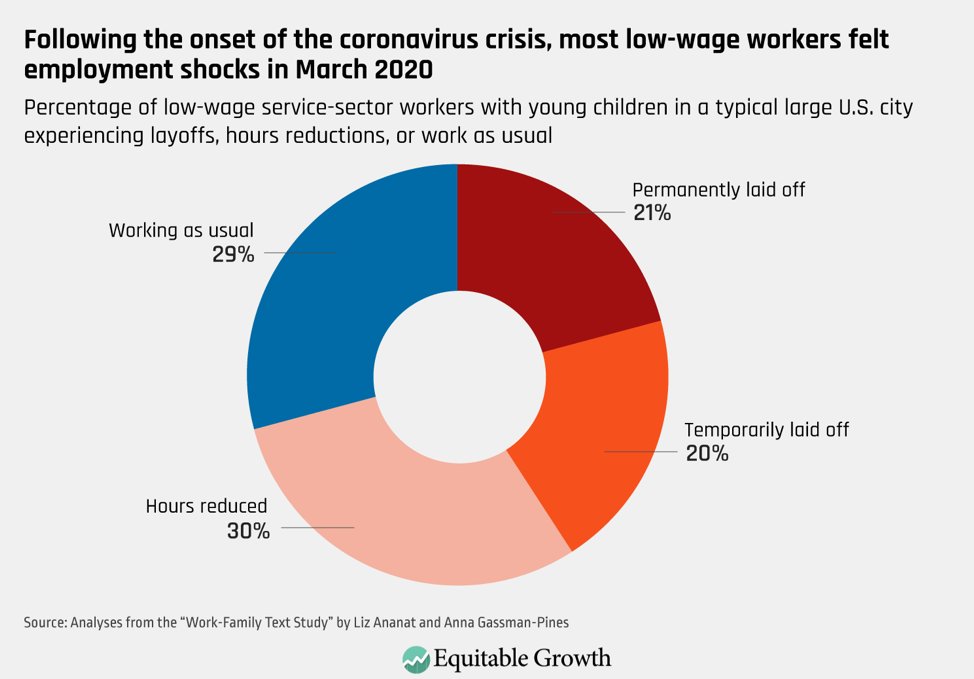
HELLO. Research released earlier this year sheds new light on why it’s so important to extend the duration of unemployment benefit receipt in all recessions, but especially this one. Let me tell you all about it. (1/15)
Okay, so there’s this idea about unemployment benefits and job matching. It goes like this: When I have resources to meet my basic needs while I’m out of work, I can take the time I need to find the right job for me, rather than taking the first thing that comes along. (2/15)
It makes sense, but there was little research that confirmed or disproved it until @adriana_kugler, @UmbertoMuratori, + @ammar_farooq got access to a unique data source that links information about workers with information about their employers. (3/15)
lehd.ces.census.gov/data/
lehd.ces.census.gov/data/
They used these data to study the natural experiment that was created by state-level variation in unemployment benefit duration from 2000-2013. (4/15) 

And it turns out that the longer you have access to unemployment benefits, the higher paying the job that you eventually find is… (5/15)

…and the more your skills and training get put to use.
Access to the full extended benefits available in 2009 increases the probability that a worker will be re-employed in a job that requires more education than their previous job by 11.7 percentage points. (6/15)
Access to the full extended benefits available in 2009 increases the probability that a worker will be re-employed in a job that requires more education than their previous job by 11.7 percentage points. (6/15)

That’s not just good news for workers, that’s good news for firms and the whole economy! The research team finds that high quality firms are better able to recruit workers that have the abilities they need, which creates a chain reaction ⬇️ (7/15)

But wait, there’s more: effects are GREATER for workers who are members of groups (women, workers of color, less-educated workers) that typically lack private savings and are thus likely to take the first job that comes along if they don't have income from UI. (8/15)
In today’s recession, workers still need jobs that are the right match for their skills, but they also need a job that matches their health and safety needs. It could be the difference between life and death for themselves or for a family member. (9/15)
nytimes.com/2020/04/09/us/…
nytimes.com/2020/04/09/us/…
And remember how the effects the research team uncovered were biggest for women, workers of color, and low educated workers? Those are the groups being hit hardest by this economic crisis. (10/15)
h/t @gbenga_ajilore
h/t @gbenga_ajilore
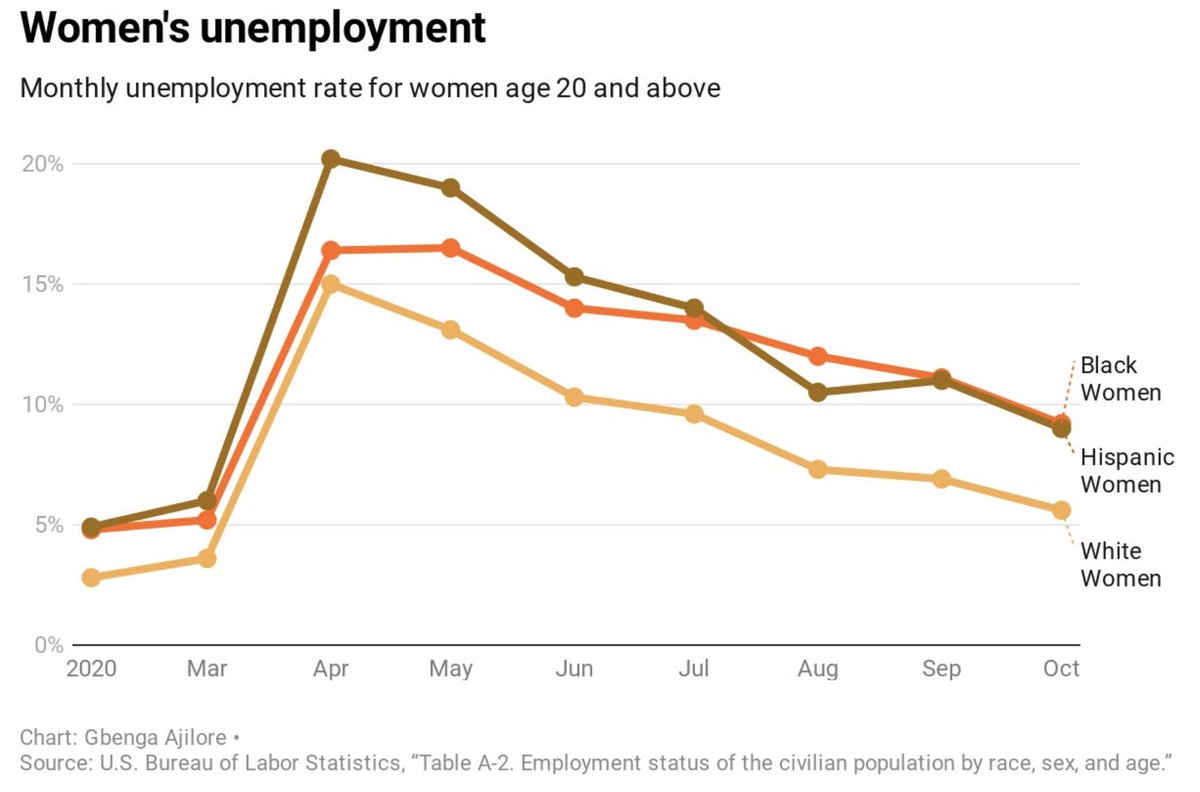
So we need to extend UI benefits now more than ever. But the benefit extensions expire on 12/26. (11/15)
h/t @pelhamprog + @ENPancotti
tcf.org/content/report…
h/t @pelhamprog + @ENPancotti
tcf.org/content/report…
To allow workers to pay their bills and match with a job that is a good fit for them and a boon to the economy as a whole, we need to extend PEUC. (12/15)
h/t @bencasselman
h/t @bencasselman

That’s the short-term solution. But it’s not enough: we need to ensure that extended benefits are delivered automatically, when economic conditions warrant, rather than relying on political horse trades. (13/15)

Want to know more? Check out the full paper and my write-up at the links below… (14/15)
equitablegrowth.org/working-papers…
equitablegrowth.org/the-long-run-i…
equitablegrowth.org/working-papers…
equitablegrowth.org/the-long-run-i…
…and learn more UI policy lessons from the Great Recession here: (15/15)
equitablegrowth.org/fool-me-once-i…
equitablegrowth.org/fool-me-once-i…
• • •
Missing some Tweet in this thread? You can try to
force a refresh