If you don't understand the principle of Backpropagation or the notion of the maths behind it.
Then this 🧵 could be helpful for you.
We are going to use a simple analogy to understand better
(Check final tweets for notes)
↓ 1/11
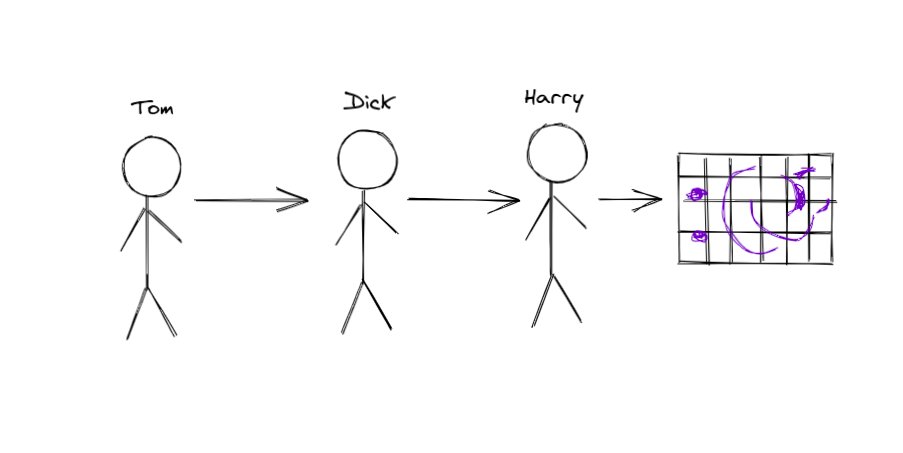
Consider you (Harry) are trying to solve a puzzle along with two of your friends, Tom and Dick
And sadly none of you guys are among the brightest.
But you start trying to put the puzzle together.
2/11
Tom has put the first 6 pieces out of 20, 2 of them are wrong, then passes the puzzle to Dick.
Dick puts the next 8 pieces, 6 of them wrong, then passes the puzzle to you.
And now, you put the final 6 pieces, 4 of them wrong.
I've had a lot of trouble understanding different convolutions
What do different convolutions do anyway❓
Without the correct intuition, I found defining any CNN architecture very unenjoyable.
So, here's my little understanding (with pictures)🖼👇
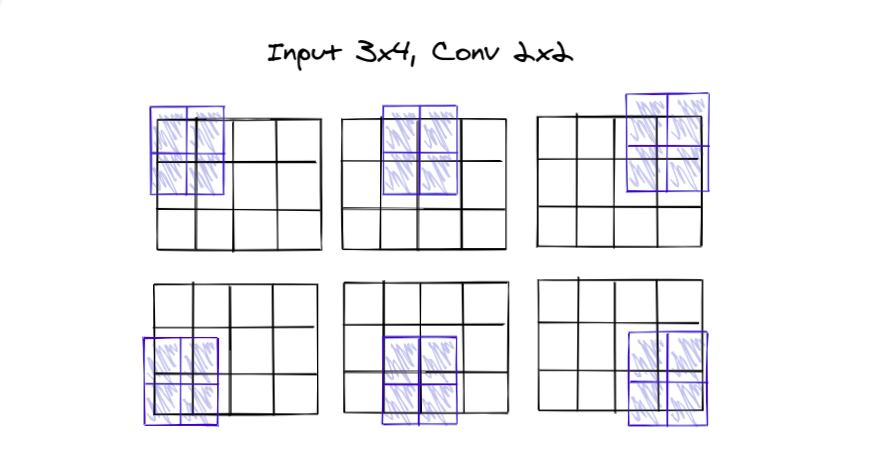
The Number associated with the Convolution signifies two things:
🔸The number of directions the filter moves in and,
🔸The dimensions of the output
Each convolution expects different shapes of inputs and results in output equal to the dimensions it allows the filter to move in.
In 1⃣D-Conv, the kernel moves along a single axis.
It is generally applied over the inputs that also vary along a single dimension, ex: electric signal.
The input could be a 1D array and a small 1D kernel can be applied over it to get another 1D array as output.
If you just focus on the left side, it seems to make sense.
The training loss going down, the validation loss going up.
Clearly, seems to be an overfitting problem? Right?
But the graphs on the right don't seem to make sense in terms of overfitting.
The training accuracy is high, which is fine, but why is that validation accuracy is going up if the validation loss is getting worse, shouldn't it go down too?