Interesting thread @trvrb on growth of B.1.1.7, P.1, B.1.351 in US
I worry about key assumptions underlying these analyses:
-sequences are random sample of state/US infections (definitely not)
-trends in sequences represent local transmission rather than changes in imported cases
Many of the P.1, B.1.351 numbers are very low & introduced cases can make a substantial contribution to total count. Increased transmission elsewhere (e.g. Europe, S America) & constant introductions can lead to apparent increase in US for foreign variants.
In addition, increased detection of introduced cases can also bias results towards observing a local increase of an introduced variant.
Are cases (not frequencies) of P.1 really increasing in many states as @trvrb suggests? Possibly.
But I'd be more convinced by analyses that address issues described above.
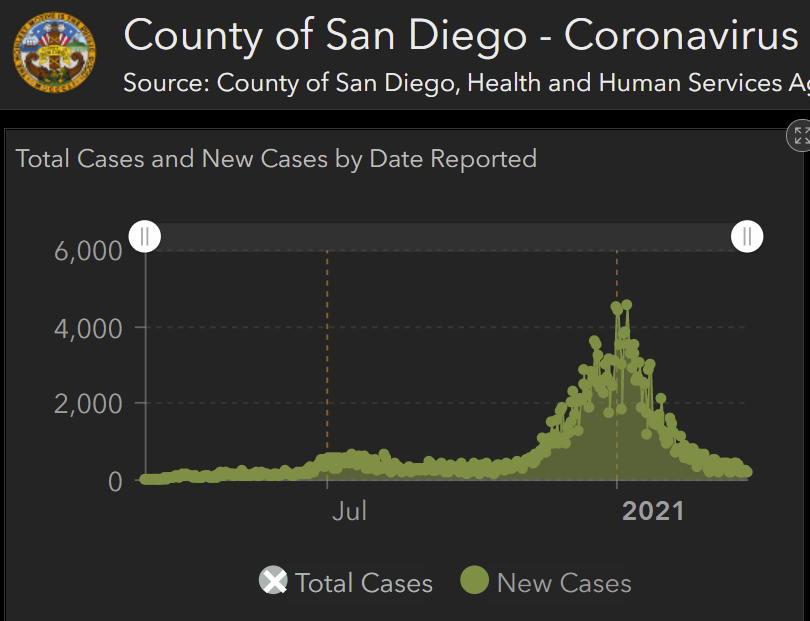
Locally, where overall R is <1, we've observed several variants inc. B.1.1.7 being introduced, leading to chains of transmission and then fading out. Summed across a state, this could appear to be growth.
Instead, so far at least, these introductions have not established, and cases are now very low and falling. If vaccination continues, I believe P.1 & other variants can be suppressed.
Obviously B.1.1.7 is being transmitted locally & contributed to surges in some/many states. But the extent of local transmission for P.1. is less clear to me at present. But our best insurance to stop spread of all variants is continued vaccination, as @trvrb suggests!
• • •
Missing some Tweet in this thread? You can try to
force a refresh

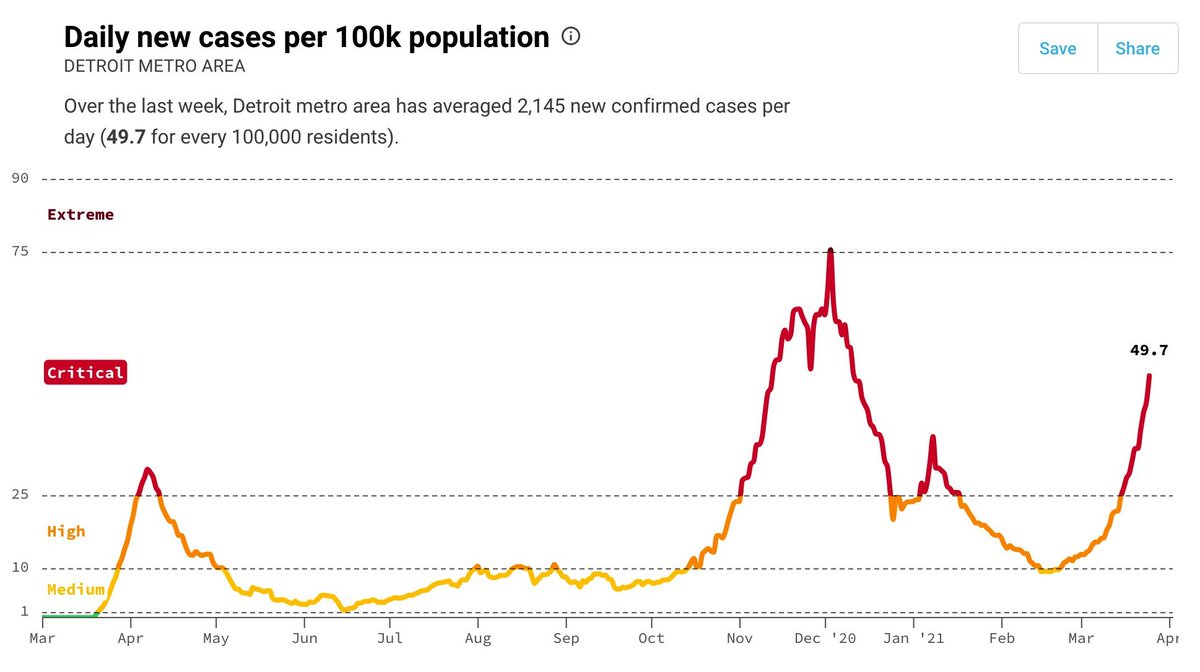
Vaccination can have rapid impacts on transmission & disease & surging vaccines to MI could save many lives.
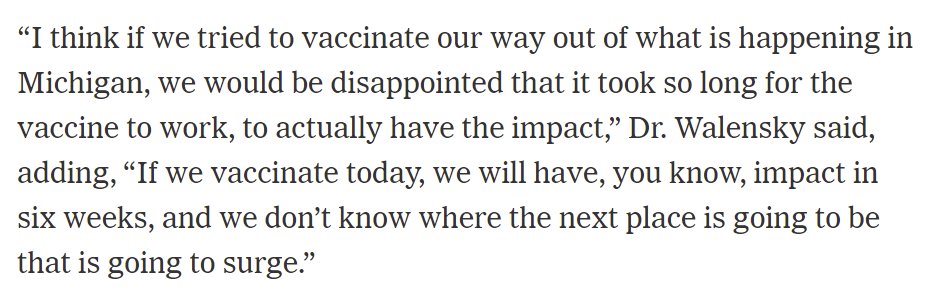
Comments in NYT article from multiple health officials including @CDCDirector@celinegounder are surprisingly at odds w/ data. 1-2 wks not 6. nytimes.com/2021/04/12/us/…
@CDCDirector argues increasing vaccine supply to MI would take 6 weeks to take effect.
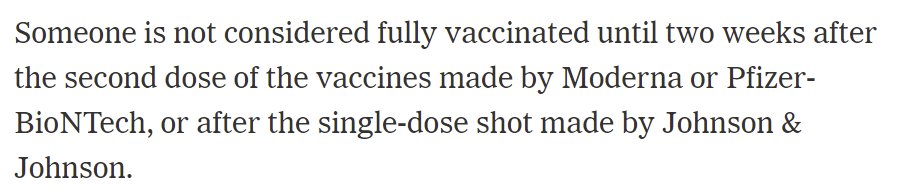
Article by @noahweiland@MitchKSmith tries to explain this by stating that time for full protection w/ mRNA vaccines. But we know 1 dose offers substantial protection vs disease AND infection.
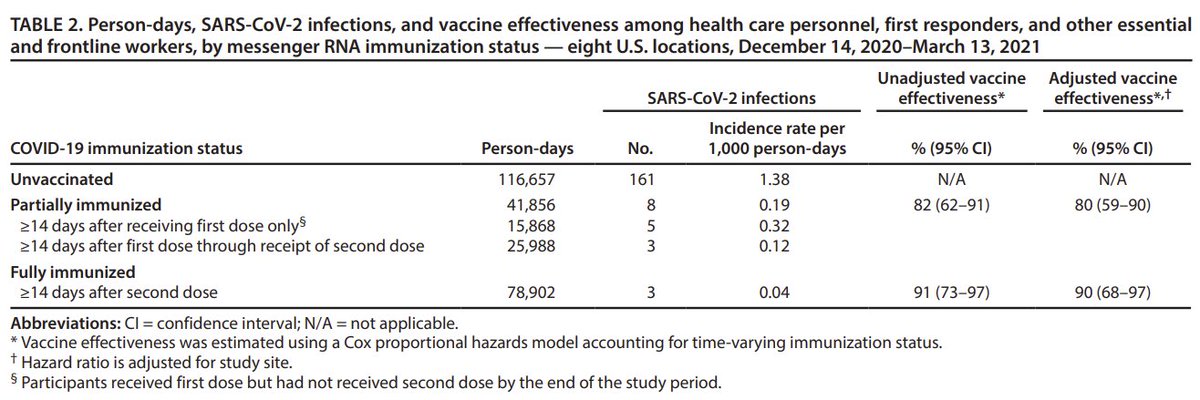
Paper published in CDC's own journal MMWR showed protection against INFECTION (not symptoms) is 80% 2 wks after 1st dose. Thus, vaccinating people could reduce transmission much more quickly than 6 wks. cdc.gov/mmwr/volumes/7…
Why have we given up on targeted vaccination & dose sparing?
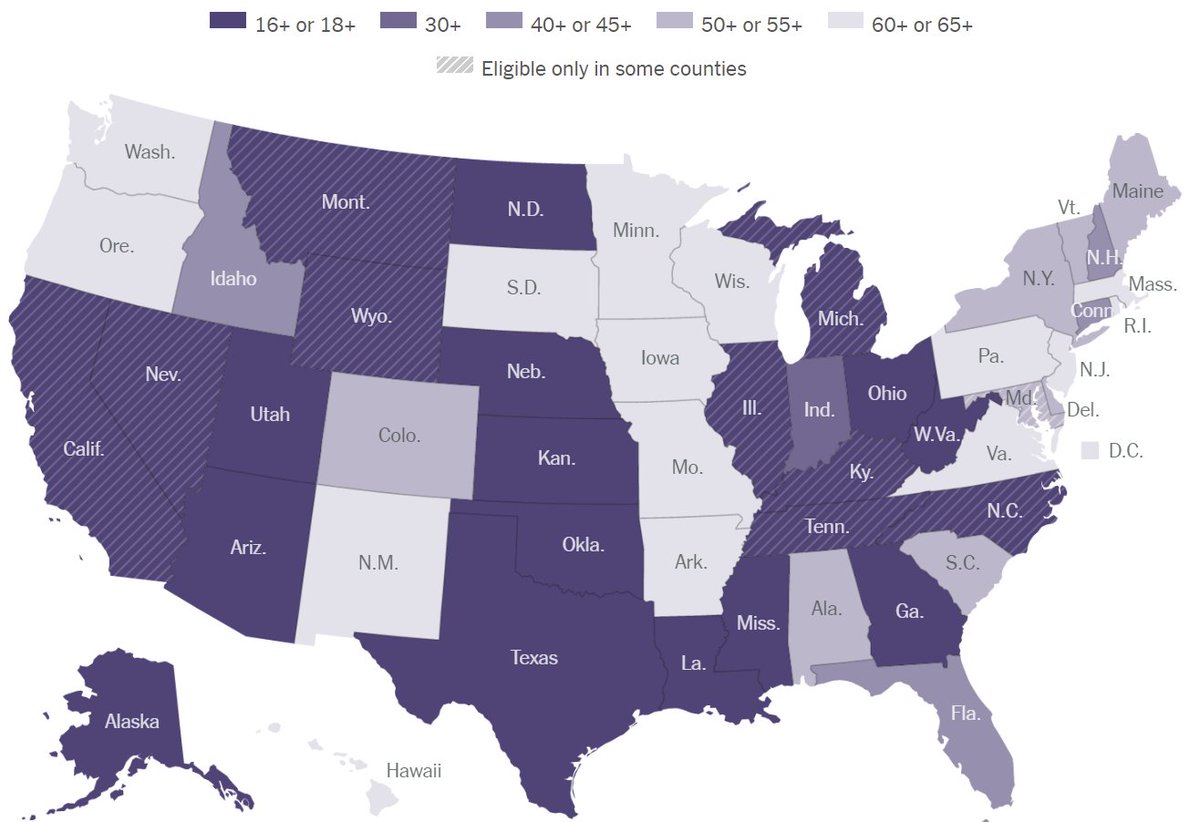
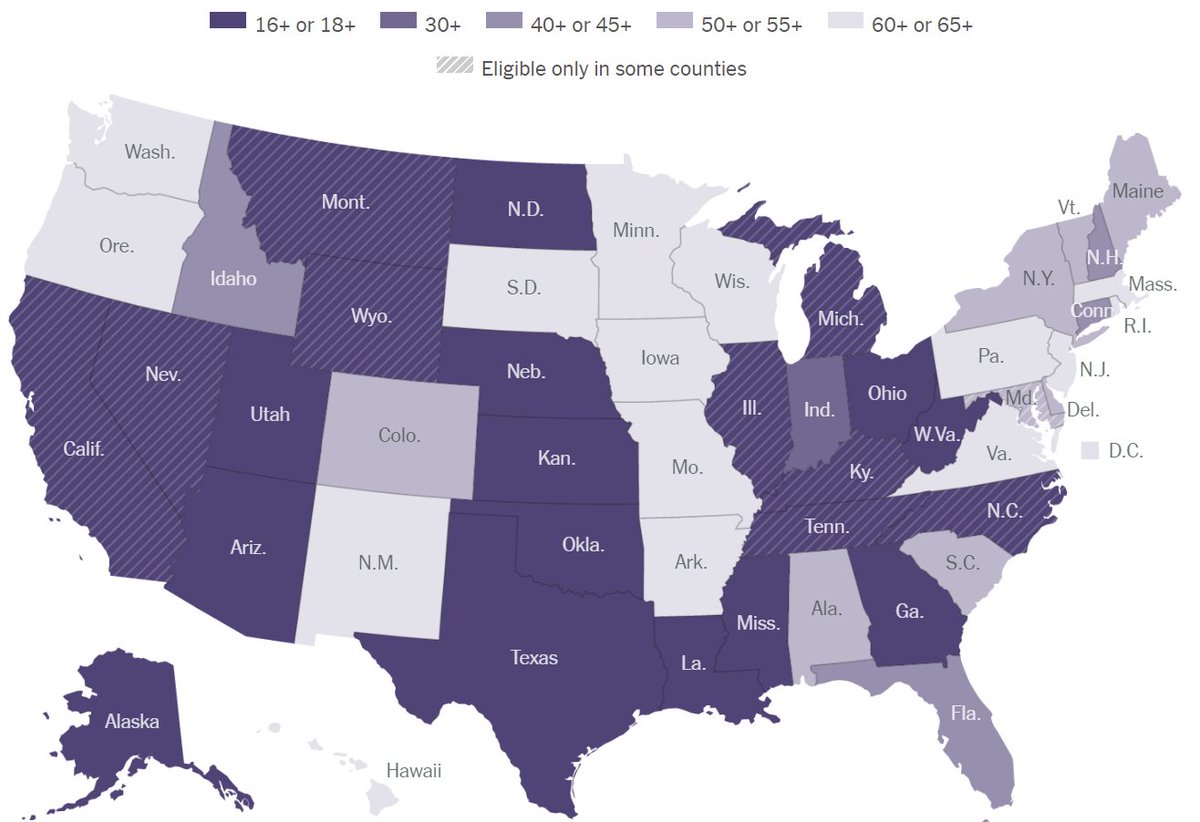
Many announcements like below. Seems great except most 50y+ aren't vaccinated in most states, nor are those w/ pre-existing conditions. Given surging cases & still limited vaccines this will lead to avoidable deaths.
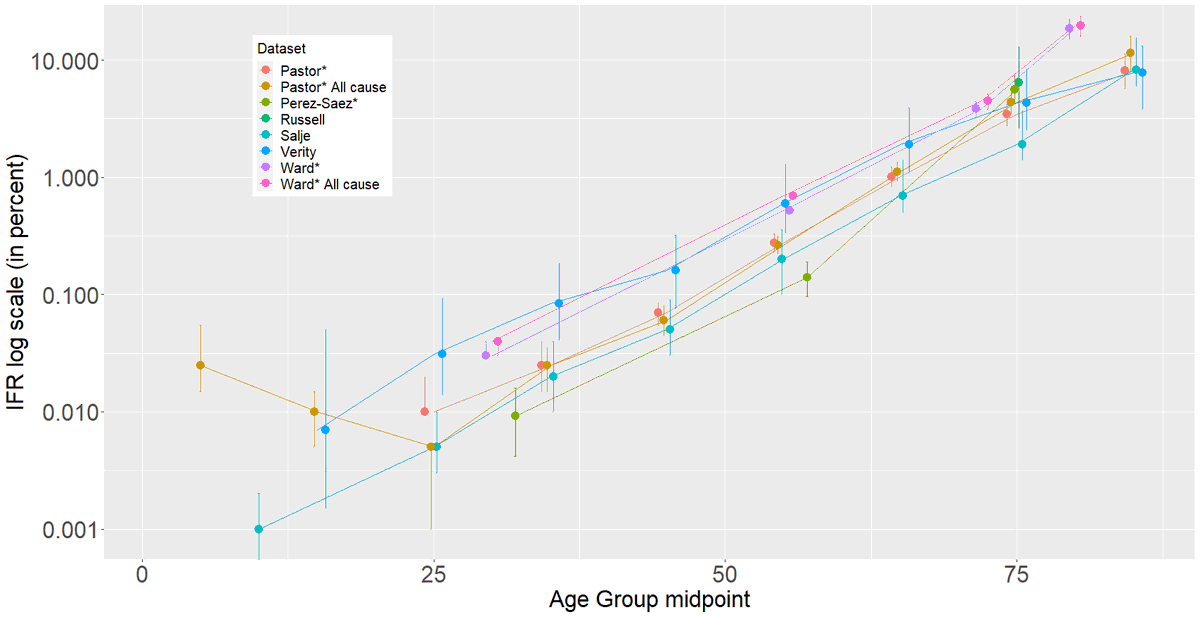
). It's ~10x higher for every 20 yrs of age. Same for hospitalizations. And yet most states are open to 16/18+ (nytimes.com/interactive/20…).
Remember all the discussions about ways to vaccinate faster? Half-doses? Large gap b/w doses? 0/1 doses initially for already infected? Now clear strong evidence for all these strategies, & yet...
silence.
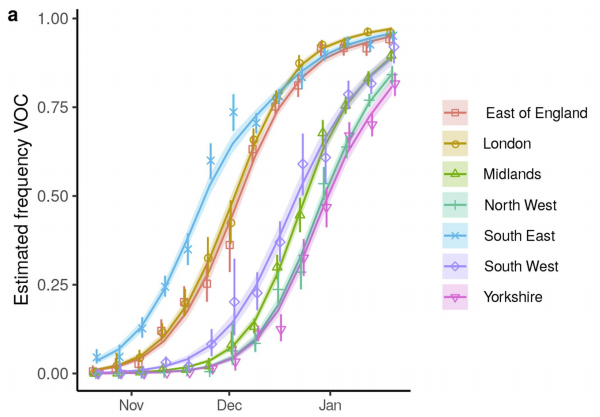
Differential growth trajectories of B.1.1.7 (UK variant) in US states.
The rate of increase in frequency of B.1.1.7 varies between different locations that also differ in case trajectories. What is driving this?
Thread
We know have clear evidence of variant B.1.1.7 being more 50-100% infectious & ~67% more deadly. It is likely playing an important role in the current surge in cases in Europe. nature.com/articles/s4158… doi.org/10.2807/1560-7…
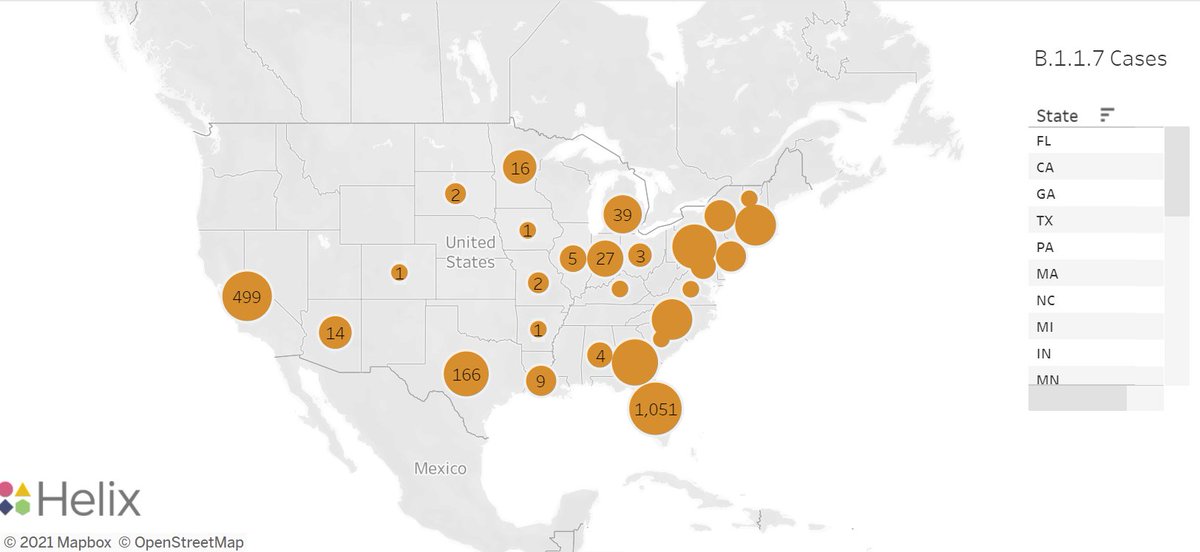
B.1.1.7 has also been detected in many US states(helix.com/pages/helix-co…) & is probably present in most states now. In Jan-Feb most expected it to spread rapidly in US to become the dominant variant like it did in UK Nov-Jan, & other EU countries later (nature.com/articles/s4158…)
Is vaccination protection against severe disease higher than against mild disease? Key Q for new variants which may show lower effectiveness against mild cases.
Thread
tl;dr Data do not show higher efficacy against severe disease, but not clearly lower either. It matters.
Background
COVID-19 has reshaped our society for the last year b/c of the 10-20x higher hospitalization rate & fatality compared to the flu.
However, vaccine efficacy trials for COVID-19 have included all "symptomatic infection" which is mostly mild cases. (even for J&J)
This was done b/c mild cases occur more frequently; efficacy could be measured more quickly if mild cases were included. Some (@EricTopol) raised concerns about this design b/c they were worried that vaccines might *only* prevent mild cases & not severe. nytimes.com/2020/09/22/opi…
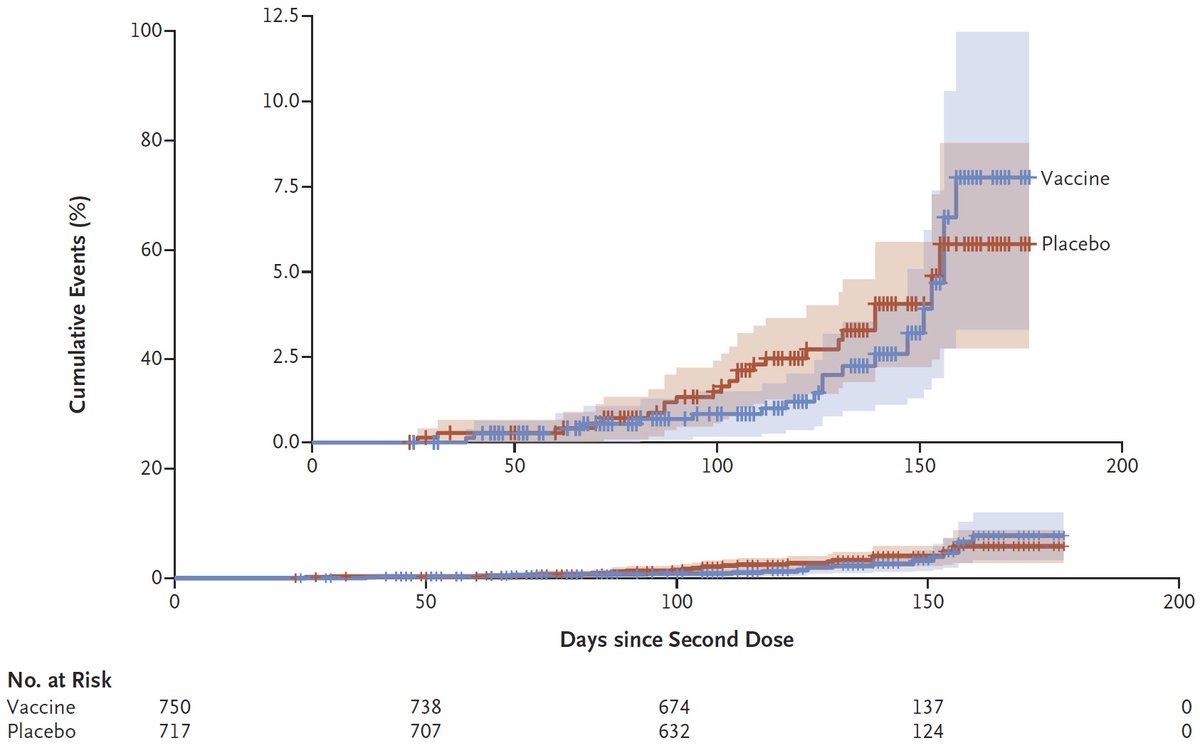
Visual picture of how invasion of B.1.351 eliminated efficacy of Astrazeneca vaccine in S Africa: placebo rises more quickly through d140 when B.1.351 emerges & difference erased (vaccine ends up higher but pop at risk at end is small).
Paper is now out: nejm.org/doi/full/10.10…
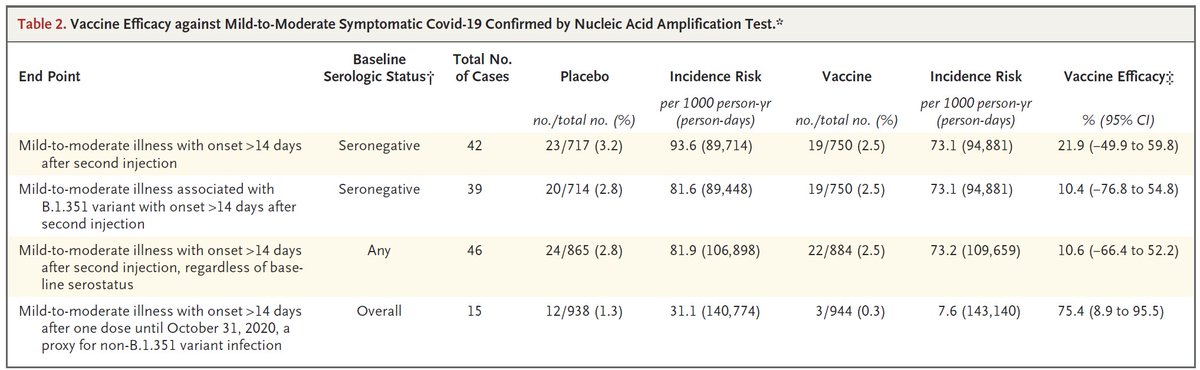
Efficacy before Oct 31 before B.1.351 dominant: 75%
Efficacy against B.1.351: 10.4%
Both have very wide CIs b/c study small (1K in each group) but contrast is stark.
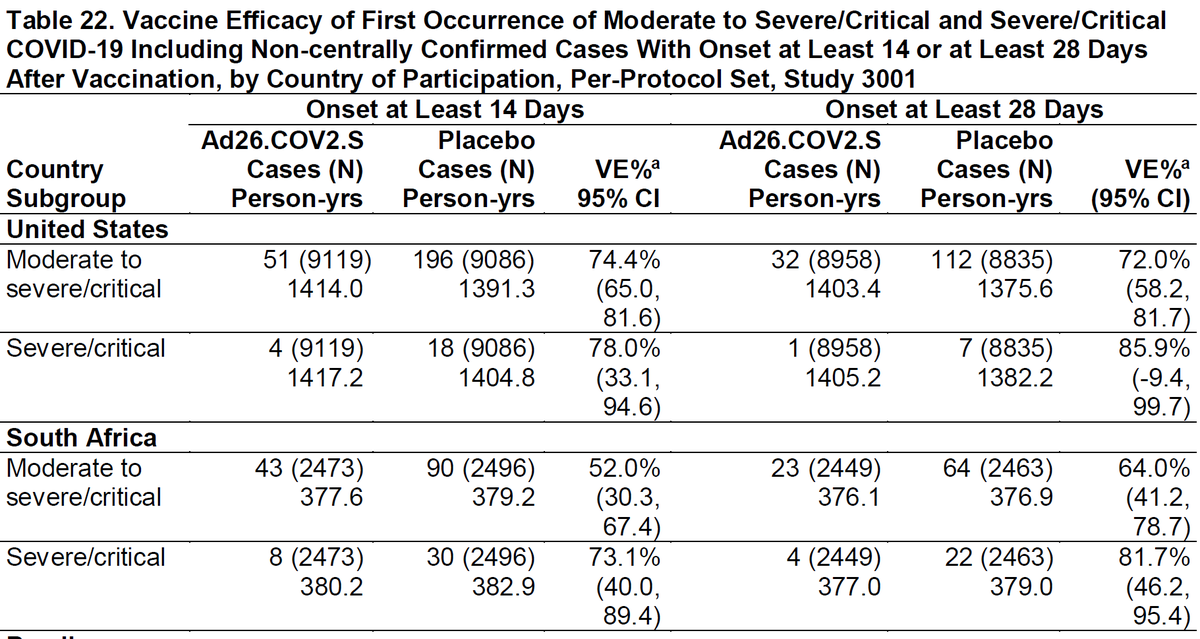
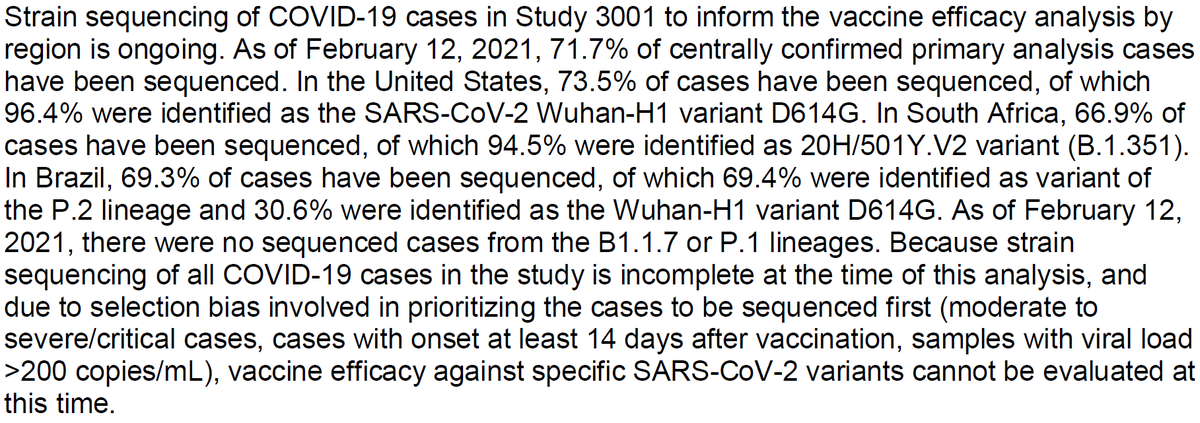
Thankfully, J&J vaccine faired much better, w/ a non-significant diff b/w US & S Africa & Brazil (w/ P.1), despite B.1.351 & P.1 being majority of viruses sequenced. (fda.gov/advisory-commi…)
New paper on reinfections & protection from previous exposure. Study design is crude.
Protection was 82% against infection & 85% against symptomatic reinfection. Half (50%) of reinfections were symptomatic (similar to new infections 58%). @florian_krammer academic.oup.com/cid/advance-ar…
Current dogma is that protection from reinfections is 80-90% (like this study) but reinfections are mild or asymptomatic (
). But here 50% were symptomatic & 5 of 31 symptomatic reinfections needed hospitalization (fraction for new infections not given).
Study design is crude: comparison is pairs of tests >90d apart. Little effort to control for factors that might influence detectability of infections. But no clear diffs in age, etc. of groups testing -/+ at 1st test. Hard to know how biased results might be.