AJAX (Mini-thread)
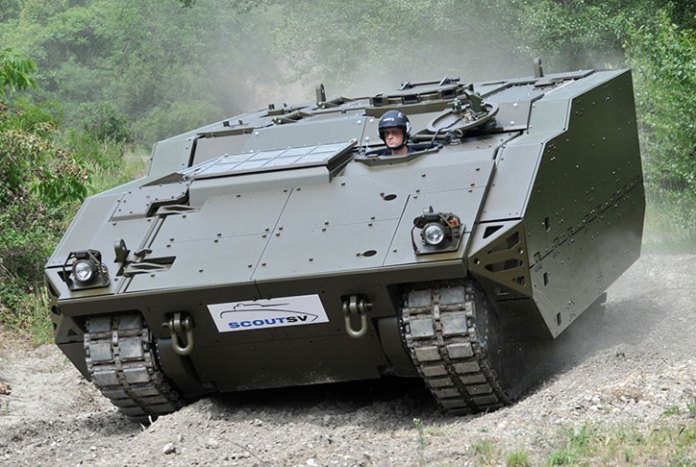
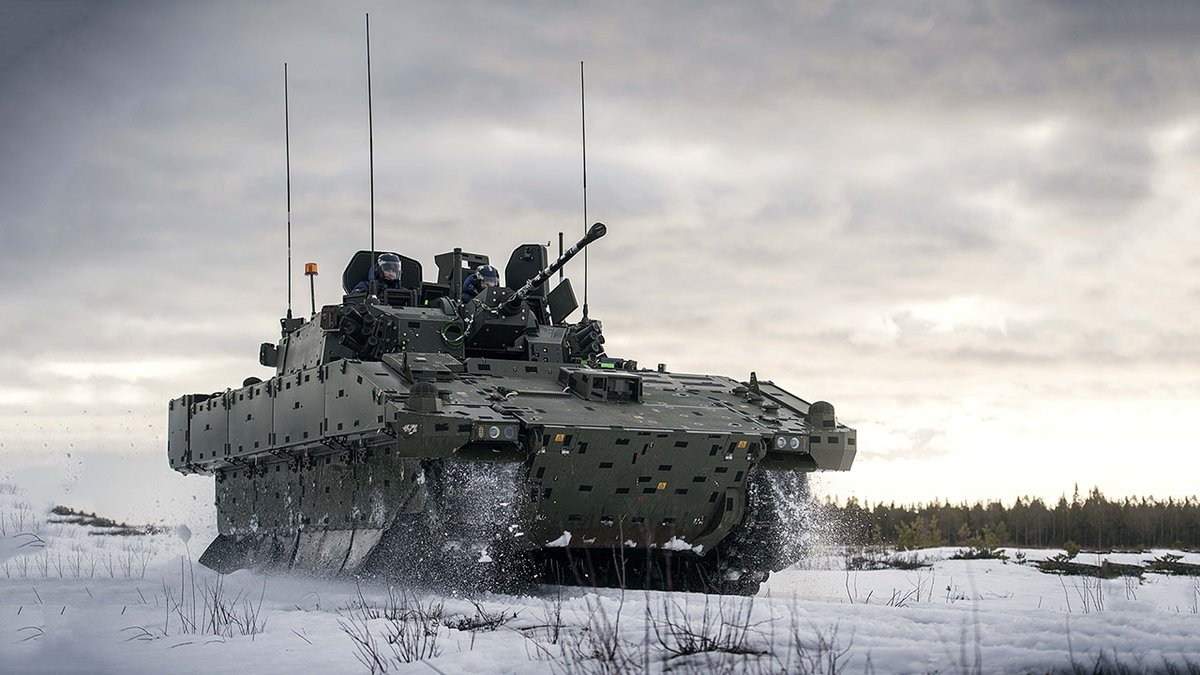
Working for a competitor of @gduknews I didn't think it was appropriate to comment on the specific issues related to the Ajax programme, but I do want to say something important about the capability itself. 1/7
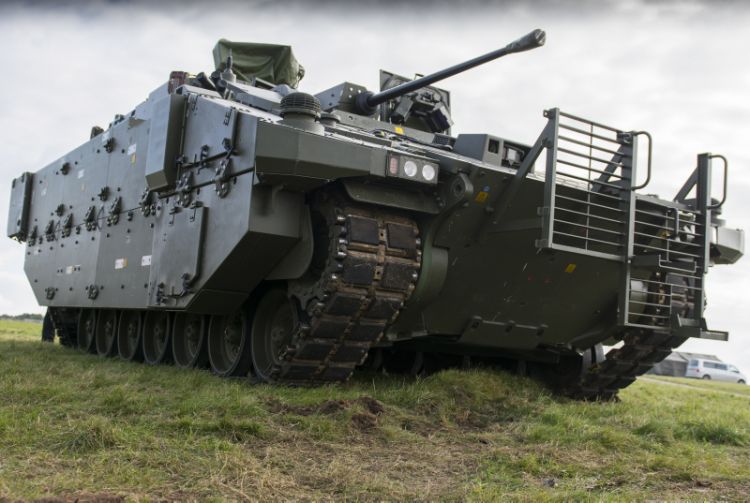
Without the reconnaissance strike and fire support element that Ajax is intended to provide, the Army will not be able to fulfil its 2030 aspirations. Heavy Brigade Combat Teams will lack sufficient lethality, and be placed at a considerable disadvantage operationally. 2/7
This means any notion of cancelling Ajax and deleting the capability altogether is neither credible nor acceptable. You might as well disband the Army. The Government could only consider the cancellation of Ajax if it were to replace it with an alternative platform. 3/7
If the Government cancelled Ajax, it would need to write-off the £3.5 billion already spent. It would also need to find a further £3.5 billion to acquire a substitute platform. This is also unacceptable and unaffordable given the current resource envelope. 4/7
To reiterate, Ajax is an essential capability central to the Army's emerging doctrine and its future way of warfare. While we cannot afford to lose the utility it will provide, it would be wrong to say it's too important to fail. So we must find a way to make it work. 5/7
Any ambitious equipment programme will encounter unexpected issues that add cost and cause delay. The question is at what point does something become undeliverable? And, if you feel you've reached that point, how do you manage the situation? It's never easy. 6/7
Einstein said “Insanity is doing the same thing over and over and expecting different results.” If Ajax is not working, it means something radical needs to be done to fix it. Those responsible will need to be bold, brave and innovative, while maintaining their integrity.
End/
• • •
Missing some Tweet in this thread? You can try to
force a refresh

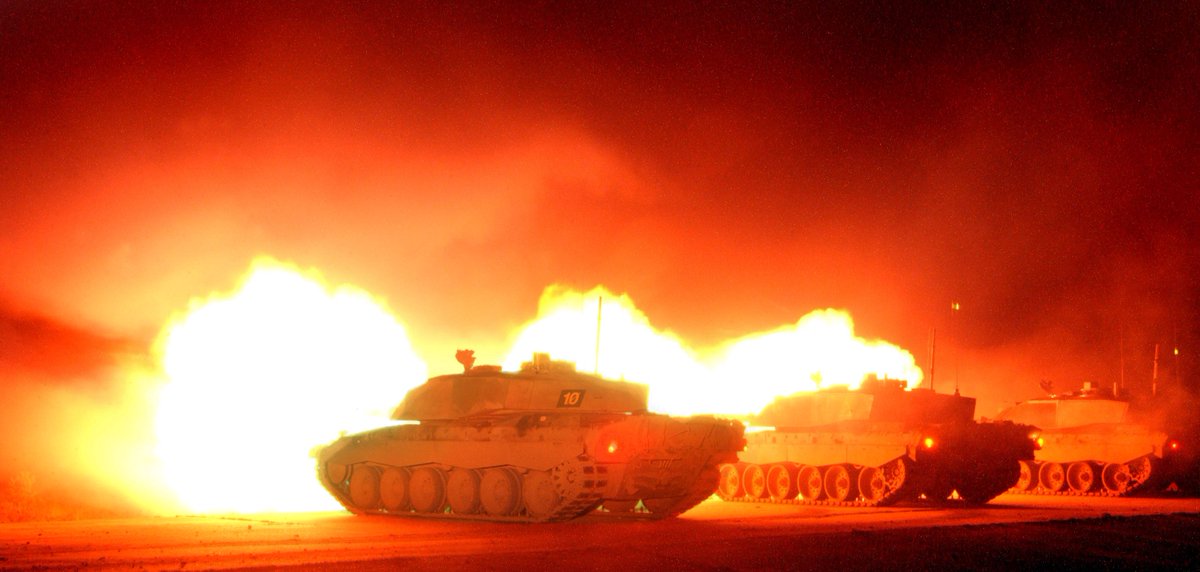
I wanted to respond to the CR3 announcement last week. Those who follow me will know I have an interest to declare here, since I am an advisor to KMW, manufacturer of the Leopard 2A7 and competitor to RBSL. However, the views that follow are my own, not KMW’s.
[1 of 20]
First, it’s fantastic news that the UK is retaining a Main Battle Tank capability. Despite the threat posed by loitering munitions and other new battlefield technologies, nothing else provides the shock effect, resilience and sheer brute force that tanks still offer.
[2 of 20]
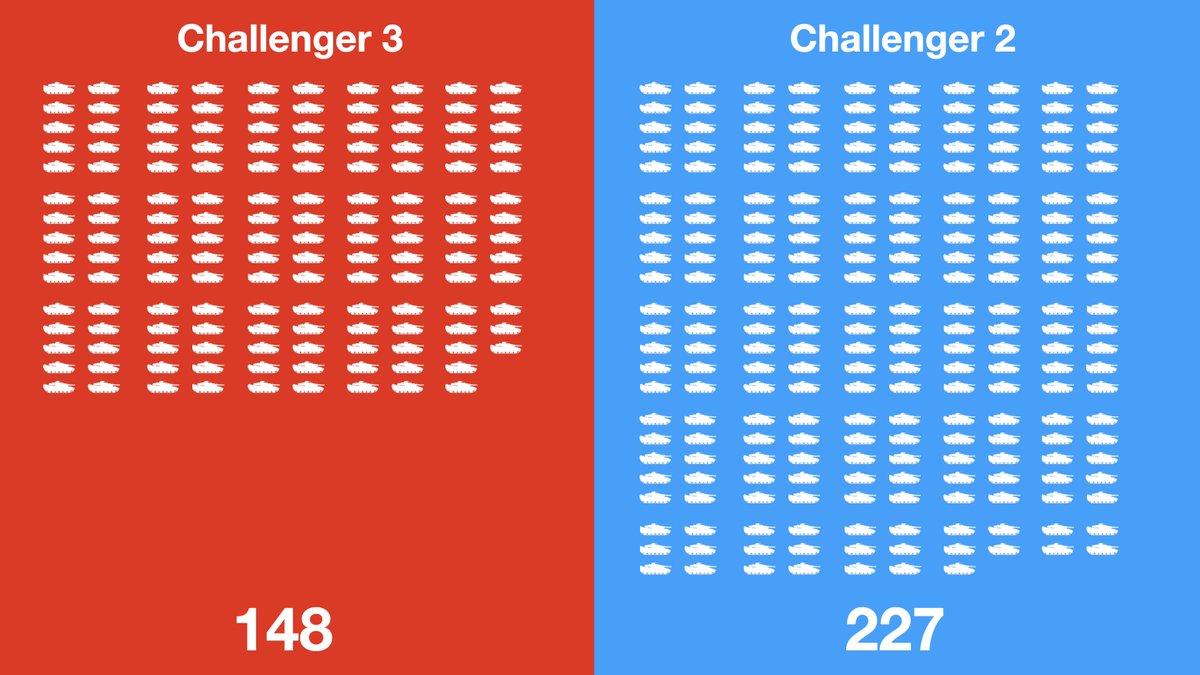
However, we need to ask what is a meaningful number. Reducing the fleet to 148 is only sufficient for two regiments + training sqdn. This seems like tokenism for the sake of compromise rather than a serious attempt to reconfigure the Army around the threats it faces.
[3 of 20]
THE SITUATION IN UKRAINE (Thread)
As Russian troops continue to mass along the Ukraine's Eastern border, we are all rightly concerned. But will Putin really go for another land grab? And if so, what might happen? Let’s look at how a potential scenario might unfold...
(1 of 10)
Putin attacks across three lines of advance into Western Ukraine. Whatever his strategy, this time it’s different. Unlike 2014, Ukraine forces are better prepared and much better equipped. Territorial gains within the first 24 hours are less than anticipated.
(2 of 10)
Global condemnation swiftly follows. Further sanctions are applied, but this changes nothing at the front. Withering artillery barrages are followed-up by substantial armoured thrusts. Although Ukraine forces lose ground, Russian forces suffer significant attrition.
(3 of 10)
So, in the absence of detail from the recent Defence Command Paper, I thought I would provide a personal view on the British Army's strategy and answer that all important question: WHAT IS IT FOR? I'll start with the principal threats to note the resurgence of peer adversaries.
The UK's four overarching defence commitments translate into a range of roles with varying intensity. The specific tasks the Army aims to perform were not communicated clearly. The important shift in emphasis is a move to high-end expeditionary war fighting.
The four primary tasks are performed by Light, Heavy and Special Forces structures. Again, once you understand the intent, the logic is sound. An increased special forces component is consistent with the missions we anticipate.
BRITSH ARMY HEADCOUNT REDUCTION (Thread)
Looking back at personnel cuts made in 2010, a reduced Army of 82,000 didn’t help Britain regain its financial strength, it simply signified a hollowing-out of our ability to defend ourselves.
(1 of 25)
It destroyed the credibility of David Cameron’s Coalition Government then and even more so in hindsight. It was military illiteracy on a grand scale. The problem wasn’t so much the reduction itself, but the fact that there was no real strategy behind it, no future plan.
(2 of 25)
Back in 2010, the UK's involvement Iraq and Afghanistan didn’t really serve our national interests (See Ben Barry’s book). If these conflicts were sub-optimal uses of the Army, they raised the important question of what the Army’s underlying raison d’être should be.
(3 of 25)
BRITISH ARMY MRVP PROGRAMME (Thread)
The Army wants an inexpensive multi-role protected vehicle so that more of its troops can benefit from protected mobility. This remains an important programme that will ensure a larger % of the Army is deployable.
(1 of 10)
As things stand, the Army wants to acquire the Oshkosh JLTV for Package 1 (Command & Liaison / Tactical Support roles). And is holding a competition between GDLS Eagle V and Thales Bushmaster MR6 for Package 2 (Troop Carrying and Battlefield Ambulance roles).
(2 of 10)
However, MRVP has come under increased scrutiny and for good reason. JLTV is an excellent and inexpensive vehicle. But helping our post-pandemic economy to recover will require us to invest in military vehicles built domestically rather than imported from the USA.
(3 of 10)
WUHAN ONE YEAR ON
On 22 January 2021, it will be a year since China locked-down the city of Wuhan and in doing so alerted the rest of the world to the fact that we were facing a new and deadly illness that has changed our lives.
(1 of 21)
There is compelling evidence to suggest that China knew how serious the virus was long before January 2020. Internet searches in the Wuhan area revealed people trying to identify the symptoms we now identify as Covid-19 in October and November 2019.
(2 of 21)
Athletes returning from the World Military Games in Wuhan, also in October 2019, reported a strange illness that was unidentified at that time. Isolated cases of an unknown illness also presented at French, Swedish, and other European hospitals in November 2019.
(3 of 21)