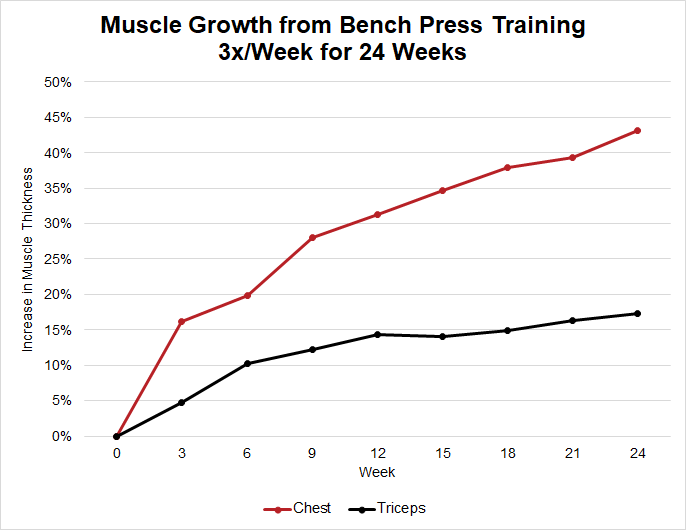
For set volume, ideally I like to see the number climb from low, to moderate, and finally high levels over the course of a training block (~6–8 weeks).
In the beginning you are very sensitive to new stimuli and don’t need many sets at all. Perhaps 2–3 per workout.
But as you get more accustomed to the training, you’ll need to increase the magnitude of the stimuli (e.g., the set volume) for sustained gains.
For advanced lifters, I sometimes like it when the last week or so of a block has ”too much” volume, and then follow that up with a taper/deload, or simply a very light start to the next block.
The goal?
Breaking out of homeostasis.
• • •
Missing some Tweet in this thread? You can try to
force a refresh

A broad and powerful chest is more than just a filler of your shirt.
Strong chest muscles increase your physical performance in every athletic endeavor where you project force forward, whether you’re throwing a ball, a punch, or pushing an opponent away.
👇
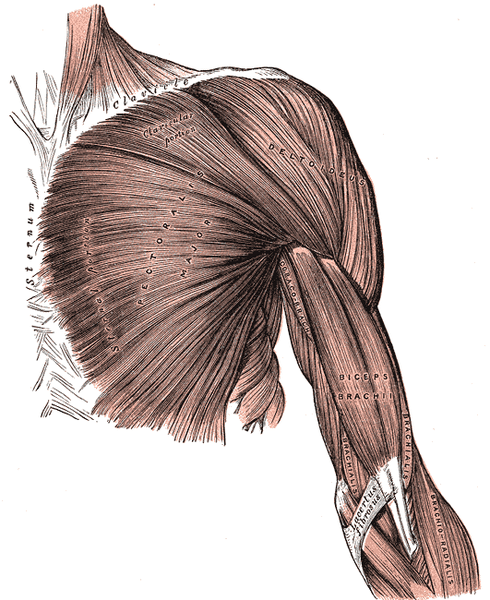
Your chest muscles are made up almost entirely of one, large muscle on each side: pectoralis major.
The pectoralis major has a wide, fan-shaped origin, and is generally divided into two parts:
1. The sternocostal part is the larger, lower portion, which originates mainly from your sternum (and to a degree, from your upper abdominal sheath and ribs).
2. The clavicular part is the smaller, upper portion, which originates from the first half of your clavicle.
If you’re leaning towards one or the other, part of the explanation might lie in your muscle fiber type ratio.
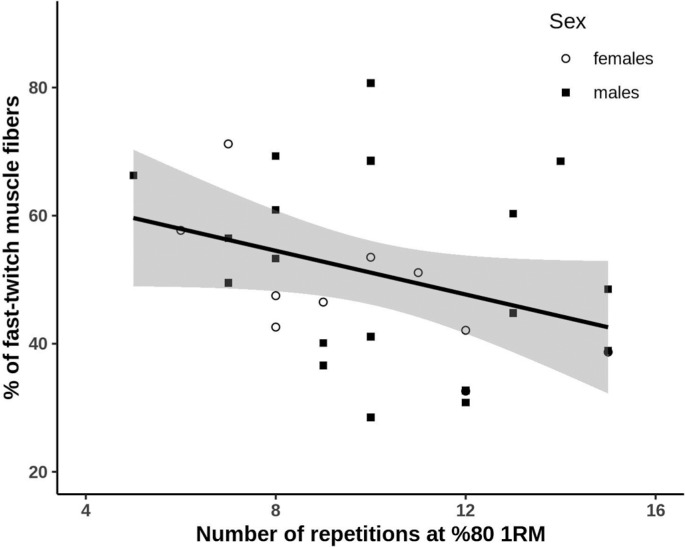
A new study tested if the # of reps one could complete at 80% of 1RM in the squat correlated with muscle fiber type ratio.
⬇️
Here's what they did:
1. 30 participants warmed up and did a 1RM test in the squat. 2. After 15 minutes of rest, they did a max rep set at 80% of that 1RM. 3. They took muscle biopsies of the participants' quadriceps and analyzed the muscle fiber type ratio.
Results?
There was a small, inverse correlation (r=-0.38) between the number of reps participants could do and their percentage of fast-twitch fibers.
Lifting heavier weights or doing more reps than last workout is the basis for getting bigger and stronger. 📈
Here are four ways to do that using the StrengthLog app 👇
1. The training log
- Go to the training log,
- Scroll down and select the last similar workout
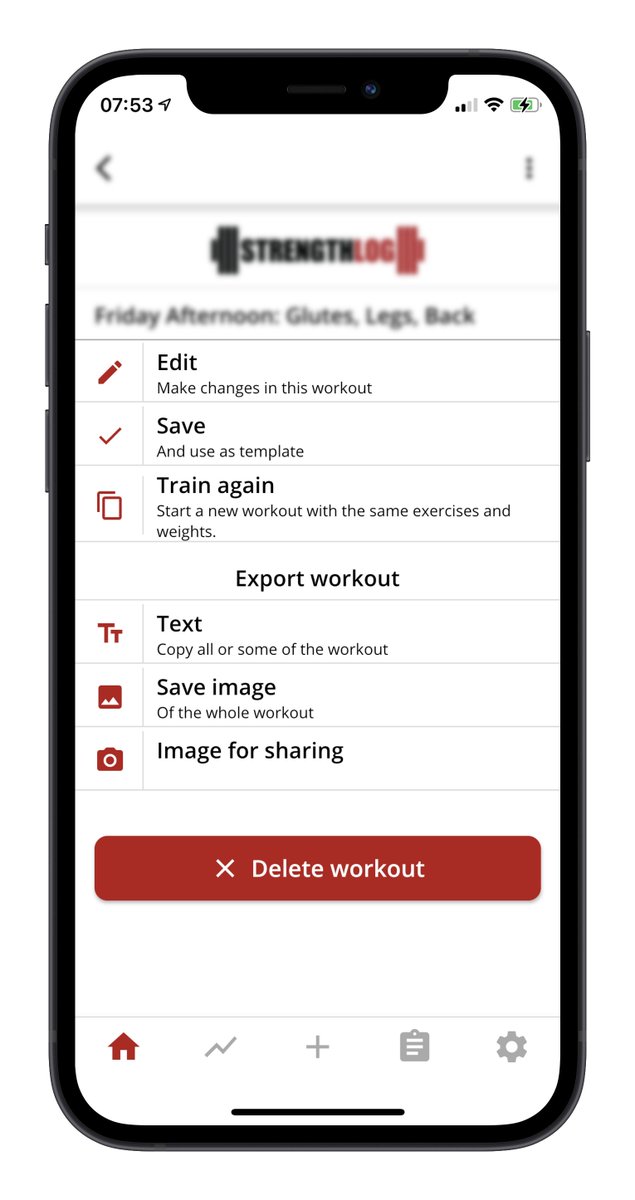
- Hit "Train again"
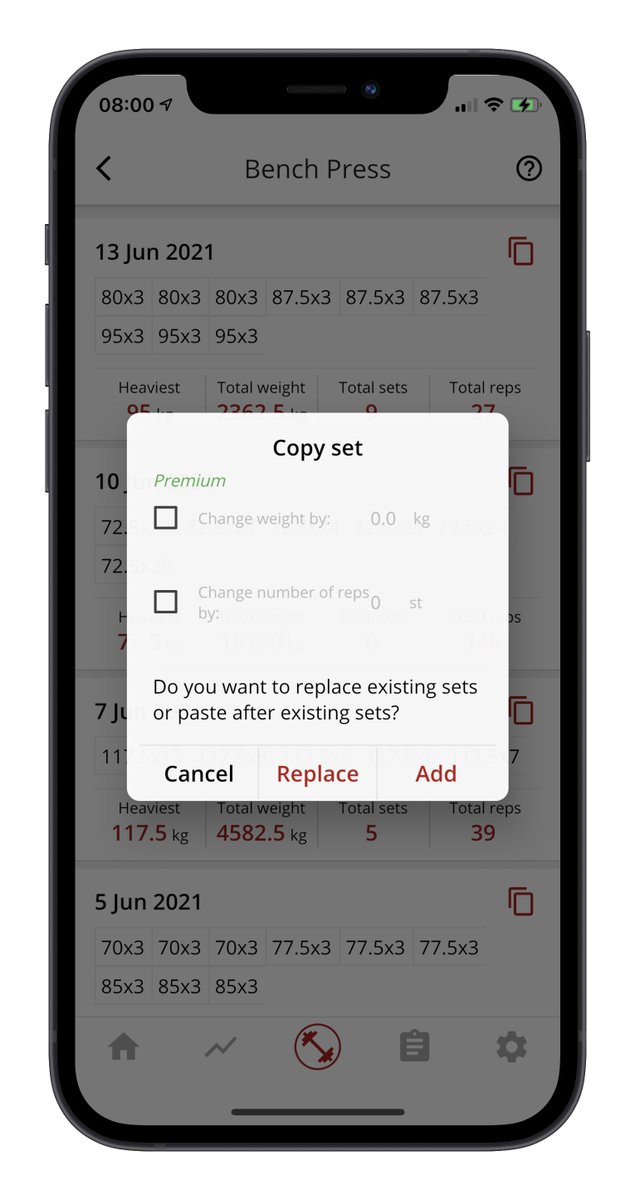
- Choose if you want to train an identical workout, or modify weight/reps
2. The exercise history
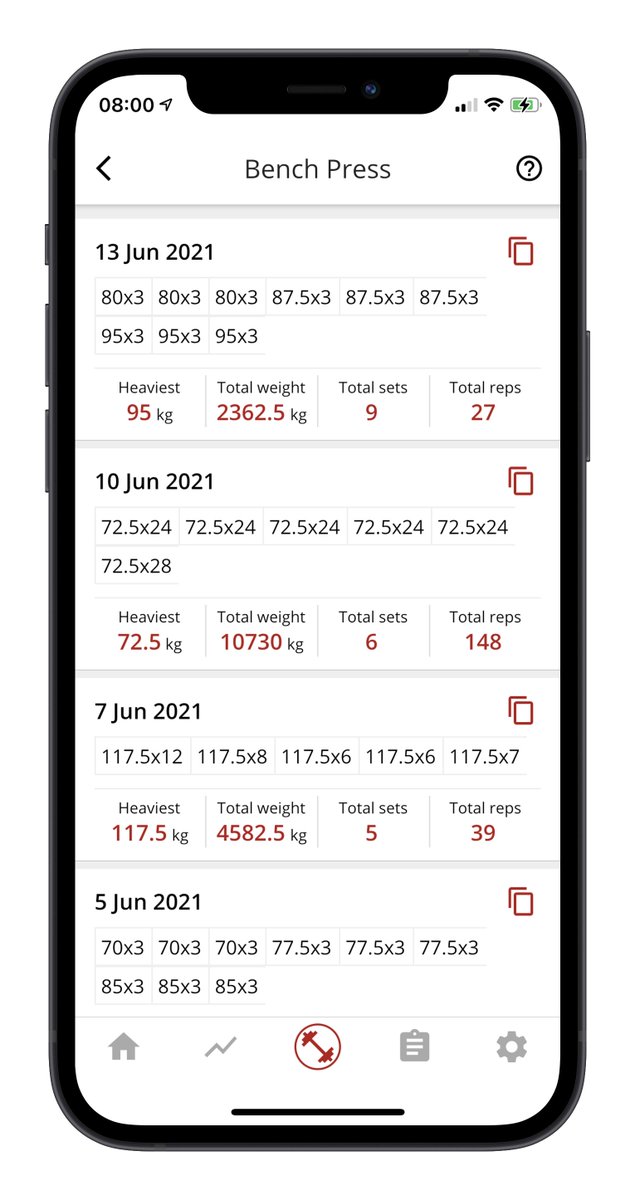
Want to see previous workouts for a specific exercise?
- Start a new workout
- Add an exercise
- Tap the “…” to the right of the exercise name
- Tap History
Here, you will see all previous workouts with that exercise.