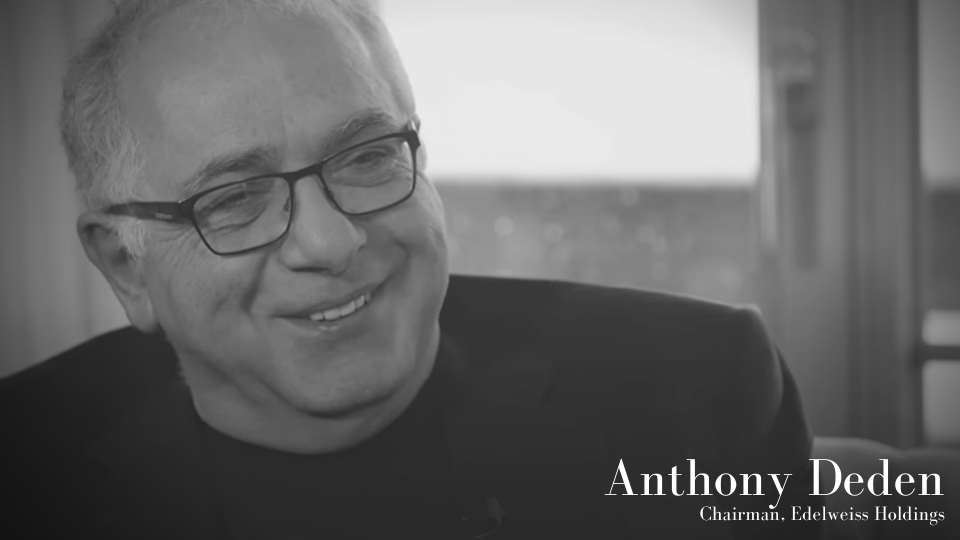
'Tony' Deden got into the investment business by accident.
Managing the monetary affairs of a family after the breadwinner dies.
Over time, one family became two, three, and more.
Knowing that his clients no longer had an income, capital preservation was key.
My key insights:
Managing the monetary affairs of a family after the breadwinner dies.
Over time, one family became two, three, and more.
Knowing that his clients no longer had an income, capital preservation was key.
My key insights:
1. Respect the capital
The capital entrusted to him was a lifetime's worth of savings.
It's tough enough to protect the capital from externalities such as inflation, taxation or unforeseen events.
A fund manager can't compound the error by internal factors such as imprudence.
The capital entrusted to him was a lifetime's worth of savings.
It's tough enough to protect the capital from externalities such as inflation, taxation or unforeseen events.
A fund manager can't compound the error by internal factors such as imprudence.
2. A good investment must have three components
Scarcity, permanence and independence.
These three components make investments endure the test of time.
Scarcity, permanence and independence.
These three components make investments endure the test of time.
Scarcity
Over time, anything that is scarce accumulates value.
Savings, tangible and intangible resources, or human qualities that help in building great businesses.
It could also be a company's culture and ability to adapt & endure.
Hard to replicate by competitors.
Over time, anything that is scarce accumulates value.
Savings, tangible and intangible resources, or human qualities that help in building great businesses.
It could also be a company's culture and ability to adapt & endure.
Hard to replicate by competitors.
Permanence
Invest in companies whose practices and behavior are designed to endure rather than just grow.
A company can grow but become fragile at the same time, and eventually die.
Invest in companies whose practices and behavior are designed to endure rather than just grow.
A company can grow but become fragile at the same time, and eventually die.
Independence
Dependence injects fragility.
Depending on a supplier, a single customer, government subsidies etc can reduce a company's ability to endure in the long run.
It is more likely for an independent company to adapt and endure in tough times
Dependence injects fragility.
Depending on a supplier, a single customer, government subsidies etc can reduce a company's ability to endure in the long run.
It is more likely for an independent company to adapt and endure in tough times
3. Risk
A real risk is permanently losing one's capital without ever being able to recover it.
Volatility is not risk.
Think hard about what could go wrong.
It is better to err on the side of inaction than to act hastily and without thought.
A real risk is permanently losing one's capital without ever being able to recover it.
Volatility is not risk.
Think hard about what could go wrong.
It is better to err on the side of inaction than to act hastily and without thought.
4. The illusion of prosperity
During periods of prosperity (bull markets), examine the causes to figure out if it’s real or simply an illusion of prosperity.
E.g. Is the rise in consumer spending due to increased real income or funded by credit?
During periods of prosperity (bull markets), examine the causes to figure out if it’s real or simply an illusion of prosperity.
E.g. Is the rise in consumer spending due to increased real income or funded by credit?
5. Look beyond just growth
Deliberate upon the idea of endurance and durability of a company.
Study those companies that stood the test of time.
Deliberate upon the idea of endurance and durability of a company.
Study those companies that stood the test of time.
6. Idea of exclusion
Figure out which businesses you'll never invest in.
There're only a handful of companies worth your time.
Figure out which businesses you'll never invest in.
There're only a handful of companies worth your time.
7. Difference between owners and investors
No owner of a business wakes up everyday and ask himself what he's worth.
Owners are focused on ensuring:
•the business survives
•have a great product
•a satisfied workforce
•stable suppliers
•delighted customers
No owner of a business wakes up everyday and ask himself what he's worth.
Owners are focused on ensuring:
•the business survives
•have a great product
•a satisfied workforce
•stable suppliers
•delighted customers
8. Balance sheet
Companies should never exchange growth for a fragile balance sheet.
Especially not for stock buybacks to artificially boost EPS when the management's compensation is tied to EPS.
A company's ability to endure is tied to the strength of its balance sheet.
Companies should never exchange growth for a fragile balance sheet.
Especially not for stock buybacks to artificially boost EPS when the management's compensation is tied to EPS.
A company's ability to endure is tied to the strength of its balance sheet.
9. Looking at stock prices
The more you look at stock prices, particularly during drawdowns, the more you start to question why you own them.
Regularly checking the portfolio can damage long-term compounding.
The more you look at stock prices, particularly during drawdowns, the more you start to question why you own them.
Regularly checking the portfolio can damage long-term compounding.
10. Circle of competence
Don't own something you don't understand.
Even if it's going up, it makes no difference.
Don't own something you don't understand.
Even if it's going up, it makes no difference.
11. Businesses to avoid
Commodity-based businesses have a low barrier to entry.
Similarly, companies that provide transport e.g. flights, trains or trucks have no operating leverage.
They are subject to inputs and costs that are beyond their control.
Commodity-based businesses have a low barrier to entry.
Similarly, companies that provide transport e.g. flights, trains or trucks have no operating leverage.
They are subject to inputs and costs that are beyond their control.
12. There's no value to reading the news
The news is fake and it always has been.
Many news report are poorly disguised promotions or written by people with no clue.
People are usually addicted to news because they base their investment decisions on other people's decisions.
The news is fake and it always has been.
Many news report are poorly disguised promotions or written by people with no clue.
People are usually addicted to news because they base their investment decisions on other people's decisions.
If you wish to learn more, check out this great interview with Anthony 'Tony' Deden with Grant Williams!
This is the end of my key takeaways from Tony Deden!
I hope you enjoyed it.
If you like this, follow me here @steadycompound
I write about investment concepts, business breakdowns and growth philosophies.
I hope you enjoyed it.
If you like this, follow me here @steadycompound
I write about investment concepts, business breakdowns and growth philosophies.
If you have enjoyed this thread, you're gonna love my newsletter where I curate 3 ideas on investing and growth philosophies.
Every week.
steadycompounding.com
Every week.
steadycompounding.com
• • •
Missing some Tweet in this thread? You can try to
force a refresh