The Khmers raised their monarchs to the status of the the representatives of the Gods on earth and therefore found it easy to take the next step: depicting a God in the form of the monarch.
Jayavarman VII had himself depicted several times as Avalokitesvara/Lokeshvara
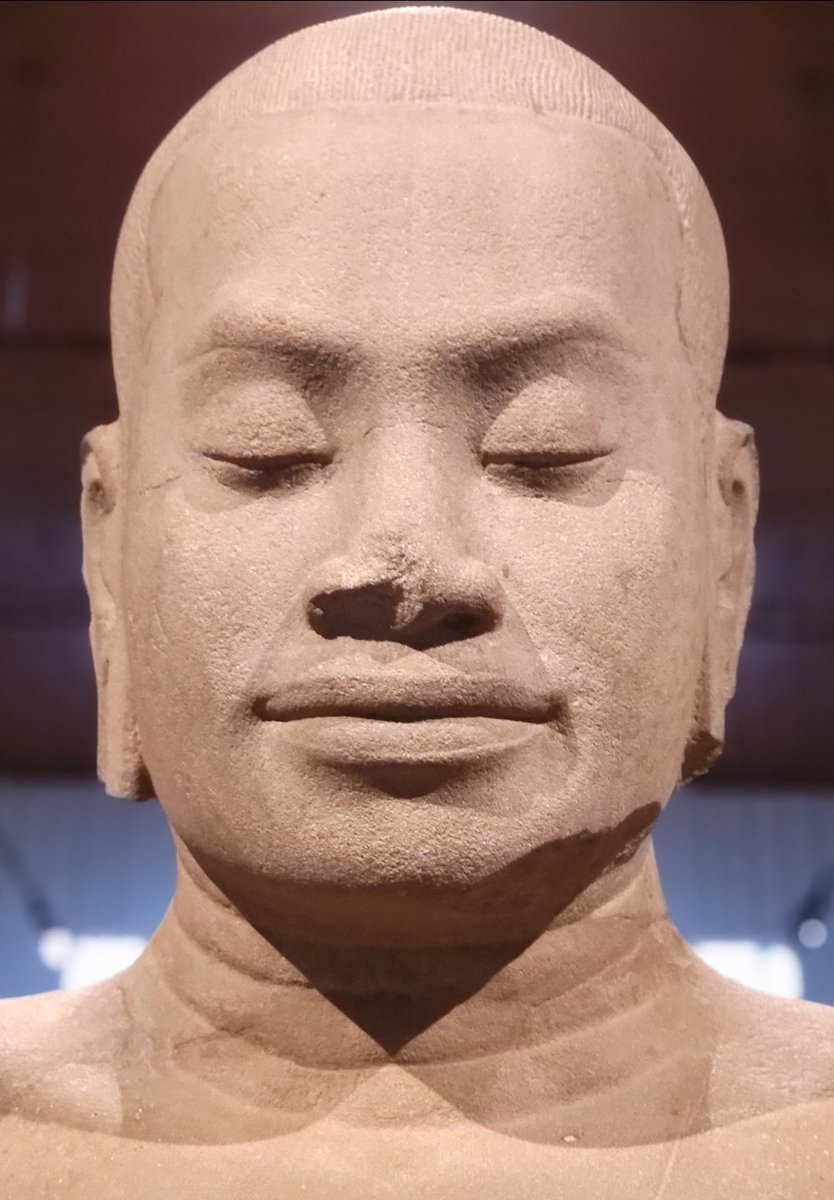
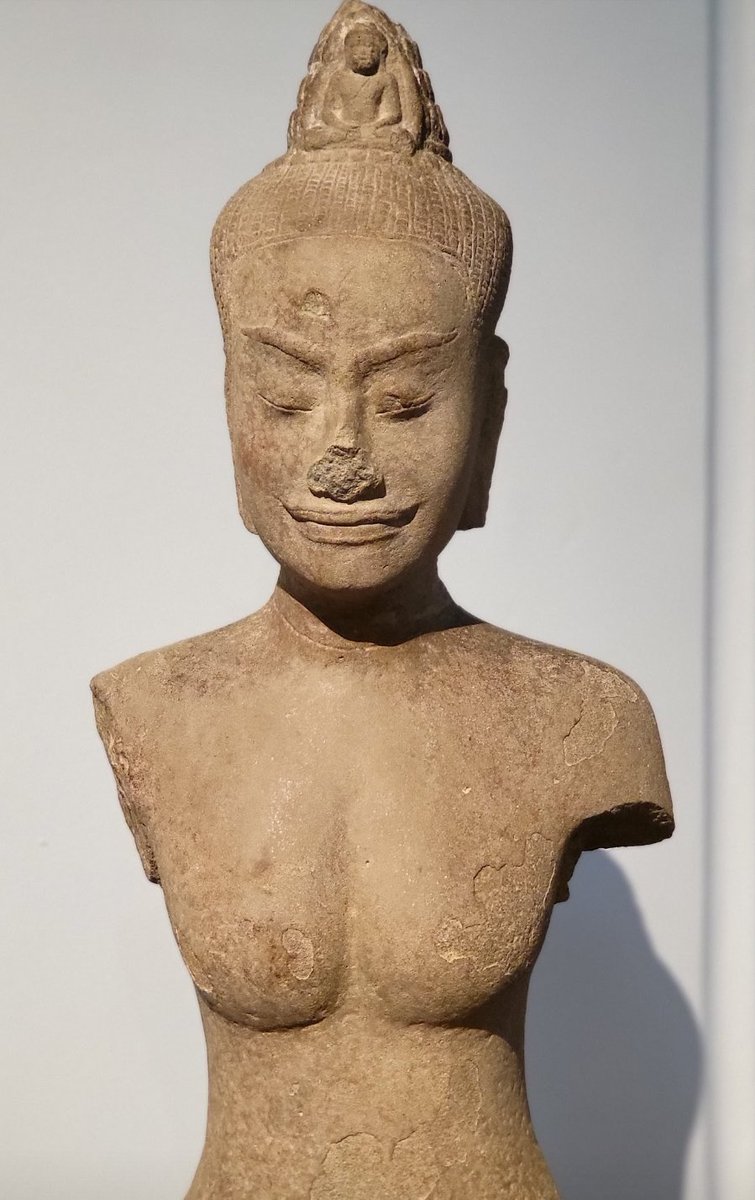
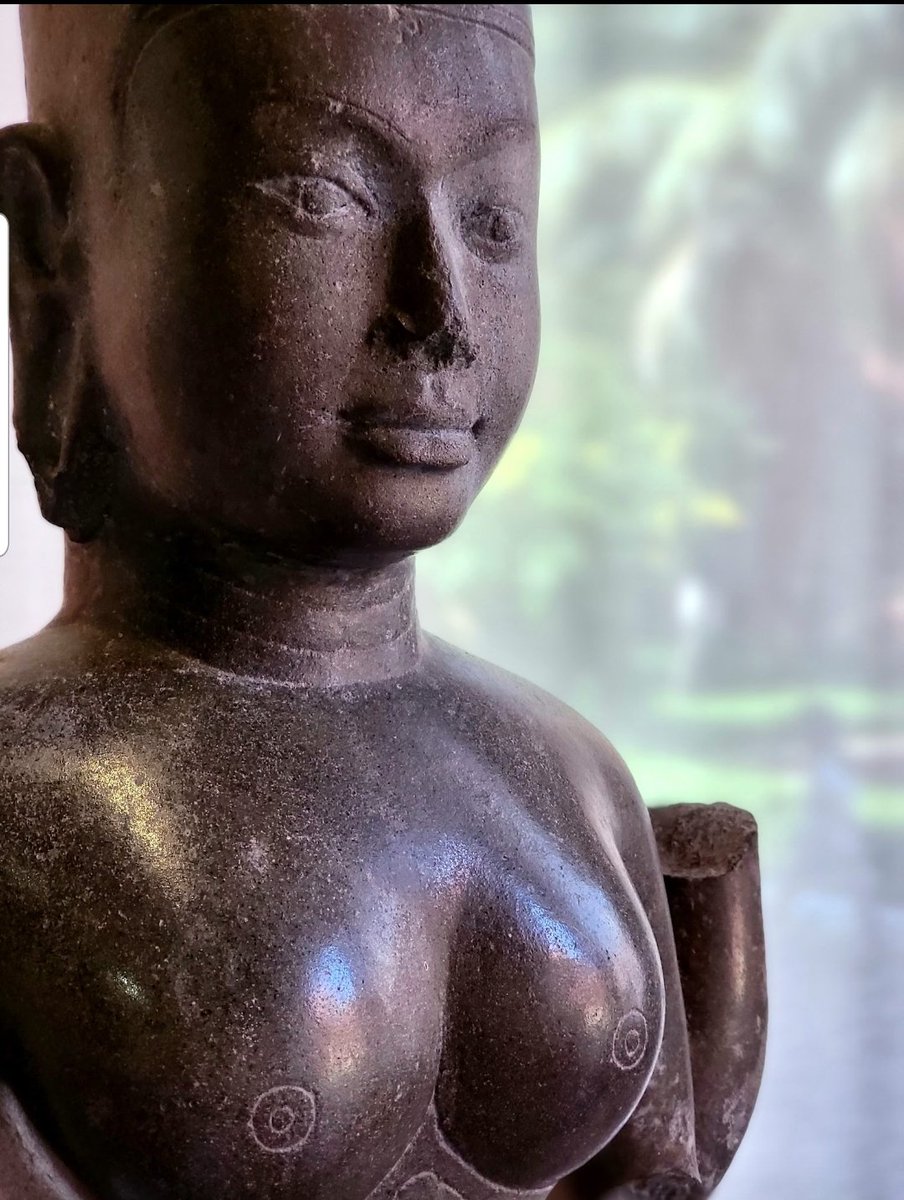
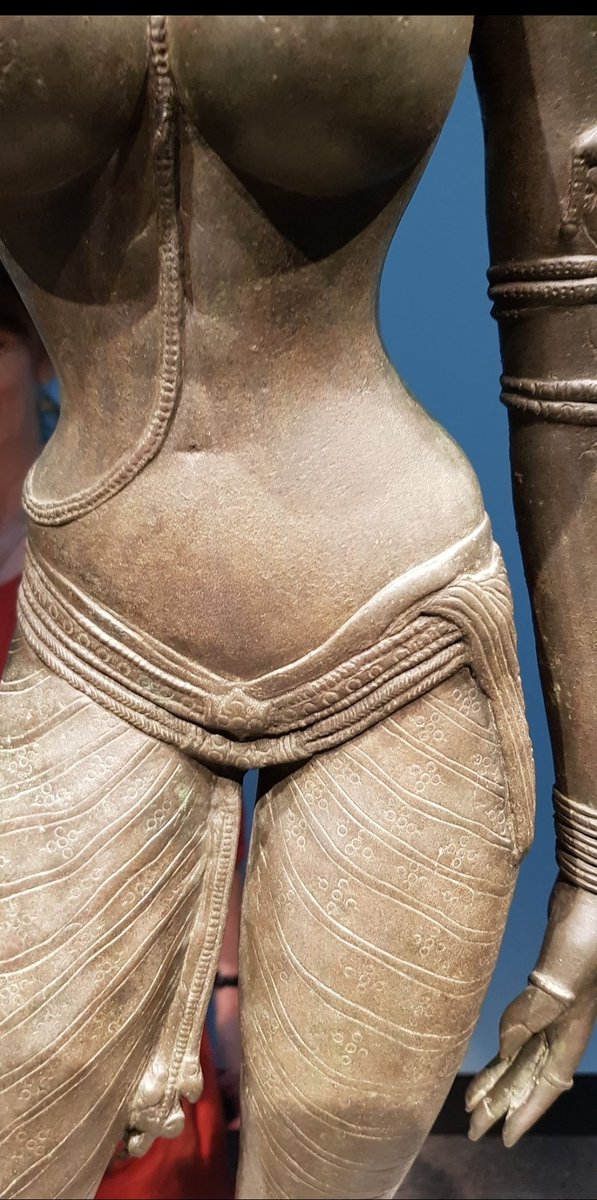
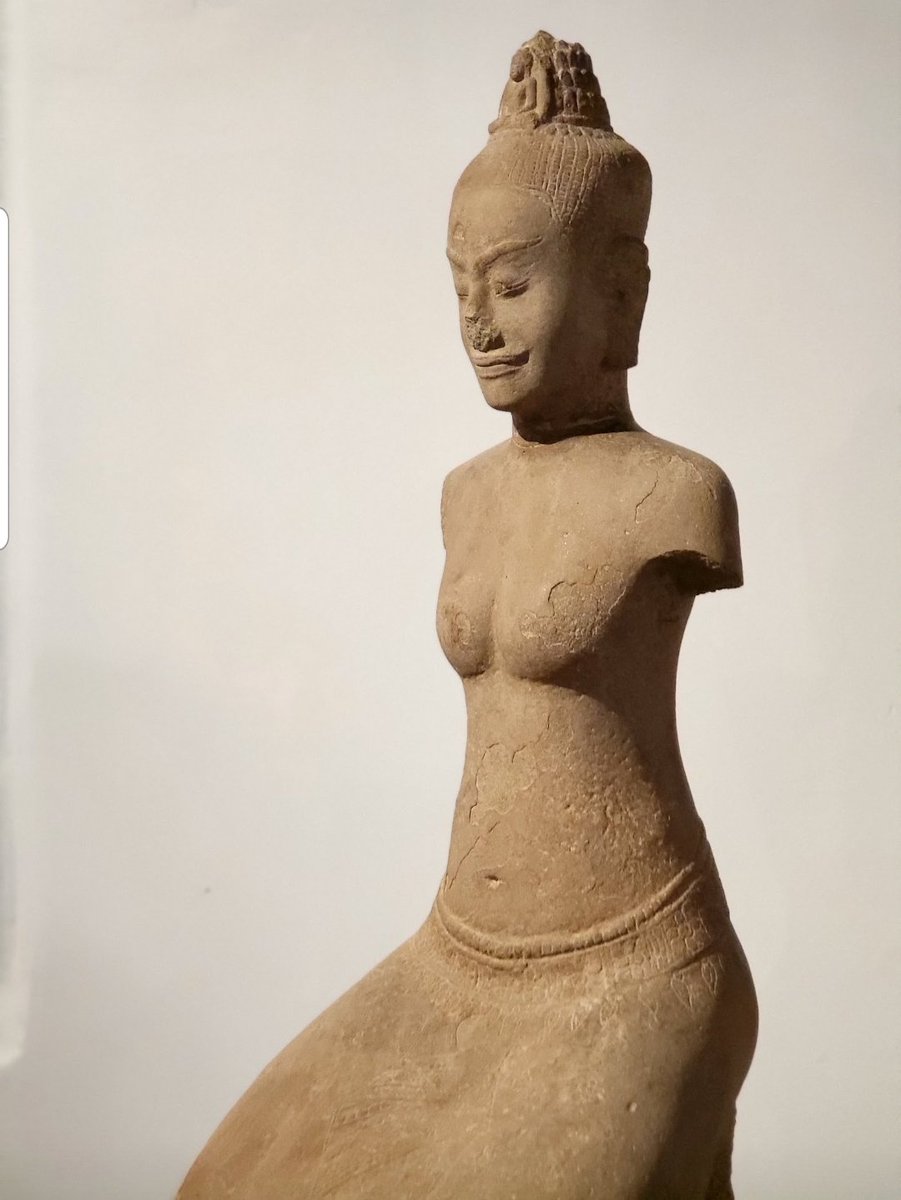
His Queen Indradevi was used as the model for Prajnaparamita.
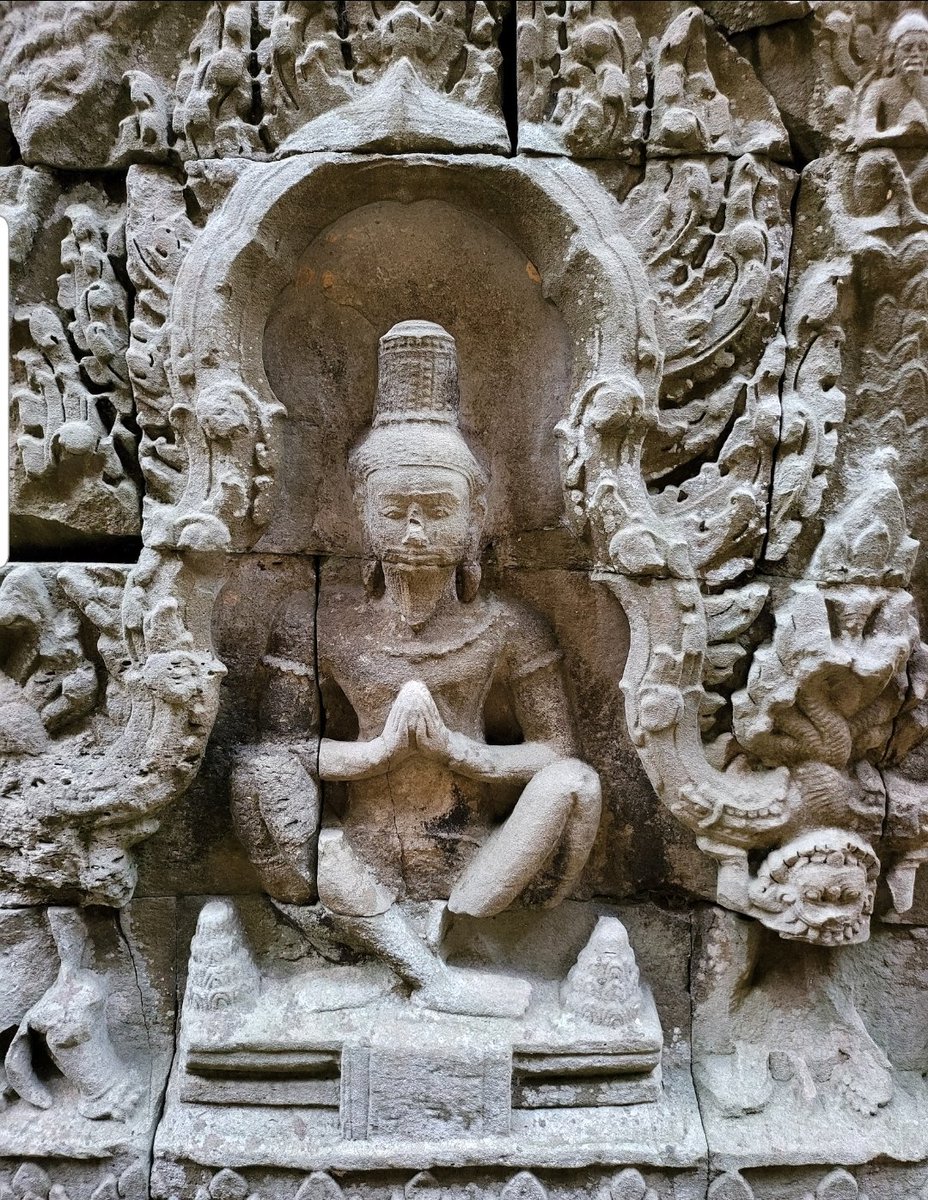
In the case of Jayavarman VII, the King is presented as a humble worshipper, head lowered with eyes closed in deep and profound meditation. Yet the worshipper still has the powerful physique of a man trained for combat and his expression is full of charisma and strength.
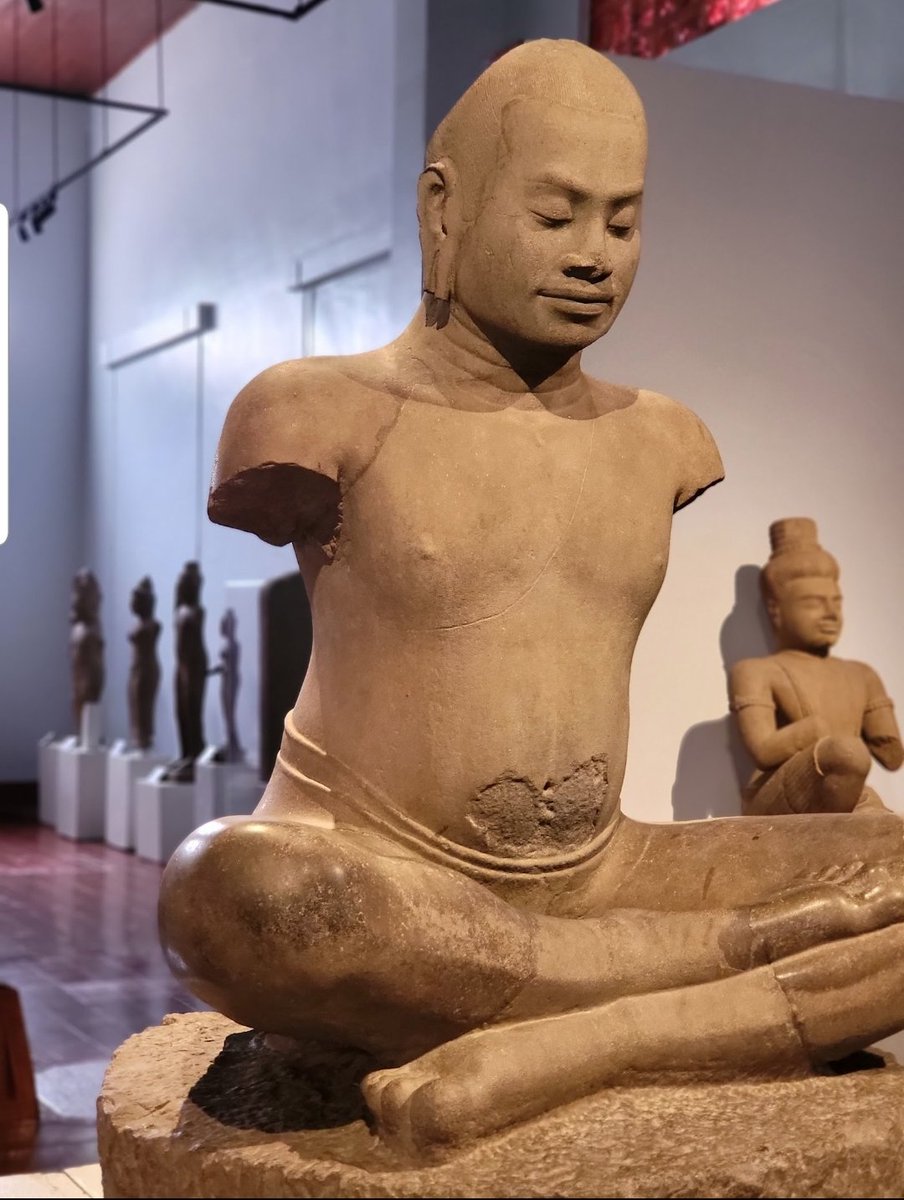
Some art historians maintain that the faces looking down from the Bayon and Banteay Kdei are also based on images of Jayavarman VII as Lokeshvara.
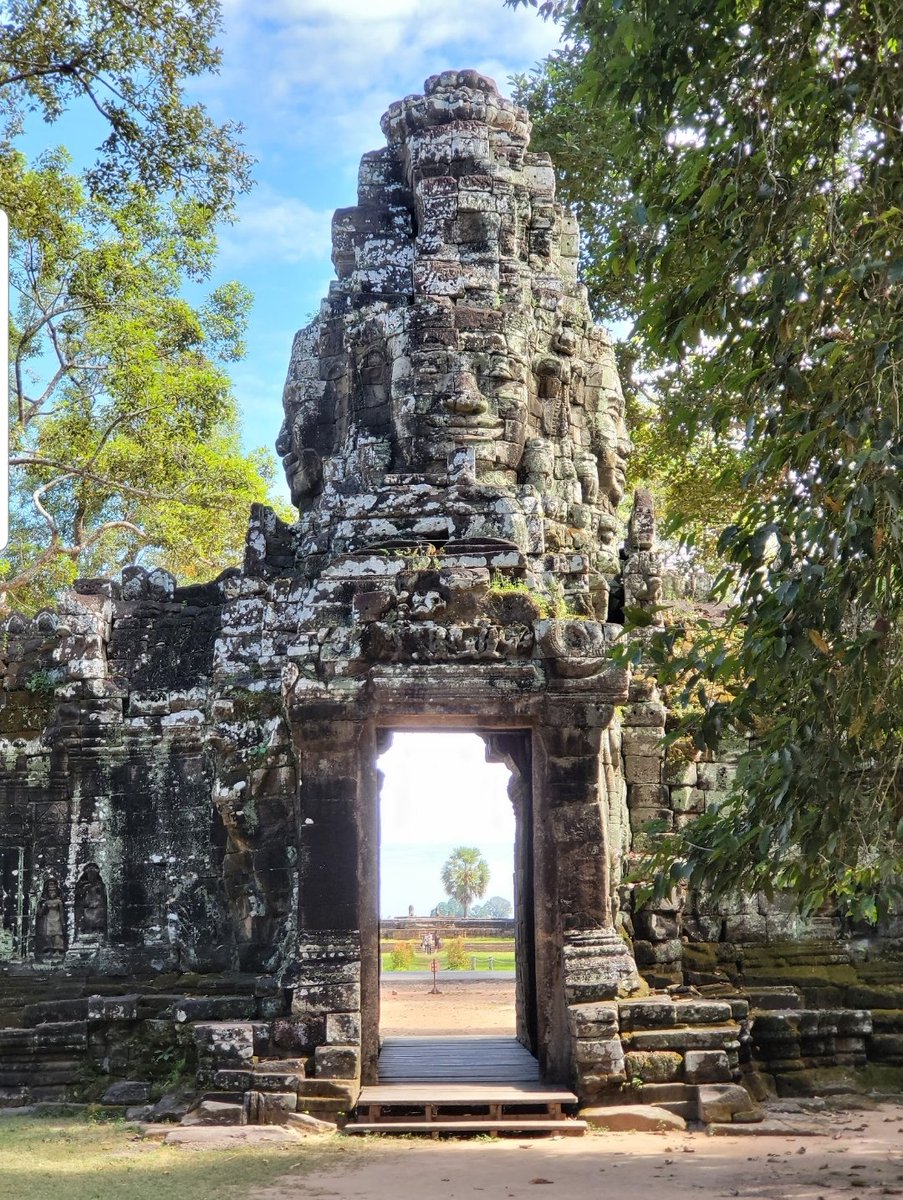
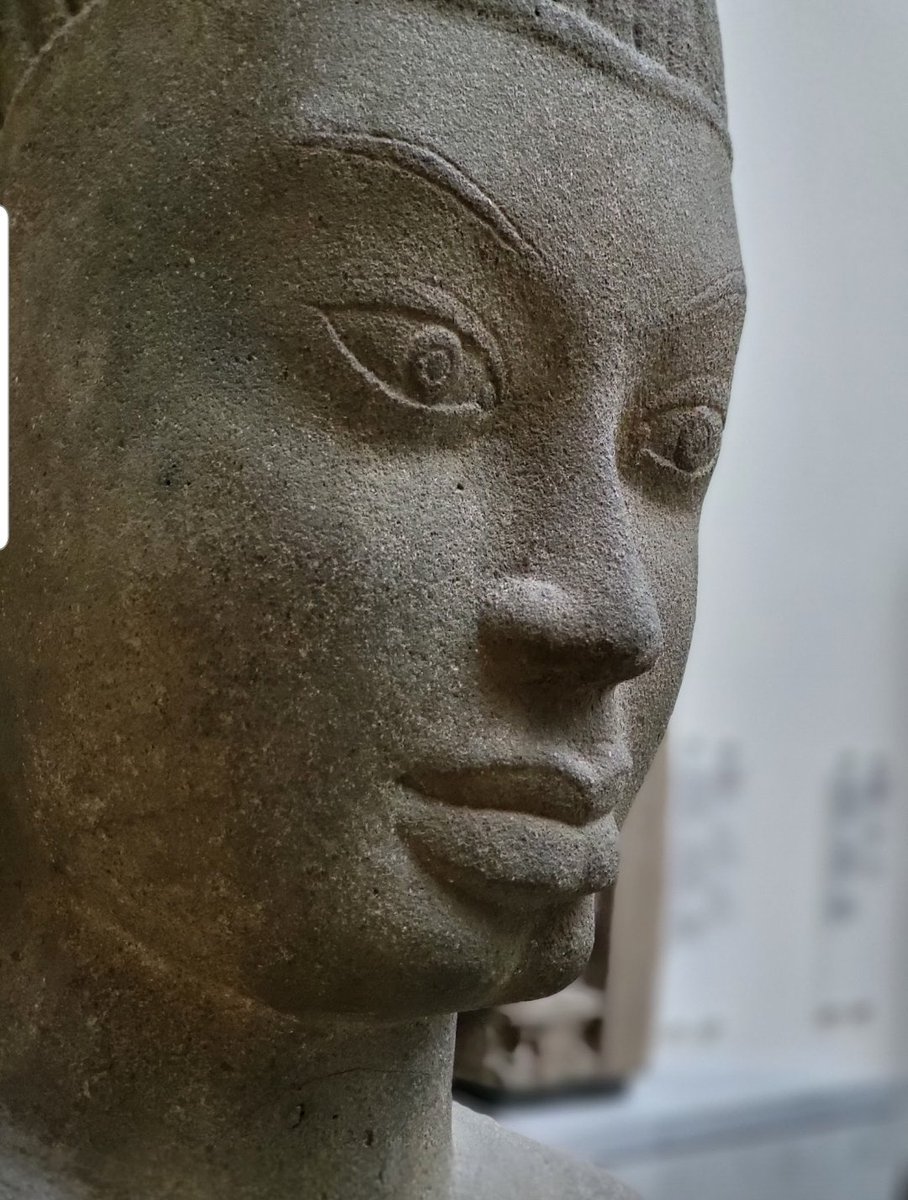
Art historians also suspect that two particularly idiosyncratic portraits of the Devi are also probably modelled on real, living Khmer queens
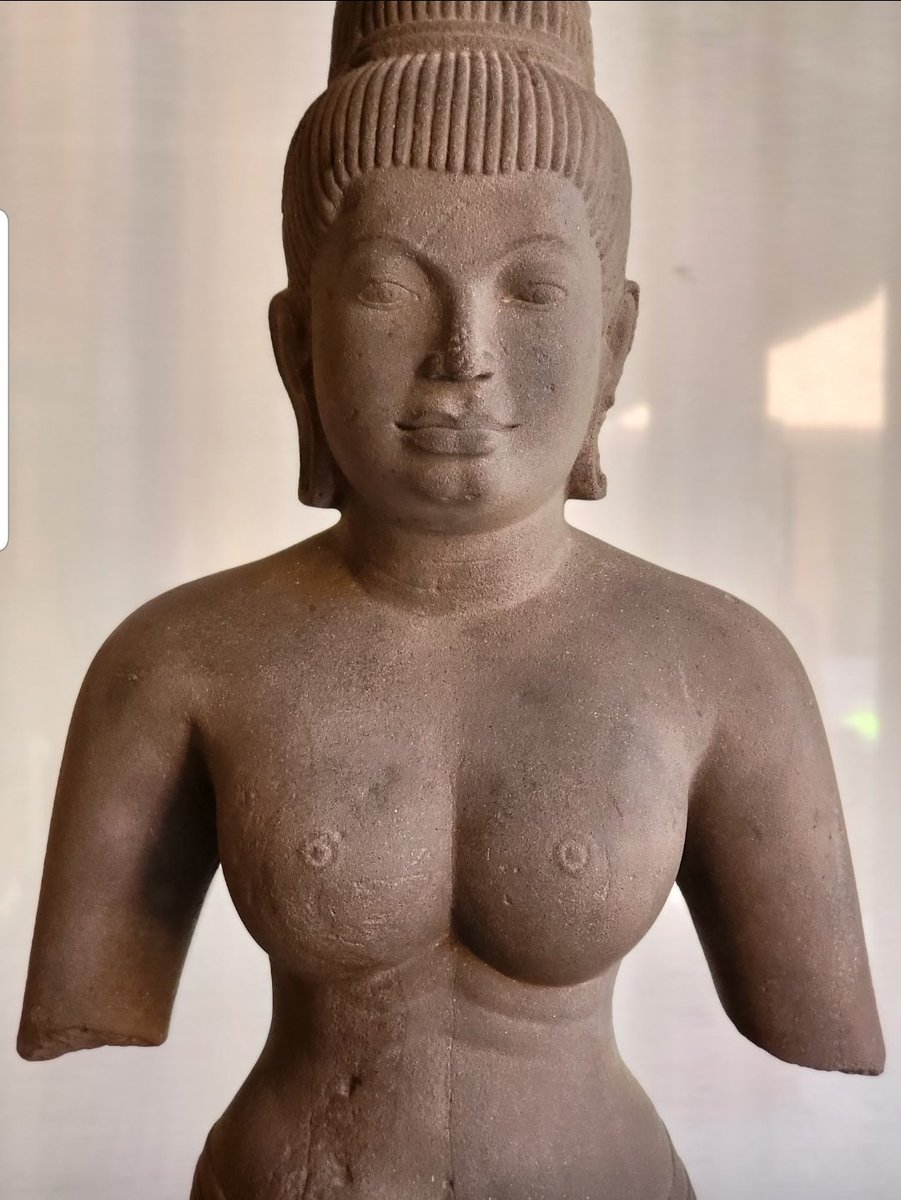
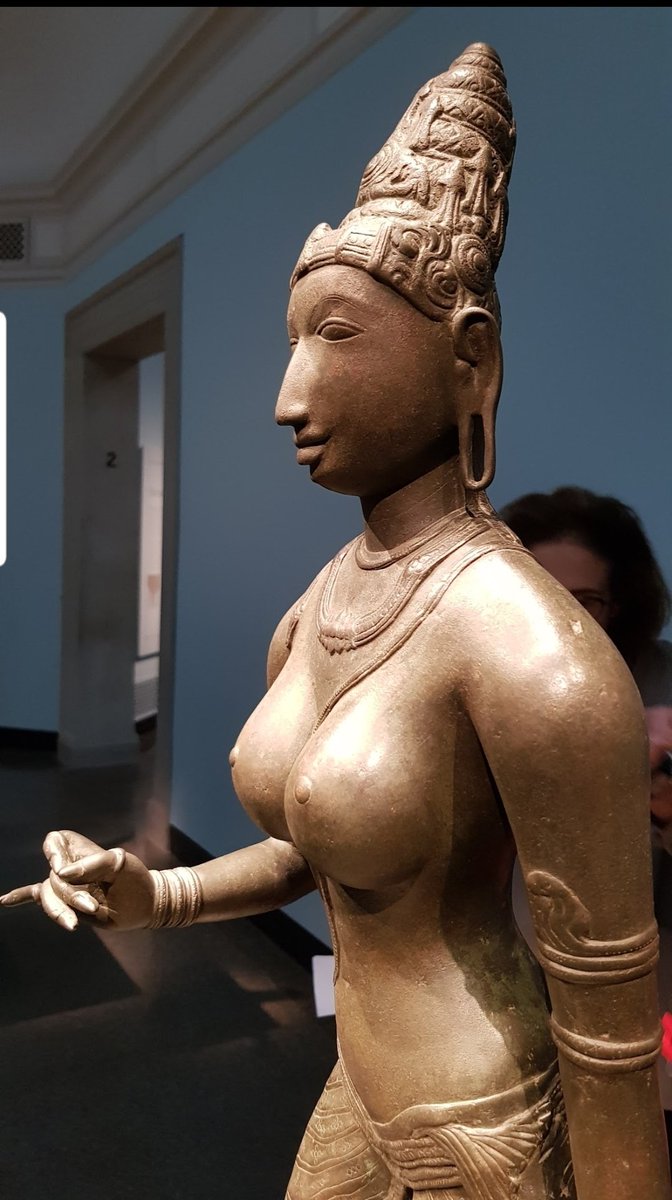
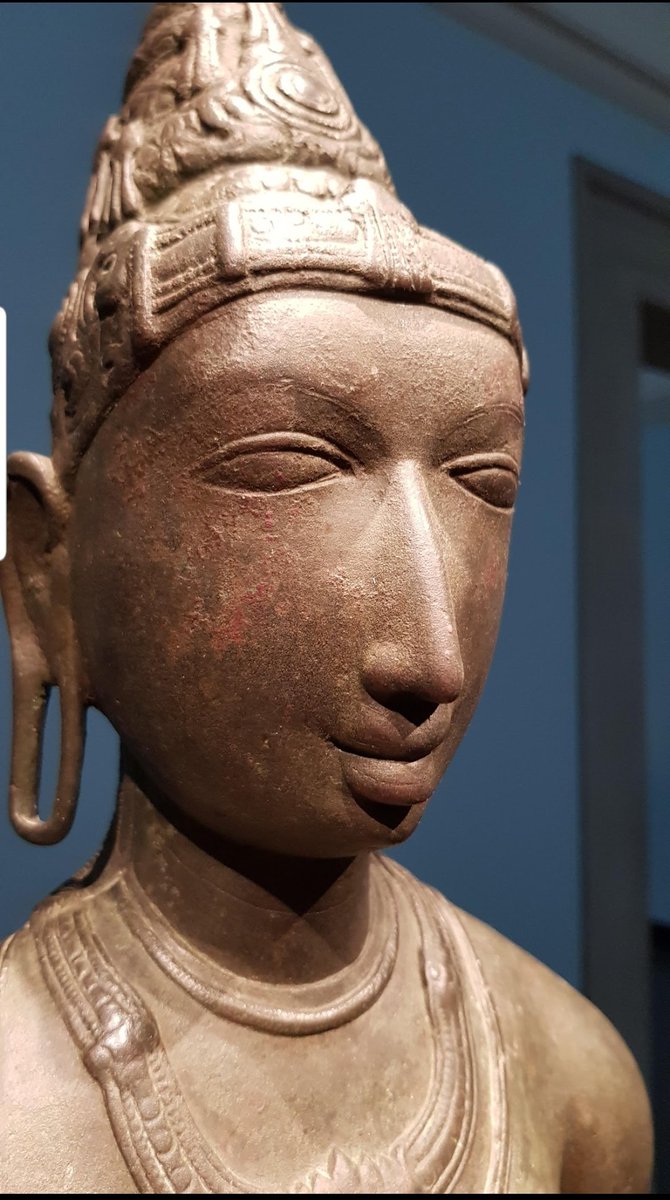
A little later, the Cholas seem to have done the same with a bronze of Queen Sembiyan Mahadevi.
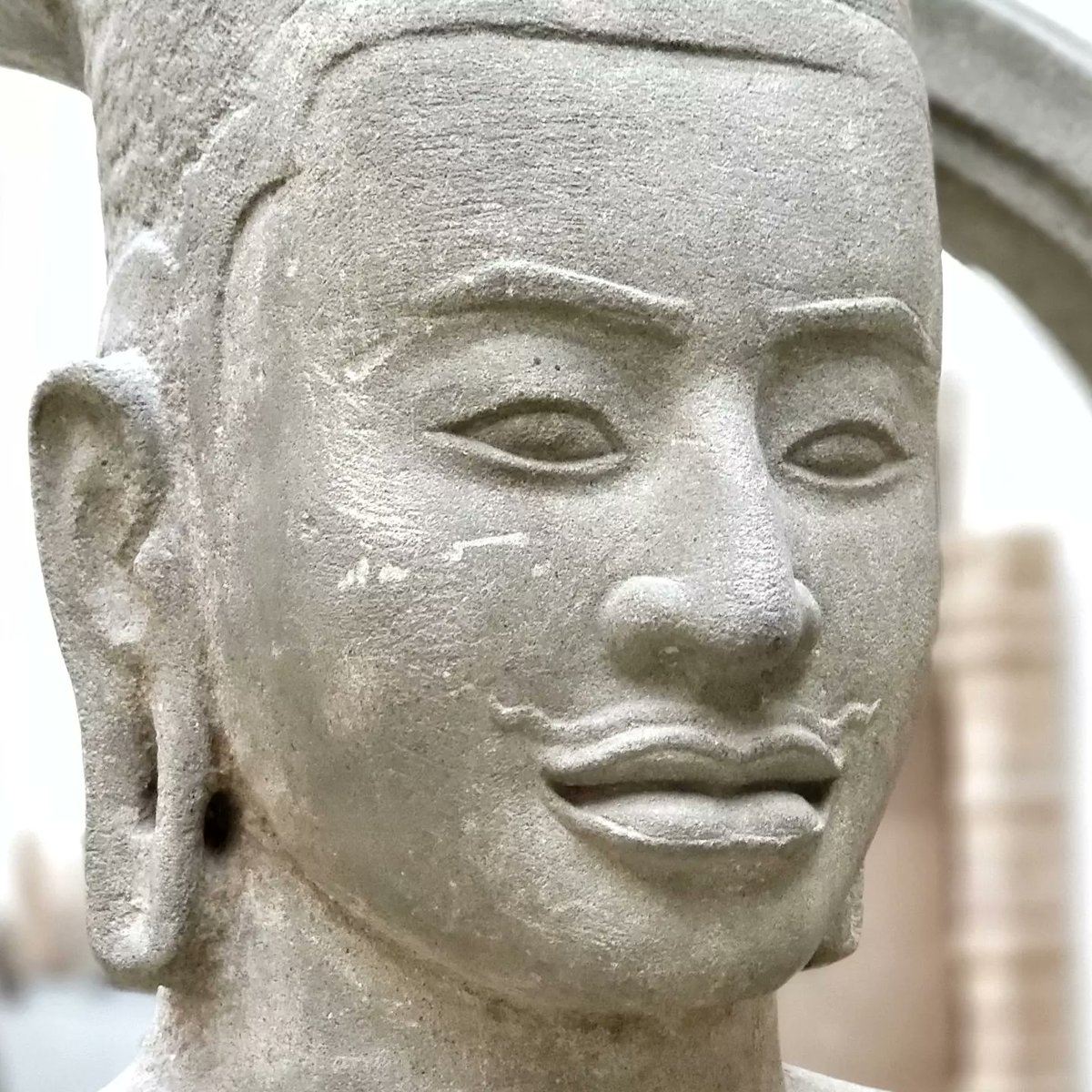
What I didn't know until yesterday, re-reading the Met catalogue of the wonderful Lost Kingdoms exhibition, was that there also exists a possible portrait of the king often said to be the founder of the Angkor royal line, Jayavarman II.
In 802, two years after Charlemagne declared the Holy Roman Empire in St. Peters, on the remote hilltop of Phnom Kulen, the young Khmer Prince Jayavarman II was declared chakravartin of what would become the great Empire of Angkor.
The Prince had probably been a hostage in Java, where he may have seen the building of the Buddhist pyramid-stupa of Borobodur.
But Jayavarman II was no Buddhist. A passionate Hindu, around 770CE, aged around 20, he returned from exile, or possibly escaped, and declared himself independent,rejecting the Buddhism of his enemies.
One of his first actions, according to a 10thC inscription, was to perform a ceremony that “made it impossible for Java to control holy Cambodia.” He then began a series of military campaigns & made alliances welding together disparate regions into some sort of community.
Over a rule of 48 years, Jayavarman II conquered all of the state henceforth called Cambodia, and declared himself supreme sovereign. This was marked in 802 by a ritual consecration on a pyramid at Mahendrapura on the mountain top of Phnom Kulen
The ceremony was performed by Hiranyadama, a Brahmin from India said in a later inscription to be "a scientist in magic science." It nullified all prior acts of vassalage and proclaimed Jayavarman as "world emperor."
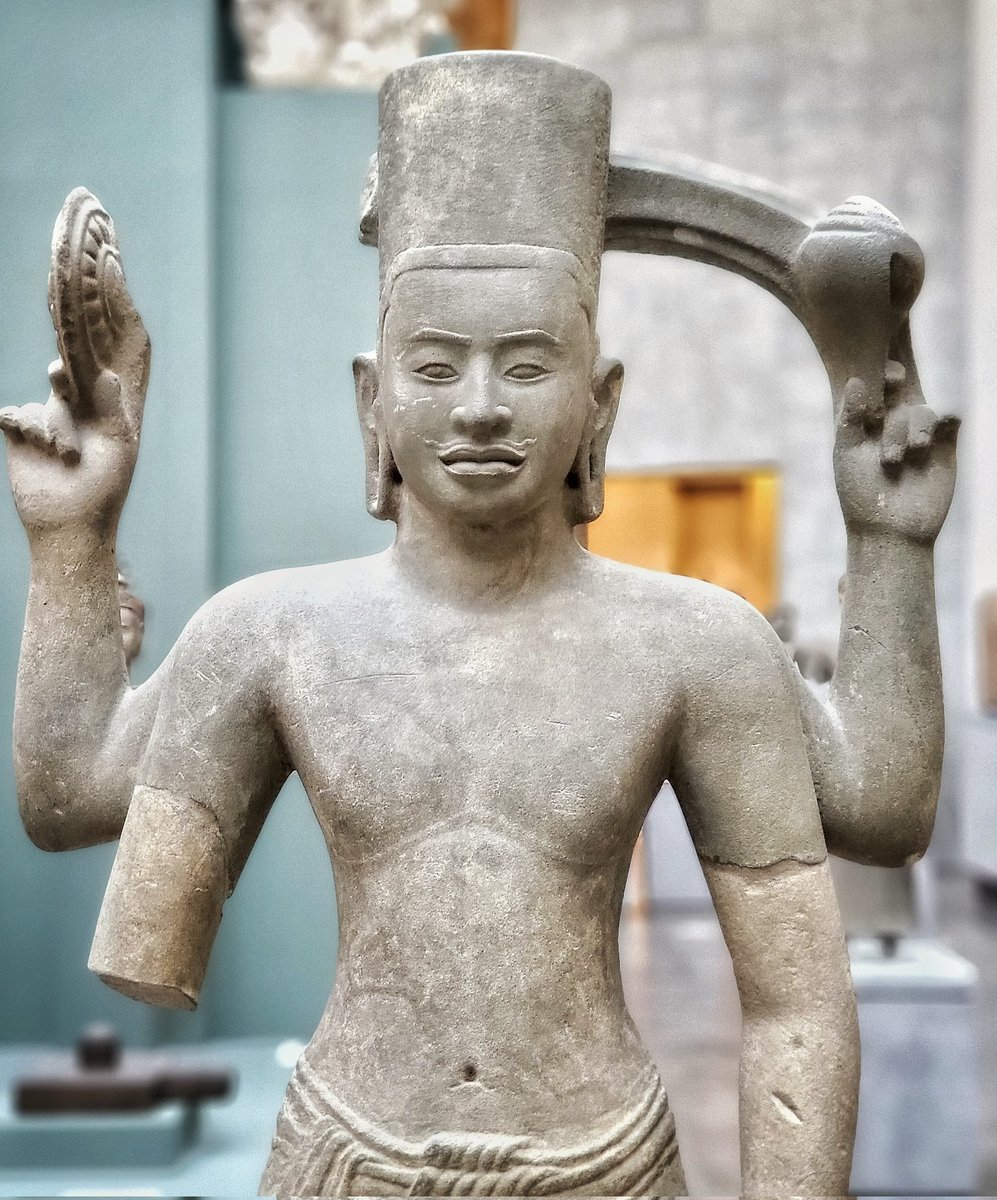
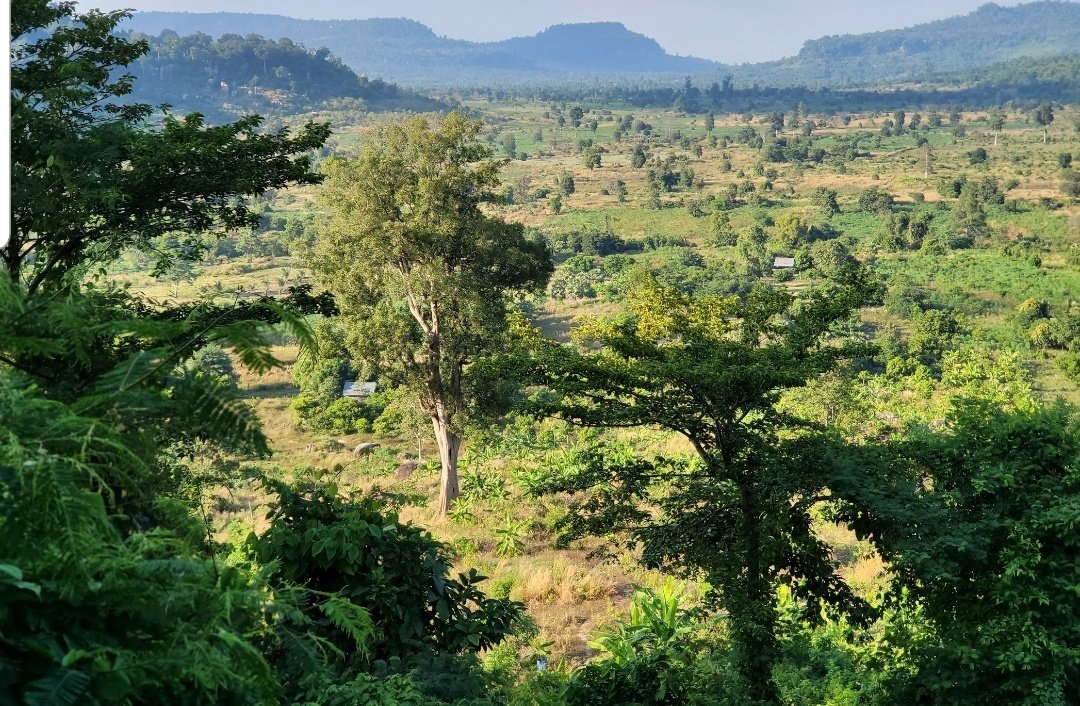
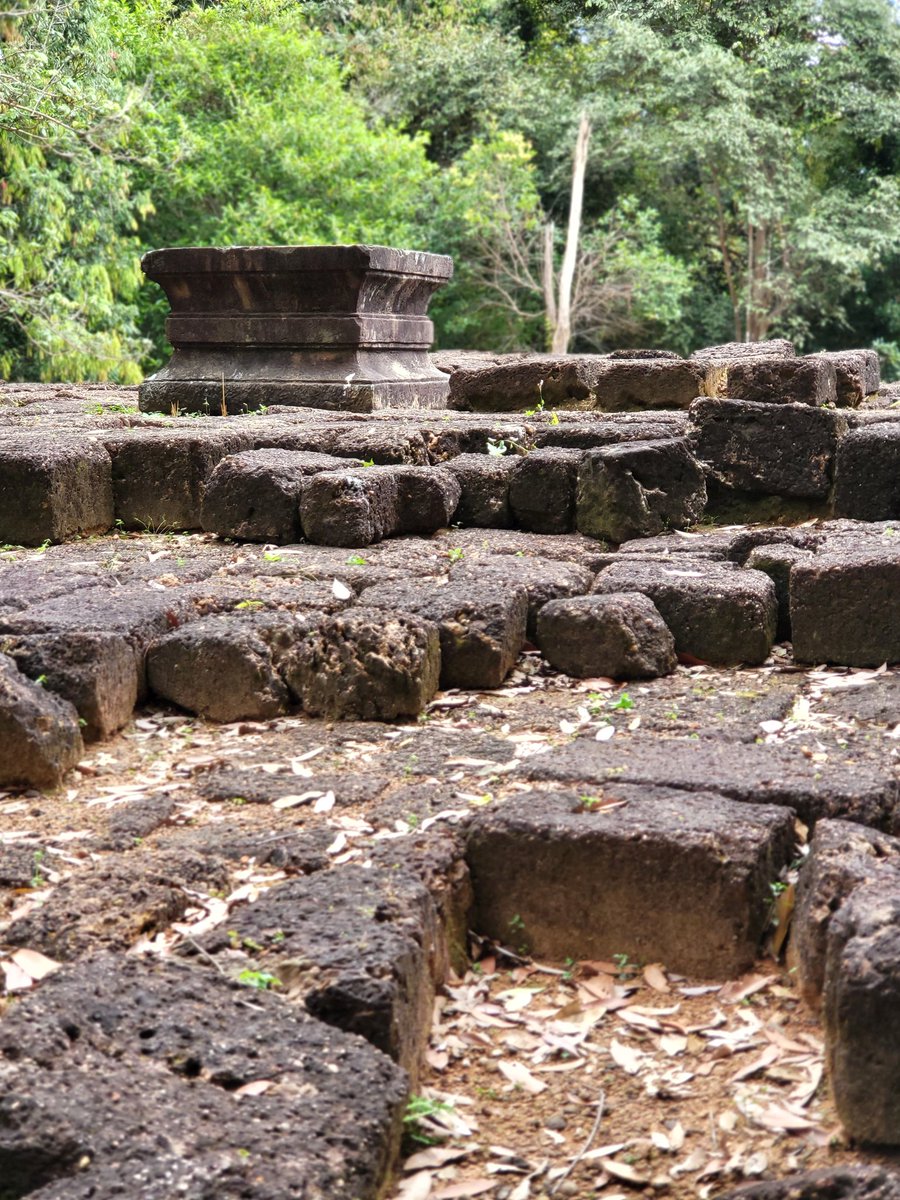
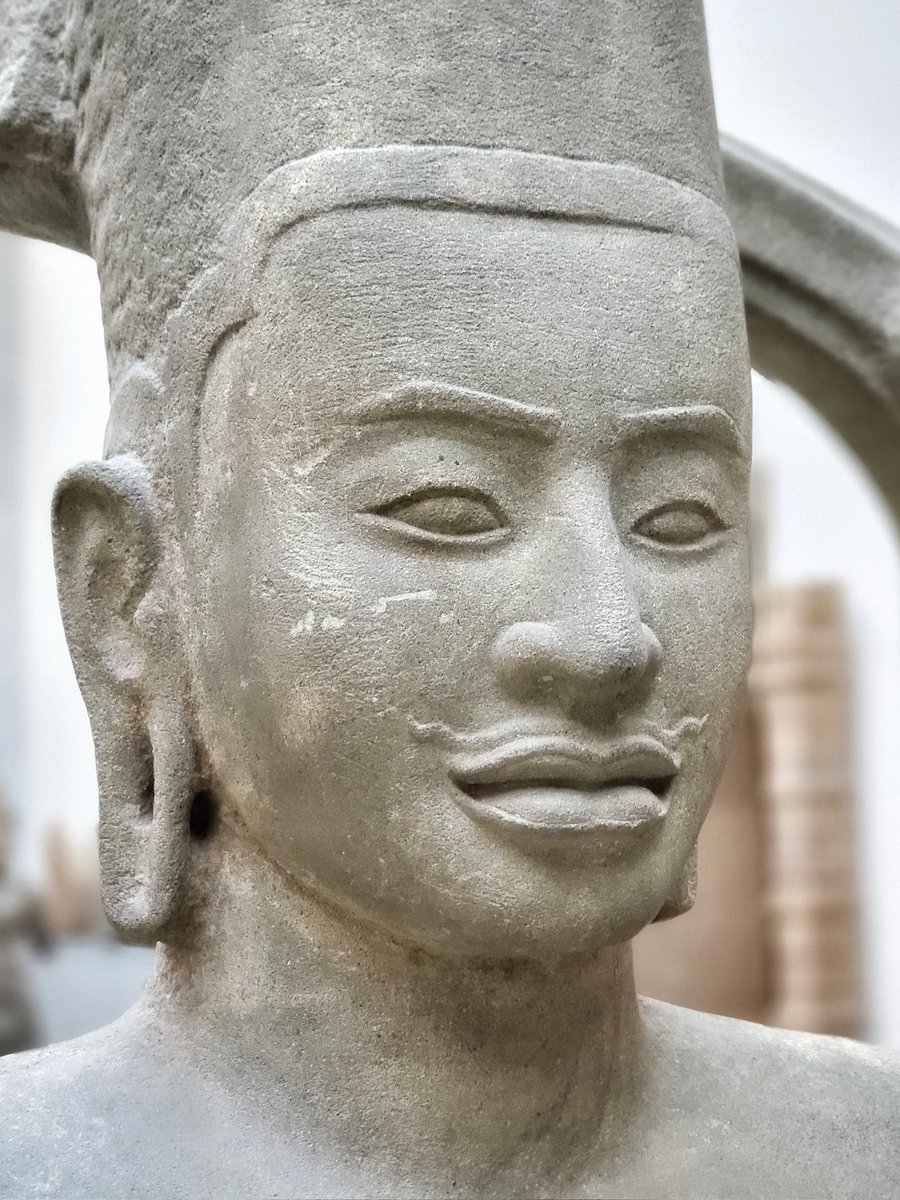
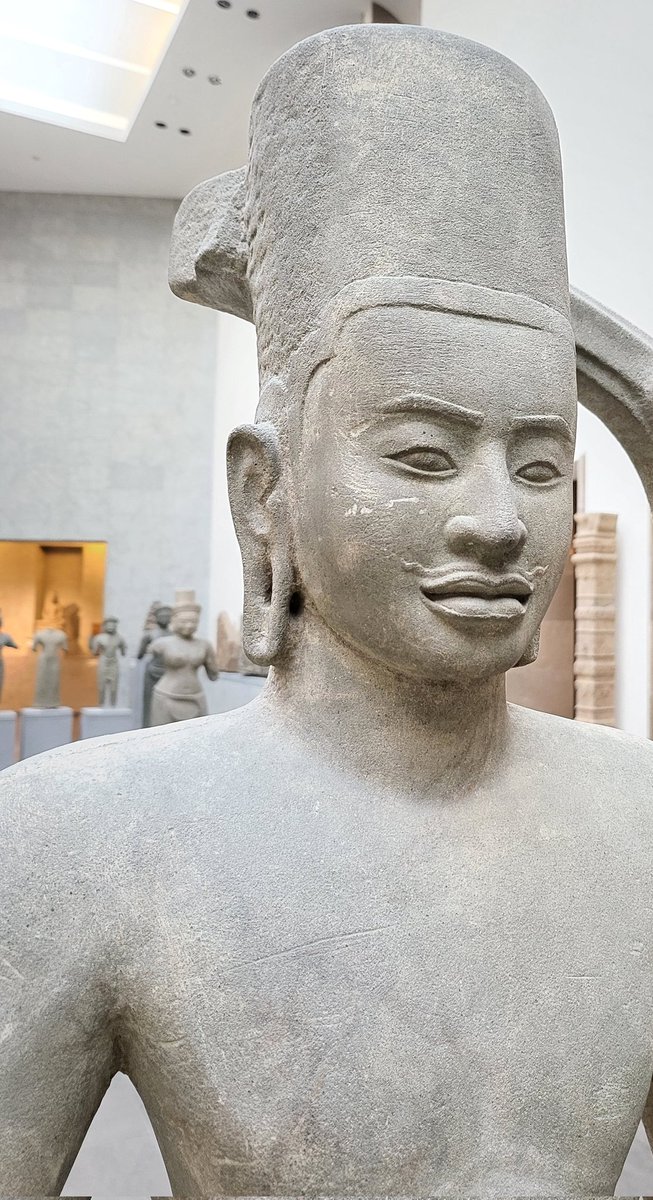
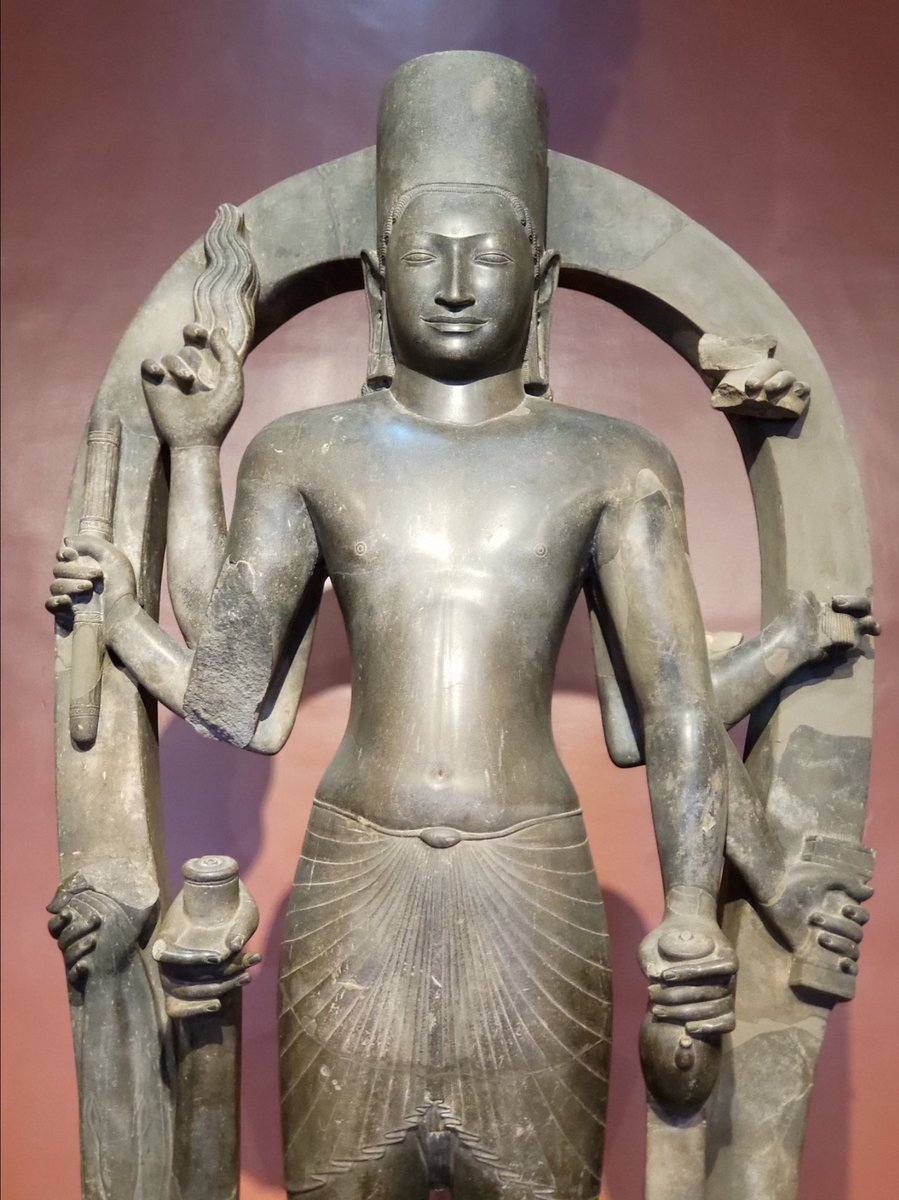
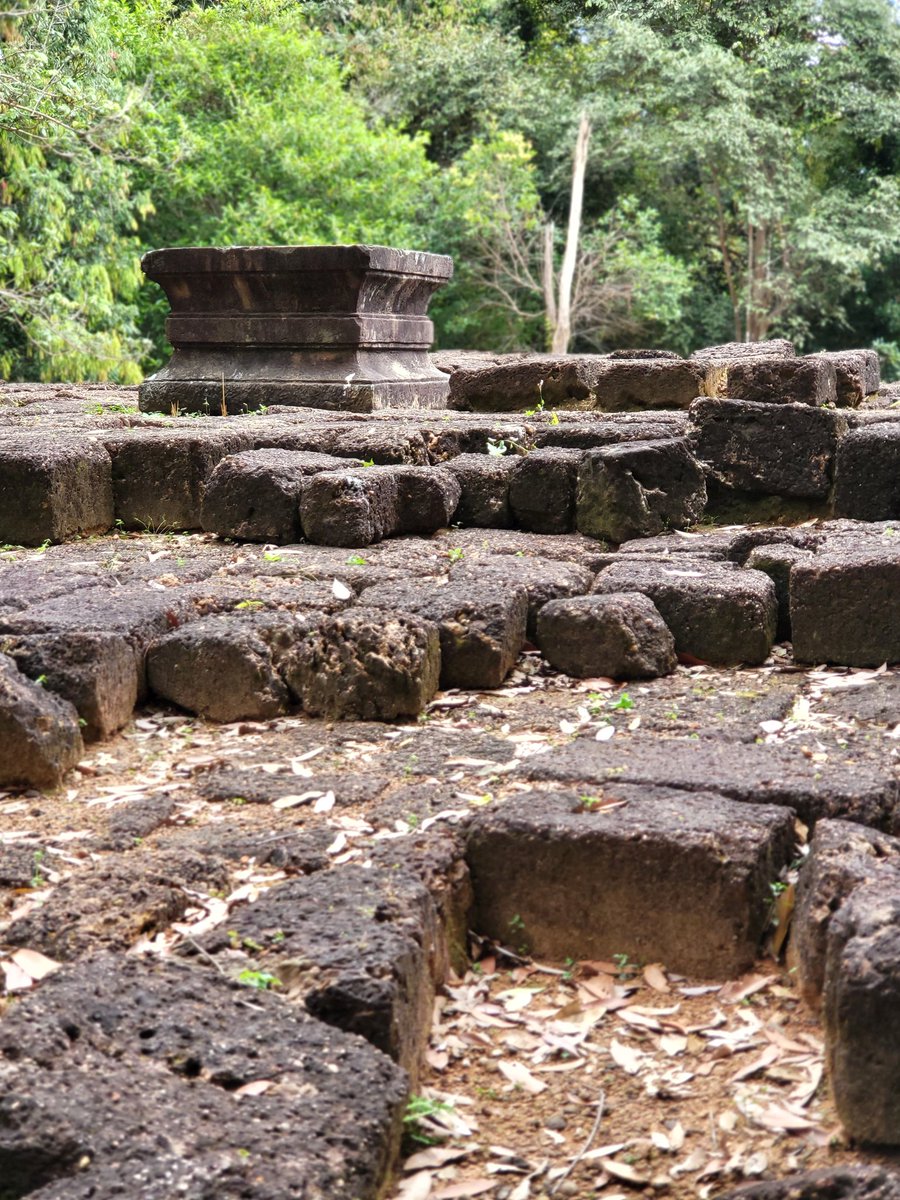
I visited Phnom Kulen when I was in Cambodia and took a motorbike into the scrub to the site of his consecration, but didn't realise that there survived in the Guimet in Paris a possible likeness of the man found on the hilltop of Phnom Kulen where he was consecrated.
Art historians have long remarked on its portrait like qualities: the very particular physiognomy of this taught and muscular figure with his thin, serpentine moustache, full, sensuous lips and determined expression.
The only trouble with this theory is that the image, while from the Shaivite centre of Phnom Kulen/Mahendrapura takes the form of Lord Vishnu, and Jayavarman was a passionate follower of Lord Shiva. So the case remains unproven, but it remains a most intriguing possibility.
• • •
Missing some Tweet in this thread? You can try to
force a refresh
Early Hinduism in SE Asia was largely focused on devotion to Lord Vishnu. Literally hundreds of Vaishnav images have been in the Mekong Delta, in both Cambodia and Vietnam, many dating from the 5th, 6th & 7thC CE.
Many of the earliest images of Mitred Vishnu's have been dug up around the early trading sites of Oc Eo, Angkor Borei & Phnom Da where ships brought in goods from across the Bay of Bengal to Suvarnabhumi, the Lands of Gold.
Then in the fifth century, a wave of Shaivite Pasupatas arrived in some numbers in SE Asia from India, spearheading a new wave of popularity in Shaivism which up to then had been much less prominent than devotion to Lord Vishnu.
In 802, two years after Charlemagne declared the birth of the Holy Roman Empire on Christmas day in St. Peters, on the remote hilltop of Phnom Kulen, the young Khmer Prince Jayavarman II was declared chakravartin of what would become the great Empire of Angkor.
The Prince had been a hostage in Java, where he may have seen the building of the great Buddhist pyramid- temple of Borobodur. But Jayavarman was no Buddhist. A passionate Shaivite, around 770CE, aged around 20, he returned from exile, or possibly escaped to Cambodia.
Here he declared himself independent, firmly rejecting the Buddhism of his neighbours and Javanese enemies.
In 928, a pretender to the Khmer throne, Jayavarman IV seized power. He established himself in a massive new temple & palace complex which he set up as a rival capital to Angkor at Chok Gyargar, an inhospitable area with little water about sixty miles north of Angkor.
Jayavarman IV named his new capital Lingapura; today it is known Koh Ker.
Jayavarman ruled the empire for two decades from Koh Ker. At its centre was a great seven-storey pyramid, the tallest in Cambodia, known as Prasat Thom, supporting the massive Devaraja lingam, sixty feet high, probably made of metal, known as “Lord of the Threefold World”.
The Khmer temple, tomb, observatory, dynastic funeral chapel and national shrine now known as Angkor Wat was, and remains, the largest Hindu temple complex in the world, dwarfing the temples of Kanchipuram and Mamallapuram that ultimately inspired it.
At Angkor, the temple alone covers an area of over two hundred hectares. Beyond stretches a palace complex, ornamental lakes and the different quarters of the Khmer capital city so vast it can be seen from space.
By the 12th century, the Hindu Khmer Empire was at its height and stretched across the region, controlling with varying degrees of authority modern Cambodia, Vietnam, and much of what is now northern and southern Thailand and Laos.
The temple of Ta Prohm was built in 1186 by the great Buddhist convert, Jayavarman VII, who broke with centuries of Hindu kingship to establish a new Buddhist order at the centre of the Khmer Empire.
An inscription records that the temple was built in memory of his mother, honoring her as Prajnaparamita, and surrounded her with 600 dependent gods and bodhisattvas, though none of these associated icons has been found.
An inscription records that Jayavarman instituted a health care network that consisted of 102 regional “hospitals” that were dedicated to Bhaishajyagura, the Indic god of healing. It had 439 professors, 970 scholars, 66,625 people employed to serve the deities.
In 967 Yajnavaraha, a counsellor of the Khmer king Rajendravarman of Angkor, began work on the tiny, delicate but utterly exquisite Vishnu temple of Banteay Srei, ‘the jewel of Khmer art’ and one of the loveliest temples in all Southeast Asia.
Here there are magnificent images here of Durga dancing her way to victory over the buffalo God Mahisasura “filled with a sinuous pattern of limbs rounded by the sap of youth,” as Stella Kramrisch put it & cycles of sculpture from the Ramayana and the Mahabharat
There are images of Ravana shaking Mount Kailasha; the fire in the Khandava Forest, Krishna killing Kamsa, and Kama, the God of Love, firing arrows at Lord Shiva.