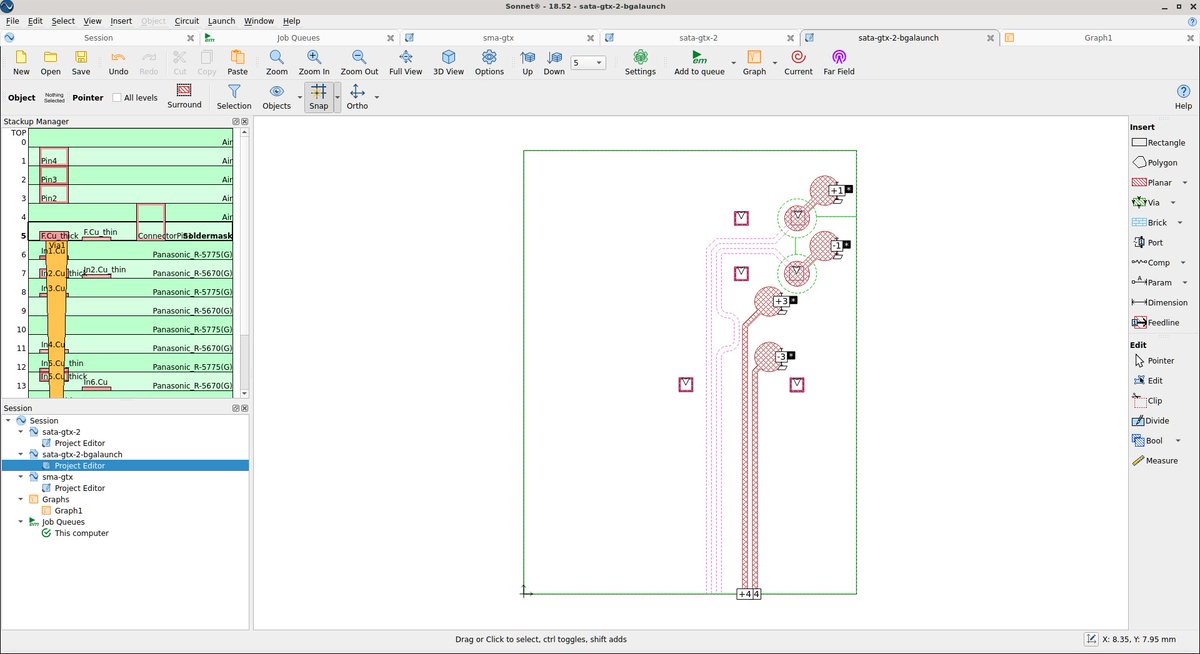
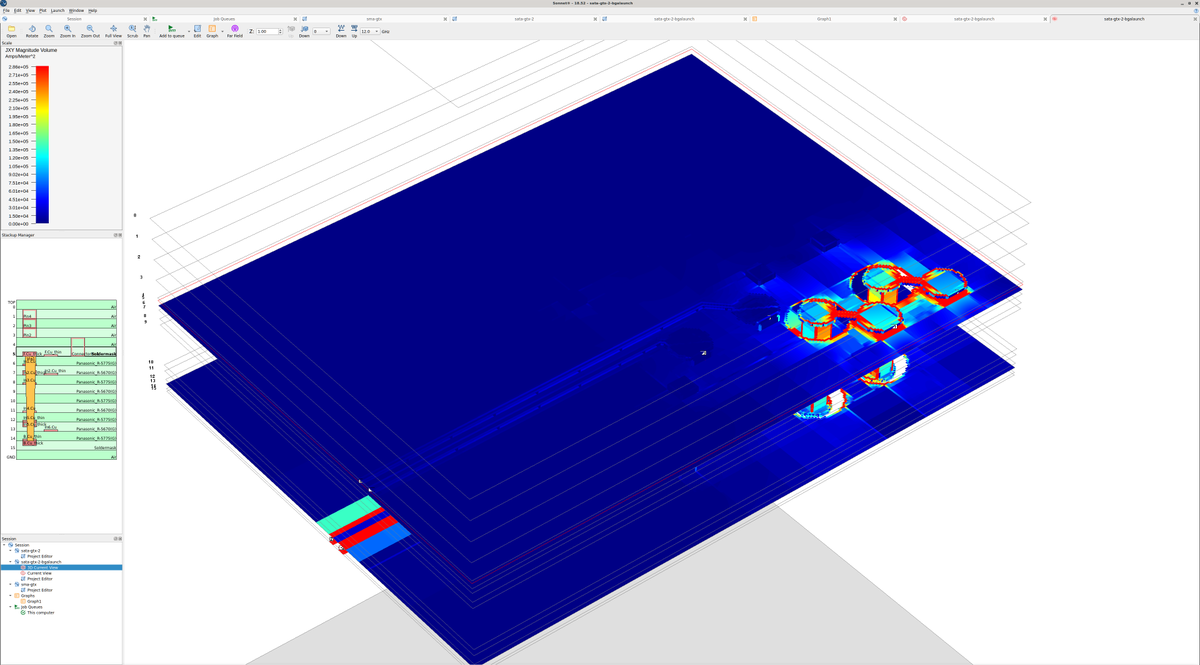
Finally got a decent EM simulation on the SATA pairs done. Only took four days... seems I need to simplify it further still.
Let's take a look at the results.
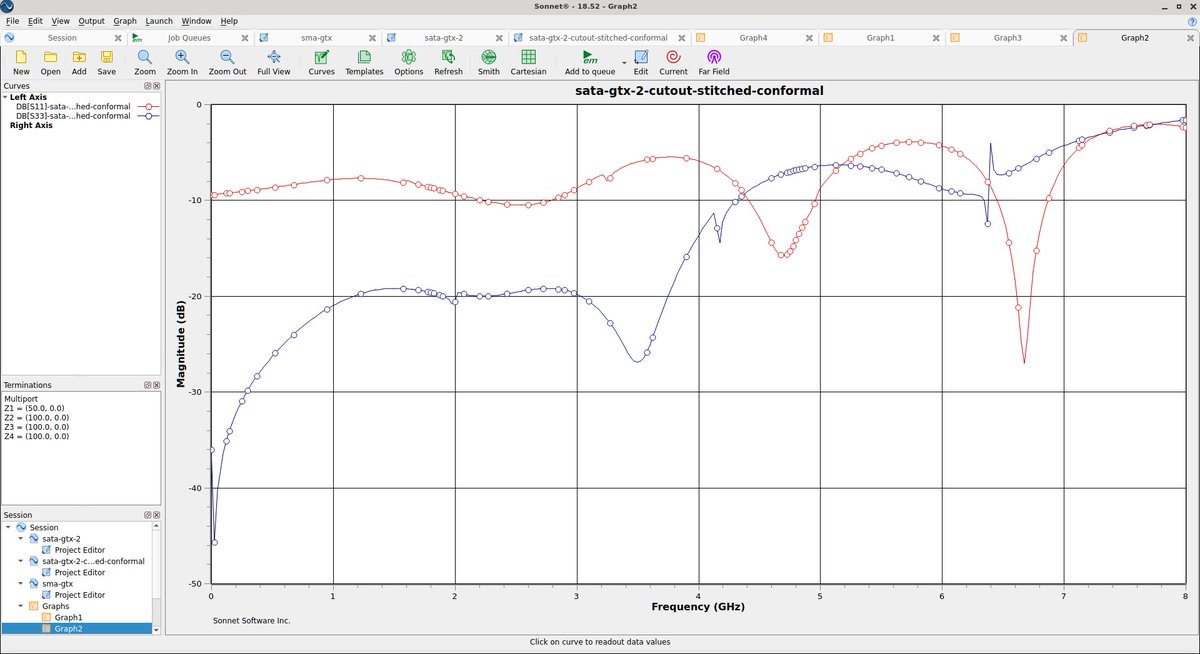
Here's insertion loss. S21 (red), is the left pair going through the layer change, S43 (blue) is the right pair with no layer change.
Looks like the layer change is introducing some kind of impedance mismatch.
Neither one really has great return loss, but the pair with the layer change is definitely a lot worse.
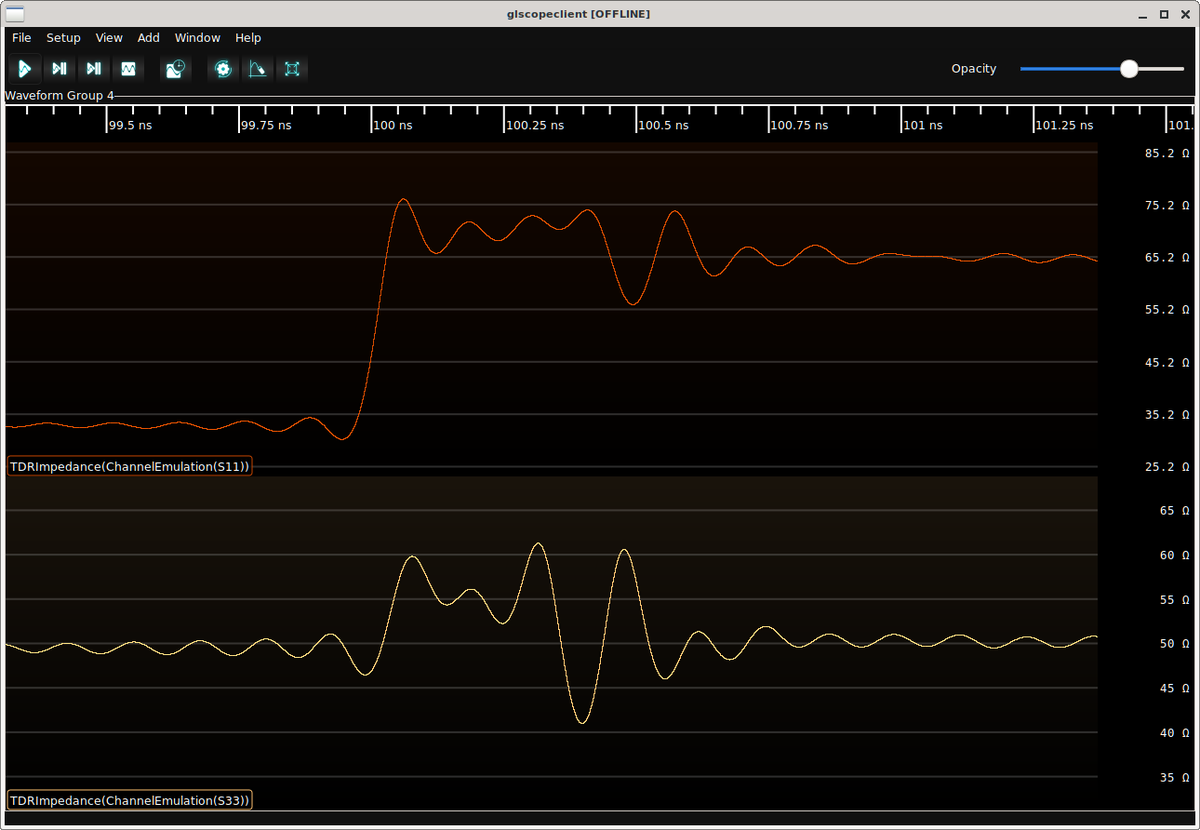
TDR transform on the two pairs (different Y axis scales).
Seems to suggest that the impedance on the back layer pair is way high, which makes no sense at first because the stackup is symmetric land I have stitching vias everywhere I should...
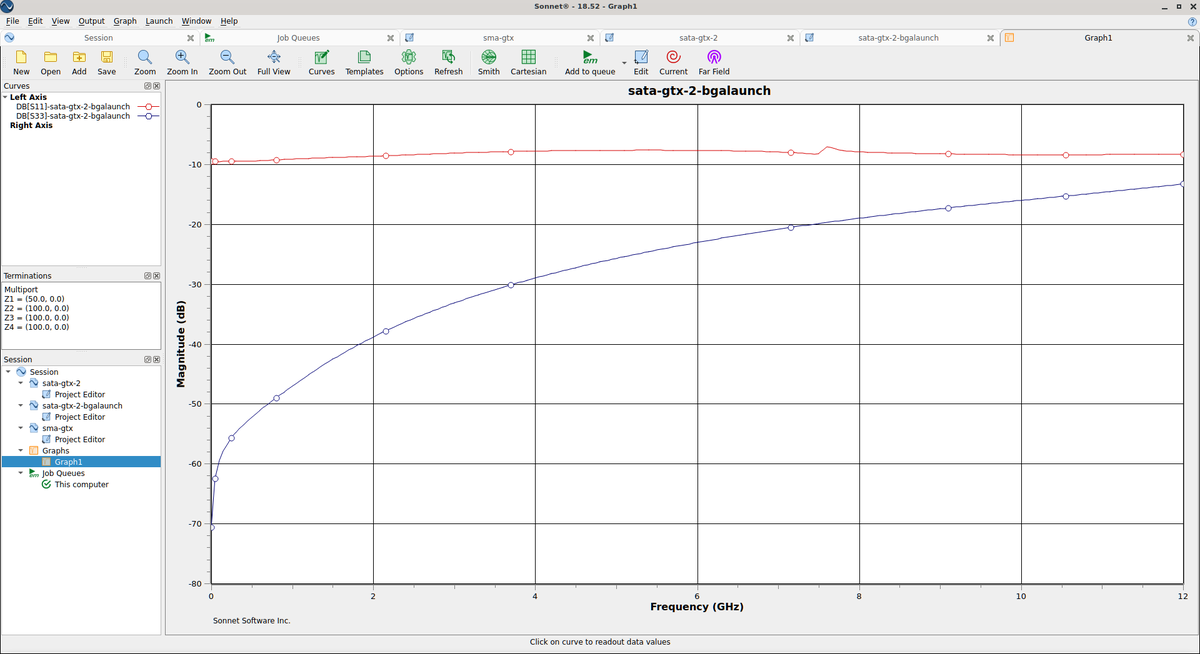
This is interesting. Simulating just the BGA launch in isolation shows uniformly terrible S11 and fairly decent S33.
I wonder if there's something to be learned from this...
Wut?? TDR transform of S11 is showing about 75 ohm impedance for what should be a 100 ohm line/
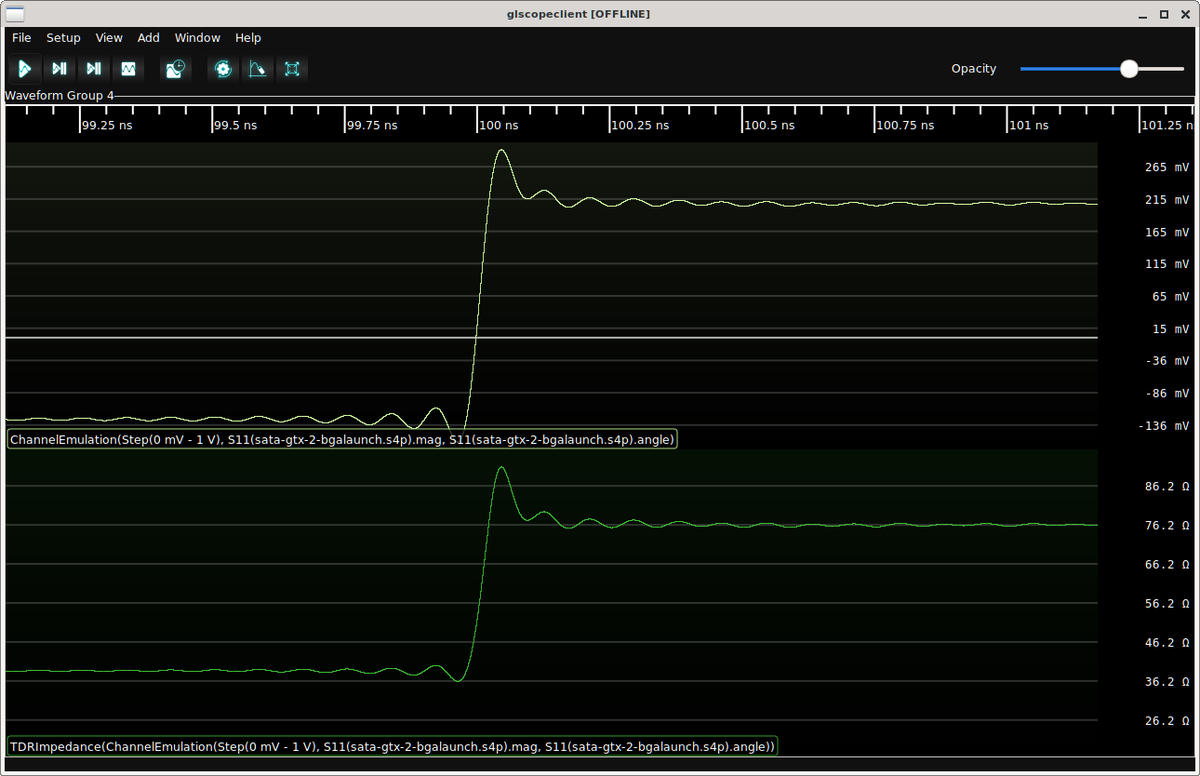
Derp. Had port impedance set wrong. That would explain a lot.
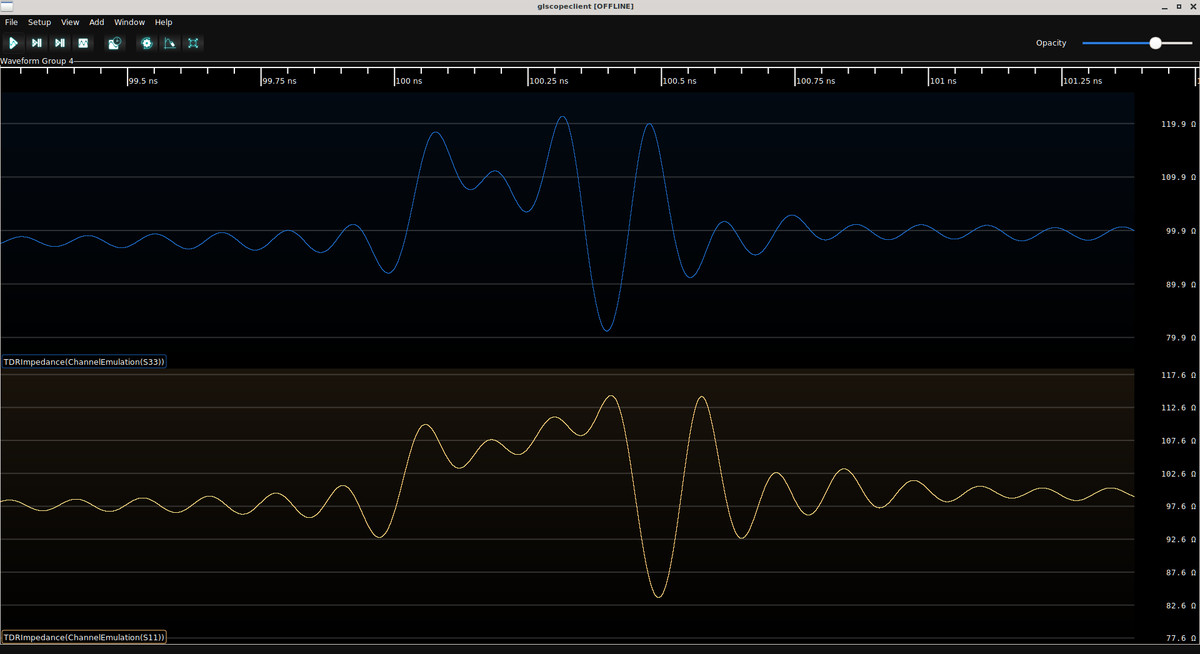
S-parameters and TDR transform of the two pairs with corrected impedance. Makes a lot more sense now.
I'd like to tune both further but the graphs are plausible.
• • •
Missing some Tweet in this thread? You can try to
force a refresh

Time for a bit of a thread on all of my various open hardware oscilloscope probe projects, where they are, and what the next steps are on each project.
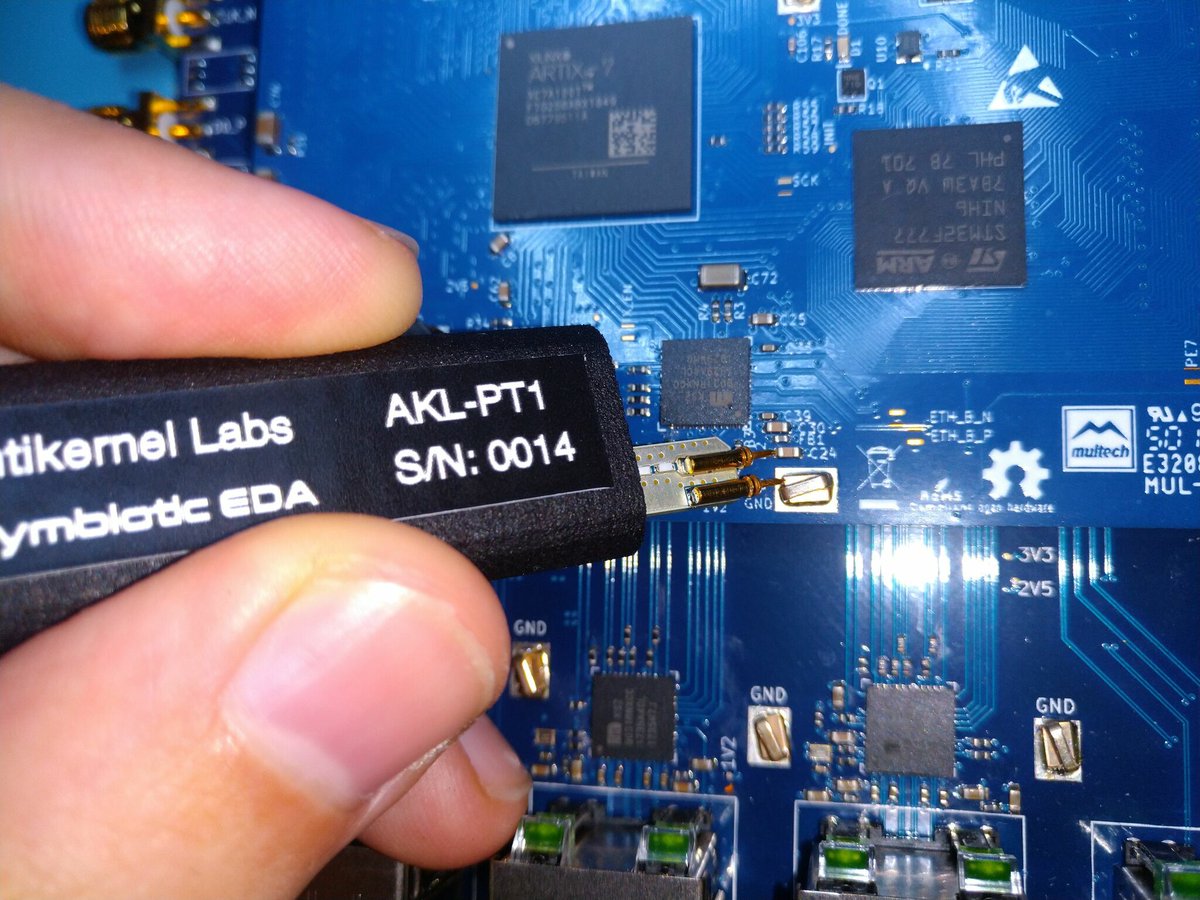
First off, the passive probes. All of these are resistive probes, so they have AKL-PT* part number prefixes (AntiKernel Labs, Passive, Transmission line).
The AKL-PT1 is a handheld probe that has bandwidth in excess of 6 GHz. Now that I've upgraded to an 8.5 GHz VNA I can characterize the true B/W limit, this data was from my old 6 GHz VNA.
It works well, but has a huge (+3 dB) peak in the response around 5 GHz.
Finally finished initial characterization of the @UCSC_OpenRAM OR1 test chips made on SKY130! Here's a thread of results.
I tweeted a bunch of preliminary results a while back but some of the numbers have changed due to methodology tweaks and refining of the test protocols.
The OR1 test chip is an 8kbit (256 row x 32 bit) SRAM array with two bits of each byte bonded out to pins of a 64-pin QFN.
So the actual addressable capacity for the purposes of testing is 256 rows x 8 bits.
It predates full top level STA in OpenROAD and there are some very long routing delays at the top level. As a result, performance of the test chip is quite a bit worse than the "naked" SRAM IP.
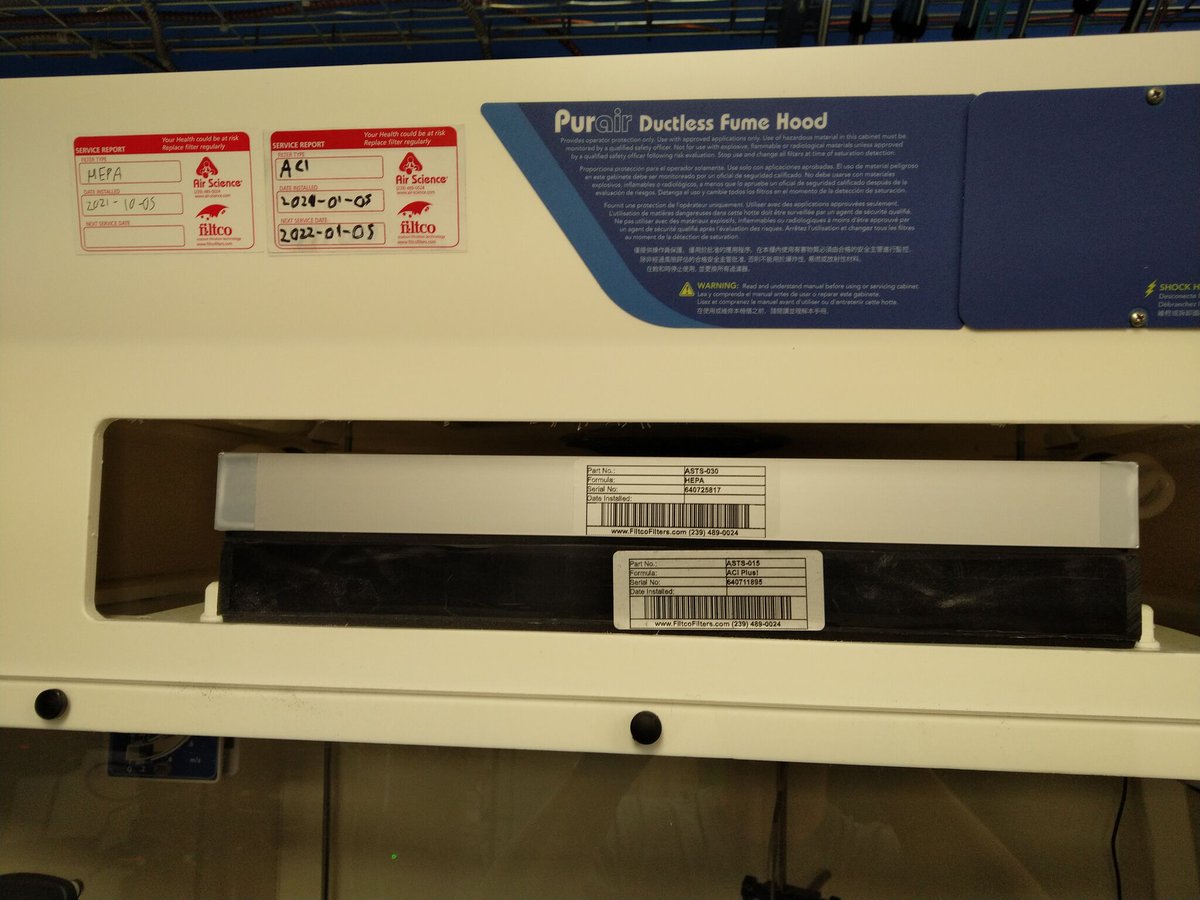
Not how the saying usually goes, but that's how things go in my lab. This is a ductless hood with a stack of two filters, a doped carbon for organic vapor/acid gas followed by a HEPA to catch carbon particles, sanding debris, etc.
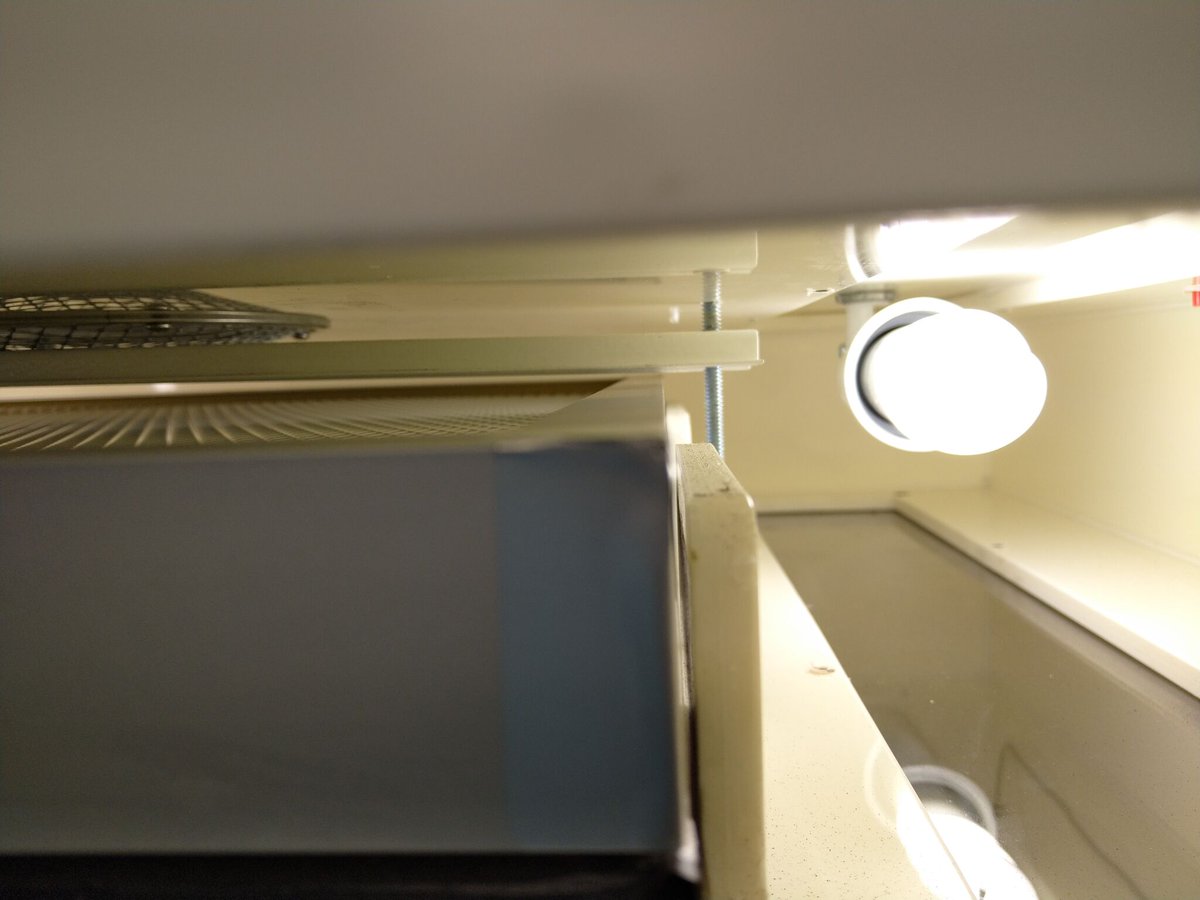
Here's the service plenum with the access cover removed. I change the carbon filter annually and the HEPA only when I notice it's clogged enough to impair airflow.
This is pretty rare since I don't generate a lot of particles in the lab and the overall air quality is excellent.
After loosening the compression bar on the filter mount, I can remove the HEPA and save it for re-insertion over the new carbon filter.
Why does Amazon bother sending order confirmation / shipped emails anymore? There's no actionable information left in them.
All I know is "something shipped". I don't know *what* shipped, when it's arriving, the tracking number, etc.
So all I do is delete them because it tells me nothing.
Also, I really wish there was a privacy setting to say "I don't use a mail provider that data-mines my inbox, please include full order details in the emails"
Or, equivalently, "I use gmail but also adblock, so IDGAF if Google can see my purchase history because I won't be seeing the ads anyway".
I generally don't care much about silent background web tracking because it doesn't harm me in any noticeable way. Ads are in-your-face.