Mick Ryan, AM Profile picture
Dec 19, 2022 25 tweets 14 min read Read on X
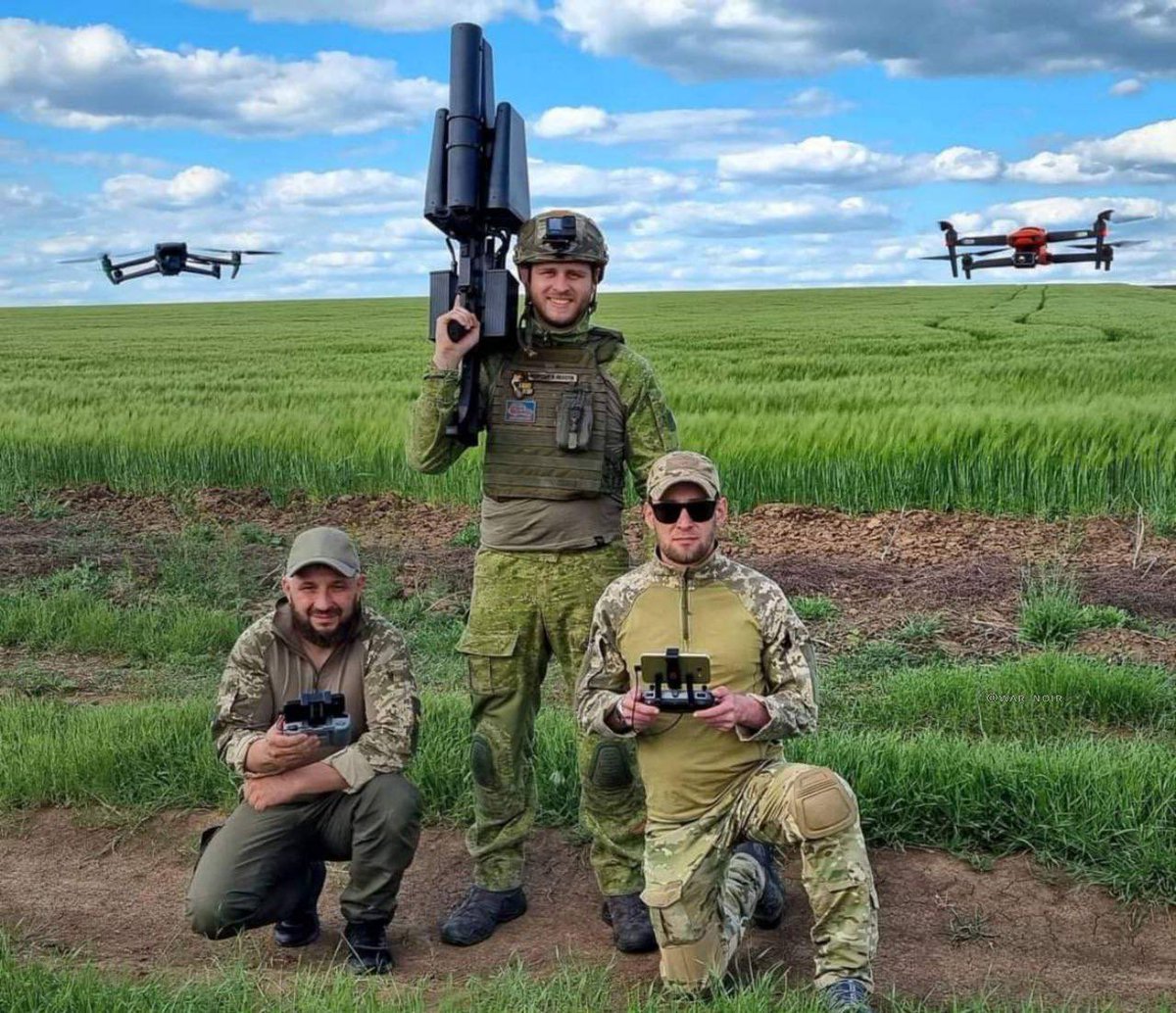
War is a very destructive human endeavour. But war is also a learning opportunity for military institutions. Many governments and institutions are watching the war in #Ukraine for insights into future competition and conflict. A thread on lessons and the war. 1/25 🧵
2/ Back in May, I explored why learning in war is so important, and explained some of the principles related to lessons and lessons learned for military organisations. You can read that post here:
3/ In the past ten months there has been a profusion of articles that propose lists of lessons from the Russo-Ukraine War. Some – from experts on war, the military, strategy and national security affairs - are well informed and cogently argued. atlanticcouncil.org/blogs/new-atla…
4/ Some, on the other hand, are biased, poorly structured, misinformation or just plain wrong (or even weird). This includes premature declarations such as ‘the death of (insert your least favourite military equipment here)’.
5/ But learning from war is a serious business that has significant consequences for military organisations if not done well. The lives of our future service personnel literally hang on how competently we learn, and adapt, from our observations of modern wars.
6/ Why should we look at lessons from war in general, and this one in particular? The answer is that our world is constantly changing. Rather than continuously making our own mistakes in responding to change, clever institutions can learn from the missteps of others.
7/ To exploit the failures of others requires a military institution to have a learning culture. As I have explored previously in my threads, the Ukrainians have demonstrated a superior learning culture in this war, and in its lead up. They learned from 2014, adapted & improved.
8/ I have explored this competitive learning environment in #Ukraine, which can be better called an adaptation battle, in several articles. engelsbergideas.com/essays/how-ukr…
9/ With this as context, I wanted to explore some of the better observations from the war in #Ukraine. While there is a long way to go, these provide good intellectual foundations for the lessons that military institutions will draw from the war to inform modernisation efforts.
10/ The November 2022 report from @RUSI_org is probably the best report on Ukraine war observations released thus far.
rusi.org/explore-our-re…
11/ It has a particular focus on Russian operations and the integration of different force elements. Its critiques of Ukrainian operations are limited however, noting the requirement for operational security. That said, it is a very good report on initial observations of the war.
12/ One lesser-known series of reports is from the @AARCAusArmy. In a three-part series, these reports look at the context of the war, and observations from its conduct.
researchcentre.army.gov.au/library/land-p…
13/ And while this is not a long report, the source makes it worthy of perusing. In June this year, the Secretary of the US Army discussed five key lessons from #Ukraine. breakingdefense.com/2022/06/us-arm…
14/ The war in the air over Ukraine is worthy of additional study. There has been a lot going on with both crewed and uncrewed systems, missiles, and Ukraine’s integrated air and missile defence system. One of the better studies on this is from @RUSI_org
static.rusi.org/SR-Russian-Air…
15/ This report on air warfare, as well as space operations, from @atlanticcouncil is also very comprehensive. atlanticcouncil.org/programs/scowc…
16/ Cyber operations, have been described by some as that dog that hasn’t barked in Ukraine. This is probably an unfair assessment – there have been cyber operations on both sides. But they are not as obvious or transparent as other aspects of the war. lawfareblog.com/cyberwar-ukrai…
17/ In June this year, Microsoft issued a report on the early lessons of cyber from the war in Ukraine. It is a good read, although should be read in conjunction with other views of the cyber war such as those from @WIRED and @TheEconomist
blogs.microsoft.com/on-the-issues/…
18/ Finally, information warfare. This war has seen widespread influence operations from both sides. It has also seen a Cambrian explosion in civil influence operations, open-source mapping and assessment, and intelligence analysis. gov.uk/government/spe…
19/ This discussion from @CSIS explores a range of observations drawn from the war in #Ukraine. The link is a transcript, but a video of the discussion is also available. csis.org/analysis/nafo-…
20/ While reviewing the many observations made of this war so far, there are 2 things to keep in mind. First, events in the coming months might change the context of these current observations. And second, even with these observations, not all military #innovation is good.
21/ We must ensure that institutional processes are informed by examples of failed lessons and failed ‘lessons learned’ processes. Examples of failed reform processes can be just as informative as successful adaptations.
22/ Earlier this year, Kendrick Kuo explored how military innovation can also hurt military effectiveness. It is a long read but contains many useful lessons for observing military affairs and drawing lessons on innovation and adaptation. belfercenter.org/publication/da…
23/ In #learning from this war, western military institutions will need to invest in – and apply – collection, analysis, dissemination, and adaptation processes. Importantly, as Don Starry described in "To Change an Army" this will require #leadership from the top.
24/ As this war continues, and both sides are adapting based on battlefield learning, their interactions with each other, and new technologies and ideas. Other clever military institutions must be watching, assessing and adapting. End.

• • •

Missing some Tweet in this thread? You can try to force a refresh

 

Keep Current with Mick Ryan, AM

Mick Ryan, AM Profile picture

Stay in touch and get notified when new unrolls are available from this author!

Read all threads

This Thread may be Removed Anytime!

PDF

Twitter may remove this content at anytime! Save it as PDF for later use!

Try unrolling a thread yourself!

how to unroll video
  1. Follow @ThreadReaderApp to mention us!

  2. From a Twitter thread mention us with a keyword "unroll"
@threadreaderapp unroll

Practice here first or read more on our help page!

More from @WarintheFuture

Mar 18
The latest update on drone and missile attacks on the UAE has just been released. With this as context, I thought I would share some initial insights arising from this Iranian retaliatory campaign and the overall war against #Iran. 1/9 🧵
2/ First, the battlespace is not transparent. It is highly visible but high visibility is not the same as high wisdom about what is seen. And we must not fall into the trap of assuming that we actually are seeing everything we need to see rather than what the enemy wants us to see. Finally, no tech can see into the hearts and minds of soldiers and combat leaders, especially when they are functioning under conditions of existential threat.
3/ Second, Understanding the enemy, and how resilient it is, matters. The Iranians have been preparing for this fight for decades, will have many caches of weapons and have strategised how this might play out. And assuming that a few bombs from the sky topple a regime (especially when it has never been achieved before) badly under estimated the Iranians.
Read 9 tweets
Mar 17
"America & Iran are fighting two very different wars and have two different theories of victory. China & others in the authoritarian learning & adaptation bloc are observing closely & learning." An assessment of where we are, & who is learning from the Iran War. 1/6 🧵 Image
2/ This assessment examines the two wars in and around Iran: the military campaign that Washington is fighting, and the economic campaign that Tehran is waging. It then asks the following question: what are the respective theories of victory, and how does that theory play out differently for each belligerent?
3/ A theory of victory is not simply a list of military objectives. It is a coherent account of how the application of military force produces a political outcome that endures. The Trump administration entered Operation Epic Fury with a theory of the means, and a range of constantly changing ends (at least in public). It might be able to use the military to win the war, but it is unclear whether it has a longer-term plan to win the peace.
Read 6 tweets
Mar 15
Wars are never simple. Despite the efforts of governments, war resists the clarity, certainty & clever narratives supported by AI slop videos, we wish to impose on them. The #Iran war & developments in #Ukraine, were exemplars of this during the week. 1/7 Image
2/ Welcome to my weekly update on war and strategic competition. This week, shifting strategic initiative in Ukraine, the war in Iran, politics in the Pacific & my Big 5 reading recommendations.
3/ In #Ukraine, Ukrainian forces achieved some of the most operationally significant gains of the past year, reclaiming territory in the south while striking deep into Russia’s military-industrial complex. Diplomacy continued its chaotic and erratic journey.
Read 7 tweets
Feb 15
"At some point, Putin will have to reckon with the failure of his strategic bombing campaign against Ukraine’s cities to shift Ukraine’s political posture, and the slow-rolling military failure that is Russia’s bloody ground campaign." A comprehensive update of the big #Ukraine & Pacific issues this week. 1/6 🧵🇺🇦Image
2/ In Europe this week, the annual Munich Security Conference was held. Lots of interesting speeches, but not a lot of progress on ending the war in Ukraine.

And as Zelenskyy stated: "A lot of time now is spent on negotiations. We truly hope that the trilateral meetings next week will be serious, substantive, and helpful for all of us. But honestly – sometimes it feels like the sides are talking about completely different things."
3/ In Ukraine, the armed forces were able to undertake opportunistic counter attacks against Russian forces deprived of Starlink.

But otherwise, as I describe in my assessment of the trajectory of the war in 2026, "the brutal calculus of the past four-years will continue into 2026 unless there is a significant breakthrough in technology, tactics or strategy that changes the deep, close and rear aspects of the overall battlefield dynamic.

The only other thing that might significantly change the trajectory of the war is if there is a significant shift in political will in Kyiv or Moscow."
Read 6 tweets
Jan 24
America has just released its 2026 National Defense Strategy (NDS). Not seeing much press activity from the Dept of Defense/War on this. While I need time to ponder the deeper implications of the document, a few things stand out on first reading. 1/11 🧵 Image
2/ First, the document is consistent with the 2025 National Security Strategy (NSS) released by the Trump Administration in November 2025. Key priorities in the NDS align with the NSS, as you would expect. However, while the NSS has priorities, the NDS has "Lines of Effort".
whitehouse.gov/wp-content/upl…
3/ There are four Lines of Effort in the new NDS:

1. Defend the U.S. Homeland.
2. Deter China in the Indo-Pacific Through Strength, Not Confrontation.
3. Increase Burden-Sharing with U.S. Allies and Partners.
4. Supercharge the U.S. Defense Industrial Base.
Read 11 tweets
Jan 11
"The Oreshnik is the sign of a Fearful, Worried Putin, Not a Leader Confident of Victory." My first 2026 update on war and great power competition. This week: the Oreshnik attack, peace talks progress, the ground war in #Ukraine, China's reaction to Venezuela and more. 1/5 🧵🇺🇦 (Image: @DefenceU)Image
2/ In events related to #Ukraine this week, the Oreshnik strike absorbed a lot of attention. But this was not an event that demonstrates Russia's strength. Indeed it showed the opposite. Also, peace talks in Paris took place as did a meeting of the Coalition of the Willing. Image
3/ In the Pacific, China continues to posture about American operations in Venezuela. While we might like to think that China will practice what it preaches with regards to its statement that “military means are not the solution to problems”, its accelerating use of military coercion and aggression against neighbours shows just how hollow and hypocritical the Xi regime is.

Also this week, Trump discussed Taiwan in his New York Times interview.Image
Read 5 tweets

Did Thread Reader help you today?

Support us! We are indie developers!


This site is made by just two indie developers on a laptop doing marketing, support and development! Read more about the story.

Become a Premium Member ($3/month or $30/year) and get exclusive features!

Become Premium

Don't want to be a Premium member but still want to support us?

Make a small donation by buying us coffee ($5) or help with server cost ($10)

Donate via Paypal

Or Donate anonymously using crypto!

Ethereum

0xfe58350B80634f60Fa6Dc149a72b4DFbc17D341E copy

Bitcoin

3ATGMxNzCUFzxpMCHL5sWSt4DVtS8UqXpi copy

Thank you for your support!

Follow Us!

:(