People_of_Space: Profile picture
Jun 9, 2020 10 tweets 4 min read Read on X
Now that I introduced you to how science communication can go wrong, let's see why it goes off course sometimes. There are multiple factors, but I think the greatest pitfall in the translation from scientists to journalists and then the public is: The Habitable Zone. A thread:
Because the Habitable Zone is, in fact, NOT what is shown in the GIF before. It doesn't encompass ALL the things that make a planet "liveable" for humans. What it means is that the planet is situated "right" in relation to its host star to have liquid water, in a crude sense.
As you can see by the quotation marks, it's more complicated than that. @ravi_kopparapu published a paper in 2014, taking into account many more factors, like CO2 and H2O dominated atmospheres, planetary mass, stellar type, etc.
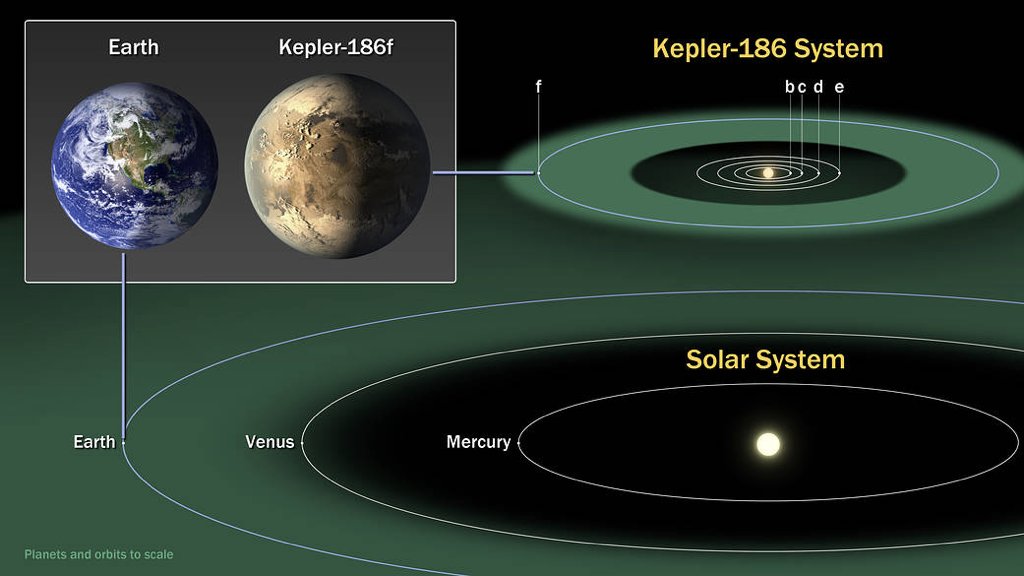
Look at #Kepler186f in this graphic from @NASA for example. The systems are to scale. And since the host star Kepler-186 irradiates less than our Sun, the Habitable Zone is much closer to its star than it is for us. Planet f (about the same distance as Mercury) is thus in its HZ. Image
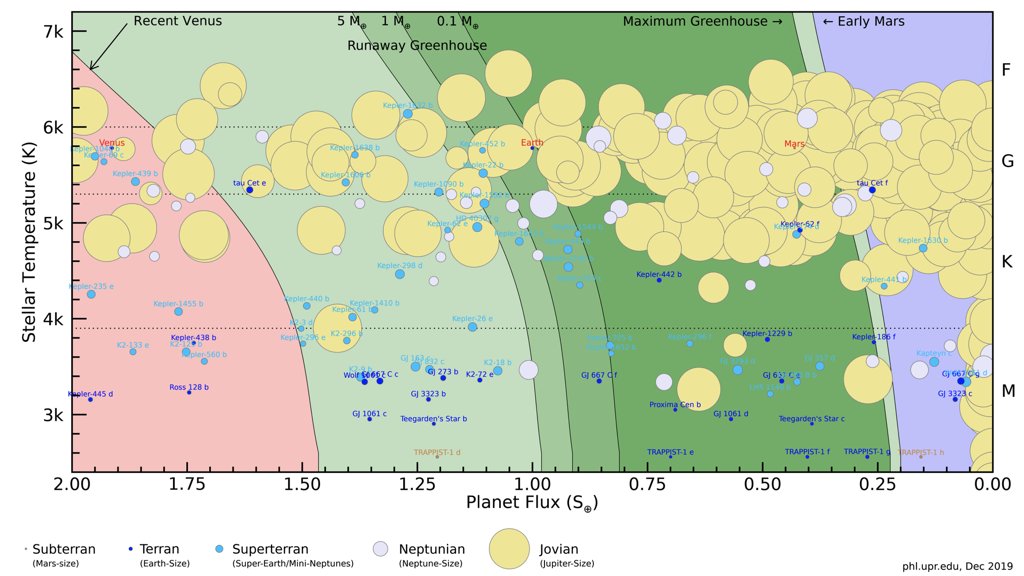
Here is a graphic taking into account the more sophisticated version of the Hab. Zone from @PlanetaryHabLab at the @NAICobservatory. Here you can see where the different exoplanets I talked about earlier sit, and how suited or not suited they are for habitability. Image
So where does the confusion start? Being somewhere in the Habitable Zone doesn't mean "let's move there", it means, potentially life could survive here. It means 'maybe' there is water in liquid form, 'probably' the planet is the right size.
Any talk of an Earth 2.0 is widely exaggerated. Both Mars and Venus fall at the borders of the HZ here and who would want to move there? No one. Some planets in this sample of Super-Earths have masses 5-10 times the mass of Earth, can you imagine?
So, although the name "Habitable Zone" suggests it's like home, it just means, "not instant death while still in a spacesuit". It doesn't mean a breathable atmosphere. It doesn't mean alien life. And it for sure doesn't mean this is our plan B to get off our own blue marble.
So whenever we as scientists talk about the Habitable Zone, we have to take into account what this name insinuates, at what it actually means. Or we are right back in the next round of news articles about a "Planet B", when it might be another Venus.
And don't forget: These planets are incredibly far away. The closest, #ProximaCentauri_b is 4 lightyears away. #Voyager I, who was sent out into space in 1977, has so far only made it out to 0.002 lightyears. Human space flight won't make it to our closest neighbour anytime soon.

• • •

Missing some Tweet in this thread? You can try to force a refresh

 

Keep Current with People_of_Space:

People_of_Space: Profile picture

Stay in touch and get notified when new unrolls are available from this author!

Read all threads

This Thread may be Removed Anytime!

PDF

Twitter may remove this content at anytime! Save it as PDF for later use!

Try unrolling a thread yourself!

how to unroll video
  1. Follow @ThreadReaderApp to mention us!

  2. From a Twitter thread mention us with a keyword "unroll"
@threadreaderapp unroll

Practice here first or read more on our help page!

More from @People_Of_Space

Jan 30, 2022
PEOPLE OF SPACE! I’m super excited to be hosting this week! We’ll be covering a bunch of topics that are near and dear to me including #space (obviously), astronomy, supernovae, radio astronomy, science communication, and MORE
🧵
#science #scicomm #spacetwitter #intro #Thread
But who is this random dude yelling at us about space?
Well the short version is that I’m a physicist who finished high school with every intention of becoming a lawyer - pictured is 19yo me not caring about science
#accidentalscientist #accidentalphysicist #throwback #SPACE 10 years ago before I had considered a career in science - I
For a slightly longer version you can check out this #thread I did on my @funfactscience account recently to reintroduce myself to #spacefam and any newcomers to my page
#introductions #spacetwitter #space
Read 7 tweets
Jul 26, 2021
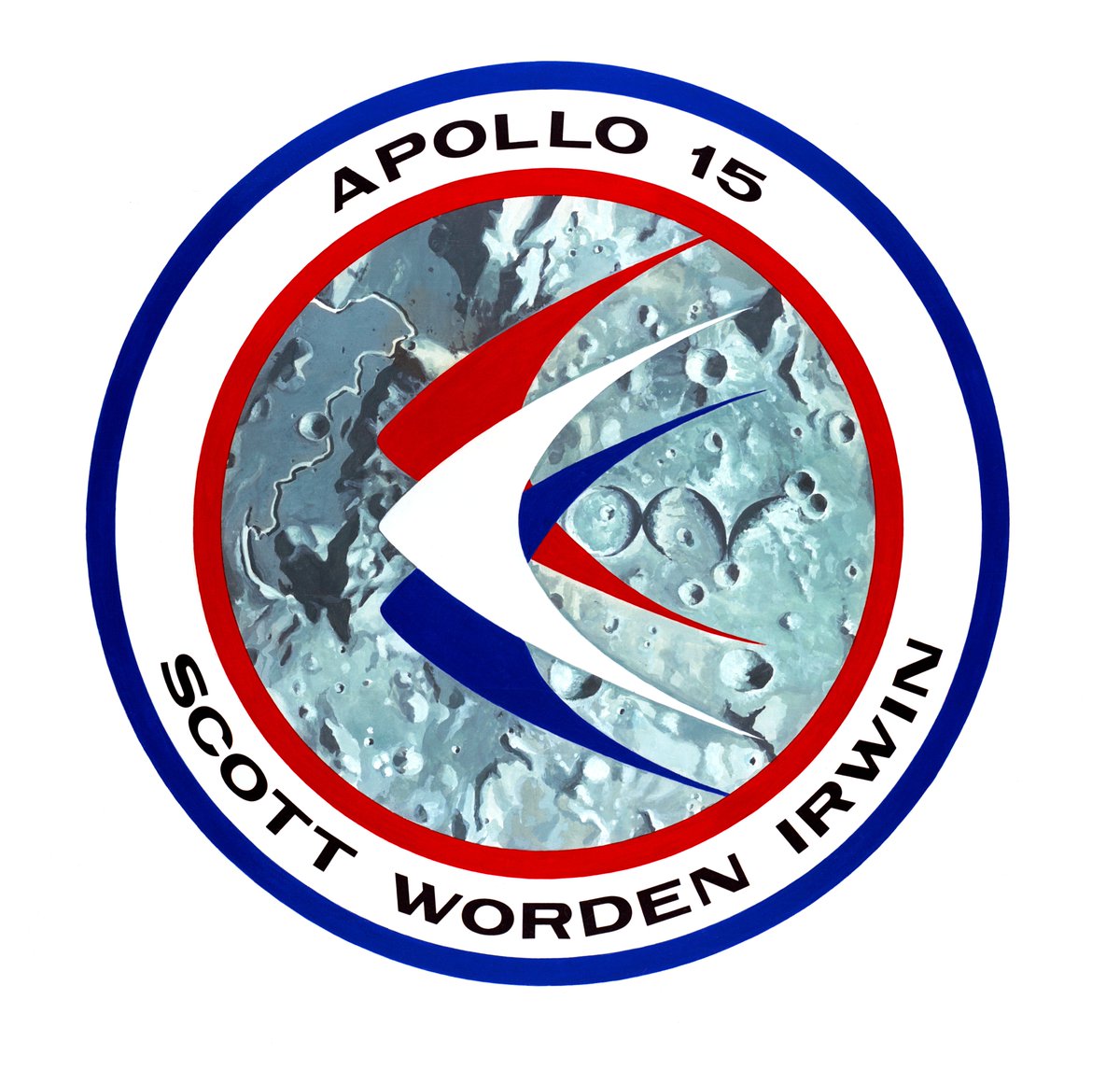
The mission patch was based on a design from well known Italian fashion designer, Emilio Pucci. The design has three stylized birds flying over the Hadley-Appenine landing site with the crew names on the lower part of the outer border.
In an early version of an Easter egg, the crew snuck a Roman numeral XV into the crater shadows. According to a story I heard from one of Al Worden's @ExploreSpaceKSC presentations, NASA discouraged Roman numerals on the Apollo patches, thus the hidden nature.
Before his passing last year, @WordenAlfred was a regular astronaut host at @ExploreSpaceKSC giving presentations guiding tours and being an affable ambassador of the Apollo program to a new audience.
Read 4 tweets
Jul 26, 2021
On board were (left to right) Lunar Module Pilot Jim Irwin, Commander Dave Scott, and Command Module Pilot Al Worden
The landing site was Hadley-Appenine, on the edge of Mare Imbrium. It was bordered by Hadley Rille, a valley-like geological structure and the Montes Apenninus, or Appenine Mountains. The Palus Putredinus was a lava field that filled the area.
Read 7 tweets
Jul 16, 2021
Today I’ll be working on some research for the big Mars exhibition! As I said yesterday, I’m working on researching how people have been imaging the Red Planet throughout history.
Today we have orbiters circling Mars and rovers that take pictures of the surface. But the history of imaging Mars stretches back centuries, from depicting Mars in art to the canals people thought they saw on the planet.
What are some of your favourite images of Mars and why?
Read 9 tweets
Jul 15, 2021
Going to talk about designing a temporary display today!
In Science Museum lingo, there are 2 kinds of displays:
🚀Exhibitions (temporary displays) - these can last up to a year
🚀Galleries (permanent displays)
Even a temporary display might take several years to prepare for, with overviews and detailed proposals.
Read 5 tweets
May 15, 2021
🧬 Life as we don't know it 🧫

Exotic solvents & life's building blocks are among the more speculative
#astrobiology topics, but still important to study scientifically! Our own system contains places potentially able to host life unlike on Earth. Not just Titan!

#AstroThread
All Earth life is carbon-based and needs water to survive. 💦

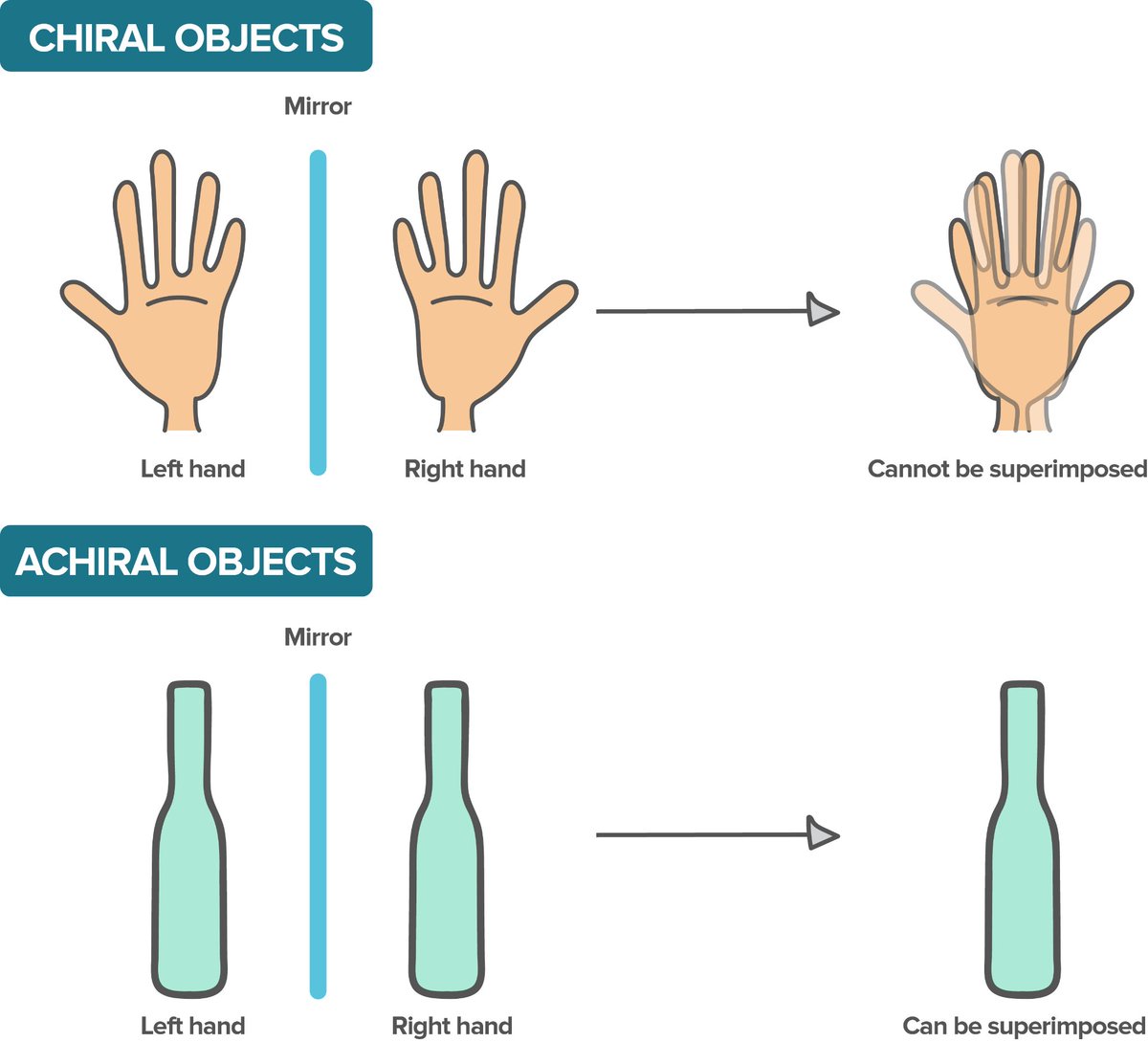
'Mildly' exotic life might share these traits, but use e.g. other information molecule (or differently coded DNA, even with different/more 'letters') or opposite chirality (left/right-handedness) of some compounds. ImageImage
There are countless possibilities of different information molecules and their coding. Is Earth DNA and RNA a ', frozen accident', or does it have a phys/chem reason? And is all life chiral? In the same way, or is that another frozen accident? What about the amino acids we use? Image
Read 82 tweets

Did Thread Reader help you today?

Support us! We are indie developers!


This site is made by just two indie developers on a laptop doing marketing, support and development! Read more about the story.

Become a Premium Member ($3/month or $30/year) and get exclusive features!

Become Premium

Don't want to be a Premium member but still want to support us?

Make a small donation by buying us coffee ($5) or help with server cost ($10)

Donate via Paypal

Or Donate anonymously using crypto!

Ethereum

0xfe58350B80634f60Fa6Dc149a72b4DFbc17D341E copy

Bitcoin

3ATGMxNzCUFzxpMCHL5sWSt4DVtS8UqXpi copy

Thank you for your support!

Follow Us!

:(