This 2019 paper, to me, brings up a key under-appreciated climate equity aspect to nuclear phaseouts in Europe.

Even assuming shut-down nuclear is replaced with renewables (it isn’t) this passes enviro, climate, health costs onto other countries. (1)

sciencedirect.com/science/articl…
Beylot et al. analyze the carbon emissions associated with mining and processing four raw materials (steel, concrete, copper, aluminum) needed for a French power sector transition over the next few decades under a plan where French nuclear is cut to 50% of the overall mix. (2)
Their findings:

“the cradle-to-gate climate change impacts... required as a response to the energy transition, are assessed to amount between 57 and 650 million tonnes of CO2-eq (≥ 95% probability), and most likely between 150 and 375 million tonnes of CO2-eq” (3)
“there is a 20% risk that the production of steel, Cu, Al and concrete... induce >445 million tonnes of CO2-eq. The corresponding GHGs, *mainly emitted outside France*, would correspond to 8 yrs of climate change impacts by the French energy sector” (4)
Granted, the French energy sector currently produces few climate impacts thanks to its high proportion of clean power.

However, these materials-associated emissions - as well as the air pollution, mining, water impacts they produce elsewhere in the world - are unnecessary. (5)
However, this is also just France alone! Nuclear phaseouts in Europe, even if they are perfectly replaced by clean energy and therefore “climate-neutral” (with large caveats), will come with a larger, non-negligible climate, materials, and enviro cost. (6)
Essentially, decommissioning nuclear plants rather than pursuing lifetime extension generates unneeded emissions *while* exporting very real air pollution, mining, water impacts to low/middle income countries where copper, rare earths for renewable tech are sourced. (7)
All of this to avoid very NOT real, sensationalized radiation/waste fears in developed, wealthy Europe. This is a very compelling international climate and environmental inequity if you ask me - one that’s critically under-discussed in the context of EU nuclear shutdowns. (8)
Side note 1: material intensities presented in this paper strongly corroborate the conclusion renewables are generally more materials-intensive than nuclear (similar concrete intensity, significantly higher steel, Al, Cu demand per unit capacity). Matches my own findings. (9)
Side note 2: this paper does assume that some of the new capacity installed in France by 2050 is new nuclear (45GW out of the 266GW to be built). This means that the climate, enviro costs of a truly non-nuclear power plan would in fact be higher than these results suggest. (10)
This is even more true given that this analysis only considers steel, concrete, Al, Cu.

Solar + wind infrastructure also need major inputs like silver, rare earth metals, nickel which are much more carbon-intensive and currently come with large enviro impacts of their own. (11)
None of this is to say that solar and wind are bad. Renewables, nuclear, hydro, geothermal are ALL part of a broader solution. We can + must also get better at reducing climate, enviro impacts of mineral sector, because we will need LOTS of minerals for full decarbonization. (12)
But recall that replacing existing nuclear plants with new infrastructure rather than extending plant lifetimes represents fundamentally unnecessary additional materials demand.

At best, it's mere replacement that doesn't grow overall clean generation capacity at all. (13)
To repeat: even assuming near-perfect replacement of phased-out nuclear primarily with renewables, European nuclear decommissioning passes on very real enviro, health, climate costs on to communities abroad in order to minimize overinflated perceived risks at home. (14 - END)

• • •

Missing some Tweet in this thread? You can try to force a refresh
 

Keep Current with Seaver Wang

Seaver Wang Profile picture

Stay in touch and get notified when new unrolls are available from this author!

Read all threads

This Thread may be Removed Anytime!

PDF

Twitter may remove this content at anytime! Save it as PDF for later use!

Try unrolling a thread yourself!

how to unroll video
  1. Follow @ThreadReaderApp to mention us!

  2. From a Twitter thread mention us with a keyword "unroll"
@threadreaderapp unroll

Practice here first or read more on our help page!

More from @wang_seaver

22 Oct
We must reduce mining impacts, but at the same time we’re gonna need copper for net zero. LOTS OF IT. (THREAD)

Current global pop w/o electricity: 1 billion
Current pop w/o clean cooking fuel: 3 billion (think electric stoves w clean power)
Global pop by 2050: 10 billion

(1/7)
Copper intensity of electric gen by type, in tons/GW capacity:

Onshore wind: 1700-6700
Offshore wind: 1650-10000, likely on higher end
Solar: 4900-7000
Nuclear: 726-2000
(to compare: fossil fuels are around 450-600, not that that's remotely a reason to keep em around) (2/7)
By my preliminary calcs for an academic paper I'm working on with @hausfath, @SteveDavisUCI, @erikolsonn, @jamesonmcb + others, assuming a MESSAGE 1.5C decarbonization pathway, we will consume around this much copper per year by 2050: (3/7)
Read 8 tweets
21 Oct
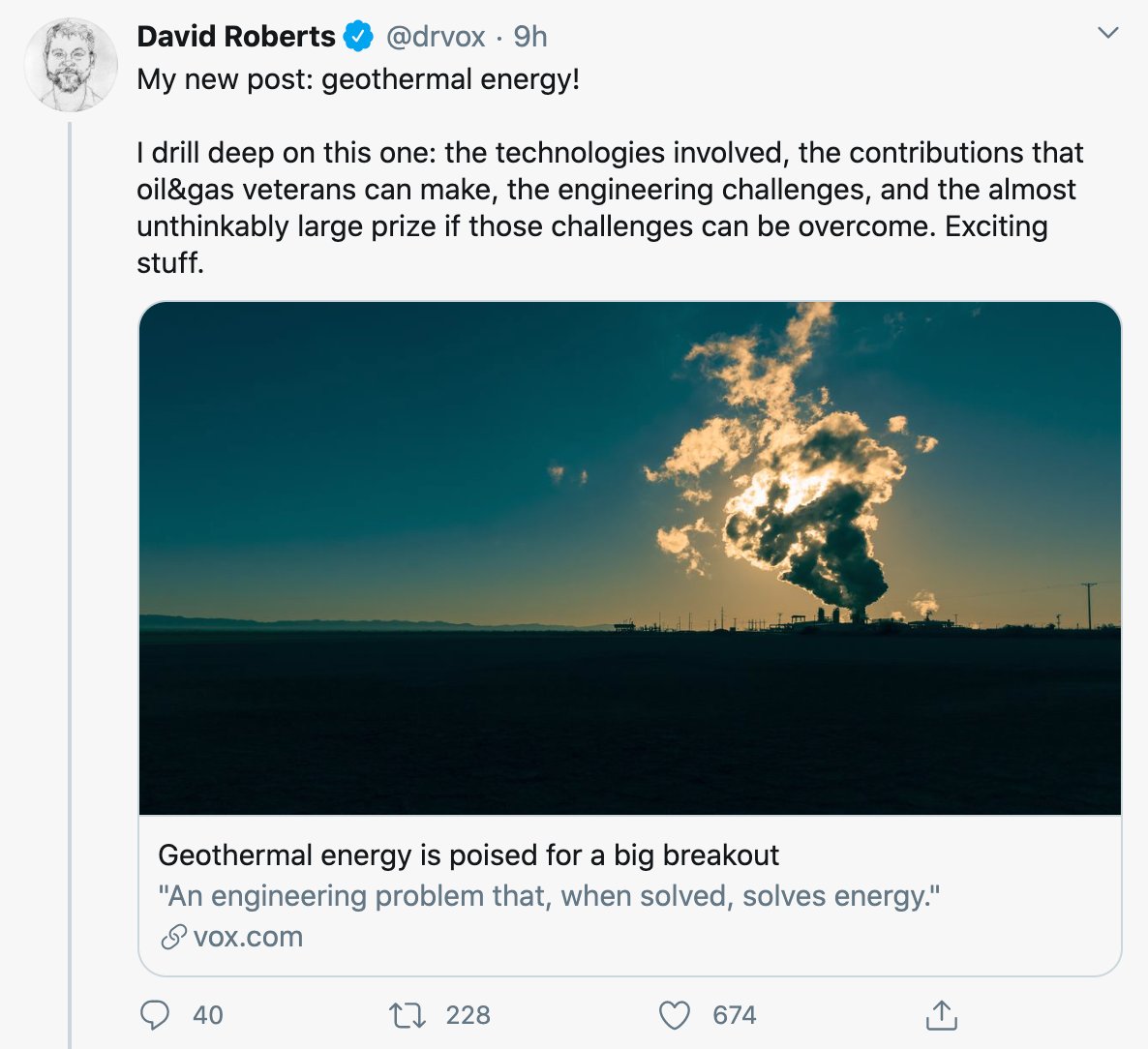
A certain new big explainer piece on geothermal is rightly getting a lot of attention!

But imo, the really important theme to @drvox 's #energytwitter activity today is the importance of really selling the clean energy transition to oil/gas workers + communities. (1/5)
For the geothermal piece in question:

vox.com/energy-and-env…

Can clean geothermal absorb all current oil + gas jobs? Likely not. But it offers those working in the industry a clear path forwards. (2/5)
I've written on how geothermal's just one way for oil/gas folks to transition to the clean energy economy.

We'll still need pipelines, chemicals (think ammonia, H2) Drilling could help sequester CO2. Offshore wind can leverage oil rig expertise. (3/5)

thebreakthrough.org/issues/energy/…
Read 5 tweets
21 Oct
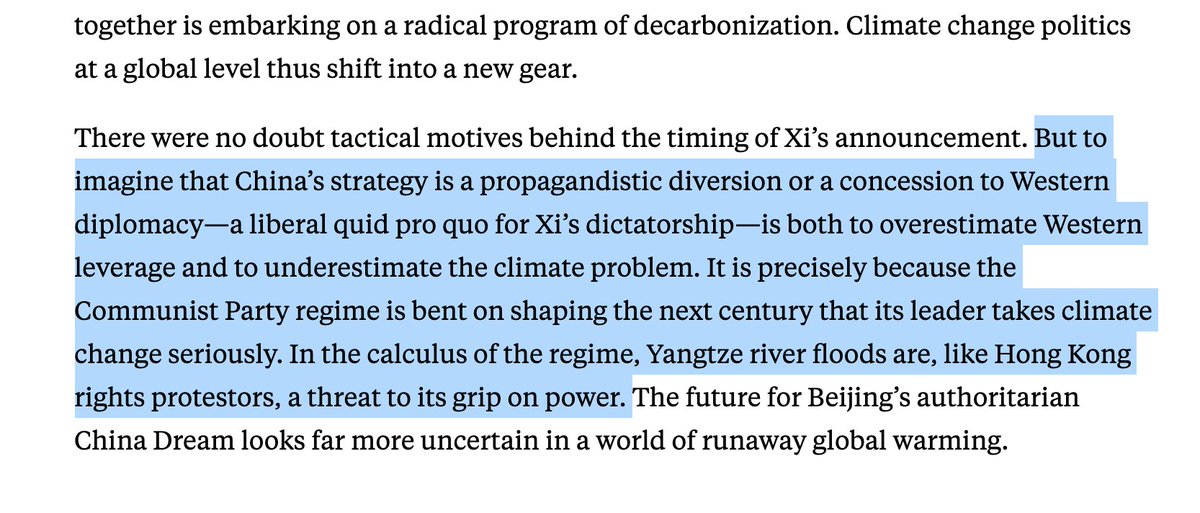
This piece in @ForeignPolicy by @adam_tooze is useful perspective, placing China's recent net-zero commitment in the context of where the world's major economies are on climate, how rising economies impact the climate picture, and where we go next. (1)

foreignpolicy.com/2020/10/17/gre…
Lots of good perspective here, most importantly the emphasis that a Western-focused framing for tackling climate change is increasingly inadequate and outdated. This is an ever more global issue, which will require leadership from all corners of the world. (2)
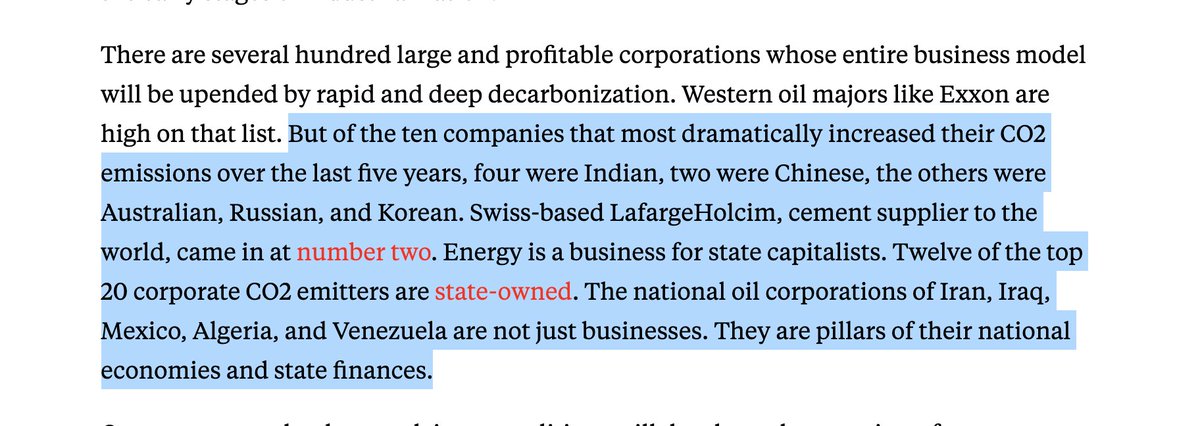
As this global picture becomes clearer, so too does the realization that effective climate mitigation hinges upon managing emissions from non-Western corporations and state-owned enterprises just as much as it does upon private Western companies. (3)
Read 6 tweets
20 Oct
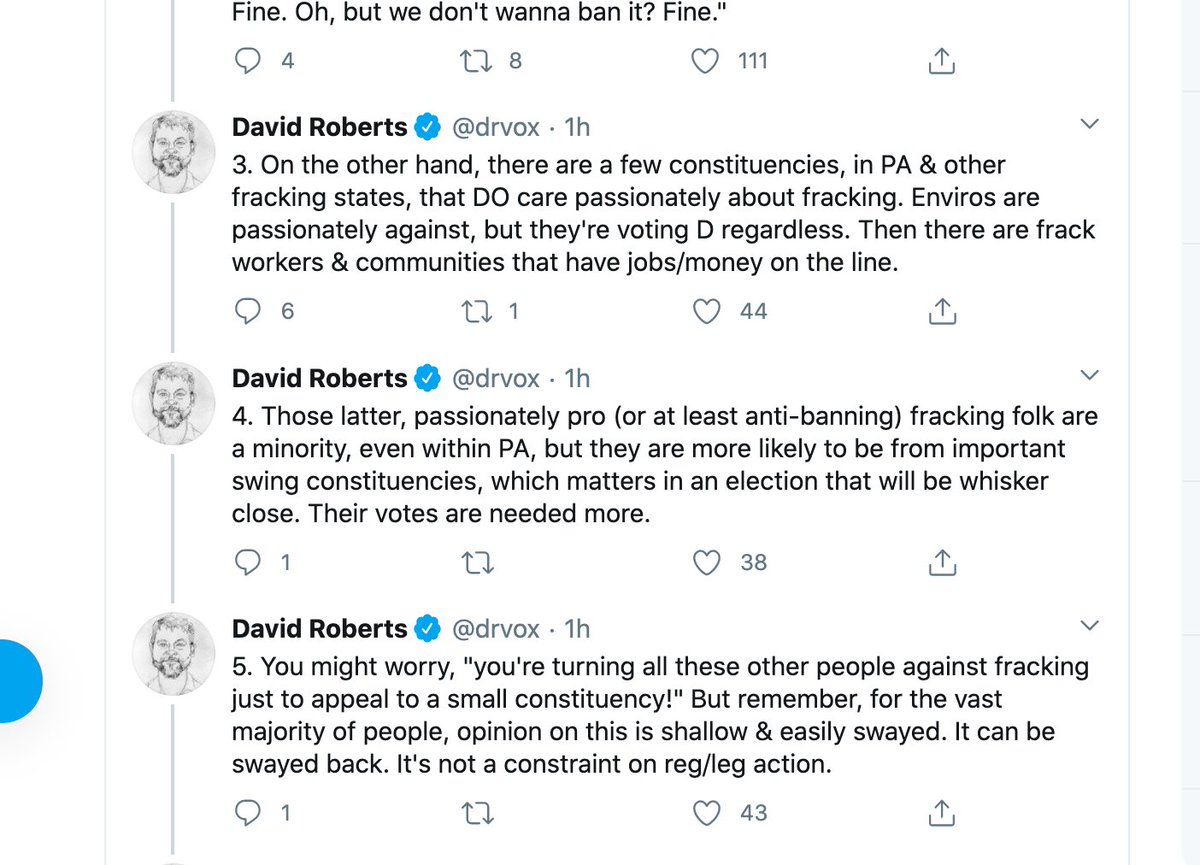
Since my colleagues @hausfath and @atrembath’s piece in @politico on reasons to question the utility of a US public lands fracking ban has been generating a lot of buzz, I thought I’d highlight aspects of #energytwitter discussion so far. (THREAD)

First, worth noting upfront that @politico’s editorial choice of title is extreme - far from @hausfath + @atrembath’s original title.

Their original title was: "Why Biden and Harris Are Right to Be Skeptical of a Fracking Ban”

That acknowledged, the discussion so far: (1)
Important point: Only 1/3 of US gas production goes to electric gen. 1/3 is used for industrial (fertilizer production, chemicals, etc), rest is mostly residential/commercial use. So most gas use is harder to substitute with clean tech than is the case for electricity. (2)
Read 13 tweets
22 Sep
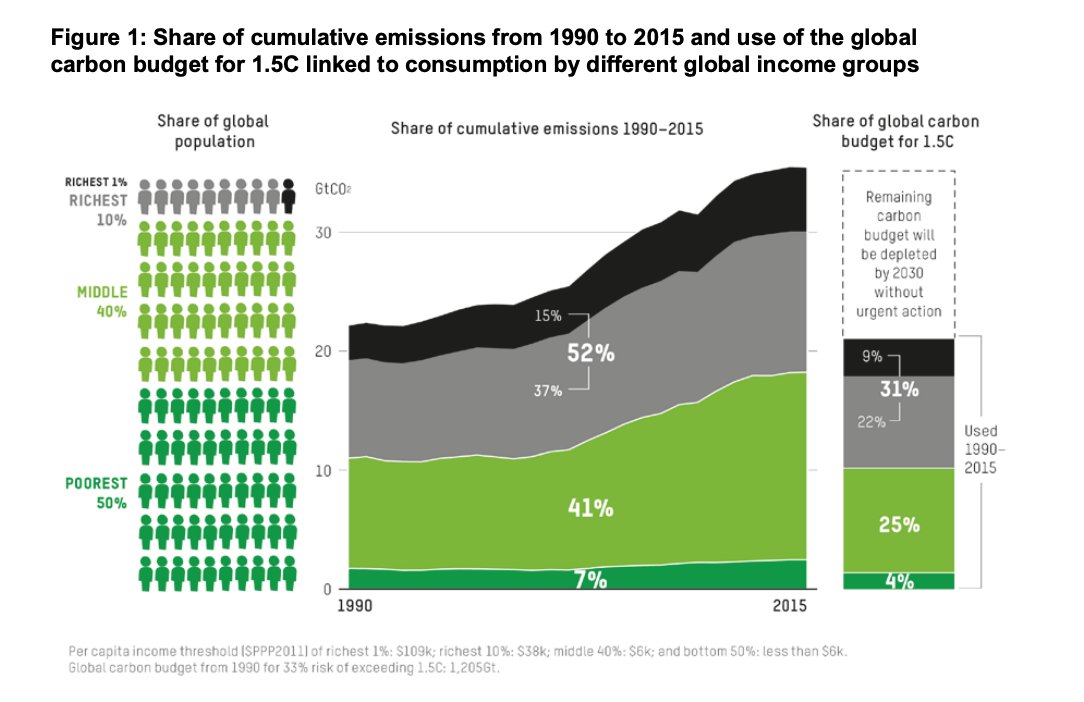
This study is generating buzz + looked fascinating, so I read the press release, media briefing + full report yesterday.

Key findings are probably approximately correct, but these results were guaranteed given the methodology used. (THREAD)
The authors use a top-down approach to assign a country’s total emissions (private + govt) to each household based on a monotonic relationship proportional to household income, using the national income distribution and Global Carbon Proj carbon emissions data for each year. (1)
In other words, the study is virtually hard-coded to allocate more emissions to households with higher incomes, irregardless of actual consumption patterns. To be fair, relationship btwn income + emissions is generally borne out by consumer habit surveys, but… (2)
Read 14 tweets
17 Sep
New PNAS paper highlights increasing fragility of buttressing ice shelves at the mouths of the Pine Island + Thwaites glaciers in Antarctica, further emphasizing the importance of warming-induced positive feedbacks for ice mass loss + sea lvl rise: (1)

pnas.org/content/early/…
Scientists studying Antarctic ice are paying close attention to Thwaites and Pine Island ice shelves, as they are exhibiting some of the fastest changes among West Antarctic glaciers and could drive considerable sea level rise over timescales of a century and beyond. (2)
The Thwaites Glacier is thought to be particularly important to the stability of the West Antarctic Ice Sheet as a whole, which could be significantly destabilized by its degradation. (3)

washingtonpost.com/climate-enviro…
Read 8 tweets

Did Thread Reader help you today?

Support us! We are indie developers!


This site is made by just two indie developers on a laptop doing marketing, support and development! Read more about the story.

Become a Premium Member ($3/month or $30/year) and get exclusive features!

Become Premium

Too expensive? Make a small donation by buying us coffee ($5) or help with server cost ($10)

Donate via Paypal Become our Patreon

Thank you for your support!

Follow Us on Twitter!