Some inflation comment here. With annual CPI now at 4.2% and core at 3%, the post pandemic path of inflation is clearly stirring worries. The monthly changes this year so far are feisty, but there are some good reasons to think this isn't simply a post pandemic thing /1
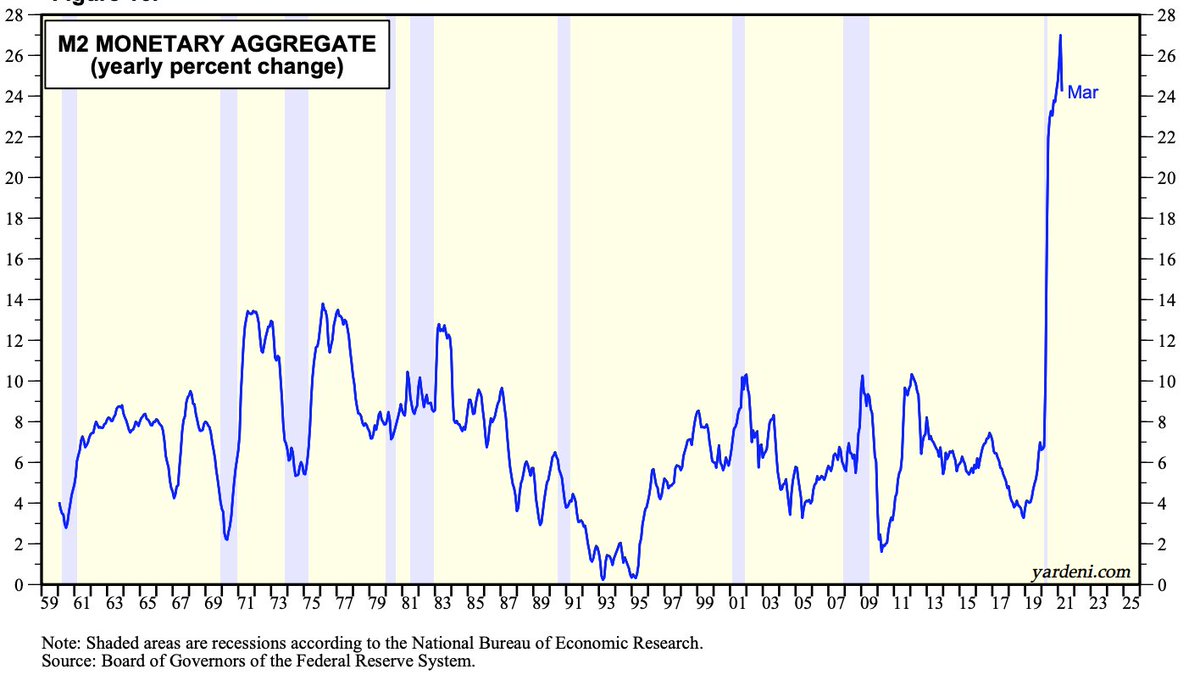
One key factor is the monetary backdrop which is still quite unusual, and accommodative in ways that we never saw after the GFC. Demand deposits, not just banks' balances at the Fed, are booming, making for potentially very fertile spending backdrop. /2
Materials shortages, long delivery times, supply chain choke points are joining rising commodity prices and rising pay in a chorus of inflation pressures, we haven't seen for a long time. Service workers comp rose by over 5% annualised in Q1, the biggest gain for 20 yrs /3
Powell et al/ inflation sceptics say this is all temporary and will wash out in/by 2022. Perhaps, but regime changes always feel like this when they start. The monetary/fiscal mutual reinforcement, and changed global supply conditions are likely to endure. /4
I think we can keep an open mind....but better be prepared for the possibility that inflation will prove stickier than ppl want to believe. Even this may not be all bad. End.
• • •
Missing some Tweet in this thread? You can try to
force a refresh

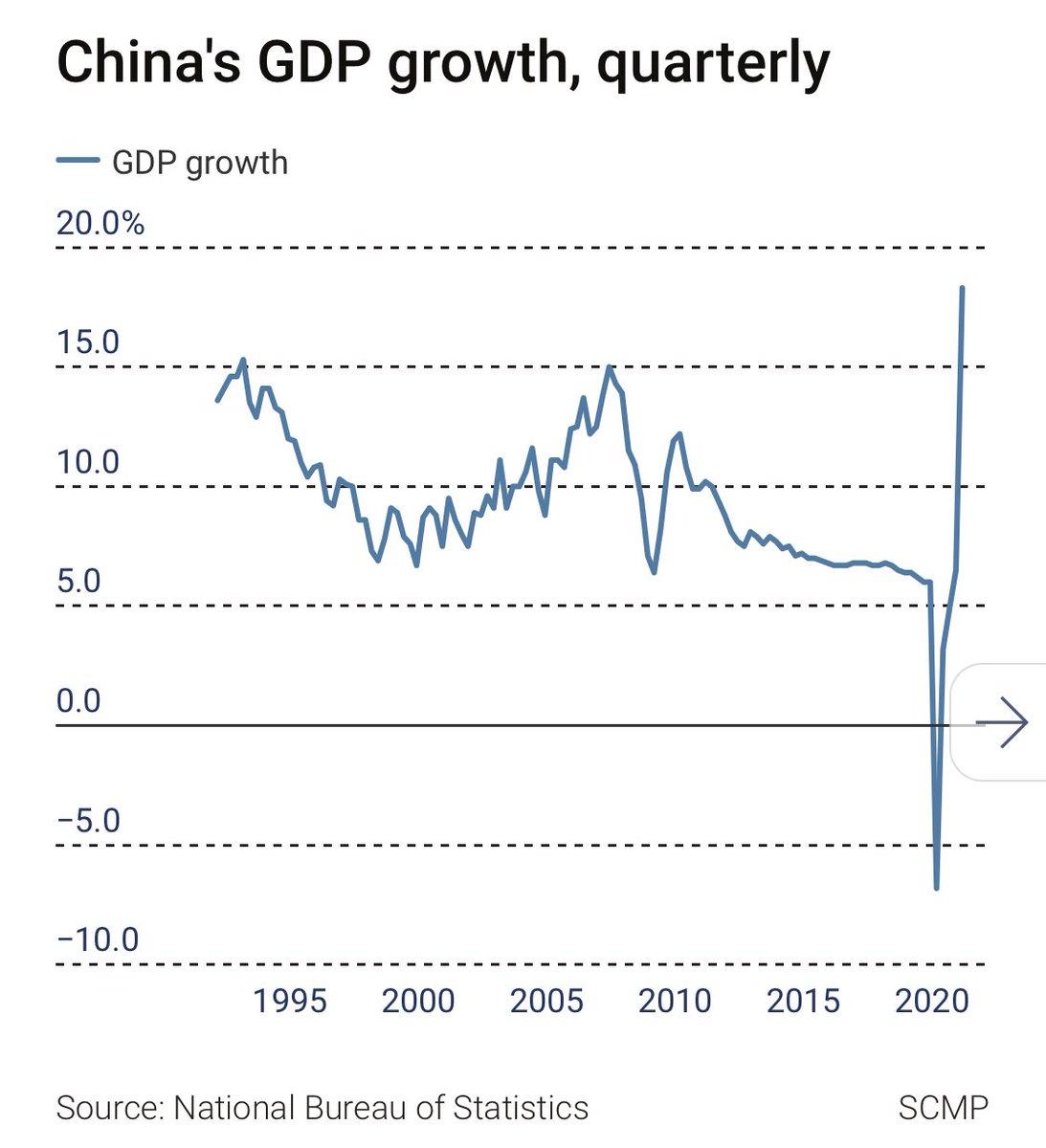
Big headline annual surge in China’s GDP in 1st qtr, but largely due to almost 10% reported quarterly fall this time last year. On a quarterly basis, last quarter was actually a damp squib riding just 0.6%, aka 2.4% annualised. /1
This follows a 2.5% quarterly rise in Q4 2020. At this rate, officially reported growth will be tumbling rapidly before year end towards 4%. Jan/Feb were esp disappointing partly related to a COVID scare, but the structure of the GDP growth - more details tomorrow - was too. /2
Most of the increase was thanks to industry and construction. Plus exports. Consumer spending is showing good y/y comparisons of course, but isn’t carrying the load as one might have hoped. /3
As always look at these numbers through more calibrated lenses than cheerleading authors. Example: citing China’s ambitious planned urbanisation rise from 69 to 65% doesn’t map with eg Scott Rozelle’s trenchant research in which he says only 34% of pop have urban hukou .....1/
....registration. So there are many ppl classified as urban who have neither urban status and benefits or live in places only loosely urban. Same with R&D spending. Compounding growth over 5 years tells you little about quality or content. ....2/
....and as China’s former Industry Minister, Miao Wei, confirmed last Sunday, China is weak in foundational technologies and products. So catch up needs to be qualified. ...3/
Short version, with comment, of Li Keqiang's Government Work Report today at China's National People's Congress. More details on 14th FYP by early next week. Try this for starters. 1/ 11
Leaving aside backward looking parts of the GWR, with emphasis on the positive economic consequences of containing the pandemic and on eradication of poverty, the forward-looking parts were rather sober overall. 2/11
Contrary to expectations, the govt did announce a growth target of 'about 6 per cent', but in 2021, hitting this target will be like falling off a log in a fast flowing river. Li said there will be annual targets for economic growth. Hmmm 3/11
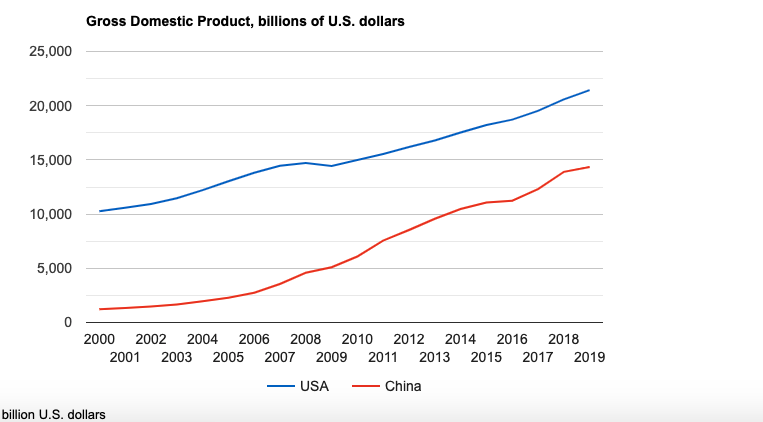
Hooray, I have found a soul mate in @CapEconomics whose latest rpt says 'Our long-run forecasts suggest that China will still be the second largest economy, measured at market exchange rates, in 2050'. My view too. Read on /1
They say that if China hasn't overtaken the US by 2030, it won't. and even if it did, the bragging rights might not last (my words). They say China's poorer demographics and output per worker are the key drivers of this non consensus view. I think there's more /2
So I would add 2 things. First, the prod'ty part of this is key. I'm also more optimistic that US economic structure, assets and strengths still give it an edge, along with politics permitting more robust institutions and stronger tech branding and commercialising capability /3
Thread on saving (mostly older peoples) lives v economy. Spoiler: rant because a lot of ppl incl on @BBCr4today misunderstand or misrepresent this. There is no choice. 1/n
Ppl, incl a Bristol Univ Prof in risk mgt, say economic slumps are injurious to health and we have the balance wrong. We should protect economy more and presumably be more tolerant of higher cv fatalities. 2/n
It’s true that slumps take a heavy toll on physical and mental health. Which is partly why we have well developed if not always adequately funded social sec and healthcare progs. But in today’s cv world, the deaths vs economy argument is a total red herring and wrong 3/n
On HK protest movement against the E law, lots of thoughts swirling around. No question it’s been a huge boost for HKers, who must feel buoyed that if the govt or Beijing persist in erosion of civil liberties, they know what to do. Yet, this is ultimately toxic for the CCP 1/n
At same time, also no question that this is the biggest climb down Xi Jinping has made since coming to power. The all-powerful, truck no nonsense, leader of China has had to bow to street politics. This will not have made him happy or quiescent.2/n
Under the circumstances though, and with a G20 coming up in Osaka next week, he had no choice. Interesting though, that faced with international and domestic pushback, the gov has virtually eradicated Made in China 25 rhetoric, moderated its Belt and Road strategy (pro tem) 3/n