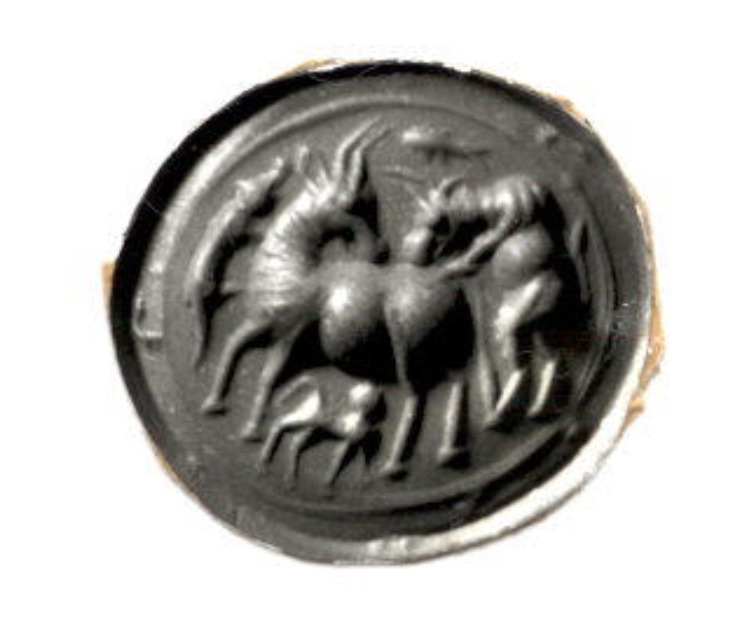
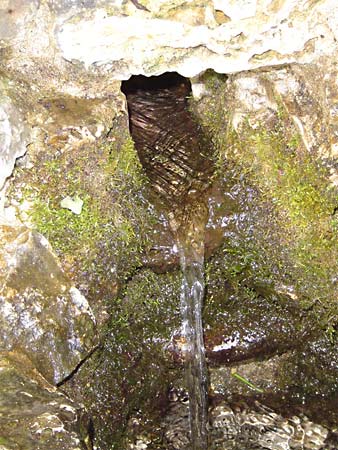
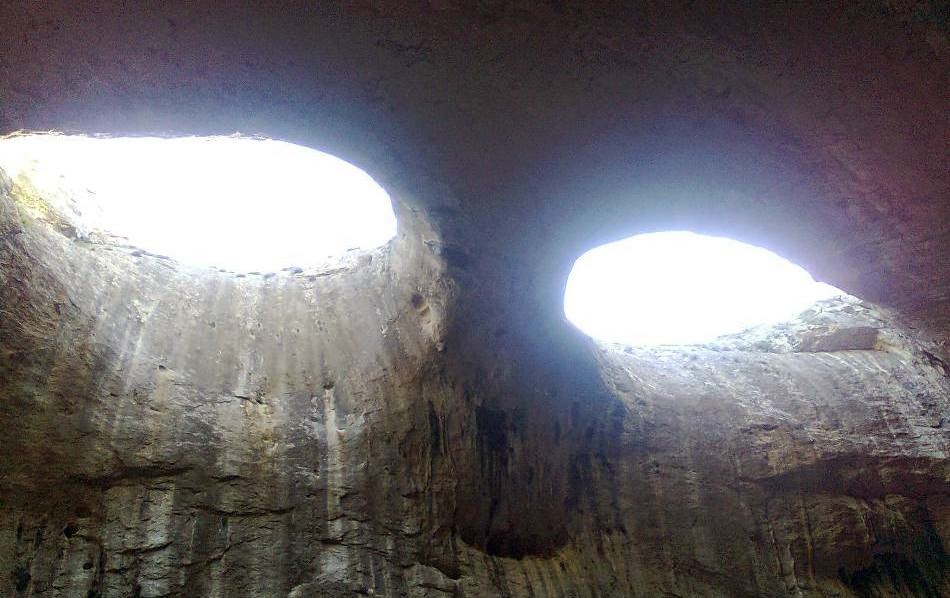
Thread: While I was looking for a suitable illustration for this thread about "lapis manalis", the sacred stone used as part of a Roman "aquaelicium" (calling of the waters), rain making ceremony performed during droughts, I suddenly realised what cup and ring marks look like... 

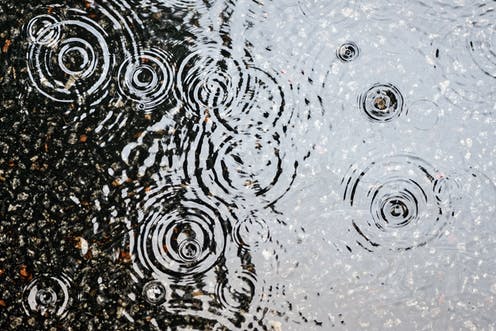
I'll just leave this pic here...
Anyway, we have no ideas what this magic Roman "weather stone" looked like...What we know is that it was kept inside the Temple of Mars in Clivo near the Porta Capena...
Anyway, we have no ideas what this magic Roman "weather stone" looked like...What we know is that it was kept inside the Temple of Mars in Clivo near the Porta Capena...
From there, the stone was brought into the Senate, where offerings were made to Jupiter petitioning for rain, and water was ceremonially poured over the stone...
Now, have a look at this: In his 1925 paper "The Ring of Nestor" (digi.ub.uni-heidelberg.de/diglit/evans19…), Sir Arthur Evans, mentions a curious rain-making ritual which was performed in Ibrahimovci, near Skoplje, Macedonia, during droughts. Pic: Altar dedicated to Jupiter, Macedonia
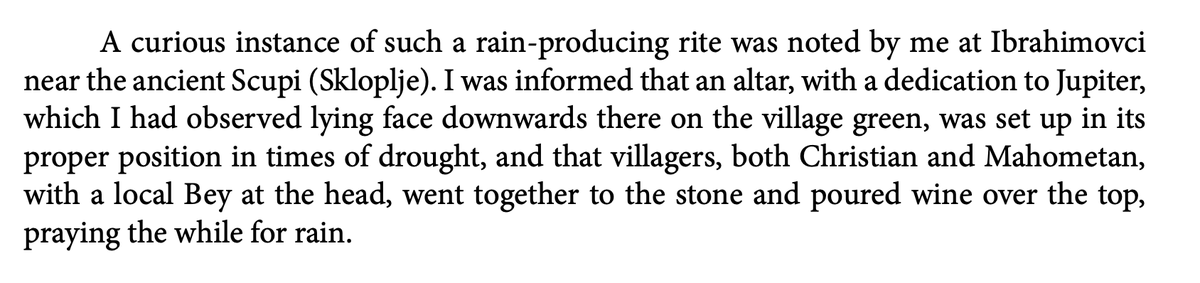

This is 1925 we are talking about. At least 1500 years since Jupiter was officially a god of rain...And yet, uneducated, illiterate SLAVIC villagers in Macedonia still remembered him in times of desperation...
What is very interesting is that this altar "was lying face down normally but was lifted when the rain was needed".
Compare this with this Slavic rain making ritual from Belarus in which Dabog's stone is ceremonially lifted (and water is poured on it 🙂) oldeuropeanculture.blogspot.com/2018/03/the-la…
Compare this with this Slavic rain making ritual from Belarus in which Dabog's stone is ceremonially lifted (and water is poured on it 🙂) oldeuropeanculture.blogspot.com/2018/03/the-la…
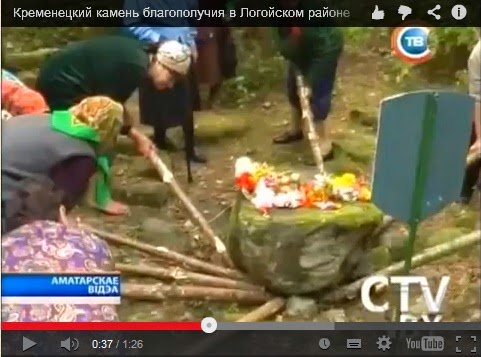
And compare this with other weather controlling Slavic rituals involving "weather stones" oldeuropeanculture.blogspot.com/2019/07/weathe…
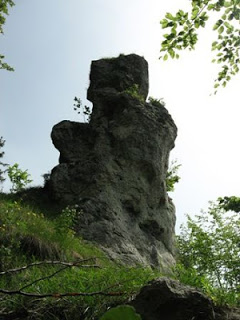
Have a look at this thread too (not yet added to my blog)
https://twitter.com/serbiaireland/status/1415769824492408841
And now compare all this with the Roman "calling the waters" (Latin: aquaelicium) ritual with the "lapis manalis" sacred stone...Interesting, right? It gets better...
This was not the only sacred "lapis manalis" stone Romans played with...There was one more...This one covered the "mundus Cereris" (The world of Ceres), a pit thought to contain an entrance to the underworld...
This "lapis manalis" was removed on August 24, October 5 and November 8 and the pit was opened with the official announcement "mundus patet" ("the mundus is open")...
Its opening offered the spirits of the dead temporary leave from the underworld, to roam lawfully among the living...This is very interesting...You'll see soon why...
Anyway after the pit was opened, offerings were thrown into it for "the underworld deities" and "the agricultural deities", including Ceres the goddess of grain "and guardian of underworld portals"...This is also very interesting...You'll see soon why...
Roman tradition held that the "mundus Cereris" had been dug and sealed by Romulus as part of Rome's foundation...
There are some suggestions that the "mundus Cereris" was the Rome's first storehouse (penus) for seed-grain, which later become the symbolic penus of the Roman state...Which makes sense cause the pit was called "mundus Cereris" (The world of Ceres)...
However, most cities of Latium and Etruria contained a similar pit or ditch...Plutarch suggests that the custom of the "mundus Cereris" was of Etruscan origin...
He compares it to pits dug by Etruscan colonists, containing soil brought from their parent city, and into which they sacrificed the first fruits of the harvest...
Sooo...Here we have two stones with the same name, one used in rain making ritual, the most important agricultural ritual that there is, and the other one used in a thanksgiving agricultural ritual involving "the dead" and grain...
Apparently, grammarian Festus, who worked in the later 2nd century AD, "held the cover to the gate of the underworld and the rainmaking stone to be two distinct stones"....
Possibly...But they were functionally and mythologically definitely related...Except, by the time of Festus, Romans probably had forgotten that fact...Well, not everyone forgot the link between the dead, the grain, the stones and the rain...Check this:
https://twitter.com/serbiaireland/status/1225450181254156289
This is why Bosnian Muslim Slavs would during droughts throw stones in the air making sure they fall in a river. The reason why a stone was thrown up in the air was "to bring the thirsty souls down from the clouds"...

Slavs believed that stones can capture the spirits of deceased...
https://twitter.com/serbiaireland/status/1304358713134854145
Hence why Romans also believed that their "lapis manalis" stone would keep the souls of their "blessed dead" inside the "mundus Cereris"...
This belief in thirsty ancestors most likely originates in Neolithic...In this thread I talk about the possibility that vessels placed in graves since Neolithic were not left there empty, but originally contained drink for the thirsty dead...
https://twitter.com/serbiaireland/status/1309500188604747777
We find the same belief among the Hittites, who blamed the effects of the climate change which eventually led to the collapse of the Bronze Age empires around Mediterranean, on themselves. Because they have forgotten to honour their ancestors. Check this: oldeuropeanculture.blogspot.com/2020/05/house-…
BTW, Slavs didn't just believe that the ancestors controlled only rain. They firmly believed that it was their ancestors who were the source of all the good and all the bad in their lives. And particularly grain...
https://twitter.com/serbiaireland/status/1396084211501740032
So...Back to Romans and their sacred "lapis manalis" stones. Were they named the same because they were both linked with the worship of the ancestors? Doesn't "lapis manalis" mean "Manes (blessed dead) stone"?
Was the water poured on the rain making "lapis manalis" during the rain making ceremony, because it contained "thirsty souls of the ancestors"?
You know, Manes, the blessed dead, who lived in the pit covered with the other "lapis manalis"...The pit which Romans opened so they can sacrifice to "the underworld deities" and "the agricultural deities"...
The pit which could have originally been the grain seed store...Thankfully, Slavs still remembered who to blame for the drought, and who to thank for rain and grain until recently: the ancestors...So we can now understand these ancient "obscure" Roman rituals a bit better...
Oh, forgot. Slavs also prayed to and sacrificed to Dabog. Don't forget Dabog, The Giving god. Dabog, The Sky god, Sun and Rain god, to whom Slavs prayed for just enough rain and sunshine, so their grain fields would yield plenty of grain...
Also Dabog, the god of the dead...Whom Serbs considered their ancestral deity, the first, original ancestor...And whom other Slavs knew as "Djed" (Grandfather)...So we are still in the realm of the ancestor cult... oldeuropeanculture.blogspot.com/2019/05/day-st…
So there you have it...
Finally, have a look at this:
Food for thought...
Which reminds me. Got to go make dinner...
Finally, have a look at this:
https://twitter.com/serbiaireland/status/1256957351468453889
Food for thought...
Which reminds me. Got to go make dinner...
• • •
Missing some Tweet in this thread? You can try to
force a refresh