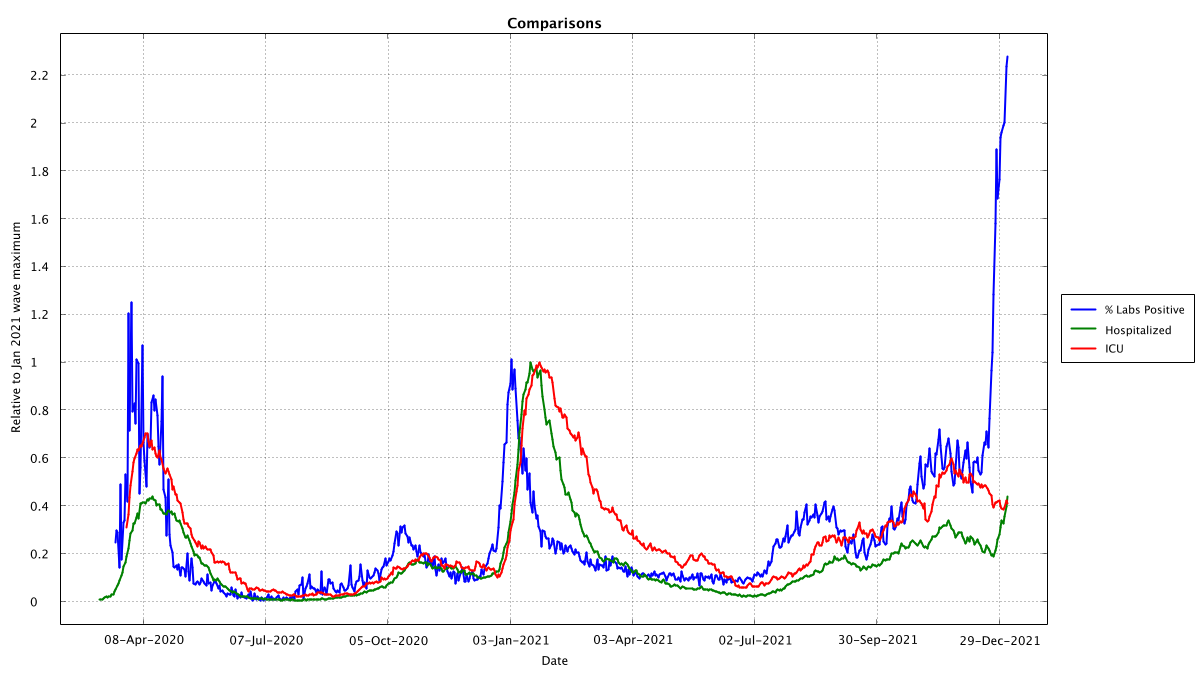
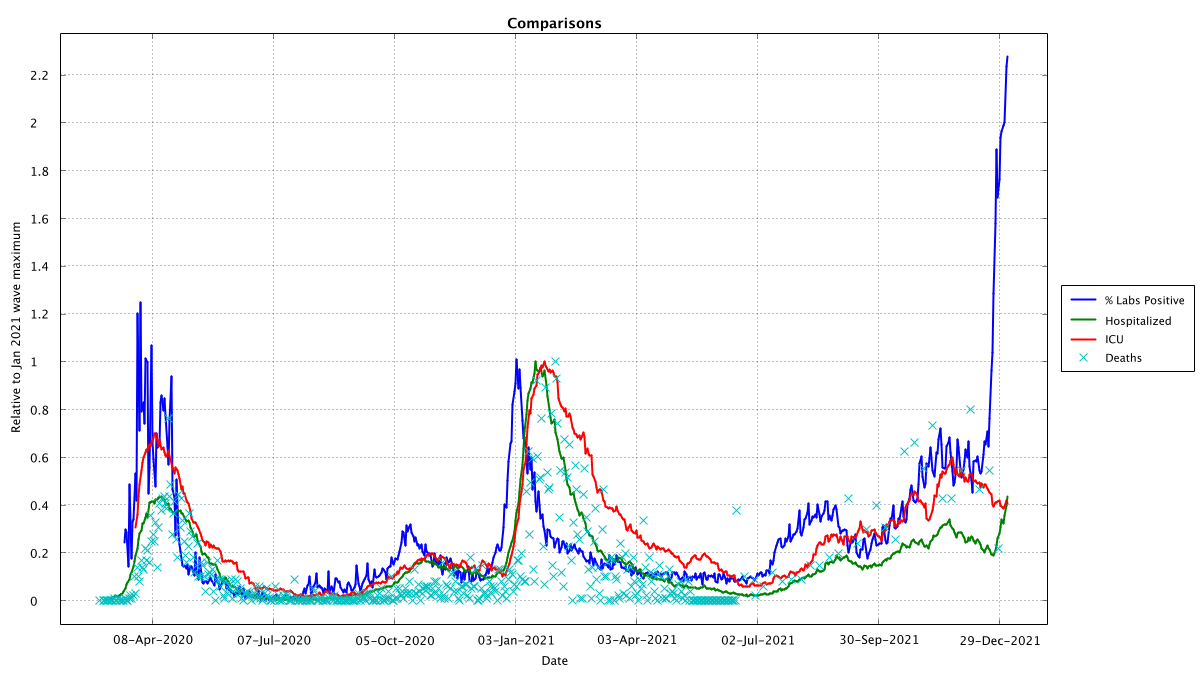
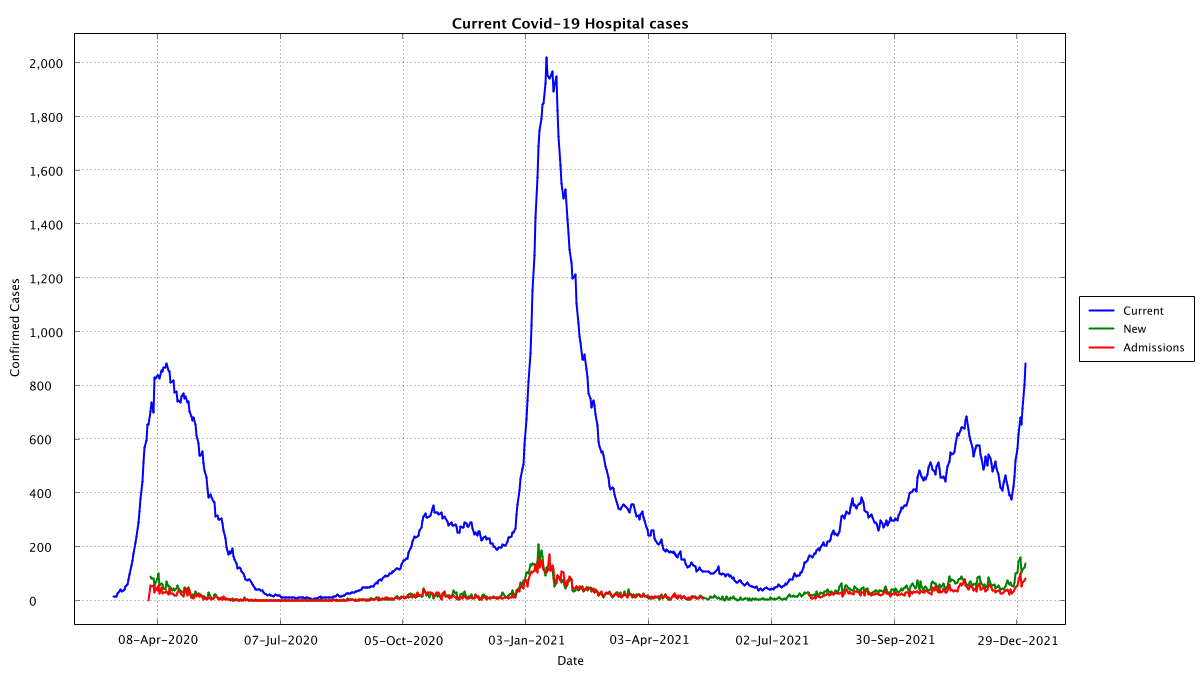
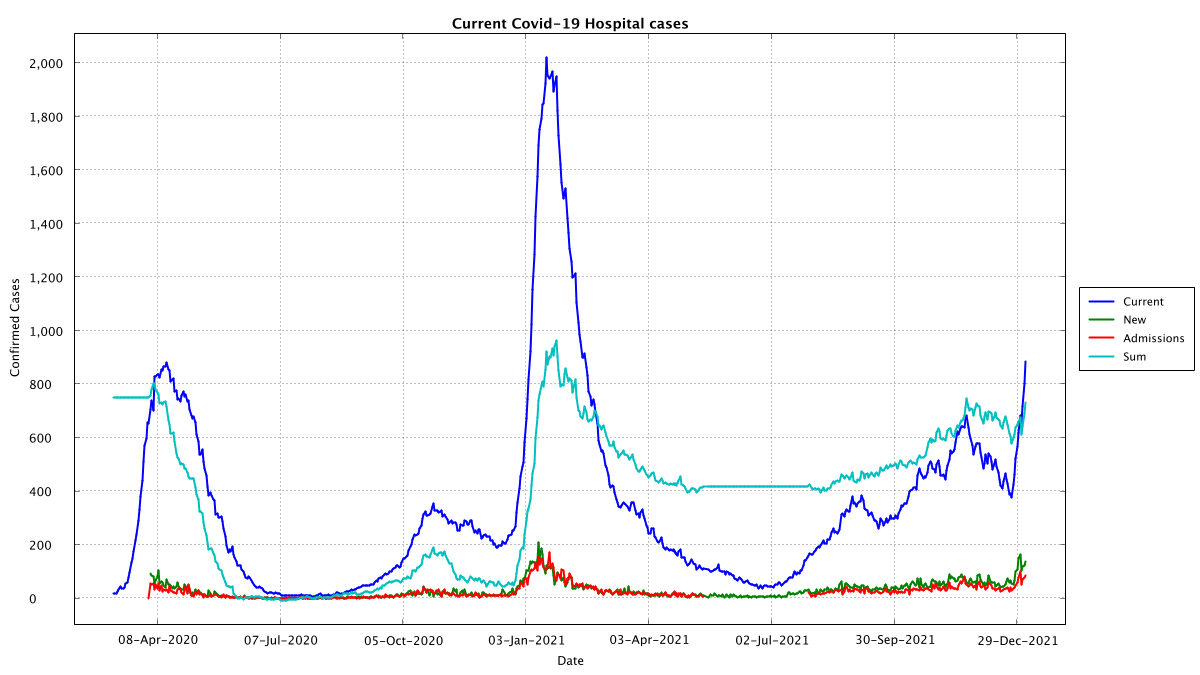
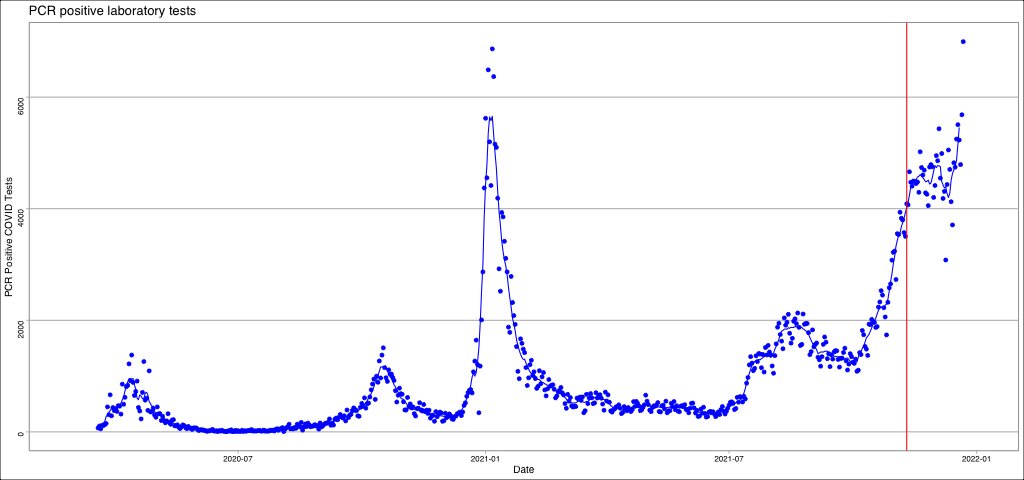
Here's animation of all the irish data since the start. The deaths have a minimum Gaussian smoothing of 5 days to correct for the now weekly reporting of deaths since July in case you were wondering why the light blue line starts smooth
Here's the graph with a Gaussian weighted smoothing of 3 days (deaths using 5 days):
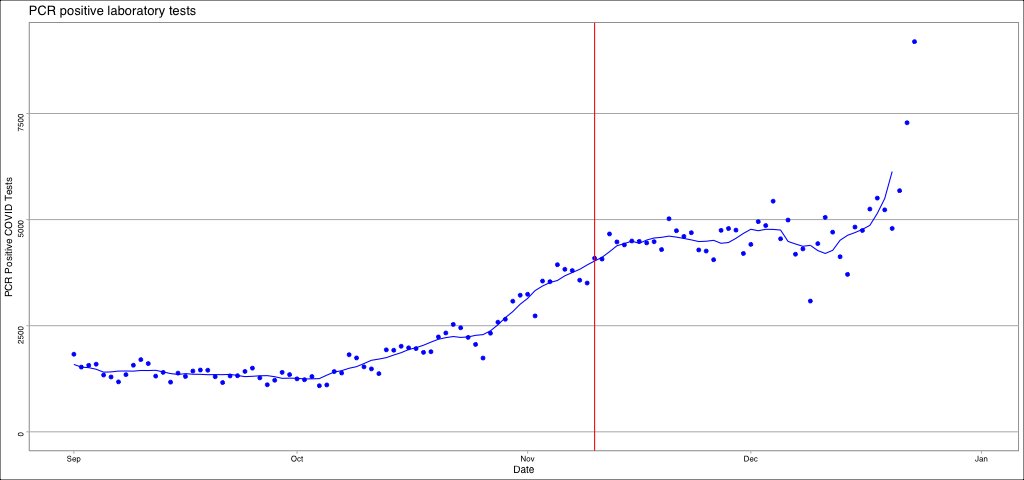
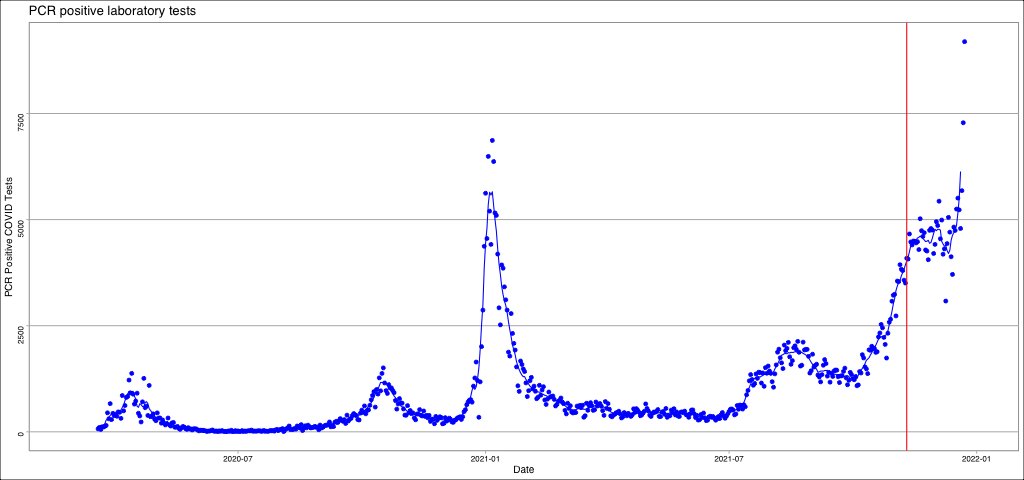
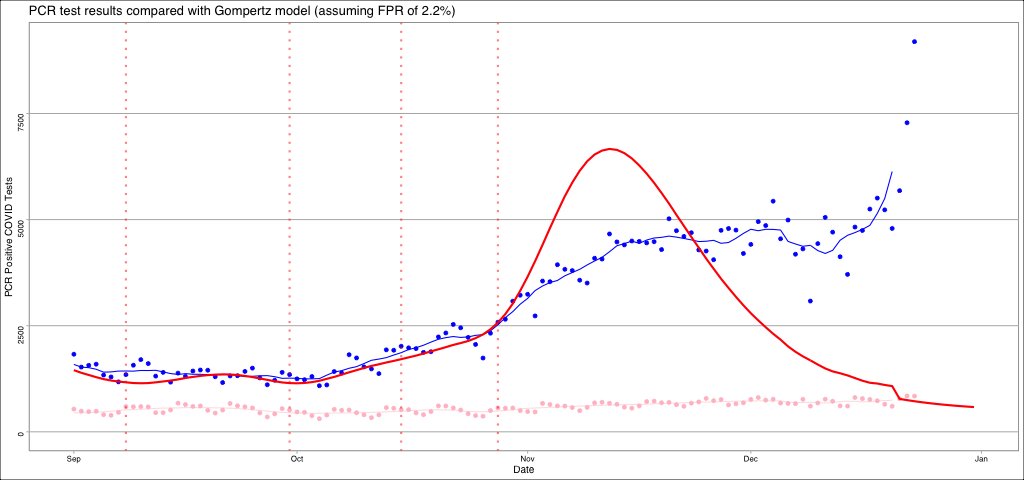
* After each wave, we seem to have a raise in the baseline for PCR tests, e.g. in 2020 the baseline was close to 0 (on this scale), in 2021 until July it was 0.1, after july maybe 0.2
* After each wave, we seem to have a raise in the baseline for PCR tests, e.g. in 2020 the baseline was close to 0 (on this scale), in 2021 until July it was 0.1, after july maybe 0.2
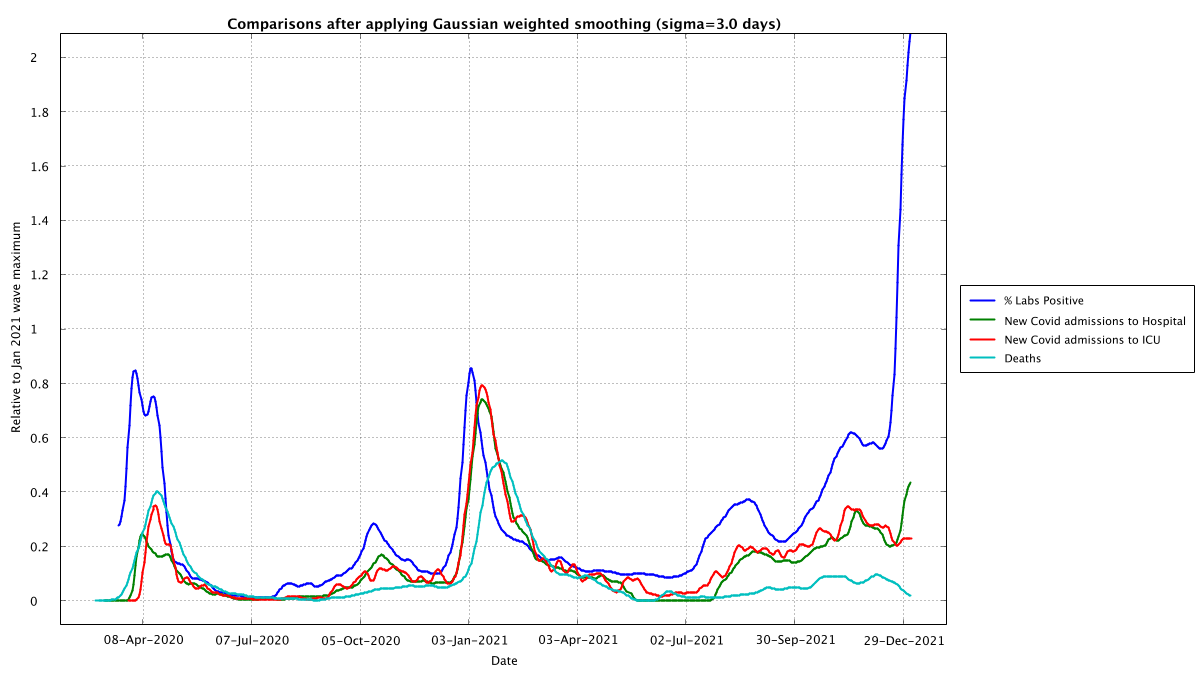
* If we assume the baseline has changed then hospital and ICU admissions seem to mirror PCT testing positivity exactly, with just an approximate 9 day lag.
* Deaths for the first wave were at a similar level to hospital/ICU admissions. For the Jan 21 wave they were half. Now they seem to be even lower again.
* This would seem to be a good thing. The root causes are harder to unpick:
- vaccine?
- better treatment?
- more testing?
* This would seem to be a good thing. The root causes are harder to unpick:
- vaccine?
- better treatment?
- more testing?
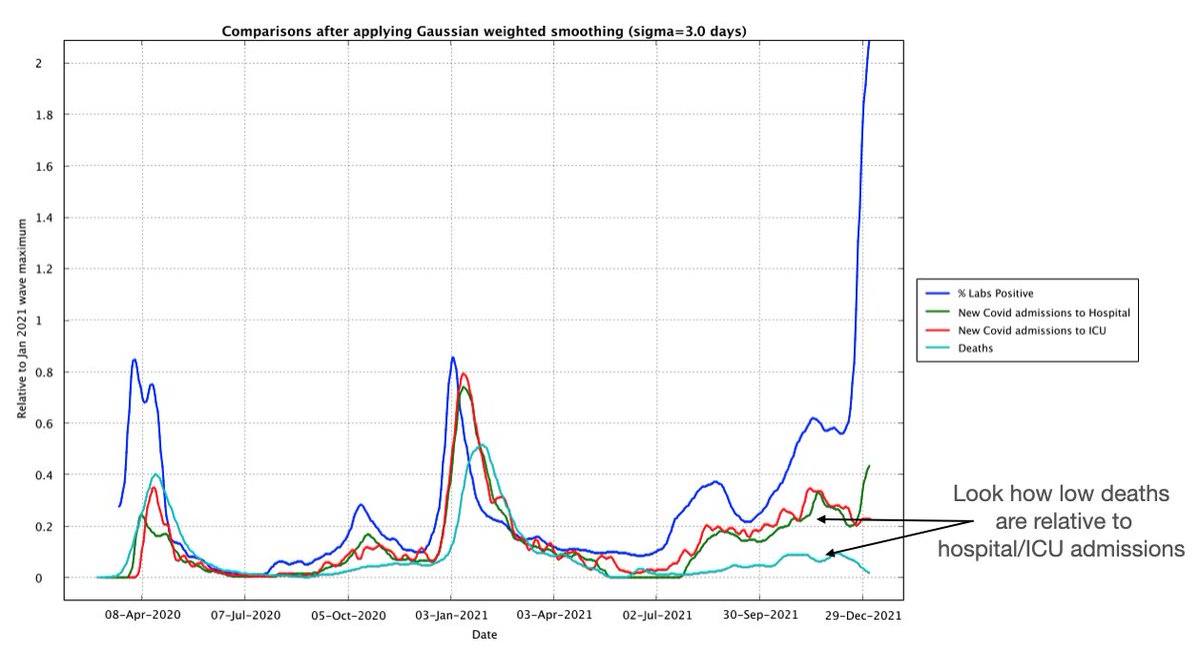
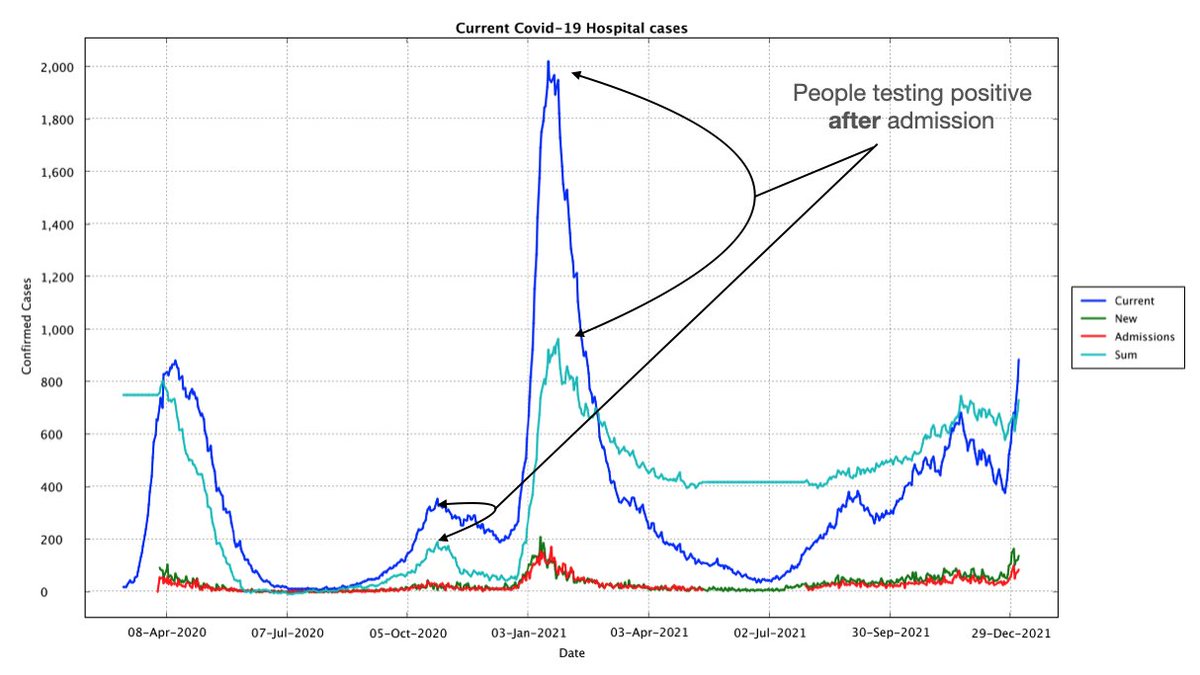
* For the very first wave, we were not testing as many people so there would be expected to be fewer people admitted where their covid status was already known. Now we are testing lots and lots, so a lot more would be expected to be admitted with covid (as distinct to from covid)
* The vaccine is claimed to reduce risks, so that could also explain the lower deaths
* Our medical staff have a lot more experience treating Covid, that has got to have an effect on improving outcomes
In my opinion, it's probably a mixture of effects, but it's good news anyway!
* Our medical staff have a lot more experience treating Covid, that has got to have an effect on improving outcomes
In my opinion, it's probably a mixture of effects, but it's good news anyway!
What does all this mean for Ireland?
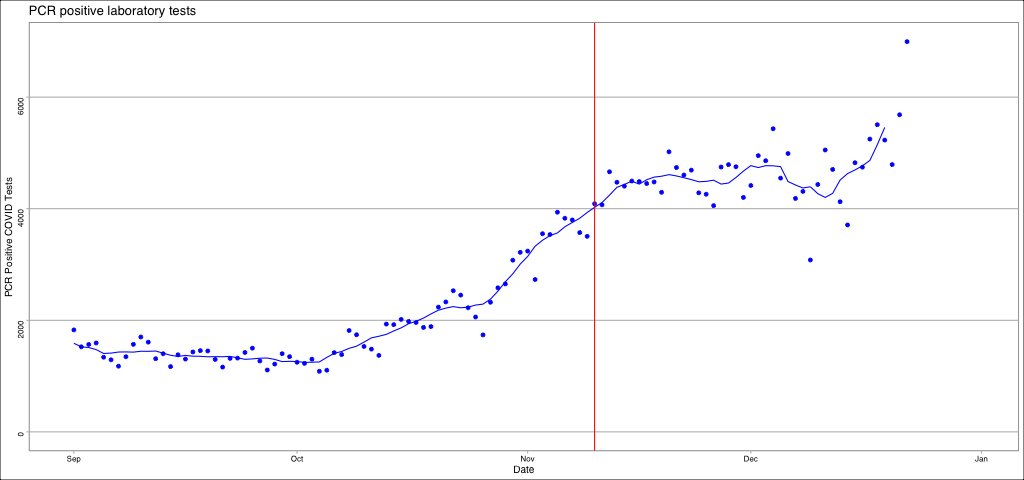
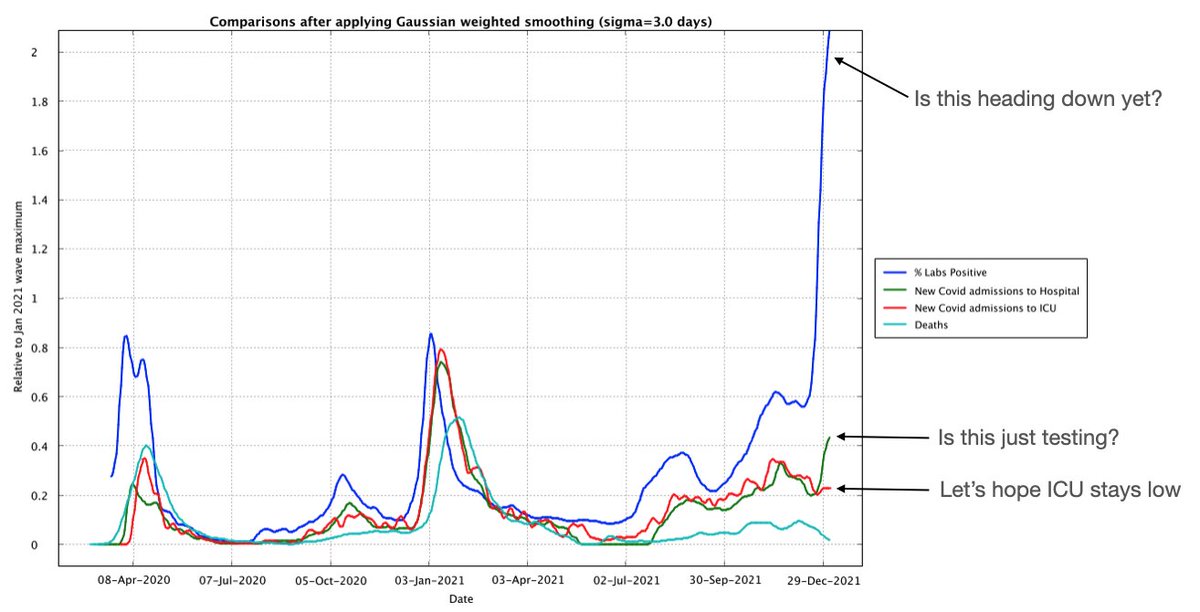
* Well it's unclear if PCR tests have peaked yet
* There may be signs of Hospital Covid admissions rising, but ICU isn't, just a testing side-effect?
* ICU admissions are what lead to deaths, so 🤞 that doesn' trend up
* 🤞 deaths stay low
* Well it's unclear if PCR tests have peaked yet
* There may be signs of Hospital Covid admissions rising, but ICU isn't, just a testing side-effect?
* ICU admissions are what lead to deaths, so 🤞 that doesn' trend up
* 🤞 deaths stay low
@RealEddieHobbs @BBN_Ireland @EwanMacKenna @karldeeter @MLevitt_NP2013 @FatEmperor @USMortality @orwell2022 @rtenews @VirginMediaIE @gavreilly @FergalBowers @griptmedia
@threadreaderapp unroll
@RealEddieHobbs @BBN_Ireland @EwanMacKenna @karldeeter @MLevitt_NP2013 @FatEmperor @USMortality @orwell2022 @rtenews @VirginMediaIE @gavreilly @FergalBowers @griptmedia Ok inspired by a tweet I saw from somebody in Israel, here's the same animation but I have shifted the deaths 23 days and the hospital admissions 9 days. The March 202 wave is not aligning probably because of low test capacity, but most of the other peaks align
Static graph for anyone who wants to look at the sigma=3days case
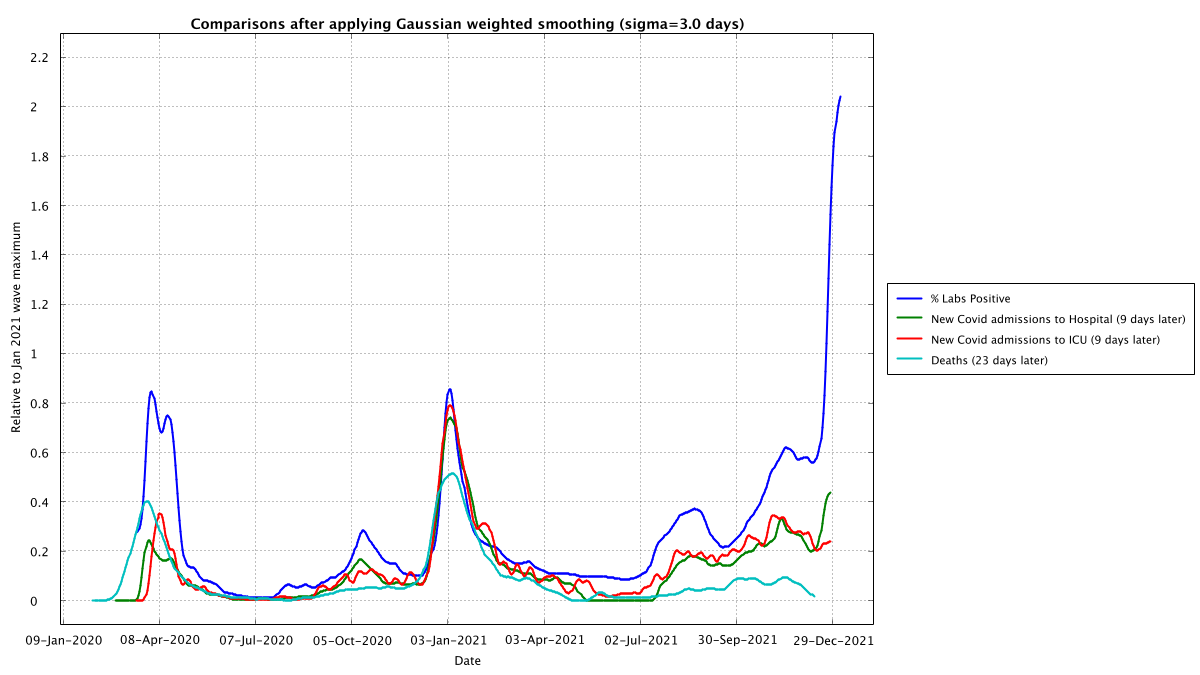
What I like about this is that the peaks are very clearly all the exact same shape and width. Anyone saying there is no relationship needs to craft a very careful explanation and avoid Occam's razor
Having said that, this is need not be a causal relationship, it could just reflect the general population having an incidental infection rate as detected by testing and a certain proportion get admitted to ICU and a certain proportion of those end up dying...
Occam's razor, to my mind though, says that the people who are Covid positive on admission to hospital and go straight to ICU as a Covid admission and then die on the balance of probabilities died from Covid as distinct from with.
Here's the same shifted graph but where I remove the minimum smoothing on deaths... as an animation it works well but for a staic graph you need it to be at least 5 days of a smoothing window
• • •
Missing some Tweet in this thread? You can try to
force a refresh