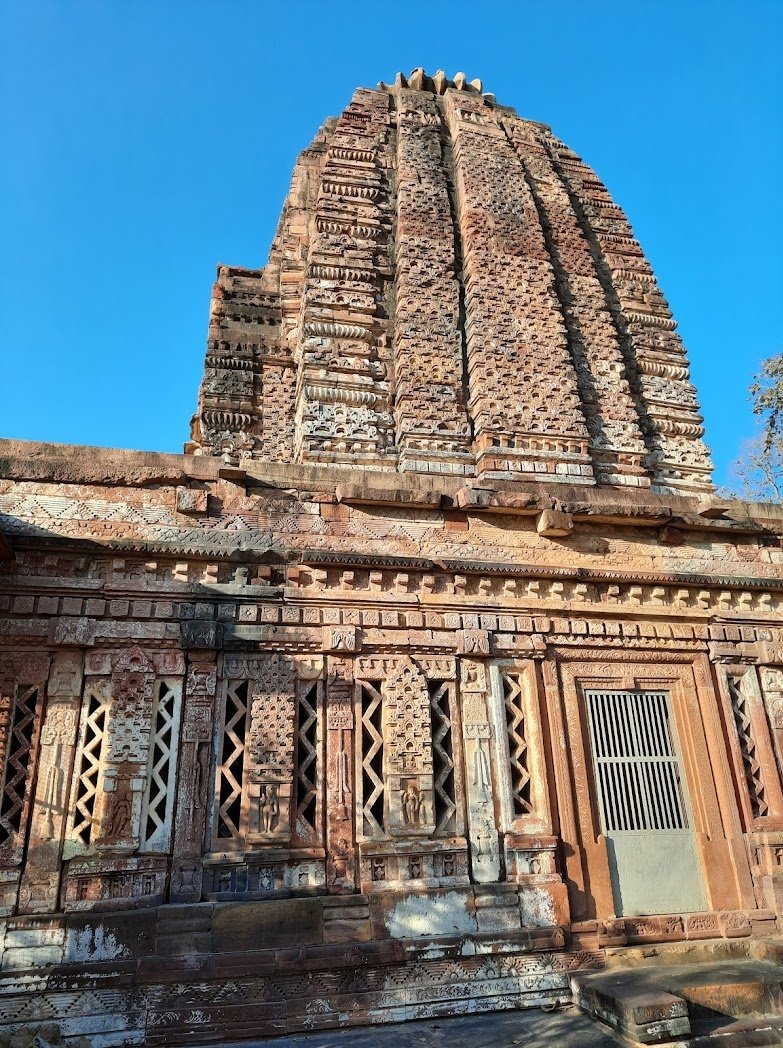
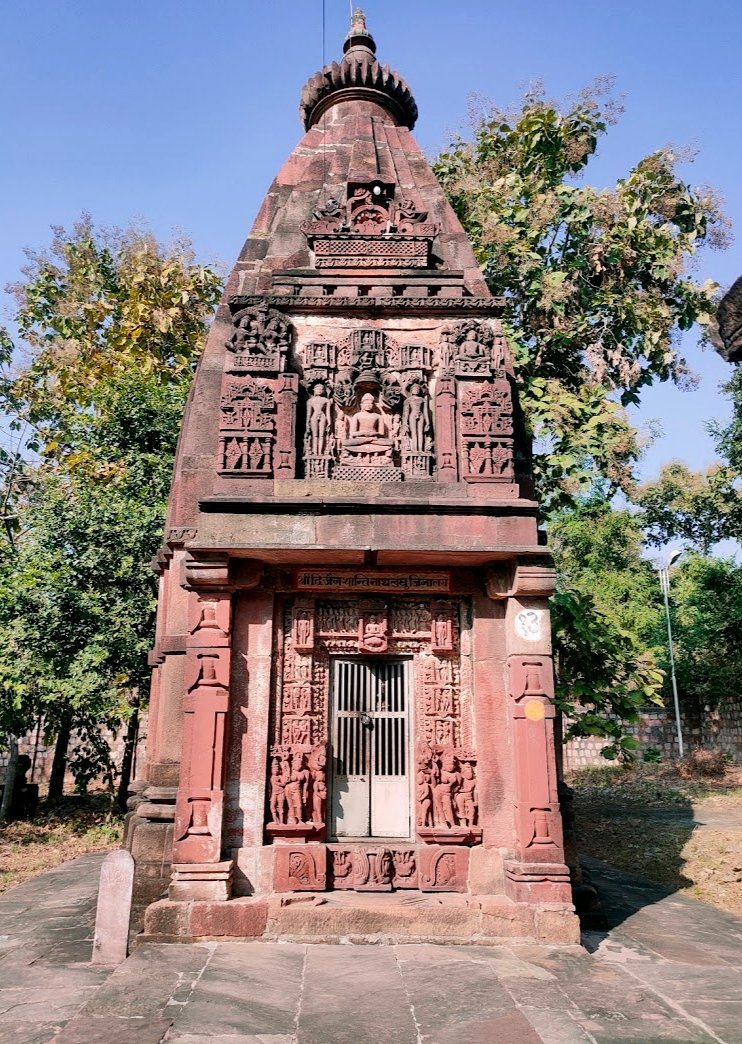
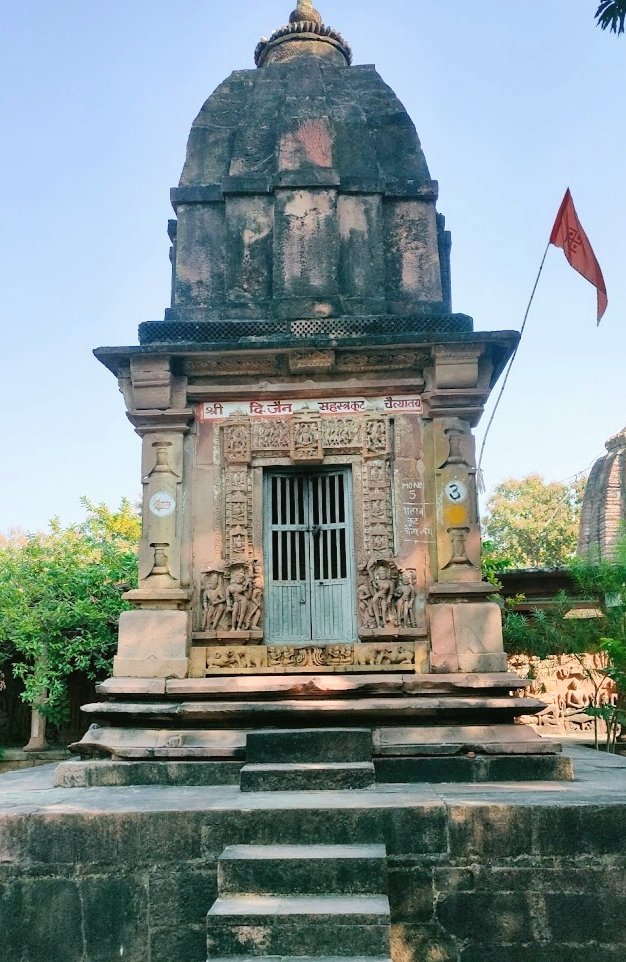
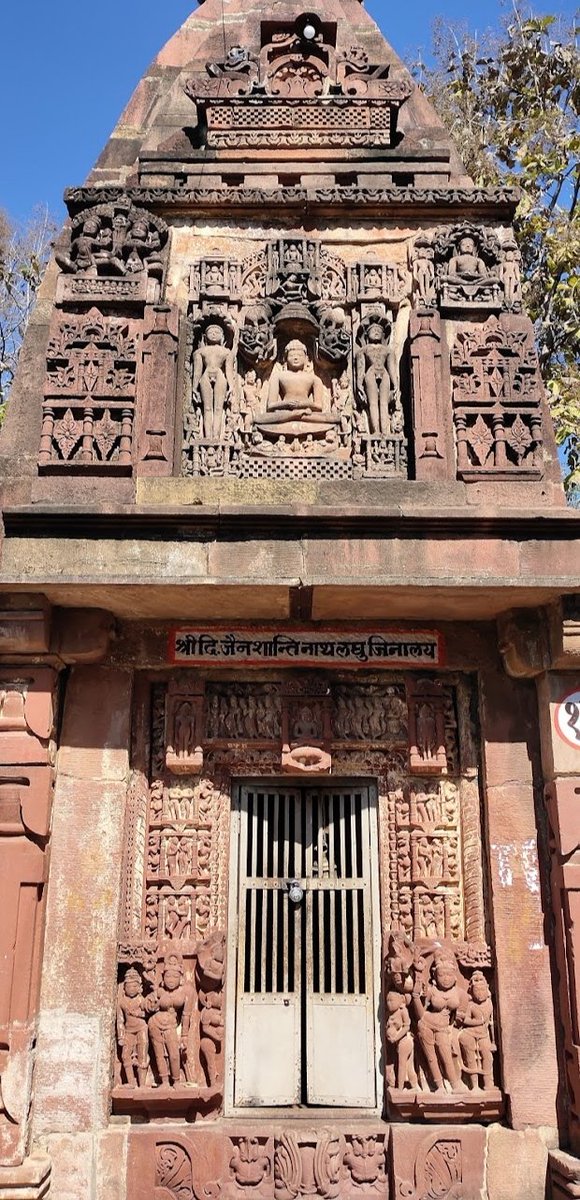
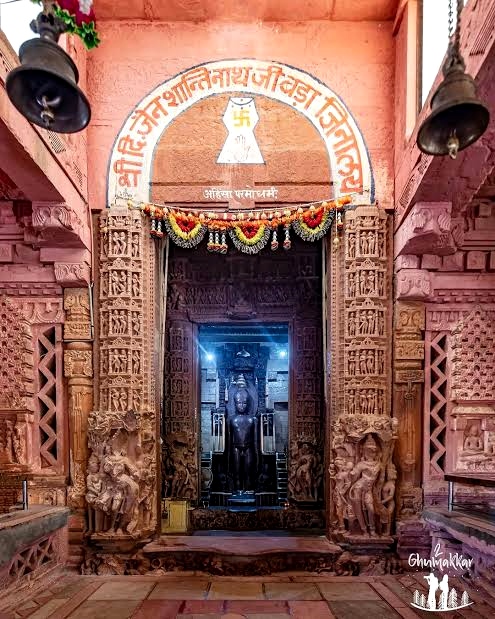
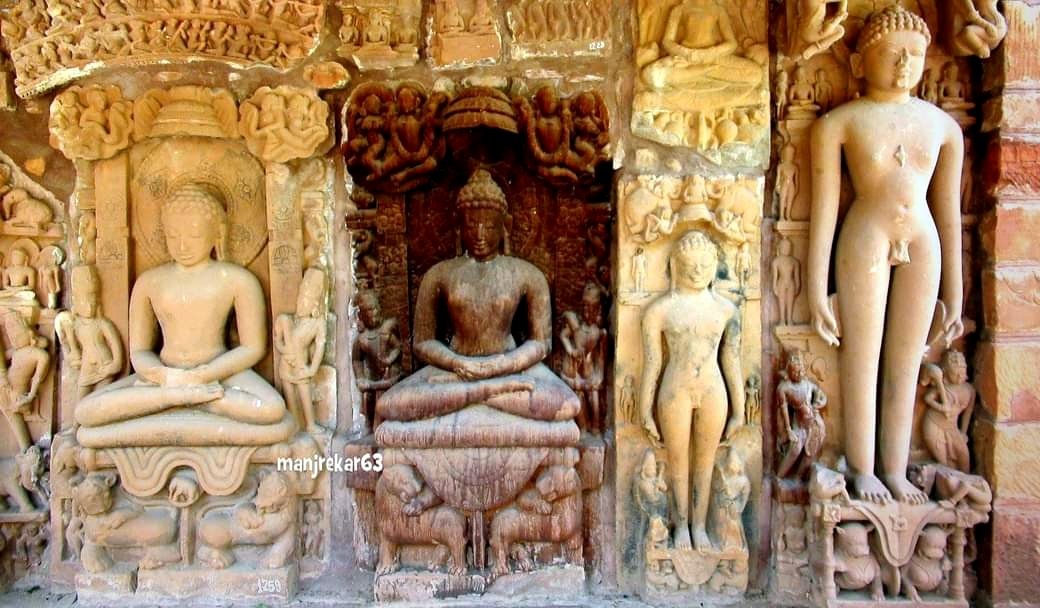
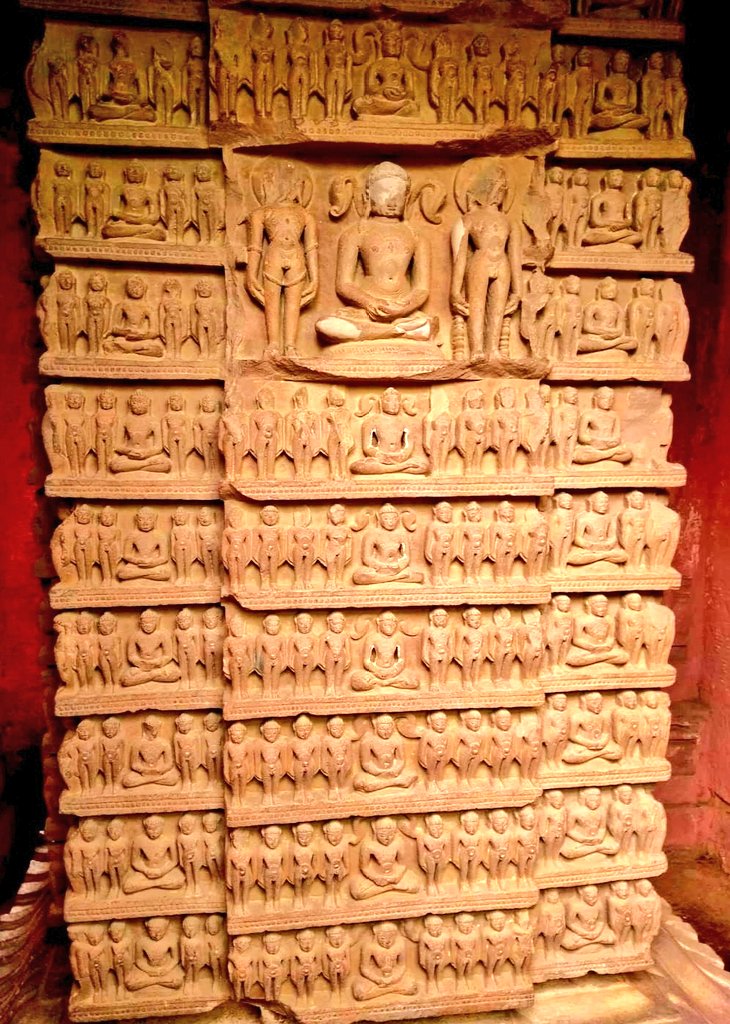
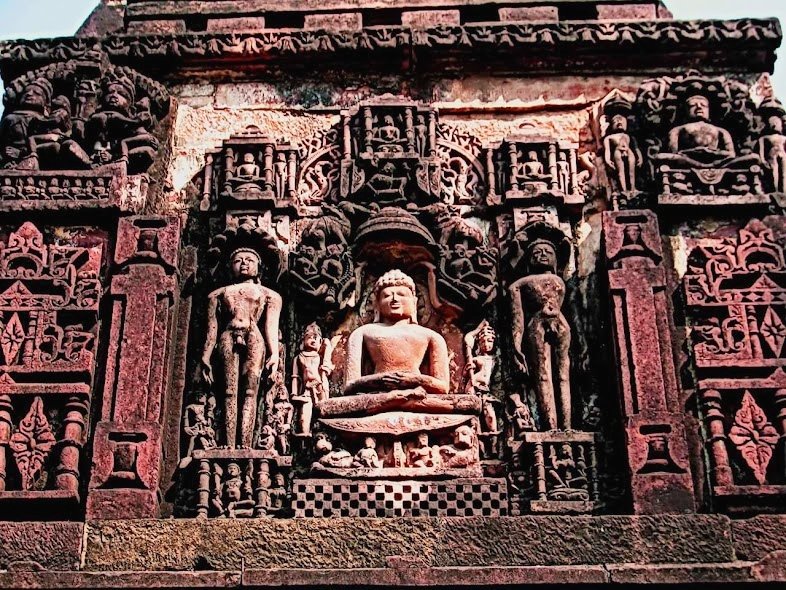
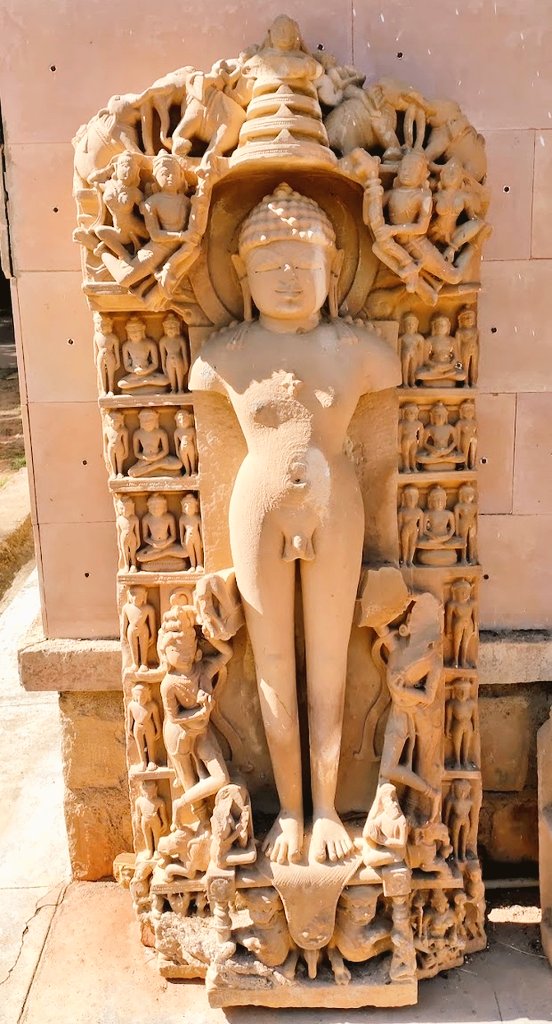
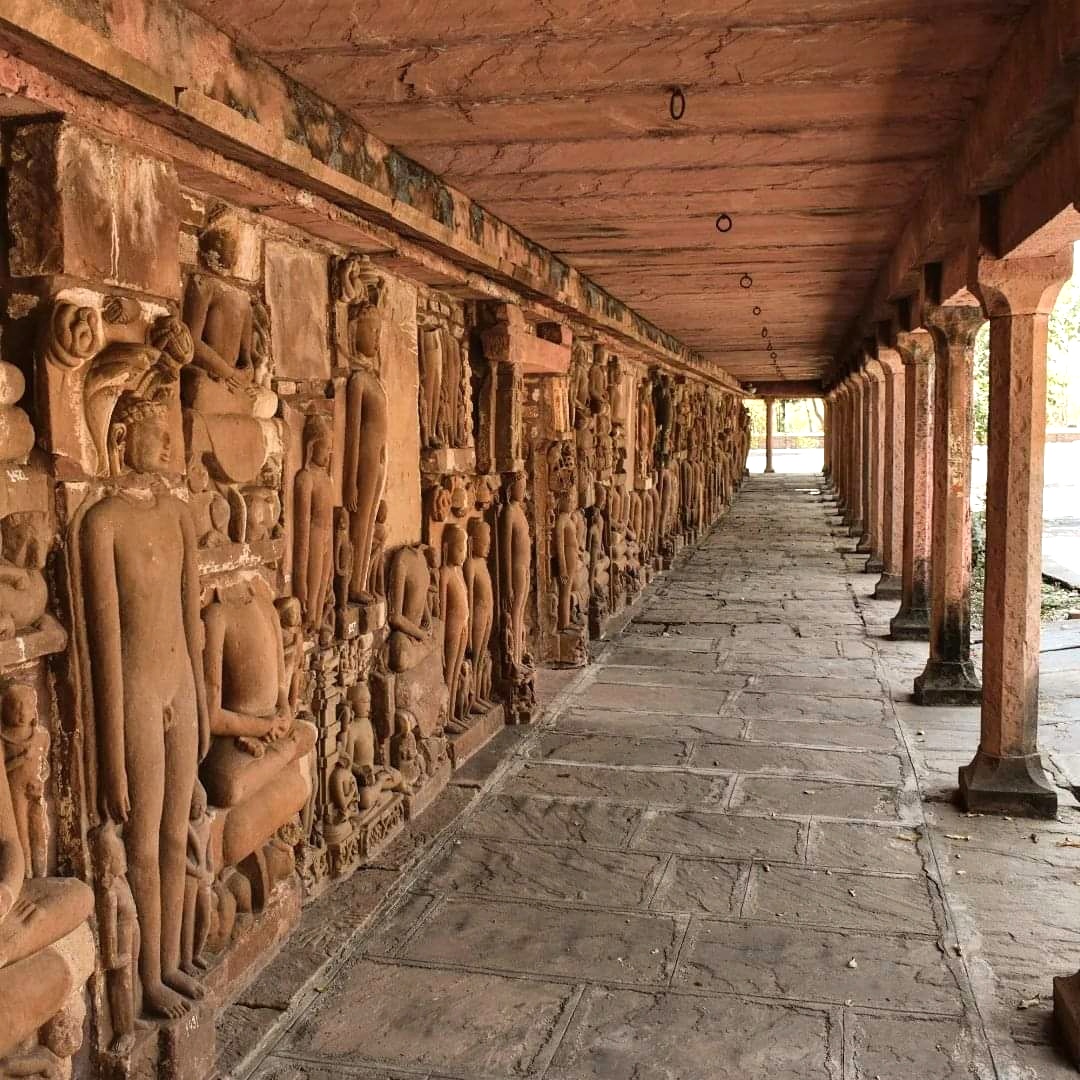
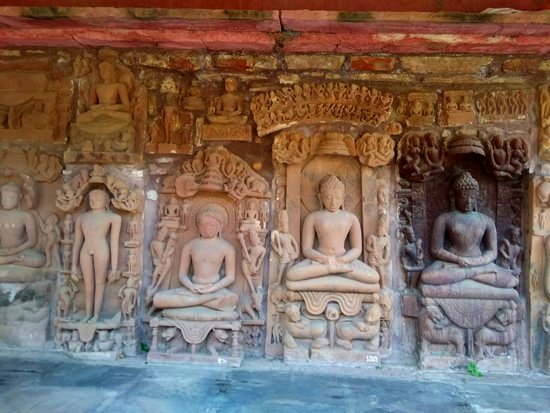
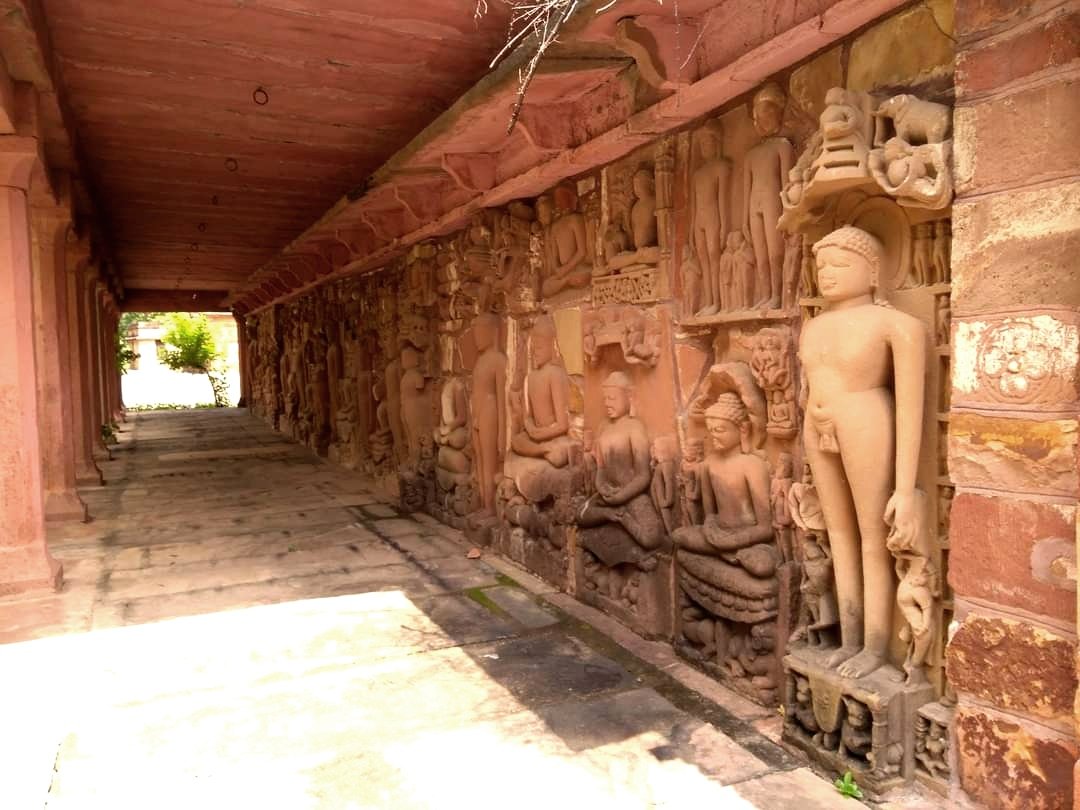
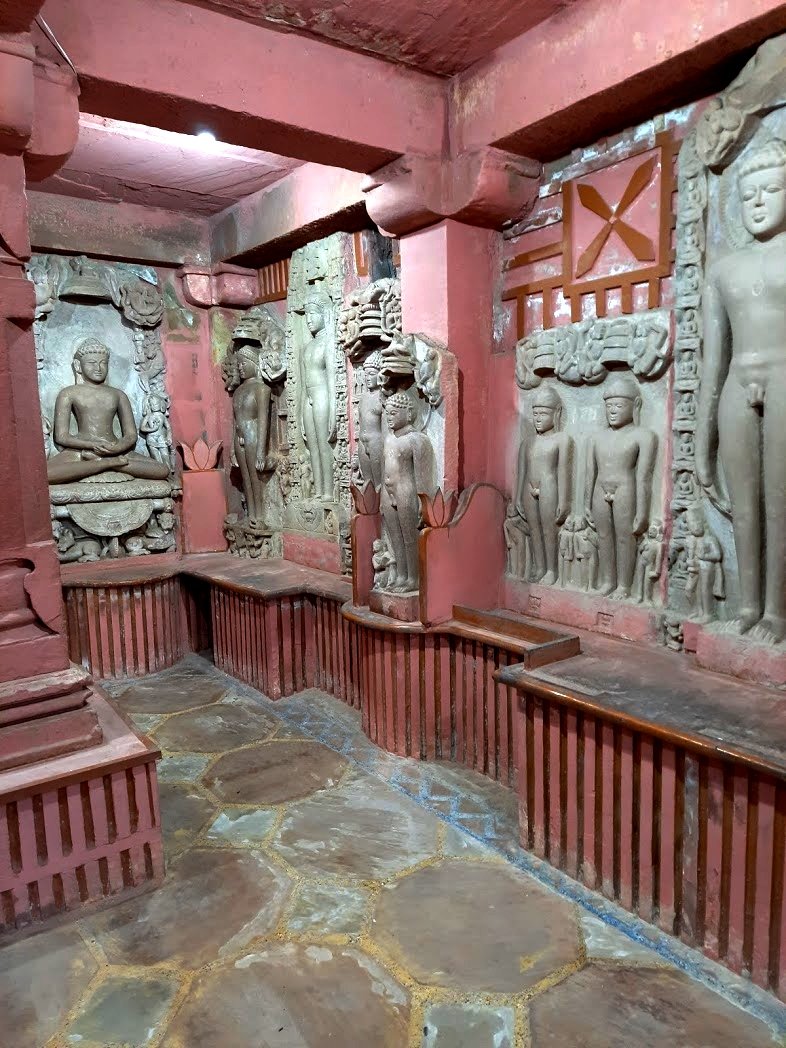
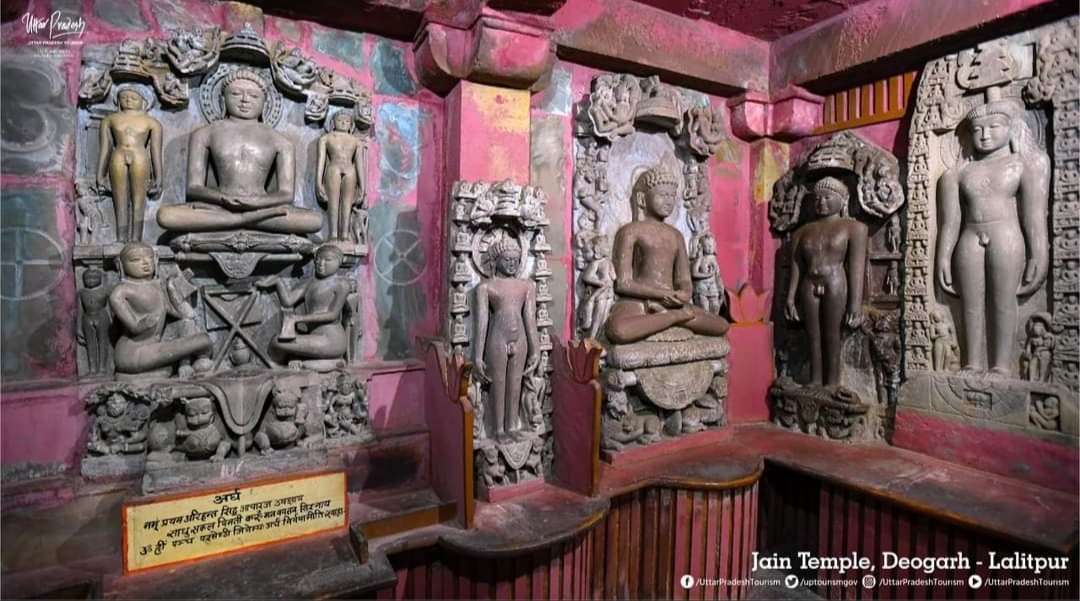
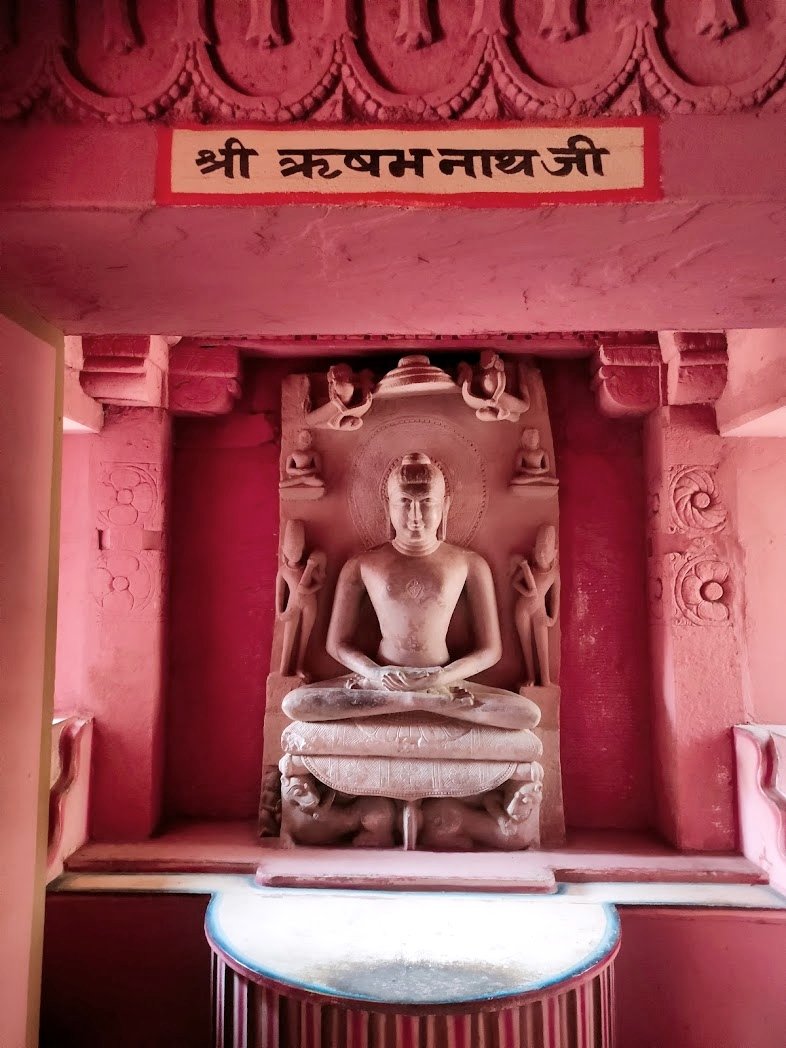
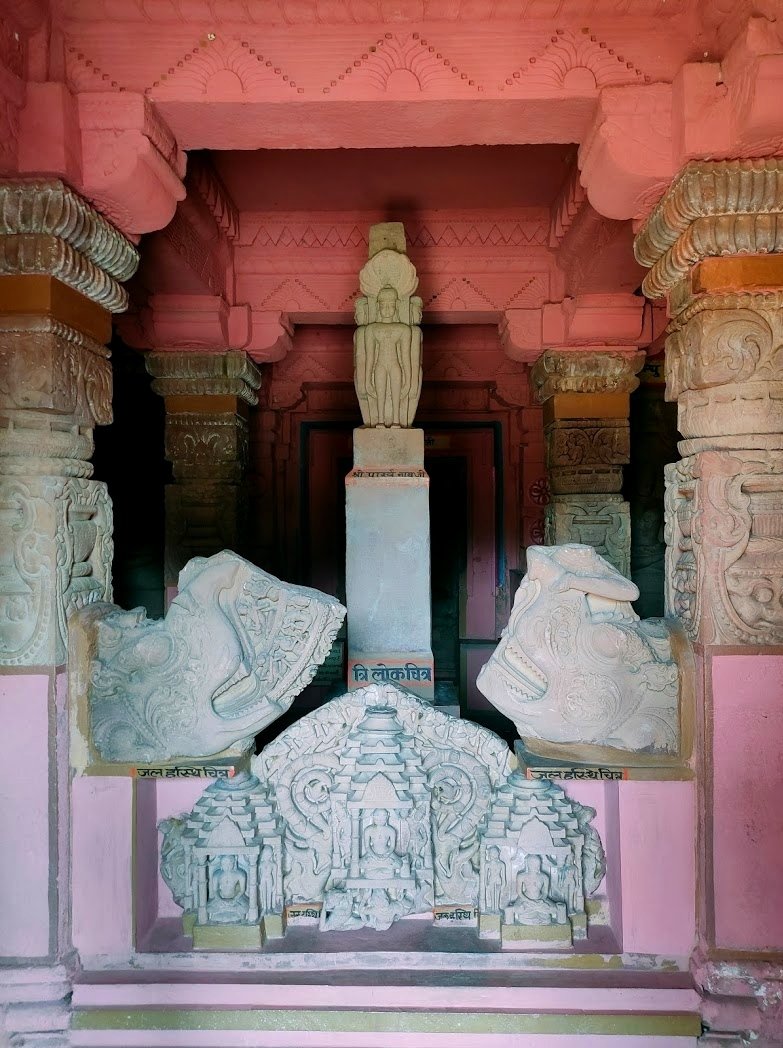
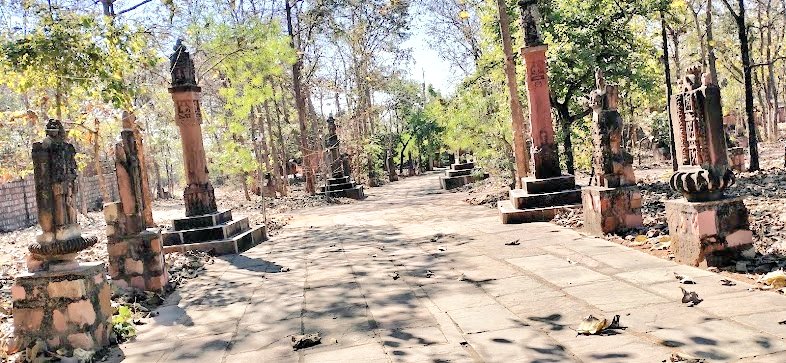
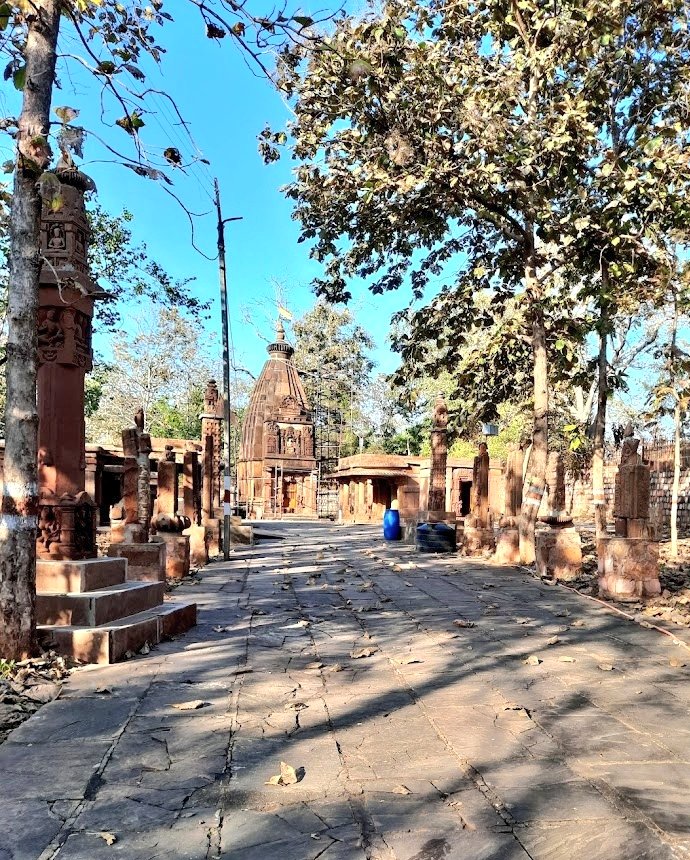
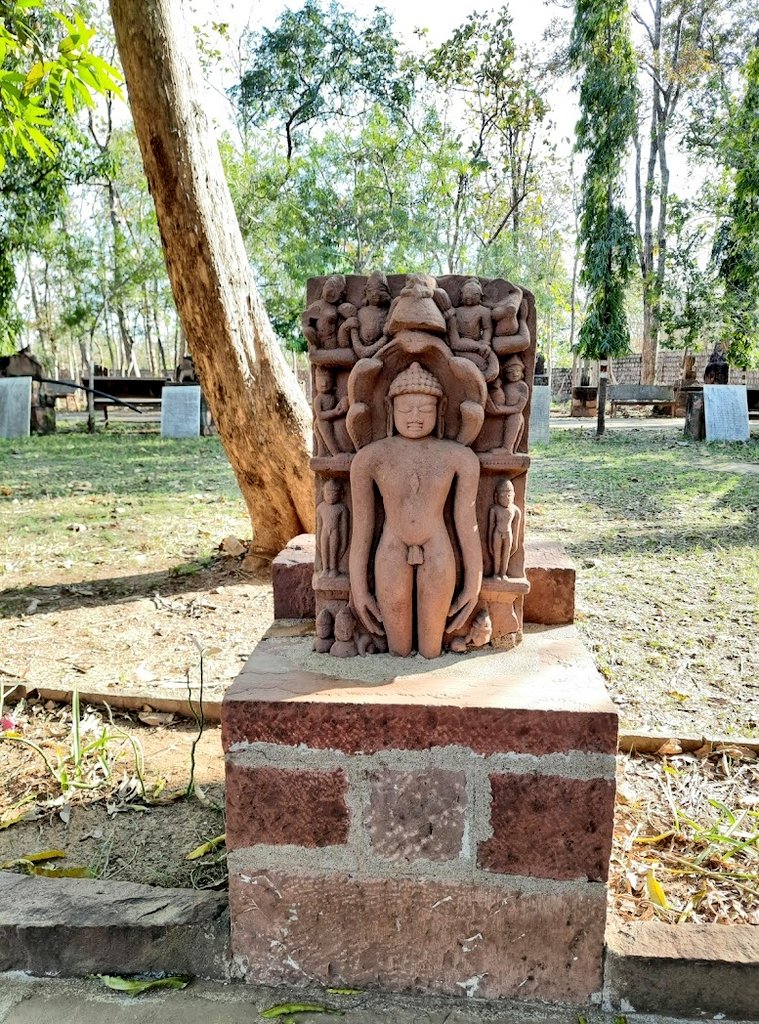
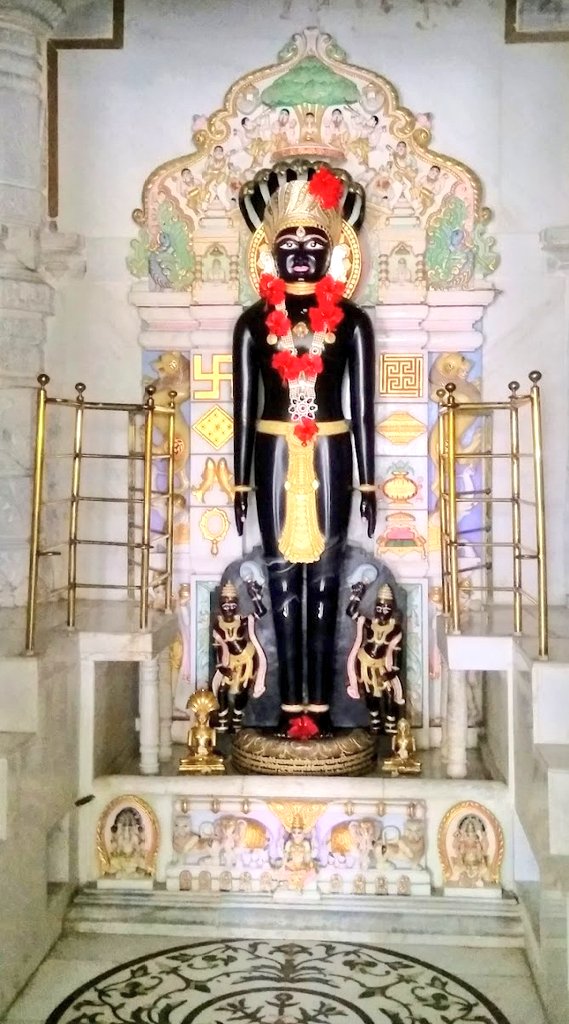
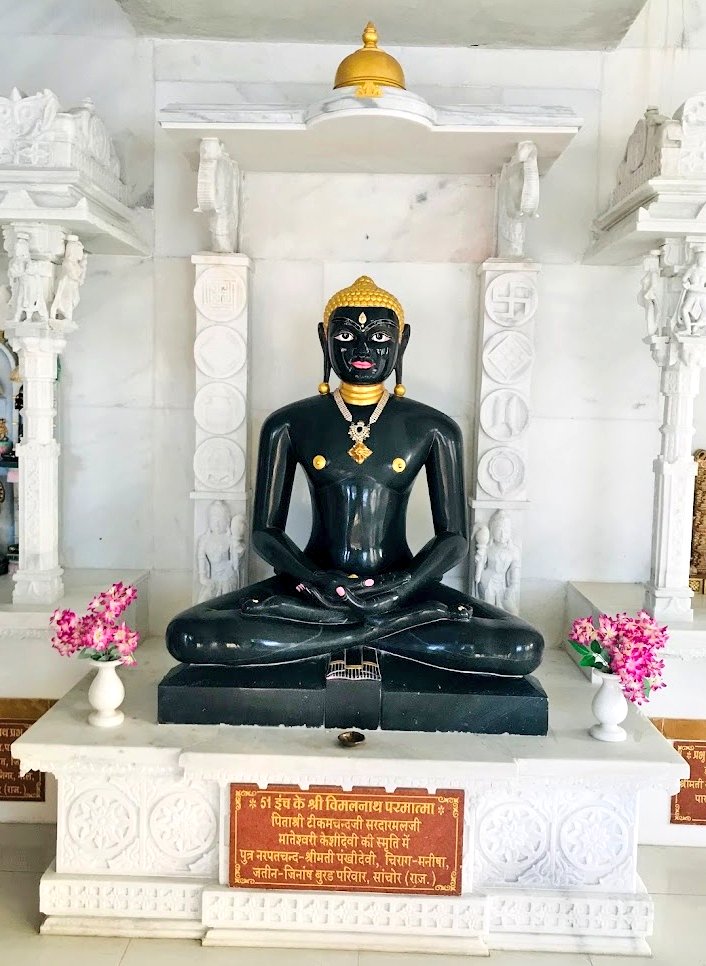
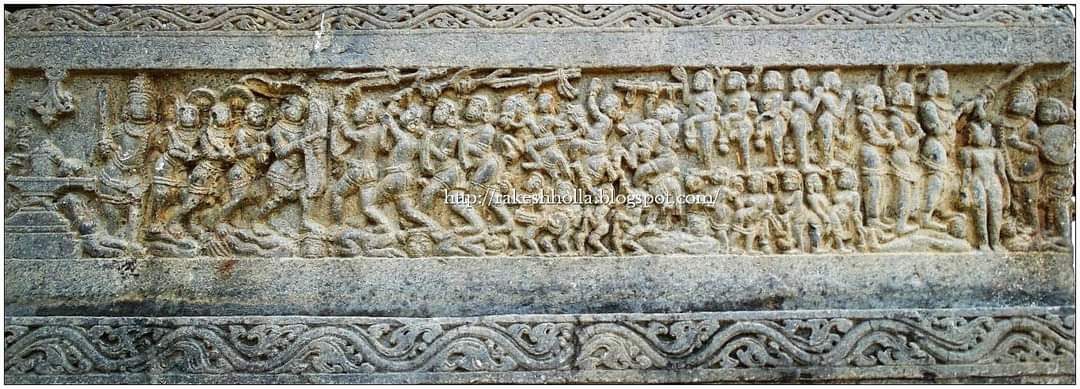
There are 31 Jain temples here, situated inside the Fort of Karnali on the hills. The site was a Jain centre from the 8th to 17th century. It houses about 2000 sculptures, which is the largest such collection in the world!
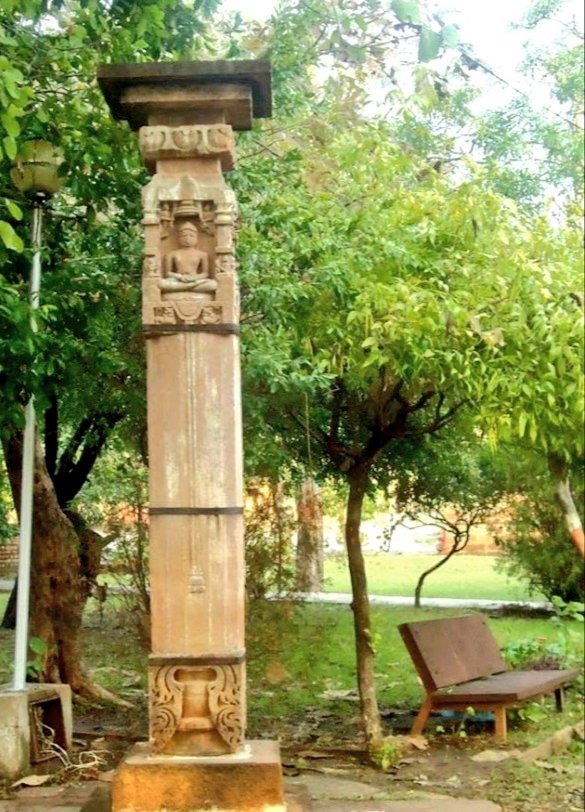
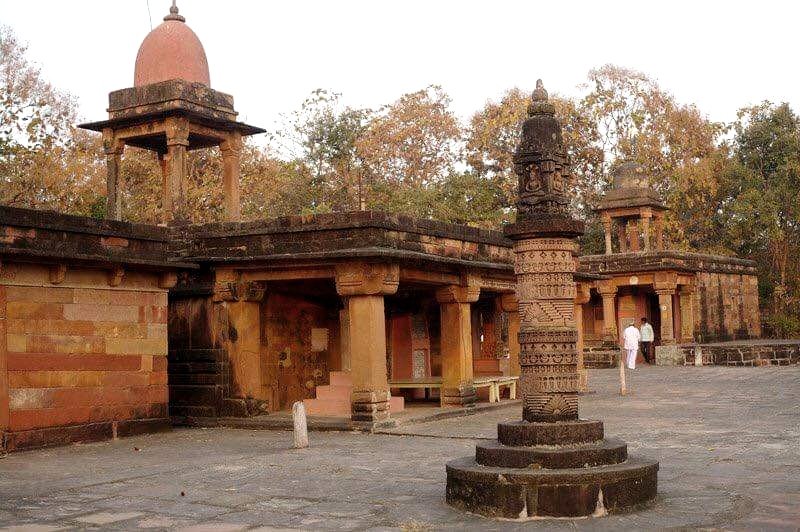
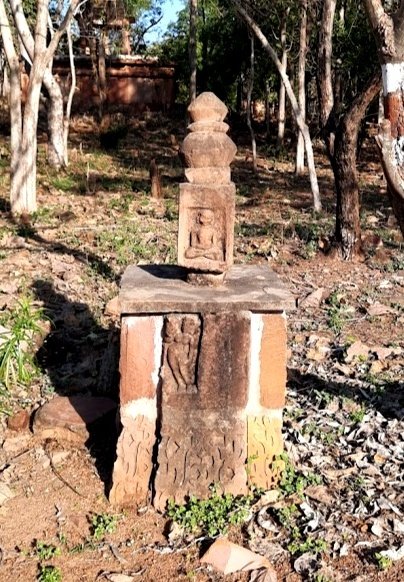
The temples abound in panels depicting scenes from Jain mythology, Tirthankara images, pillars, tablets, Jain images visible from all sides and pillars carved with thousand of Jain figures. A beautiful Manastambha depicting 24 Tirthankars and Yaksh/Yakshini is noteworthy (2)
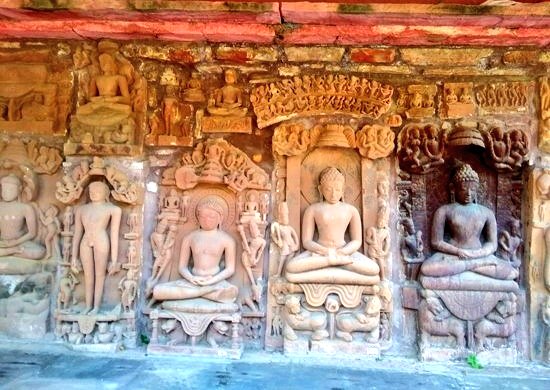
Thousands of sculptures are seen embedded in the walls surrounding the complex. A large number of idols lying scattered around the fort area. (3)
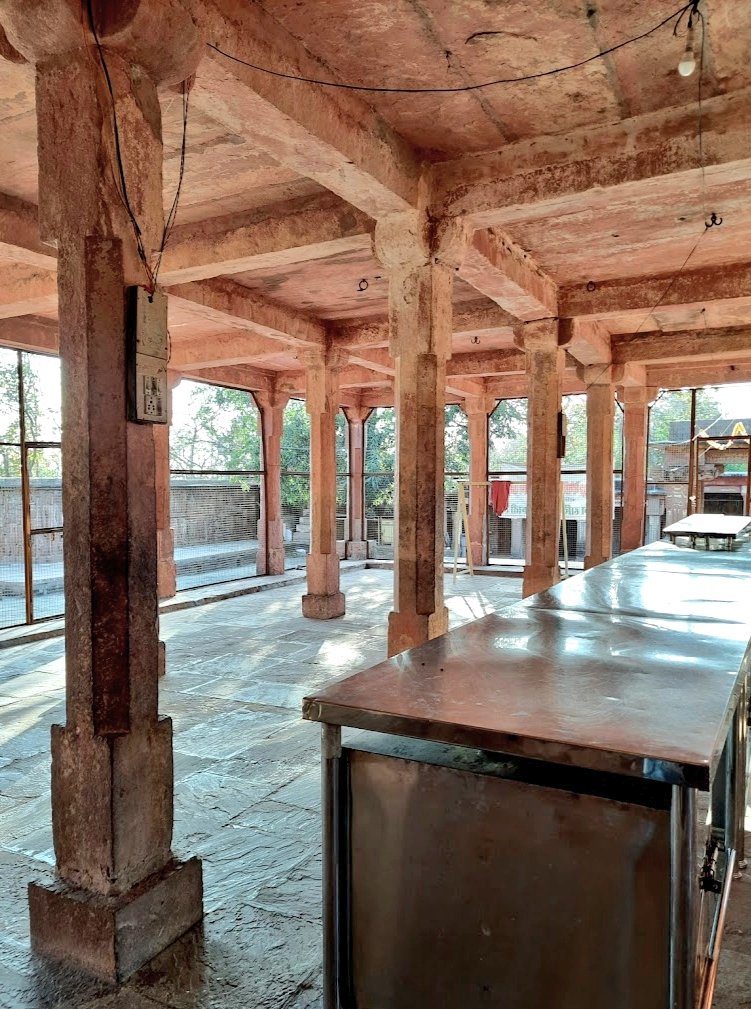
During the Islamic iconoclastic depredations the temples were devastated; this was compounded by the growth of vegetation & neglect of maintenance. The Jain community is managing the temples since 1939 and have done some restoration work. (4)
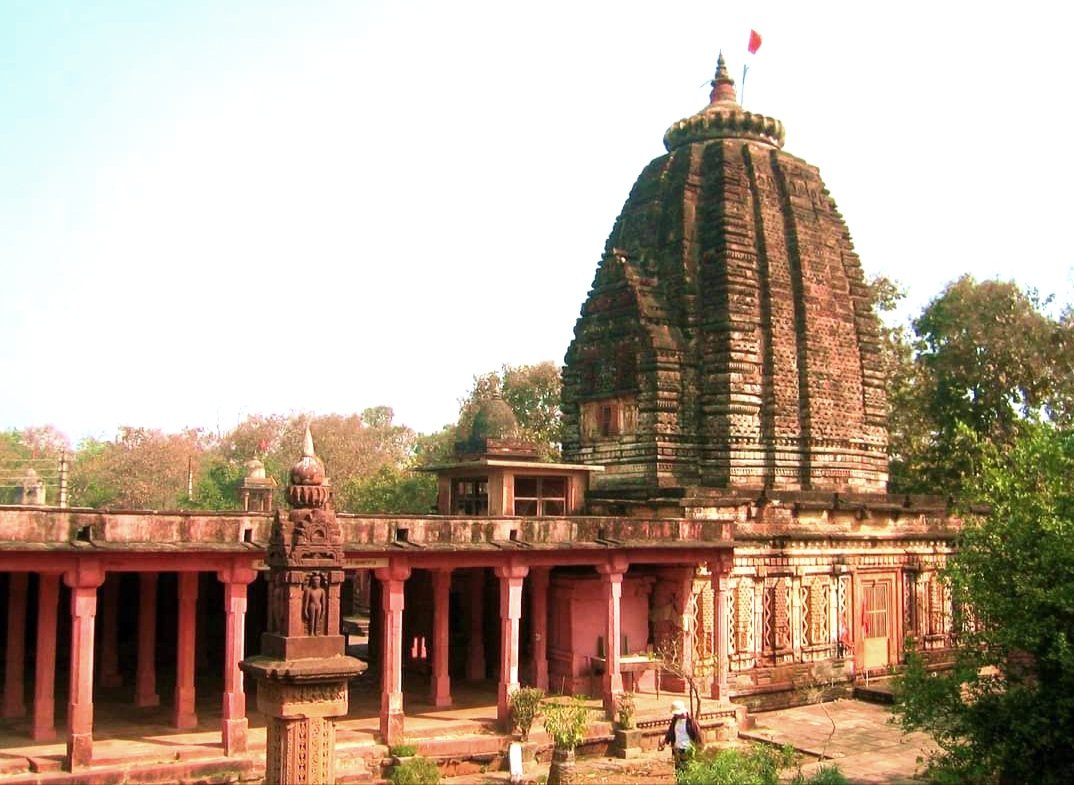
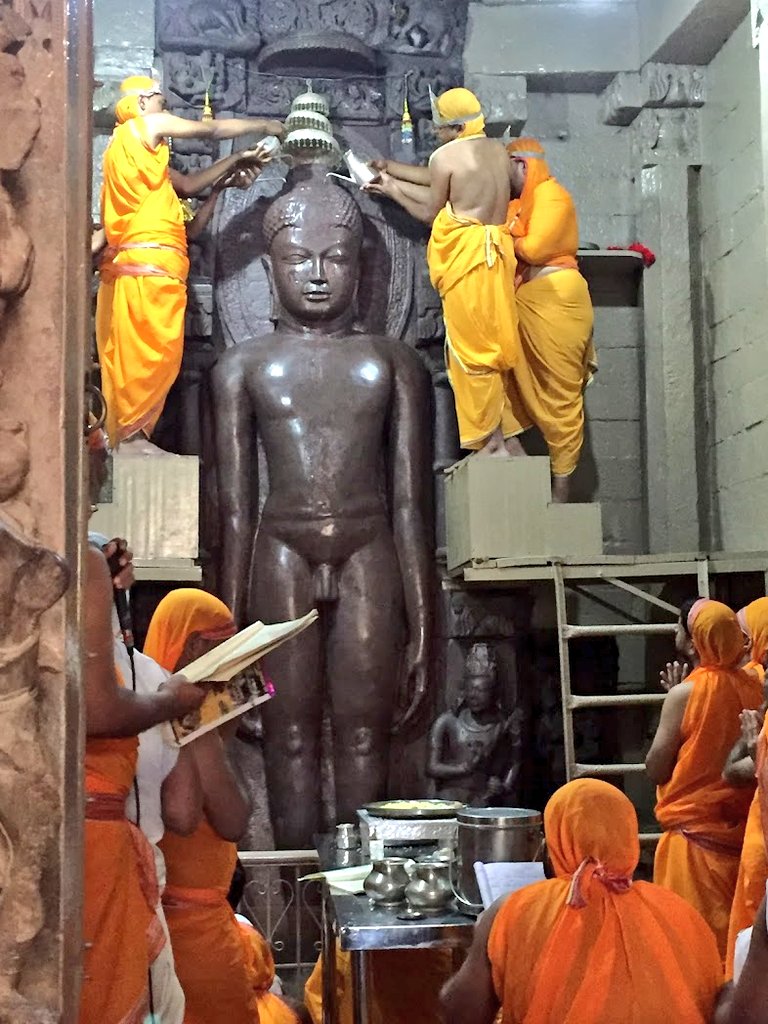
Worship at some of the Jain temples is still held regularly. The most famous of the Jain temples in the fort is the Shantinath Temple, which was built before 862 AD. It is a testament that a prosperous Jain community lived in this region. (5)
The number of images & inscriptions for each temple have been recorded by ASI. These findings testify the political history & early medieval status of Jains. Out of the many sculptures, more than 400 carvings are worthy of recording for their stylistic & iconographic variety (6)
The Jain complex in Deogarh are protected by the Department of Archaeology of the Archaeological Survey of India (ASI), and managed through its Northern Circle Office located in Lucknow. (7)
In 1959, robbers looted several Jain images or even cut off heads of many idols. This resulted in the Jain community of the area taking precautionary action by setting up a Temple committee, which oversees the protection & maintenance of the monuments. (8)
ASI maintains a museum at the Deogarh site that has a fine collection of sculptures discovered from the surrounding areas. It's exhibits attract researchers & history enthusiasts to discover more about the findings of the Gupta period & the evolution of Jainism in this area. (9)
Sri Ranganatha Temple in Srirangapatna, #Karnataka
It is a #Hindu temple. But how many of us know it's connection with #Jainism??
Records say that it was constructed extensively using material of 101 #Jain temples demolished nearby at Kalaswadi by a Vaishnavite Timmaya. #Thread
An inscription in the temple reveals it was first consecrated in 984 CE by Tirumalaiah, a vassal of the Western Gangas. He founded 2 temples on the island - one of Ranganatha & a smaller one of Tirumala Deva enclosing them with a wall; & called the place Sri Rangapura/pattana (2)
Ranganatha temple is protected by @ASIGoI. It is just 400 metres away from Tipu's Summer palace in Srirangapatnam. In the early 12th century, Hoysala King Vishnuvardhana (1108-1152 CE), granted the village of Srirangapatna to Ramanujacharya as an Agraharam (place of learning) (3)
Impalement of #jains in Madurai & around in 7-8th Century CE
This hidden piece of history is seen in paintings & sculptures in temples & literary sources in Tamil Nadu. Annual festivals are celebrated for victory against Samanars. Impalement sticks are found in some places. (1)
It occurred during the time of a Jain Pandya King & Shaivite monk Sambandar who converted him. His queen Mangayarkkarasiyar & minister Kulachirai Nayanar both were staunch Shaivites. Koon Pandiyan had ordered the impalement of 8000 #Jains. (2)
Although the legend is still debated, temples have customs, sculptures & paintings of the massacre. During the annual festival of Meenakshi temple, effigies were impaled on sticks & taken around as part of a ritual called Samanar Madam Adakkal. The ritual was stopped in 1974. (3)
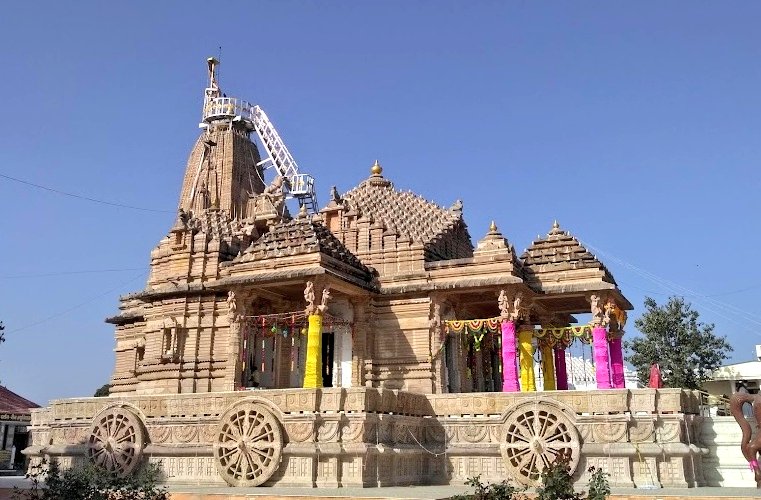
Also known as Shri Manibhadra Veer #Shwetamber Jain meditation & devotion center. A chariot-shaped temple was inaugurated on 19.5.91 under divine guidance of Shri Veer Ratna Vijay Maharaj saheb (1)
There are 3 temples inside this huge centre. There is a Upashray, Dharamshala, Bhojanshala, Pustakalay, Vriddhashram etc. Astrological healing methods of Tantra, Yantra & Mantra and old poetry in the form of manuscripts are found here. (2)
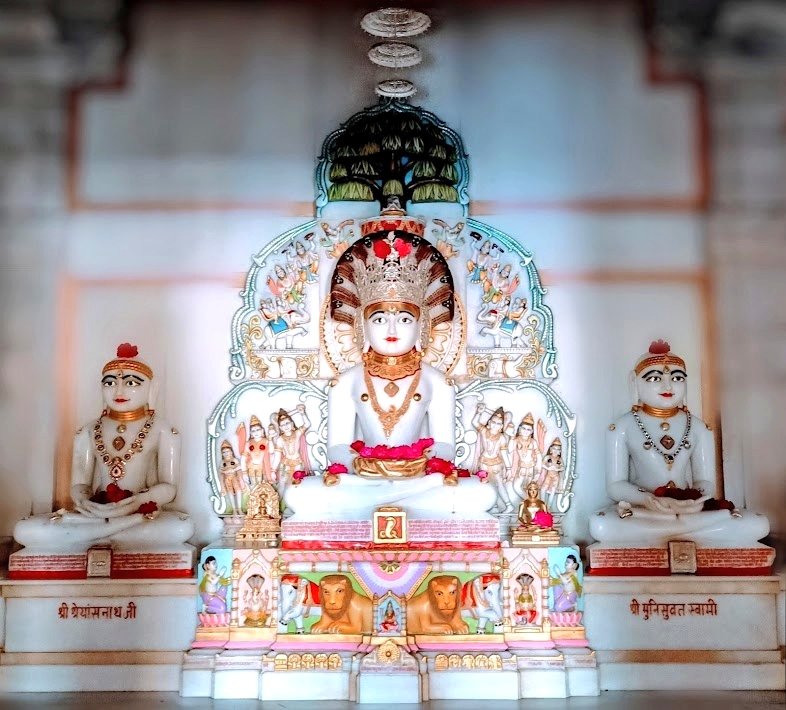
Artistic idols of Tirthankars made out of marble, gold work & other precious stones are a sight to see. (3)
Pre-12th century Someshwara temple, Abalur, #Karnataka was a #Jain temple
Ambaluru was an important centre of #Jainism in ancient times. Its influence started waning frm 12th century when a proponent of Shaivism Ekantada Ramaiah stood up against Jains. #Thread
Legend has it that he cut off his own head during a religious dispute with the #Jains & was brought back to life by Lord Shiva himself. The incident is narrated by an inscription of 1200 CE found here.
On the right portion of the gateway is a sculpture showing Sankagavunda handing over a document to Ekantada Ramaiah and another sculpture depicting the breaking up of the Jina image & the consecration of the Shivalinga by the latter.
Most of us only know the world-famous #Bahubali or Gommateshwara statue at Shravanabelagola.But there are 5 historic Monolithic (carved from single stone) statues of Bahubali in #Karnataka - Shravanabelagola, Karkala, Dharmasthala, Venur, Gommatagiri. Let us take a look. #Thread
1. The 57 ft tall monolithic statue of Gommateshwara at Shravanabelagola is located on Vindyagiri Hill, built in 981 CE by Chavundaraya who erected the statue for his mother.He was the Minister & Commander of the Western Ganga dynasty. It was the world's largest monolithic statue
2. This 42 ft monolithic statue of Gommateshwara at Karkala, Udupi district was the 2nd tallest statue of Bahubali in the world built in 1430 CE by Veera Pandya Bhairarasa Wodeyar of Santara dynasty on advice from Lalitakirti, the Bhattaraka of Karkala Jain Matha.
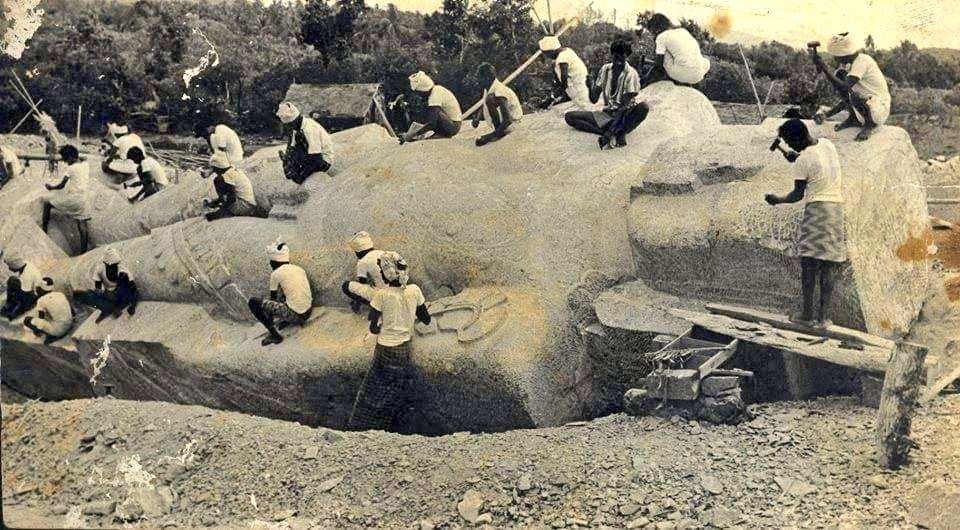
This 57 ft idol is a wonder of the Modern world, created nearly 400 yrs after the last Bahubali at Venur. No one had any concrete idea about how such a massive statue would be sculpted, transported or erected. #Thread#Jainism
However, Shri Rathnavarma Heggade made a bold decision to make it happen come what may & initiated the plan. Unfortunately he passed away before his vision was brought to life. His illustrious son Dr.Veerendra Heggade succeeded him at a tender age of 20 & continued work!
Sculptor's Salt Sacrifice for 6 Years:
Renjala Gopala Shenoy who was 64, completely sacrificed salt until the statue was completed! At Karkala, he found a perfect 100 ft tall stone to begin with & laborers, mostly migrants from Tamil Nadu worked for 6 long yrs to complete it!