
 Read on Twitter
Why do we call it the "Square Root"?
√‾‾‾
We have been using the popular square root symbol since childhood, yet most of us don't stop to think where it came from.
Let's fix that... 🧵 https://t.co/DkMqpcRSrztwitter.com/i/web/status/1…

√‾‾‾
We have been using the popular square root symbol since childhood, yet most of us don't stop to think where it came from.
Let's fix that... 🧵 https://t.co/DkMqpcRSrztwitter.com/i/web/status/1…

The Italians (around 1100~1200 A.D.) started to trade with the north of Africa. And back then, the north of Africa which was strongly touched by the Islamic empire.
The vast Islamic empire came from the Middle East and expanded to Asia, India, and also Europe.
The vast Islamic empire came from the Middle East and expanded to Asia, India, and also Europe.

One famous Italian tradesman was Leonardo Bonacci (Fibonacci).
Fibonacci used to trade between Pisa and what we know today as Algeria.
As he traded with the Islamic people, he acquired a large understanding of their math.
In 1202 he wrote "Liber Abaci."
Fibonacci used to trade between Pisa and what we know today as Algeria.
As he traded with the Islamic people, he acquired a large understanding of their math.
In 1202 he wrote "Liber Abaci."

Fibonacci thought it was important to demonstrate this Islamic math to the Europeans.
Liber Abaci was one of the first Western books to describe the Hindu–Arabic numeral system and to use symbols resembling modern "Arabic numerals".
Liber Abaci was one of the first Western books to describe the Hindu–Arabic numeral system and to use symbols resembling modern "Arabic numerals".

By addressing applications of both commercial tradesmen and mathematicians, it promoted the superiority of the system & these glyphs.
In this book, we can find one of the first mentions of something called "Radix Quadratum."
In this book, we can find one of the first mentions of something called "Radix Quadratum."
Some early notations used acronyms like "Rad" or just "R".
For example, to express that the square root of 9 is 3, we found manuscripts stating that:
"Rad9a3"
For example, to express that the square root of 9 is 3, we found manuscripts stating that:
"Rad9a3"
In 1525, Christoph Rudolff used the symbol "√" to represent the square root.
The symbol √ was *probably* inspired by the letter "r" from previous manuscripts.
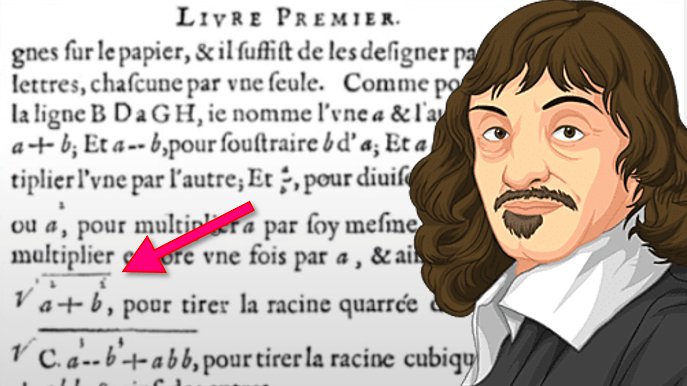
The complete symbol - with the upper part (√‾‾) to enclose the entire radicand - would only appear in 1637.
The symbol √ was *probably* inspired by the letter "r" from previous manuscripts.
The complete symbol - with the upper part (√‾‾) to enclose the entire radicand - would only appear in 1637.

And in 1637, René Descartes wrote "La Géométrie", which was the first to propose the idea of uniting algebra & geometry into a single subject (inventing an algebraic/analytic geometry).
It was the first time we saw the symbol that most of us recognize today as "Square Root".
It was the first time we saw the symbol that most of us recognize today as "Square Root".
And just to conclude out thread...
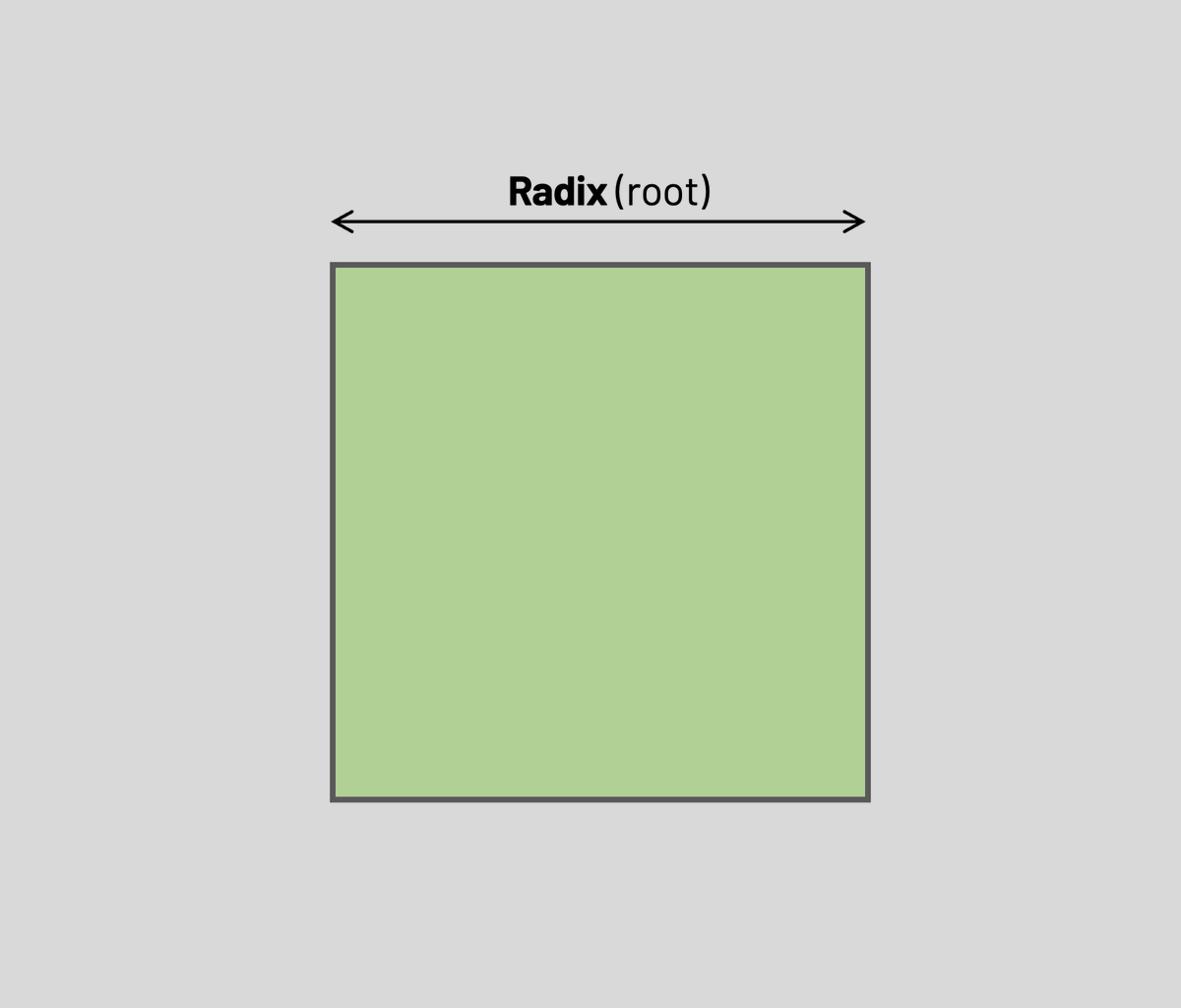
The Radix (the root) is what the Islamic called the sides of a square.
If you think about it, with a single side, one knows how to generate the entire square.
That's why the side is, indeed, the root of the shape. 🙂
Boom! ❤️
The Radix (the root) is what the Islamic called the sides of a square.
If you think about it, with a single side, one knows how to generate the entire square.
That's why the side is, indeed, the root of the shape. 🙂
Boom! ❤️
• • •
Missing some Tweet in this thread? You can try to
force a refresh






