Three personal, casual thoughts on Taiwan's successful democracy.
1) Just as New Zealand gets wide attention for COVID-19 success while Taiwan hasn't, perhaps western progressives are also looking too much to Europe, NZ and not enough to Taiwan for inspiration.
None should over-generalize the complex, ideologically very diverse Taiwanese political landscape as progressive, but:
- woman-led, high representation of women in legislature
- universal healthcare
- indigenous seats in legislature codified in law
- direct democracy initiatives
2) With Point #1 in mind, perhaps US progressives should be a little more willing to commit to Taiwan's defense should Beijing violently attempt to force reunification.
With the rapid modernization of the Chinese navy, that will require maintaining many US military capabilities.
3) Doesn't really fit in with the above, but noting that direct democracy measures in Taiwan have had interesting implications for Taiwan nuclear power. Recent referendums showed broad support for nuclear. Another referendum to take place in August. (END)
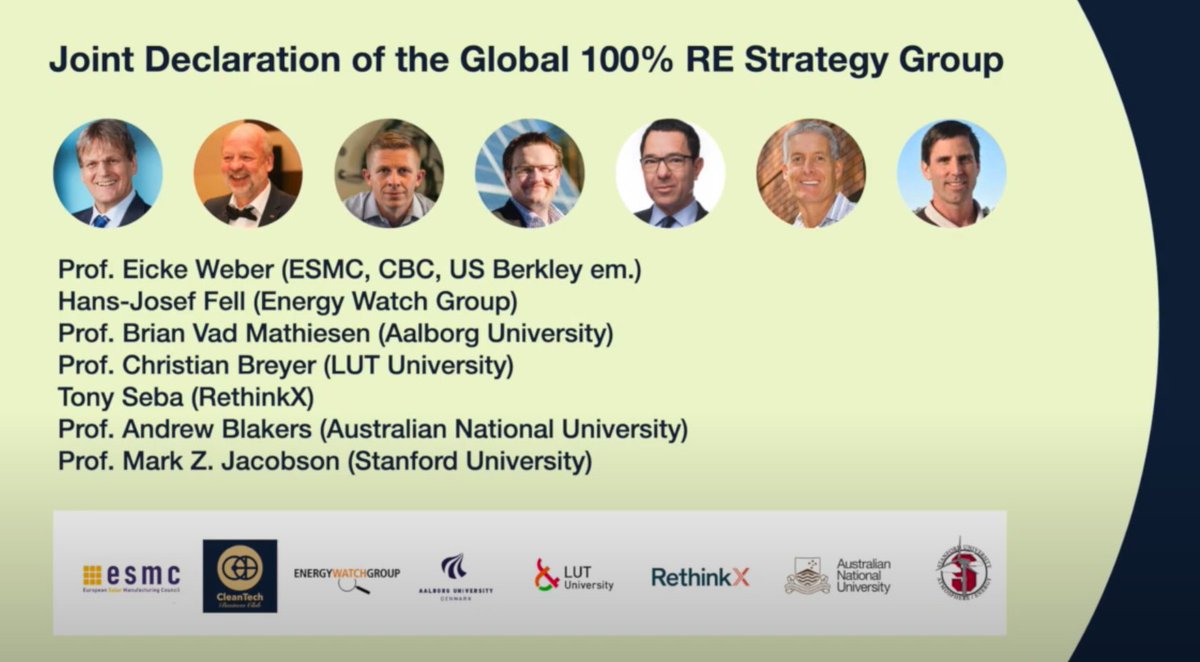
The 100% Renewable Energy Strategy Group makes no sense to me. Net-zero electricity by 2030 is a target many would argue is near-impossible for even the USA, yet the signatories set exactly the same target for, say, Mongolia. Oh, and no nuclear allowed. (THREAD)
Global 2030 net-zero electricity is a target exponentially, ludicrously beyond many current commitments globally. Still using Mongolia as example, renewables generate <10% of total electricity (rest is coal). Mongolia’s 2030 renewables target is 30%. (1)
It's so damn hard to get a straight answer from degrowthers about what real degrowth policies would look like.
What is "excessive" growth or consumption? If it's these planetary boundaries, can I question why it's white European countries that score highest on those metrics? (2)
At the international level, are degrowth measures voluntary, or imposed?
If imposed via carbon border taxes and the like, who does the imposing and how?
If voluntary, what do you do when China laughs you out of the negotiating hall? (3)
This spring, a reporter exclaimed "We had to go all the way to New Zealand to find leaders seemingly doing everything right to keep people safe from the spread of Covid19"
Well okay, if Asian success stories are invisible to you, I guess. (2)
Thanks to swift early action, Taiwan has not had to implement a lockdown since the pandemic began. Taiwan does plan to keep its strict screening and quarantining of travelers in place, however. (3)
Beylot et al. analyze the carbon emissions associated with mining and processing four raw materials (steel, concrete, copper, aluminum) needed for a French power sector transition over the next few decades under a plan where French nuclear is cut to 50% of the overall mix. (2)
Their findings:
“the cradle-to-gate climate change impacts... required as a response to the energy transition, are assessed to amount between 57 and 650 million tonnes of CO2-eq (≥ 95% probability), and most likely between 150 and 375 million tonnes of CO2-eq” (3)
We must reduce mining impacts, but at the same time we’re gonna need copper for net zero. LOTS OF IT. (THREAD)
Current global pop w/o electricity: 1 billion
Current pop w/o clean cooking fuel: 3 billion (think electric stoves w clean power)
Global pop by 2050: 10 billion
Copper intensity of electric gen by type, in tons/GW capacity:
Onshore wind: 1700-6700
Offshore wind: 1650-10000, likely on higher end
Solar: 4900-7000
Nuclear: 726-2000
(to compare: fossil fuels are around 450-600, not that that's remotely a reason to keep em around) (2/7)
By my preliminary calcs for an academic paper I'm working on with @hausfath, @SteveDavisUCI, @erikolsonn, @jamesonmcb + others, assuming a MESSAGE 1.5C decarbonization pathway, we will consume around this much copper per year by 2050: (3/7)
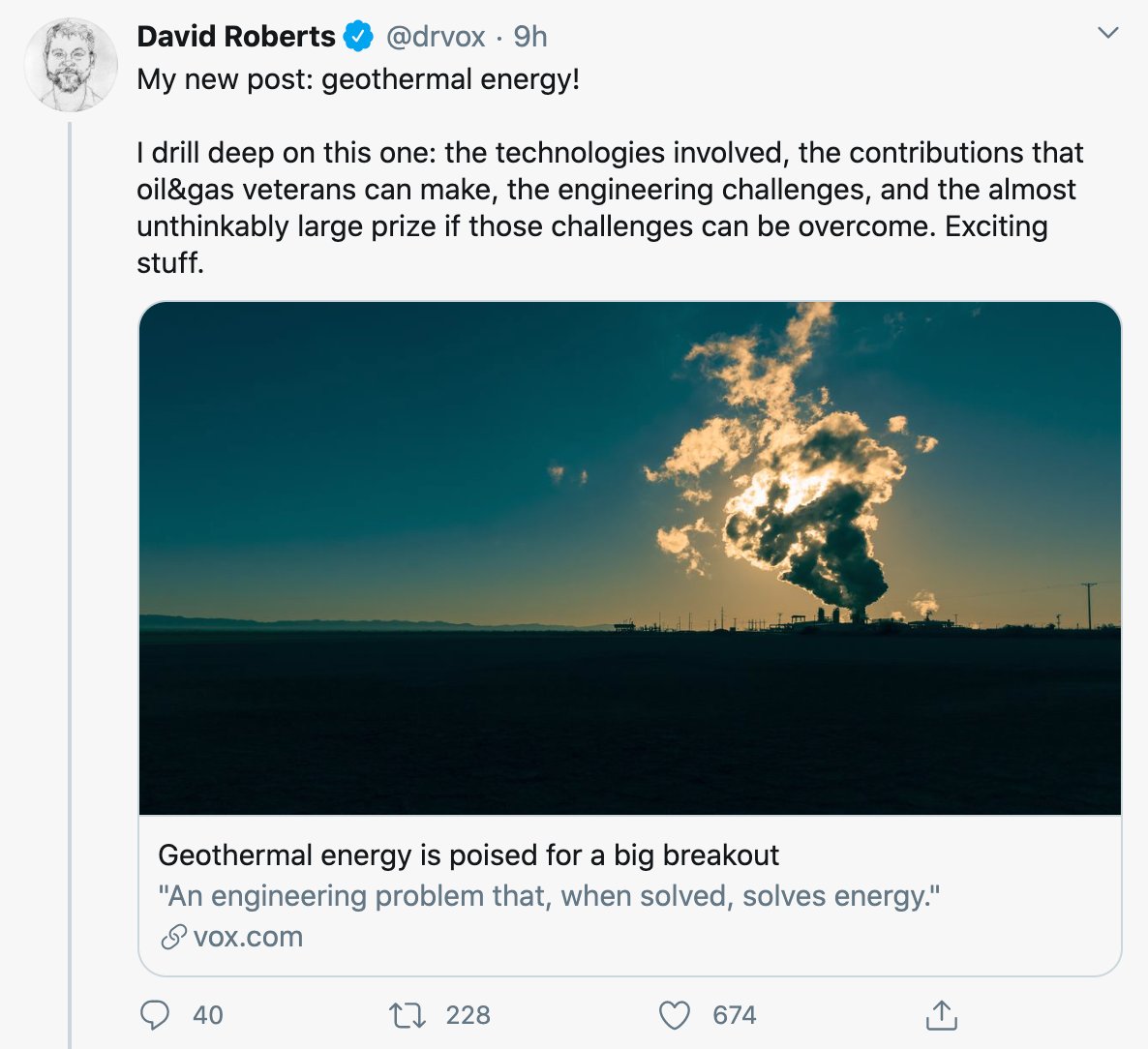
A certain new big explainer piece on geothermal is rightly getting a lot of attention!
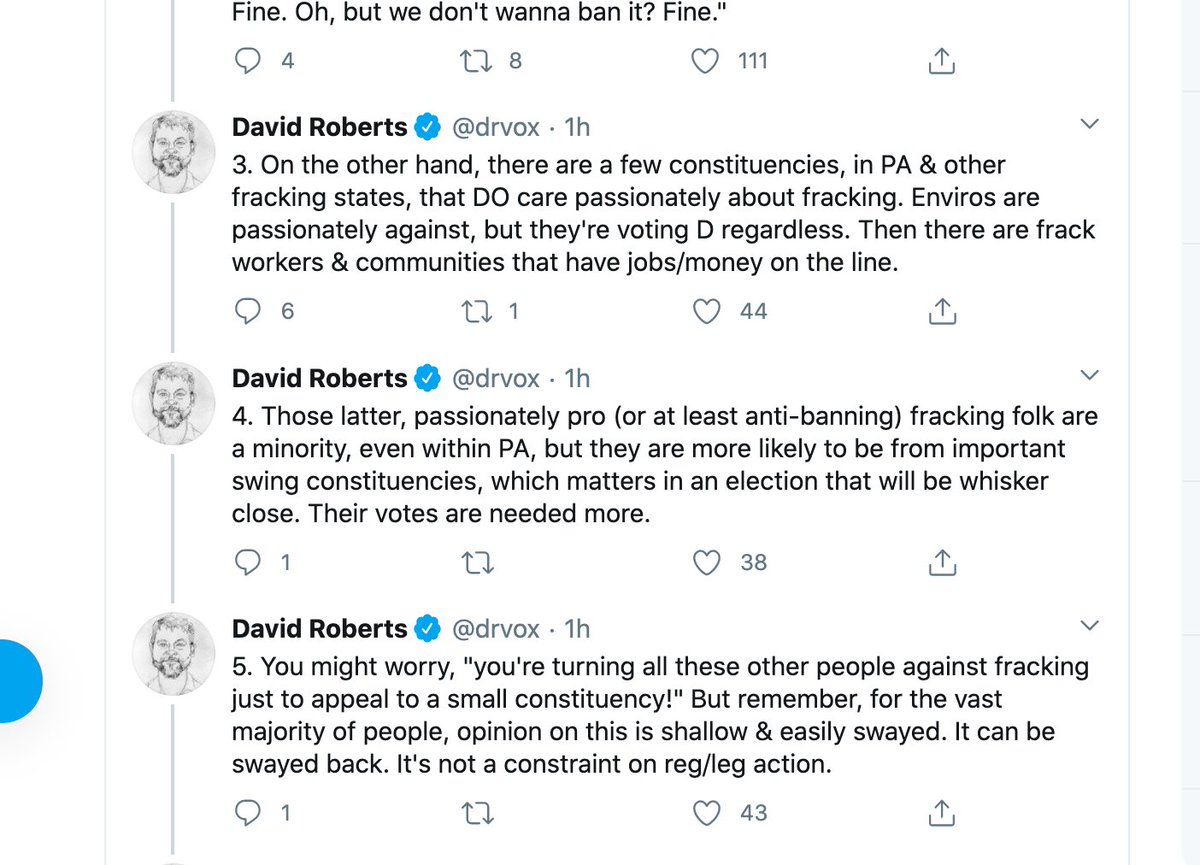
But imo, the really important theme to @drvox 's #energytwitter activity today is the importance of really selling the clean energy transition to oil/gas workers + communities. (1/5)