If you’re a SaaS marketer, you need to study Airtable.
The SEO & growth strategies they used become a $5B startup and reach 1M users are so impressive.
Here's a few things you can learn from them 🧵
The SEO & growth strategies they used become a $5B startup and reach 1M users are so impressive.
Here's a few things you can learn from them 🧵
Every month, an estimated 10-15M visits hit their Airtable's website from various sources.
Organically (SEO) more than 245k people reach the site through search. That’s a lot of people.
One of the major attraction spots on Airtable’s website is the templates landing page:
Organically (SEO) more than 245k people reach the site through search. That’s a lot of people.
One of the major attraction spots on Airtable’s website is the templates landing page:
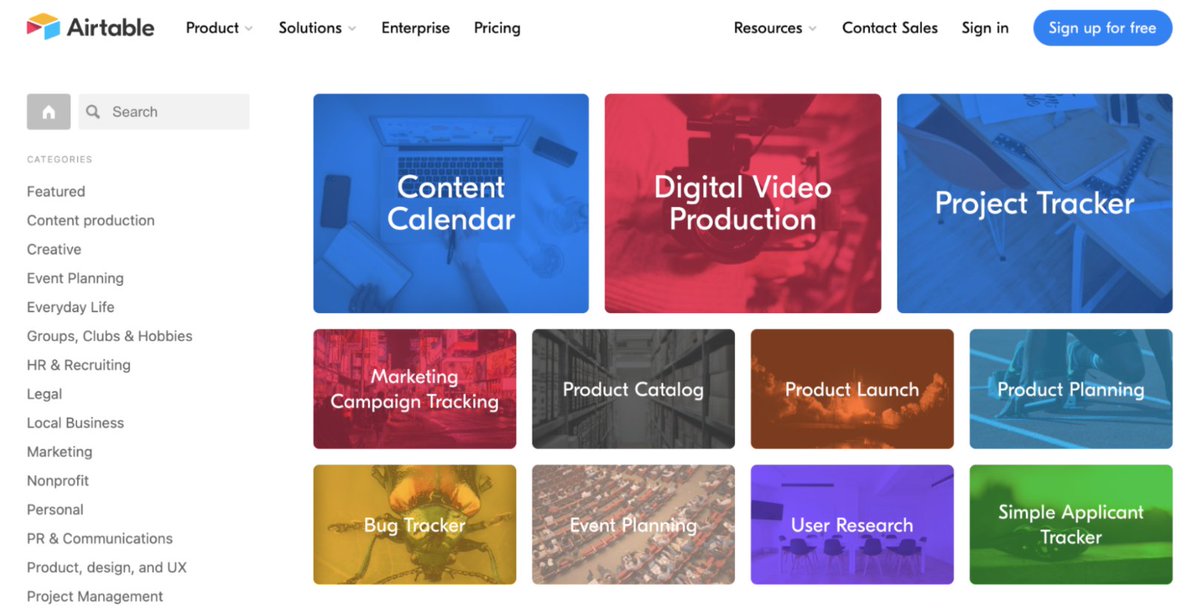
Here's some key metrics:
The templates rank for 16.4K organic keywords
Attracts over 9500 visitors each month
The organic traffic value is $42,000
Meaning... You would have to pay Google $504,000 to capture that much traffic through PPC a year.
This is why SEO is important.
The templates rank for 16.4K organic keywords
Attracts over 9500 visitors each month
The organic traffic value is $42,000
Meaning... You would have to pay Google $504,000 to capture that much traffic through PPC a year.
This is why SEO is important.
1) EMBRACE SEO DRIVEN TEMPLATES
Airtable recognized that templates are highly valued, especially in B2B, so they created a bunch of them.
I always say:
"People love templates. It’s a cheat code to adulting."
And Airtable's been able to leverage this to perfection.
Airtable recognized that templates are highly valued, especially in B2B, so they created a bunch of them.
I always say:
"People love templates. It’s a cheat code to adulting."
And Airtable's been able to leverage this to perfection.
Riches are in the niches and the sale is in the long tail.
Airtable has templates for long tail phrases like:
> Social Media Calendar
> Job Search Template
> Recipe Database
> Book Database
> Personal CRM
> Lease Tracker
> Trip Calendar
This drives a ton of long tail traffic.
Airtable has templates for long tail phrases like:
> Social Media Calendar
> Job Search Template
> Recipe Database
> Book Database
> Personal CRM
> Lease Tracker
> Trip Calendar
This drives a ton of long tail traffic.
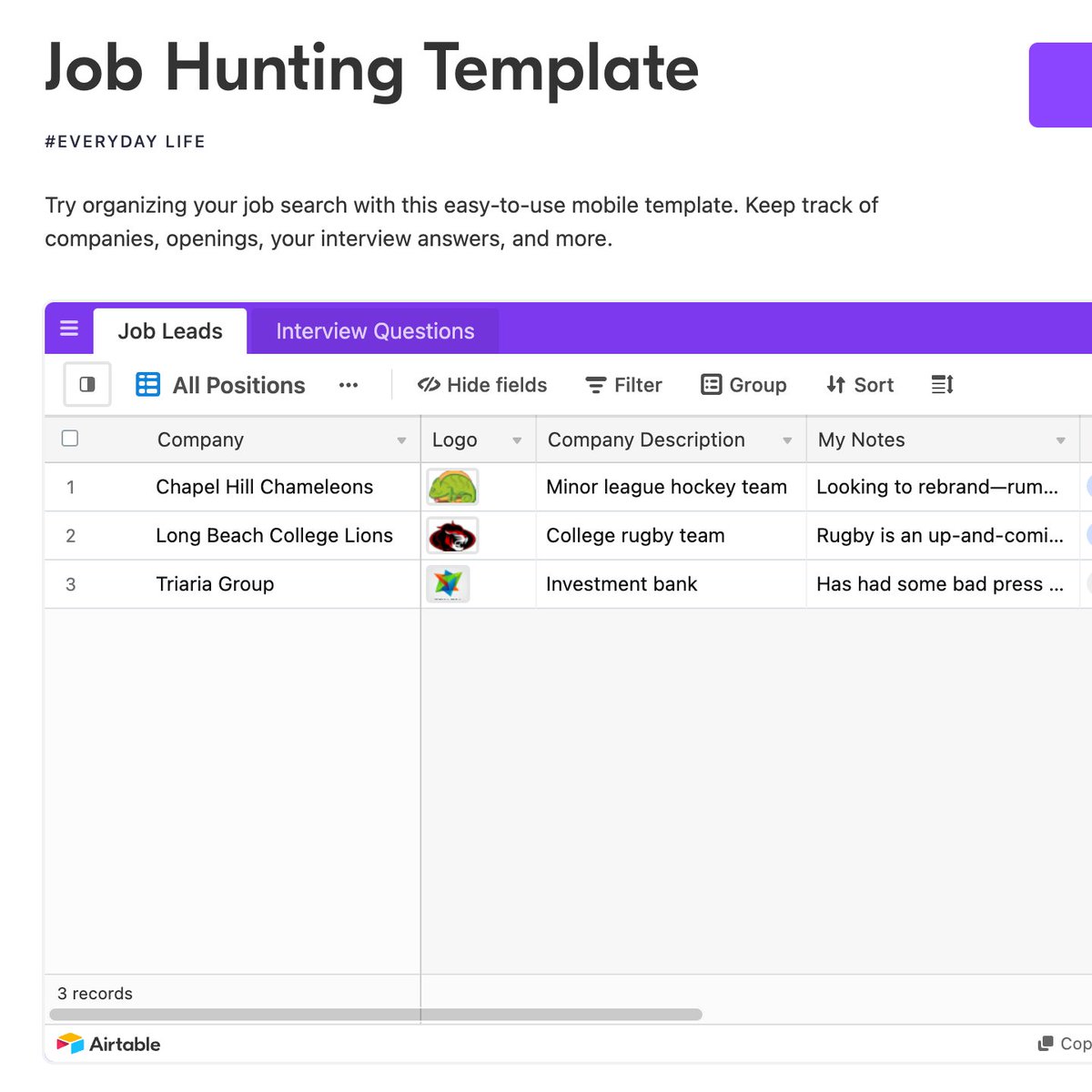
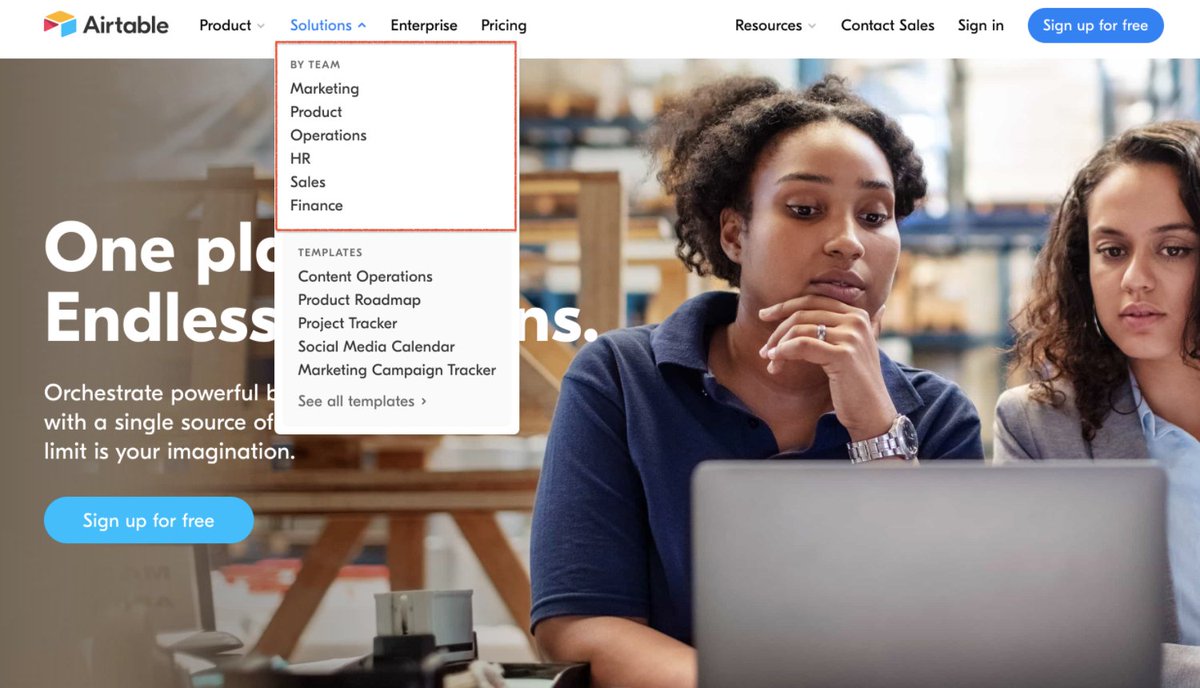
2) SPEAK DIRECT TO YOUR AUDIENCE
Another thing Airtable does right is creating audience oriented landing pages.
Visitors can self-identify with the niche and industry that they’re working in.
Talking about someone’s industry is the B2B equivalent of saying someone’s name.
Another thing Airtable does right is creating audience oriented landing pages.
Visitors can self-identify with the niche and industry that they’re working in.
Talking about someone’s industry is the B2B equivalent of saying someone’s name.
4) EMBRACE VIDEO FOR SEARCH
Google is the most popular search engine in the world. The second most popular is YouTube.
Some people learn by reading.
Some people learn by watching.
Airtable's YouTube is filled with product demos, API walkthroughs and product marketing assets.
Google is the most popular search engine in the world. The second most popular is YouTube.
Some people learn by reading.
Some people learn by watching.
Airtable's YouTube is filled with product demos, API walkthroughs and product marketing assets.
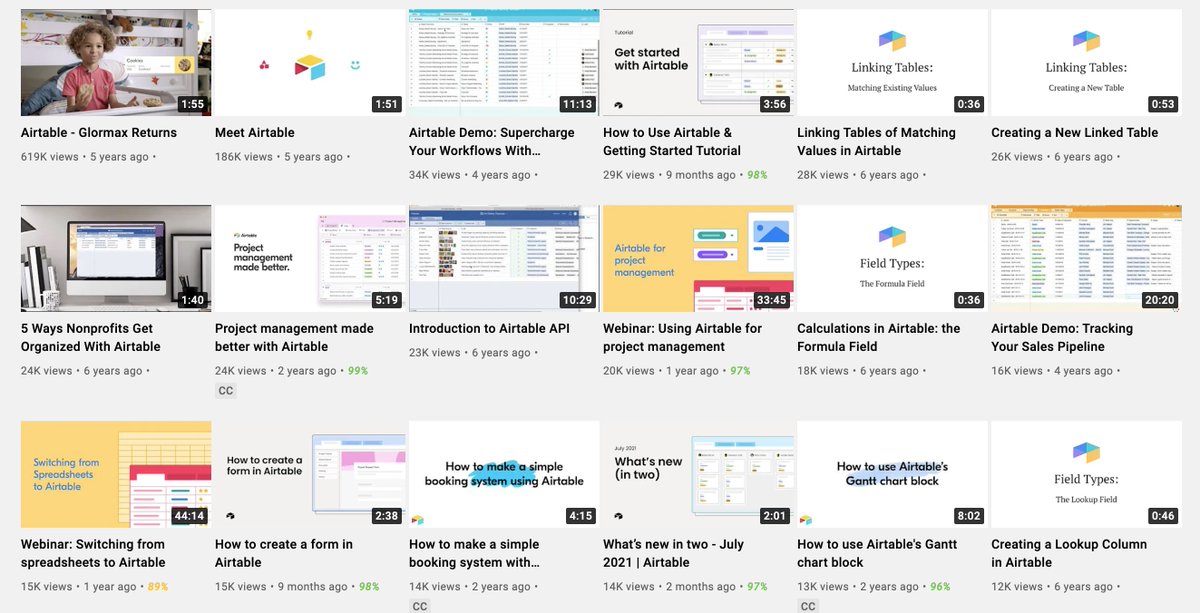
Airtable's YouTube channel is estimated to generate about 44,000 views per month and is growing by +800 new subscribers per month.
Not all Airtable's videos are found via YouTube though. People are finding these videos directly from Google.
Not all Airtable's videos are found via YouTube though. People are finding these videos directly from Google.
5) INJECT SOCIAL PROOF ON YOUR SITE
Got traction? Good.
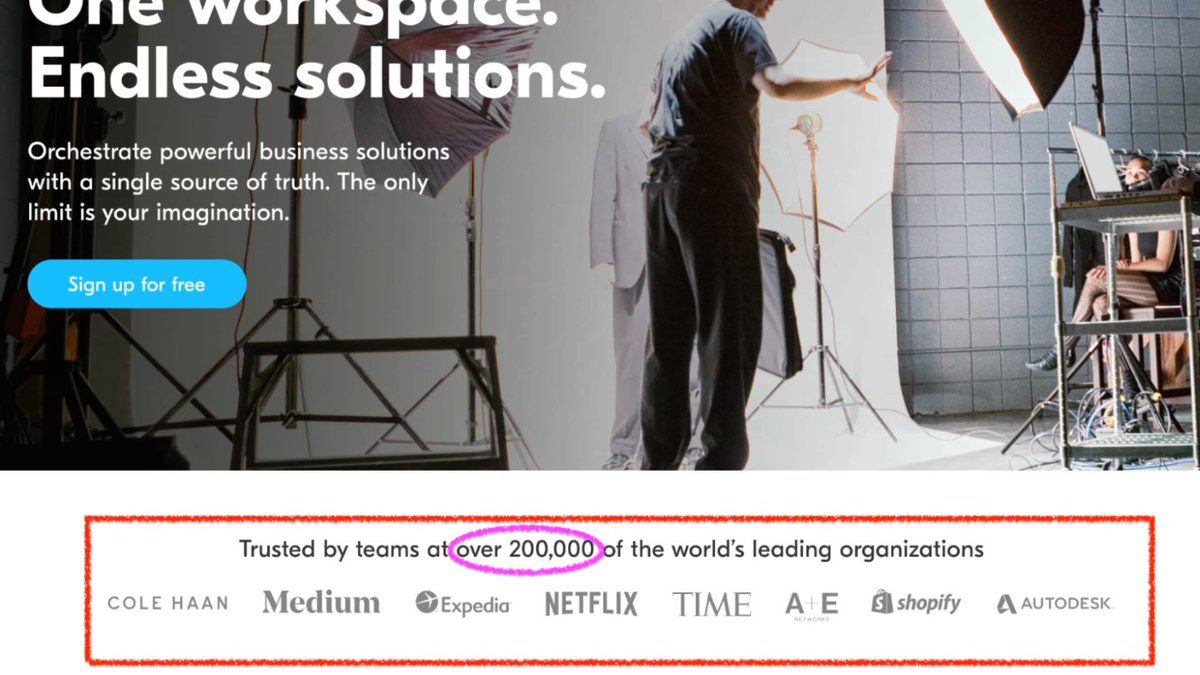
Tell people about it. Scream and yell at the rooftops how your product helps Netflix, Expedia, Medium and more.
People want to be in good company so showcase the brands you work with to build trust.
Got traction? Good.
Tell people about it. Scream and yell at the rooftops how your product helps Netflix, Expedia, Medium and more.
People want to be in good company so showcase the brands you work with to build trust.
6) CREATE CASE STUDIES THAT AREN'T BORING
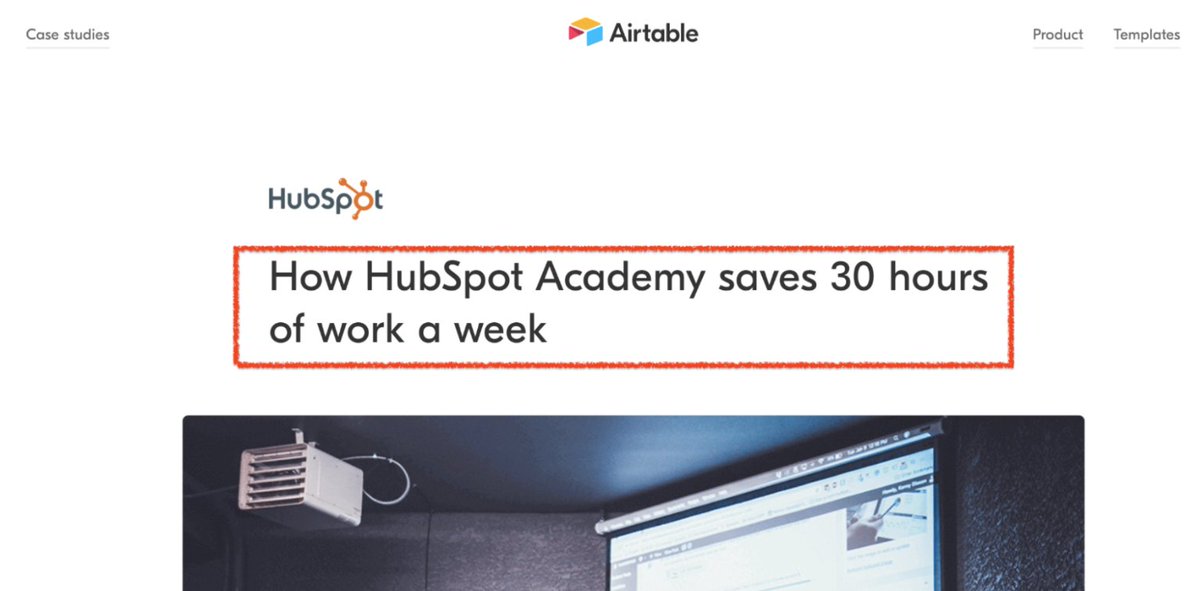
One of the biggest mistakes SaaS companies make is creating case studies that aren't written with a story.
Whether it's a TV series on Netflix or a case study - People resonate with stories. Airtable does this well.
One of the biggest mistakes SaaS companies make is creating case studies that aren't written with a story.
Whether it's a TV series on Netflix or a case study - People resonate with stories. Airtable does this well.
7) INVEST IN CREATING BACKLINK DRIVEN CONTENT
Backlinks are still important.
No, you're not going to rank for high value keywords after buying 500 links on Fiverr. But if you can create content worth linking & do content distribution.
The returns will be significant.
Backlinks are still important.
No, you're not going to rank for high value keywords after buying 500 links on Fiverr. But if you can create content worth linking & do content distribution.
The returns will be significant.

If you enjoyed this thread subscribe to my newsletter where I share stuff like this weekly: content.foundationinc.co/insights-2
And follow @TheCoolestCool + @FoundationIncCo for in-depth breakdowns like this.
And follow @TheCoolestCool + @FoundationIncCo for in-depth breakdowns like this.
• • •
Missing some Tweet in this thread? You can try to
force a refresh