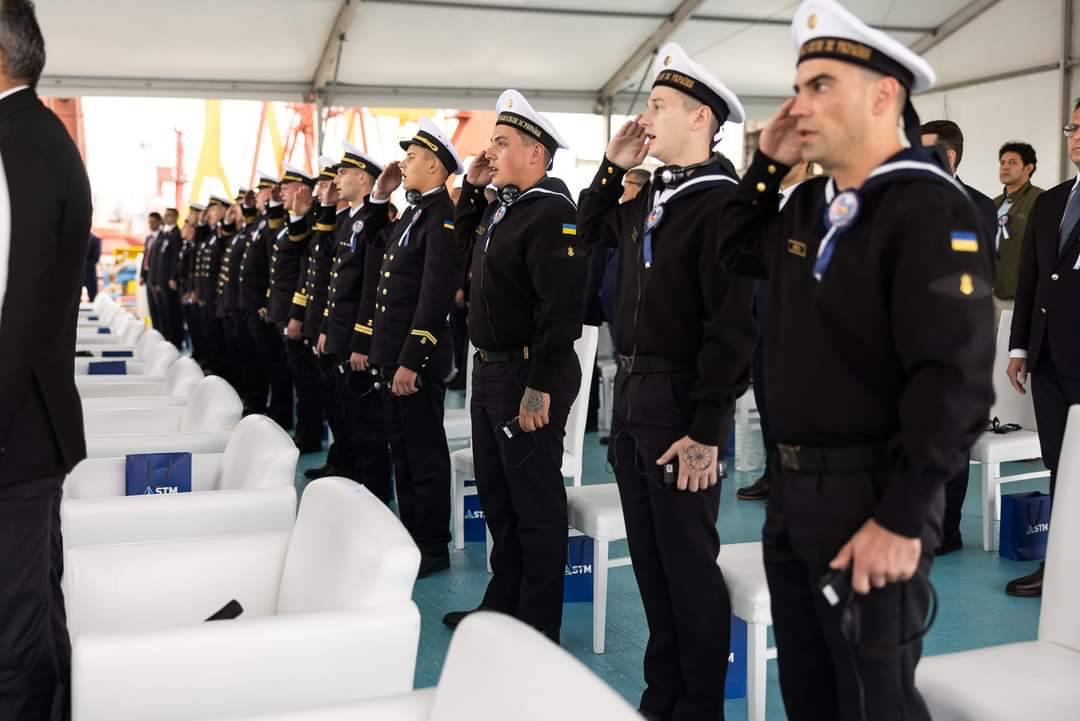
Vice Admiral Oleksiy Neizhpapa.
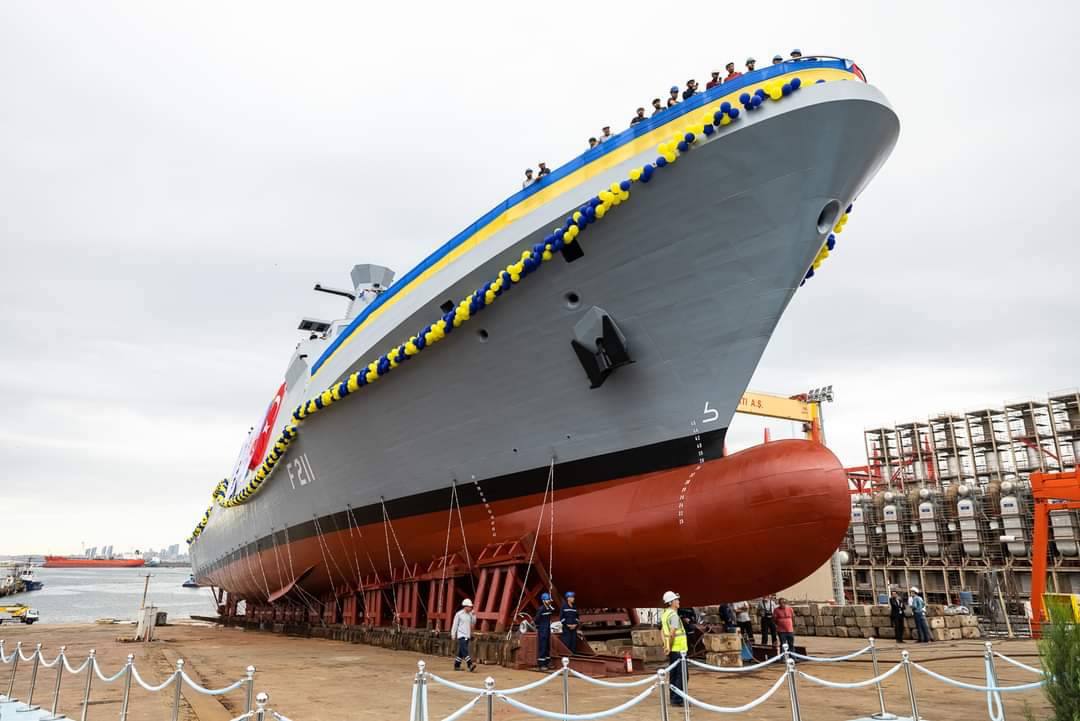
"Today's extremely important event for πΊπ¦and its #navy proves once again that during a decisive war for our independence and territorial integrity, for the will of the multinational πΊπ¦ people, for freedom and dignity, we have a great friend-πΉπ·.
It's one of future flagships of #UAnavy. Ukraine is forming a navy on a new basis along with the help of partners.
Our cooperation gets another dimension - a beautiful #corvette that will soon protect #Ukraine, free navigation, which is definitely a common goal of our countries."
β’ β’ β’
Missing some Tweet in this thread? You can try to
force a refresh

Modern war is fought in the air. But the ground decides who holds the line.
Ukraine's 91st Support Brigade builds the infrastructure that makes every drone strike more effective and every Russian infantry assault more costly.
It is called a kill zone.
Here is how it works β and why it matters.
ππ§΅
1/5
Russia's current front-line tactic: constant small infantry group infiltration β pairs, threes, probing for gaps in Ukrainian defensive lines.
The engineering response is a layered obstacle system designed not to stop the enemy immediately, but to slow him down long enough for drones to find him.
The system β explained by sapper platoon commander "Sava":
β Two low-profile barriers (MPP)
β Four rows of Egoza concertina wire
β Two more MPP barriers
β Repeated across the entire defensive line
"This kind of obstacle can stop even a tank. The wire wraps around the tracks and stops it. Infantry gets tangled in it. It is very difficult to pass through. It is a very effective barrier."
The wire runs even through water. At one position, the obstacle system feeds into a natural lake β with an anti-tank ditch on one side and concertina wire on the berm.
2/5
Beyond the wire: the kill zone itself.
After the obstacle belts comes an open stretch of terrain β deliberately cleared of vegetation, with wire set on low stakes just above ground level. It is called a "stumbler."
Enemy infantry rarely attempts to cross it. When they do β they rarely complete the crossing.
But the kill zone is not designed to stop the enemy by itself. It is designed to buy time.
"This is done to slow the enemy and give our drone operators time to detect and destroy him. Because if the enemy gets somewhere, accumulates there, you need powerful means to dislodge them β or send people in for clearance. Those are potential casualties. These obstacles help hold them back." β "Sava," sapper platoon commander.
The kill zone is the physical manifestation of Ukraine's combined arms logic: obstacles + drones + artillery + infantry, each element enabling the next. The obstacle doesn't need to destroy the enemy. It needs to hold him still long enough for something else to.
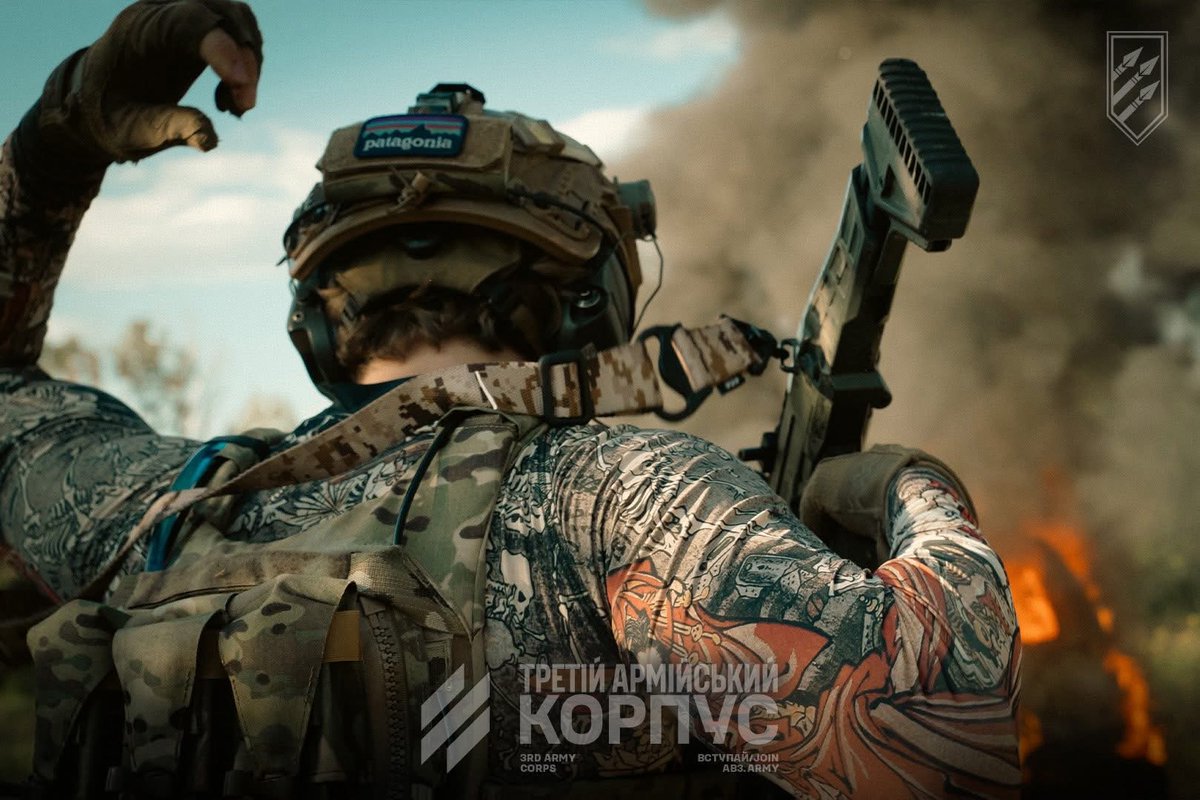
One year ago, Ukraine's 3rd Army Corps @ab3army inherited a front line where Russian infiltration was reaching 10 kilometres deep into Ukrainian defences.
Today: not a single metre lost. Enemy casualties up fivefold. 35,000 russian soldiers killed or wounded in their sector alone.
This is what happens when a military organisation is rebuilt from the ground up β under fire, in real time.
ππ§΅
1/7
The scale of what the 3rd Corps manages:
β 150+ kilometres of front line β 12% of Ukraine's entire contact line, the largest sector of any corps in the Armed Forces
β Three Russian armies opposing them simultaneously on the Lyman-Borova direction: the 20th and 25th Combined Arms Armies and the 1st Tank Army
β Organic brigades plus attached units from the State Border Guard Service, Territorial Defence, National Guard, Special Operations Forces, SBU, and GUR β all operating under unified command
Deputy Chief of Staff Danylo Novytskyi on the transformation:
"Where before our arrival up to 70 square kilometres per month could be lost β today not a single metre is being lost. This is now one of the most stable sectors of the front."
Three villages in Luhansk region β Nadiya, Hrekivka, Novoyehorivka β remain under Ukrainian control despite Russian claims of full regional occupation.
2/7
The institutional innovation that changed everything: the battle captain system.
The 3rd Corps introduced dedicated battle management officers β "battle captains" β at every level from battalion to corps, freeing brigade and battalion commanders from real-time tactical micromanagement to focus on planning and decision-making.
The Corps is now the first in the Armed Forces to implement the full battle officer tier β the senior level above battle captain β creating a unified battle management system across the entire corps structure.
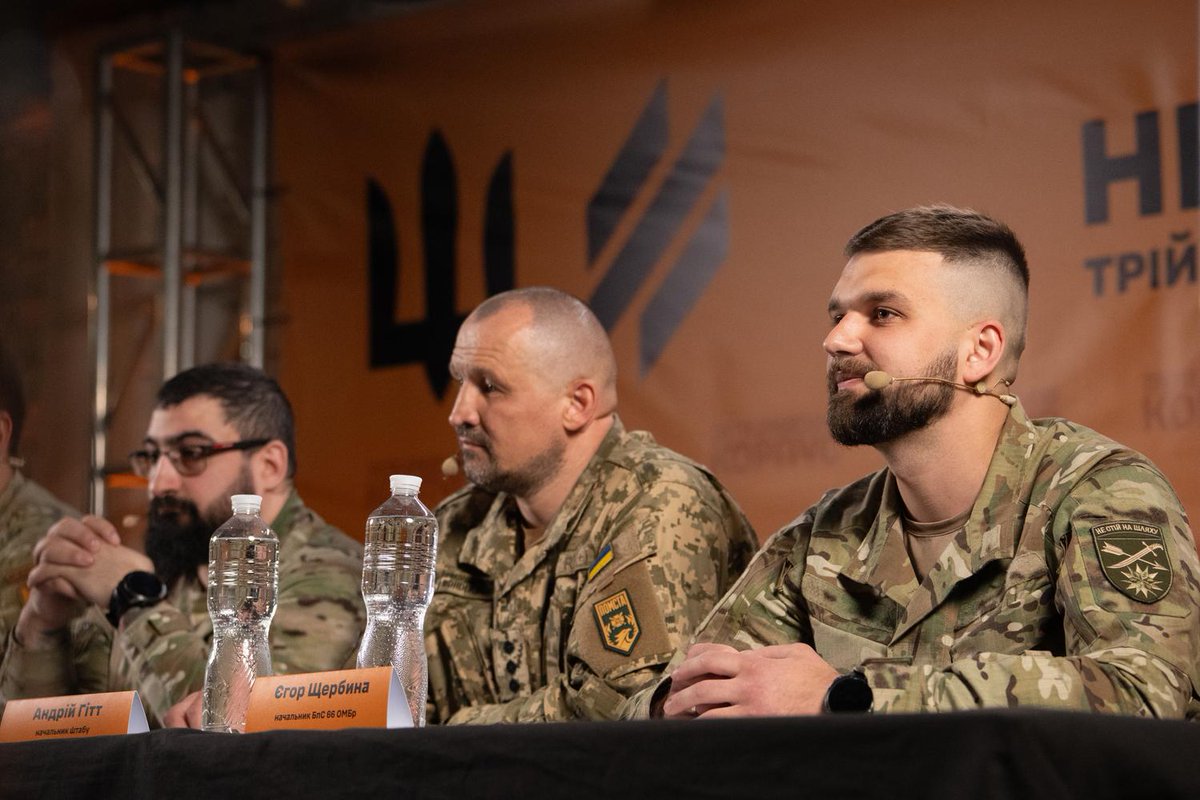
The operational effect, described by 66th Brigade drone systems chief Yehor Shcherbyna:
"We resolve combat and organisational tasks at horizontal and parallel vertical levels simultaneously β reducing response time to events. Previously this only worked through the vertical chain."
Commander planning horizons extended. Response cycles compressed. The same information visible to every headquarters simultaneously in real time.
Ukraine shot down Russian Kalibr cruise missiles. Then took them apart β board by board, component by component.
What Ukraine's Ministry of Defence @DefenceU found inside should be uncomfortable reading for Western regulators and sanctions enforcement agencies.
More than 80β90% of the guidance system electronics: foreign-made. Every part marked. Every manufacturer identified. π§΅π
1/5
The Kalibr 3M14 is Russia's primary long-range cruise missile β subsonic, terrain-following, capable of striking targets 1,500+ km from launch point.
Ukraine's MoD engineers dismantled intercepted missiles to the circuit board level β mapping every component, tracing every supplier, building a complete structural-functional diagram of what kills Ukrainian civilians.
Key findings:
β 450kg warhead β 3,600 steel fragmentation elements, each capable of penetrating 10cm of concrete
β Four-channel guidance: GPS satellite navigation, inertial system, radio altimeter, terminal radar homing
β Flight profile: as low as 20 metres over water, ~150 metres over terrain β minimising radar detection horizon
β In spring 2026: first confirmed cluster warhead variant β same configuration as the Kh-101, designed to maximise area coverage against dispersed targets
The missile was designed to destroy port infrastructure and open areas.
Russia is using it against apartment buildings.
2/5
Now the part that matters for sanctions enforcement.
The guidance system electronics β the component that makes this missile accurate enough to hit a specific building in a specific city β is more than 80β90% foreign-made.
This is not an estimate. This is a verified fact: every component is marked, and each passed through Russian military acceptance inspection before assembly.
Ukraine's MoD tracked the procurement timeline:
β 2023β2024: Russia attempted a transition to domestic electronics
β 2025 production batch: back to imported components
The working hypothesis of Ukrainian analysts: the switch to Russian electronics degraded guidance accuracy. So Russia returned to foreign parts β drawing on pre-sanctions stockpiles that have not yet been exhausted.
Western components. Russian missiles. Ukrainian cities.
In one week, they laid 3,000 mines β without a single soldier crossing the contact line.
Every mine was dropped from a drone.
Ukraine's 91st Support Brigade just redefined what military engineering looks like in 2026.
This is the thread based on Ukrainian front line experience every defence planner should read.
π§΅π
#Ukraine #UAF #ModernWarfare #LearnFromUkraine
1/5
Classic military engineering: fortifications, bridge-laying, obstacle construction. Dangerous. Slow. Human.
The 91st Brigade's drone battalion still does all of that. But now β remotely.
Acting battalion commander Dmytro, callsign "Donbas," explains the origin:
"If drones can bomb effectively or deliver supplies, why not use them for mining?"
They were the first unit in Ukraine to deploy anti-tank mines from Vampire drones β not for bombing, but for precision minelaying. Everyone said it was impossible. That from 40 metres altitude you couldn't place a TM mine precisely on a road.
"We proved it was real. Our record: a TM placed precisely on a road from 80 metres altitude."
Scepticism didn't survive contact with results.
2/5
3,000 munitions in one week on a single direction.
The tactical logic behind the number:
Russian assault tactics have shifted away from armoured columns toward motorcycles, quads, and buggies β fast, small, hard to hit with conventional weapons. Drone-laid minefields are specifically effective against exactly this type of infiltration.
"We make the kill zone more effective β a significant portion of enemy casualties come from our obstacles. Recently we laid over 3,000 munitions in one week on one direction. This allowed us to redirect enemy assaults and drive the enemy into a continuous kill zone. Now that sector shows very good results."
The mine doesn't care about the fog. Heavy bomber pilot Andriy, callsign "Bilyi":
"Recently a tank and two trucks detonated on my mines. There was fog β they probably didn't notice the minefield, drove in, and stayed there."
"Truth dies in the trenches if the commander doesn't hear it."
A year ago, Ukraine's 3rd Army Corps @azov_media inherited a sector in critical condition: units losing cohesion, commanders making decisions in the dark, battlefield reality systematically falsified up the chain of command.
Today, the 3rd Corps holds over 12% of Ukraine's entire front line β and has cut friendly casualties by three times while increasing enemy losses fivefold in its sector.
This is what institutional transformation looks like under fire. π§΅π
#Ukraine #UAF #ModernWarfare #DefenceReform
1/6
When the 3rd Corps took over its sector on June 4, 2025, the situation on paper bore little resemblance to reality on the ground.
Deputy Commander Kyrylo "Kirt" Berkal describes what they actually found:
"The real state of affairs was very different from what had been reported up the chain. We accepted the sector β and it turned out to be in a far worse condition than we were handed on paper."
Three Russian armies were preparing a coordinated offensive on three directions simultaneously. Unit commanders were making decisions based on distorted information. Soldiers had lost trust in their officers. The result: high casualties, uncontrolled units, and a command culture built on telling superiors what they wanted to hear.
The Corps' first mission was not to advance. It was to find out what was actually true.
2/6
The cultural diagnosis was precise β and it explains why the fix took the shape it did.
Berkal identifies what he calls "a sad phrase" as the root failure of the previous system:
"Truth dies in the trenches. And it will β if you don't build an organisational culture where the brigade or corps commander actually hears the trenches."
The pathology: commanders rewarded for reporting success, not reality. No initiative. No accountability. Officers seeking justifications rather than solutions. And at the top β physically and mentally exhausted brigade commanders sitting on radio 24/7, micromanaging everything while controlling nothing.
The 3rd Corps' answer was structural. They introduced "battle captains" β dedicated battle management officers β freeing brigade commanders from operational micromanagement to focus on command decisions.
Paperwork was cut by 40%. Decision authority was pushed down to the lowest competent level.
The NATO term for this is mission command. Ukraine is now building it under live fire conditions.
"I didn't break my oath. I swore to the Soviet Union β and Russia is its successor..."
Male. 59. Kyiv. Distributed Russian propaganda. Active in closed pro-russian online communities. This man lived among Ukrainians in 2024 β and was actively working against them.
Ukraine just presented the most forensically detailed portrait of who collaborators are. Every country bordering Russia needs to read key findings from this study.
π§΅π
#Ukraine #UAF #HybridWarfare
1/5
"I was well recruited. I only understood what happened when I was already in prison and read my own messages from the outside..."
Female. 37. Saleswoman. Odesa. Chatted in messengers with an FSB officer. Passed data on military movements through the city.
She wasn't a spy. She wasn't ideological. She was recruited so smoothly she didn't notice it happening.
That is precisely the point. Russia doesn't need fanatics. It needs ordinary people with an unguarded moment and an open phone.
#Ukraine #HybridWarfare #Disinformation
2/5
579 people are currently serving sentences in Ukraine for collaboration with the enemy.
Ukraine's Penitentiary Academy surveyed 100 convicted collaborators β 30 case files, 20 in-depth interviews, a control group of 50 ordinary citizens.
The analytical picture is sobering:
β ~90% held Ukrainian citizenship
β 72% male, average age 42β44
β 82%+ had no higher education
β ~70% were unemployed before arrest
β Cases concentrated in Kharkiv, Zaporizhzhia, Kherson β but researchers are explicit: collaboration has no fixed regional address.
The common denominator is not geography. It is a specific psychological profile: weak civic identity, low critical thinking, and decades of Russian narrative absorbed without resistance.
That profile exists in every post-Soviet society. Not just Ukraine.