Army Media 🇺🇦 Profile picture
Official. Insightful. Human. Official account of Army Media. Insights into Ukraine’s defence, military, and war realities.🇺🇦
May 23 9 tweets 5 min read
Russia turned occupied Starobilsk into a military hub. Now it hides behind the “civilians” it trapped there.

Russia says Ukraine struck “civilian infrastructure” in occupied Starobilsk. The story dominating Russian media this week leaves out one detail: what Starobilsk actually is.

Here is the full picture for anyone trying to understand what really happened.
🧵👇Image 1/8 — What set off the Russian campaign

For two days, the occupied town of Starobilsk has dominated Russian online media. The trigger: an aggressive Russian effort claiming Ukraine’s Defence Forces struck civilian objects there.

Putin and Russian propagandists revived their oldest refrain — the “Ukraine bombed Donbas for eight years” narrative they’ve recycled since 2014.

But there is a simple fact that has held true since 2014: Ukraine strikes only military infrastructure and objects used for military purposes. The Starobilsk story is no exception — and the details make that clear.
May 21 9 tweets 7 min read
"The main gap Is no longer in ideas — it's in scaling." A Ukrainian DefTech expert explains where the real investment opportunity now lives.

Ukraine's defence-tech sector is the most dynamic in the world. The country has become what insiders call a "living polygon" for innovation. But more than four years into the full-scale war, the critical challenge has shifted — and what comes next determines whether Ukraine's wartime innovation becomes a long-term strategic asset.

Yana Shkvarovska — COO at @defencebuilder, one of Ukraine’s defence startup accelerators — spoke with ArmyInform about the structural state of Ukraine’s DefTech ecosystem.

Her assessment is essential reading for foreign defence specialists, investors and policymakers tracking where Ukraine’s defence innovation sector is heading.

🧵👇Image 1/8 — The new bottleneck: not ideas, but scaling

The most important insight from Shkvarovska’s interview is also the most counterintuitive for outside observers.

“By the fifth year of the full-scale war, we have to admit that the main gap is no longer a lack of ideas or technologies, but the ability to bring solutions to the level of systemic use.”

Ukraine has no shortage of innovative ideas. What it lacks — and what the international community most needs to help build — is the systemic infrastructure that can turn prototypes into reliably manufactured products that can be procured at scale, integrated into Defence Forces operations and exported to allies.

For investors, this is the inflection point. Ukrainian DefTech is no longer primarily a venture funding problem. It is an institutional infrastructure problem.

The companies that will shape the next decade of European defence are being built right now — and the ecosystem helping them mature is itself strategically important to understand.
May 17 10 tweets 6 min read
A year ago, Electronic Warfare meant jamming devices. Today it is a cloud-updated operating system. Why every Defence Ministry should be watching.

Ukraine’s electronic warfare industry has spent four years building the only system in the world tested against constant mass drone attack. Its CEOs are now describing the result with surprising candour.

Yaroslav Filimonov — CEO of one of Ukraine’s leading EW manufacturers — gave a detailed interview to ArmyInform on May 15. What he describes is not a snapshot of Ukrainian capability. It is the road every NATO defence ministry is about to have to travel — and Ukraine has already walked it. 🧵👇Image 1/9 — The shift: from devices to ecosystems
In 2022, Ukrainian EW meant individual jamming units distributed across the front. Operators called targets. Operators jammed targets. The system was a collection of tools.

By 2026, that picture has been replaced by something fundamentally different.

“We are now talking about a complex of electronic support that combines electronic intelligence and electronic warfare in a single system. The key achievement is the integration of three functions: detection, identification, and suppression of targets.”

The system intercepts the drone’s video feed during identification — meaning it can determine in seconds whether a UAV in the sky is Russian or Ukrainian before deciding whether to engage. Everything is managed through a centralised situational awareness server, allowing remote control of dozens of installations and over-the-air software updates.

EW has become an operating system. That single conceptual shift defines almost everything else.
May 16 8 tweets 6 min read
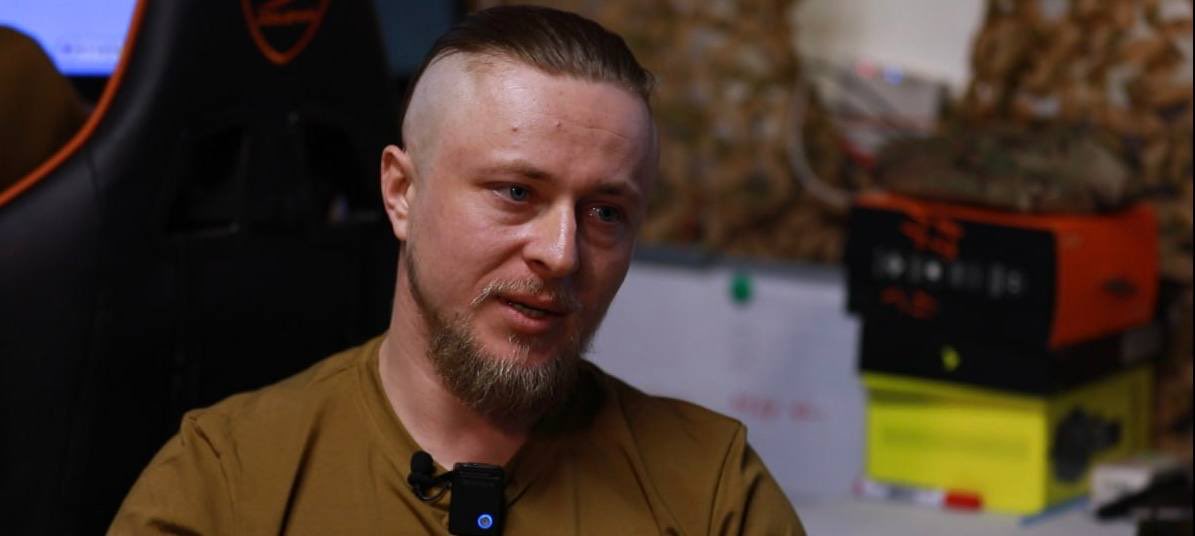
He used to fix pipes. Now he reads the Russian army’s mind. Meet the Ukrainian plumber who became an intelligence analyst.

Callsign “Lys” — “Fox” — is a plumber and gas welder by trade. Today he sits in a small room near Ukraine’s front line and listens to Russian radio traffic.

He hears Russian assault troops asking their commanders for water and being told to crawl forward instead. He hears wounded Russian soldiers being abandoned by their own. He predicts Russian assaults before they begin — by listening to the silence between the words.

He works alongside commander “Shonni,” whose unit has suppressed nearly 11,800 Russian drones in a single year with mostly homemade equipment.

ArmyInform spent time with them.
This is what the radio war actually sounds like. 🧵Image 1/7 — Inside the room where Russian movements are predicted
A small room. Dozens of information streams converging at once. Drone footage. Radio intercepts. Movement reports. Map updates.

Operational analyst “Lys” (“Fox”) and his team assemble the picture of Russian operations — fragment by fragment — every day.

“We collect every type of data, every piece of information we can get about the enemy, and then we analyse it with different resources. We know which enemy unit is where, what tasks they’re performing, through which channels they transmit information.”

Encrypted Russian communications come in as colours, numbers, and code words. Chaos to a civilian. A coherent system to Lys.

“Yesterday we received information about possible enemy movement. I plotted the route, understood where they might emerge, and passed it to the pilots. The Mavics spotted the enemy. The FPV pilots destroyed him.”

This is the Ukrainian intelligence cycle in 2026: prediction, observation, destruction. Minutes apart, sometimes seconds.
May 16 8 tweets 6 min read
A Russian tank is 40 kilometres from the front line. The crew thinks they’re safe.

The crew is wrong.

A Ukrainian fixed-wing reconnaissance drone is already overhead. The tank’s coordinates are already in Delta — Ukraine’s combat coordination system.

The strike drones are already queuing up. The tank has minutes to live, and the soldiers riding past in the truck behind it don’t know they’re about to be a bonus.

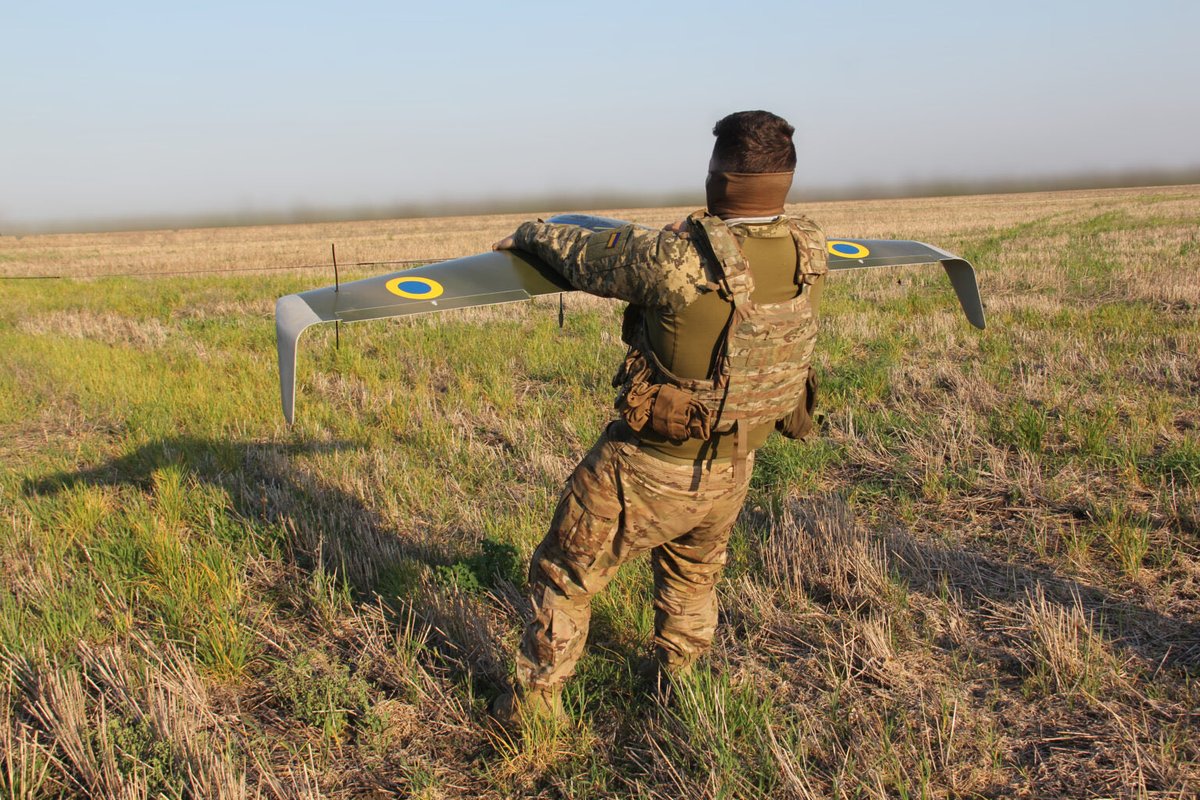
Meet “Domakha” — the reconnaissance wing crew of Ukraine’s 42nd Separate Mechanised Brigade.

ArmyInform spent a day with them. This is what modern warfare actually looks like in 2026. 🧵👇Image 1/7 — The kill zone is now 50 kilometres deep
On the Novopavlivka direction, Ukrainian fixed-wing reconnaissance drones have transformed Russian rear areas into something the Russians cannot escape: a continuous surveillance zone where every movement is observed and almost every movement becomes a target.

Domakha, the crew’s reconnaissance wing UAV, flies up to 50 kilometres deep into Russian-held territory.

Sometimes further. It identifies positions, equipment, and personnel — and feeds that information to strike crews who finish the work.

Senior crew member “Ramiro” explains why the wing matters more than smaller quadcopters like the Mavic:

“The wing, unlike the Mavic, can fly to where the enemy most often hides things. They try to accumulate there before advancing. We fly up to 50 kilometres. Sometimes further. We detect positions, equipment, personnel. We pass it on, and the guys work it from there. It’s very useful to fly there.”Image
May 14 8 tweets 5 min read
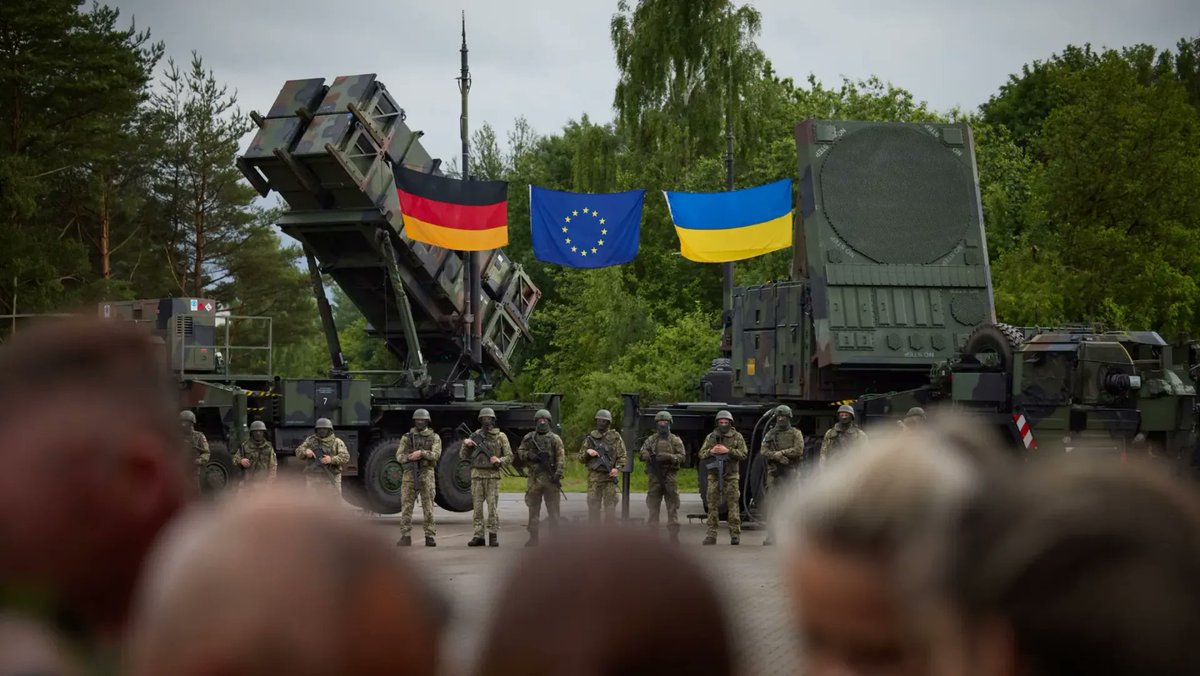
🇩🇪🇺🇦€11.5 Billion. Patriot missiles. Joint drone production. Why Germany's investment in Ukraine is investment in Germany.

Germany is now Ukraine's largest defence partner — providing nearly one-third of all security assistance Ukraine receives. But the relationship is no longer one of donor and recipient. It has become something more strategically consequential: a genuine partnership.

Ukraine brings combat-tested technology, real war data, and operational knowledge that no other country in the world can offer. Germany brings industrial capacity, capital, and the political will to build a European defence architecture that doesn't depend on borrowed time.

Both sides need each other. Both have admitted it. The agreements signed in 2025 and 2026 prove it. 🧵👇Image 1/7 — The €11.5 billion commitment for 2026
Germany plans to direct at least €11.5 billion to military assistance for Ukraine in 2026. The figure funds both existing contracts and current Defence Forces requirements — and reflects the German government's assessment that sustained, predictable defence investment in Ukraine is more cost-effective than late-stage reaction to Russian escalation.

What that envelope covers spans every category that defines modern war: air defence, drone and missile capabilities, long-range ammunition, joint production, and shared innovation. Not aid. Operational capability.
May 6 9 tweets 5 min read
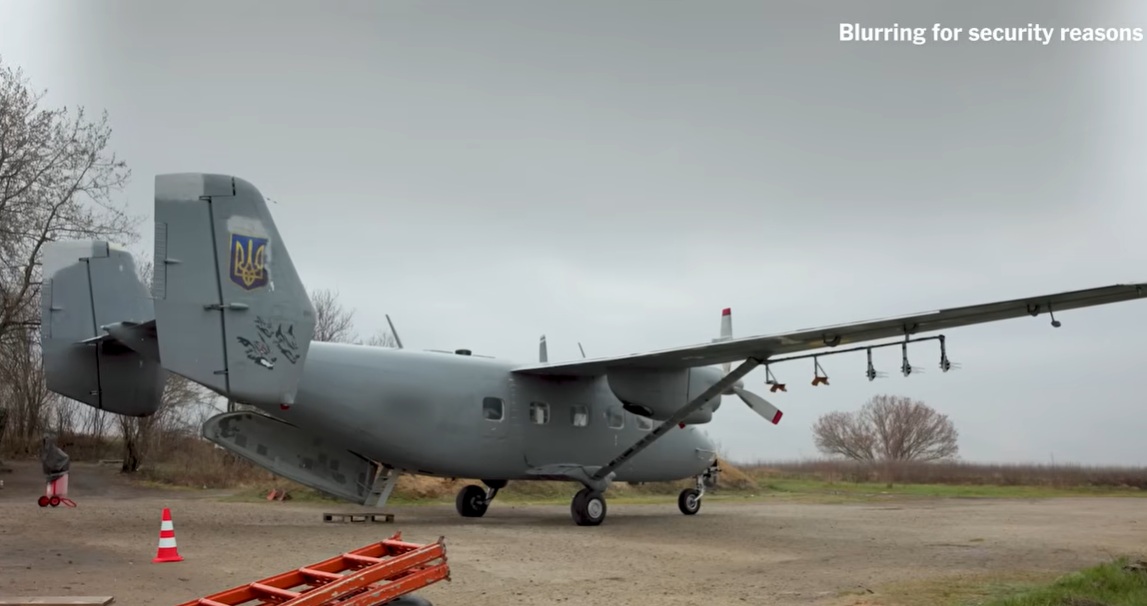
An old soviet parachute plane. A 3,000-rounds-per-minute American Minigun. A volunteer crew of two pilots — one of them a former world champion. And 213 russian drones marked on the fuselage.

Meet Ukraine’s most unusual air defence unit.

The New York Times @nytimes published footage of one of the most unusual air defence units in this war. It’s Ukrainian. It’s experimental. It’s working.

This is the story. 🧵Image 1/8 — The aircraft and the weapon

The plane is an An-28 — a Soviet-era short takeoff and landing aircraft, originally used for parachute jumps. Today it’s been converted into something its designers never imagined: an airborne anti-drone platform.

Mounted on board: an 🇺🇸M134 Minigun — American-made, six-barrelled, capable of firing up to 3,000 rounds per minute. Fifty rounds per second.

Below the wings: hardpoints for interceptor drones.
Painted on the fuselage: 213 marks, one for each Russian drone the crew has shot down.Image
May 2 5 tweets 3 min read
Kharkiv is 30 km from russia. That’s why Ukraine is building AI-enabled air defence that thinks faster than humans can🧵.

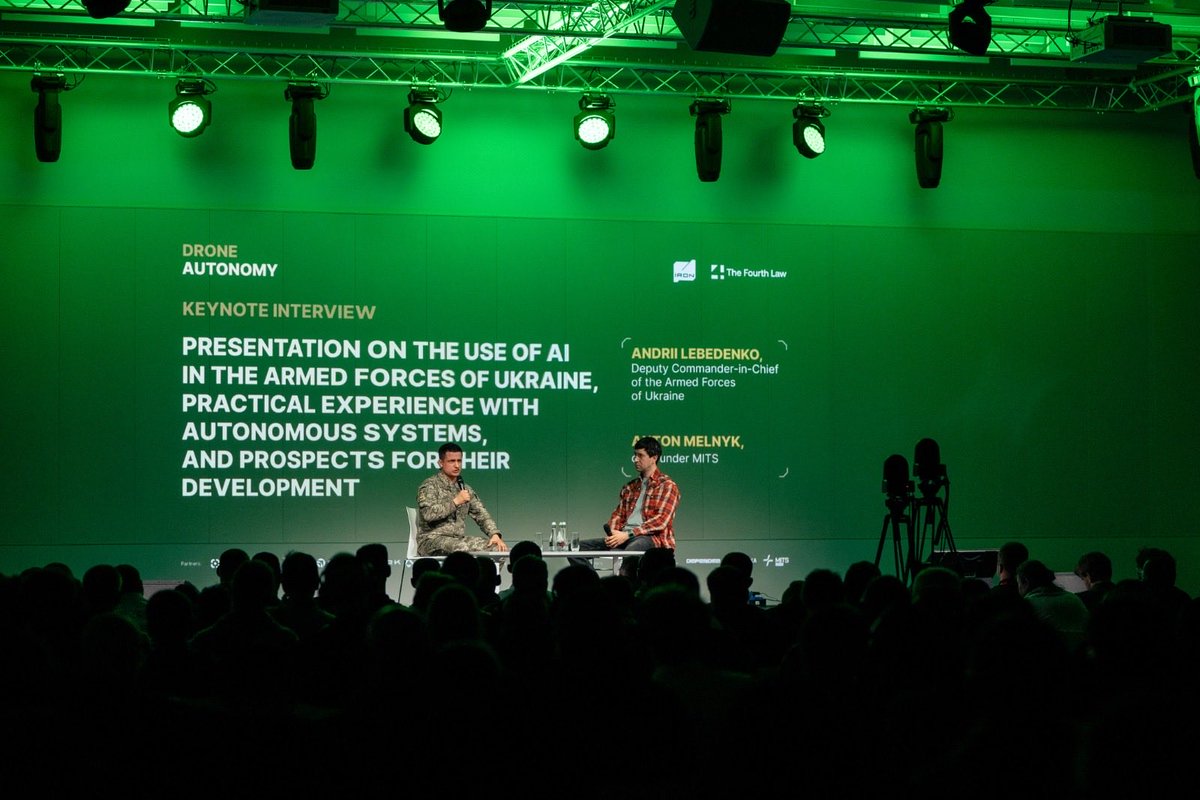
Brigadier General Andriy Lebedenko — Deputy Commander-in-Chief of Ukraine’s Armed Forces — at Drone Autonomy 2026 in Lviv made statements that deserve the attention of every defence analyst and policymaker tracking this war.👇Image 2/ AI command systems are operational now — not a future project.

“Imagine all these processes — enemy assessment, own forces, their numbers, training, supply, weapons — processed by artificial intelligence in seconds, providing an almost instant result. Analysis of data spanning months and years. We no longer spend hours or days — only minutes, receiving our own high-quality, verified information concentrate that can model the future battle and its development scenarios.”

Every headquarters from battalion to corps currently has humans doing this work manually. Lebedenko confirmed that projects integrating AI into Command & Control systems are already running — and that this is an urgent operational need, not a long-term aspiration.

“The integration of modern management systems and AI agents is not a future prospect. It is an urgent need today — and work in this direction is already underway.”Image
Apr 30 8 tweets 6 min read
Ukraine cannot afford an Iron Dome. So it is building something more difficult. The man who broke russia's armour for $13.8 billion explains the challenges.

He was a TV producer. Then he built the most lethal drone unit in Ukraine's war. Now he's been handed the hardest job in the country.

Meet Pavlo Yelizarov — callsign "Lasar" — founder of Lasar's Group, now Deputy Commander of Ukraine's Air Forces for small air defence and counter-drone operations.

In a rare, deeply candid interview with Ukrainska Pravda @ukrpravda_news on April 30, he gave the most honest public account of where Ukraine's war actually stands — the achievements, the gaps, and what is being done about them. 🧵👇Image 2/ Who Lasar's Group is — and why Yelizarov's voice matters
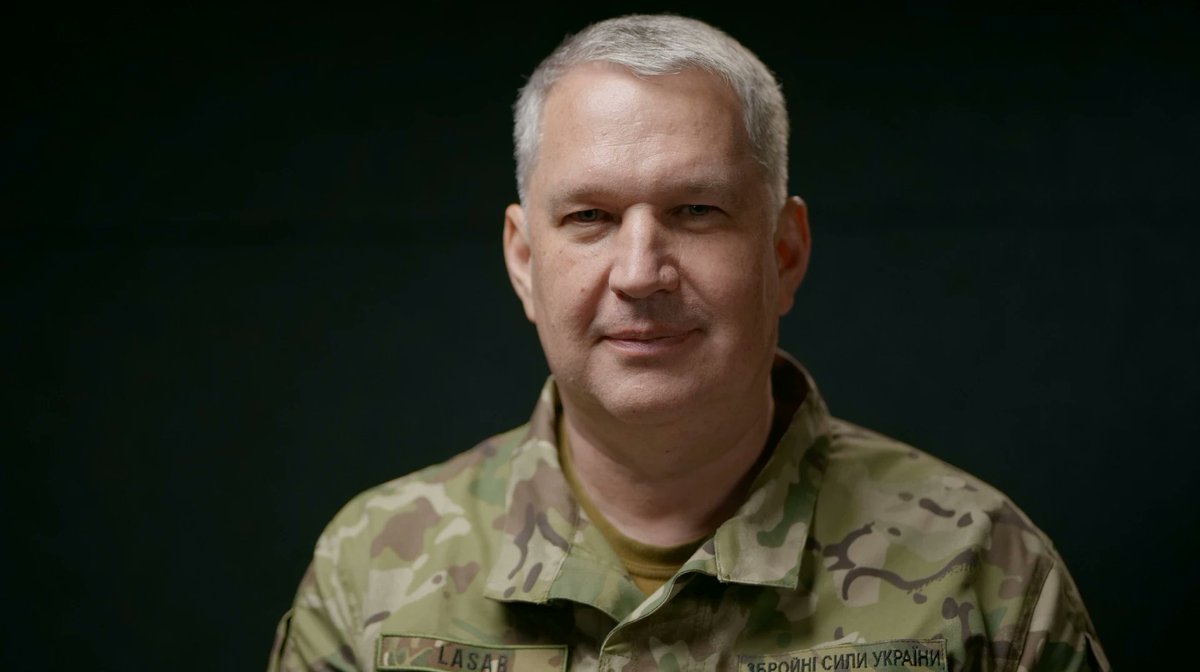
In May 2022, a former TV producer attached a Starlink terminal to a consumer drone in a field — the first time it had ever been done — and bypassed the radio horizon entirely. Suddenly, his unit could fly low, maintain video signal, and strike targets at distances conventional drone operators couldn't reach.

That insight became Lasar's Group. Today it has destroyed over $13.8 billion worth of Russian equipment.

In March 2026, it ranked first in all eight effectiveness categories tracked by Ukraine's eBaly combat performance system.

1,900 people. Three brigades. Built for result, not for size.

When Minister Fedorov @FedorovMykhailo called Yelizarov on vacation and invited him to join the Air Forces leadership, the argument that convinced him was simple: "We can sit by the TV and tell footballers how to play. Or we can go onto the field. I'm inviting you to play."

He flew back that day.Image
Apr 27 10 tweets 3 min read
Ukraine Has a Destruction Plan. They’re Exceeding It. Four Months Running. Madyar Just Told BBC How.

@BBC just published a rare interview with the commander of Ukraine’s Unmanned Systems Forces @usf_army — “Madyar” — Robert Brovdi.

Art collector. Grain trader. Former Christie’s regular. Now running the most technologically advanced drone warfare operation in history from a secret underground command centre.

This is what he said. 🧵👇Image 1/

“The territory 1,500–2,000 km inside Russia is no longer a peaceful rear. The freedom-loving Ukrainian ‘bird’ flies there whenever and wherever it wants.”
Apr 22 6 tweets 5 min read
Nobody Knew Scotland Until Braveheart. Now the World Has 🇺🇦Killhouse.

Ukraine just made the war film that explains everything you didn’t understand about modern warfare.

It’s called Killhouse.

It opens April 23. And you need to see it.

Here are 5 reasons why. 🧵👇Image 1/ It’s based on a real operation.

And it’s unlike anything you’ve seen on screen.

Two Ukrainian commanders — callsigns Sid and Sova — conducted a real civilian rescue using drones. When director Lyubomyr Levytsky first saw the drone footage, he didn’t believe it was real.

CNN @CNN came to Ukraine, filmed a report, aired it in prime time. The footage got 2 million views and hundreds of thousands of comments.

“I realised this story about drones is something completely new in cinema. It reaches people. It’s understandable. And it needed to be told.”
— Director Levytsky

The film dramatises that operation — and deepens it with one of the most painful realities of this war: children stolen by Russia.

The civilian couple crossing into occupied territory wasn’t retrieving their parents. They were trying to buy back their daughter.Image
Apr 17 18 tweets 5 min read
Russia spent decades and billions building a fleet to dominate the Black Sea.

Ukraine dismantled it with drones — sinking 30+ vessels, evicting the fleet from Crimea, and rewriting the rules of maritime warfare without a large navy of its own.

Every navy in the world is taking notes.
This thread is the receipt and must-read. 🧵👇Image 1/ March 25, 2022 — Saratov (Large landing ship)

A land-based Tochka-U ballistic missile. Fired at a ship. In a port. That had never been done before.

Saratov was destroyed at the dock in occupied Berdiansk. Two more ships fled with fires burning on their decks.

Russia's amphibious landing on southern Ukraine — cancelled.
Apr 16 7 tweets 3 min read
🇺🇦🇵🇪 Ukrainian Soldiers Pulled a Peruvian Father From a River. His Story Is a Warning to All of Latin America.

His name is Freddy Gomez.

He is 41. He has two sons — one of them seriously ill.
He came from Peru to Russia looking for work. He almost didn't come home.

This is his story — and his warning to every man in Latin America being offered easy money in Russia right now. 🧵👇Image 2 / Freddy is a technician from Lima, Peru.

Cameras, computers, electronics. Honest work.

A Colombian contact offered him something better: a government job in Moscow, good pay, official contract.

Everything arranged.

He flew to Russia on February 28.
By March 1, he was drugged at a party, thrown into a car, and waking up inside a Russian military facility.

His phone was gone. His documents were gone.

"I saw the contract and it was all in Russian. I didn't sign it. Then I understood — this wasn't a job. It was military service. And I was going to war."
Apr 13 11 tweets 3 min read
Ukraine Is Quietly Building the Most Important System of This War. It Has Nothing to Do With Weapons.

Ukraine just brought 175 soldiers home from Russian captivity.

What happens next — the system no one talks about. 🧵👇Image 2/ Coming home from a Russian prison is not the end of the ordeal.

It is the beginning of a different one.

Ukraine’s Ministry of Defence @DefenceU has built an 80-facility nationwide system to receive them.

Here is how it works — and why it matters.
Apr 7 5 tweets 2 min read
9,000 robotic missions in one month — Ukraine is automating the frontline🧵

In March alone, Ukraine’s ground robotic systems (UGVs) executed 9,000+ missions — up from ~2,900 in Nov 2025 and 7,000 in Jan 2026.

Since the start of 2026: 32,500 missions — @DefenceU .

This is not experimentation anymore. It’s scaling.

Why it matters?👇Image 2 / What’s happening

Ukraine is systematically shifting high-risk battlefield tasks to robots:

— ammunition resupply
— logistics under fire
— casualty evacuation

Already 167 units are using UGVs (vs 67 in late 2025).

All missions are tracked, verified, and scored via the DELTA battlefield system — turning robotics into a measurable, managed capability.
Mar 27 4 tweets 3 min read
Ukraine is no longer just learning from NATO. It is teaching it🧵

Ukraine’s battlefield experience is now shaping how allied forces train — Ukraine’s General Staff @GeneralStaffUA.

Ukrainian instructors conducted a live demonstration for international trainers under Operation Interflex in the United Kingdom — marking a shift from aid recipient to equal partner.👇Image 2/ What Ukraine brought to the table:

— Small-unit tactics in urban combat
— Fighting in forests with limited visibility
— Immediate response to ambushes
— Assault and keeping positions under fire
— Integration of reconnaissance and FPV drones into every phase of combat

All tested in real, high-intensity war.Image
Image
Image
Image
Mar 26 8 tweets 3 min read
🇺🇦 Ukraine just did in 2 months what takes most militaries years🧵

Ukraine’s Ministry of Defence @DefenceU has deployed Mission Control — a unified AI-powered drone management system — across every single army corps and troop grouping on the front line.

Here’s why this is a bigger deal than it sounds. 👇Image 2/ WHAT IS MISSION CONTROL?

Mission Control is a digital command layer inside Ukraine’s DELTA battlefield ecosystem — a real-time intelligence and coordination platform Ukraine has been building since the full-scale invasion began in 2022.

It tracks every drone unit’s activity across the entire force and converts raw operational data into clean, actionable dashboards — available simultaneously from battalion level all the way up to the General Staff @GeneralStaffUA and Ministry of Defence @DefenceU .
Feb 24 13 tweets 5 min read
147th Artillery Brigade: How Ukraine’s Armed Forces Transformed in 4 Years of War 🧵

Four years after Russia’s full-scale invasion, the story of one brigade shows how modern war — and Ukraine’s military — have evolved.

Meet the 147th Separate Artillery Brigade.👇Image 1/ Built in War. Deployed in Months.

Formed in August 2025 as part of Ukraine’s corps reform, the 147th became the first newly created artillery brigade to deploy at full strength.

By January — fully operational.
No years of peacetime buildup.
Just months.

That’s wartime transformation.Image
Feb 16 7 tweets 3 min read
🇩🇪🇺🇦From German Engineering to Battlefield Reality: Lessons from Wisent in Ukraine

When Germany delivered the Wisent engineering vehicle to Ukraine, it was more than equipment transfer. It was the beginning of a real-time learning cycle under combat conditions.🧵👇Image 2 / Wisent — based on the Leopard 1A platform — is designed to restore mobility under fire. In Ukraine, that capability is tested daily.

“As soon as we hit a minefield, Wisent goes first,” says Oleksii, a Ukrainian instructor who trained in Germany.
“It clears a path by pushing mines aside with its teeth. Then it reverses on its own tracks — and armored vehicles follow.”Image
Mar 16, 2023 7 tweets 3 min read
The russians have already lost 15 #T90M tanks in 🇺🇦 -
Andriy Rudyk, representative of the Center for the Research of Trophy and Prospective Weapons and Military Equipment of @GeneralStaffUA, during a briefing at @MilMediaCenter. Parts of #T90M

📸 Nazar Voloshyn.
2/
Mar 15, 2023 4 tweets 2 min read
👉Media #announcement!
A briefing on the failed 🇷🇺 T-90M main battle tank with the participation of representatives of the Centre for Research on Trophy and Advanced Weapons will take place on March 16, 11:00 a.m., in the Military Media Center.
1/
Elements of the #T90M tank will be demonstrated at the briefing.

❗️Accreditation for media representatives is required and will be available until March 15, 6:00 p.m. Accreditation applications can be sent to psmodu@post.mil.gov.ua
2/