John Cabot - Wikipedia
John Cabot (Italian: Giovanni Caboto [dʒoˈvanni kaˈbɔːto]; c. 1450 – c. 1500) was an Italian[3] navigator and explorer. His 1497 voyage to the coast of North America under the commission of Henry VII of England is the earliest en.wikipedia.org/wiki/John_Cabot
John Cabot (Italian: Giovanni Caboto [dʒoˈvanni kaˈbɔːto]; c. 1450 – c. 1500) was an Italian[3] navigator and explorer. His 1497 voyage to the coast of North America under the commission of Henry VII of England is the earliest en.wikipedia.org/wiki/John_Cabot
known European exploration of coastal North America since the Norse visits to Vinland in the eleventh century.
Cabot is known today as Giovanni Caboto in Italian, as Zuan Chabotto in Venetian, and as John Cabot in English. This was the result of a once-ubiquitous European
Cabot is known today as Giovanni Caboto in Italian, as Zuan Chabotto in Venetian, and as John Cabot in English. This was the result of a once-ubiquitous European

tradition of nativizing names in contemporary documents, something often adhered to by the actual persons themselves. In Venice Cabot signed his names as "Zuan Chabotto", Zuan being a form of John typical to Venice.[4] He continued to use this form in England, at least among
Italians. He was referred to by his Italian banker in London as 'Giovanni', in the only known contemporary document to use this version of his first name.
However, John has not been a popular one for members of the royal family. The memory of King John is tainted by negative depictions of his turbulent reign and troublesome personality and by his role as villain in the Robin Hood stories;[citation needed] Prince Alexander John,
the youngest son of Edward VII, died shortly after birth; and another Prince John, the sickly youngest son of George V, died at age 13.
The family became very powerful, and it was claimed that by the late 1750s they were "involved in every major event in the British Empire".
Johnstone sat in the House of Commons of Great Britain from 1774 to 1780, having bribed his way to a victory in the Dysart Burghs.
Johnstone sat in the House of Commons of Great Britain from 1774 to 1780, having bribed his way to a victory in the Dysart Burghs.
John Johnstone (28 April 1734 – 10 December 1795)[3] was a Scottish nabob,[4] a corrupt official of the British East India Company who returned home with great wealth. Described as "a shrewd and unscrupulous business man",[5] he survived several scandals and became a major
landowner when he returned to Scotland in 1765.
A nabob /ˈneɪbɒb/ is a conspicuously wealthy man deriving his fortune in the east, especially in India during the 18th century with the privately held East India Company.[1
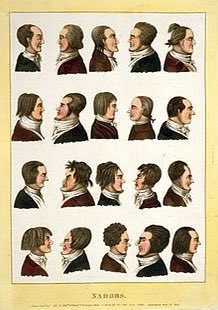
The English use of nabob was for a person who became rapidly wealthy in a foreign country, typically India, and returned home with considerable power and influence.[9] in England, the name was applied to men who made fortunes working for the East India Company and, on their
return home, used the wealth to purchase seats in Parliament
The collapse of the Company's finances in 1772 due to bad administration, both in India and Britain, aroused public indignation towards the Company's activities and the behaviour of the Company's employees.[10]
The collapse of the Company's finances in 1772 due to bad administration, both in India and Britain, aroused public indignation towards the Company's activities and the behaviour of the Company's employees.[10]
Samuel Foote gave a satirical look at those men who had enriched themselves through the East India Company in his 1772 play, The Nabob.
Pitt's India Act of 1784 gave the British government effective control of the private company for the first time. The new policies were designed for an elite civil service career that minimized temptations for corruption
The Act also stated that to pursue schemes of conquest and extension of dominion in India are measures repugnant to the wish, the honour and the policy of this nation.[3] (This would later change with the rise of Napoleon and French interest in India).
By a supplementary act
By a supplementary act
passed in 1786 Lord Cornwallis was appointed as the 2nd governor-general of Bengal, and he then became the effective ruler of British India under the authority of the Board of Control and the Court of Directors. The constitution set up by Pitt's India Act did not undergo any
major changes until the end of the company's rule in India in 1858.
The East India Company Act (EIC Act 1784), also known as Pitt's India Act, was an Act of the Parliament of Great Britain intended to address the shortcomings of the Regulating Act of 1773 by bringing the East
The East India Company Act (EIC Act 1784), also known as Pitt's India Act, was an Act of the Parliament of Great Britain intended to address the shortcomings of the Regulating Act of 1773 by bringing the East
India Company's rule in India under the control of the British Government. Named for British prime minister William Pitt the Younger, the act provided for the appointment of a Board of Control, and provided for a joint government of British India by the Company and the Crown
with the government holding the ultimate authority. A six member board of control was set up for political activities and Court of directors for financial/commercial activities. As the Regulating Act had many defects, it was necessary to pass another Act to remove these defects.
• • •
Missing some Tweet in this thread? You can try to
force a refresh