Texas Eastern Transmission Pipeline - Wikipedia
Texas Eastern Pipeline (TETCo) is a major natural gas pipeline which brings gas from the Gulf of Mexico coast in Texas and Louisiana up through Mississippi, Arkansas, Tennessee, Missouri, Kentucky, Illinois, en.wikipedia.org/wiki/Texas_Eas…
Texas Eastern Pipeline (TETCo) is a major natural gas pipeline which brings gas from the Gulf of Mexico coast in Texas and Louisiana up through Mississippi, Arkansas, Tennessee, Missouri, Kentucky, Illinois, en.wikipedia.org/wiki/Texas_Eas…
Indiana, Ohio, and Pennsylvania to deliver gas in the New York City area. It is one of the largest pipeline systems in the United States. It is owned by Enbridge. Its FERC code is 17.[1]
This pipeline was built as Big Inch by War Emergency Pipelines (WEP), a consortium of
This pipeline was built as Big Inch by War Emergency Pipelines (WEP), a consortium of
Standard Oil Company of New Jersey, Texas Pipe Line Company, Cities Service, Socony-Vacuum Oil, Gulf Oil, Consolidated Oil, Shell Oil, Atlantic Refining, Tidewater Associated Oil, Sun Oil and Pan American Petroleum and Transport Company. 
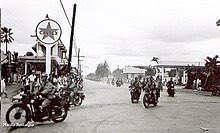
Caltex station seen on the side, as the Imperial Japanese Army captures Manila in WW2 (1942)
Malaysia
Caltex was established in the Philippines in 1917 when Texas Company began marketing its products in the Philippines through a local distributor, Wise and Co.[15] In 1921,
Malaysia
Caltex was established in the Philippines in 1917 when Texas Company began marketing its products in the Philippines through a local distributor, Wise and Co.[15] In 1921,
Texaco (Philippines) was formally established and opened its office in Binondo, Manila.[15] Eleven years later, its Pandacan oil depot was converted into a key distribution terminal to bring products by barge to nearby provinces.[15]
They only sell two kinds of gasoline namely
They only sell two kinds of gasoline namely
Caltex Platinum (Replacement of Gold) (95 octane) and Caltex Silver (91 octane) and one kind of diesel named Caltex Diesel. All these products contain Techron.
Caltex had a subsidiary in India in the early 1940s through the early 1980s, however as state owned corporation
Caltex had a subsidiary in India in the early 1940s through the early 1980s, however as state owned corporation
Indian Oil came in to market, strategically Caltex decided to reduce its operation in India. In State of Gujarat there were 2 major dealers of Caltex, T.C. Brothers Company (Saurashtra region) & MS. N. K. Sheth Co. CEO of T.C. Brothers Co, was Mr. Tribhovandas D Parekh (also
known as Mr. Pampu-sheth ) & Chairman was Mr. Cuhnilal D Parekh. T. C. Brothers company dealt in Petrolium products, service station for automobiles, paint, tiles, pipes, cements and transportation of oil, kerosene, gasoline/petrol in state of Gujarat. In 2010, Caltex started
trading under the name GS Caltex.[1
A quarter of Caltex's service stations are located in South Africa making it one of the country's top five petroleum brands. As a subsidiary of Chevron it also owns a refinery in Milnerton, north of Cape Town which has a production capacity
A quarter of Caltex's service stations are located in South Africa making it one of the country's top five petroleum brands. As a subsidiary of Chevron it also owns a refinery in Milnerton, north of Cape Town which has a production capacity
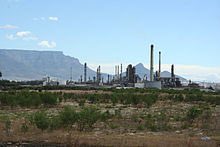
of 100,000 barrels per day and produces a range of petrochemical products which include petrol, diesel, jet fuel, liquefied petroleum gas, fuel oil and paving asphalt. The company also has a lubricants manufacturing plant and laboratory in Durban.[18]
Caltex had been criticized.
Caltex had been criticized.
frequently
Tenneco, Inc.'s origin was in the Chicago Corporation, established about 1930.[5] Tennessee Gas and Transmission Company (completely separate) had been formed in 1940.[6]
Natural gas
Edit
A shortage of fuel for World War II defense industries in the Appalachian
Tenneco, Inc.'s origin was in the Chicago Corporation, established about 1930.[5] Tennessee Gas and Transmission Company (completely separate) had been formed in 1940.[6]
Natural gas
Edit
A shortage of fuel for World War II defense industries in the Appalachian
area developed when industrial production was increased. The nuclear development operations of the Manhattan Project at Oak Ridge, Tennessee consumed huge quantities of Tennessee Valley Authority electrical power that would have otherwise been available to other industrial
operations. The Chicago Corporation was able to acquire a Federal Power Commission (FPC) license to build a pipeline from Texas to Appalachia, eventually expanding to the largest natural gas pipeline network in the United States. These pipelines were acquired by
El Paso Corporation in 1996, and are now owned by Kinder Morgan.
In the 1950s, the company acquired existing oil companies, including Sterling Oil, Del-Key Petroleum, and Bay Petroleum.[7] The Tennessee division of the Chicago Corporation acquired Tennessee Gas Transmission
In the 1950s, the company acquired existing oil companies, including Sterling Oil, Del-Key Petroleum, and Bay Petroleum.[7] The Tennessee division of the Chicago Corporation acquired Tennessee Gas Transmission
Company in 1943 to build a natural-gas pipeline 1,265 miles (2,036 km) from Texas to West Virginia. The first line was completed in October 1944. It was followed by three additional pipelines totaling 3,840 miles (6,180 km)[6] during the next 15 years which provide gas to
New York and New Jersey.[8]
In 1966, Tennessee Gas was incorporated as Tenneco, Inc.[5] Tenneco expanded into a number of business ventures as a result of diversification. In 1967, the company acquired Walker, Inc., a manufacturer of universal-fit exhaust mufflers and pipes.
In 1966, Tennessee Gas was incorporated as Tenneco, Inc.[5] Tenneco expanded into a number of business ventures as a result of diversification. In 1967, the company acquired Walker, Inc., a manufacturer of universal-fit exhaust mufflers and pipes.
The year after, they started working on the construction of a universal-fit catalytic converter, that would become a cost-effective alternative to the OE catalytic converters. It took the company 8 years to introduce one. Tenneco bought Houston Oil & Minerals Corporation in the
late 1970s. Tenneco owned and operated a large number of gasoline service stations, but all were closed or replaced with other brands by the mid-1990s.
Solomon Robert Dresser invented a "packer", using rubber for a tight fit, and after taking out a patent on May 11, 1880, he began advertising and selling his product, the Dresser Cap Packer, from Bradford, Pennsylvania, in the heart of the oilfields. Dresser's packer was one of
many available on the market, and it was another invention that saw a substantial expansion of the company. A flexible coupling, the Dresser Joint, that he built in 1885 to join pipes together in such a way that they would not leak natural gas. This coupling also used rubber for
a tight fit, and it was so successful that it permitted for the first time the long-range transmission of natural gas from the gas fields where it was extracted to the cities which were the main gas consumers.
Following Dresser's death, his descendants decided to sell it, and in 1928 the Wall Street investment-banking firm of W. A. Harriman and Company, Inc., converted the firm into a public company by issuing 300,000 shares of stock.[5]
H. Neil Mallon was selected as president and
H. Neil Mallon was selected as president and
chief executive officer; he held that position until his retirement in 1962. Under Mallon, Dresser began a program of acquisitions designed to help it survive the threat posed to its core business by the introduction of welding for joining pipes together. Starting in 1930 Dresser
began acquiring companies that manufactured valves, heaters, pumps, engines and compressors and the company diversified into such products as oil derricks, blowers, drill bits, refractories, and drilling mud.[
In 1968, the Wayne Oil Tank and Pump Company, established in 1891,[7] merges with Dresser,[8] becoming the Dresser-Wayne Company.[9] Dresser Industries brought together Lane-Wells and the Pan Geo Atlas Corporation (PGAC) to form Dresser Atlas. PGAC's expertise in openhole
logging and its international operations made it an ideal merger partner to form an integrated wireline services company.
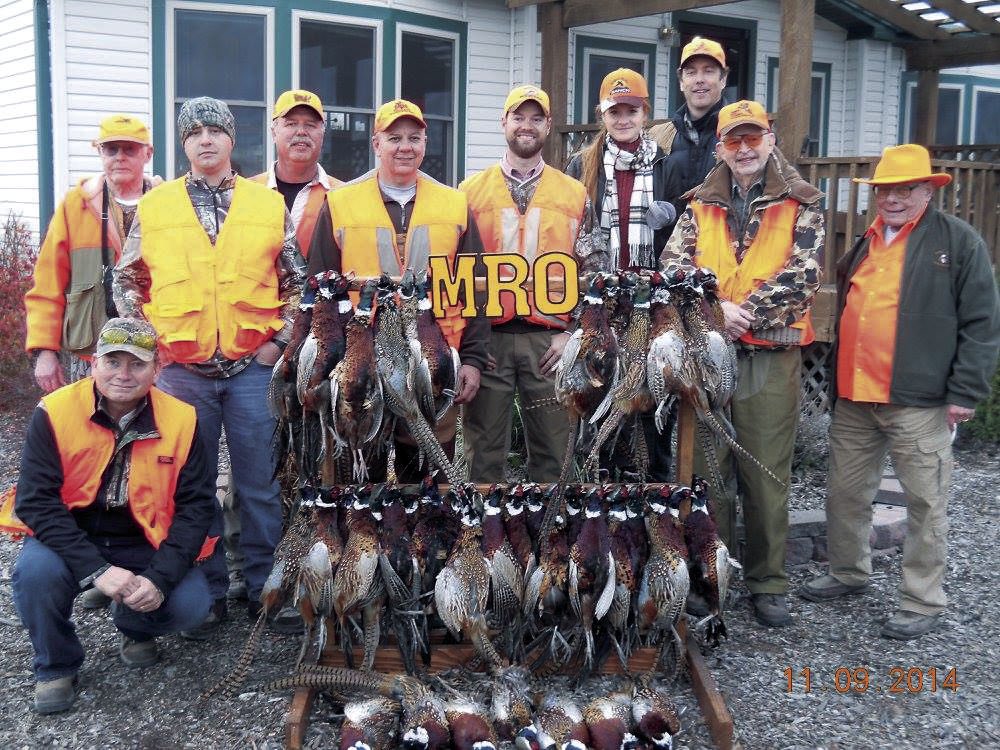
In 1998, Dresser merged with its main rival Halliburton and became known as Halliburton Company.[1] Dick Cheney negotiated the US$7.7 billion deal, reportedly having done so during a weekend of quail-hunting. In 2001, Halliburton was forced to settle the asbestos lawsuits that
it acquired including the landmark case Bell v. Dresser Industries [16] as a result of purchasing Dresser, causing the company's stock price to fall by eighty percent in just over a year.[17]
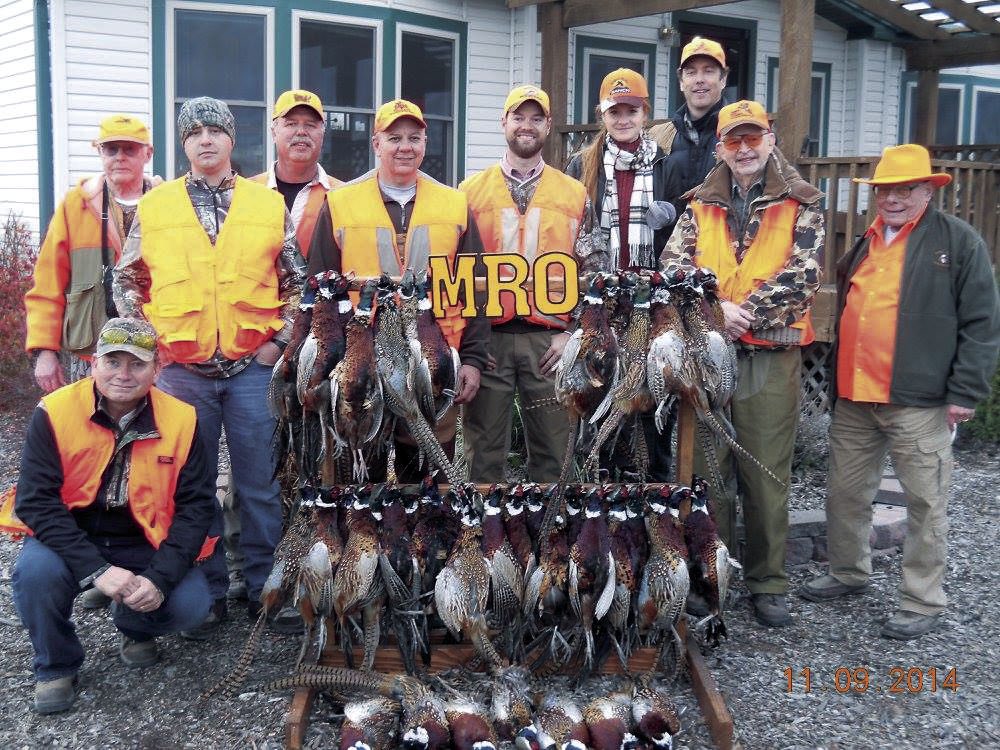
Orange Jackets is the oldest service organization for women and non-binary folks at the University of Texas at Austin. The group was founded in 1923 as a women's honorary service organization, named for their distinctive orange vests.
Butina and Paul
Sack Lodge grub worm pop
Butina and Paul
Sack Lodge grub worm pop
Bell Aircraft Corporation, on July 10, 1935. On a government-sponsored "spy tour" to Germany with 44 other industrialists in 1938, he saw the Focke-Wulf Fw 61 helicopter, and used the layout of a German aircraft factory for his Niagara Falls plant.[1] Bell Aircraft built the
P-39 Airacobra and P-63 Kingcobra fighter aircraft during World War II. Bell's P-59 Airacomet fighter was America's first jet-powered aircraft. Postwar, the company produced the Bell X-1, the first aircraft to break the sound barrier in level flight. The company began
developing helicopters in 1941, with the Bell 30 taking its maiden flight in 1943. This early model evolved into the Bell 47, the first helicopter to be certified for civilian use. The Model 47 saw worldwide success, with over 5,600 being built, serving notably in the Korean War,
Bell's greatest enduring legacy is perhaps the UH-1 Iroquois, with over 16,000 produced, advanced versions of which remain in production. The "Huey" transformed US Army aviation during the Vietnam War, and became one of the most recognizable aircraft in history.
For his role in
For his role in
the X-1's first supersonic flight, he shared the 1947 Collier Trophy with pilot Chuck Yeager and John Stack, a research scientist with the National Advisory Committee for Aeronautics (now NASA). He was awarded the Society of Automotive Engineers' Daniel Guggenheim Medal in 1944,
and was posthumously inducted into the National Aviation Hall of Fame (1977), the Army Aviation Hall of Fame (1986), and the International Aerospace Hall of Fame (2004
The Glenn L. Martin Bomber Plant (also known as Air Force Plant 1) was an aircraft manufacturing facility in the central United States, located at Offutt Field, Nebraska, south of Omaha. Adjacent to suburban Bellevue in Sarpy County, the plant was operational during World
War II, from 1942 to 1945.
Offutt Air Force Base /ˈɒfʌt/ (IATA: OFF, ICAO: KOFF, FAA LID: OFF) is a U.S. Air Force base south of Omaha, adjacent to Bellevue in Sarpy County, Nebraska. It is the headquarters of the U.S. Strategic Command (USSTRATCOM), the 557th Weather Wing,
Offutt Air Force Base /ˈɒfʌt/ (IATA: OFF, ICAO: KOFF, FAA LID: OFF) is a U.S. Air Force base south of Omaha, adjacent to Bellevue in Sarpy County, Nebraska. It is the headquarters of the U.S. Strategic Command (USSTRATCOM), the 557th Weather Wing,
and the 55th Wing (55 WG) of the Air Combat Command (ACC), the latter serving as the host unit.



Up to this point, the WPD of the War Department was responsible for planning all aspects of Army, and Army Air Corps expansion in the U.S.[6] George was challenged by WPD which contested AWPD's and Air Staff's authority to make strategic plans. WPD recommended that AWPD is
limited to tactical planning, and that the Air Staff, in a subordinate role, should advise the WPD rather than make its own operational or strategic plans. George pushed for greater autonomy—he wished to prepare all plans for all air operations.[6]
On 9 July 1941, President
On 9 July 1941, President
Roosevelt asked Frank Knox, the Secretary of the Navy, and Henry L. Stimson, the Secretary of War, for an exploration of the total war production required for the United States to prevail in case of war.[1] The WPD, in order to project long-term numbers, realized that Rainbow 5
would now be used as a basis for production quantities, but it lacked detailed air power figures. Stimson requested of Robert A. Lovett, Assistant Secretary of War for Air,[7] that the USAAF be tapped for their ideas about production numbers. After some bureaucratic delay, the
AWPD received the request.[1]
Lovett was born on September 14, 1895 in Huntsville, Texas to Robert S. Lovett, president and chairman of the board of the Union Pacific Railroad and a Director of both The National City Bank of New York and Western Union.[
Lovett was born on September 14, 1895 in Huntsville, Texas to Robert S. Lovett, president and chairman of the board of the Union Pacific Railroad and a Director of both The National City Bank of New York and Western Union.[

On April 19, 1919, Lovett married debutante Adele Quartley Brown, daughter of James Brown (1863–1935), a descendant of Alexander Brown (1764—1834) and the New York Brown banking family that, in 1931, would merge with another Wall Street firm, Harriman Brothers & Company,
forming Brown Brothers Harriman & Co.,[5] and Adele Quartley (1866 – 1954), daughter of famed seascape painter, Arthur Quartley; the couple had two children.
After World War II broke out in Europe, Stimson accepted President Franklin Roosevelt's appointment to the position as Secretary of War. After the United States entered World War II, Stimson took charge of raising and training 13 million soldiers and airmen, supervised the
spending of a third of the nation's GDP on the Army and the Air Forces, helped formulate military strategy, and oversaw the Manhattan Project to build the first atomic bombs.
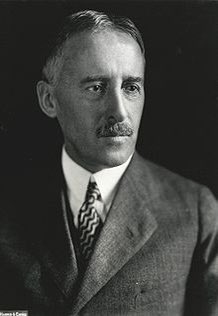
Ezra Cornell (/kɔːrˈnɛl/; January 11, 1807 – December 9, 1874) was an American businessman, politician, and philanthropist. He was the founder of Western Union, founder of Ithaca's first library, and a co-founder of Cornell University. He also served as President of the New York
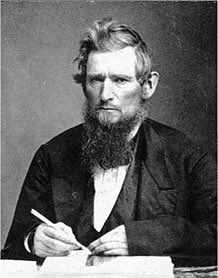
Agriculture Society[1] and as a New York State Senator.
Upon arriving in Ithaca, NY in the spring of 1828, Cornell first found work as a carpenter before being hired as a mechanic by Otis Eddy to work at his cotton mill on Cascadilla Creek.
Upon arriving in Ithaca, NY in the spring of 1828, Cornell first found work as a carpenter before being hired as a mechanic by Otis Eddy to work at his cotton mill on Cascadilla Creek.
During Cornell's long association with Beebe, he designed and built a tunnel for a new mill race on Fall Creek; a stone dam on Fall Creek, which formed Beebe Lake; and a new flour mill. By 1832, he was in charge of all Beebe's concerns at Fall Creek.
Ezra Cornell was a birthright Quaker, but was later disowned by the Society of Friends for marrying outside of the faith to a “world’s woman,” Mary Ann Wood, a Methodist. They were married March 19, 1831, in Dryden, New York.
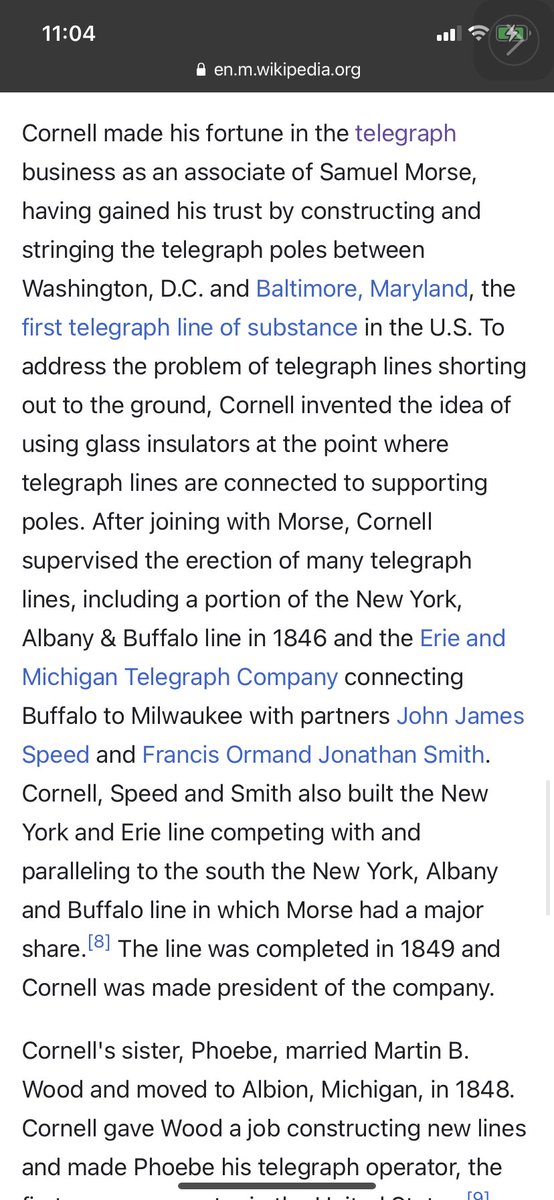
Happening into the offices of the Maine Farmer in 1842, Cornell saw an acquaintance of his, one F.O.J. Smith, bent over some plans for a "scraper" as Smith called it. For services rendered, Smith had been granted a one-quarter share of the telegraph patent held by Samuel F.B.
Morse, and was attempting to devise a way of burying the telegraph lines in the ground in lead pipe.[7] Ezra's knowledge of plows was put to the test and Ezra devised a special kind of plow that would dig a 2 feet 6 inches (76 cm) ditch, lay the pipe and telegraph wire in
the ditch and cover it back up as it went. Later it was found that condensation in the pipes and poor insulation of the wires impeded the electrical current on the wires and so hanging the wire from telegraph poles became the accepted method.
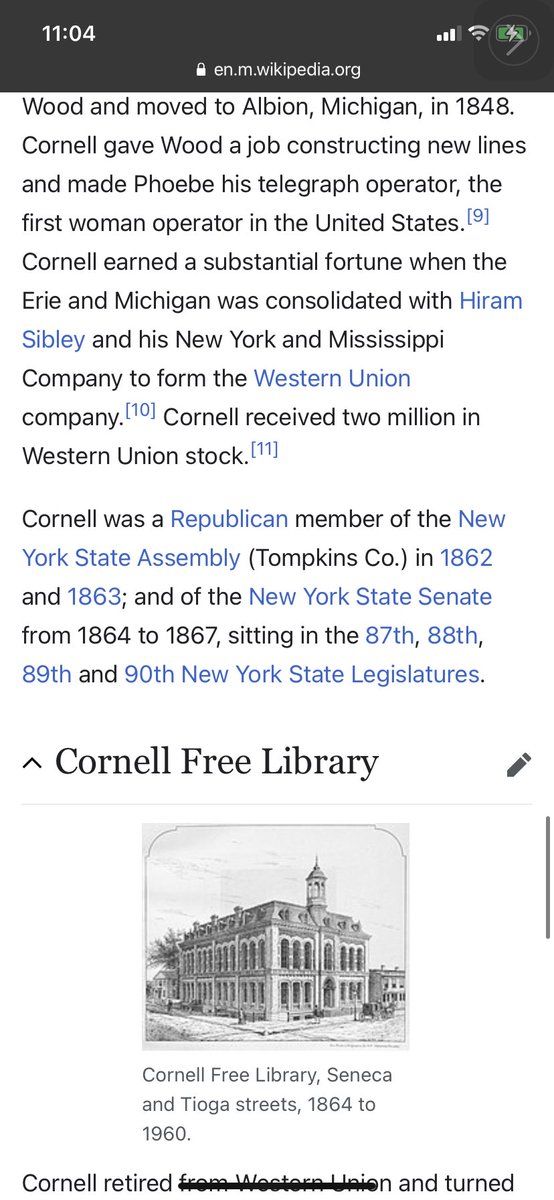
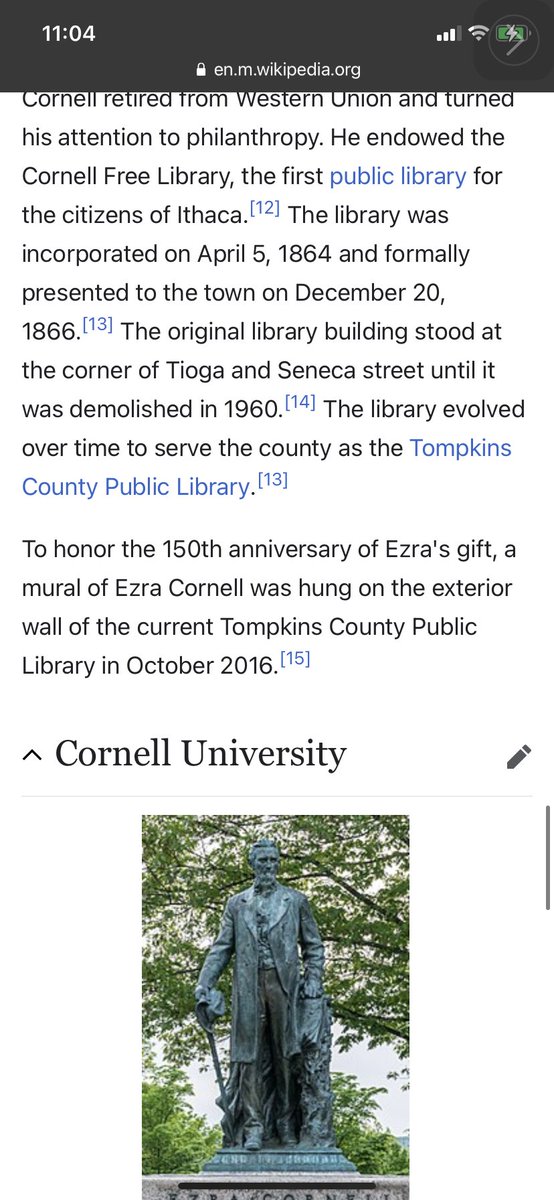
Andrew Dickson White helped secure the new institution's status as New York's land grant university, and Cornell University was granted a charter through their efforts in 1865.
Lands granted by the Morrill Act to universities in states without substantial federal land could be
Lands granted by the Morrill Act to universities in states without substantial federal land could be
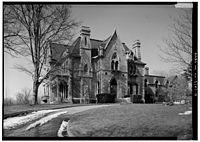
claimed in states having a large surplus of unclaimed land. Cornell University's endowment was based on Ezra Cornell's judicious investment in federal land, especially timber land in Wisconsin. Unlike most land grant universities, which sold their land immediately, under Ezra's
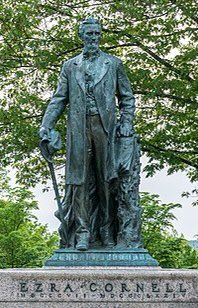
leadership Cornell managed and maintained its land for an extended period, selling it only at the most opportune time. The university was able to reap an unprecedented $5 million endowment as a result.[
• • •
Missing some Tweet in this thread? You can try to
force a refresh