Historic Detroit
While he was best known for his movie palaces, his work wasn't limited to theaters. He also designed Detroit's Olympia Stadium, the former home of the Detroit Red Wings (1927-1987) that sat more than 12,000, as well as the Lafayette historicdetroit.org/architects/c-h…
While he was best known for his movie palaces, his work wasn't limited to theaters. He also designed Detroit's Olympia Stadium, the former home of the Detroit Red Wings (1927-1987) that sat more than 12,000, as well as the Lafayette historicdetroit.org/architects/c-h…
Building (1925-2010). Crane's tallest building was the Leveque Tower in Columbus, Ohio, which stands at 47 stories.
historicdetroit.org/architects/c-h…
historicdetroit.org/architects/c-h…
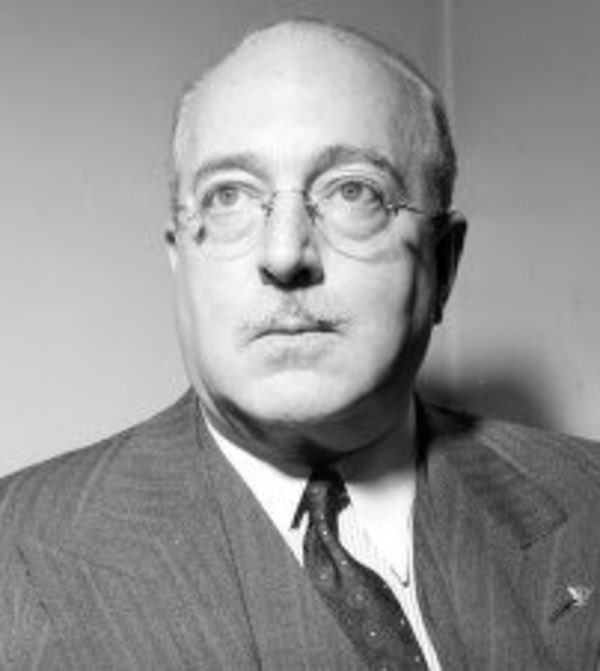
The Great Depression took its toll on Crane, like it did with many businessmen. He lost everything in the stock market crash, and as a result, he moved to London. His office in Detroit was kept open, and he continued to keep in communication with over the years. While in Britain,
Crane continued to design theatres, but never as elaborate as before. 
That theater was the building's main attraction. The UA was the baby of Detroit's movie palaces, as it was the smallest of the giants. The UA was built exclusively for films -- a rarity at the time -- and showed mostly United Artists films. The movie studio was founded in 1919
by actors Charlie Chaplin, Mary Pickford, Douglas Fairbanks and director D.W. Griffith -- four of the biggest names in showbiz at the top. Detroit's UA was one of three that Howard designed in the Spanish Gothic style for the United Artists Theatre Circuit, and followed theaters
in Chicago and Los Angeles.
The Detroit theater was considered the sister of the Los Angeles location. Crane, who had done mostly classic theater designs up until this point, was asked to go with an exotic, Gothic style because Pickford loved the look of European castles,
The Detroit theater was considered the sister of the Los Angeles location. Crane, who had done mostly classic theater designs up until this point, was asked to go with an exotic, Gothic style because Pickford loved the look of European castles,
according to the Los Angeles Theatres Web site. Pickford and Fairbanks are said to have personally approved its design.
An eight-story, jaw-dropping blade marquee clung to the eastern side of the building spelling the name "United Artists" in 80 feet of multicolor bulbs.
An eight-story, jaw-dropping blade marquee clung to the eastern side of the building spelling the name "United Artists" in 80 feet of multicolor bulbs.
The marquee was 7.5 feet wide and featured a sunburst design at its base.
The 2,070-seat Detroit theater opened Feb. 3, 1928, with the showing of "Sadie Thompson." At the show, the film's star Gloria Swanson addressed the audience by telephone, pulling the switch by remote and
The 2,070-seat Detroit theater opened Feb. 3, 1928, with the showing of "Sadie Thompson." At the show, the film's star Gloria Swanson addressed the audience by telephone, pulling the switch by remote and
opening the curtain on the theater's 18-foot-by-22-foot screen for the first time. The temple-style theater's price tag was about $1.2 million (about $15 million).

On July 31, 1957, the Bagley Building Corp. sold the United Artists Building for $3.2 million (about $24 million today) to the Detroit Automobile Inter-Insurance Exchange at the Automobile Club of Michigan. The exchange bought the building to provide permanent office space for
the exchange and the auto club. The two groups occupied about 65% of the building's office space. The bank location on the corner of Clifford was occupied at this time by the National Bank of Detroit.
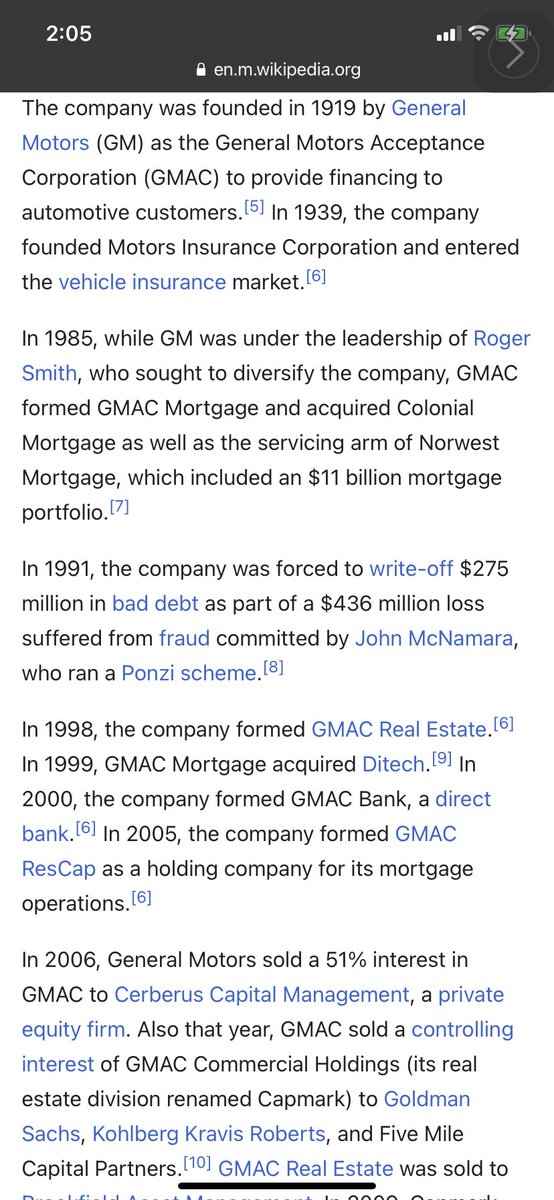
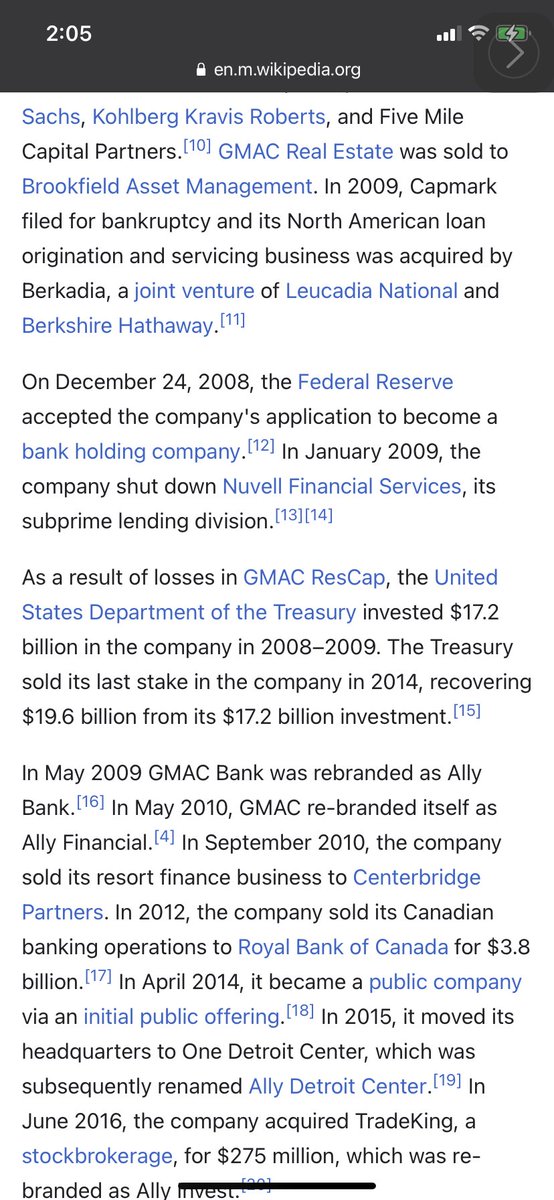
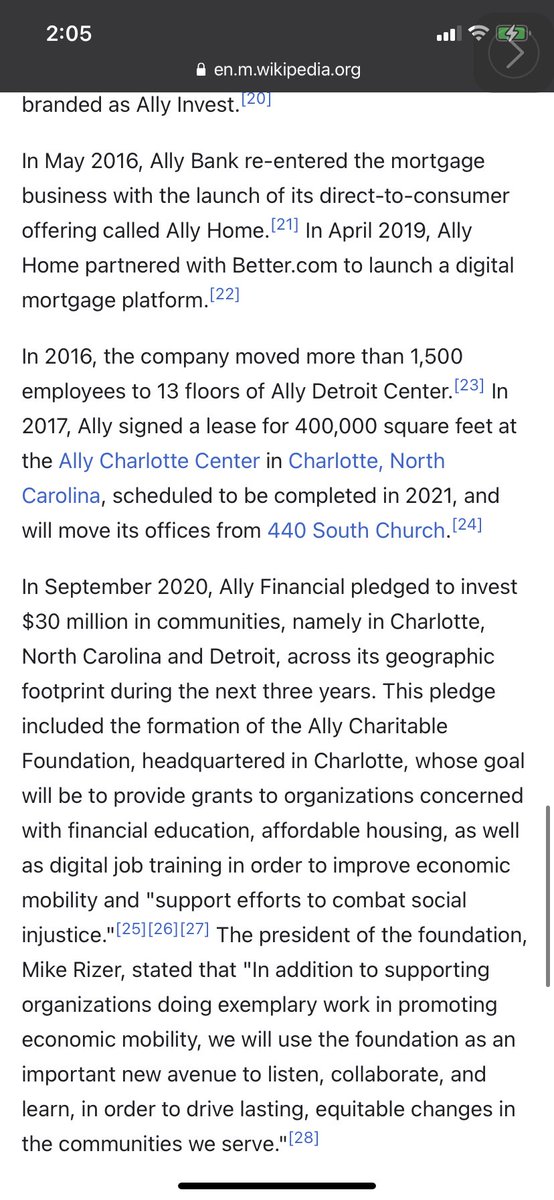
On December 24, 2008, the Federal Reserve accepted the company's application to become a bank holding company.[12] In January 2009, the company shut down Nuvell Financial Services, its subprime lending division.[13][14]
As a result of losses in GMAC
As a result of losses in GMAC
ResCap, the United States Department of the Treasury invested $17.2 billion in the company in 2008–2009. The Treasury sold its last stake in the company in 2014, recovering $19.6 billion from its $17.2 billion investment.[15]
In May 2009 GMAC Bank was rebranded as Ally Bank.[
In May 2009 GMAC Bank was rebranded as Ally Bank.[
16] In May 2010, GMAC re-branded itself as Ally Financial.[4] In September 2010, the company sold its resort finance business to Centerbridge Partners. In 2012, the company sold its Canadian banking operations to Royal Bank of Canada for $3.8 billion.[17] In April 2014, it
became a public company via an initial public offering.[18] In 2015, it moved its headquarters to One Detroit Center, which was subsequently renamed Ally Detroit Center.[19] In June 2016, the company acquired TradeKing, a stockbrokerage, for $275 million, which was re-branded as
Ally Invest.[
The Sensimatic developed into the Sensitronic which could store balances on a magnetic stripe which was part of the ledger card. This balance was read into the accumulator when the card was inserted into the carriage
The Sensimatic developed into the Sensitronic which could store balances on a magnetic stripe which was part of the ledger card. This balance was read into the accumulator when the card was inserted into the carriage
In the 1950s, Burroughs worked with the Federal Reserve Bank on the development and computer processing of magnetic ink character recognition (MICR) especially for the processing of bank cheques.
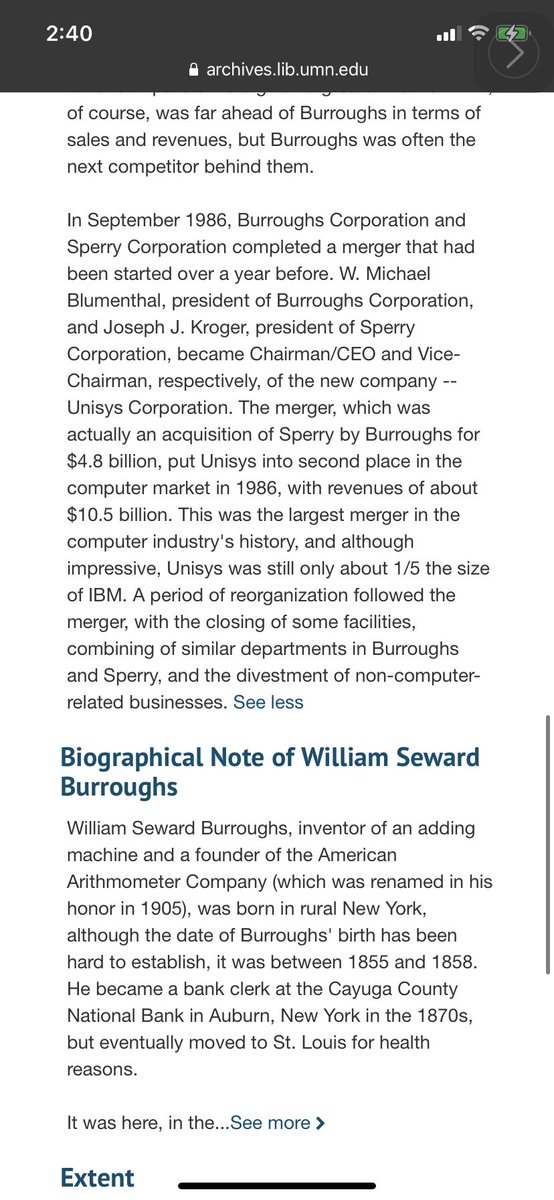
By 1972 when GE and RCA were no longer in the mainframe business, the remaining five companies behind IBM became known as the BUNCH, an acronym based on their initials.
The Burroughs Corporation developed three highly innovative architectures, based on the design philosophy of "language-directed design". Their machine instruction sets favored one or many high level programming languages, such as ALGOL, COBOL or FORTRAN. All three architectures
were considered mainframe class machines:
•Their operating systems, called MCP (Master Control Program—the name later borrowed by the screenwriters for Tron), were programmed in ESPOL (Executive Systems Programming Oriented Language, a minor extension of ALGOL), and later in NEWP (with further extensions to ALGOL)
almost a decade before Unix. The command interface developed into a compiled structured language with declarations, statements and procedures called WFL (Work Flow Language).
Many computer scientists consider these series of computers to be technologically groundbreaking.
Many computer scientists consider these series of computers to be technologically groundbreaking.
reliability.
In industries like banking, where continuous operations was mandatory, Burroughs large systems penetrated most every large bank, including the Federal Reserve Bank. Burroughs built the backbone switching systems for Society for Worldwide Interbank Financial
In industries like banking, where continuous operations was mandatory, Burroughs large systems penetrated most every large bank, including the Federal Reserve Bank. Burroughs built the backbone switching systems for Society for Worldwide Interbank Financial
Telecommunication (SWIFT) which sent its first message in 1977. Unisys is still the provider to SWIFT today.
•Burroughs produced the B2500 or "medium systems" computers aimed primarily at the business world. The machines were designed to execute COBOL efficiently. This
•Burroughs produced the B2500 or "medium systems" computers aimed primarily at the business world. The machines were designed to execute COBOL efficiently. This
included a BCD (Binary Coded Decimal) based arithmetic unit, storing and addressing the main memory using base 10 numbering instead of binary.
Burroughs designated it the B8300 after Trans World Airlines (TWA) ordered one in September 1965. A system with three instruction
Burroughs designated it the B8300 after Trans World Airlines (TWA) ordered one in September 1965. A system with three instruction
processors was installed at TWA's reservations center in Rockleigh, New Jersey in 1968. The system, which was called George, with an application programmed in JOVIAL, was intended to support some 4000 terminals, but the system experienced repeated crashes due to a filing system
disk allocation error when operating under a large load
This system was used successfully in two military projects: field test systems used to check the electronics of the Air Force General Dynamics F-111 Aardvark fighter plane[citation needed] and systems used to control the
This system was used successfully in two military projects: field test systems used to check the electronics of the Air Force General Dynamics F-111 Aardvark fighter plane[citation needed] and systems used to control the
countdown and launch of the Army's Pershing 1 and 1a missile systems
In 2010, Unisys sold off its Payment Systems Division to Marlin Equity Partners, a California-based private investment firm, which incorporated it as Burroughs Payment Systems based in Plymouth, Michigan.
In 2010, Unisys sold off its Payment Systems Division to Marlin Equity Partners, a California-based private investment firm, which incorporated it as Burroughs Payment Systems based in Plymouth, Michigan.
Burroughs B205 hardware has appeared as props in many Hollywood television and film productions from the late 1950s. For example, a B205 console was often shown in the television series Batman as the Bat Computer; also as the computer in Lost in Space.
In 1954, he joined the Shell Oil Company Technical Services, working on programming applications.
While at Shell, in preparing for a conference in Michigan in 1958, Barton was reading Irving Copi's 1954 textbook on "Symbolic Logic" and saw a reference in it to Polish
While at Shell, in preparing for a conference in Michigan in 1958, Barton was reading Irving Copi's 1954 textbook on "Symbolic Logic" and saw a reference in it to Polish
notation.[3] This made him curious about it and its application to arithmetic expressions and their processing on a computer. He also then read the works of Jan Łukasiewicz, who had invented "Polish Notation" back in the early 20th century for use in logic.[3]
Barton joined
Barton joined
Burroughs Corporation (ElectroData Division) in Pasadena, California in the late 1950s after he had worked for some time at Shell Development, a research arm of the Shell Oil Company in Texas where he used and programmed an early Burroughs/Datatron 205 computer.[3]
He managed a system programming group in 1959 which developed an ALGOL-like compiler for Burroughs. The early programming language was known as BALGOL and was implemented for the Burroughs 220 machine. The language and compiler were an early implementation of the International
Algebraic Language (IAL) also known as ALGOL 58.[4]
In 1960, he became a consultant for Beckman Instruments working on data collection from satellite systems, for Lockheed Corporation working on satellite systems and organizing of data processing services, and for Burroughs
In 1960, he became a consultant for Beckman Instruments working on data collection from satellite systems, for Lockheed Corporation working on satellite systems and organizing of data processing services, and for Burroughs
continuing to work on the design concepts of the B5000.
After an assignment in Australia in 1963 for Control Data Corporation, he returned in 1965 to join the Computer Science staff of the Department of Electrical Engineering at the University of Utah.
After an assignment in Australia in 1963 for Control Data Corporation, he returned in 1965 to join the Computer Science staff of the Department of Electrical Engineering at the University of Utah.
After an assignment in Australia in 1963 for Control Data Corporation, he returned in 1965 to join the Computer Science staff of the Department of Electrical Engineering at the University of Utah. From 1968 to 1973 he taught as a professor of Electrical Engineering at the
University of Utah with David C. Evans, Ivan Sutherland, and Thomas Stockham. His Ph.D. students at the University of Utah were Duane Call, co-founder of Computer System Architects; Alan Ashton, co-founder of WordPerfect; and Al Davis, University of Utah professor of computer
science. Other Utah students that he influenced included: Alan Kay, James H. Clark co-founder of Silicon Graphics, John Warnock, co-founder of Adobe Systems, Ed Catmull of Pixar, Henri Gouraud (Gouraud shading) and Bui Tuong Phong (Phong shading).
After 1973, he devoted his
After 1973, he devoted his
full-time to Burroughs Systems Research in La Jolla, San Diego, California, working on new computer architectures and systems programming.

• • •
Missing some Tweet in this thread? You can try to
force a refresh