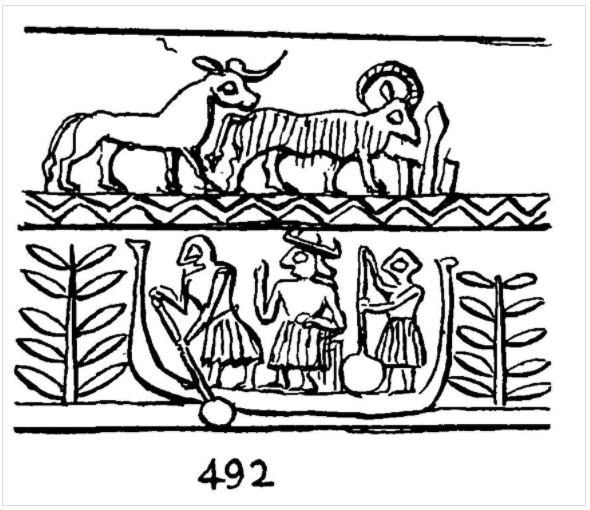
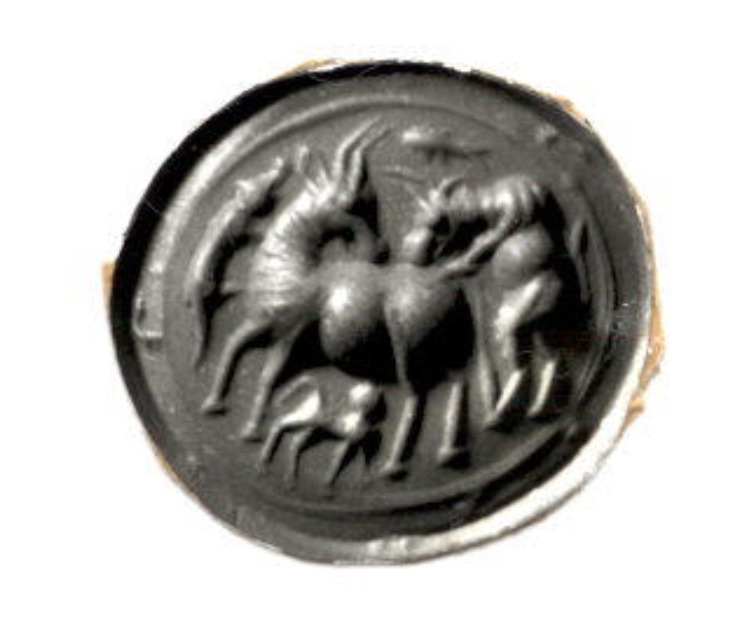
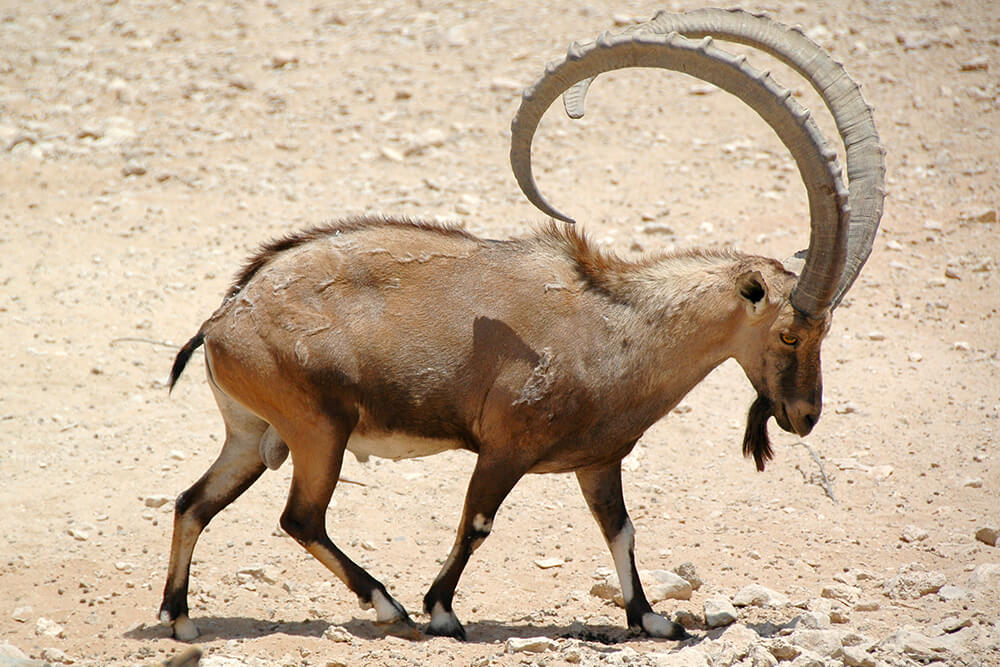
Thread (longish): In this thread, I would like to talk about goatfish, the sacred (mythical) animal of Enki/Ea, the Mesopotamian god of fresh water...Mythical animal 🙂 Of course not. Anyway, let's begin...Lots to talk about... 
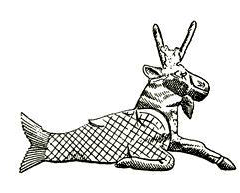
First who was Enki? Enki was the Sumerian god of sweet water. Actually, he was the source of fresh water, which was seen as his semen, which he emptied into Tigris and Euphrates...
More importantly, he was the god of the annual flood of Tigris and Euphrates...The flood that made land fertile and agriculture possible in Mesopotamia.
When king Ur-Namma built a temple for Enki, he called Enki in his dedicatory inscription: "Enki the flood of heaven and earth"
When king Ur-Namma built a temple for Enki, he called Enki in his dedicatory inscription: "Enki the flood of heaven and earth"
Enki was mentioned in the earliest extant cuneiform inscriptions throughout the region and was prominent from the third millennium down to Hellenistic times...
On cylinder seals, Enki is most often depicted with two streams of water flowing out of his body: one representing Tigris, the other Euphrates. This portrays Enki as the source of Tigris and Euphrates...
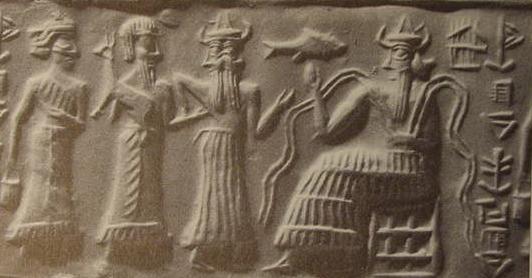
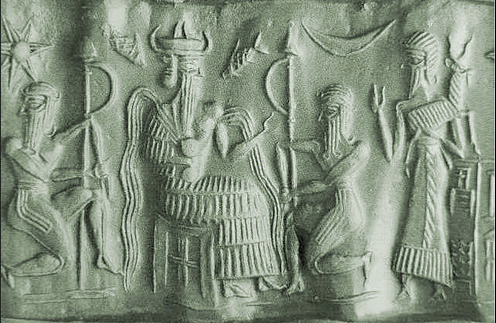
The other most common depiction of Enki is holding a jar from which two streams pour out. This portrays Enki as the god of water who controls the source of Tigris and Euphrates...
late 3rd millennium BC text "Debate between Bird and Fish" tells us that it was Enki who: "laid out side by side the Tigris and the Euphrates, and caused them to bring water from the mountains"...

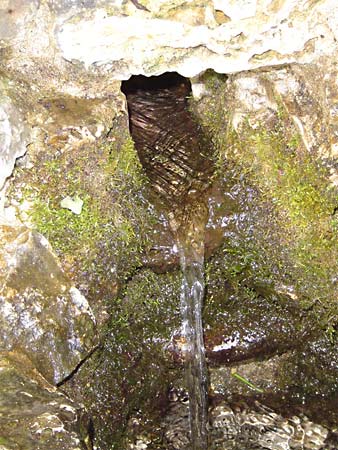
Did you notice that Tigris and Euphrates were made by Enki "to bring water from the mountains"? Do you remember Abzu, Enki's home, the source of the water flowing down Tigris and Euphrates?
And how I argued (in this thread) that Abzu was not "the underground sea of fresh water, the aquifer", but that instead, Abzu was the name for the mountains from which the two great rivers emerged?
https://twitter.com/serbiaireland/status/1425057842080456713
Now have a look at this: This is part of the Stele of the Vultures, a monument from the Early Dynastic III period (2600–2350 BC) in Mesopotamia celebrating a victory of the city-state of Lagash over its neighbour Umma.
en.wikipedia.org/wiki/Stele_of_…
en.wikipedia.org/wiki/Stele_of_…

On another fragment we see a large male figure holding a mace in his right hand and an anzu or lion-headed eagle in his left hand. The hammer and the anzu identify the figure as the storm god Ningirsu. Below the anzu is a large net filled with the bodies of naked men...

In the "The God Enki in Sumerian Royal Ideology and Mythology" by Peeter Espak (researchgate.net/publication/47…) we can read this interesting bit about this monument:
The text on the Stele of the Vultures has a long list of curses intended to frighten the rulers of Umma if they ever decided to overrule the terms of defeat and start another dispute. One of the gods invoked in the curses is Enki who is titled “the king of Abzu”:
"When I (Umma) transgress the border, the great battle-net of Enki, the king of Abzu, according to the oath taken (or: curse given) upon (Umma) from the sky let cover!"
So the net we see on the above image must be "the net of Enki"...
So the net we see on the above image must be "the net of Enki"...
The text continues with the king Eanatum releasing carp-fish said to be sent or going to Abzu.
"(To) the carp-fish released/sent to Abzu Eannatum swore"...
Very interesting indeed...
"(To) the carp-fish released/sent to Abzu Eannatum swore"...
Very interesting indeed...
Peeter Espak concludes that "It looks like Eanatum uses carp-fish to intermediate the oath taken or superimposed on the state of Umma to Enki situated in his Abzu. The carp-fish are therefore carriers of the message and informers of Enki"...
This is very interesting, as most of the seals which depict Enki as the source of Tigris and Euphrates, also depict fish...
The fish are either depicted swimming within the two rivers flowing out of Enki...

Or fish are depicted somewhere near the streams...

But regardless where the fish are, they are always facing Enki. They are always swimming towards Enki...Towards Abzu...
Now, the goatfish was to Sumerians known as Carp-goat...This is super important...As the fish which Eanatum sent to Enki, to Abzu, was also carp-fish...
Now, the goatfish was to Sumerians known as Carp-goat...This is super important...As the fish which Eanatum sent to Enki, to Abzu, was also carp-fish...
What does all this mean? Why is this important? Because carp was directly linked with the annual flood of Tigris and Euphrates, the most important annual event in Mesopotamia...
In researchgate.net/publication/47… we can read that the poem written by the king Ur-Namma, he says that "Enki treats me favourably, flood...for me he gives". Now the word Ur-Namma used for flood was actually "a-eštub" which literally means "carp(-filled) water"...
In academia.edu/2286616/A_stud… we can read that an Ur III text calls Enki "the (wielder of) the a-eštub (carp flood)”...
Now remember all these depictions of Enki with Tigris and Euphrates pouring out of him, full of fish swimming towards Enki? That fish is carp. And not just any carp. A mother of all carps...Barbus esocinus (L. esocinus)...
Barbus esocinus (L. esucinus) is a large fish that can reach a weight of 140 kg (300 lbs) and can be over 2 metres long. It is one of the largest freshwater fishes in the world....It is distributed in most parts of the Tigris and Euphrates and their main tributaries.

Common names for this fish are: “soong, bach, anzeh, anzah, narbach, and anzeh-bach, balzard” in Iran, “bizz, farkh-el-biz” in Iraq, “Yerli Turna, Kurşun, Cero” in Turkey.
The English called it Tigris salmon, Euphrates salmon. Why?
The English called it Tigris salmon, Euphrates salmon. Why?
Cause just like salmon, this Mesopotamian carp is synchronous spawner migrating to the upper reaches of the rivers to spawn. Their spawning beds are at the springheads of the rivers where banks are covered with gravel...
Based on collected observation data, B. esocinus spawned over a relatively short period of time, from mid-April through late June with a peak concentrated in April/May when the water temperature exceeded 19–24° C...
Which is the ideal time to catch these mighty fish which spends the rest of the year in deep waters of the lower Tigris and Euphrates system...
So the migration of B. esocinus is not an event you would miss, if you lived by the river...
So the migration of B. esocinus is not an event you would miss, if you lived by the river...
Guess what happens at the exact same time when, millions of giant carps all start swimming upstream, towards the shallow waters of the source of Tigris and Euphrates?
The peak of the annual flood. Enki's flood...It peaks in Apr/May...
L: Tigris flow
R: Euphrates flow
The peak of the annual flood. Enki's flood...It peaks in Apr/May...
L: Tigris flow
R: Euphrates flow
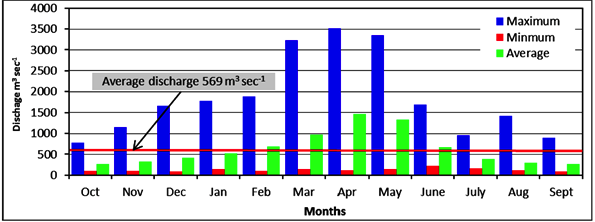
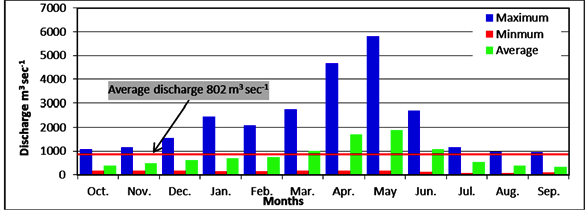
The carp flood, "a-eštub", "carp filled water"...This is why all the fish depicted on the seals showing Tigris and Euphrates pouring out of Enki, Abzu, are facing Enki, Abzu.
Because these seals depict the peak of the flood. When giant carp swim towards Enki who is (in) Abzu...
Because these seals depict the peak of the flood. When giant carp swim towards Enki who is (in) Abzu...
Do we need better proof that Abzu is not "the underground sea of fresh water, the aquifer"?
These fishes are not swimming "towards Abzu, an imaginary underground sea of the fresh water".
They are swimming Abzu, the mountains from which the two great rivers emerge...
These fishes are not swimming "towards Abzu, an imaginary underground sea of the fresh water".
They are swimming Abzu, the mountains from which the two great rivers emerge...
So now we know what the fish part is in the goatfish. What about the goat part?...
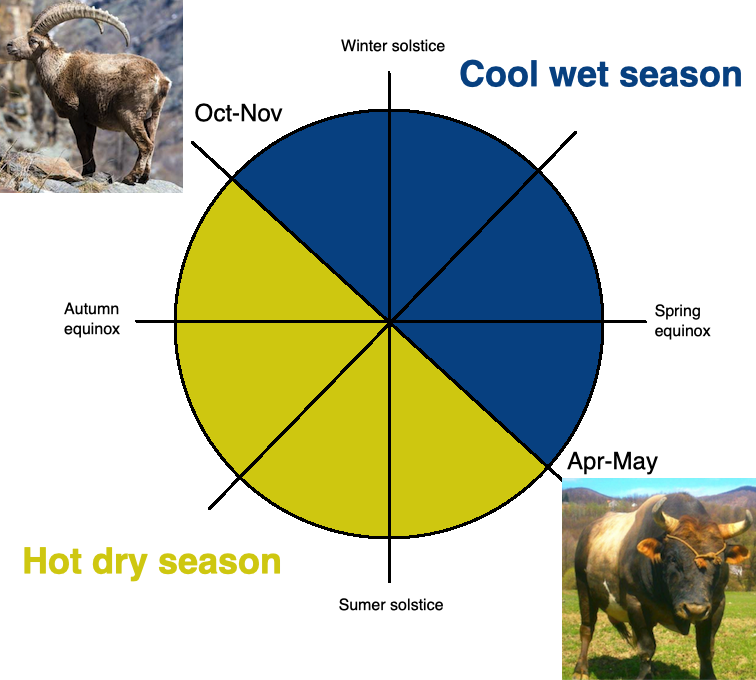
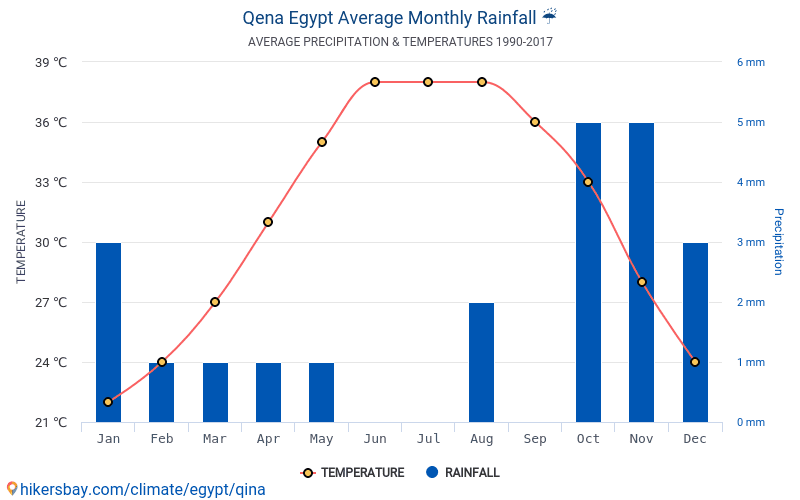
Climatic year in Mesopotamia is divided into hot/dry and cool/wet halves.
Climatic year in Mesopotamia is divided into hot/dry and cool/wet halves.
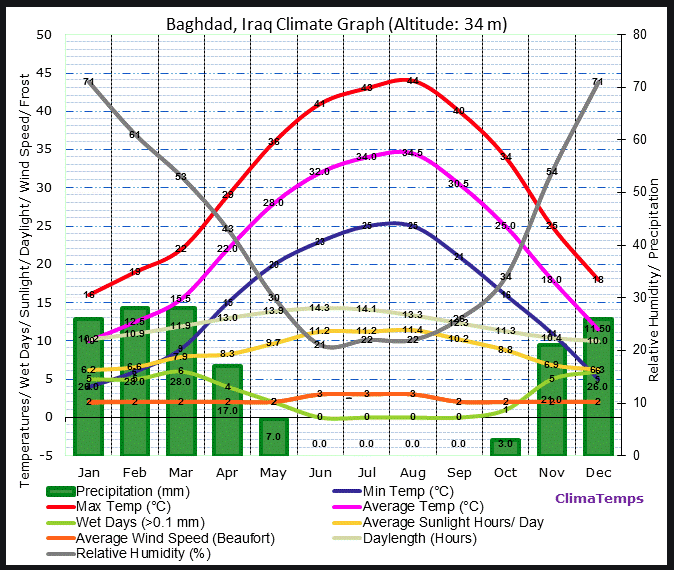
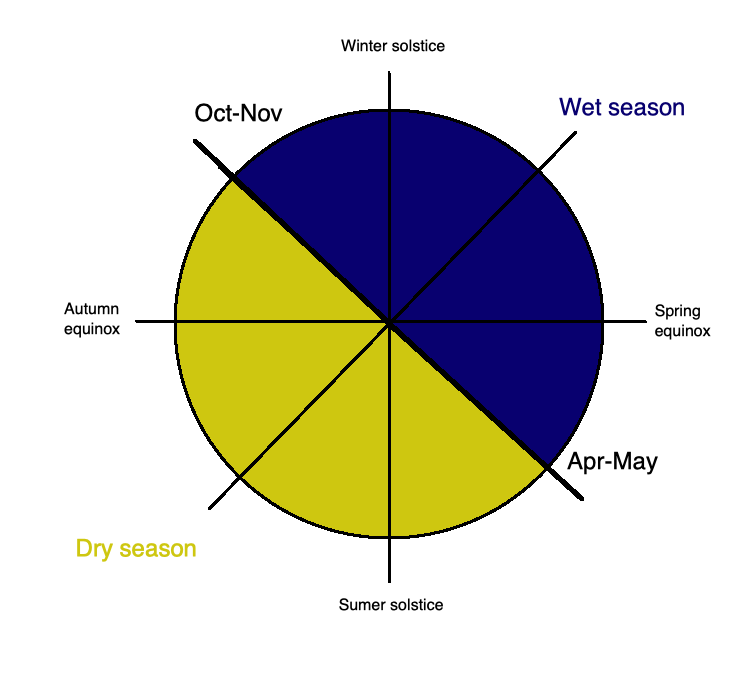
The first rains (and snow) of the cool/wet season arrive to Mesopotamia when Ibex and Markhor mountain goats start to mate, Oct/Nov...
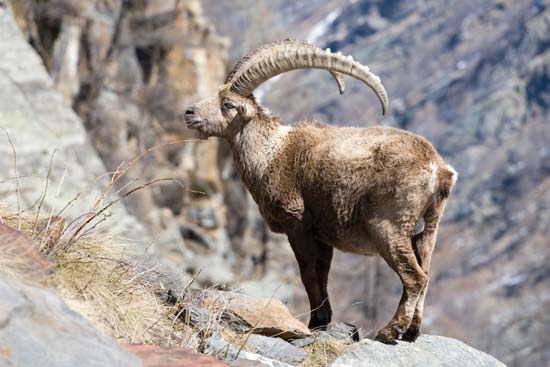

The beginning of the Wild Goat mating season signals the beginning of the cool, wet season, Winter. And it is the rain and snow which fall during Winter (Nov-May) that are the source of all the fresh water that flows down Tigris and Euphrates...And of Enki's flood...
This is such an important event in these arid lands that wild goats were basically deified:
https://twitter.com/serbiaireland/status/1397280984224129034
The gestation period of the wild goats that live in Northern Mesopotamia is 150 days...So the first baby goats appear just before the water levels peak in the two Holy Rivers....Which is why we see baby goats being brought to Enki as offerings on so many seals...
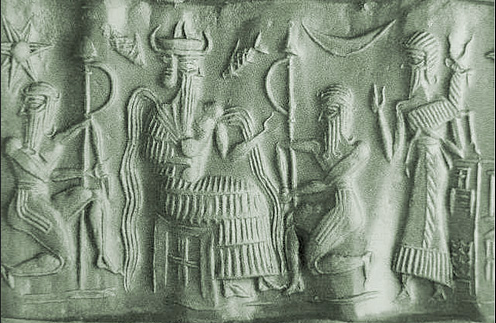
Mesopotamian hydrological report states: "Tigris and Euphrates have two flood periods: an irregular, rain-fed rise of minor proportions lasting from November to the end of March (this is basically a slight increase in water levels) and the main snowmelt flood of April and May"...
Which means that the flood starts when Ibex goats start to mate and peaks when eštub carp start to mate...Hence goatfish as the symbol of Enki, the god (source) of fresh water and the annual flood of Tigris and Euphrates....
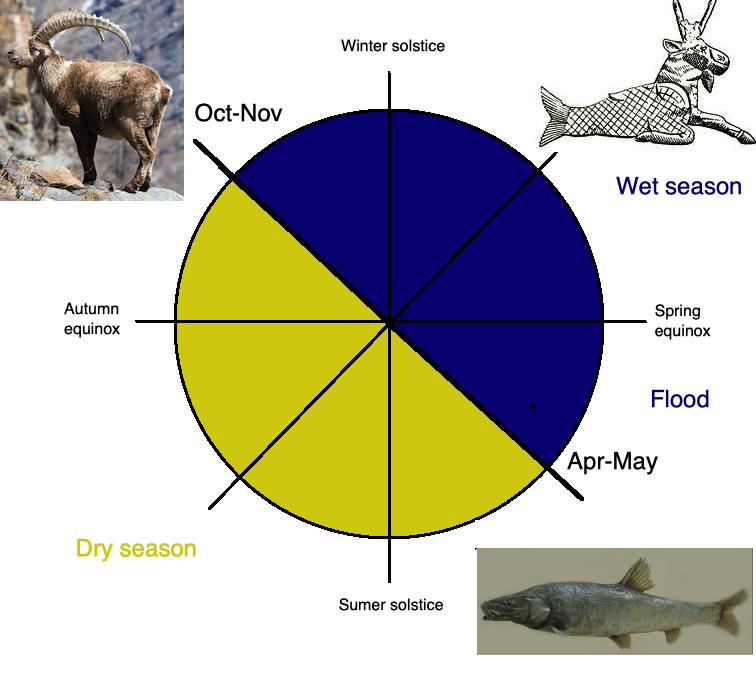
So not a mythical animal after all. Just a complex animal calendar marker, marking the time of the year ruled by Enki...Which is why Enki is often depicted standing on a goat fish...His "mythical animal" 🙂 I told you. There are no such things as mythical animals...
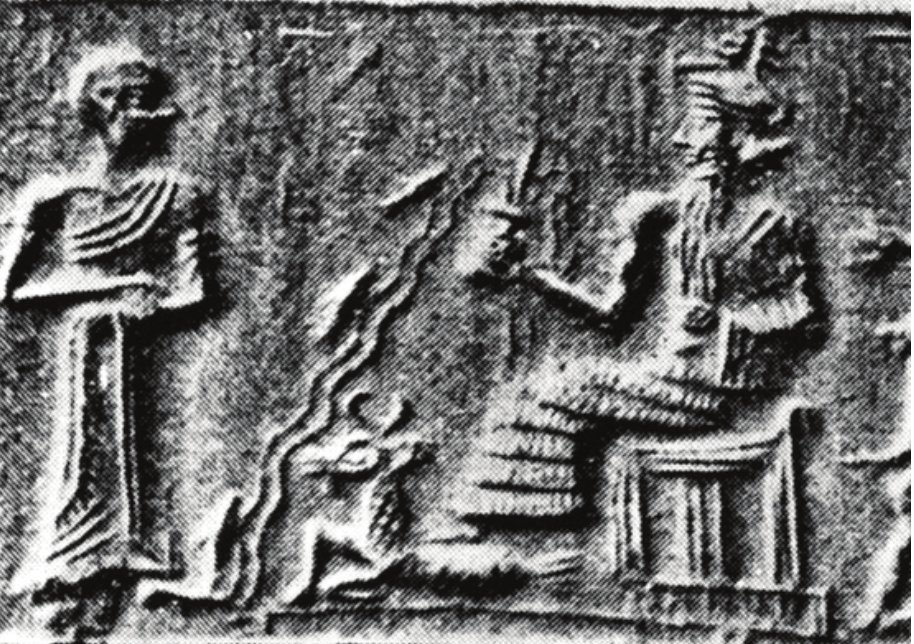
Oh, by the way, did you notice that sometimes, the "goatfish" also has bull horns, and not goat horns? Like this one...Why?
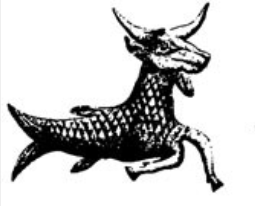
For the same reason Enki is depicted standing on a bull on this seal...
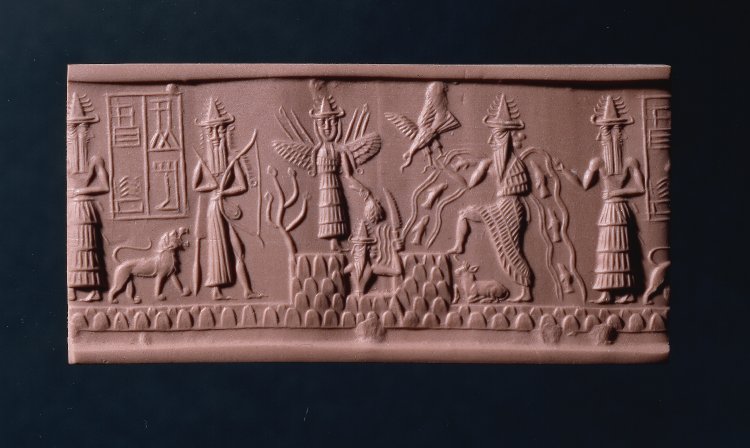
The annual flood, carp flood, peaks during the calving season of the wild Eurasian cattle...Apr/May. Time of the year which has been marked by the bull, calf, cow and calf symbol all over Eurasia and North Africa since Neolithic...Taurus...
https://twitter.com/serbiaireland/status/1363442370914758660
Hence bull-goat-fish 🙂 subspecies of the goat-fish mythical animal of Enki...
More about animal (and plant) calendar markers found in ancient cultures, start here oldeuropeanculture.blogspot.com/p/animal-solar……then check the rest of the blog posts I still didn't add to this page, and finally check my twitter threads I still didn't convert to blog post...I am 6 months behind now
That's it. I think that this is quite significant thread which explains so many "mysterious things"...Very little mystery left, I am afraid. Just Climatology, Biology and Hydrology...
What do you think?
What do you think?
• • •
Missing some Tweet in this thread? You can try to
force a refresh