An explanation of how the new format for UEFA competitions will work from next season, including an explanation of the revenue distribution.
The number of clubs in the Champions League will increase from 32 to 36 with the group stage of 8 groups of 4 teams being replaced by a single league of 36 teams, then a new knockout round, before reverting to the traditional last 16.
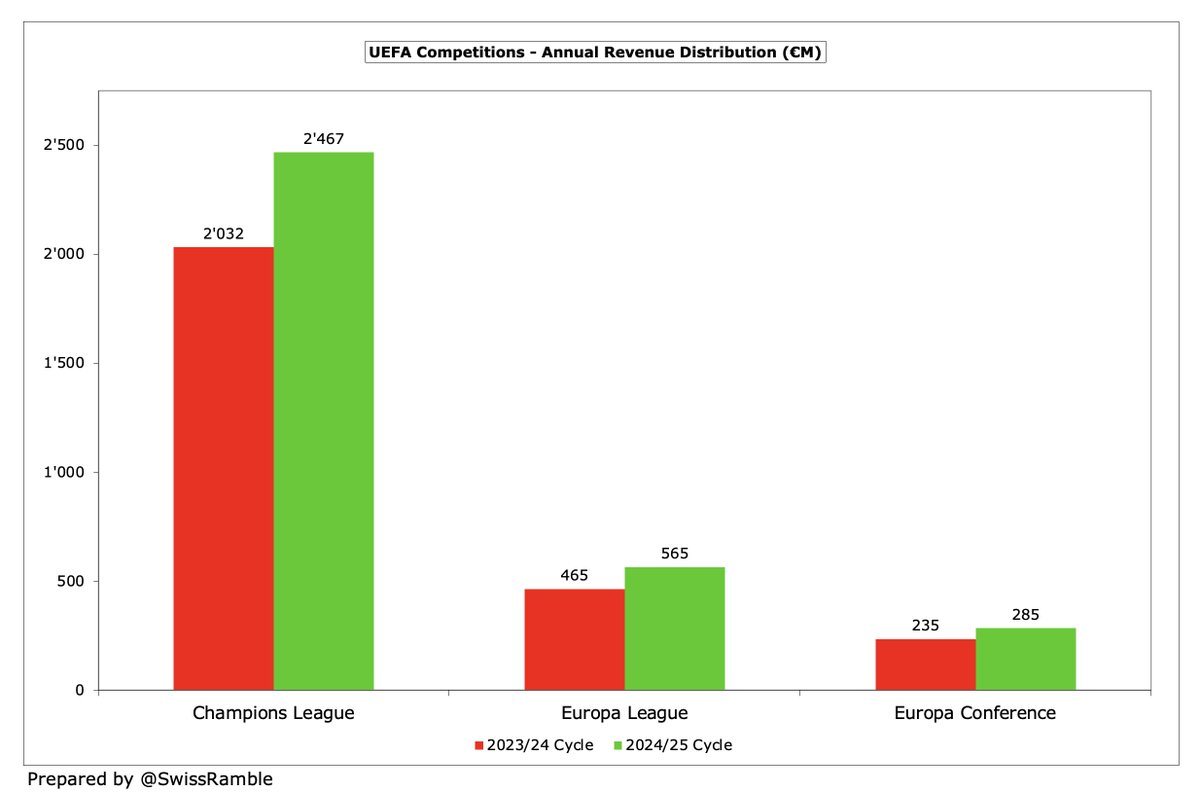
Total revenue distribution will increase by 21% from €2.7 bln to €3.5 bln. Lion's share will go to the Champions League €2.5 bln, followed by Europa League €565m and Europa Conference €285m.
Revenue will be allocated based on three elements:
1. Participation – equal share 2. Performance – prize money 3. Value pillar – replacing TV pool and UEFA coefficient
Prize money includes two new performance bonuses, one based on a club's finishing position in the league phase, the other based on qualification to the knockout rounds.
The value pillar is a complicated calculation, split into the European part and non-European part. Factors involved in the revenue distribution are size of TV deal, club qualification for group stage in last 5 years and two UEFA coefficients (5 years and 10 years).
Much more detail in today's blog, including an estimate of how much money could be earned.
As an example, Manchester City received £115m for winning the Champions League in 2022/23, which would be worth £134m under the new system #MCFC
Quick review of the money earned by England's Champions League representatives to date after this week's matches.
#MCFC lead the way with £93m, followed by the other quarter-finalists #AFC £80m. The two clubs eliminated in the group stage earned less: #MUFC £51m and #NUFC £29m.
Champions League TV money is split into 4 elements:
- Participation Fee
- Prize Money
- UEFA coefficient
- TV pool
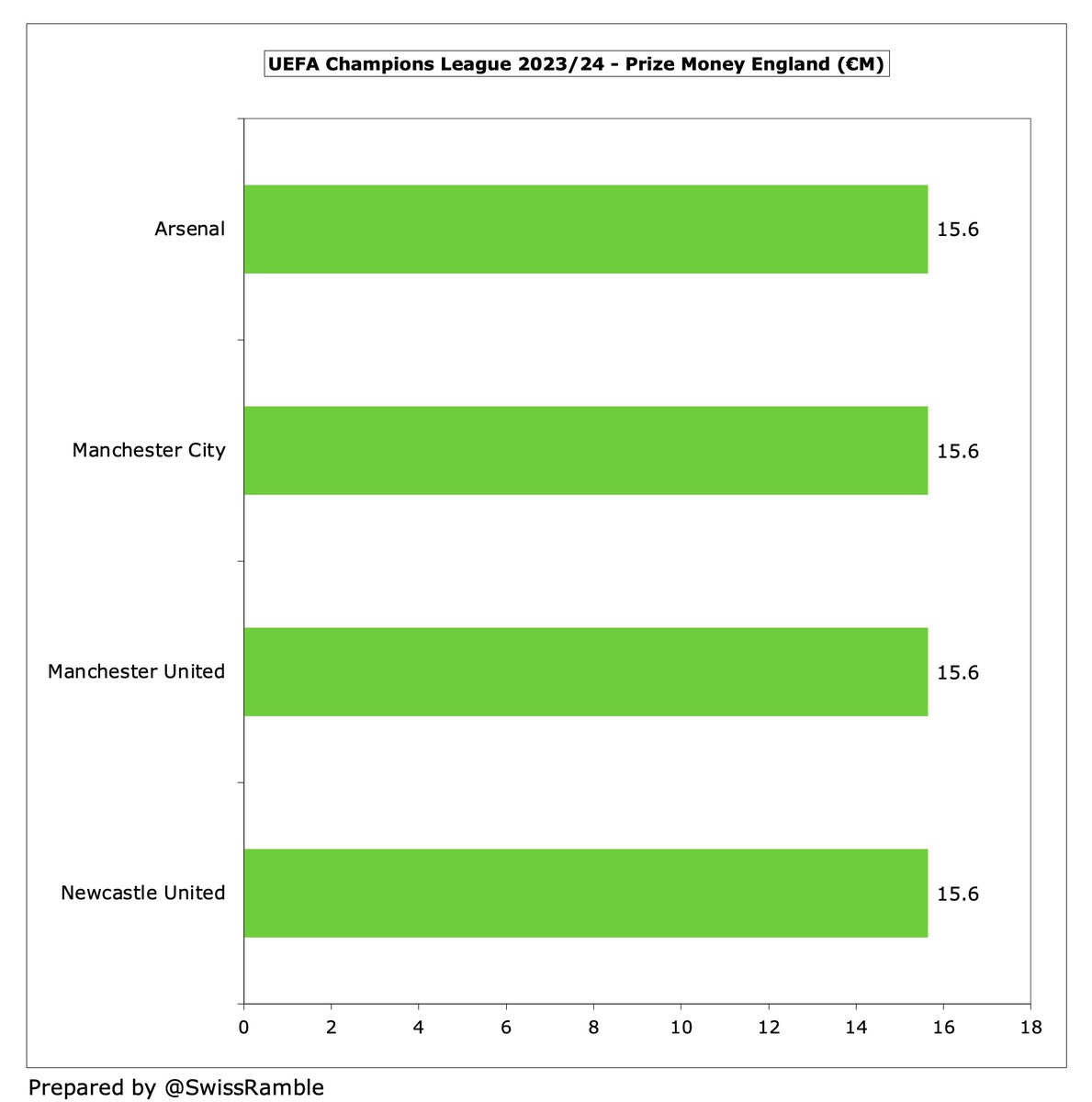
Each club that reaches the group stage receives a €15.6m participation fee.
So Everton have been deducted 10 points by the Premier League for a breach of the Profitability & Sustainability Rules #EFC
I have frequently looked at their case, the last time during an overall review of FFP. The article can be found on my blog here swissramble.substack.com/p/financial-fa…
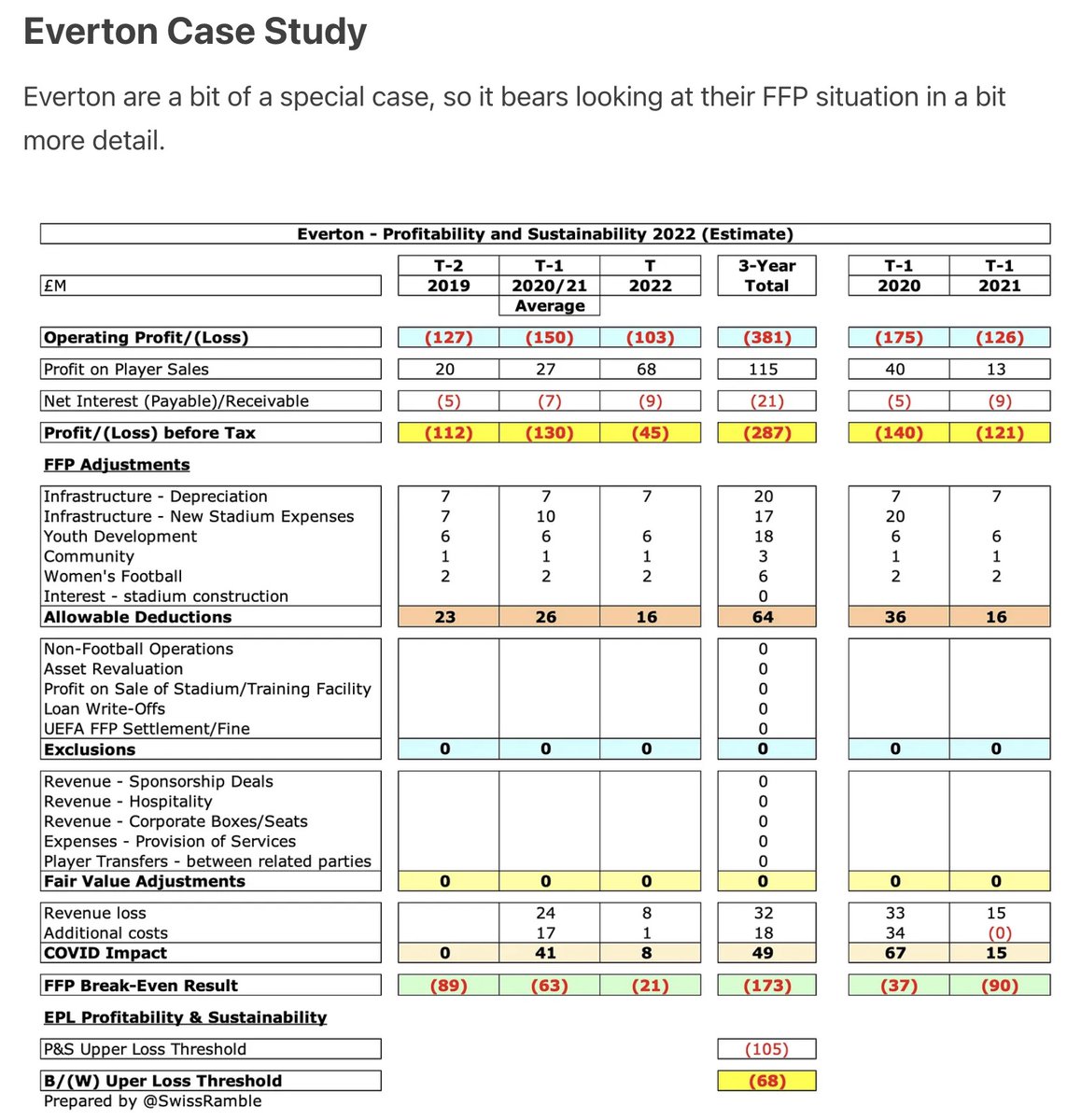
However, given the importance of this decision, I've attached a series of screen shots from that article that help explain the background #EFC
First, Everton's initial FFP situation over the monitoring period up to 2021/22, where they are a fair way over the maximum allowed loss #EFC
Analysis of Rangers' 2022/23 financial results, when pre-tax loss slightly increased to £3m, as revenue fell 4% to £84m and operating expenses rose £11m, partly offset by profit on player sales more than doubling to club record £24m #RangersFC
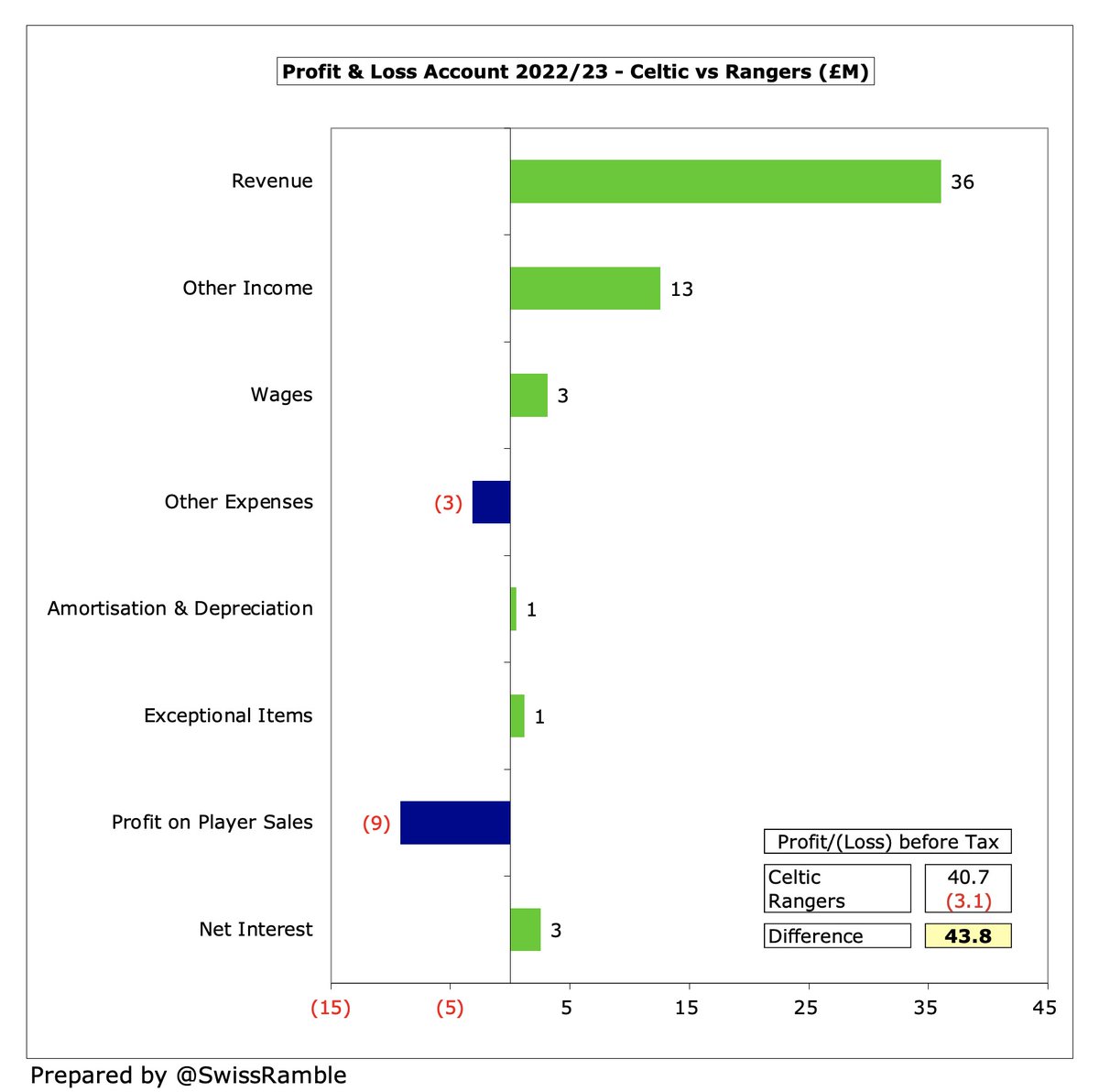
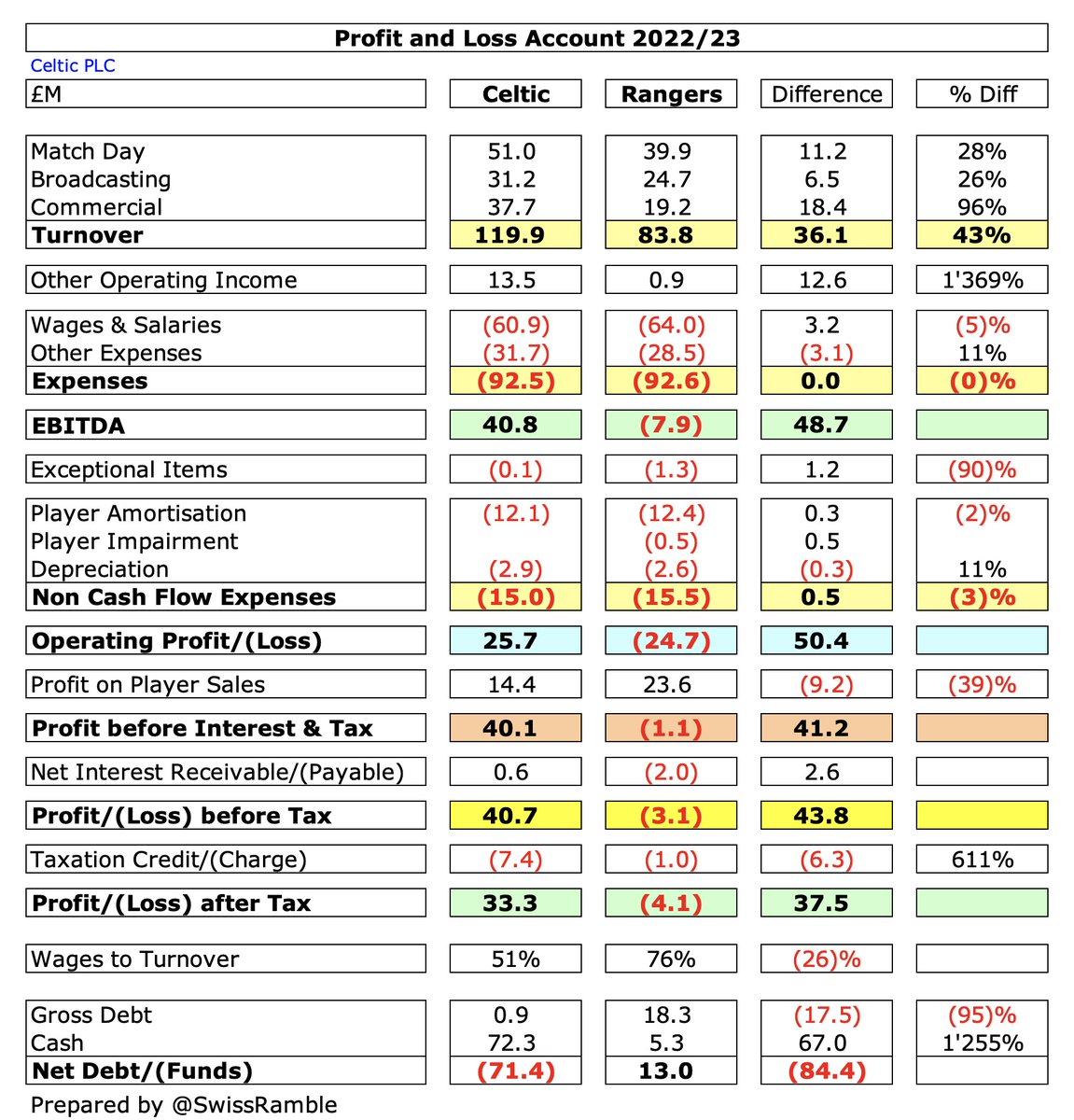
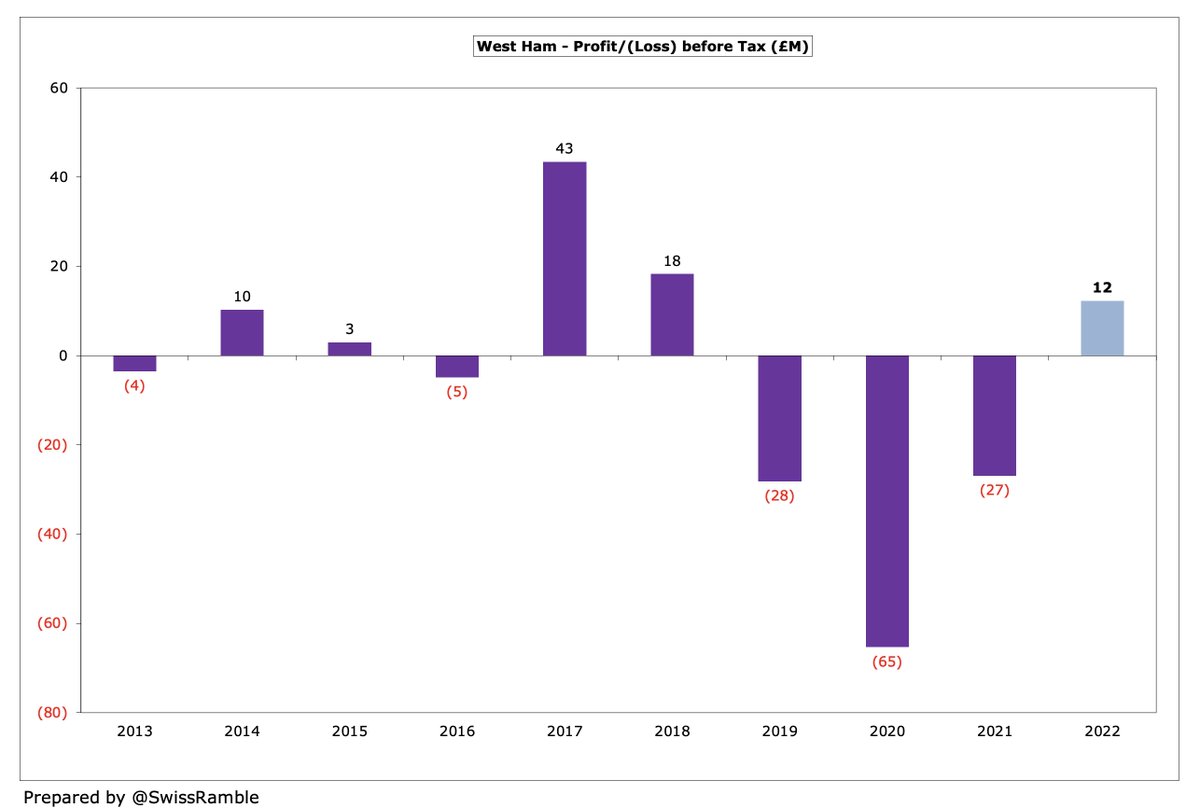
In terms of profitability, #RangersFC and #CelticFC were at the opposite end of the spectrum with Rangers posting a small £3m pre-tax loss, while Celtic generated a record £41m profit.
Given that both clubs qualified for the Champions League, the size of the gap might come as a surprise. Cost bases are very similar, but #CelticFC revenue is substantially higher plus once-off other income, partly offset by #RangersFC better player sales.
8 of the 9 highest revenue increases over 2020/21 came from English clubs. #LFC led the way with an impressive £106m, followed by #MUFC £89m and #THFC £82m. The biggest reductions were at two Italian clubs, troubled Juventus £44m and Inter £32m.
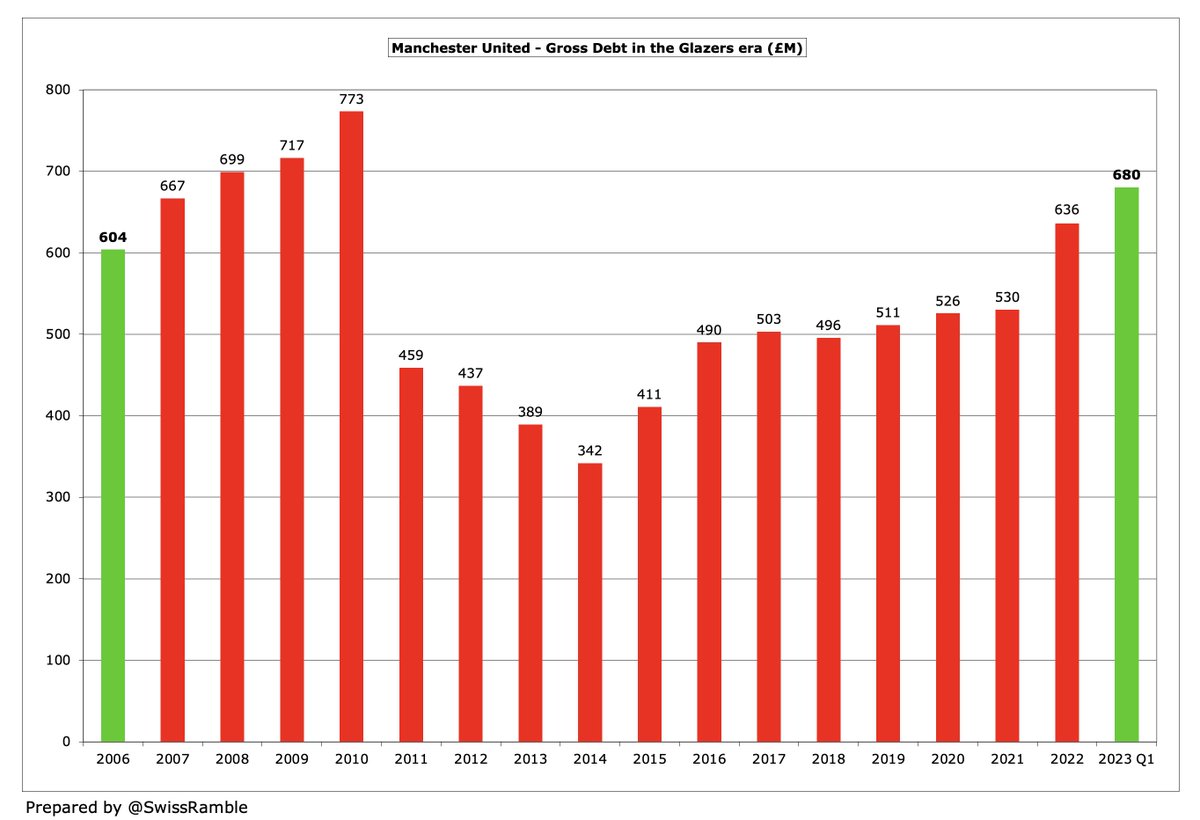
Analysis of Manchester United's first quarter financials for the 2022/23 season. Loss increased, as operational improvement wiped out by higher interest. No dividend payment. Gross financial debt up to £680m. Highest ever PL transfer debt £307m #MUFCswissramble.substack.com/p/manchester-u…
A few points from the detailed analysis of Manchester United's Q1 2022/23 results #MUFC
Gross financial debt increased £44m to £680m since year-end, so is now £76m higher than the £604m owed after the Glazers’ leveraged buyout nearly 20 years ago. Largely due to the weakening GBP, as most of the debt is denominated in USD #MUFC