OK, here are my issues with this paper, list style
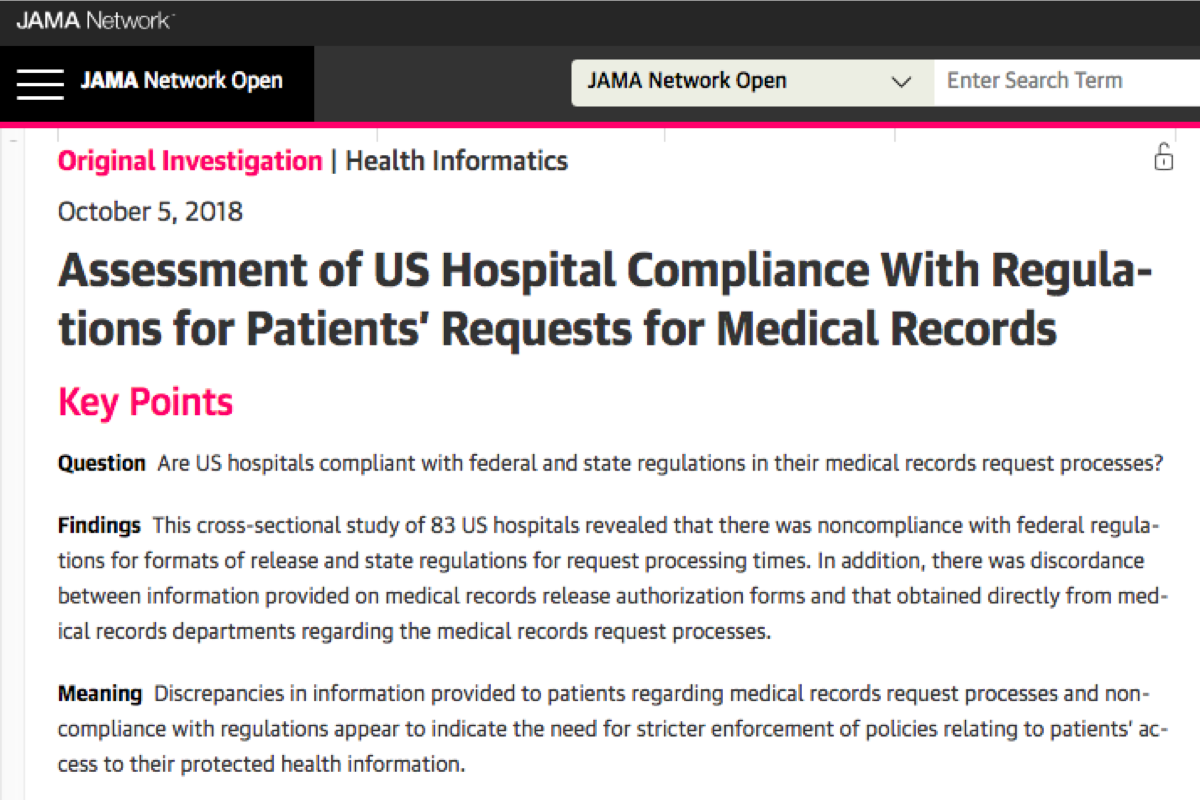
jamanetwork.com/journals/jaman…
Most of what I say here has been voiced by others... As @mikejohansen2 notes, the comment thread on this article is excellent, see examples from Stange, Etz, Katerndahl, Peek
jamanetwork.com/journals/jaman…
Most of what I say here has been voiced by others... As @mikejohansen2 notes, the comment thread on this article is excellent, see examples from Stange, Etz, Katerndahl, Peek
2) The fact that specialists see patients with more diagnoses is NOT surprising. This is how it is supposed to work, i.e. patients get sick, they get diagnosed with diseases, they get referred to specialists.
3) As @VPrasadMDMPH notes, the definition of “complexity" here is key. Adding up medical diagnoses is a crude measure, especially when using claims. the fact that it correlates with the other measures (# physicians involved, ED visits, death) is well known.
4) They examine PATIENTS seen by specialists, then imply that you can determine the complexity of a specialists WORK. If a specialist manages one disease in a medically “complex” patient, while leaving care coordination to the PCP, the specialist's work may be less complex.
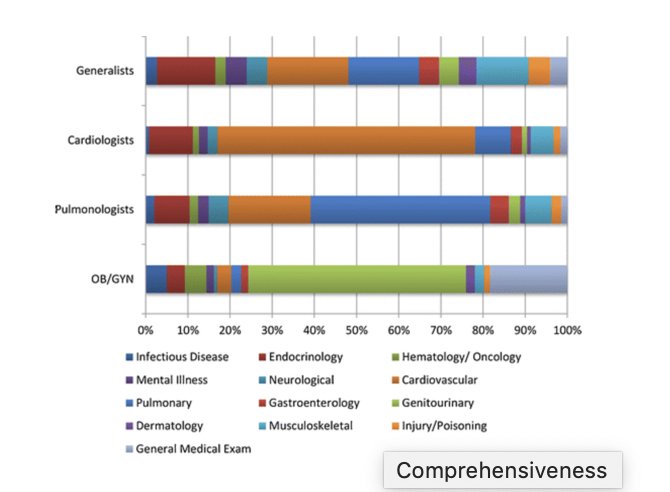
5) To examine complexity of the work, you might looks at the range of diagnoses. Using NAMCS, we analyzed visits with generalists, cardiologists, pulmonologists, and OB/GYNs who identified as PCPs. Generalists saw the greatest range of diagnoses. rdcu.be/bfIRu 
6) Another approach to examine ambulatory encounter complexity by speciality from David Katerndahl that included *undifferentiated symptoms* (which are in rich supply in primary care) found that primary care visits are the most complex.
sciencedirect.com/science/articl…
sciencedirect.com/science/articl…
7) Primary care is far more than managing diseases, it is the integration, and prioritization of health care in the context of family and community. It is developing relationships and trust. It isn’t linear. It’s inherently complex, algorithms rarely apply.

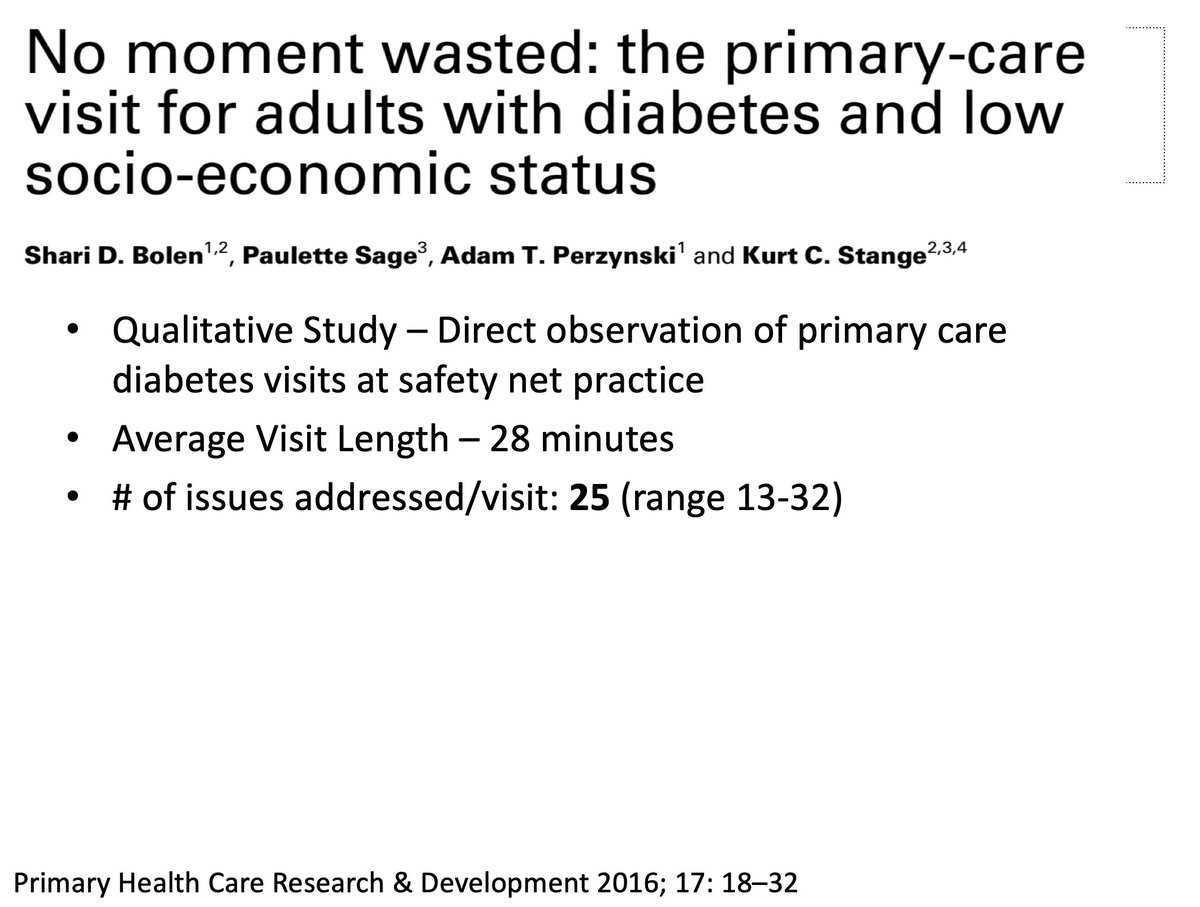
8) Here is a great example of what primary care work looks like from @sharibolen
ncbi.nlm.nih.gov/pmc/articles/P…
They directly observed primary care visits in a safety net clinic, and found that *25 issues* were addressed in each visit. This kind detail is not revealed in claims.
ncbi.nlm.nih.gov/pmc/articles/P…
They directly observed primary care visits in a safety net clinic, and found that *25 issues* were addressed in each visit. This kind detail is not revealed in claims.
9) Clearly, patients seen by specialists are complex, and require specialist's deep knowledge of disease and treatment. But specialists do not work in isolation, and patients do not have only one problem.
10) Instead of ranking specialists, we need to think harder about how we can integrate the strengths of specialist and generalist approaches to meet the needs of complex patients.
ncbi.nlm.nih.gov/pmc/articles/P…
ncbi.nlm.nih.gov/pmc/articles/P…