
I edit mainly history and cultural studies based on credible scientific journals, books and reports.
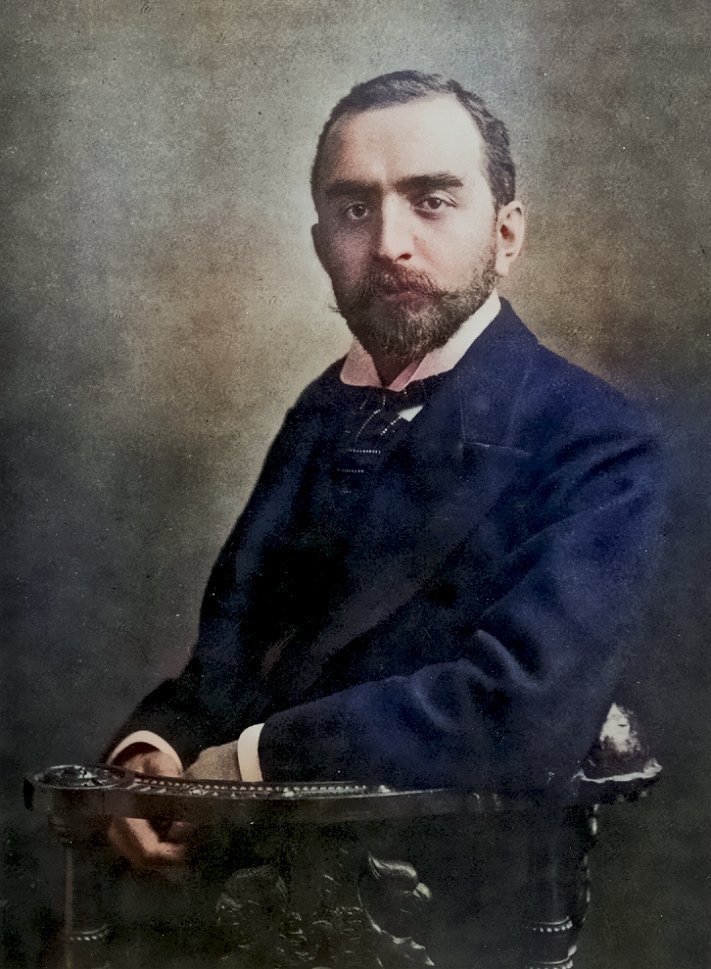 Gulbenkian travelled extensively and lived in a number of cities including Istanbul, London, Paris and Lisbon. Throughout his life, Gulbenkian was involved with many philanthropic activities including the establishment of schools, hospitals, and churches.
 According to the 1917 publication of the Caucasian Calendar, there were 43,869 residents in Shushi in 1916. The city was composed of 23,396 Armenians who formed 53.3 percent of the population, and 19,091 Shia Muslims (mainly Azerbaijanis) who formed 43.5 percent of the population

 Armenian merchants from Amsterdam went to Southeast Asia in the 19th century to trade, and to set up factories & plantations. Armenian merchants settled in parts of Java, as did Armenians moving east from the Persian Empire, establishing a community of Armenians in Java.
 The Armenian Oblast was a province of the Caucasus Viceroyalty of the Russian Empire that existed from 1828-40. It corresponded to most of present-day central Armenia, the Iğdır Province of Turkey, the Nakhchivan exclave of Azerbaijan. Its administrative center was Yerevan.


 Of the 69 passengers & 9 crew, only 1 person, #Azerbaijan'i Fahraddin Balaev survived, as he was lucky enough to be in the cab of a truck at the tail end of airplane. This was Armenia’s worst air catastrophe, about which only a few people within & beyond its borders know about.
 Matthew II was born in 1845 in Istanbul as Simeon Martirosi Izmirlian. He was ordained as priest in 1869 and served as the personal secretary to Patriarch Mkrtich Khrimian when the latter was still Armenian Patriarch of Constantinople in the early 1870s.
 Unfortunately, life shows that the adoption of this document did not prevent
 The destruction of the cemetery has been widely as an act of cultural genocide. After the total destruction of the cemetery, @UNESCO included Armenian khachkars on its list of Intangible Cultural Heritage.
 For having fought to establish the independence of the First Republic of Armenia, in 1937 during the Great Purge of Joseph Stalin, Araratian was arrested and executed on charges of nationalism.
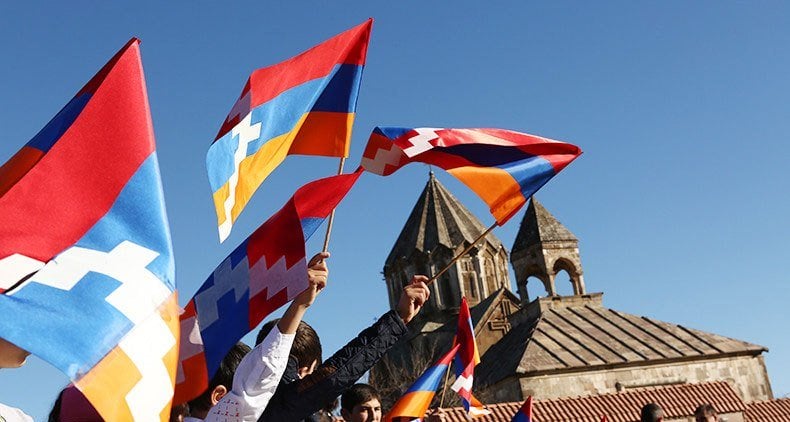 The referendum was held in full compliance with the then national legislation in force, democratic procedures & norms of int'l law. All necessary conditions were created for holding a referendum on the entire territory of the Republic. 82% of the citizens took part in the voting.
 Khachaturian's original Gayane was the story of a young Armenian woman whose patriotic convictions conflict with her personal feelings on discovering her husband's treason. Later, the plot was modified several times, the resultant story emphasizing romance over nationalistic zeal
 She joined the Tbilisi Armenian Drama Theater in 1923, the A. Mravian Leninakan Dramatic Theater in 1929, and the G. Sundukian Theater in Yerevan in 1940.

 Oshagan was born in 1883 as Hagop Kufejian in Soloz, a village near Bursa. Oshagan was spared the fate of many of his fellow writers and was able to elude the Turkish secret police until early 1918, when he fled from Constantinople to Bulgaria, disguised as a German officer.
 The rest of Armenian nation scattered around the globe – if they had managed to escape. But the rest were dead, victims of brutal oppression, death marches, massacres, disease, starvation or else ‘Turkified’- robbed of their cultural identity, abused, & forced to convert to Islam
 Komitas is widely seen as a martyr of the genocide and has been depicted as one of the main symbols of the #ArmenianGenocide in art. Along with hundreds of other Armenian intellectuals, Komitas was arrested & deported to a prison camp in April 1915 by the Ottoman government.
 The Byzantine policy of weakening Armenia by removing its military forces had left the region undefended & had invited marauding Turkish groups to attack southern Armenia. Until the arrival of the Seljuks in the 11th c., there was no organized Turkish plan to conquer Armenia. 2/
 The trolleybus lay at the bottom of the reservoir some 25 metres (80 ft) offshore at a depth of 10 metres (33 ft). Karapetyan swam to it and, despite conditions of almost zero visibility, due to the silt rising from the bottom, broke the back window with his legs.
 His best known novel, The Travails of the 9th Century, reflects the liberation struggle of the Armenian people against the Abbasid Caliphate in the 9th century. Tserents' novel Theodoros Rshtuni is about the historic struggle of the 7th century for a strong centralized state.
 The beginning of Nalbandyan's artistic career happened to be during the 1930s, the time when active restructuring in the artistic sphere has begun, and Social Realism started to gain its momentum. He worked in the field of graphics, painted portraits, still lifes & landscapes.
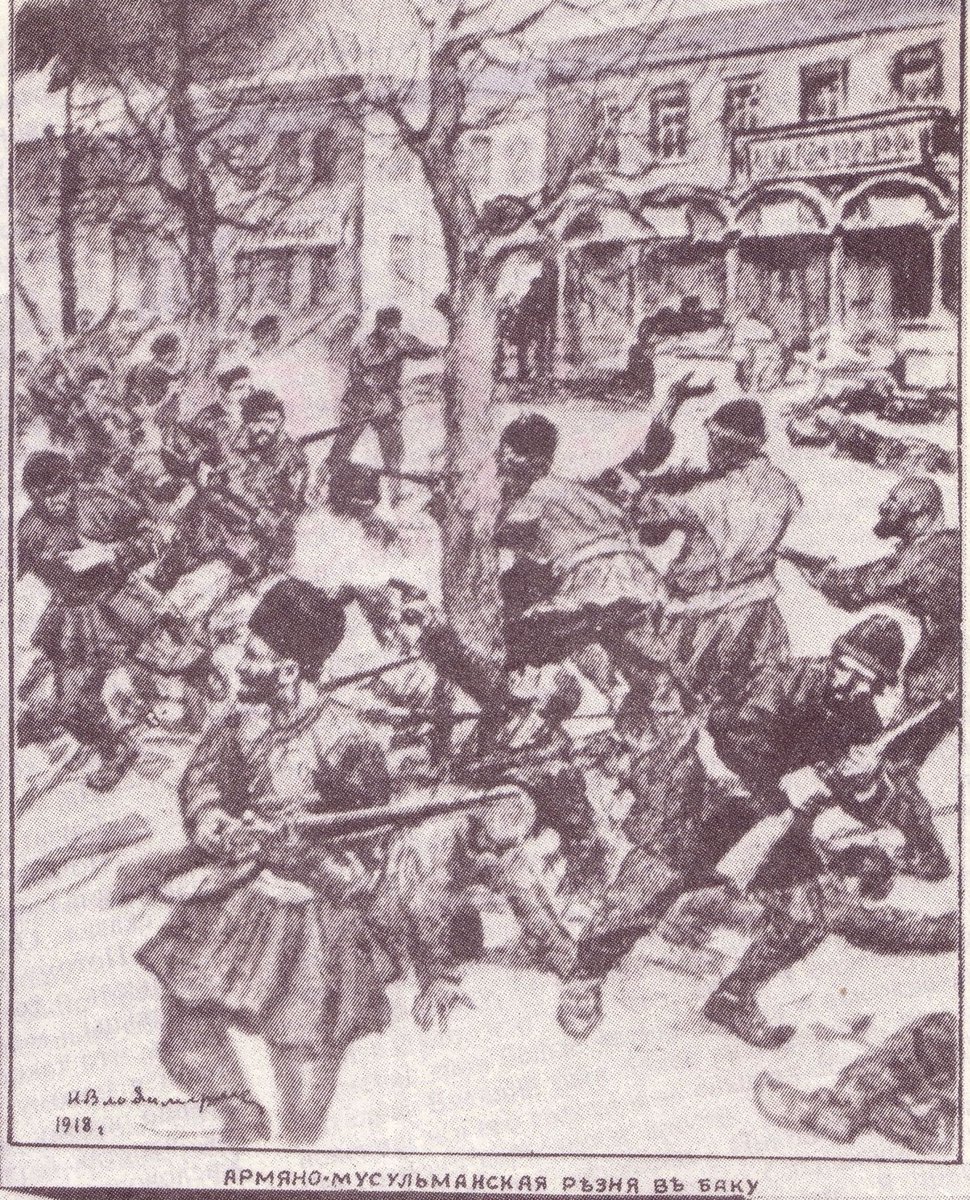 A terrible panic in Baku ensued once the Turks entered the city. The Armenians crowded the harbor in a frantic effort to escape. Regular Ottoman troops were not allowed to enter the city for 2 days, so that the local irregulars – bashibozuks – would conduct looting and pillaging.