,
13 tweets,
6 min read
Read on Twitter
1/
Why are right-sided pleural effusions more common in patients with cirrhosis?
If edema is the results of sodium/fluid retention with some contribution of hypoalbuminemia, why aren't they bilateral?
Let's examine Laennec's cirrhosis and the associated hepatic hydrothorax.
Why are right-sided pleural effusions more common in patients with cirrhosis?
If edema is the results of sodium/fluid retention with some contribution of hypoalbuminemia, why aren't they bilateral?
Let's examine Laennec's cirrhosis and the associated hepatic hydrothorax.

2/
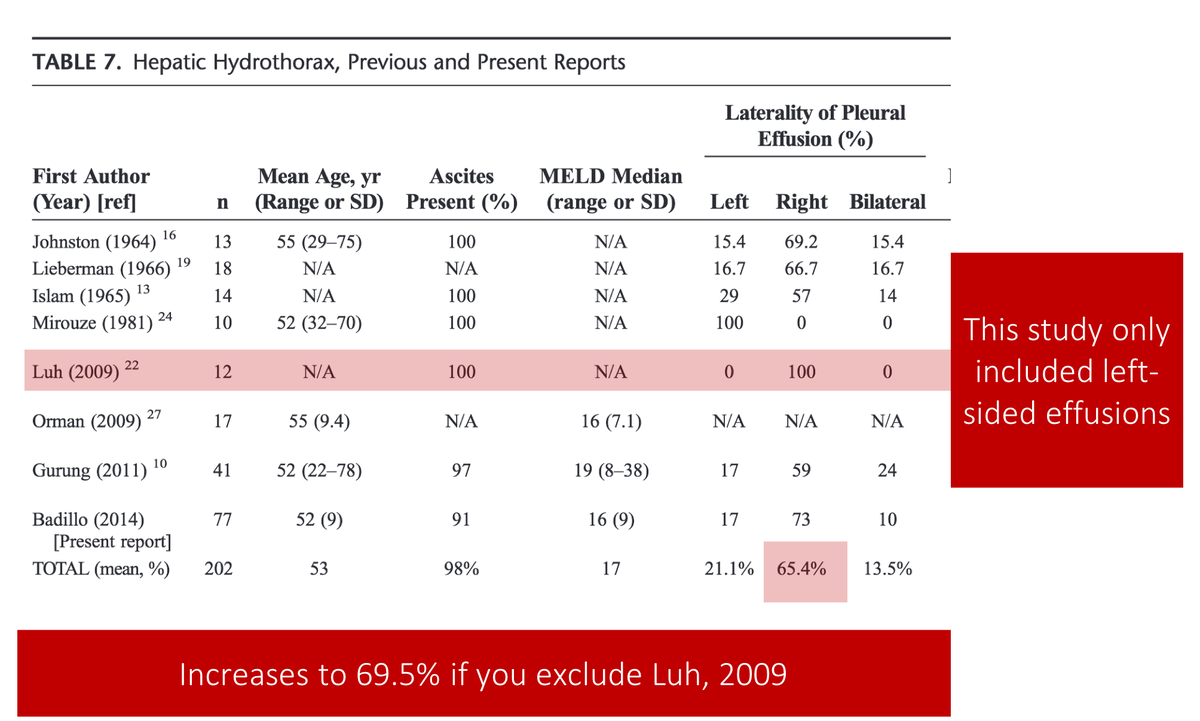
Before moving on, it's worth establishing that pleural effusions in cirrhosis (i.e., hepatic hydrothorax) are typically right-sided.
In one recent study of 77 cases, 73% were sided-sided only. Another 10% were bilateral.
ncbi.nlm.nih.gov/pubmed/24797168
Before moving on, it's worth establishing that pleural effusions in cirrhosis (i.e., hepatic hydrothorax) are typically right-sided.
In one recent study of 77 cases, 73% were sided-sided only. Another 10% were bilateral.
ncbi.nlm.nih.gov/pubmed/24797168
3/
What do you think explains the extreme laterality of hepatic hydrothorax (HH)?
[DD = diaphragm defects; AV = azygous vein]
What do you think explains the extreme laterality of hepatic hydrothorax (HH)?
[DD = diaphragm defects; AV = azygous vein]
4/
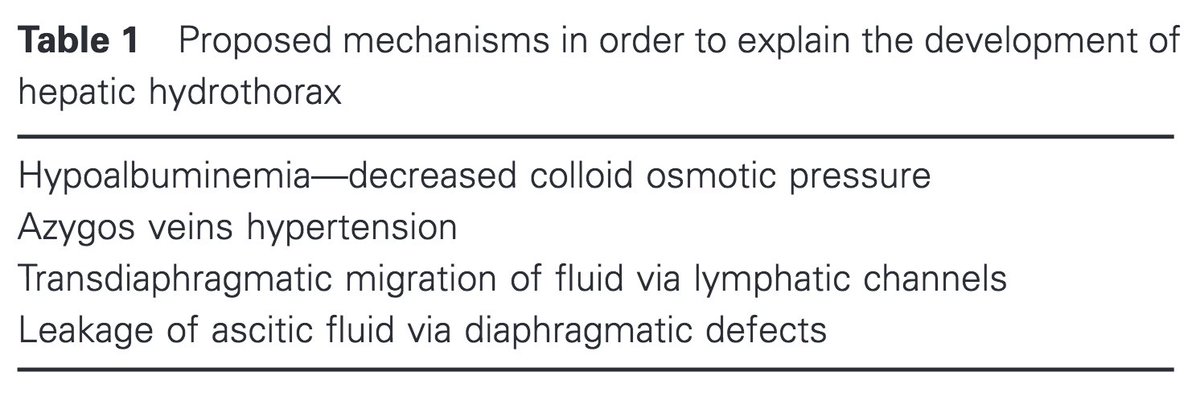
To understand the right-sided predominance of HH, it's first necessary to explain how any pleural effusion forms in cirrhosis.
Many theories have been proposed, but the leading one is that peritoneal fluid crosses the diaphragm into the pleural space.
ncbi.nlm.nih.gov/pubmed/17645471
To understand the right-sided predominance of HH, it's first necessary to explain how any pleural effusion forms in cirrhosis.
Many theories have been proposed, but the leading one is that peritoneal fluid crosses the diaphragm into the pleural space.
ncbi.nlm.nih.gov/pubmed/17645471
5/
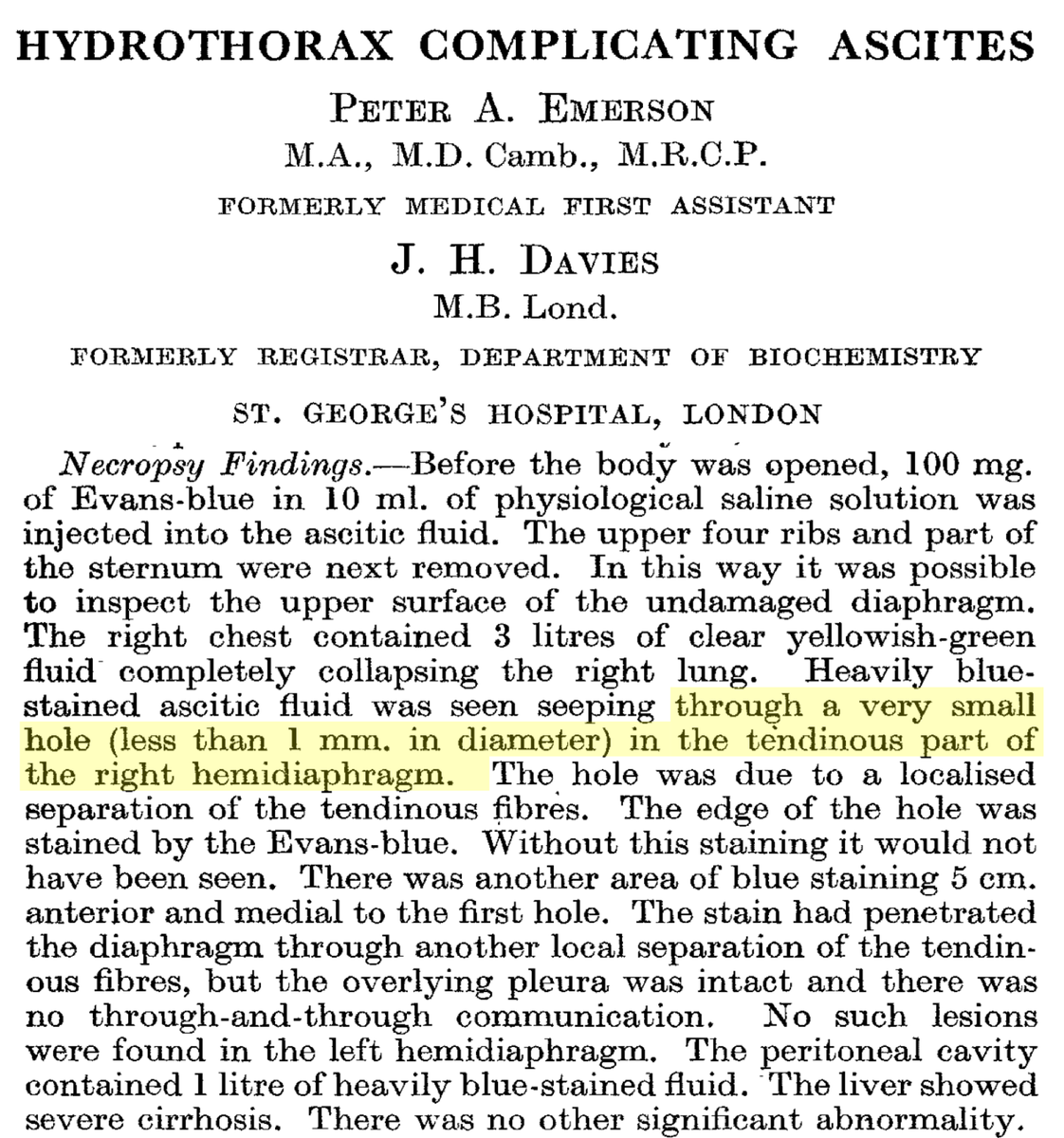
In 1955, Emerson and Davies reported a case of HH in which autopsy revealed a small hole in the tendinous portion of the right hemidiaphragm.
They argued that this was the channel across which ascites passed, "transforming" into a pleural effusion.
ncbi.nlm.nih.gov/pubmed/13234425
In 1955, Emerson and Davies reported a case of HH in which autopsy revealed a small hole in the tendinous portion of the right hemidiaphragm.
They argued that this was the channel across which ascites passed, "transforming" into a pleural effusion.
ncbi.nlm.nih.gov/pubmed/13234425
6/
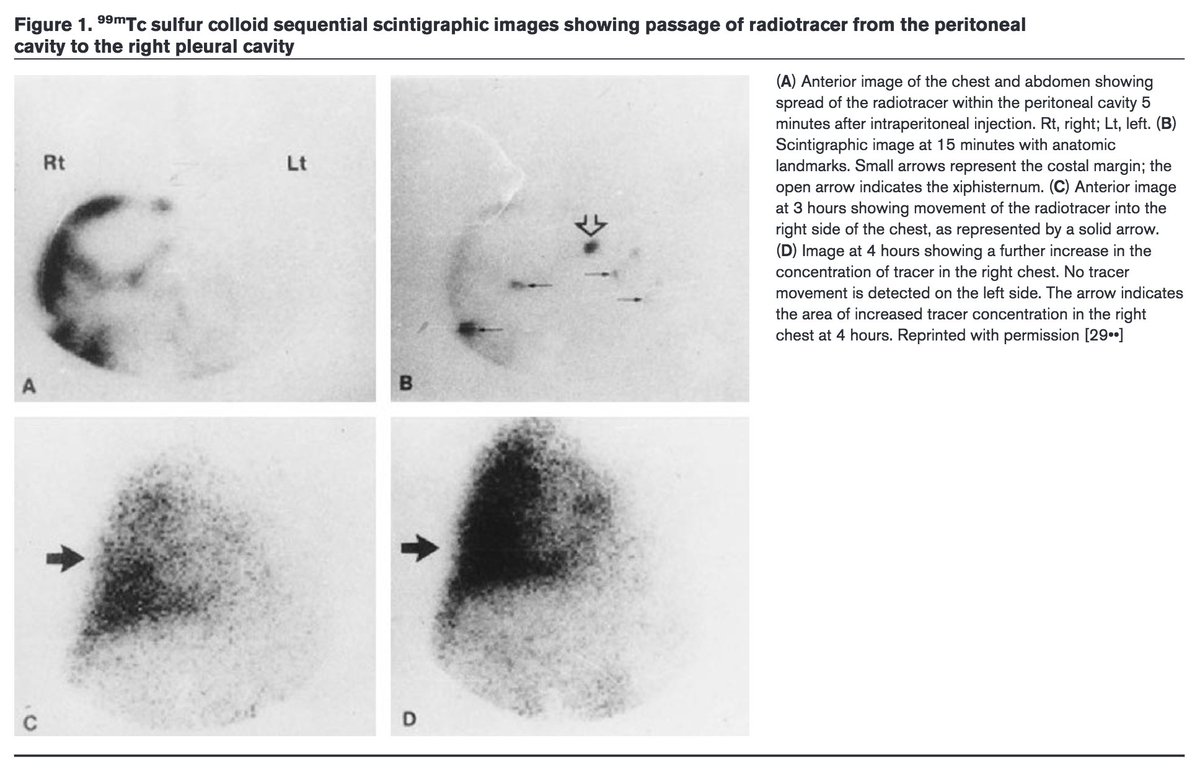
Evidence of direct movement of fluid across the diaphragm is also suggested by studies showing that radiolabeled tracer injected into the peritoneal cavity rapidly appears in the pleural space.
ncbi.nlm.nih.gov/pubmed/12806237
Evidence of direct movement of fluid across the diaphragm is also suggested by studies showing that radiolabeled tracer injected into the peritoneal cavity rapidly appears in the pleural space.
ncbi.nlm.nih.gov/pubmed/12806237
7/
The same thing can happen with air, leading to pneumothorax.
But, something else must be going on. If not we would see a lot more pneumothoraces with laparoscopic abdominal surgery.
ncbi.nlm.nih.gov/pubmed/5902279
The same thing can happen with air, leading to pneumothorax.
But, something else must be going on. If not we would see a lot more pneumothoraces with laparoscopic abdominal surgery.
ncbi.nlm.nih.gov/pubmed/5902279
8/
In patients with cirrhosis and ascites, increased peritoneal pressures lead to widening of defects in the collagen bundles of the diaphragm's central tendon.
Herniations, known as pleuroperitoneal blebs, may rupture, leading to fluid leakage and HH.
ncbi.nlm.nih.gov/pubmed/10492320
In patients with cirrhosis and ascites, increased peritoneal pressures lead to widening of defects in the collagen bundles of the diaphragm's central tendon.
Herniations, known as pleuroperitoneal blebs, may rupture, leading to fluid leakage and HH.
ncbi.nlm.nih.gov/pubmed/10492320
9/
But, none of this necessarily explains the original question: why are right-sided pleural effusions more common in patients with cirrhosis?
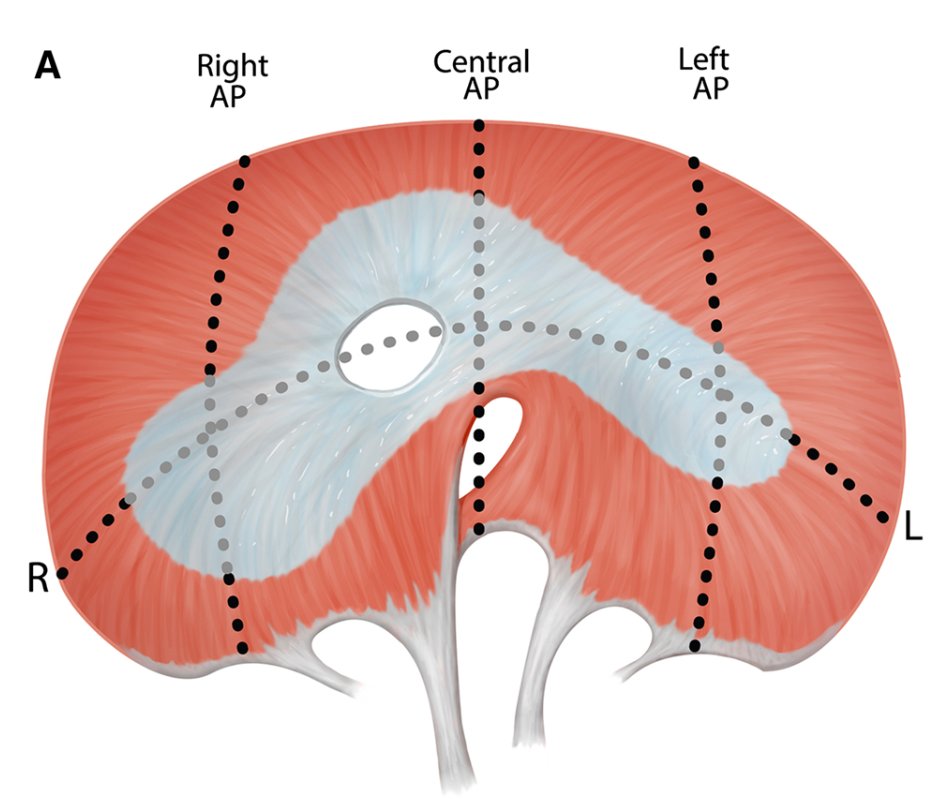
One explanation: the central tendon of the diaphragm is larger on the right.
ncbi.nlm.nih.gov/pubmed/25935593
But, none of this necessarily explains the original question: why are right-sided pleural effusions more common in patients with cirrhosis?
One explanation: the central tendon of the diaphragm is larger on the right.
ncbi.nlm.nih.gov/pubmed/25935593
10/
If defects in the diaphragm are seen in the tendinous region, the fact that the right hemidiaphragm has more tendon supports the right-sidedness of HH.
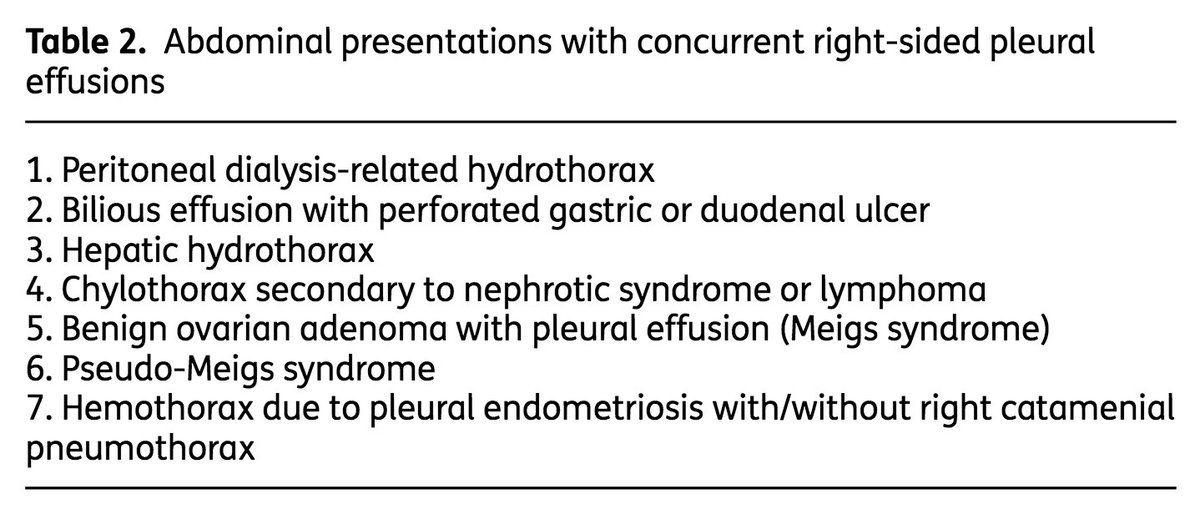
Unsurprisingly, every "porous diaphragm syndromes" is right-sided!
ncbi.nlm.nih.gov/pubmed/25815179
If defects in the diaphragm are seen in the tendinous region, the fact that the right hemidiaphragm has more tendon supports the right-sidedness of HH.
Unsurprisingly, every "porous diaphragm syndromes" is right-sided!
ncbi.nlm.nih.gov/pubmed/25815179
11/
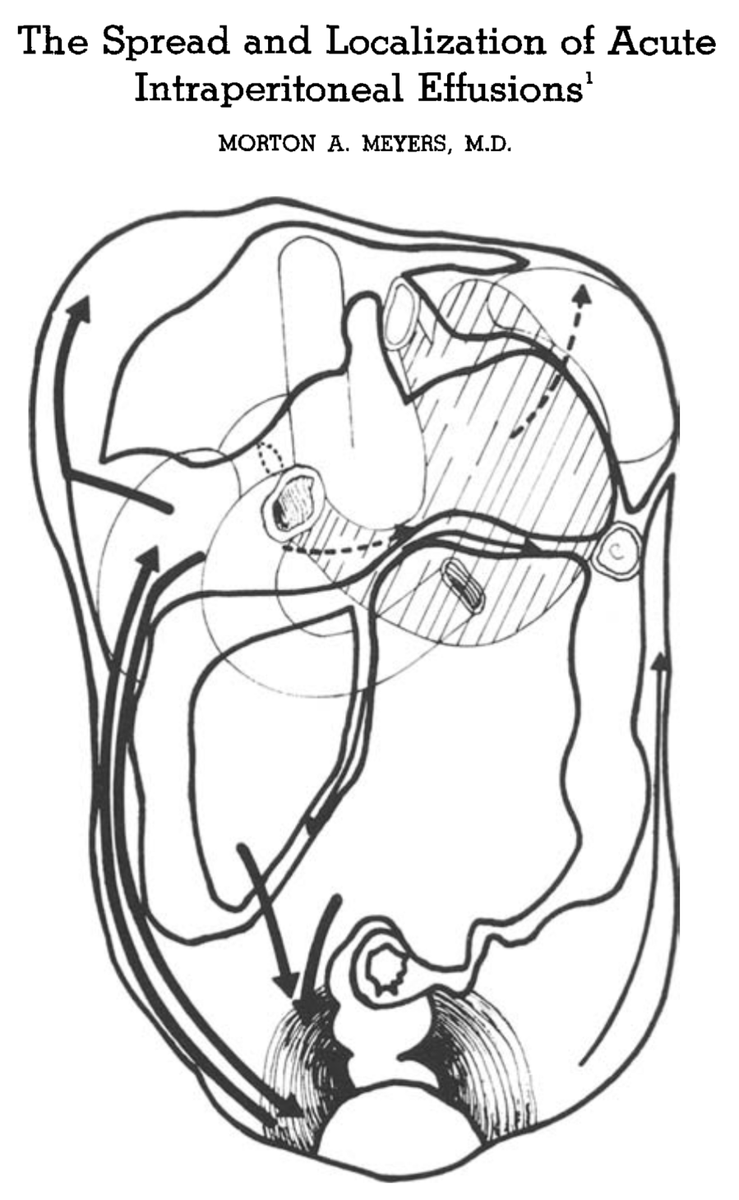
There may be other contributors. One cool study showed that peritoneal fluid naturally flows to the RUQ.
If that's true, then there are currents in the abdomen channeling ascites to the right diaphragm and its more prevalent defects!
ncbi.nlm.nih.gov/pubmed/5442658
There may be other contributors. One cool study showed that peritoneal fluid naturally flows to the RUQ.
If that's true, then there are currents in the abdomen channeling ascites to the right diaphragm and its more prevalent defects!
ncbi.nlm.nih.gov/pubmed/5442658
12/
Before summarizing, here, again is the original question:
Why are right-sided pleural effusions more common in patients with cirrhosis?
[DD = diaphragm defects; AV = azygous vein]
Before summarizing, here, again is the original question:
Why are right-sided pleural effusions more common in patients with cirrhosis?
[DD = diaphragm defects; AV = azygous vein]
13/
Summary
✔️Hepatic hydrothorax (HH) results from the movement of peritoneal fluid across defects in the diaphragm into the pleural space
✔️The right-sided predominance of HH may be due to the fact that the central tendon is larger on the right
Summary
✔️Hepatic hydrothorax (HH) results from the movement of peritoneal fluid across defects in the diaphragm into the pleural space
✔️The right-sided predominance of HH may be due to the fact that the central tendon is larger on the right