Just published: "‘Fake news’ as infrastructural uncanny" in New Media & Society, co-authored with @bb_liliana & @TommasoVenturin and building on work with the @PublicDataLab. ✨ A thread with some highlights. 👇🏽 

The paper starts with the societal concerns around "fake news", illustrated with this case of a "clone" of the website of the Belgian news outlet "Le Soir".

This was not the first time that a 'second Le Soir' was in circulation. The Belgian resistance circulated an elaborate satirical issue in 1943.

Both cases of fabricating Le Soir (in 1943, in 2017) involved interventions around the sociotechnical infrastructures through which news is made available to its readers. "Fake" and "junk" news can be taken as an occasion to challenge/change the role of such infrastructures.

The article presents three "scenographies" (@BrunoLatourAIME) examining infrastructures and practices involved in ranking content, metrifying engagement and commodifying attention, building on recipes in: fakenews.publicdatalab.org

Drawing on recent work in infrastructure studies and platform studies (inc @silvertje @JCPlantin et al) we look at how digital infrastructures become concerning not just due to breakdown or failure, but rather because of success in ways other than hoped for.

We draw on the notion of the "infrastructural uncanny" to characterise some of the unusual, concerning, and unexpected effects that infrastructures may give rise to, drawing on work by @bernardionysius and in uncanny studies.

The infrastructural uncanny manifests when the role of sociotechnical devices in the co-production of value, engagement, audience and social relations becomes unsettling and generates ambiguities such that the way in which agency is distributed becomes difficult to untangle.

We use digital methods to produce "infrastructural scenographies" of (1) the ‘link economy’ and the ranking of content; (2) the ‘like economy’ and the metrification of engagement; and (3) tracking infrastructures and the monetisation of attention.
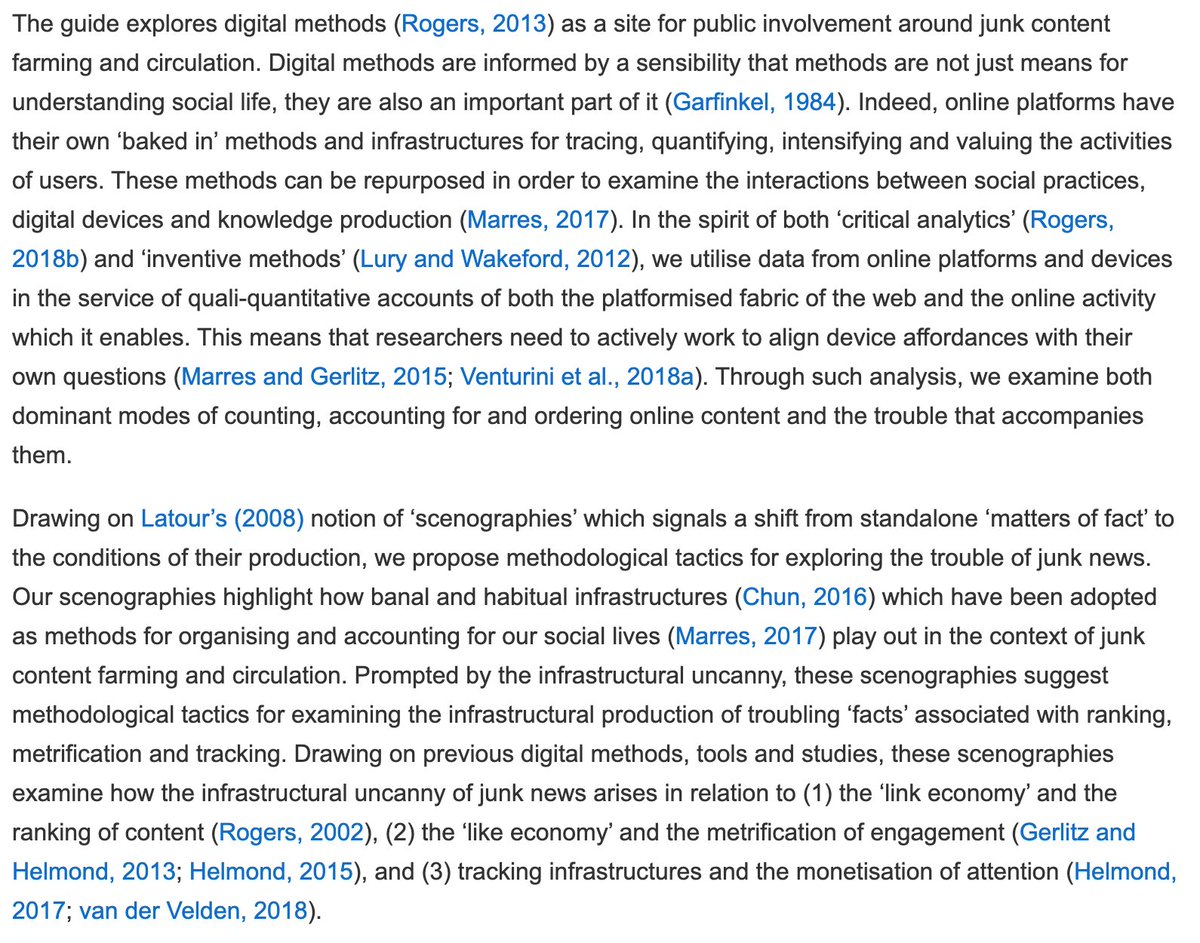
The first scenography starts with the infrastructural uncanny prompted by the appearance of unwanted deceptive content in top Google search results where one would typically expect authoritative news sources to appear.

Repurposing search engine rankings to explore referencing dynamics between web pages, the scenography provides a different perspective on the interplay between search engines, hyperlinks and textual references enabling the uncanny appearance of junk content in top search results.

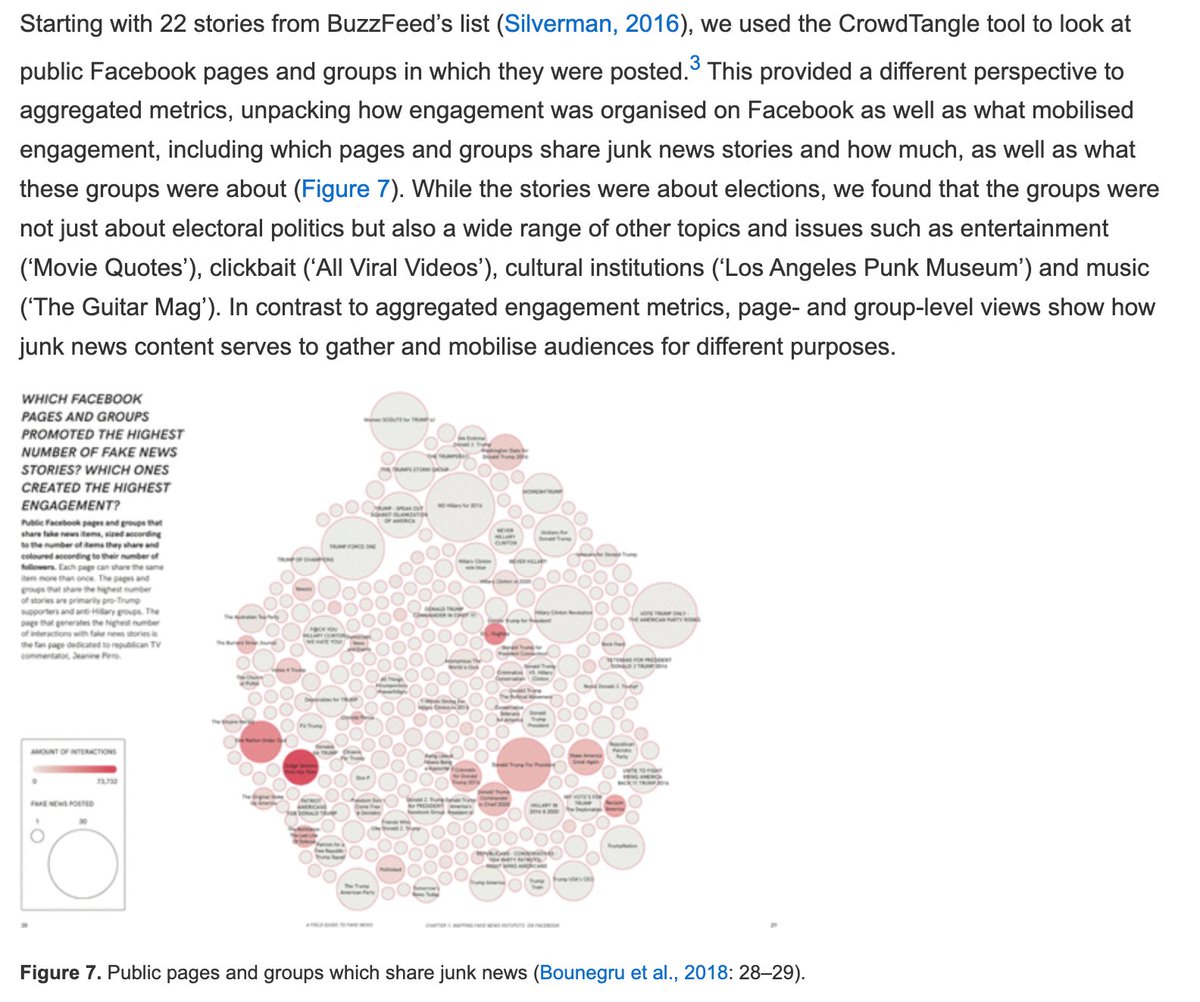
The second scenography examines what enables the infrastructural uncanny of junk content apparently overtaking ‘real’ content, as well as different forms of distributed agency involved in the construction and metrification of engagement (e.g. bots, paid users, data traces).
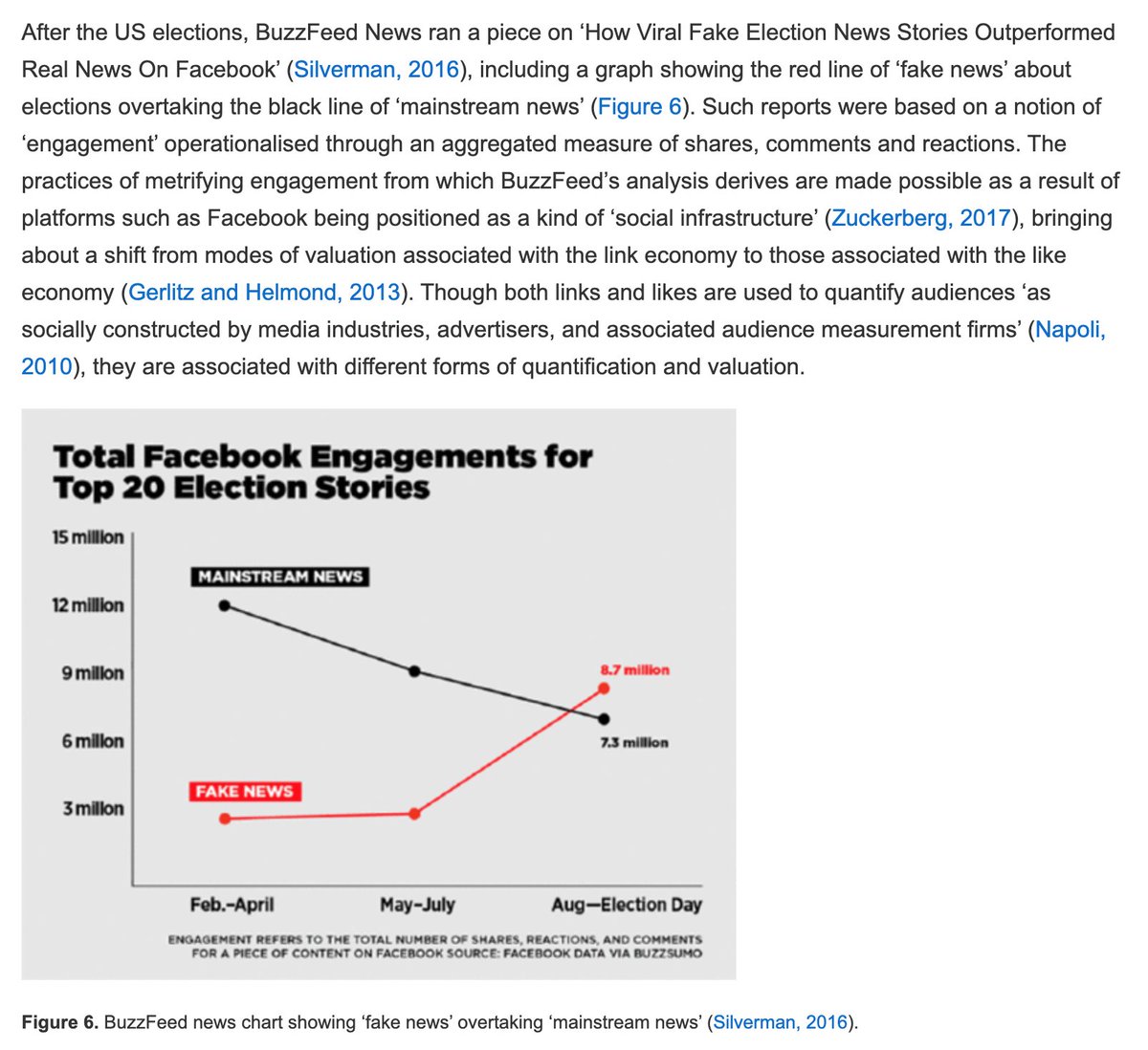
The infrastructural uncanny of unsettling metrics surfaces the comparatively inconspicuous participation of nonhuman actors such as platform features, junk content, bots and algorithms in the co-production of social life.
The third scenography focuses on the infrastructural uncanny that arises from the unanticipated effects of web economies, including the unexpected participation of "distant" actors in "domestic" politics enabled by online advertising industries.

By exploring networks of third party tracking infrastructures which facilitate the monetisation of content, this scenography shifts focus back to ‘domestic’ US and Western European advertisers, marketers and technology companies that dominate online audience markets.

Concluding, the article suggests that the uncanny prompted by junk news can be taken as an empirical occasion to explore the infrastructures which enable these unsettling effects, exploring three methodological tactics.
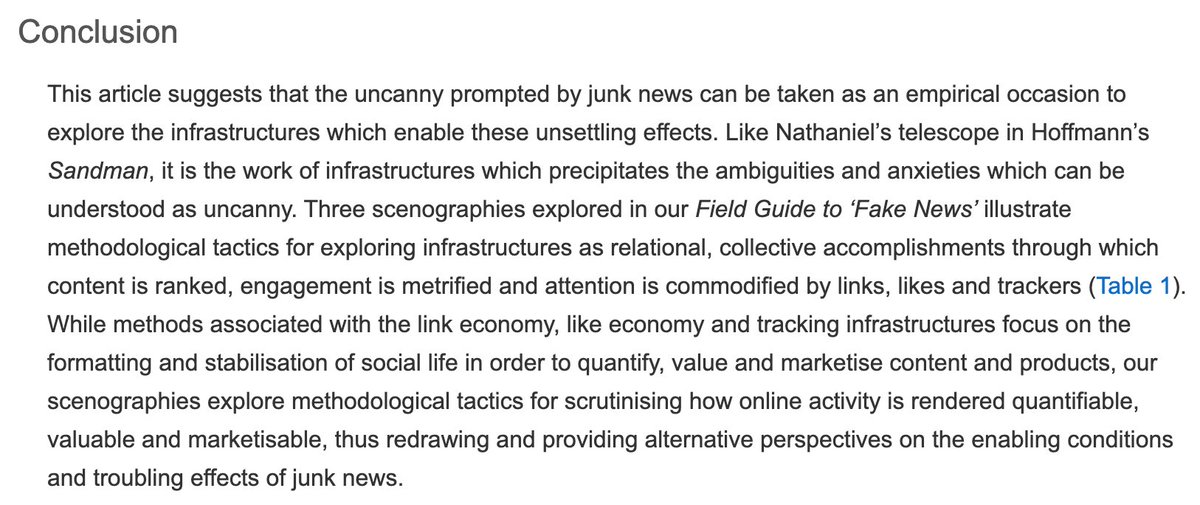
Methods of the link economy, like economy and tracking infrastructures focus on the formatting and stabilisation of social life (to quantify, value and marketise content), may be repurposed to scrutinise how online activity is rendered quantifiable, valuable and marketisable.

The infrastructural uncanny raises questions about what it means to be part of a society which is co-constituted by digital infrastructures.

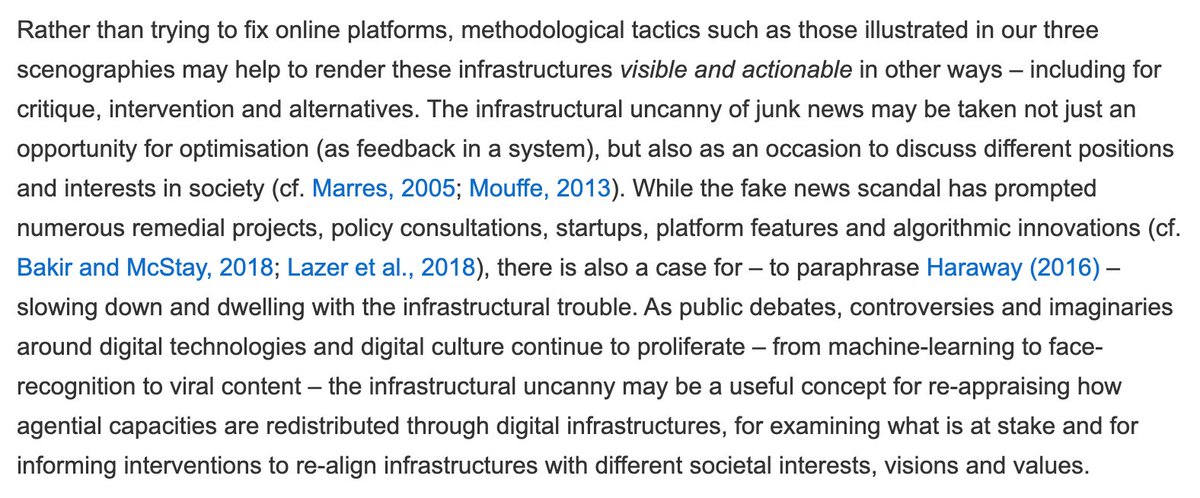
Rather than trying to fix online platforms, these kinds of methodological tactics can render infrastructures visible and actionable in other ways (e.g. critique, intervention and alternatives). There is a case for slowing down and dwelling with the infrastructural trouble.
Thanks to the many people who provided comments, input and encouragement on various versions of the paper, including @bernardionysius @MJBroersma @MrsBunz @whkchun @cgrltz @alanyliu @DrEllaMcPherson @richardrogers @kinematograph @esthr and others below...

.. as well as all involved in the "field guide" which the paper draws on: @alexgekker @AndersKMunk @angelesbriones @liside @ekborra @esthr @marioponte @jacomyma @mikima @pciuccarelli @richardrogers @sabinesabine @densitydesign @TANTlab @digitalmethods @medialab_ScPo & many more.

And a shoutout to the editors and other articles in the special issue on "digital journalism" in New Media & Society, including @SethCLewis @nikkiusher @gravesmatter @Chanders @KarinWahlJ and others: journals.sagepub.com/toc/nmsa/curre…

@SethCLewis @nikkiusher @gravesmatter @Chanders @KarinWahlJ And here is the link to the full paper, which is #openaccess: 📄🔗🔓 journals.sagepub.com/doi/10.1177/14…