,
15 tweets,
8 min read
Read on Twitter
🚨NEW PAPER!🚨 There are major concerns in the US about the cost of building infrastructure, but we have little solid evidence. Leah Brooks and I help fill the gap by studying the Interstate highways.
Paper available at: ssrn.com/abstract=34286…. 1/
Paper available at: ssrn.com/abstract=34286…. 1/
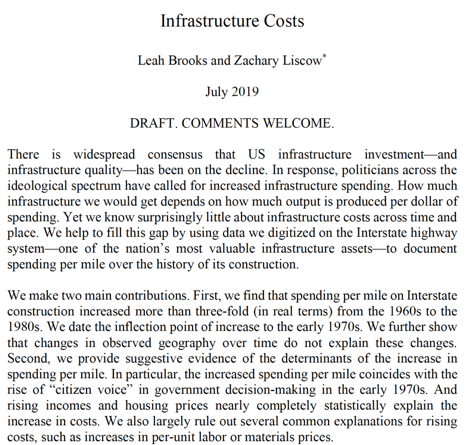
We find that, remarkably, between the 1960s and 80s, the cost to build a new mile of Interstate highway **tripled** (in real terms) even as highway-building technologies improved.
But why? 2/
But why? 2/
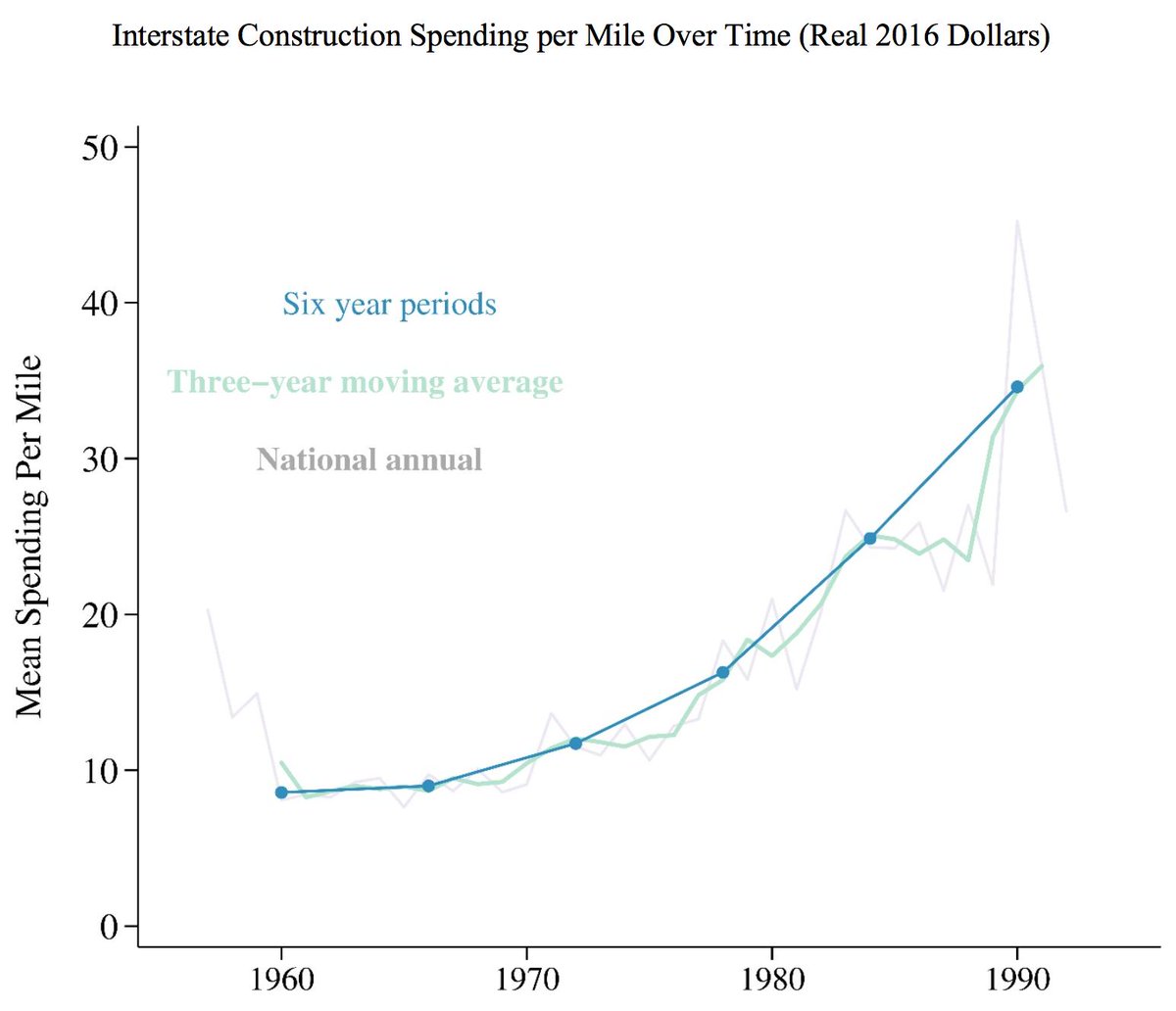
The prices of the main inputs into highways – labor and materials – did not increase. So it must be that we used more quantities of inputs in the highways. So this isn’t a story about unions or legislation driving up wages over time. 3/

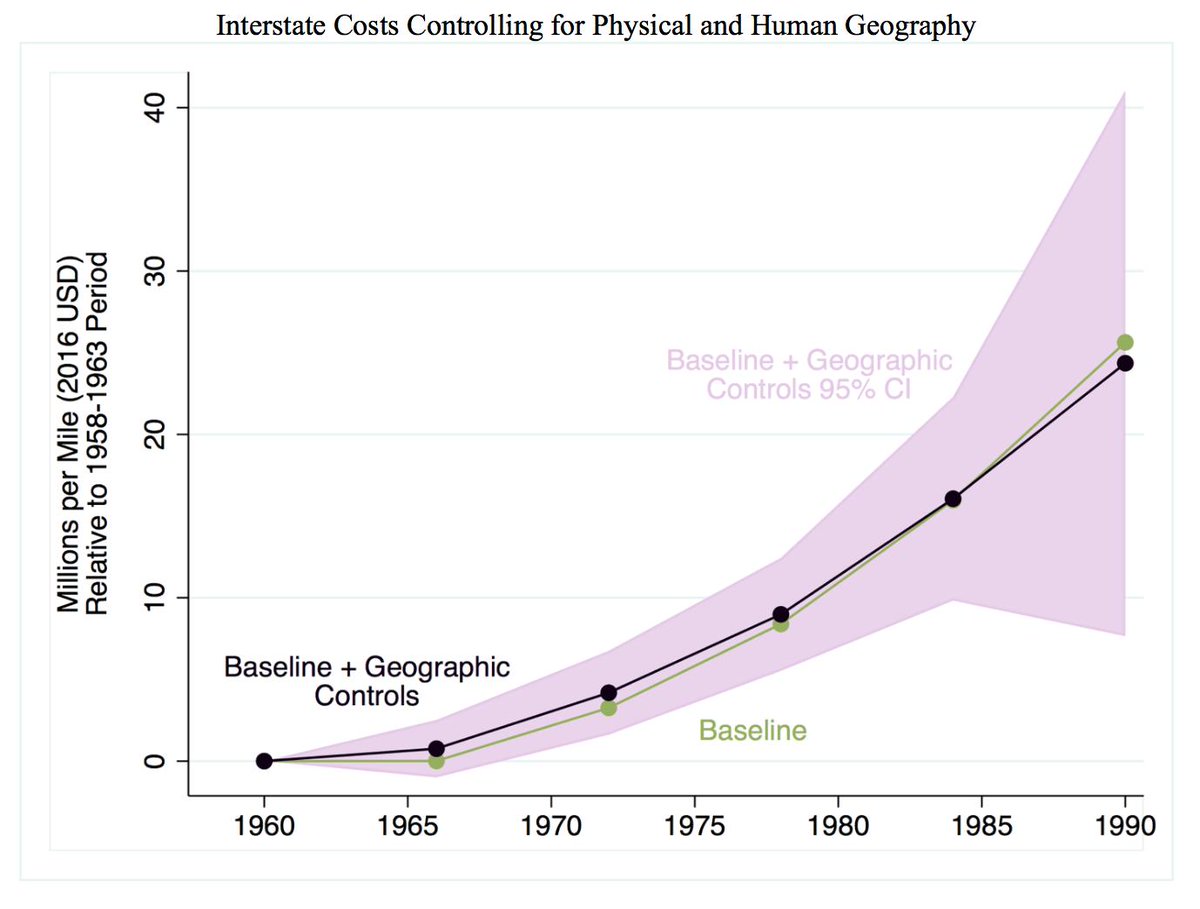
It is not that highways we built highways in later years in geographically more difficult places in observable ways. Controlling for geography makes little difference on the estimates. 4/
So, why then? We can look across states, some of which saw much larger cost increases than others. 5/

The variables that best explain the cost increase are increases in local median income and housing prices (which can’t be principally driven by land costs, since spending is overwhelmingly on construction itself). They explain 99% of the cost increase.
How could this be? 6/
How could this be? 6/
Richer people may demand more expensive highways from their politicians. And, over time, we do see more elevated highways (perhaps to cause less disruption by allowing people to pass beneath rather than bisecting neighborhoods): 7/
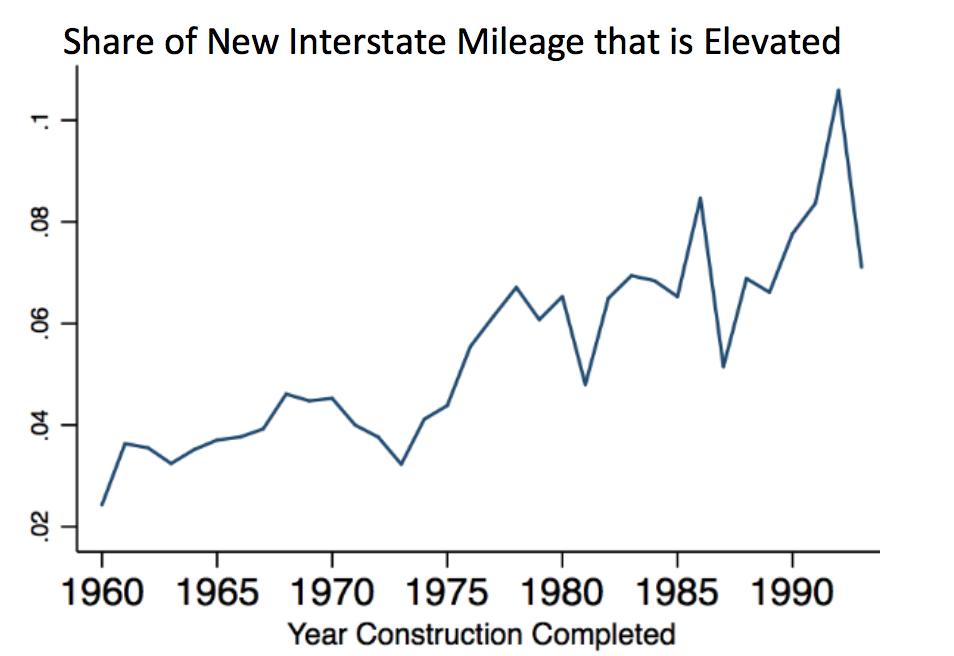
And we see wigglier highways over time (perhaps to avoid sensitive neighborhoods, environmental sites, etc.) 8/

…and more noise walls. 9/

The ability of citizens to have their voice heard may have been accentuated by institutional changes that enhanced “citizen voice,” like the National Environmental Policy Act (requiring environmental review), judicial rulings (e.g., Overton Park), and social movements. 10/
For example, in the Congressional Record, we see much more discussion of the environment after 1969. 11/

So, older highways tended to look more like the left image (I-20 in Atlanta: opened in 1960) and newer highways tended to look more like the right image (I-696 outside of Detroit: opened in 1989), sunken, with noise walls, and parks on top. 12/
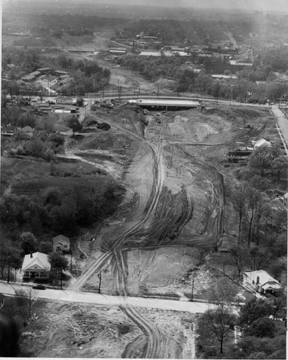
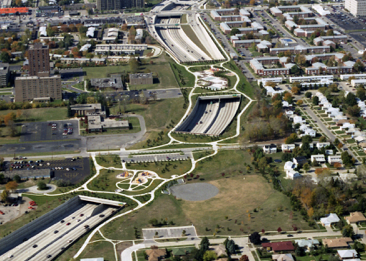
We cannot say whether these changes are good (e.g., because they are incorporating legitimate concerns that citizens have) or bad (e.g., because they reflect wasteful attempts to placate well-heeled interests). 13/
But we can look to the evidence of what has happened.
We’re glad to build on the great work on infrastructure costs being done by @barro, @mattyglesias, @alon_levy, @ProfSchleich, @Noahpinion, @gordontrac, and others 14/
Comments welcome!
We’re glad to build on the great work on infrastructure costs being done by @barro, @mattyglesias, @alon_levy, @ProfSchleich, @Noahpinion, @gordontrac, and others 14/
Comments welcome!
@Barro @mattyglesias @alon_levy @ProfSchleich @Noahpinion @gordontrac Thanks as well, to these terrific writeups of the piece:
bloomberg.com/opinion/articl…
pedestrianobservations.com/2019/07/15/cos…
brookings.edu/blog/up-front/…
15/15
bloomberg.com/opinion/articl…
pedestrianobservations.com/2019/07/15/cos…
brookings.edu/blog/up-front/…
15/15