Book review tweetstorm: The Sovereign Individual (1999)
amazon.ca/Sovereign-Indi…
The book was certainly a inspirational tome for much individualist cypherpunk thought in the 2000s. But what did it concretely predict? And with 2020 hindsight (heh), what was right and what wrong?
amazon.ca/Sovereign-Indi…
The book was certainly a inspirational tome for much individualist cypherpunk thought in the 2000s. But what did it concretely predict? And with 2020 hindsight (heh), what was right and what wrong?
First, let's walk through James Dale Davidson and William Rees-Mogg's model of the world.
Big questions of how the world is structured are determined primarily not by ideology or wishes, but by "megapolitical factors" - a key term they use as often as Fukuyama uses "isothymia" or Mises uses "praxeology". 
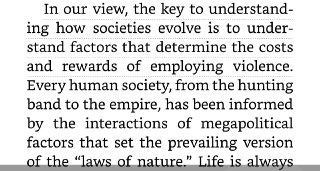
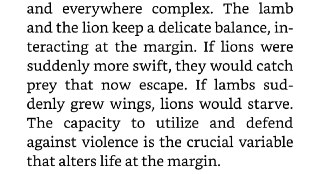
Basically, this means things like whether defense is stronger than offense, what the economies of scale are in deploying violence, patterns of communication... structural properties of the world that are shaped largely by technology.
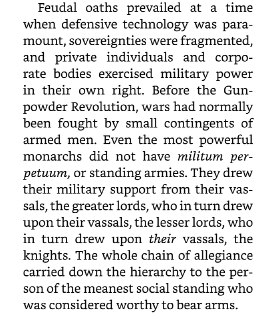
In their telling, ~1500 AD saw the end of feudalism and rise of centralized nation states essentially because military tech changes began to favor offense over defense. This reduced power of local lords to resist kings, who could deploy violence with newfound economies of scale.
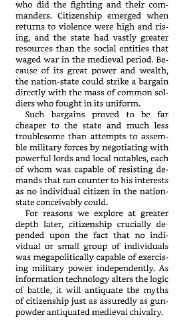
Followed by the industrial revolution increasing returns to scale in, well, nearly everything else that mattered.
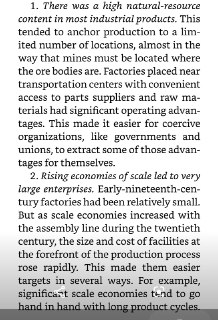
This culminated in the 20th century, when efficient production depended on large scale and fixed physical capital and this made it easy for governments and unions to extract a large surplus.
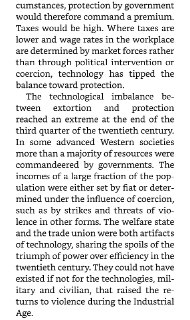
Democracy (+welfare states) were effective for governments during this time, because people would vote for high taxes that transfer money from business elites to government, funding both welfare and more powerful militaries than governments controlled by elites could muster.
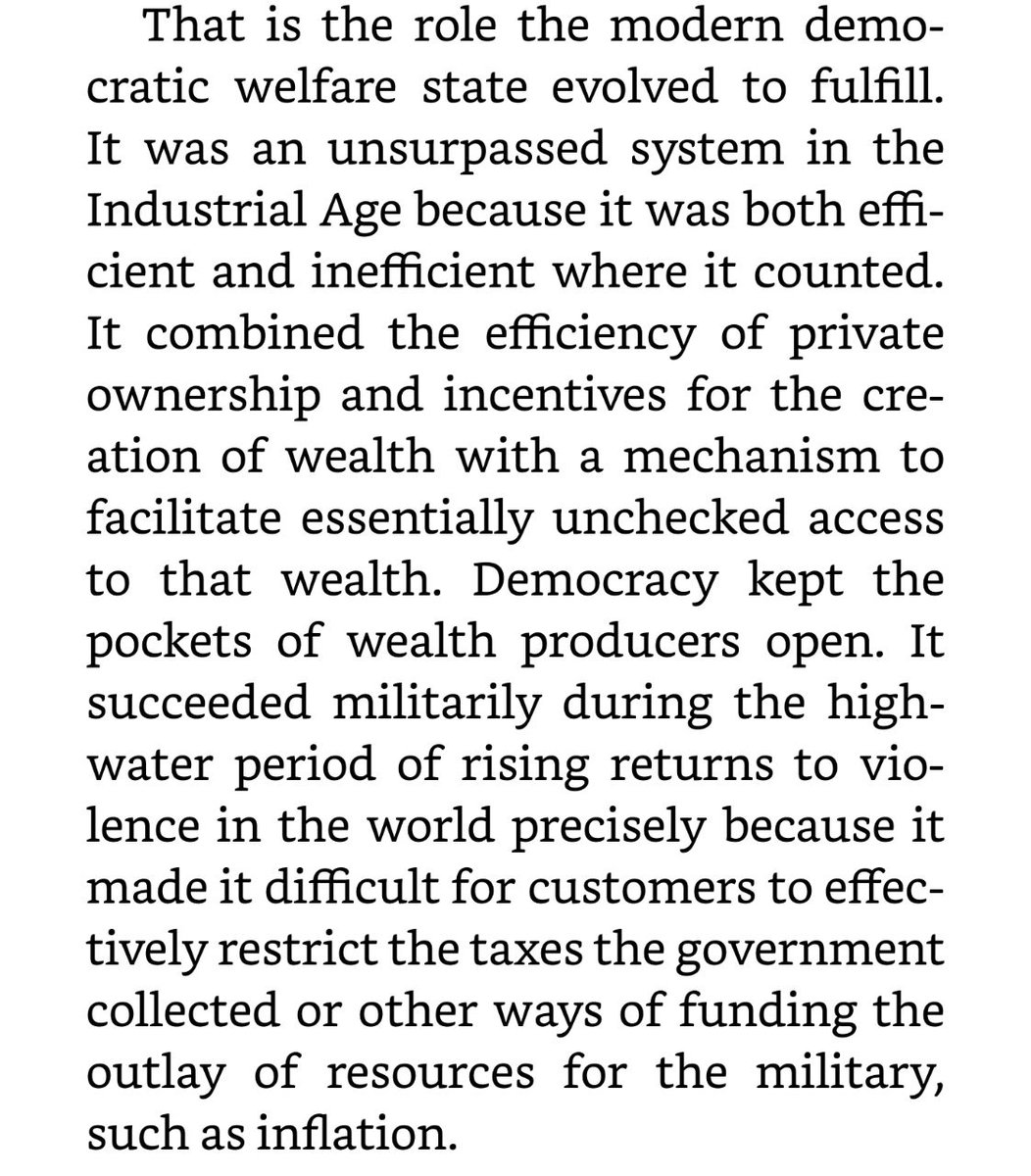
This all sets the stage for Davidson and Rees-Mogg's description of the information age: reduced dependence on physical capital and increased importance of the virtual unwinds all these economies of scale, bringing a transformation as large as that from feudalism to nation states
The book's core prediction is basically "down with voice, up with exit". People would escape bad governments (in this book described largely as those that charge high taxes) and choose among jurisdictions in a competitive market.
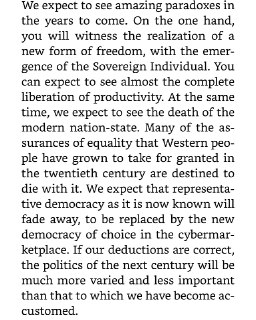
In 2019, much of this certainly seemed wrong; "markets will rule, politics is passé" seemed itself passé as politics was coming back with a vengeance. But what if the megapolitical factors that will create this new age are coming after all, just a little bit later than expected?
Here's one paragraph that looked over-optimistic in 2019 but now seems obvious.
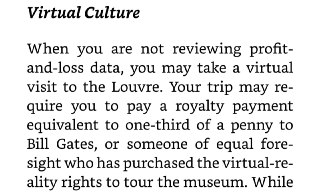
But OTOH here's one concrete prediction that still seems way off the mark.
While regional divisions keep existing (eg. buffalodeclaration.com ), Canada's far from literally breaking up and Italy more so.
While regional divisions keep existing (eg. buffalodeclaration.com ), Canada's far from literally breaking up and Italy more so.
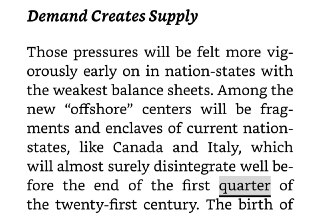
But these are unimportant details, and ultimately whether it comes to be in 2025 or 2045 is not super important either. What about the important stuff?
One major trend that the book predicts is the death of nationalism (including friendly fluffy "civic nationalism") as an ideology. Another is the shift from long-term corporations to short-term orgs that pop in and out of existence.
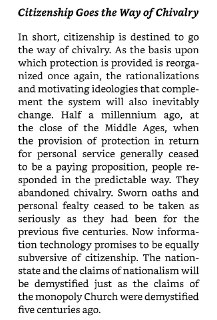
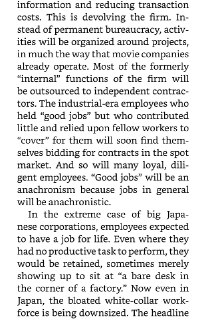
But here I see a challenge that the book fails to address: where do people get their sense of community and belonging? Religion is dying, nationalism is dying, persistent organizations for work are dying - what replaces that function? No answer.
Real life has an answer that IMO the book failed to predict: cross-organizational collaboration. The zero knowledge proof space that I've spent some time contributing to is a great example: lots of orgs, lots of people, all collaborating without much regard for boundaries.
So you get persistence of purpose without relying on persistence of any individual corporate entity.
Another question: what are the remaining things that divide people? One big one in my opinion is language. The book says "eh, universal translators will solve that".
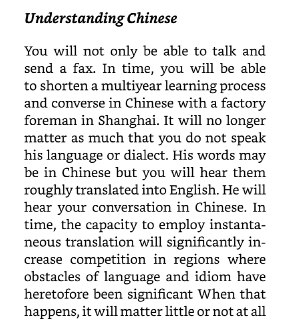
As someone who actually learned Chinese I have something to say about this! The reason I am not so optimistic is what rationalists call "trivial inconveniences": lesswrong.com/posts/reitXJgJ…
If doing something is even somewhat annoying (translations are imperfect, etc), then people will be much less inclined to do it. Hence, most English-speaking people will naturally interact much more with English-speakers than Chinese-speakers (and vice versa), preserving division
I've experienced this uphill struggle personally. Ironically cyberspace makes this harder: you can't go "full immersion" because you're always one click away from the lazy comforts of reading tweets originally written in your mother tongue.
And this is a segue into the next topic: the book underestimates trivial inconveniences in general. The bar for annoyance that a government needs to impose to prevent the emergence of a mass market product is just not high. Total banning, near-impossible, nudging, easy.
This is part of why even significant levels of taxation are sustainable with not that much effort spent on enforcing them.
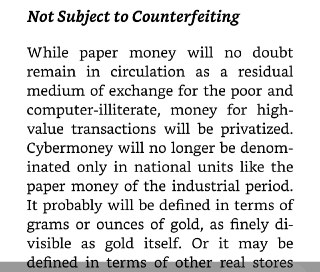
The book's treatment of cryptocurrency seems to focus on backed tokens (digitized gold deposits etc). But in practice, we saw tokens backed by nothing at all.
Finally, we get to public goods. The book's treatment of public goods is quite perfunctory, focusing on city-level public goods. It completely misses global public goods (especially info: scientific research, code, writing), and the huge benefits of coordinating to provide them.
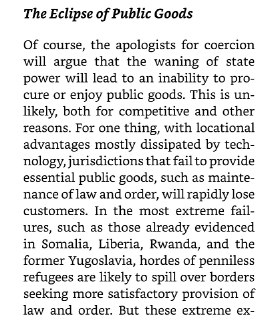
One mistake the book *does not make* is believing the transition to a cyber world will be quick and easy. It acknowledges the inevitability of backlash, and that regions where everyone's lives are improving (ie. Asia) won't see governments break down quickly.
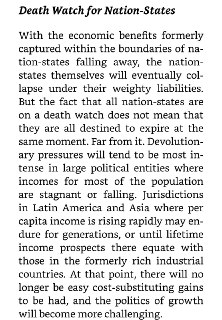
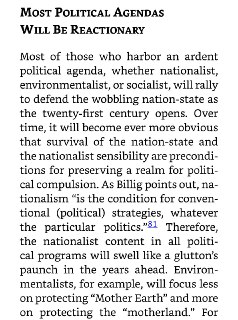
So all in all, a mixed bag. The book highlights some important trends that will play a part in shaping the world whether we like it or not, but the book's individualist and often proudly anti-egalitarian ethos at times leads it to miss important things.
Our sudden realization this year that much more virtualized ways of living are possible should open our minds to the possibility that many of the trends (competitive governance particularly) may come, they'll just lay dormant as ideas for a while and then suddenly spring up.
But the challenges of a world where everything is based on consumer choice are significant, and IMO the authors' failure to correctly assign great importance to these challenges leads them to fail to predict what 21st century attempts to meet these challenges will look like.
Additionally, the authors fail to see that while economies of scale are lower in that companies need fewer *employees*, economies of scale are greater in the form of network effects via many *customers*, eg. modern tech monopolies. What will come out of that we also don't know.
But for all these challenges, there's a lot of room for human agency in developing new solutions - new internet-enabled ways for people to organize being at the top of the list. I welcome anyone who is willing to rise to the challenge!